Pahuk Hill, Nebraska
The last surviving dwelling of the sacred animals, where Pawnee healing began
Understand sacred places, explore living traditions, and learn how to engage respectfully with Pilgrim Map.
Access has not been verified. Check current local guidance before planning a visit.
Cedar Bluffs, Nebraska, United States
Read the sources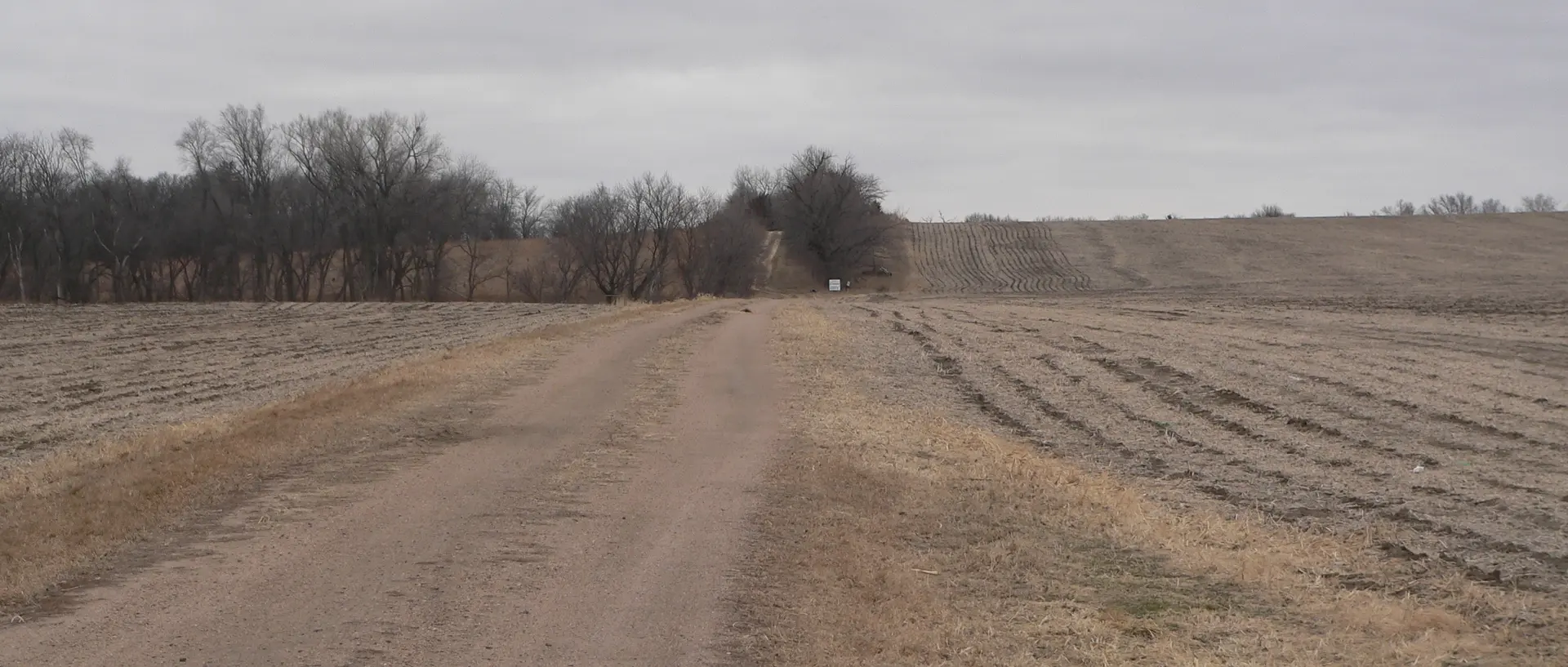
Visit essentials
A quick read before you go
- Duration
- Variable depending on the nature of any permitted access.
- Etiquette
- Pahuk is private property and profoundly sacred ground.
Overview
Pahuk rises above the Platte River, a heavily wooded bluff whose Pawnee name means 'headland' or 'promontory.' To the Pawnee Nation it is one of only five places in the world where the nahurac—sacred spirit animals—made their dwelling, and the origin place of Pawnee healing traditions. Pawnee leaders compare its significance to the Temple Mount for Jews or Mecca for Muslims.
In Pawnee traditional religion, the supreme being Tirawa conferred miraculous powers on animals that became the nahurac, able to intercede with Tirawa for the Pawnee people. They dwelt in five lodges across the landscape; at Pahuk, the most important, the Sacred Animals held council during mythic times.
Tradition tells of a young Pawnee boy taken into Pahuk's animal lodge. The nahurac taught him healing secrets—which herbs to use and how to cure the sick. He returned as a medicine man, healed his people, and began the Pawnee healing tradition.
Four of the five nahurac sites have been destroyed or significantly damaged by development, agriculture, and neglect; Pahuk alone survives intact. Dr. Louis Gilbert purchased the 150-acre core in 1974 and began restoring native prairie. In 2008, the Shanahans created a conservation easement protecting 257 acres.
The Pawnee were removed from Nebraska to Oklahoma in the 19th century, but their connection to Pahuk was not severed. It remains sacred, its knowledge persists, and the bluff is one of North America's most significant sacred sites for those who understand what it represents. It still holds what generations of Pawnee prayer have placed there.
Why this place is sacred
The thinness of Pahuk is structural. This is not simply a place where people prayed or where significant events occurred. This is one of only five dwelling places of the nahurac—the sacred spirit animals who exist between Tirawa and the Pawnee people, carrying prayers upward and bringing power down. At Pahuk, the veil between ordinary reality and the realm of the sacred animals was thin enough to pass through.
The tradition of the boy who learned healing makes this explicit. He was taken into the animal lodge—not shown the lodge from outside, not taught at a distance, but brought in, made a guest of the Sacred Animals themselves. Inside the lodge, he received knowledge that transformed not only his own life but the life of his people. Pawnee healing tradition traces to what was transmitted at Pahuk.
This transmission quality is what makes Pahuk thin. Other places are sacred because of what humans did there. Pahuk is sacred because of what was given there—knowledge, power, the ability to heal, passed from the spiritual realm to the human realm through this particular threshold. The thinness is not metaphorical but functional. Things could pass between worlds here that could not pass elsewhere.
The fact that four of five nahurac sites have been destroyed makes Pahuk's survival all the more significant. Whatever thinness those other sites held has been disrupted. Pahuk alone remains—the last intact doorway, the final dwelling of the Sacred Animals that has not been desecrated by development or agriculture. What the site holds is not only its own significance but the concentrated significance of a sacred geography largely destroyed.
Pahuk served as a dwelling of the nahurac—the sacred spirit animals who act as Tirawa's messengers and servants. At this site, during mythic times, the Sacred Animals held council. A young Pawnee boy was chosen by the animals and taken into their lodge, where he learned the secrets of healing. He returned to his people as a medicine man, founding the Pawnee tradition of healing.
The site's purpose was to house the sacred animals and provide a threshold through which their knowledge could pass to humans.
The Pawnee were removed from Nebraska to Oklahoma in the 1870s, separated from their sacred landscape by government policy. But removal did not sever the connection to Pahuk. The knowledge of what the site represented persisted in the community.
In the 20th century, Pahuk faced the same pressures that destroyed the other nahurac sites. Agriculture and development threatened to erase what remained. The turning point came in 1974 when Dr. Louis Gilbert and his wife purchased the 150-acre core site. They began the work of restoring the land to native prairie, reversing the agricultural conversion that had affected much of the landscape.
In 2008, Pat and Nancy Shanahan created a conservation easement protecting 257 acres around Pahuk, providing additional legal protection for the site. Pahuk was placed on the National Register of Historic Places, formal recognition of its significance.
Today, Pahuk survives as the only one of five nahurac sites that has not been destroyed or significantly damaged. The preservation effort represents a collaboration between non-Native landowners, conservation organizations, and the Pawnee Nation—a model for how sacred sites can be protected when different stakeholders recognize their value.
Experience and orientation
Pahuk does not invite casual visitation. The site is located on private property, protected by conservation easements that prioritize preservation over access. Unlike a national park or monument, there are no visitor centers, no interpretive signs, no parking lots. The protection that has kept Pahuk intact for generations includes keeping it relatively inaccessible to those who might disturb it.
For those who do visit with appropriate permission and guidance, the experience is one of encounter with land that looks much as it did for centuries. The bluff rises above the Platte River, its slopes wooded, its profile distinctive against the Nebraska sky. The restoration to native prairie has reversed some of the agricultural changes that affected the surrounding landscape. What you see approximates what Pawnee people saw when they came here for ceremony.
The setting is not dramatic in the way of mountains or waterfalls. This is Great Plains sacred geography—subtle, horizontal, requiring attention to perceive. The power of Pahuk lies not in spectacle but in what the place represents: the last intact dwelling of the Sacred Animals, the origin of healing tradition, a threshold between worlds that has somehow survived when all the others were destroyed.
If you stand at Pahuk knowing what it is, the ordinary bluff becomes extraordinary. This is where the nahurac held council. This is where a boy entered the animal lodge and emerged as a healer. This is where a people's understanding of medicine and the sacred began. The wooded slopes hold that history. The restored prairie remembers.
Approach requires contacting the Pawnee Nation or the landowners who hold the conservation easements. Pahuk is not a tourist destination but a sacred site whose access is appropriately restricted. Those who make the effort to approach properly—with permission, with guidance, with reverence—encounter something that has largely vanished from the American landscape: a sacred site intact, preserved, still holding what generations placed there.
Pahuk is located on the Platte River north of Cedar Bluffs, Nebraska. The site is on private property protected by conservation easements. Access requires permission. Contact the Pawnee Nation for guidance on appropriate ways to learn about or potentially visit the site. The nearest larger towns are Fremont, Lincoln, and Omaha.
Context and lineage
The origin story of Pahuk centers on transmission—knowledge passing from the sacred realm to the human realm. During mythic times, the Sacred Animals (nahurac) held council at Pahuk. They chose a young Pawnee boy and took him into their animal lodge. Inside, they taught him the secrets of healing—which herbs to use, which ceremonies to perform, how to cure the sick.
The boy returned to his village transformed. He was no longer an ordinary youth but a medicine man, carrying knowledge that had come directly from the Sacred Animals. He cured his fellow villagers. He established the tradition of Pawnee healing that would continue for generations. Everything that Pawnee medicine men would do traced back to what was taught at Pahuk.
This is not a historical event in the ordinary sense but a mythic occurrence that explains how things came to be. The story answers a fundamental question: how did humans learn to heal? The answer points to Pahuk, to the animal lodge, to the Sacred Animals who chose to share their knowledge.
Pahuk belongs to the Pawnee Nation. Though the Pawnee were removed from Nebraska to Oklahoma in the 1870s, their connection to Pahuk persists. The site's significance within Pawnee religion—comparable to the Temple Mount or Mecca—has not diminished with geographical separation. Non-Native preservationists who have protected the site have done so in recognition of Pawnee claims, not in replacement of them.
The Boy Who Learned Healing
Young Pawnee who was chosen by the Sacred Animals, taken into their lodge at Pahuk, and taught the secrets of healing. He returned to his people as the first medicine man, founding Pawnee healing tradition.
Old-Lady-Grieves-the-Enemy
Pawnee woman who defended Pahuk against a raiding party of Ponca and Sioux, one of several stories attesting to the site's significance.
Dr. Louis Gilbert
Purchased the 150-acre core site in 1974 and began restoration to native prairie, initiating the preservation effort that has kept Pahuk intact.
Traditions and practice
The central practice at Pahuk was the encounter with the nahurac—the Sacred Animals who dwelt in the lodge at this site. Those chosen by the animals could enter the lodge and receive teaching. The young boy who learned healing exemplifies this pattern: selection by the animals, entry into their dwelling, transmission of knowledge, return to the human community transformed.
Healing rituals took place at Pahuk. Vision seeking occurred. Sacred stories were set here—not only 'The Boy Who Was Sacrificed' but other narratives that gave the site its accumulated meaning. Each practice added to what the place held.
The defense of Pahuk by Old-Lady-Grieves-the-Enemy against Ponca and Sioux raiders demonstrates that protecting the site was itself a sacred duty. What Pahuk held was worth fighting for.
The Pawnee Nation maintains Pahuk as among their most sacred sites despite the geographical separation caused by removal to Oklahoma. The specific contemporary practices associated with the site are not extensively documented in public sources, and that absence may itself be significant—protecting sacred knowledge from inappropriate disclosure.
What is known is that the site's status has not changed. The Pawnee describe Pahuk with language that admits no qualification: this is their most sacred place, comparable to what the Temple Mount means to Jews or Mecca to Muslims. Such comparison is not made lightly.
Pahuk is not open to public visitation in the manner of a park or monument. Those who wish to learn about the site should contact the Pawnee Nation for appropriate guidance. If any opportunity for visitation arises, it should be undertaken with profound respect for the site's significance.
The practice available to most people is learning—understanding what Pahuk represents, why it matters, and how it survived when the other nahurac sites were destroyed. This learning is itself valuable. It changes how we understand the American landscape, revealing sacred geography that most people never knew existed.
Dwelling of the Nahurac (Sacred Animals)
ActiveIn Pawnee traditional religion, Pahuk is one of five dwellings of the nahurac—spirit animals with miraculous powers who serve as Tirawa's messengers. At Pahuk, during mythic times, the Sacred Animals held council. This is where humans could enter the animal lodge and receive teaching.
Entry into the animal lodge to receive teaching. Healing rituals. Vision seeking. Prayer and ceremony. A person chosen by the animals would be taken into their lodge and taught the secrets of healing.
Origin of Pawnee Healing Tradition
ActiveAccording to tradition, a young Pawnee boy was taken into the animal lodge at Pahuk, where the Sacred Animals taught him the secrets of healing. He returned to his people as the first medicine man, establishing Pawnee healing tradition. All subsequent medicine men trace their lineage to this transmission.
Healing ceremonies. Use of medicinal herbs as taught by the Sacred Animals. Continuation of the knowledge passed down from the first medicine man.
Perspectives and open questions
Pahuk is understood through Pawnee traditional religion as the most sacred site of a people—the last surviving dwelling of the Sacred Animals, the origin place of healing tradition. Academic sources confirm its significance while acknowledging that full understanding belongs to the Pawnee community.
Scholarly perspective
Academic sources document Pahuk as the most important of five Pawnee sacred sites, one of the dwelling places of the nahurac (sacred spirit animals) in Pawnee cosmology. The site's National Register eligibility and its documentation in sources like the Encyclopedia of the Great Plains confirm its recognized significance.
The preservation history of Pahuk has been studied as an example of successful sacred site protection through private conservation action. The collaboration between non-Native landowners and the Pawnee Nation offers a model for how such sites might be preserved elsewhere.
Living and traditional perspectives
Pawnee leaders describe Pahuk in terms that leave no doubt about its significance: this is their most sacred place, comparable to the Temple Mount for Jews or Mecca for Muslims. It is the dwelling of the nahurac—the Sacred Animals who carry prayers to Tirawa and bring power down to the people. It is the origin place of healing tradition, where a young boy entered the animal lodge and emerged as the first medicine man.
The destruction of the other four nahurac sites makes Pahuk's survival all the more significant. This is not simply one sacred site among several. This is the last intact doorway to the sacred animal realm. What Pahuk holds cannot be recovered if it is lost.
Open questions
The full ceremonial protocols, oral traditions, and spiritual teachings associated with Pahuk are held within the Pawnee community. Public documentation captures the site's significance in broad terms but cannot convey the full depth of what the site means to those whose tradition it grounds.
Plan your visit
Access and arrival
Hotels in Fremont (15 miles), Lincoln (50 miles), or Omaha (40 miles).
Respectful visit
Do not photograph the site without explicit permission from the Pawnee Nation and the landowners.
Follow any guidance provided by the Pawnee Nation. Do not leave offerings without appropriate instruction.
{"Private property—do not enter without permission","Contact Pawnee Nation for guidance on any approach","No unauthorized photography","Treat the site as you would the Temple Mount or Mecca—with profound respect"}
Pahuk is on private property. Uninvited visitation is trespassing and desecration. Do not attempt to visit without permission and guidance. The site's survival depends on restricting access to those who approach appropriately.
Location
Map loads as you approach this section.
Pilgrim reflections
A portrait of encounter, not a score
Pilgrims describe what they felt, how present they could become, and whether the place would shape a journey. There are no stars and no ranking of traditions.
No reviewed reflections yet
The first pilgrims can help describe the character of being here.
Share a reflection
Available after an account-backed “Been there.” Every reflection is reviewed before publication.
Nearby sacred places
Explore other sacred places in the region. Proximity does not establish access or travel time; check each place’s guidance.
Pipestone National Monument, Minnesota
Pipestone, Minnesota, United States
302.9 km away
Independence Temple
Independence, Missouri, United States
311.0 km away
Jeffers Petroglyphs, Comfrey, Minnesota
Comfrey, Minnesota, United States
335.4 km away

Mother Mosque of America
Cedar Rapids, Iowa, United States
421.1 km away
References
Sources consulted for this page. Source categories describe the publication, not a guarantee that every claim is verified. Traditional accounts and outside interpretations may differ.
- 01Historical Marker - Pahuk' Hill — Pawnee NationSource contextOfficial tribal documentation
- 02Sacred Geography — Encyclopedia of the Great PlainsacademicAcademic encyclopedia
- 03Pahuk — WikipediaencyclopediaGeneral reference
Share a photo
Help visitors recognize Pahuk Hill, Nebraska. Every submission is reviewed before publication.