The Ruins of Paestum (Basilica of Hera)
Where three Doric temples rise from millennia of silence, holding the memory of goddess worship
Capaccio Paestum, Campania, Italy
Plan this visit
Practical context before you go
Two to three hours allows sufficient time for both the archaeological park and the museum. Those with particular interest in archaeology or who wish to sit contemplatively with the temples may prefer a longer visit.
The Paestum train station, on the Naples-Reggio Calabria line, lies a short walk from the site entrance. Buses run from Salerno and Naples. By car, exit the A3 motorway at Battipaglia and follow the SS18 toward Paestum. Parking is free.
Standard archaeological site etiquette applies: respect the ancient structures, remain on designated paths, and refrain from climbing on ruins. Photography is permitted for personal use. The open site offers little shade, so sun protection is advisable.
At a glance
- Coordinates
- 40.4219, 15.0050
- Type
- Temple Complex
- Suggested duration
- Two to three hours allows sufficient time for both the archaeological park and the museum. Those with particular interest in archaeology or who wish to sit contemplatively with the temples may prefer a longer visit.
- Access
- The Paestum train station, on the Naples-Reggio Calabria line, lies a short walk from the site entrance. Buses run from Salerno and Naples. By car, exit the A3 motorway at Battipaglia and follow the SS18 toward Paestum. Parking is free.
Pilgrim tips
- The Paestum train station, on the Naples-Reggio Calabria line, lies a short walk from the site entrance. Buses run from Salerno and Naples. By car, exit the A3 motorway at Battipaglia and follow the SS18 toward Paestum. Parking is free.
- No dress code applies. Comfortable, weather-appropriate clothing and sturdy walking shoes are recommended.
- Personal photography is permitted throughout the archaeological park and museum. Tripods may require special permission.
- No active religious rituals are appropriate at this archaeological site. Visitors should not leave offerings or attempt to conduct ceremonies within the temple precincts.
Overview
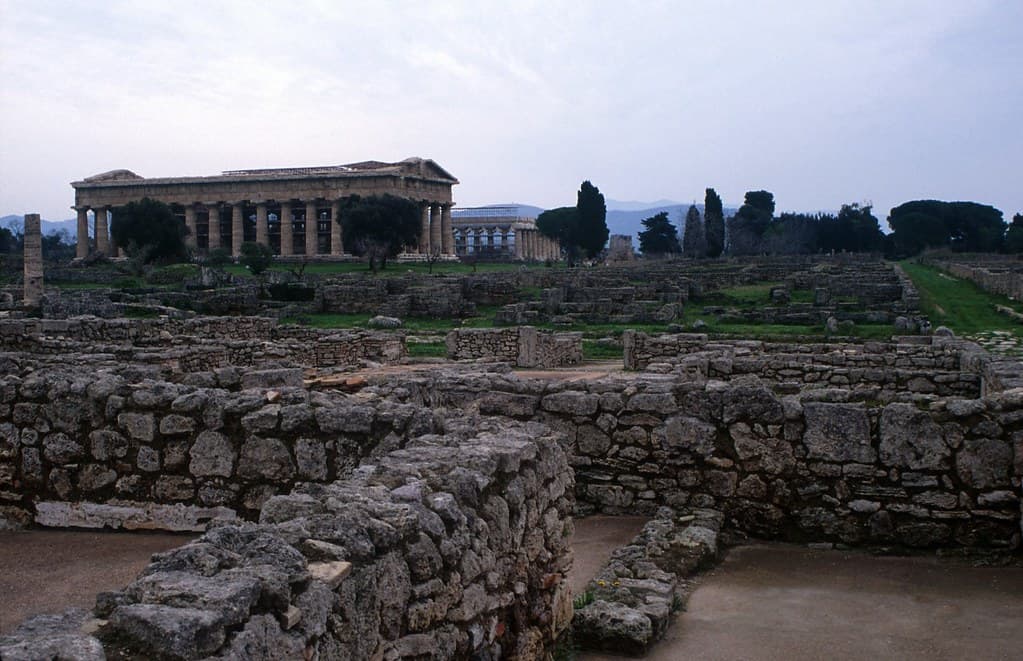
Paestum stands as one of the most complete Greek sacred sites outside Greece itself. Three honey-colored temples dedicated to Hera and Athena rise from the Campanian plain, their columns intact after twenty-six centuries. Here, the ancient worship of the divine feminine left its mark in stone, terracotta, and the haunting image of a young man diving into eternity.
On the edge of the Tyrrhenian Sea, where Greek colonists once landed on Italian shores, three temples stand in near-perfect preservation. Founded as Poseidonia around 600 BCE, this city became a major sanctuary for Hera, the goddess of women, marriage, and the cycles of life. Two grand temples were raised in her honor, while a third honored Athena, goddess of wisdom and spiritual consciousness.
What makes Paestum singular is not only its architectural survival but its atmosphere of emergence from hidden time. Abandoned in the Middle Ages and swallowed by malarial swamps, the temples spent centuries unknown to the wider world before their rediscovery in the eighteenth century. This period of forgetting has given them an unusual quality: they feel less like ruins than like places held in suspension, awaiting return.
The archaeological museum holds the Tomb of the Diver, a fifth-century burial whose painted ceiling shows a solitary figure leaping from a platform into water. Scholars debate whether this represents the soul's passage through death or something more literal, but the image has become an emblem of Paestum itself: a place where the boundary between worlds seems thin, where ancient questions about mortality and meaning still resonate in stone and pigment.
Context and lineage
Greek colonists from Sybaris founded Poseidonia around 600 BCE, establishing a major center for the worship of Hera. The city passed through Lucanian and Roman hands before its medieval abandonment and eighteenth-century rediscovery.
The colonists who founded Poseidonia came from Sybaris, itself a Greek colony in southern Italy. According to the ancient geographer Strabo, the sanctuary of Hera at the mouth of the nearby Sele River was established by Jason and his Argonauts during their mythic journey around the Mediterranean. While this origin story belongs to legend rather than history, it speaks to the antiquity that the Greeks themselves attributed to the site's sacred character.
The choice of Hera as the principal deity may reflect the assimilation of an existing local goddess cult. Archaeological evidence suggests that the site held sacred significance before Greek arrival, with an Italic mother goddess worshipped in the area. The Greeks incorporated this existing sanctity into their own religious framework, dedicating multiple shrines to Hera in her various aspects: as protector of marriage, guardian of women's rites of passage, and patron of fertility.
The city prospered for two centuries under Greek rule before falling to the Lucanians around 400 BCE. These Italic people maintained the sanctuary and continued worship at the temples. When Rome established a colony here in 273 BCE, renaming the city Paestum, religious practice continued alongside the new Latin presence. Greek and Roman gods coexisted until the Theodosian decrees ended pagan worship in 392 CE.
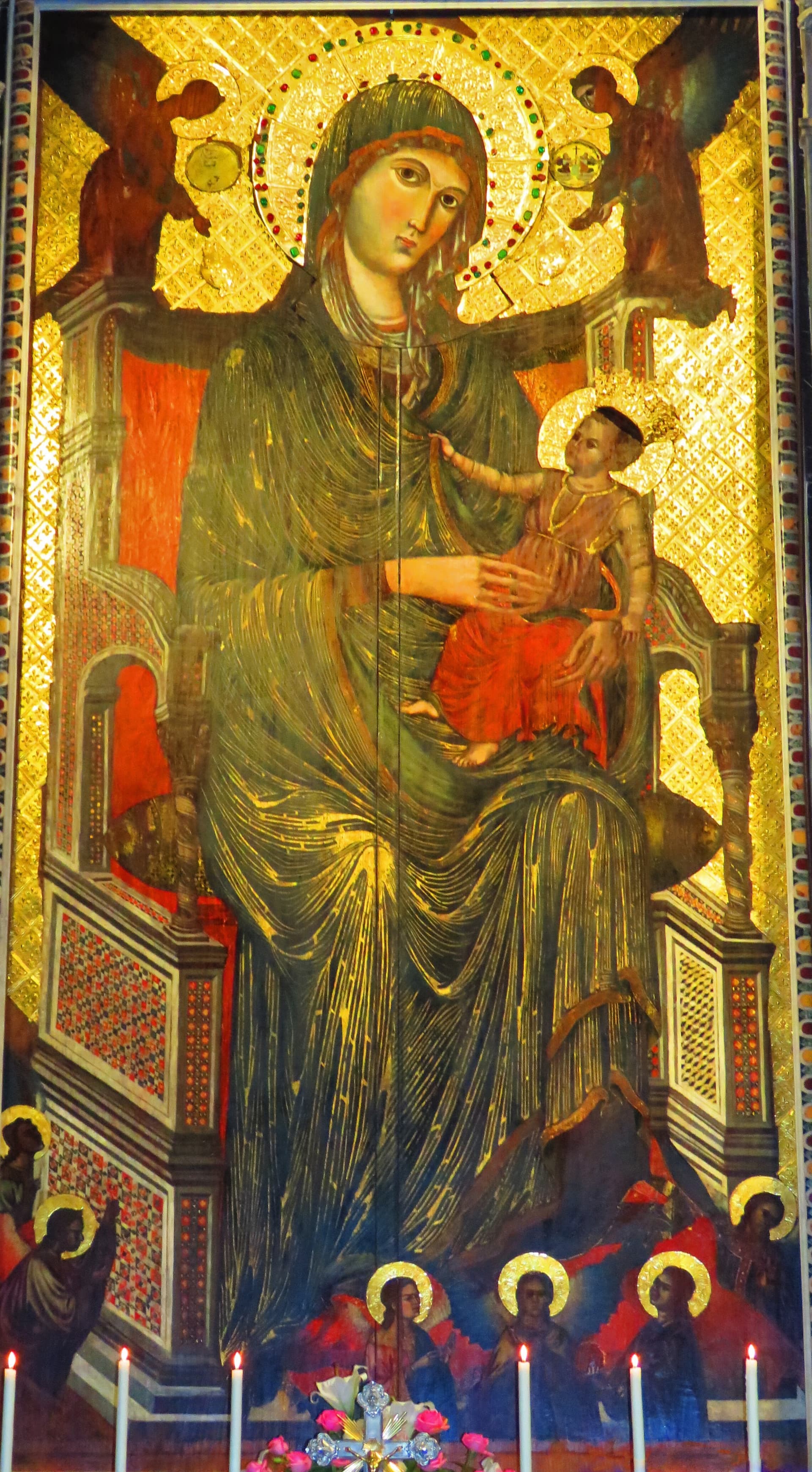
The worship of Hera at Paestum likely continues an older Italic mother goddess tradition. When Christianity arrived, the Temple of Athena was converted to a church, and a medieval village grew around it. The later cult of the Madonna del Granato (Madonna of the Pomegranate) in the region preserves iconographic connections to Hera, who was traditionally depicted holding a pomegranate.
Jason and the Argonauts
Legendary founders of the Heraion sanctuary according to Strabo
Mario Napoli
Italian archaeologist
Paola Zancani Montuoro
Italian archaeologist
Why this place is sacred
Paestum's quality of thinness derives from its remarkable preservation, its centuries of abandonment, and the liminal imagery of the Tomb of the Diver. Visitors from Goethe onward have reported feeling the sacred presence of the place despite the absence of active worship.
The concept of a thin place—where the boundary between the ordinary world and something greater grows permeable—finds unusual expression at Paestum. This is not a site of continuous veneration; the temples have stood empty of worship for over sixteen centuries. Yet the experience of visitors suggests that sacredness can persist beyond the rituals that first called it forth.
Goethe, arriving in 1787, wrote that upon entering the walls he felt 'all the religion of the place' and trod 'as on sacred ground.' This response has echoed through centuries of visitors who find themselves moved by something beyond the archaeological interest of the site. The temples' preservation is so complete that the imagination requires little effort to reconstruct the processions, the smoke of offerings, the crowds gathered for the annual festivals of the goddess.
The Tomb of the Diver contributes to this liminal atmosphere. The painted figure, suspended between the diving platform and the water below, has been read as an image of the soul's passage from life to afterlife—a visual meditation on the threshold between worlds. Whether or not this interpretation is correct, the image speaks to the concerns of those who built and worshipped here: questions of death, transition, and what lies beyond.
Paestum also occupies a geographical threshold. In antiquity, the Sele River marked the boundary between Greek and Etruscan territories. The city stood at the edge of Magna Graecia, the last outpost of Greek civilization before Italic lands began. This position at a cultural boundary may have intensified the site's spiritual significance, marking it as a place between worlds in multiple senses.
Paestum was founded as a sacred precinct dedicated primarily to Hera, with additional worship of Athena and possibly other deities. The temples served as dwelling places for the gods in earthly form, where offerings and sacrifices secured divine favor for the community.
The site evolved from Greek to Lucanian to Roman control, with worship continuing through these transitions. When the Theodosian decrees of 392 CE banned pagan practice, the Temple of Athena was converted to a Christian church. Medieval abandonment followed, then eighteenth-century rediscovery transformed the site from active sanctuary to archaeological monument.
Traditions and practice
Ancient worship at Paestum centered on animal sacrifice at outdoor altars, votive offerings of terracotta figurines and bronze weapons, and annual festivals including the weaving of a new peplos garment for Hera's cult statue. Fertility rituals drew couples seeking the goddess's blessing for conception.
The temples of Paestum functioned as dwelling places for the gods rather than as congregational spaces. The faithful gathered outside, at the great altars positioned before each temple's entrance, where priests performed sacrifices and offered prayers on behalf of the community.
Archaeological evidence reveals the devotions of individual worshippers. Thousands of terracotta statuettes have been recovered from sacred pits near the temples—small figures of women, often holding infants or symbols of fertility. Wedding cauldrons (gamikoi lebetes) left as offerings indicate that young women about to marry came to seek Hera's blessing. According to local tradition recorded by later visitors, couples struggling with infertility would visit the temple precinct at night, believing that conception within the sacred space would call forth the goddess's fertilizing influence.
At the Heraion sanctuary north of the city, women wove a new peplos garment each year to clothe the cult statue of Hera. This garment was carried in procession and presented to the goddess during her annual festival—a practice paralleling the Panathenaic procession in Athens.
The Temple of Athena received different offerings. Bronze weapons, both life-sized and miniature, have been found in the surrounding area, appropriate to a goddess associated with war and protection. Inscriptions record dedications of harvest portions to the goddess.
A modern Festival of Hera is held periodically, honoring the ancient goddess with ceremonies and cultural activities. This represents a revival or commemoration rather than continuous tradition.
Modern visitors engage with Paestum through walking the sacred precinct with attention and presence, allowing time for the scale and silence of the temples to make their impression. The museum merits unhurried viewing, particularly the Tomb of the Diver, which rewards sustained contemplation. Some visitors find that early morning or late afternoon, when crowds thin and light softens, offers the most conducive atmosphere for reflection.
Ancient Greek Religion - Cult of Hera
HistoricalHera was the primary deity of Paestum, receiving the dedication of two temples and at least eleven additional shrines within the sacred precinct. As goddess of women, marriage, fertility, and childbirth, she oversaw the major transitions of life. The Greeks likely assimilated her worship with an existing local mother goddess cult, suggesting continuity of sacred presence across cultural change.
Worship centered on animal sacrifice at outdoor altars, dedication of votive offerings including terracotta figurines and wedding cauldrons, and annual festivals featuring the weaving and procession of a new peplos garment for the goddess. Fertility rituals drew couples seeking conception under divine blessing.
Ancient Greek Religion - Cult of Athena
HistoricalAthena received worship at the northern temple, misnamed the Temple of Ceres by eighteenth-century archaeologists. As goddess of war, wisdom, and spiritual consciousness, she complemented Hera's domestic focus with protection and intellectual patronage.
Offerings of bronze weapons, both life-sized and miniature, surrounded the temple. Inscriptions record dedications of harvest portions to the goddess.
Pythagorean and Orphic Mysteries
HistoricalThe Tomb of the Diver's imagery has been interpreted as reflecting Pythagorean or Orphic beliefs about death and the afterlife. These mystery traditions, widespread in Magna Graecia, addressed the soul's journey through death and purification.
Mystery initiations, philosophical contemplation of mortality, and the use of music in rituals of spiritual transformation characterized these traditions.
Pre-Greek Italic Religion
HistoricalArchaeological evidence suggests that the site held sacred significance before Greek colonization. An Italic mother goddess cult may have been assimilated into Greek Hera worship, providing continuity of sacred presence across cultural change.
The nature of pre-Greek practice remains speculative, known only through traces visible in later Greek cult.
Experience and perspectives
Visitors encounter an open, sun-drenched landscape where three monumental temples stand against the Campanian sky. The scale and preservation create a sense of direct connection to the ancient world, while the relative quietude compared to major Italian sites allows for contemplative engagement.
Approaching Paestum, the first impression is of space and sky. Unlike the cramped archaeological sites of many Italian cities, the temples here stand in an open plain, their columns rising against a backdrop of distant mountains. The effect is of encountering structures that have not been crowded out by later development but remain in something like their original relationship to the landscape.
The three temples demonstrate the evolution of Greek Doric architecture over a century. The earliest, the First Temple of Hera from around 550 BCE, shows the archaic style with its widely spaced columns and pronounced entasis. The Temple of Athena, built fifty years later, represents a transitional moment. The Second Temple of Hera, completed around 450 BCE, achieves the classical proportions that would influence Western architecture for millennia.
Walking among these structures, visitors often report a sense of time becoming elastic. The stone has weathered to warm honey tones, and the afternoon light catches the fluting of columns in ways that photography struggles to capture. In spring, wildflowers and poppies surround the ruins, creating images that seem painted rather than real.
The archaeological museum offers a different quality of encounter. The Tomb of the Diver's painted slabs are displayed in a quiet room, and the intimacy of viewing them contrasts with the monumentality of the temples outside. The diving figure, barely a foot tall in the original, carries a weight of meaning that larger works might not achieve. Surrounding cases hold terracotta figurines by the hundreds—small images of women, perhaps votives left by worshippers seeking Hera's blessing for marriage or fertility.
The archaeological park stretches roughly north-south, with the Temple of Athena at the northern end and the two Temples of Hera at the southern end. The Roman forum and amphitheater lie between them. The museum is located at the site entrance. Most visitors spend two to three hours exploring both the ruins and the museum.
Understanding Paestum requires holding multiple perspectives in creative tension: the archaeological evidence, the religious traditions that shaped the site, speculative interpretations of its mystery cult connections, and the questions that remain unanswered after centuries of study.
Archaeological consensus recognizes Paestum as one of the finest examples of Greek temple architecture outside Greece. The three temples demonstrate the evolution of the Doric order from archaic to classical forms. Scholarly opinion now identifies the so-called Temple of Neptune as a second temple of Hera, correcting eighteenth-century misattribution. The dedication of two temples to the same goddess, along with numerous additional shrines, indicates the exceptional importance of Hera worship at this site.
The Tomb of the Diver represents the only surviving example of Greek Classical painting, giving it unique art-historical significance. Its interpretation, however, remains contested. Most scholars see the diving figure as eschatological, representing the soul's passage from life to death, but some argue for more literal readings related to athletics or symposium culture.
Evidence suggests that the Greeks assimilated an existing Italic mother goddess cult when they established their sanctuary of Hera. This indigenous tradition may have predated Greek colonization, with the site already holding sacred significance for local peoples. The later Christian cult of the Madonna del Granato, featuring the pomegranate associated with Hera's iconography, may preserve echoes of this ancient goddess worship in Christianized form.
Some interpreters see the Tomb of the Diver as evidence of Orphic or Pythagorean mystery traditions at Paestum. The image of diving into water connects to beliefs about the soul's purification and passage through death that were prevalent in Magna Graecia, where Pythagoras himself established his school. The stringed instruments depicted in the tomb's symposium scenes reinforce this connection, as music played a central role in Pythagorean beliefs about the soul's salvation. Some have suggested that the temple precinct was originally sacred to prehistoric earth-goddess cults, later overlaid with Greek religion.
Significant questions remain open. The identity of a second deity worshipped alongside Zeus at one temple has never been established. The precise meaning of the Tomb of the Diver continues to generate scholarly debate. Perhaps most significantly, eighty percent of the ancient city remains unexcavated, suggesting that major discoveries may still await future archaeologists. The nature of religious practice before Greek colonization remains largely speculative, known only through the traces of assimilation visible in later Greek cult.
Visit planning
Paestum lies 40 km south of Salerno in Campania, accessible by train, bus, or car. The site is open daily year-round except December 25 and January 1. Spring and fall offer the best conditions for visiting.
The Paestum train station, on the Naples-Reggio Calabria line, lies a short walk from the site entrance. Buses run from Salerno and Naples. By car, exit the A3 motorway at Battipaglia and follow the SS18 toward Paestum. Parking is free.
The town of Paestum offers small hotels and agriturismos (farm stays). Salerno provides a wider range of accommodation within easy day-trip distance.
Standard archaeological site etiquette applies: respect the ancient structures, remain on designated paths, and refrain from climbing on ruins. Photography is permitted for personal use. The open site offers little shade, so sun protection is advisable.
Paestum welcomes all visitors without restriction beyond the requirements of preservation. The temples and grounds remain accessible to anyone with an admission ticket, and no special dress or behavioral codes apply beyond common sense and respect for a heritage site.
The primary etiquette concern is physical preservation of the structures. Visitors should not climb on temple platforms, lean against columns, or touch carved surfaces. The stone has endured remarkably, but twenty-six centuries of weathering have left it vulnerable to additional wear. Walking paths wind through the site, and remaining on these protects both archaeological remains and unexcavated areas.
The open landscape makes practical preparation worthwhile. Little shade exists among the ruins, and summer temperatures can be intense. Comfortable walking shoes are essential for the uneven terrain, which also makes the site challenging for strollers or wheelchairs.
No dress code applies. Comfortable, weather-appropriate clothing and sturdy walking shoes are recommended.
Personal photography is permitted throughout the archaeological park and museum. Tripods may require special permission.
Visitors should not leave offerings, flowers, or other items at the temples or altars.
Climbing on structures is prohibited. Food and beverages are not permitted in the archaeological area. Touching carved or painted surfaces should be avoided.
Nearby sacred places
Sacred places within a half-day’s reach. Pilgrims often visit them together: walk one, stay for the other.


Key questions
What pilgrims usually ask
- Why is The Ruins of Paestum (Basilica of Hera) considered sacred?
- Explore Paestum's three ancient Greek temples dedicated to Hera and Athena. This UNESCO site preserves 2,600 years of sacred history in Campania, Italy.
- What should I wear at The Ruins of Paestum (Basilica of Hera)?
- No dress code applies. Comfortable, weather-appropriate clothing and sturdy walking shoes are recommended.
- Can I take photos at The Ruins of Paestum (Basilica of Hera)?
- Personal photography is permitted throughout the archaeological park and museum. Tripods may require special permission.
- How long should I spend at The Ruins of Paestum (Basilica of Hera)?
- Two to three hours allows sufficient time for both the archaeological park and the museum. Those with particular interest in archaeology or who wish to sit contemplatively with the temples may prefer a longer visit.
- How do you visit The Ruins of Paestum (Basilica of Hera)?
- The Paestum train station, on the Naples-Reggio Calabria line, lies a short walk from the site entrance. Buses run from Salerno and Naples. By car, exit the A3 motorway at Battipaglia and follow the SS18 toward Paestum. Parking is free.
- What offerings are appropriate at The Ruins of Paestum (Basilica of Hera)?
- Visitors should not leave offerings, flowers, or other items at the temples or altars.
- What etiquette should visitors follow at The Ruins of Paestum (Basilica of Hera)?
- Standard archaeological site etiquette applies: respect the ancient structures, remain on designated paths, and refrain from climbing on ruins. Photography is permitted for personal use. The open site offers little shade, so sun protection is advisable.
- What is the history of The Ruins of Paestum (Basilica of Hera)?
- The colonists who founded Poseidonia came from Sybaris, itself a Greek colony in southern Italy. According to the ancient geographer Strabo, the sanctuary of Hera at the mouth of the nearby Sele River was established by Jason and his Argonauts during their mythic journey around the Mediterranean. While this origin story belongs to legend rather than history, it speaks to the antiquity that the Greeks themselves attributed to the site's sacred character. The choice of Hera as the principal deity may reflect the assimilation of an existing local goddess cult. Archaeological evidence suggests that the site held sacred significance before Greek arrival, with an Italic mother goddess worshipped in the area. The Greeks incorporated this existing sanctity into their own religious framework, dedicating multiple shrines to Hera in her various aspects: as protector of marriage, guardian of women's rites of passage, and patron of fertility. The city prospered for two centuries under Greek rule before falling to the Lucanians around 400 BCE. These Italic people maintained the sanctuary and continued worship at the temples. When Rome established a colony here in 273 BCE, renaming the city Paestum, religious practice continued alongside the new Latin presence. Greek and Roman gods coexisted until the Theodosian decrees ended pagan worship in 392 CE.