Mt. Wu Tang Shan
Where the Perfected Warrior attained immortality and softness learned to overcome hardness
Understand sacred places, explore living traditions, and learn how to engage respectfully with Pilgrim Map.
Access has not been verified. Check current local guidance before planning a visit.
Danjiangkou City, Hubei, China

Visit essentials
A quick read before you go
- Duration
- Minimum two days to see major sites.
- Access
- Danjiangkou City, Hubei Province.
Overview
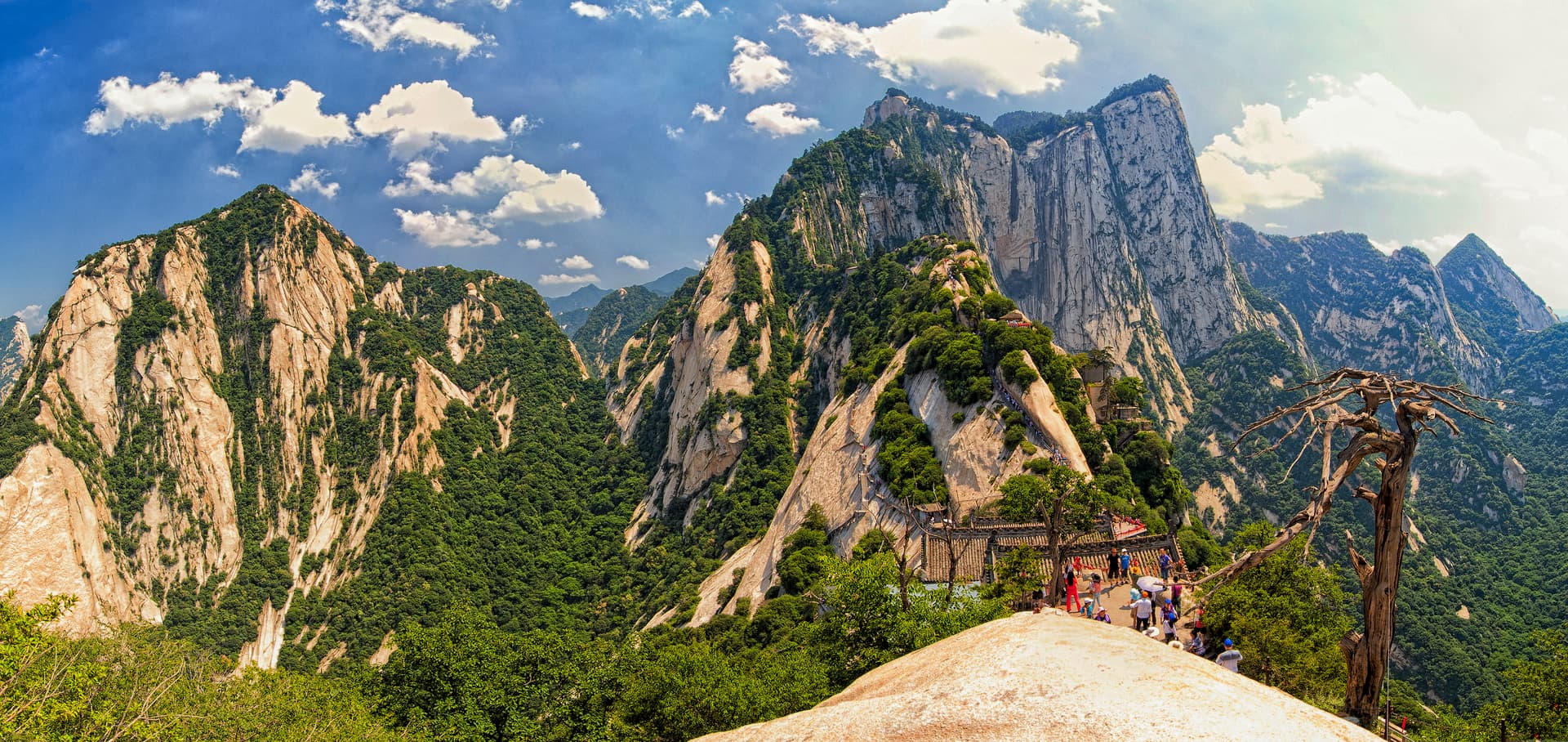
Wudangshan means 'none are worthy to be its equal.' In Taoist cosmology, its seventy-two peaks form a natural mandala where heaven and earth communicate, with 1,612-meter Heavenly Pillar Peak as the axis.
Taoist tradition places Zhenwu's renunciation, forty-two-year cultivation, enlightenment, ascension, and appointment by the Jade Emperor as guardian of the northern heavens here; his summit cultivation site became the holiest point. Believing Zhenwu aided his rise, Ming emperor Yongle committed three hundred thousand workers for twelve years to thirty-three complexes, nine palaces, seventy-two cliff temples, and thirty-six nunneries aligned by Taoist geomancy. The summit's gilded-bronze Golden Hall, weighing over eighty tons, was made in Beijing and transported here in 1416.
UNESCO's 1994 inscription recognises the ensemble as among the finest surviving Taoist architecture.
In the parallel martial tradition, legendary or semi-legendary Taoist immortal Zhang Sanfeng watched a crane fight a snake and derived tai chi's principle that yielding softness overcomes hard force. His historicity remains debated, but Wudang schools still teach internal martial arts as Taoist spiritual practice.
Why this place is sacred
The thinness of Wudangshan operates through alignment. The seventy-two peaks bow toward the central summit like courtiers before a throne, a formation that Taoists read as the landscape recognizing divine sovereignty. The Ming temples were positioned to mirror this natural geometry, creating a built environment that amplifies rather than contradicts the mountain's own structure.
The ascent of the mountain enacts the Taoist path of cultivation. Climbing through successive temples, each positioned at a specific energetic point in the landscape, the visitor moves from worldly engagement at the base toward transcendent realization at the summit. This is not metaphor overlaid on geography but the original design intention: Emperor Yongle's architects positioned each building according to Taoist geomantic principles, creating a landscape that teaches by being walked.
The martial artists practicing in temple courtyards at dawn embody the integration that Taoism teaches. Their movements are simultaneously combat technique, meditation, and prayer. Tai chi, born on this mountain from the observation of a snake deflecting a crane's strikes, translates the Taoist principle of wu wei, effortless action, into physical form. To watch a practitioner move through a form in the morning mist is to see philosophy made flesh.
At the Golden Summit, above the clouds, the boundary between human effort and cosmic pattern becomes indistinct. The Golden Hall, cast in bronze and gilded in gold, catches the first light. The mountain below disappears into mist. The sensation of standing at a point where the distinction between human and cosmic dissolves is what Taoists have sought here for over thirteen hundred years.
The Dragon Head Incense Burner at Nanyan Temple extends over a sheer cliff, and pilgrims who light incense there offer their devotion literally over the abyss. The gesture captures something essential about Wudang: the sacred is not found in safety but in the willingness to approach edges.
Wudangshan has been a Taoist sacred mountain since at least the Tang Dynasty in the seventh century CE, dedicated to the worship of Zhenwu, the Perfected Warrior. The Ming Dynasty construction transformed an existing sacred landscape into a comprehensive architectural-cosmological complex.
The mountain's Taoist significance extends from the Tang Dynasty through the Ming construction period, which transformed it from a regional sacred mountain into one of the most important Taoist sites in China. The Cultural Revolution caused significant damage; restoration has been ongoing since the 1980s. The UNESCO inscription of 1994 recognized the architectural complex. Contemporary Wudang has become internationally known through martial arts, bringing a new dimension to its significance.
Experience and orientation
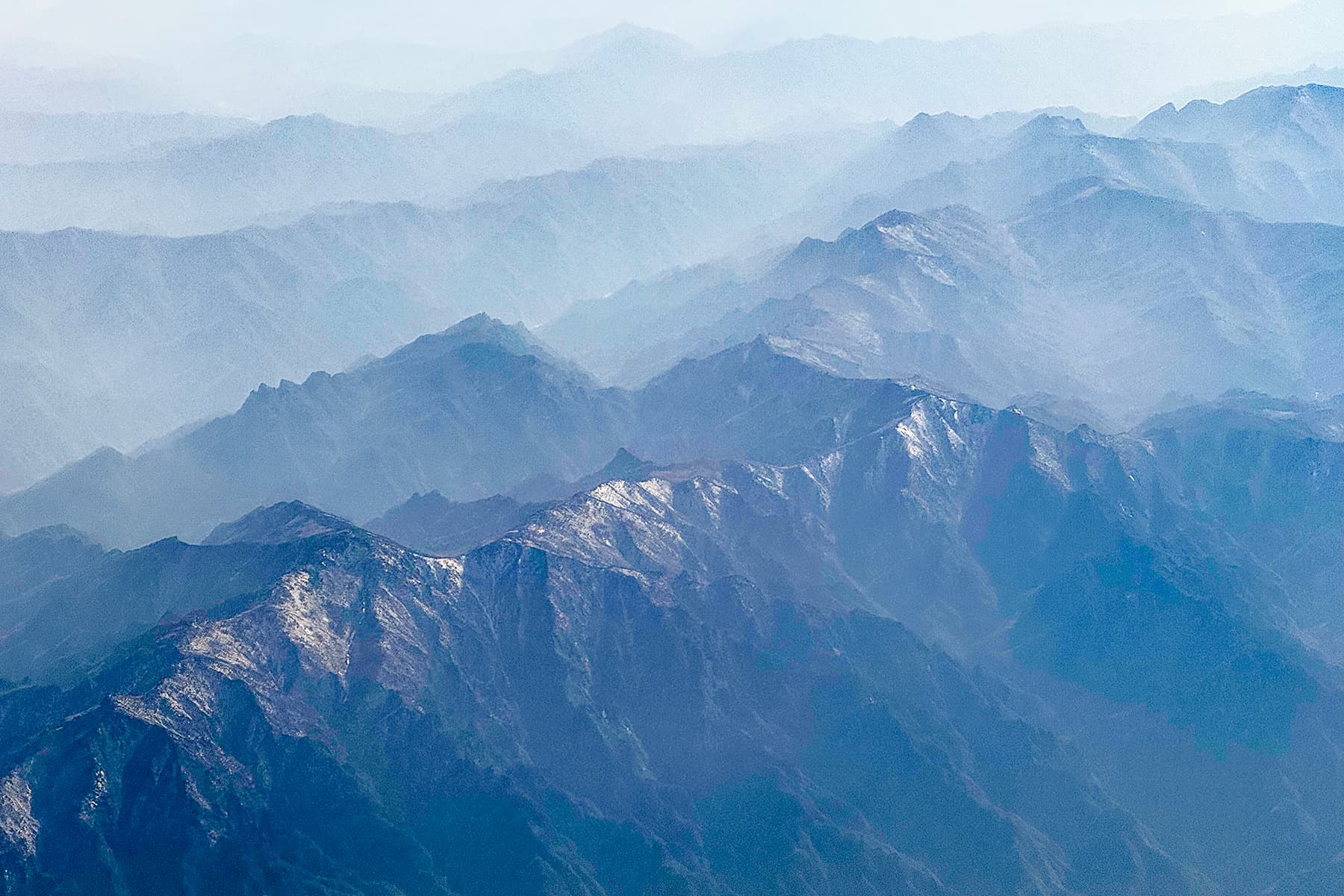
Approaching Wudangshan, the scale of the enterprise becomes clear gradually. The mountain range spreads across eighty kilometers of terrain, the temples distributed along peaks and ridges rather than concentrated in a single valley. The experience is dispersal rather than density, each temple occupying its own position in the landscape's natural geometry.
Purple Cloud Temple, the largest and best-preserved, is the main center of worship and administration. Built in 1413, its halls stretch along the mountainside in a series of ascending courtyards. The architecture blends palace and temple styles, reflecting Emperor Yongle's intention to create something that honored both divine and imperial authority. Taoist monks conduct daily services here, their chanting audible from the courtyards.
The climb to the Golden Summit is the mountain's defining physical experience. Whether ascending by stone steps or taking the cable car, arrival at the top produces a shift. The Golden Hall holds the primary Zhenwu statue. At sunrise, the gilded surface catches the first light while the valley below remains in shadow. The contrast between the gold above and the darkness below is the mountain's most concentrated visual teaching.
Nanyan Temple, built on a sheer cliff face, houses the Dragon Head Incense Burner, a stone dragon head extending over the precipice. Pilgrims who light incense here lean over a drop of hundreds of meters. The act is devotional, reckless, and beautiful.
At dawn, Taoist monks and martial arts practitioners emerge into temple courtyards. The tai chi and sword forms they practice in the morning mist are not performances but daily cultivation. The movements are slow, deliberate, and continuous, the body tracing patterns that are simultaneously martial technique and meditation. Watching is its own form of practice.
Allow at least two days; three to four supports hiking between temples. Begin at Purple Cloud Temple, consider a summit-guesthouse night for sunrise at the Golden Hall, and visit Nanyan Temple for its cliff-face setting. The long, steep mountain path cannot be rushed.
Context and lineage
A crown prince of the ancient kingdom of Jingle renounced his throne to cultivate the Tao on Wudang Mountain. After forty-two years of arduous practice, he attained enlightenment and ascended to heaven as the deity Zhenwu, the Perfected Warrior. The Jade Emperor appointed him guardian of the northern heavens. His cultivation site at the summit became the holiest point.
Zhang Sanfeng, a Taoist immortal of uncertain historicity, observed a crane fighting a snake on Wudang Mountain. From the snake's yielding, coiling movements that deflected the crane's hard strikes, he derived the principle of softness overcoming hardness. This observation became the foundation of tai chi and the internal martial arts. Zhang Sanfeng is said to have lived over two hundred years. Emperor Yongle sent envoys to find him on Wudang but failed.
The Taoist lineage at Wudangshan extends from the Tang Dynasty through the Ming imperial construction to the present monastic community. The martial arts lineage traces from Zhang Sanfeng through generations of Wudang practitioners to contemporary schools. Both continue as living traditions.
Zhenwu (Xuantian Shangdi)
deity
The Perfected Warrior, guardian of the northern heavens, who attained immortality on Wudang Mountain after forty-two years of cultivation. The mountain's primary object of worship.
Emperor Yongle (Zhu Di)
patron
Ming Dynasty emperor who commissioned the massive temple building program with 300,000 workers over twelve years, believing Zhenwu had assisted his rise to power.
Zhang Sanfeng
legendary_founder
Legendary or semi-legendary Taoist immortal credited with founding tai chi and the internal martial arts on Wudang Mountain. His historicity is debated by scholars, but the tradition he represents is foundational.
Traditions and practice
Zhenwu worship ceremonies involve incense, prostrations, and scripture chanting. Taoist ordination rituals mark the entry of new monks. Seasonal jiao rituals of cosmic renewal renew the relationship between the mountain community and the cosmos. Internal alchemy meditation retreats cultivate the practitioner's inner energies. Mountain circumambulation pilgrimages visit temples in prescribed order. The Dragon Head Incense burning at Nanyan Temple is a devotional act performed over the cliff edge.
Daily morning and evening liturgy continues in major temples. Tai chi and martial arts practice at dawn is a daily rhythm. Incense offering and prayer at Zhenwu altars take place throughout the complex. The annual Zhenwu birthday festival on the third day of the third lunar month features large-scale ceremonies. Martial arts demonstrations and competitions are regularly held. Qigong practice groups meet on the mountain. Temple fairs during Chinese New Year and other holidays draw large numbers.
Arrive at any temple courtyard before dawn and watch the martial arts practice. The practitioners are not performing for you; you are permitted to witness their daily cultivation. The slow, continuous movement in the morning mist is the mountain's central teaching made visible.
Climb to the Golden Summit and stand before the Golden Hall at sunrise. The gilded bronze catches the first light while the valleys remain in shadow. Allow the contrast to register.
Visit Nanyan Temple and stand near the Dragon Head Incense Burner. Whether or not you light incense there, the gesture of devotion over the abyss communicates something about what Taoist practice demands.
Walk the pilgrimage path between temples rather than taking shuttle buses where possible. The path itself is the practice, each temple positioned at a specific energetic point in the landscape. Rushing between them by vehicle defeats the design.
Taoism (Zhenwu Worship)
ActiveWudangshan is one of the Four Sacred Mountains of Taoism, primarily associated with Zhenwu, the Perfected Warrior who attained immortality here after forty-two years of cultivation. The Ming Emperor Yongle built the temple complex as a cosmic diagram in stone, positioning buildings according to Taoist geomantic principles.
Daily Taoist liturgy and scripture chanting. Worship and offerings at Zhenwu altars. Incense burning at the Golden Summit. Pilgrimage ascent through successive temples. Internal alchemy meditation. Seasonal ceremonies including Zhenwu's birthday festival.
Wudang Internal Martial Arts
ActiveWudangshan is traditionally the birthplace of tai chi and the internal martial arts, attributed to Zhang Sanfeng. Wudang martial arts emphasize internal energy cultivation, softness overcoming hardness, and alignment with Taoist yin-yang principles. The tradition distinguishes itself from external Shaolin martial arts.
Daily practice of tai chi, bagua, xingyi, and Wudang sword forms. Internal energy cultivation through qigong. Meditation integrated with movement practice. Martial arts training programs for monks and lay practitioners.
Perspectives and open questions
Wudangshan invites engagement through Taoist theology, architectural history, martial arts philosophy, and direct physical experience. The mountain holds all these registers without contradiction.
Scholarly perspective
Historians and art historians recognize Wudangshan as one of the finest surviving examples of Ming dynasty imperial Taoist architecture, representing the political and spiritual ambitions of Emperor Yongle. The UNESCO inscription emphasizes the exceptional integration of architecture with the natural landscape according to Taoist cosmological principles. Scholars debate the historicity of Zhang Sanfeng, with most considering him a legendary or semi-legendary figure whose association with Wudang was solidified during the Ming dynasty.
Living and traditional perspectives
For Taoist practitioners and Chinese pilgrims, Wudangshan is a living sacred landscape where Zhenwu cultivated and attained immortality. The mountain's peaks, caves, and springs are nodes of cosmic energy. The martial arts tradition is inseparable from spiritual cultivation: tai chi and internal kung fu are moving meditation and pathways to longevity. Pilgrims ascend to accumulate merit, seek healing, and draw closer to the Tao.
Alternative interpretations
Some practitioners are drawn by the mountain's reputation as a center for qigong and internal energy cultivation, seeking health benefits and spiritual opening through its martial arts traditions. The mountain is sometimes included in theories about Chinese sacred geography and dragon vein feng shui networks.
Open questions
Was Zhang Sanfeng a historical person, and if so, when did he live? What pre-Tang Taoist practices were conducted on the mountain? How did the mountain's feng shui geography influence the specific placement of Ming temples? What internal alchemy texts and practices were transmitted exclusively within Wudang lineages? These questions remain open.
Plan your visit
Access and arrival
Danjiangkou City, Hubei Province. High-speed train to Wudangshan Station from Wuhan takes approximately four hours, from Xi'an approximately two hours. Shuttle buses from base area to mountain temples. Cable car to Golden Summit area. Internal shuttle buses between major temple complexes. Entry fees: 235 CNY peak season, 140 CNY off-season. Shuttle bus 100 CNY. Cable car 90 CNY one-way. Golden Summit 27 CNY additional. Mobile phone signal is available in developed areas.
Guesthouses and hotels at various points on the mountain, from budget to mid-range. Summit guesthouse available for sunrise viewing. Hotels in the base town area. Martial arts schools offer accommodation for training visitors. Budget to mid-range options predominate.
Respectful visit
Modest clothing with shoulders and knees covered. Sturdy hiking shoes essential for the mountain paths and stone steps. Layers recommended as temperature drops significantly with altitude.
Generally permitted in outdoor areas and at most temples. Interior photography restricted or prohibited in some sanctuaries and during ceremonies. Ask before photographing monks or martial arts practitioners. Drone use prohibited.
Incense can be purchased at temple shops. Light incense in designated outdoor areas, not inside halls. Offerings of fruit or other items may be placed at altars. Do not use excessively large incense bundles.
Do not touch or climb on statues or architectural elements. Do not interrupt ceremonies or martial arts practice. Remove hats in main halls. Do not point at deity statues. Follow designated paths in restricted areas. No smoking in temple areas.
Treat Taoist ceremonies and martial cultivation as living practice, not entertainment. Short-term tai chi and martial-arts classes are available through mountain schools for direct participation.
Current practical details
Address
Wudang Mountain, Danjiangkou, Shiyan, China, 442715
Hours, fees, and access can change — verify on the official source before you travel. Practical details last checked Jun 2026.
Location
Map loads as you approach this section.
Pilgrim reflections
A portrait of encounter, not a score
Pilgrims describe what they felt, how present they could become, and whether the place would shape a journey. There are no stars and no ranking of traditions.
No reviewed reflections yet
The first pilgrims can help describe the character of being here.
Share a reflection
Available after an account-backed “Been there.” Every reflection is reviewed before publication.
Nearby sacred places
Explore other sacred places in the region. Proximity does not establish access or travel time; check each place’s guidance.

Pilgrim glossary
- Mandala
- A symbolic diagram of the cosmos used in meditation and ritual.
Share a photo
Help visitors recognize Mt. Wu Tang Shan. Every submission is reviewed before publication.