Montsegur
Where over 200 Cathars chose the flames rather than betray their faith
Understand sacred places, explore living traditions, and learn how to engage respectfully with Pilgrim Map.
Access has not been verified. Check current local guidance before planning a visit.
Montségur, Ariège, France
Read the sources
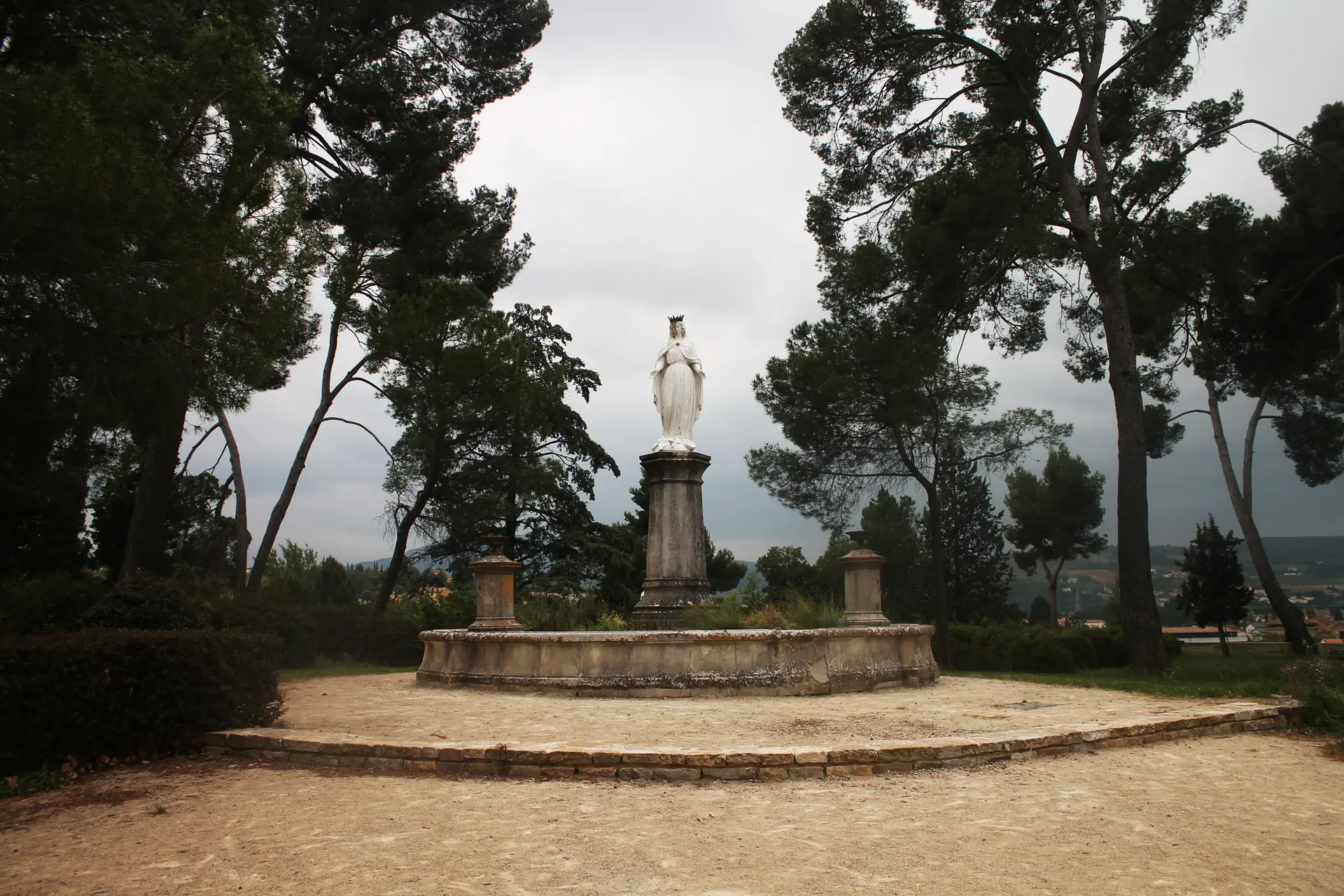
Image of Montsegur. Image source · CC-BY-SA-3.0
Visit essentials
A quick read before you go
- Duration
- Two to four hours including the climb, ruins exploration, and Field of the Burned.
- Etiquette
- This is a martyrdom site; approach with appropriate gravity.
Overview
Montségur rises from the Pyrenean foothills like a ship's prow aimed at heaven: a rock fortress 1,200 meters high and the last major stronghold of a faith the Catholic Church was determined to destroy.
Cathars called themselves Good Christians. They held that the material world was evil and made by a false god, while the true God was pure spirit; they rejected Church sacraments, hierarchy, and wealth. Their perfecti were radically ascetic—vegetarian, celibate, and devoted to prayer. Cathar presence grew across twelfth-century southern France until the Church declared them heretics and launched a crusade.
By 1243, Montségur was the last significant Cathar refuge, sheltering several hundred believers and the highest-ranking perfecti. A crusading army of 10,000 surrounded it in May 1243 for an eleven-month siege. In February 1244, defenders were offered survival if they renounced their faith and given two weeks. During that interval, twenty-one non-perfecti knowingly received the consolamentum, the Cathar spiritual baptism committing them to the perfecti's path.
On March 16, 1244, approximately 210-215 Cathars descended to a prepared pyre. They were not tied to stakes but walked in voluntarily and, according to some accounts, singing.
Today's fortress ruins were built afterward by the French royal forces that took control. At the base, a simple stele marks the Field of the Burned, Prat dels Cremats. People gather each March 16 to honor the dead and each summer solstice to witness the castle's solar alignments.
Why this place is sacred
What makes Montségur thin is not architecture or accumulated prayer in the traditional sense, but the concentrated presence of absolute commitment. Over two hundred people faced the question that most of us never face: Would you die for your beliefs? They answered yes.
The Cathars' theology is largely lost, known only through the writings of their enemies. What survives is clearer than any doctrine: their willingness to meet death rather than deny what they believed true. The perfecti who walked into the flames had taken vows that bound them to nonviolence and truth-telling. They could not lie their way to survival even if they wished to.
The twenty-one who took the consolamentum during the truce period deserve particular contemplation. They were not previously committed to the perfecti's path; the burning applied only to the perfecti. Yet knowing what awaited, they chose to join them. Some were defenders who had been promised safety if they surrendered. They walked away from life.
The climb to the ruins is steep enough to be a pilgrimage in itself. The physical effort mirrors the spiritual ascent the Cathars represented—away from material comfort, toward whatever light they believed awaited. At the summit, the ruins offer commanding views of the landscape that witnessed their end.
The Field of the Burned is below, at the mountain's base. A stone memorial marks the approximate location of the pyre. The ground itself seems different there—saturated with event, heavy with meaning. Visitors often weep.
The solar alignments at summer solstice—light passing through specific windows at sunrise—may or may not have been intentional in the original Cathar fortress. The current ruins were built later. But the phenomenon draws seekers who find in the light a symbol of the spiritual illumination the Cathars sought.
The castle was rebuilt around 1204 by Raymond de Péreille as a refuge for Cathars. From 1233, it served as the formal headquarters (domicilium et caput) of the Cathar church.
The original Cathar fortress was destroyed after the siege. The current ruins were built by French royal forces. The site has become a pilgrimage destination for those honoring the Cathar memory and for esoteric seekers drawn to its associations with the Holy Grail and hidden knowledge.
Experience and orientation
The village of Montségur clusters at the mountain's base. From here, a trail ascends 500 vertical meters to the summit. The climb takes thirty to forty-five minutes for fit walkers, longer for those who need to pace themselves. The path is steep, sometimes rocky, occasionally requiring hands. This is appropriate: the difficulty is part of the meaning.
As you climb, the fortress becomes visible above—walls seeming to grow from the rock itself. The final approach is the steepest. Emerging onto the summit, you enter through walls that have stood since the thirteenth century—not the walls the Cathars defended, but walls built on the same footprint.
The interior is sparse: foundations, partial walls, the famous windows that frame the solstice sunrise. Stand at the eastern window in June and watch light pierce the space. Or stand there any day and consider what it meant to defend this place, knowing you would die.
Descend the way you came, or take the path that leads toward the Field of the Burned. A simple stele marks the site: 'Als Catars, als martirs del pur amor crestian' (To the Cathars, to the martyrs of pure Christian love). The pyre was here. Over two hundred people met their deaths on this ground.
The emotions visitors report are varied: grief, awe, peace, anger at the Church that destroyed them, admiration for those who refused to yield. All are valid responses to a site where the ultimate questions were answered with fire.
The village of Montségur provides parking and basic facilities. The climb begins at the edge of the village. The ruins are at the summit. The Field of the Burned memorial is at the mountain's base, accessible by a short walk from the village.
Context and lineage
The Cathars emerged in southern France in the twelfth century, preaching a dualist Christianity that saw the material world as evil. Their perfecti lived lives of radical simplicity; their believers (credentes) could live normal lives but hoped to receive the consolamentum before death.
The Catholic Church condemned them as heretics. In 1209, Pope Innocent III launched the Albigensian Crusade, beginning forty years of war that devastated southern France. By the 1240s, the crusade had largely succeeded. Montségur remained as the final significant Cathar refuge.
Raymond de Péreille had rebuilt the castle around 1204. From 1233, it served as the formal headquarters of the Cathar church, housing the bishop and several hundred believers. In 1242, a group from Montségur participated in an attack on Inquisition officials at Avignonet, killing eleven inquisitors. This precipitated the final siege.
The siege began in May 1243, led by Hughes des Arcis. Ten thousand men surrounded the mountain. The defenders numbered perhaps six hundred. The siege lasted eleven months. In February 1244, after treachery allowed crusaders to capture an outer position, surrender was negotiated.
The terms were surprising: those who renounced their faith would be spared; the perfecti and any who would not renounce would be burned. A two-week truce was granted for reflection. During this time, twenty-one people who had been offered safety instead received the consolamentum, joining the perfecti's fate.
On March 16, 1244, the burning occurred. A legend holds that four Cathars escaped with a treasure—possibly the Holy Grail, possibly sacred texts, possibly something else entirely. The legend has never been substantiated.
No Cathar tradition survives; the crusade was too thorough. The memory is preserved by historians, spiritual seekers, and those who find in the Cathars a model of faith unto death.
Bertrand Marty
Cathar Bishop
Raymond de Péreille
Lord of Montségur
The Consoled of March
Voluntary martyrs
Traditions and practice
Cathar practices included the consolamentum (spiritual baptism), vegetarianism, celibacy for perfecti, rejection of material possessions, and commitment to truth-telling and nonviolence.
The site draws pilgrims and tourists. March 16 commemorations honor the martyrs. Summer solstice gatherings observe the solar alignment through the castle windows. Individual visitors come for reflection, meditation, and connection to a faith that chose death over betrayal.
Approach as pilgrimage. The climb is part of the meaning. At the ruins, stand where the Cathars stood. At the Field of the Burned, honor those who died. Consider what you would die for—or whether that question has ever touched you.
Catharism
HistoricalMontségur was the headquarters and final stronghold of the Cathar church. The mass martyrdom of March 16, 1244, effectively ended organized Catharism. The site has become a memorial to a faith destroyed.
The Cathars practiced the consolamentum (spiritual baptism), vegetarianism, celibacy for perfecti, rejection of material possessions, and commitment to truth-telling and nonviolence. No living tradition survives.
Perspectives and open questions
Montségur can be understood as site of mass martyrdom, as final chapter in a religious war, as pilgrimage destination for those seeking faith's ultimate expression, or as mystery site with possible esoteric significance.
Scholarly perspective
Historians recognize Montségur as the effective end of organized Catharism. The siege and burning are well-documented. The current ruins date from after the Cathar period, built by royal forces on the destroyed fortress. The solar alignments may be coincidental.
Living and traditional perspectives
Catholic tradition views the crusade as necessary suppression of heresy. Alternative historical views see the Cathars as peaceful Christians destroyed by a corrupt church. Neither perspective fully captures the complexity.
Alternative interpretations
Esoteric traditions connect Montségur to the Holy Grail, suggesting the escaped Cathars carried sacred treasures or knowledge. The solar alignments are sometimes interpreted as evidence of astronomical knowledge. These theories remain popular despite lack of evidence.
Open questions
What the four escaped Cathars may have carried away. The specific beliefs and inner practices of the Cathar perfecti. Whether the solar alignments were intentional in the original (destroyed) fortress. What the Cathars were singing as they entered the flames.
Plan your visit
Access and arrival
Limited accommodations in the village; more options in Foix and Mirepoix.
Respectful visit
Sturdy walking clothes and footwear appropriate for a mountain climb.
Permitted. The Catalan flag and memorial stele are common subjects.
None traditional.
Do not disturb the ruins; stay on marked paths where indicated. The site may close in bad weather.
The climb is demanding; good footwear essential. Weather can change rapidly. The site may close in bad conditions.
Current practical details
Address
09300 Montségur, France
Hours, fees, and access can change — verify on the official source before you travel. Practical details last checked Jun 2026.
Location
Map loads as you approach this section.
Pilgrim reflections
A portrait of encounter, not a score
Pilgrims describe what they felt, how present they could become, and whether the place would shape a journey. There are no stars and no ranking of traditions.
No reviewed reflections yet
The first pilgrims can help describe the character of being here.
Share a reflection
Available after an account-backed “Been there.” Every reflection is reviewed before publication.
Nearby sacred places
Explore other sacred places in the region. Proximity does not establish access or travel time; check each place’s guidance.

References
Sources consulted for this page. Source categories describe the publication, not a guarantee that every claim is verified. Traditional accounts and outside interpretations may differ.
- 01Fortress of Montsegur - Pyrénées Cathares Tourism — Pyrénées Cathares TourismofficialOfficial regional tourism
- 02Montségur and Catharism — Montsegur.frofficialOfficial site resource
- 03Château de Montségur - Wikipedia — Wikipedia contributorsencyclopediaHistorical overview
- 04Siege of Montségur - Wikipedia — Wikipedia contributorsencyclopediaDetailed siege history
Photo gallery
3 curated photos
Share a photo
Help visitors recognize Montsegur. Every submission is reviewed before publication.