Chapel of Saint-Salvayre
A rough stone chapel at the end of a difficult road, where unusual energy is said to pulse from altar and pillar
Understand sacred places, explore living traditions, and learn how to engage respectfully with Pilgrim Map.
Access has not been verified. Check current local guidance before planning a visit.
Alet-les-Bains, Aude, France
Read the sources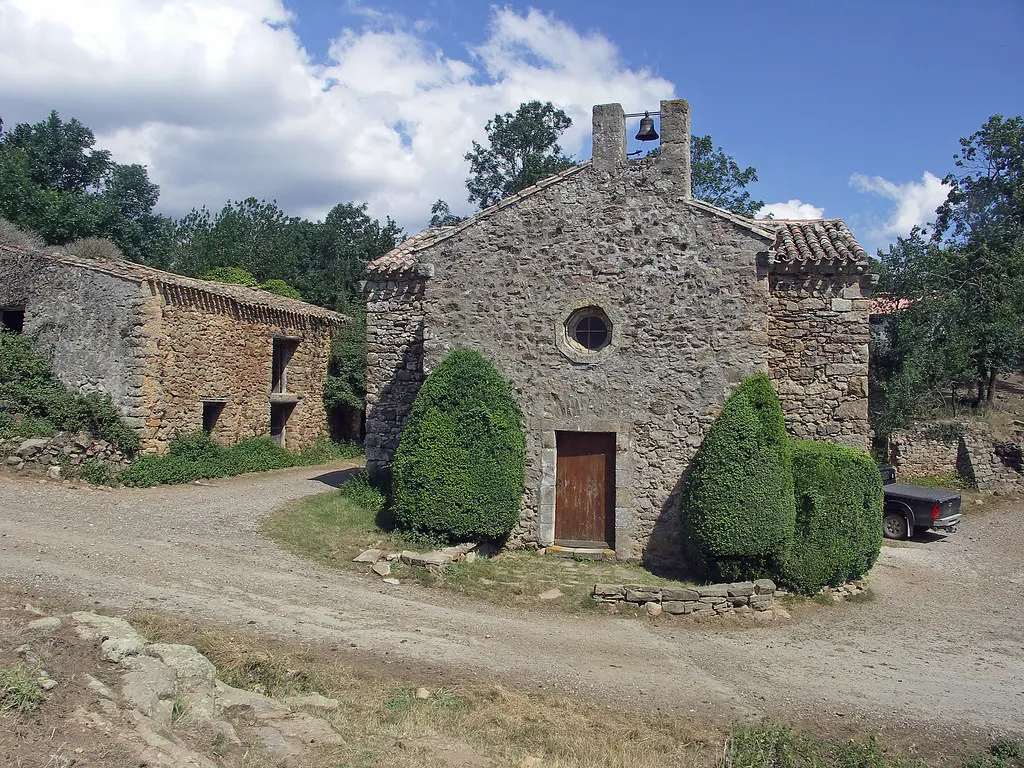
Image of Chapel of Saint-Salvayre. Image source
Visit essentials
A quick read before you go
- Duration
- 30-60 minutes plus difficult drive
- Access
- 6km from Alet-les-Bains on rough, narrow road.
Overview
Reached by six kilometres of narrow, rough track climbing from Alet-les-Bains, Saint-Salvayre is a small cruciform chapel of rough stone with a tiny Catalan bell tower and corner sculptures salvaged from long-destroyed churches. The climb rewards visitors with views across the Aude's terrain. Inside stand a stone altar and a peculiar one-metre pillar from which visitors report an energy that seems to pulse; the sensation is reported, not established.
The chapel lies on a line from Carcassonne to Rennes-le-Château within what some call the sacred geometry of 'Grail country'. Nearby are a possibly druidic menhir later Christianized with a now-lost cross and a hill called 'The Dead Man'. Its name, Holy Saviour, has inspired an unsupported legend that Jesus traveled here with Mary Magdalene, died, and was buried nearby. Difficult access preserves an untouched atmosphere and filters out casual visitors.
Why this place is sacred
What makes this place thin is harder to document than many sites. There are no authenticated miracles, no papal declarations, no UNESCO recognition. What there is: a remote chapel, an altar and pillar that many say pulse with energy, a location on the geometry connecting Carcassonne to Rennes-le-Château.
The Romanesque sculptures on the corners came from somewhere else—perhaps the abbey at Alet, now ruined. Their presence at Saint-Salvayre is rescue, preservation, repurposing. They suggest that this site was deemed worth decorating with salvaged sacred art.
The reported energy resists analysis. Skeptics dismiss it; sensitives confirm it. What is certain is that many visitors over many years have described similar sensations. Whether this represents genuine phenomenon or primed expectation in a suggestive setting, the consistency of reports is itself significant.
The legends of Jesus and Mary Magdalene cannot be verified and probably reflect modern alternative spirituality more than ancient tradition. But they point to something real: this region, with its Cathar history and its mystery-laden landscape, invites alternative interpretation. Saint-Salvayre fits the pattern.
Chapel dedicated to Holy Saviour; possibly earlier pre-Christian significance
Medieval origin (Romanesque elements). Sculptures from destroyed churches. Limited documented history.
Experience and orientation
Begin in Alet-les-Bains, the spa town with its ruined abbey. Find the road to Saint-Salvayre—it climbs inexorably, narrows alarmingly, challenges vehicles. This is not casual access. The difficulty is part of the experience.
Arrive at the tiny hamlet. Park. The chapel dominates what little settlement exists. Rough stone walls, a small bell tower, Romanesque corbels on the corners—sculptures that came from elsewhere, perhaps the abbey you passed below.
Enter. The space is small, rough, authentic. The floor is possibly Romanesque stone; the altar is an uncharacteristic single slab. Near the entrance, a peculiar stone pillar rises about one meter. It is from this pillar and this altar that visitors report sensing energy—something that the rough walls do not diffuse but seem to concentrate.
Sit with what you sense. This is not a space for hurried tourism. The difficult road filtered out the casual. Those who arrive have earned the encounter.
Come prepared for difficult access, uncertain facilities, and an experience that may be merely atmospheric or may be something more.
Context and lineage
The chapel's documented history is limited. Romanesque elements suggest medieval origin. Sculptures came from destroyed churches, possibly the abbey at Alet. The location on a line from Carcassonne to Rennes-le-Château places it in the region's sacred geometry.
Part of Aude's sacred landscape including Notre-Dame de Marceille, Rennes-le-Château, Alet-les-Bains.
Traditions and practice
Christian worship (historical)
Pilgrimage visits, energy sensing, contemplation, photography
Allow time for the difficult drive. Enter without hurry. Sit with the altar and pillar. Notice what you notice.
Christian / Alternative Sacred Geography
ActiveRemote chapel with Romanesque elements. Part of Aude's sacred landscape. Unusual energy reported from altar and pillar. Located on line from Carcassonne to Rennes-le-Château.
Visits, contemplation, energy sensing
Perspectives and open questions
Saint-Salvayre can be approached as rough medieval chapel, as site of reported unusual energy, or as node in the region's alternative sacred geography.
Scholarly perspective
Limited scholarly attention. Romanesque elements documented. Connection to Alet abbey possible.
Living and traditional perspectives
Christian dedication to Holy Saviour. Romanesque sculptures preserved here from destroyed churches.
Alternative interpretations
Part of 'Grail country' sacred geometry. Legends connect to Jesus and Mary Magdalene. Unusual energy reported from altar and pillar.
Open questions
Original builders. Source of reported energy. Truth behind alternative legends.
Plan your visit
Access and arrival
6km from Alet-les-Bains on rough, narrow road. Parking at hamlet. No facilities.
Alet-les-Bains, Limoux
Respectful visit
Weather-appropriate outdoor clothing
Permitted
None expected
Respect private property
Difficult 6km road. No facilities. Remote location.
Current practical details
Address
11580 Alet-les-Bains, France
Hours, fees, and access can change — verify on the official source before you travel. Practical details last checked Jun 2026.
Location
Map loads as you approach this section.
Pilgrim reflections
A portrait of encounter, not a score
Pilgrims describe what they felt, how present they could become, and whether the place would shape a journey. There are no stars and no ranking of traditions.
No reviewed reflections yet
The first pilgrims can help describe the character of being here.
Share a reflection
Available after an account-backed “Been there.” Every reflection is reviewed before publication.
Nearby sacred places
Explore other sacred places in the region. Proximity does not establish access or travel time; check each place’s guidance.


References
Sources consulted for this page. Source categories describe the publication, not a guarantee that every claim is verified. Traditional accounts and outside interpretations may differ.
- 01L'église de Saint-Salvayre — Atlas ObscuraSource contextVisitor account with alternative interpretations
- 02Alet-Les-Bains — Limouxin TourismSource contextRegional context
Share a photo
Help visitors recognize Chapel of Saint-Salvayre. Every submission is reviewed before publication.