Monte Gargano
The Archangel's cave, consecrated by heaven itself
Understand sacred places, explore living traditions, and learn how to engage respectfully with Pilgrim Map.
Access has not been verified. Check current local guidance before planning a visit.
Monte Sant'Angelo, Foggia, Italy
Read the sources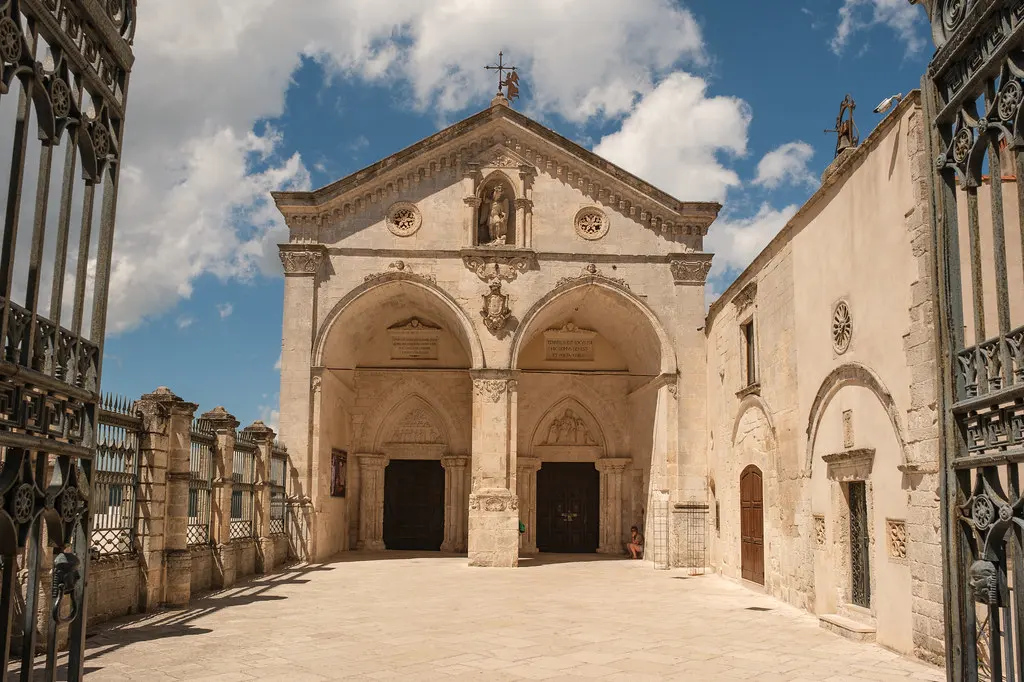
Image of Monte Gargano. Image source
Visit essentials
A quick read before you go
- Duration
- 1-2 hours for sanctuary and cave.
- Access
- By car: SP55 from Foggia.
Overview
The story begins with a lost bull. In 490 CE, on the Gargano promontory overlooking the Adriatic, a wealthy man named Elvio Emanuele searched for a bull that had strayed into an inaccessible cave. A herdsman shot an arrow into the darkness to frighten the animal out; the arrow returned and wounded the shooter. The Bishop of Sipontum, consulted about this wonder, prescribed three days of fasting and prayer. Then Saint Michael appeared.
The Archangel returned twice more—once to promise victory in battle, once to declare the cave sacred. When the bishop arrived to consecrate the grotto as a church, Michael intercepted him: 'It is no longer your task to consecrate the Basilica I built. I who founded it, I myself consecrated it.' Since that moment, the cave has been called the Celestial Basilica—the only Christian church consecrated not by episcopal hands but by heaven.
A fourth apparition came over a millennium later. In 1656, plague was sweeping southern Italy. Saint Michael appeared to the local bishop, instructing him to bless stones from the cave. Those who received these 'relic stones' were freed from the pestilence. The Archangel's protection extended beyond the cave.
During the Middle Ages, Monte Gargano stood among Christianity's four holiest places—alongside Jerusalem, Rome, and Santiago de Compostela. The shrine became the model for all Western Michaeline devotion, including Mont-Saint-Michel in Normandy. Pilgrims walked the Via Sacra Langobardorum to reach the Archangel's cave. Popes, saints, emperors descended the steps. Saint Francis arrived in 1216 but stood at the entrance, feeling unworthy to enter.
Padre Pio, from nearby San Giovanni Rotondo, sent countless penitents to climb the mountain and petition the Archangel.
Why this place is sacred
The four apparitions of Saint Michael at Monte Gargano span over a millennium, making this site's sacred history among the longest in Christianity. The 490 apparition—sparked by a mysterious arrow returning to wound its shooter—established the cave as touched by heaven. The 492 apparition brought military victory. The third apparition, around 493, created the site's unique claim: the only Christian church consecrated not by human bishops but by the Archangel himself.
This 'Celestial Basilica' status distinguished Monte Gargano from all other shrines. When bishops consecrate churches, they perform a rite of dedication. Here, according to tradition, that rite was unnecessary—heaven had already acted. The cave's natural darkness and depth reinforced this sense of otherworldly consecration. Pilgrims did not enter a building made by human hands but a space claimed by heaven.
The medieval ranking of Monte Gargano among Christianity's four holiest places—with Jerusalem, Rome, and Santiago—measured its significance in the geography of salvation. The Via Sacra Langobardorum brought pilgrims through the Gargano as part of the route to the Holy Land. Lombard dukes and kings sponsored the sanctuary's development, recognizing the Archangel as their spiritual protector. The sculptural remains from this period—now in the TECUM museum—testify to the patronage lavished on the site.
The 1656 apparition extended the Archangel's protection beyond the cave. During devastating plague, Saint Michael instructed the bishop to bless stones from the cave. These 'relic stones,' distributed to the faithful, reportedly freed those who held them from the pestilence. The Archangel's power was portable; the cave's sanctity could be carried.
The shrine's influence shaped European devotion to Saint Michael. Mont-Saint-Michel in Normandy was explicitly modeled on Monte Gargano; when the Archangel appeared to Bishop Aubert of Avranches in 708, he reportedly referenced the Italian shrine. The 'Sword of Saint Michael'—an alignment of Michaeline shrines stretching from Ireland to Israel—passes through Monte Gargano, suggesting sacred geography on a continental scale.
Padre Pio, perhaps the 20th century's most famous stigmatist, lived at nearby San Giovanni Rotondo. His devotion to Monte Gargano was well-known; he sent penitents to climb the mountain and seek the Archangel's intercession. The connection between the two sites—Padre Pio's church and the Archangel's cave—now draws pilgrims to both.
Natural cave site of four apparitions of Saint Michael (490-1656). According to tradition, consecrated by the Archangel himself as the 'Celestial Basilica.' Oldest Michaeline shrine in Western Europe.
First sanctuary built 493. Major Lombard development (7th-8th centuries). Medieval pilgrimage peak (via Francigena variant). Angevin staircase (14th century) improved access. 1656 plague apparition added relic stone tradition. 2011 UNESCO inscription as part of 'Longobards in Italy.'
Experience and orientation
The approach to Monte Sant'Angelo climbs the Gargano peninsula, rising through olive groves and forests toward the town perched at 800 meters. The views open across the Gulf of Manfredonia and the Tavoliere plain. This is pilgrimage landscape—the journey upward preparing visitors for descent into the Archangel's cave.
The town of Monte Sant'Angelo clusters around the sanctuary, a pilgrimage settlement that has served visitors for over fifteen centuries. The upper basilica, with its Romanesque portal and distinctive bell tower, marks the entrance. But the destination lies below.
The Angevin staircase—built in the 14th century to improve access—descends into the earth. The transition from sunlit town to subterranean darkness enacts the pilgrim's passage from ordinary world to sacred space. The cave is natural, not carved; the architecture minimal, serving rather than imposing. This is not a church built on level ground but a space that descends toward the place where heaven touched earth.
At the bottom, the cave opens. The altar stands before the statue of Saint Michael, sword raised. The ceiling is raw rock; the atmosphere is cool and timeless. Fifteen centuries of pilgrims have prayed in this darkness. The Archangel who declared this space consecrated by his own hand seems present still.
After the cave, the TECUM museum displays Lombard-era sculptural fragments—over 200 pieces—witnessing the patronage that made this shrine one of medieval Europe's greatest. The upper town offers cafes, shops, and the atmosphere of a pilgrimage destination that has functioned for a millennium and a half.
Nearby San Giovanni Rotondo draws many pilgrims to Padre Pio's church and tomb. The two sites complement each other: the 20th-century saint and the 5th-century apparitions, the stigmatist's church and the Archangel's cave.
The Sanctuary of Monte Gargano is located in Monte Sant'Angelo, a hilltop town on the Gargano peninsula in northern Puglia. The cave lies beneath the upper basilica, accessed via the Angevin staircase. Elevation is approximately 800 meters, overlooking the Gulf of Manfredonia.
Context and lineage
In 490 CE, on the Gargano promontory, a lost bull led to wonder. A herdsman's arrow, shot into the cave to frighten the animal, returned and wounded the shooter. The Bishop of Sipontum prescribed fasting and prayer; then Saint Michael appeared, revealing the cave's sacred nature. The Archangel returned in 492 to promise victory in battle, and around 493 to declare the cave consecrated by his own hand.
Over a millennium later, in 1656, Saint Michael appeared during plague, instructing the bishop to bless cave stones that would free the faithful from pestilence. These four apparitions—spanning 1,166 years—established Monte Gargano as one of Christianity's holiest places.
The Sanctuary of Monte Sant'Angelo is a papal minor basilica. It is part of the UNESCO World Heritage inscription 'Longobards in Italy: Places of Power (568-774 A.D.)' (2011). The shrine became the model for Western Michaeline devotion, influencing Mont-Saint-Michel and other sites.
Saint Michael the Archangel
Bishop Lorenzo of Sipontum
Saint Francis of Assisi
Padre Pio
Traditions and practice
Pilgrimage since 490 CE. Lombard royal patronage. Via Sacra Langobardorum processional route. Collection of 'relic stones' after 1656 apparition.
Daily Mass in the cave. Pilgrimage visits. Veneration before Saint Michael statue. Feast celebrations: September 29 (Michaelmas), May 8 (Apparition of Saint Michael). TECUM museum visits.
Enter through the upper basilica and descend the Angevin staircase into the cave. Allow eyes to adjust to the darkness. Approach the altar and statue of Saint Michael. Pray. Light a candle. After ascending, visit the TECUM museum for Lombard artifacts. Consider combining with San Giovanni Rotondo (Padre Pio's tomb, 25km).
Roman Catholicism
ActiveThe oldest Michaeline shrine in Western Europe. Site of four apparitions (490, 492, c. 493, 1656). The 'Celestial Basilica'—only Christian church consecrated by Saint Michael rather than human hands. Medieval ranking among Christianity's four holiest places. Model for Mont-Saint-Michel and all Western Michaeline devotion. UNESCO World Heritage (2011).
Daily Mass, pilgrimage to cave, veneration before Saint Michael statue, September 29 Michaelmas and May 8 Apparition feasts.
Perspectives and open questions
Monte Gargano offers encounter with Christianity's oldest Michaeline shrine—a cave where the Archangel appeared four times and declared the space consecrated by his own hand.
Scholarly perspective
The sanctuary is recognized as the oldest Michaeline shrine in Western Europe and the model for later sites. The Lombard patronage (7th-8th centuries) reflects the Archangel's significance to that kingdom. The UNESCO inscription (2011) acknowledges the site's role in early medieval Christianity. The apparition traditions date to the late 5th century.
Living and traditional perspectives
Catholic tradition holds that Saint Michael appeared four times at this cave, the third apparition declaring it the only Christian church consecrated by heaven rather than human hands. The medieval ranking among Christianity's four holiest places—with Jerusalem, Rome, and Santiago—measured its significance. Saint Francis's humility and Padre Pio's devotion testify to continuing spiritual power.
Alternative interpretations
The cave's position on the 'Sword of Saint Michael'—an alignment of shrines from Ireland to Israel—has attracted sacred geometry interest. Whether the cave held pre-Christian significance is debated. Some traditions suggest ancient use before Christian appropriation.
Open questions
Pre-Christian significance of the cave, if any. The exact nature of the apparitions. The meaning of the 'Sword of Saint Michael' alignment across Europe.
Plan your visit
Access and arrival
By car: SP55 from Foggia. Parking available. By bus: SITA from Foggia and Manfredonia.
Hotels and B&Bs in Monte Sant'Angelo. Larger selection in Manfredonia and San Giovanni Rotondo.
Respectful visit
Modest dress required. Shoulders and knees covered. Cave is cool—dress warmly.
Photography generally permitted; restrictions during services.
Candles available. Donations appreciated.
Admission fee: €5 | Modest dress required | Quiet and reverence in the cave | Stairs required for cave access
Descent via stairs can be challenging for those with mobility issues. The cave is cool; dress appropriately. Admission fee required (€5).
Current practical details
Address
Via Reale Basilica, 127, 71037 Monte Sant'Angelo FG, Italy
Phone
Hours
Hours, fees, and access can change — verify on the official source before you travel. Practical details last checked Jun 2026.
Location
Map loads as you approach this section.
Pilgrim reflections
A portrait of encounter, not a score
Pilgrims describe what they felt, how present they could become, and whether the place would shape a journey. There are no stars and no ranking of traditions.
No reviewed reflections yet
The first pilgrims can help describe the character of being here.
Share a reflection
Available after an account-backed “Been there.” Every reflection is reviewed before publication.
Nearby sacred places
Explore other sacred places in the region. Proximity does not establish access or travel time; check each place’s guidance.

Santuario di San Pio da Pietrelcina
San Giovanni Rotondo, Foggia, Italy
20.7 km away
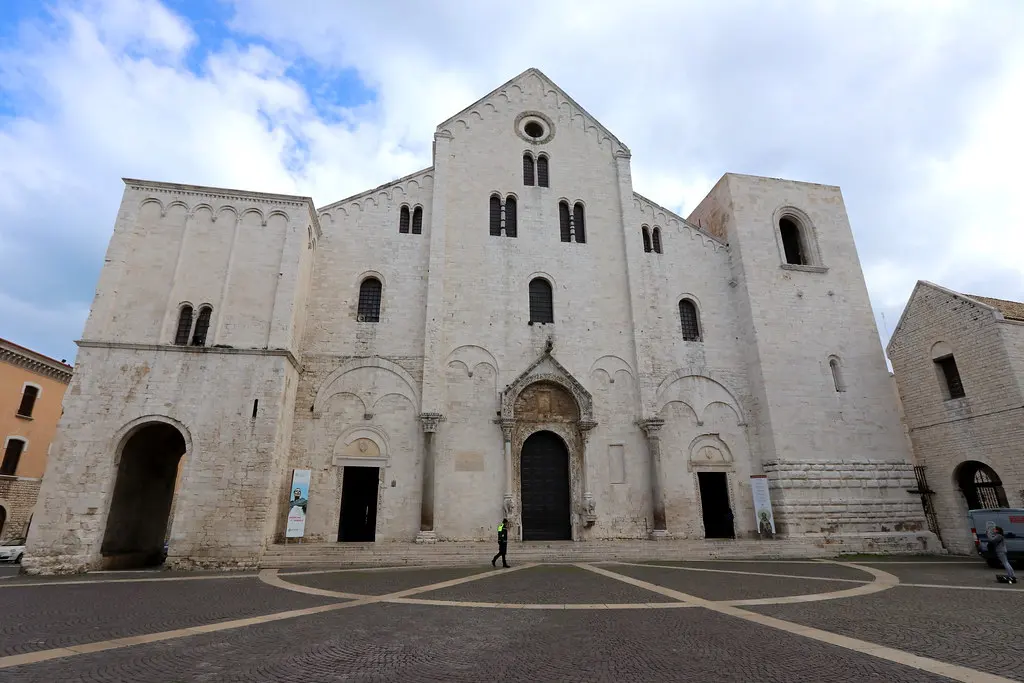
Basilica of St. Nicholas, Bari, Italy
Bari, Bari, Italy
99.7 km away

Sanctuary of Saint Gerard Majella, Materdomini
Materdomini, Caposele, Italy
116.1 km away
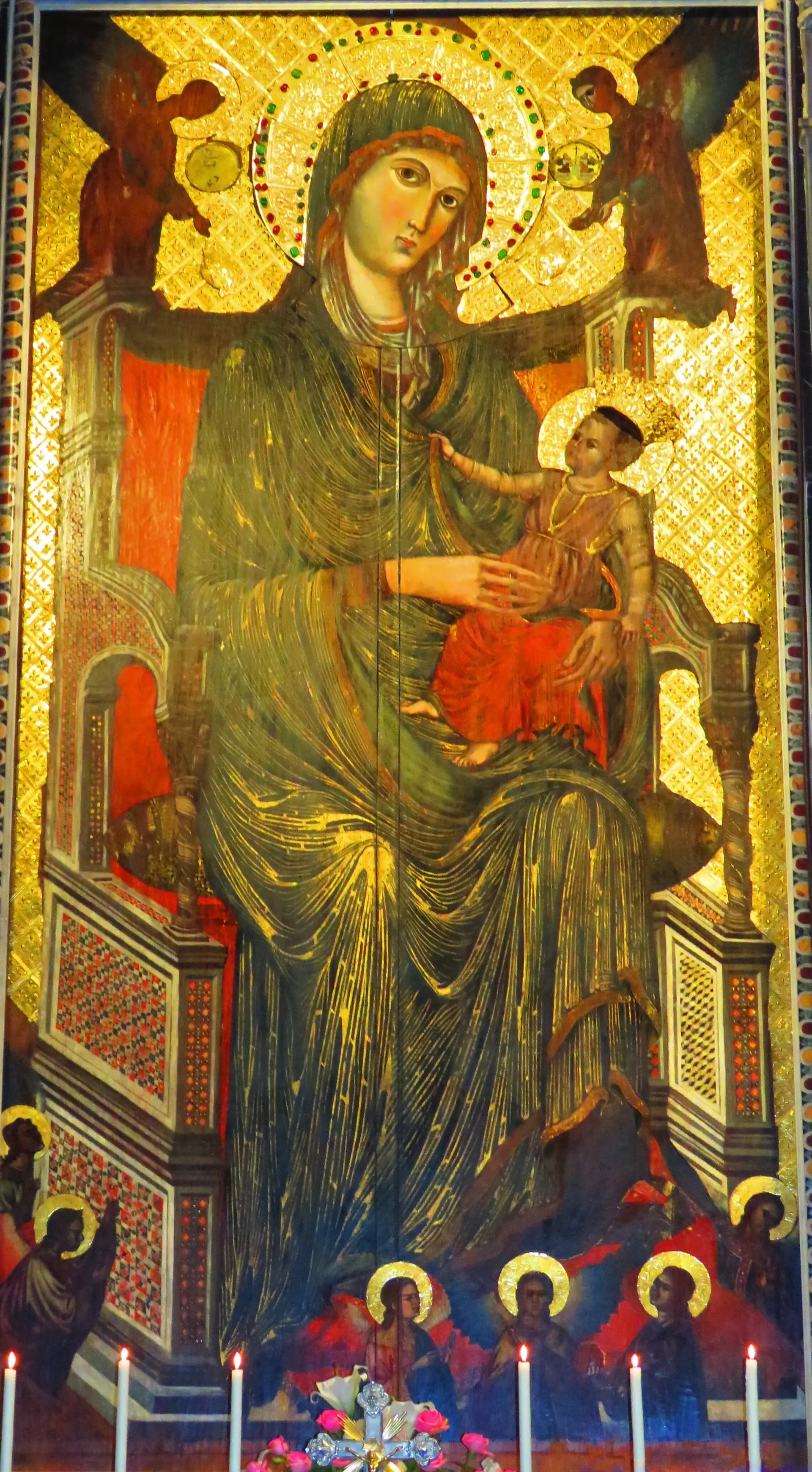
Madonna di Montevergine (Mamma Schiavona)
Mercogliano, Avellino, Italy
133.7 km away
References
Sources consulted for this page. Source categories describe the publication, not a guarantee that every claim is verified. Traditional accounts and outside interpretations may differ.
- 01The Sanctuary of San Michele Arcangelo | Longobards in Italy — Longobards in Italy UNESCOofficialOfficial UNESCO heritage site information
- 02Sanctuary of San Michele Arcangelo — Visit PugliaofficialOfficial Puglia tourism information
- 03Sanctuary of Saint Michael the Archangel - Italia.it — ENIT - Italian National Tourist BoardofficialOfficial Italian tourism information
- 04Sanctuary of Monte Sant'Angelo - Wikipedia — Wikipedia contributorsencyclopediaComprehensive overview of history and apparitions
- 05Calling upon St. Michael the Archangel on Mount Gargano — Catholic World ReportSource contextCatholic devotional context
Photo gallery
3 curated photos
Share a photo
Help visitors recognize Monte Gargano. Every submission is reviewed before publication.