Megaliths of Carnac
Where 3,000 standing stones stretch toward mystery, and 6,000 years of devotion persist
Understand sacred places, explore living traditions, and learn how to engage respectfully with Pilgrim Map.
Access has not been verified. Check current local guidance before planning a visit.
Carnac, Morbihan, France
Read the sources
Visit essentials
A quick read before you go
- Duration
- Minimum 2 hours for main alignments and Maison des Megalithes.
- Access
- Located in Carnac, Morbihan, Brittany, France.
Overview
The stones begin and do not end. Row after row of granite menhirs march across the Brittany landscape, thousands of standing forms arranged with precision no accident could produce. The first impression is scale: not the height of individual stones, though some reach seven meters, but the cumulative fact of thousands of stones arranged over kilometers, the work of generations who dedicated themselves to something we can no longer name.
The Neolithic peoples who quarried, transported, and erected these megaliths between 4500 and 3300 BCE left no written record. We know they built for roughly 1,500 years, adding to what their ancestors began. We know the alignments follow astronomical orientations, particularly winter solstice sunset. We know the massive tumuli nearby contained elite burials with grave goods suggesting 'divine kings.' We know the labor was extraordinary, requiring social organization and sustained commitment across centuries. What we do not know is why.
This mystery is not failure but invitation. Walking among the stones, visitors encounter questions that statistics cannot answer. What moved a pre-literate farming community to invest such effort? What did they believe about the cosmos, the ancestors, the forces that governed their lives? What ceremonies took place here? The stones stand as testimony that meaning mattered profoundly to our Neolithic ancestors, that they were willing to spend generations expressing something we have forgotten how to hear.
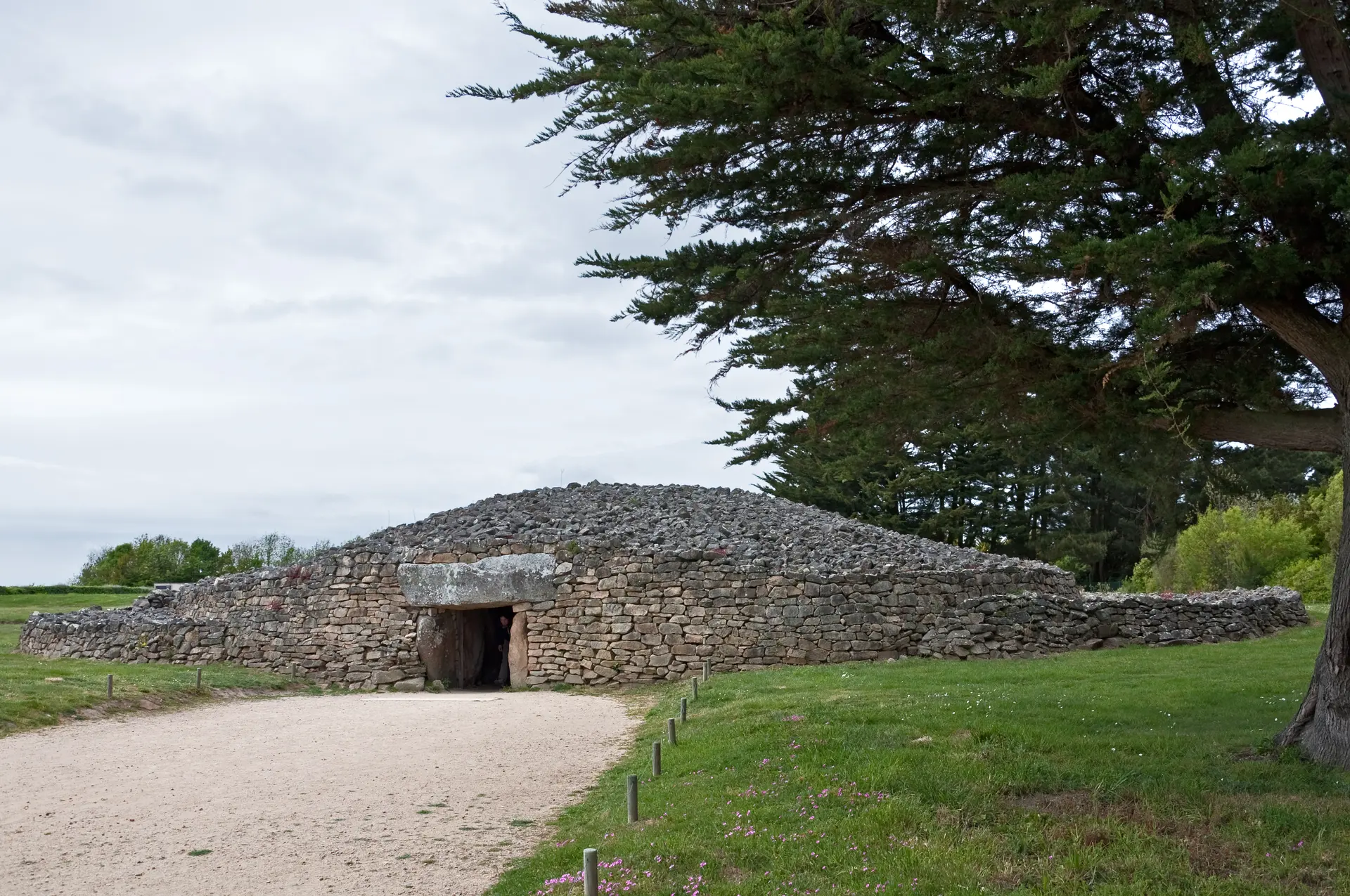
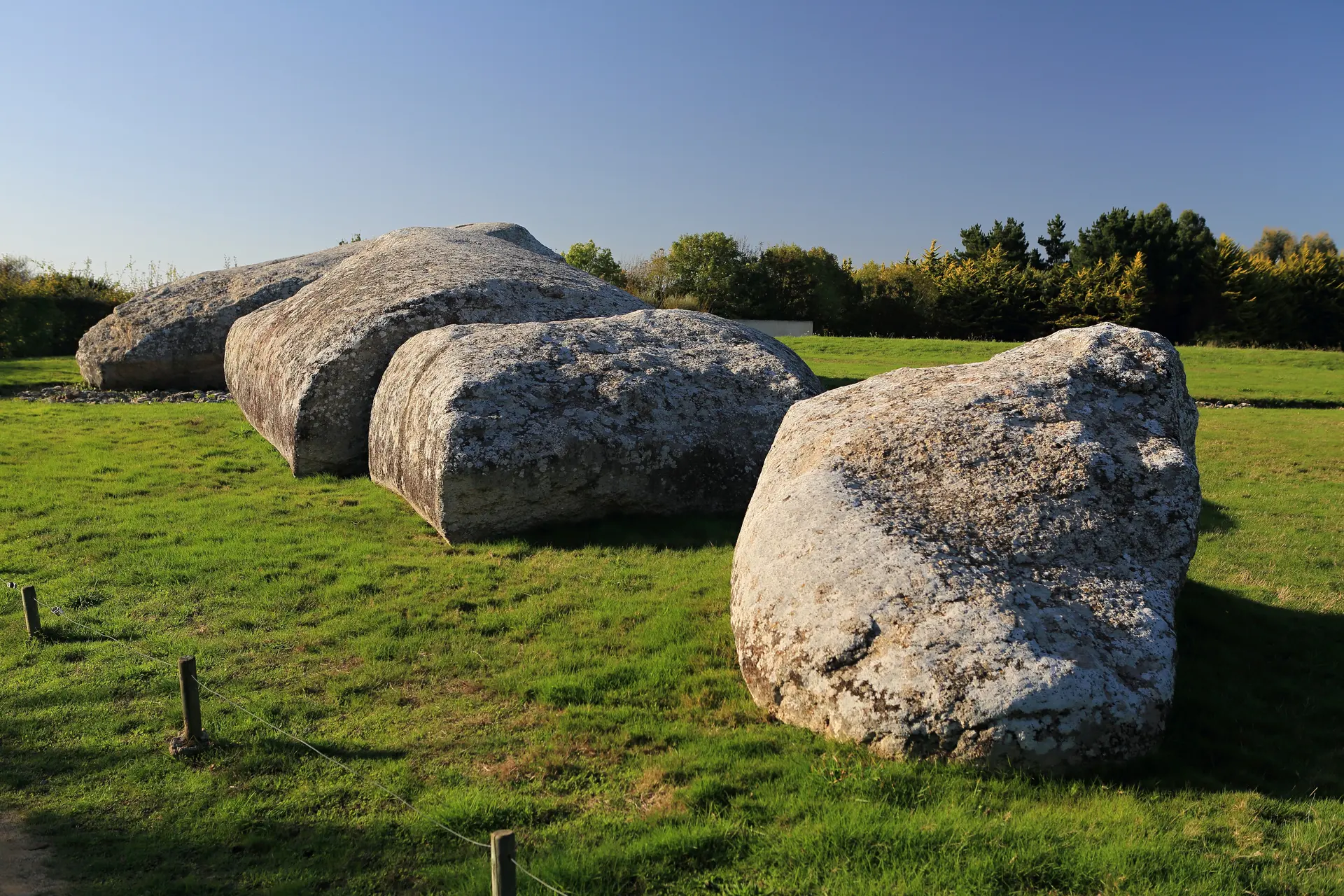
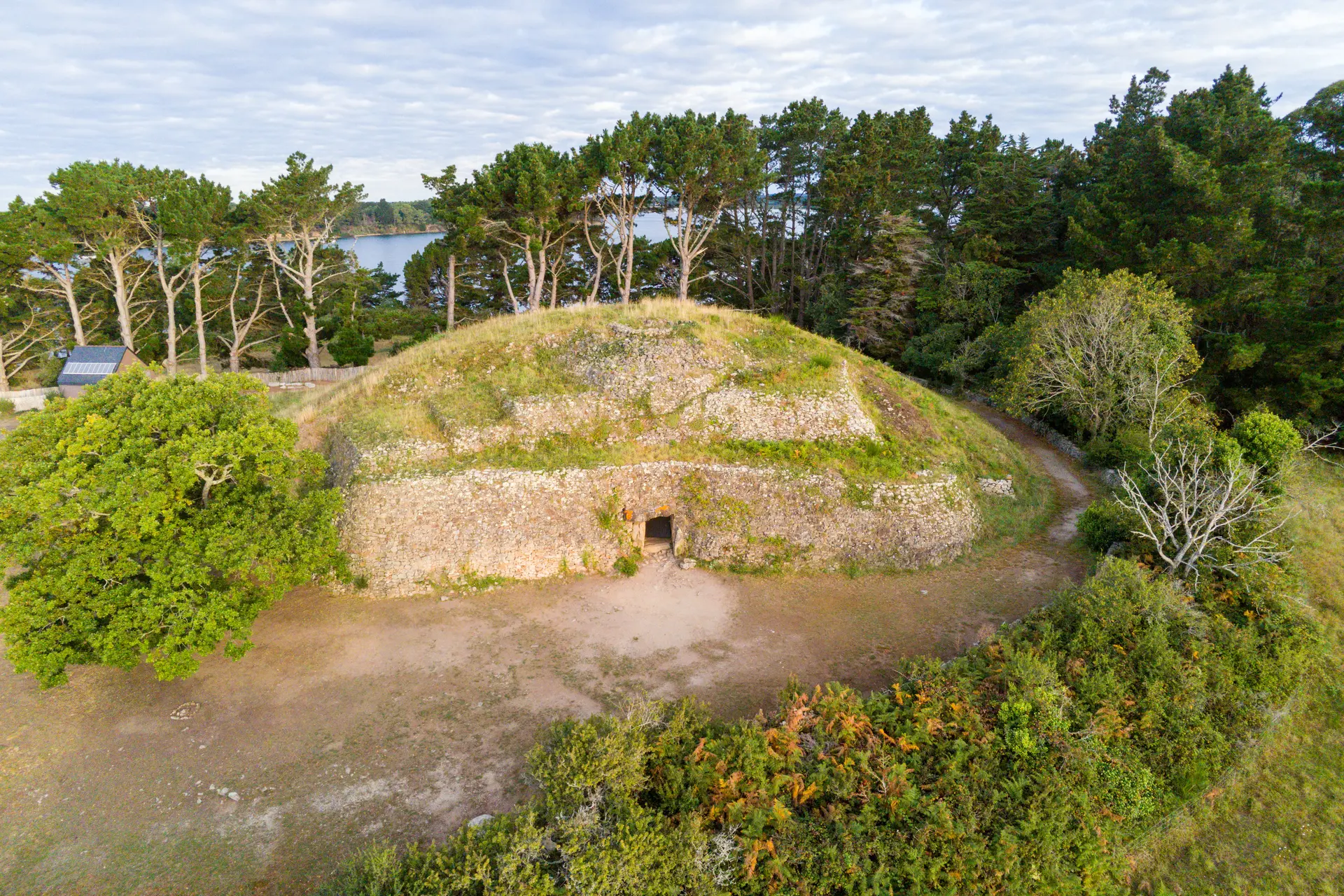
The three major alignment groups, Le Menec, Kermario, and Kerlescan, stretch across several kilometers. Between them, the Tumulus Saint-Michel rises 125 meters long and 10 meters high, the largest burial mound in continental Europe. The nearby Grand Menhir Brise at Locmariaquer, now fallen into four fragments, once stood 20.6 meters tall and weighed 330 tons, the largest stone humans ever moved in the Stone Age.
Contemporary visitors do not merely observe this landscape but participate in its ongoing life. Over 400,000 people come annually. Some come as tourists, some as pilgrims. Academic research has documented neo-pagan and New Age practitioners conducting rituals among the stones, seeking communion with earth energies and ancestral spirits. Whatever the Neolithic builders intended, the stones continue to draw those who sense that something sacred persists here.
Why this place is sacred
The Neolithic builders of Carnac invested roughly 1,500 years of effort into this landscape. The oldest structures date to around 4500 BCE, the most recent to approximately 3300 BCE. Generation after generation quarried local granite, transported stones weighing up to 350 tons, and erected them in arrangements we still cannot fully explain. This sustained commitment across fifty generations suggests profound significance we can only partially reconstruct.
The astronomical alignments offer one key. The Kermario alignment points toward winter solstice sunset, the moment when the dying sun begins its return. Alexander Thom's surveys proposed that the entire complex served as a sophisticated astronomical observatory. Whether or not this is true, the orientation suggests awareness of cosmic cycles and perhaps ceremonies marking the sun's journey.
The tumuli contain evidence of another dimension. The Tumulus Saint-Michel and similar structures nearby held elite burials with extraordinary grave goods: polished axe heads of rare materials, variscite jewelry from distant Spain, bone ornaments of exceptional craftsmanship. Researchers have described these individuals as 'divine kings,' their interments contemporary with the Varna gold culture of Bulgaria. The alignments, then, may have served also as memorials to ancestors, places where the living maintained relationship with the powerful dead.
The stone rows themselves create geometric forms whose meaning remains uncertain. The menhirs generally decrease in height from west to east, a pattern whose significance is debated. Stone circles, cromlechs, mark the ends of some alignments. The precision of the rows, maintained over kilometers, indicates intention but not content.
Contemporary spiritual practitioners perceive the stones as nodes in ley line networks, repositories of earth energy that can be felt by sensitive visitors. Academic research between 2015 and 2018 documented numerous groups conducting rituals at the megaliths. These contemporary practices represent the site's ongoing capacity to evoke spiritual encounter, even if the vocabulary differs from what the builders would have used.
The mystery is itself a form of thinness. We genuinely do not know why our ancestors built here, and this not-knowing opens a space that certainty would close.
The original purpose remains unknown due to lack of written records. Archaeological evidence suggests multiple overlapping functions: astronomical observation, particularly winter solstice alignment; ceremonial gathering and possible processional ways; territorial or social boundary marking; and ancestor veneration connected to elite burials in nearby tumuli. The extraordinary labor, sustained across 1,500 years, indicates significance that transcended any single purpose.
The site has been continuously engaged as sacred or significant space for six millennia. Celtic Bretons venerated the stones, associating them with supernatural beings. Romans carved dedications on some menhirs. The medieval Church adapted by placing crosses on stones and building a chapel atop the Tumulus Saint-Michel. The 19th century brought archaeological investigation by James Miln and Zacharie Le Rouzic. The 2023 UNESCO inscription recognizes the site's outstanding universal value.
Contemporary pagans and New Age practitioners represent the latest chapter in ongoing sacred use. The forms change, but the recognition that something powerful persists here has continued across cultures and millennia.
Experience and orientation
The first impression is usually numerical: the sheer quantity of stones, row after row extending beyond immediate sight. Photographs cannot convey this because the camera cannot stand among the stones as the body does. The experience is spatial and embodied, the sense of being surrounded by vertical forms that dwarf human scale while remaining human-made.
The second impression is often temporal. Walking among stones erected 6,000 years ago, visitors encounter deep time in a way that reading about it cannot provide. These stones were old when the pyramids were built. They were ancient when Rome was founded. They have stood through everything history records and much it does not. This duration creates a kind of vertigo, a dislocation from ordinary temporal sense.
Many visitors describe a contemplative quality that arises without effort. The mystery of purpose, the fact that we genuinely do not know why these stones stand here, invites reflection in ways that explained monuments do not. What mattered enough to fifty generations that they spent their lives adding to this work? What did they believe about the cosmos, the ancestors, the forces that governed existence? The stones pose questions that cannot be answered, and this questioning opens something.
Those who visit at dawn or dusk describe particularly powerful experiences. Light moving across the stones, shadows lengthening and shortening, the sense of astronomical alignment becoming visible: these moments approach what the builders may have sought to mark. Winter solstice, when the Kermario alignment points toward sunset, draws those interested in experiencing ancient astronomical orientation.
Contemporary practitioners who engage the stones as active sacred space report experiences of energy, presence, and transformation. While these interpretations lack archaeological support, they represent genuine contemporary spiritual engagement with the site's power.
Carnac rewards slow attention. The temptation to photograph and move on, to tick off sites and depart, misses what the stones offer. Consider spending extended time with a single alignment rather than rushing between all three.
In winter (October-March), when the alignments are freely accessible, walking among the stones allows intimate encounter impossible during high-season guided tours. The misty mornings of Breton autumn create atmospheric conditions that seem to belong to the place.
Sunrise and sunset provide the most dramatic light and the smallest crowds. Solstice visitors can experience the astronomical alignments in action, though advance planning is advisable for these popular times.
The Tumulus Saint-Michel, though its interior is generally closed, can be climbed externally for panoramic views of the entire complex. This elevated perspective helps comprehend the scale of what the Neolithic builders achieved.
The Maison des Megalithes provides essential context. Understanding what is known and what remains mysterious enriches encounter with the stones themselves.
Context and lineage
The most widespread local legend, dating from the 17th century, attributes the stones to Saint Cornelius (Pope Cornelius, 251-253 CE). According to this tale, Cornelius was fleeing from pagan Roman soldiers when he reached the sea and could not escape. He turned and cursed his pursuers, transforming the entire army into the rows of standing stones. This Christian legend explained the otherwise mysterious alignments as petrified enemies of the faith.
Other traditions connect the stones to Merlin, who turned a Roman legion to stone, or to the giant Gargantua, who scattered the menhirs as he walked through the landscape. The covered dolmens are said to be dwellings of korrigans, supernatural fairy beings who dance around the stones on moonlit nights.
Archaeological understanding recognizes the megaliths as the work of Neolithic farming communities who built over approximately 1,500 years. The earliest structures date to around 4500 BCE, with major construction continuing until approximately 3300 BCE. The builders were pre-Celtic peoples about whom we know little beyond what their monuments reveal.
The builders of Carnac left no written record and no identified descendants who maintained their traditions. The lineage that exists is of continuous human engagement with the site as sacred or significant space, from Neolithic construction through Celtic and Roman adaptation, medieval Christian overlay, 19th-century archaeology, and contemporary spiritual practice.
The UNESCO inscription in 2023 represents international recognition of the site's outstanding universal value. The megaliths now receive formal protection as part of world heritage.
James Miln
historical
Scottish antiquary who conducted the first extensive excavation in the 1860s, establishing systematic study of the megaliths.
Zacharie Le Rouzic
historical
Local Breton archaeologist trained by Miln who continued excavations and conservation, dedicating his life to the site's preservation.
Alexander Thom
historical
Scottish engineer who surveyed Carnac 1970-1974, proposing astronomical alignments and the 'megalithic yard' as a unit of measurement.
Traditions and practice
The original Neolithic practices remain unknown due to lack of written records. Archaeological evidence suggests elite burial in massive tumuli with grave goods including polished axe heads, variscite jewelry, and bone ornaments. Astronomical observation at solstices likely accompanied ceremony, with the Kermario alignment oriented toward winter solstice sunset. The transport and erection of stones may itself have been ritual, each generation adding to ancestral work.
Celtic and Gallo-Roman peoples adapted the site for their own religious purposes, carving Roman dedications on some stones. Medieval Christians added crosses to menhirs and built the Chapel of Saint-Michel atop the great tumulus, literally placing Christianity above the prehistoric sacred.
Contemporary practitioners conduct personal and group rituals at the stones including meditation, energy work, and earth-based ceremonies. Academic research documented neo-pagan and New Age groups executing practices between 2015 and 2018. Solstice and equinox gatherings occur. Some visitors touch stones where accessible or walk meditative processions along the alignments.
The Saint Cornelius pardon, blessing of cattle on the saint's feast day, continues as a local Christian tradition.
The majority of contemporary engagement is archaeological and educational: visiting the Maison des Megalithes, taking guided tours, photographing the stones, and contemplating the mystery of purpose.
Approach the stones as questions rather than answers. The mystery of purpose, the fact that we do not know why these stones stand here, is itself a form of teaching. What matters enough to fifty generations to spend their lives building? What do you hold sacred enough to invest such effort?
If visiting in winter, walk among the stones slowly. The ability to move freely through the alignments, to stand beside individual menhirs, to feel the spatial relationships, is not possible during high-season guided tours. Take advantage of this intimacy.
Sunrise and sunset, particularly at solstices, allow experience of the astronomical alignments the builders encoded. Winter solstice sunset at Kermario recreates what may have been the site's central observation.
If ceremony draws you, engage respectfully. Leave no trace. Do not disturb the vegetation protecting the site. Your practice joins a lineage of engagement stretching back six millennia.
Neolithic Ceremonial Practice
HistoricalThe megalith builders created the largest concentration of standing stones in the world over approximately 1,500 years (4500-3300 BCE). The extraordinary labor indicates profound religious or ceremonial importance. Elite burials in massive tumuli, astronomical alignments, and multi-generational construction suggest ancestor veneration and cosmic orientation.
Unknown specifically due to lack of written records. Archaeological evidence suggests elite burial with grave goods, possible astronomical observation at solstices, communal labor for stone transport, and multi-generational construction.
Contemporary Paganism and New Age Spirituality
ActiveAcademic research documented neo-pagan and New Age practitioners conducting rituals at Carnac between 2015 and 2018. Participants view the site as sacred and energetic, seeking connection with earth energies and ancestral spirits.
Meditation, energy work, ceremony. Solstice and equinox gatherings. Meditative walking among alignments. Practitioners seek personal transformation and communion with past.
Perspectives and open questions
Carnac invites interpretation from archaeological, traditional folkloric, and contemporary spiritual perspectives. Each illuminates aspects of why this landscape has drawn human attention across six millennia.
Scholarly perspective
The Carnac alignments represent the world's most extensive megalithic complex, constructed by Neolithic farming communities between approximately 4500-3300 BCE. Evidence supports multiple functions: astronomical observation, ceremonial gathering, territorial marking, and ancestor veneration. The UNESCO inscription in 2023 recognizes the site's outstanding universal value. Alexander Thom's surveys proposed astronomical alignments and the 'megalithic yard' as a unit of measurement, though these theories remain debated.
Living and traditional perspectives
There is no continuous indigenous tradition, as the Neolithic builders left no written records. Breton folklore filled this void: Saint Cornelius petrifying Roman soldiers, Merlin turning a legion to stone, the giant Gargantua scattering menhirs, korrigans dwelling in the dolmens. These legends, while not original, represent centuries of local sacred relationship with the stones. The medieval Church's addition of crosses and the chapel on Saint-Michel represents Christian engagement with the site's power.
Alternative interpretations
Contemporary visitors perceive the stones as nodes in ley line networks, repositories of earth energy that can be felt by sensitive practitioners. Some believe the alignments channel or generate power accessible to those who approach properly. The mystery of purpose encourages speculative theories about lost advanced knowledge. These interpretations, while lacking archaeological support, represent genuine contemporary spiritual engagement.
Open questions
Fundamental mysteries remain. What was the specific purpose of the alignments? What do the gradual decrease in stone height from west to east signify? What ceremonies took place here? What was the cosmological system of the builders? How was the Grand Menhir Brise transported and erected, and why did it fall? These questions cannot be answered from archaeological evidence alone and may never be answered.
Plan your visit
Access and arrival
Located in Carnac, Morbihan, Brittany, France. Train to Auray (TGV from Paris), then bus or taxi. By car via N165 from Vannes or Lorient. Free parking at Maison des Megalithes. Coordinates: 47.5958 N, -3.0611 W (Le Menec alignment).
Carnac is a seaside resort with extensive accommodation. The town has a beach (Carnac-Plage) distinct from the megalithic sites (Carnac-Ville). Auray offers historic Breton town atmosphere. Book well in advance for summer.
Respectful visit
No specific dress code. Dress for Breton coastal weather: layers, rain protection, comfortable walking shoes.
Photography permitted throughout. Drones prohibited over protected areas. No tripods during guided tours without permission. The stones photograph dramatically at dawn and dusk.
Do not leave offerings on or around stones. Any practice should leave no trace.
Do not touch or lean on stones. Do not climb on menhirs or dolmens. Stay on marked paths during tours. Respect seasonal access restrictions. Dogs welcome on leads.
Do not touch or lean on the stones; this accelerates weathering. Do not climb on stones or dolmens. Do not leave offerings that could damage the site. Respect fencing installed to protect vegetation.
In high season (April-September), access to the main alignments is by guided tour only. Attempting unauthorized access risks fine and damages the site's protection.
Current practical details
Address
Kercado, 56340 Carnac, France
Hours
Hours, fees, and access can change — verify on the official source before you travel. Practical details last checked Jun 2026.
Location
Map loads as you approach this section.
Pilgrim reflections
A portrait of encounter, not a score
Pilgrims describe what they felt, how present they could become, and whether the place would shape a journey. There are no stars and no ranking of traditions.
No reviewed reflections yet
The first pilgrims can help describe the character of being here.
Share a reflection
Available after an account-backed “Been there.” Every reflection is reviewed before publication.
Nearby sacred places
Explore other sacred places in the region. Proximity does not establish access or travel time; check each place’s guidance.
References
Sources consulted for this page. Source categories describe the publication, not a guarantee that every claim is verified. Traditional accounts and outside interpretations may differ.
- 01Welcome to the alignments of Carnac — Monuments nationaux (CMN)officialOfficial site manager and primary visitor information source
- 02Megaliths of Carnac and of the shores of Morbihan — UNESCO World Heritage CentreofficialUNESCO World Heritage inscription documentation
- 03Carnac — BritannicaacademicScholarly encyclopedia overview
- 04Stone Studies of the Carnac Alignments — ResearchGateacademicAcademic research on the stone compositions and alignments
- 05Tales and legends — Alignments of CarnacofficialOfficial source for folklore and legends
- 06The Enchantment of Archaeological Sites and the Quest for Personal Transformation — RedalycacademicAcademic study of neo-pagan and New Age practices at Carnac 2015-2018
- 07The Saint-Michel Tumulus — Alignments of CarnacofficialOfficial information on the tumulus
- 08Carnac stones — WikipediaacademicWell-referenced comprehensive article with archaeological citations
- 09The Carnac Stones: Prehistoric paths to the sacred — PilgrimapsspiritualPilgrimage and sacred site perspective
- 10Saint-Michel tumulus — WikipediaacademicDetailed information on the major tumulus
- 11Locmariaquer megaliths — WikipediaacademicInformation on nearby Grand Menhir Brise
- 12Carnac Megaliths - Sacred Sites — Sacred-Sites.orgspiritualSacred site perspective and pilgrimage information
Photo gallery
3 curated photos
Share a photo
Help visitors recognize Megaliths of Carnac. Every submission is reviewed before publication.