Mausoleums of Muslim bin Aqil, Hani bin Urwa and Almukhtar, Kufa Mosque, Najaf
One of Islam's holiest mosques, where Imam Ali governed, taught, and was fatally struck at prayer
Understand sacred places, explore living traditions, and learn how to engage respectfully with Pilgrim Map.
Access has not been verified. Check current local guidance before planning a visit.
Al Kufa, Najaf, Iraq
Read the sources
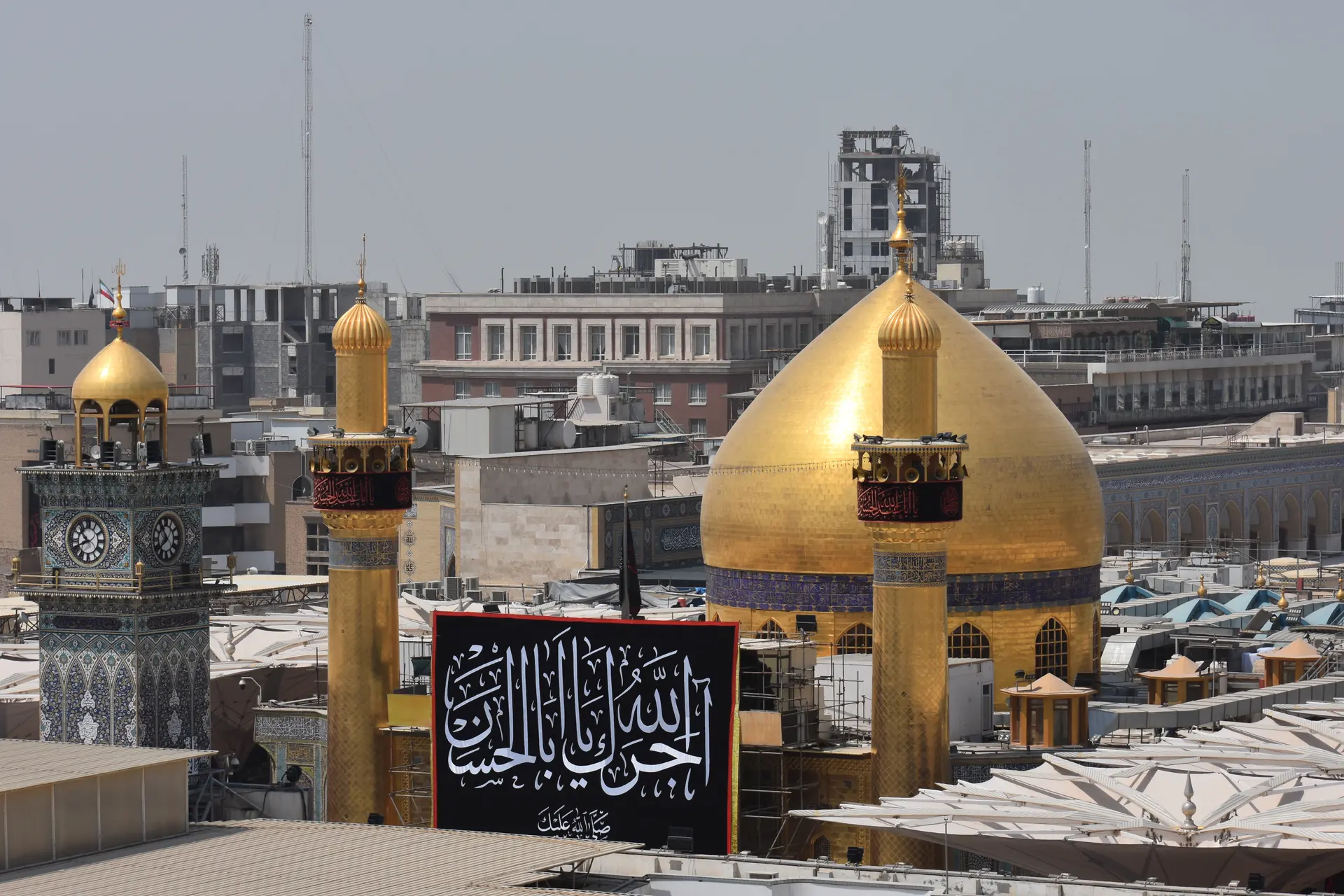
Image of Mausoleums of Muslim bin Aqil, Hani bin Urwa and Almukhtar, Kufa Mosque, Najaf. Image source · CC-BY-2.0
Visit essentials
A quick read before you go
- Duration
- 1-2 hours to pray at the maqams and visit the tombs.
- Access
- In Kufa, about 10 km northeast of Najaf, roughly 15-45 minutes by car; easily combined with the…
Overview
The Great Mosque of Kufa is a vast courtyard mosque on the Euphrates plain, about ten kilometers from Najaf, and among the Islamic world's oldest surviving mosques. Founded with Kufa's garrison city around 638 CE, it briefly stood at the Muslim world's center as the seat of governance and teaching for Imam Ali, fourth caliph and first Shia Imam. Here, while prostrating in Fajr prayer, he was struck by a poisoned sword.
Its precinct holds the tombs of Muslim ibn Aqil, Imam Husayn's envoy; Hani ibn Urwa, who sheltered him and was killed for it; and al-Mukhtar, who rose to avenge Karbala's martyrs. Named maqams around the courtyard mark prayer stations, including where God is believed to have accepted Adam's repentance and where tradition says Noah built and launched the Ark. These cosmological associations belong to faith rather than historical record and are held lightly and deeply in Shia devotion.
Shia tradition ranks Kufa after the sanctuaries of Mecca and Medina and among mosques where pilgrimage is meritorious. It also looks forward: the awaited Mahdi is said to rule from here. The mosque holds early Islam's governance, loss, and hope.
Why this place is sacred
Kufa's sanctity is built from compression: a great deal of formative history happened in a small space over a short time. The mosque was the administrative and spiritual heart of Imam Ali's caliphate, the room where authority and teaching met, and then the site of his fatal wounding at prayer. Within a generation it gathered the tombs of figures bound to the tragedy of Karbala.
Over centuries, devotional tradition added a deeper stratum still, identifying the ground with Adam's repentance and Noah's Ark, and looking forward to the reign of the Mahdi. The result is a place where past, present, and an awaited future are held together in one courtyard.
A congregational mosque and seat of governance for the new garrison city of Kufa, and the working center of Imam Ali's caliphate.
Repeatedly rebuilt across the centuries: a mausoleum for Muslim ibn Aqil and Hani ibn Urwa was raised by al-Mukhtar in 65 AH; the golden dome and tilework were added in the Safavid era; and a comprehensive restoration was carried out by the Dawoodi Bohra community between 1998 and 2010.
Experience and orientation
Pilgrims describe Kufa as a place of light and space — a wide, open courtyard mosque rather than an enclosed sanctuary, with the eye drawn to the golden dome and the named maqams scattered around the precinct. The rhythm of a visit is one of movement: praying at the stations, pausing at the place of Imam Ali's wounding, then entering the more intimate space of the tombs of Muslim ibn Aqil, Hani ibn Urwa, and al-Mukhtar.
The tombs are where the visit often turns most affecting; the spot where Imam Ali was struck is described as especially poignant. The mosque rarely feels empty, and at the great commemorations it fills with crowds whose grief and devotion are palpable.
Enter from the courtyard and orient yourself to the named maqams around its edges before moving to the tombs. The station marking Imam Ali's wounding and the tomb-chamber of the Karbala-related figures are the emotional centers of a visit; allow time and quiet at each.
Context and lineage
Kufa was founded as a garrison city under the early caliphate around 638 CE, and its congregational mosque rose with it, making it one of the earliest in Islam. When Imam Ali moved the seat of the caliphate to Kufa, the mosque became the center of his governance and teaching. There, in the month of Ramadan, he was struck while leading the dawn prayer and died of the wound — an event that fixed Kufa permanently in the Shia imagination.
In the decades that followed, the precinct gathered the tombs of figures tied to the Karbala tragedy, and over centuries devotional tradition wove in older sacred geography still.
Twelver Shia Islam, within the broader memory of the Rashidun caliphate and early Islamic Kufa.
Imam Ali ibn Abi Talib
Fourth caliph and first Shia Imam
Muslim ibn Aqil
Envoy of Imam Husayn
Hani ibn Urwa
Kufan notable
Al-Mukhtar al-Thaqafi
Leader of the revolt to avenge Karbala
Traditions and practice
The mosque is associated with specific recommended deeds: obligatory prayer here is traditionally counted as equal in reward to Hajj and supererogatory prayer to Umrah. Pilgrims pray at the named maqams — Bayt al-Tasht, the Dakka al-Qada', the station of Adam, the station of Noah — and perform ziyarat at the tombs of Muslim ibn Aqil, Hani ibn Urwa, and al-Mukhtar, with recitation and supplication prescribed for each.
Daily worship and visitation continue year round, rising sharply during Muharram, during Ramadan (especially the Nights of Qadr), and around the anniversary of Imam Ali's martyrdom in the final third of Ramadan.
A first visit can simply follow the worshippers: move slowly from station to station in the courtyard, then sit quietly at the tombs. Reflection on loyalty, the cost of justice, and the hope of redemption fits the place even for those outside the tradition.
Twelver Shia Islam
ActiveThe mosque was Imam Ali's seat of governance and teaching, the place where he was fatally struck at prayer, and the burial place of Muslim ibn Aqil, Hani ibn Urwa, and al-Mukhtar. Shia tradition holds it among the mosques to which pilgrimage is meritorious and the future seat of the Mahdi.
Obligatory and supererogatory prayers (counted as equal in reward to Hajj and Umrah respectively), ziyarat at the tombs, and prayers at the named maqams.
Early Islamic / Rashidun heritage
HistoricalOne of the earliest surviving congregational mosques, founded with the garrison city of Kufa around 638 CE and an important center of early Islamic administration, scholarship, and the Kufic script.
Historical congregational worship and governance.
Perspectives and open questions
Kufa is read very differently as history and as faith, and both readings deserve their full weight.
Scholarly perspective
Historians describe a foundational early Islamic congregational mosque of the garrison city of Kufa, central to the caliphate of Ali and to early Islamic administration, scholarship, and the development of the Kufic script — a building repeatedly rebuilt, with Safavid and modern embellishment.
Living and traditional perspectives
Shia tradition venerates Kufa as among the holiest mosques, sanctified by Imam Ali and tied to Adam, Noah, and the future Mahdi, with prescribed devotions at its maqams.
Alternative interpretations
Devotional and cosmological traditions layer the site with sacred geography — the Ark of Noah, the repentance of Adam — and with miraculous events attributed to Imam Ali.
Open questions
The cosmological associations are articles of faith beyond historical confirmation, and the precise layout of the seventh-century mosque is only partly reconstructed.
Plan your visit
Access and arrival
In Kufa, about 10 km northeast of Najaf, roughly 15-45 minutes by car; easily combined with the Shrine of Imam Ali in Najaf.
Najaf, 10 km away, offers the fullest range of pilgrim accommodation and is the natural base for visiting Kufa.
Respectful visit
Modest dress: women wear hijab and abaya; men cover legs and shoulders. Remove shoes before entering prayer areas.
Generally permitted in the courtyards; avoid flash and avoid photographing worshippers during prayer. Be discreet at the tombs.
Donations to the mosque are welcome; no material offering is required.
No eating in the main prayer halls. Maintain quiet reverence, especially during prayer times.
Current practical details
Address
2CH2+FG7, Kufa, Najaf Governorate, Iraq
Hours
Hours, fees, and access can change — verify on the official source before you travel. Practical details last checked Jun 2026.
Location
Map loads as you approach this section.
Pilgrim reflections
A portrait of encounter, not a score
Pilgrims describe what they felt, how present they could become, and whether the place would shape a journey. There are no stars and no ranking of traditions.
No reviewed reflections yet
The first pilgrims can help describe the character of being here.
Share a reflection
Available after an account-backed “Been there.” Every reflection is reviewed before publication.
Nearby sacred places
Explore other sacred places in the region. Proximity does not establish access or travel time; check each place’s guidance.



References
Sources consulted for this page. Source categories describe the publication, not a guarantee that every claim is verified. Traditional accounts and outside interpretations may differ.
- 01Great Mosque of Kufa — Wikipedia — Wikipedia contributorsacademicFounded 638 CE / completed 670 CE; one of the earliest surviving mosques; home of Imam Ali; contains tombs of Muslim ibn Aqil, Hani ibn Urwa and al-Mukhtar; Safavid golden dome; Bohra renovation 1998-2010.
- 02Mosque of Kufa — WikiShia — WikiShiaacademicMaqams (Bayt al-Tasht, Dakka al-Qada', position of Adam, position of Noah/Ark), reward equivalences (prayer = Hajj/Umrah), al-Mukhtar building mausoleum for Muslim and Hani in 65 AH.
- 03Iraq — Pilgrimage Sites — Al-Islam.org — Al-Islam.orgspiritualDevotional pilgrimage context for Kufa and its shrines.
- 04Mosques and Holy Places — The Ritual System of the Virtuous Community — Al-Islam.org — Al-Islam.orgspiritualRecommended prayers at the maqams of the mosque.
- 05Guidelines for Sacred Places in Iraq — Najaf al-Ashraf (PDF) — Academy of IslamspiritualZiyarat guidance for Najaf/Kufa sacred sites.
- 06Kufa Mosque: A Historical Beacon of Islamic Faith — Evendo — EvendoSource contextVisitor info: location 10 km from Najaf, etiquette, best times.
- 07Great Mosque of Kufa — Tripadvisor — Tripadvisor reviewersSource contextVisitor reviews and practical impressions.
Share a photo
Help visitors recognize Mausoleums of Muslim bin Aqil, Hani bin Urwa and Almukhtar, Kufa Mosque, Najaf. Every submission is reviewed before publication.