Mausoleum of 1st Imam Ali bin Abu Talib, Najaf
The gate of knowledge, on the elevated dry place
Understand sacred places, explore living traditions, and learn how to engage respectfully with Pilgrim Map.
Access has not been verified. Check current local guidance before planning a visit.
Najaf, Iraq
Read the sources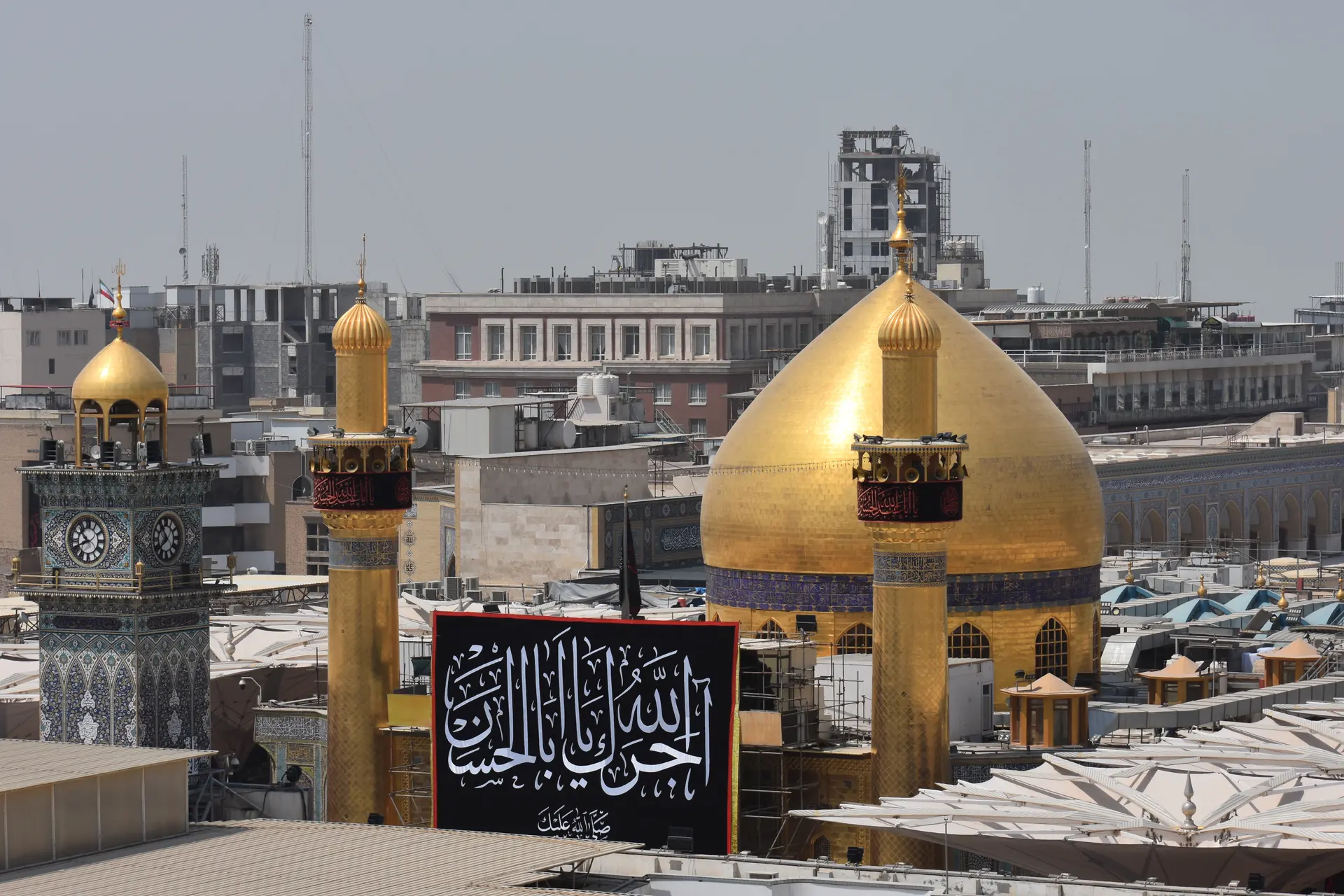
Image of Mausoleum of 1st Imam Ali bin Abu Talib, Najaf. Image source · CC-BY-SA-4.0
Visit essentials
A quick read before you go
- Duration
- Half a day for the shrine and a walk in the Wadi al-Salam.
- Access
- Najaf, central Iraq, about 160 km south of Baghdad.
Overview
The Imam Ali Holy Shrine in Najaf — al-ʿAtaba al-ʿAlawīya al-Muqaddasa — holds the burial place of ʿAli ibn Abi Talib, cousin and son-in-law of the Prophet Muhammad, the fourth Rashidun caliph and the first Imam of Twelver Shiʿa Islam. He was struck with a poisoned sword by the Kharijite ʿAbd al-Raḥmān ibn Muljam during dawn prayer at the mosque of Kufa on 19 Ramadan 40 AH (January 661 CE) and died two days later.
Adjoining the shrine lies the Wadi al-Salam cemetery — at over 9 square kilometres and more than 6 million graves, widely cited as the largest cemetery in the world, on UNESCO's tentative list. The shrine is the seat of the Najaf Hawza, the most senior centre of Shiʿa scholarly authority (marjaʿiyya), today led by figures such as Grand Ayatollah ʿAli al-Sistani.
Why this place is sacred
The Najaf shrine carries a different weight than the others in the Shiʿa pilgrimage circuit. Karbala is grief in the present tense; Najaf is the gate of knowledge. The figure of ʿAli is the source-point of nearly every silsila — every initiatic chain — of every Sufi order, and the rawza at Najaf is where those chains lead. Around the shrine has grown the Hawza, the seminary system whose senior scholars (the marjaʿiyya) shape Shiʿa life worldwide.
Hawza lessons are taught in the riwaq — the porticoes — around the courtyards; one walks past a grand ayatollah's office on the way to recite ziyarat. Adjoining the shrine, the Wadi al-Salam cemetery — more than 6 million graves stretching across more than 9 square kilometres — saturates the city with an awareness of death and return.
Bodies are still brought here for burial from across the Shiʿa world, on the conviction that to lie near Imam ʿAli is to ease the soul's journey. The crossing of the cemetery to reach the haram is, for many pilgrims, the most sobering threshold approach to any sacred site they will ever make.
Burial chamber of Imam ʿAli ibn Abi Talib, kept hidden through the Umayyad period and made publicly known in the eighth century CE. From the tenth century onward, the shrine grew into the seat of Twelver Shiʿa scholarship and the spiritual centre of Iraqi Shiʿism.
An early shrine is attested under Harun al-Rashid in the late eighth century. The Buyid ruler ʿAdud al-Dawla undertook significant tenth-century construction. Saljuq and Ilkhanid rebuilding followed; the Safavids embellished the courtyards and gilded the tile-work; Nader Shah Afshar gilded the great dome and minarets in 1156 AH / 1742 CE. The Qajars carried out further expansion; modern restoration has continued since 2003 under the shrine's Custodianship.
The 1801 (or 1802) Wahhabi attack on Najaf was largely repelled — unlike the contemporaneous raid on Karbala — with the inner shrine surviving.
Experience and orientation
The first sight of the shrine for many pilgrims is from the road in from Karbala, eighty kilometres to the north — the golden dome floating above the desert. Closer, the city closes in: narrow lanes, the old market, hawza students moving between mosques in turbans and robes, the immense paved expanse of the Wadi al-Salam cemetery extending to the horizon. Entering the haram, pilgrims pass through one of the named gates after security, with women receiving chador if needed.
The outer courtyards are spacious but more intimate in scale than Mashhad's; tile-work is largely Safavid and Qajar. At the rawza, the silver-and-gold zarih over Imam ʿAli's grave is the focus. Many describe Najaf as quieter than Karbala, more contemplative; the press at the zarih is intense but ordered. The riwaq around the courtyards often hold small clusters of hawza lessons; pilgrims may pass a senior scholar teaching a circle of students on their way out.
Enter through one of the named gates of the haram after passing security. Women receive chador at the gates if not already wearing one. Cameras with detachable lenses, weapons, and political symbols are not permitted past security. The Custodianship — Al-ʿAtaba al-ʿAlawīya al-Muqaddasa — runs an international pilgrim office that can arrange guides and advise on current access policy for non-Muslims.
Context and lineage
ʿAli was struck while prostrating in dawn prayer at the mosque of Kufa by the Kharijite ʿAbd al-Raḥmān ibn Muljam, who had coated his sword with poison. The Imam died on the night of 21 Ramadan. By Shiʿa tradition, he had told his sons Hasan and Husayn where to bury him and instructed them to load his body on a camel and let it kneel where it would.
The location was kept secret to prevent the grave being violated by the Umayyad dynasty's enemies; for nearly a century the burial place was known only within the Imam's household. In the early eighth century, the sixth Imam, Jaʿfar al-Ṣādiq, publicly identified the burial place — a high spot in the desert outside Kufa called al-Najaf ('the elevated dry place') — and pilgrimage to the grave began openly.
An organised shrine was raised under Harun al-Rashid in the late eighth century. The Buyid ruler ʿAdud al-Dawla built a substantial dome and walls in the tenth century, establishing the architectural ancestor of the present complex. Successive dynasties expanded and embellished the shrine; Nader Shah Afshar gilded the great dome and minarets in 1742, giving the shrine the silhouette by which it is recognised today.
Twelver (Ithnāʿasharī) Shiʿa Islam, with the shrine also venerated across virtually all Islamic schools and Sufi orders. The shrine is administered by Al-ʿAtaba al-ʿAlawīya al-Muqaddasa (the Imam Ali Holy Shrine Custodianship) and is the seat of the Najaf Hawza.
Traditions and practice
The Ziyarat Amīn Allāh, attributed to Imam Zayn al-ʿAbidin, is among the most loved devotional texts in Shiʿism and is recited by many pilgrims as they enter the rawza. Pilgrims touch and kiss the zarih and offer personal supplication. Tawassul — seeking the Imam's intercession — is widely practised. Burial of the dead in the Wadi al-Salam continues actively; bodies are brought from across the Shiʿa world, on the conviction that to lie near Imam ʿAli eases the soul's journey.
Night-vigil in the haram during the last ten nights of Ramadan, especially the Layali al-Qadr, is observed by many pilgrims.
21 Ramadan — the anniversary of the martyrdom of Imam ʿAli — is the most intense single night at the shrine, with all-night ziyarat, recitation, and mourning processions. 13 Rajab — the Imam's birthday — is a major joyful celebration. The Arbaʿīn season (20 Safar) sees Najaf transformed into the staging-ground for the eighty-kilometre walk to Karbala; many pilgrims arrive in Najaf days before to recite ziyarat at the Imam ʿAli shrine before setting out on foot.
Hawza lessons taught in the riwaq around the shrine continue throughout the year; senior marjaʿ, including Grand Ayatollah Sistani, maintain residences and offices near the haram.
Allow at least one full day in Najaf even if you are passing through to Karbala. Recite the Ziyarat Amīn Allāh slowly at the threshold; many pilgrims report this as the most affecting moment of their Iraq pilgrimage. Walk in the Wadi al-Salam — not as a tourist crossing it, but slowly enough that the scale of the cemetery becomes part of the visit.
If you can, attend an open hawza lesson; some are conducted in Arabic and Farsi for visiting pilgrims.
Twelver Shiʿa Islam
ActiveBurial place of ʿAli ibn Abi Talib — cousin and son-in-law of the Prophet Muhammad, fourth Rashidun caliph, and the first Imam of Shiʿa Islam. The holiest Shiʿa shrine in Iraq alongside Karbala, and the heart of the world's senior Shiʿa scholarly establishment (the Najaf Hawza).
Ziyarat of Imam ʿAli, especially the recitation of the Ziyarat Amīn Allāh; tawassul (seeking the Imam's intercession); touching and kissing the silver-and-gold zarih over the grave; burial in the Wadi al-Salam cemetery; scholarly attendance at the Hawza; walking from Najaf to Karbala (~80 km) during the Arbaʿīn pilgrimage; night-vigil during the last ten nights of Ramadan.
Perspectives and open questions
The shrine holds together history, theology, scholarship, and burial in a way unusual even among great pilgrimage sites. Each frame deepens the others.
Scholarly perspective
The Najaf shrine is one of the supreme works of Iraqi Islamic architecture, especially in its Safavid and Qajar phases. Najaf is the seat of the Twelver marjaʿiyya — the system of senior scholarly authority that, since at least the nineteenth century, has shaped Shiʿa religious, social, and political life worldwide. The Wadi al-Salam is among the largest cemeteries on Earth. The identification of the site as ʿAli's grave has been the unbroken consensus for over a millennium.
Living and traditional perspectives
Twelver Shiʿa tradition holds ʿAli as Maʿṣūm (divinely protected), wasi (designated successor) of the Prophet, Amir al-Muʾminin, and the source of true Islamic guidance after the Prophet. The hadith 'I am the city of knowledge and ʿAli is its gate' is central to Shiʿa understanding of his role. His ziyarat is held to bring forgiveness of sins, healing, and intercession.
Alternative interpretations
In Sufism, ʿAli is the bab (gate) of esoteric knowledge — the first link in nearly every silsila of every order, with the partial exception of the Naqshbandiyya, who trace their lineage primarily through Abu Bakr. Visiting his shrine is for many Sufis a homecoming to the source of their lineage. ʿAlawi and ʿAlevi communities have their own distinct, mystical veneration of ʿAli.
Open questions
The historical sequence by which the burial place was kept hidden and then revealed is preserved primarily in Shiʿa tradition rather than in independent contemporary sources; some early Sunni accounts locate ʿAli's grave at Kufa or elsewhere. The Najaf identification has been the unbroken consensus for over a millennium, and within the rawza the spiritual reality pilgrims encounter does not depend on resolving questions that scholarship cannot finally settle.
Plan your visit
Access and arrival
Najaf, central Iraq, about 160 km south of Baghdad. Najaf International Airport (NJF) is the main international entry for Shiʿa pilgrims, with direct flights from across the Shiʿa world. Buses and shared taxis link Najaf with Karbala (~80 km), Kufa (~10 km), and Baghdad. Foreign pilgrims should arrange visas in advance; the Iraqi government issues specific procedures for the Arbaʿīn season each year.
Najaf has a wide range of hotels and pilgrim guesthouses concentrated around the haram, with both economy dormitories and mid-range hotels. Demand rises sharply during the Arbaʿīn season, 21 Ramadan, and 13 Rajab; book ahead. The Custodianship provides free pilgrim accommodation and meals through its waqf services.
Respectful visit
Women: full chador (provided at gates) over modest clothing, hair fully covered. Men: long trousers and long sleeves; no shorts. Shoes removed at the haram entrance.
Restricted inside the haram and burial chamber. Outer courtyards usually permitted without flash. Do not photograph pilgrims, especially women or those weeping. Cameras with detachable lenses often refused at security.
Donations to the Custodianship and to the Hawza are welcomed. Money is sometimes thrown over the zarih as a vow. No food or perfume in the burial chamber.
No weapons, recording equipment beyond a phone, political symbols, or non-religious literature past security. Maintain silence and decorum near the rawza. Withdraw walking backwards from the burial chamber. Men's and women's prayer areas are separated inside the inner shrine. Non-Muslim access policy varies; verify current arrangements with the Custodianship before travel.
Summers in Najaf exceed 45°C; plan for heat. Maintain decorum throughout — Najaf carries a particular weight as the seat of scholarship and the marjaʿiyya. Non-Muslim access policy varies and conditions change; verify with the Custodianship before travel. During the Arbaʿīn season, accommodation and transport in Najaf are heavily strained — book ahead or join the mawkib network.
Current practical details
Address
Imam Sadiq St, النجف،, Najaf Governorate, Iraq
Hours
Hours, fees, and access can change — verify on the official source before you travel. Practical details last checked Jun 2026.
Location
Map loads as you approach this section.
Pilgrim reflections
A portrait of encounter, not a score
Pilgrims describe what they felt, how present they could become, and whether the place would shape a journey. There are no stars and no ranking of traditions.
No reviewed reflections yet
The first pilgrims can help describe the character of being here.
Share a reflection
Available after an account-backed “Been there.” Every reflection is reviewed before publication.
Nearby sacred places
Explore other sacred places in the region. Proximity does not establish access or travel time; check each place’s guidance.

Residence of the 12th Imam Muhammad Almahdi, Sahla Mosque, Najaf
Al Kufa, Najaf, Iraq
7.8 km away

Mausoleum of Maytham Altammar, Kufa, Najaf
Al Kufa, Najaf, Iraq
8.3 km away

Mausoleums of Muslim bin Aqil, Hani bin Urwa and Almukhtar, Kufa Mosque, Najaf
Al Kufa, Najaf, Iraq
8.9 km away

Mausoleum of Ezekiel, Kafel
Al Kifl, Babylon, Iraq
26.2 km away
References
Sources consulted for this page. Source categories describe the publication, not a guarantee that every claim is verified. Traditional accounts and outside interpretations may differ.
- 01Imam Ali Holy Shrine — Official Portal — Al-ʿAtaba al-ʿAlawīya al-Muqaddasa (Imam Ali Holy Shrine Custodianship)officialCustodian-published history, ziyarat texts, services, library and museum information.
- 02Imam Ali Shrine — Wikipedia — Wikipedia contributorsencyclopediaArchitecture, golden dome gilded 1742 by Nader Shah Afshar, double-walled zarih, courtyard expansions.
- 03Ali — Wikipedia — Wikipedia contributorsencyclopediaLife of ʿAli ibn Abi Talib (c. 600–661 CE), 4th Rashidun caliph and 1st Imam of Shiʿism; assassination at Kufa, burial near al-Najaf.
- 04Wadi al-Salam — Wikipedia — Wikipedia contributorsencyclopediaCemetery adjacent to the shrine: ~9.17 km², over 6 million graves, frequently cited as the largest cemetery in the world; UNESCO tentative list.
- 05NAJAF — Encyclopædia Iranica — Encyclopædia IranicaacademicAuthoritative scholarly entry on Najaf's history, shrine, the Hawza, and its role in Twelver Shiʿism.
- 06Al-Najaf | Iraq — Britannica — Encyclopædia BritannicaencyclopediaCity overview ~160 km south of Baghdad; shrine and Hawza scholarship; ranks as one of the holiest Shiʿa cities.
- 07Wadi-us-Salaam Cemetery in Najaf — UNESCO Tentative List — UNESCO World Heritage CentreofficialTentative-list submission documenting the cemetery's scale, age and significance.
- 08The Hawza of Najaf — scholarly overview — Encyclopaedia Islamica (Brill / CIS)academicReference article on the marjaʿiyya scholarly tradition centred at Najaf; Sistani, al-Khoei, and predecessors.
Share a photo
Help visitors recognize Mausoleum of 1st Imam Ali bin Abu Talib, Najaf. Every submission is reviewed before publication.