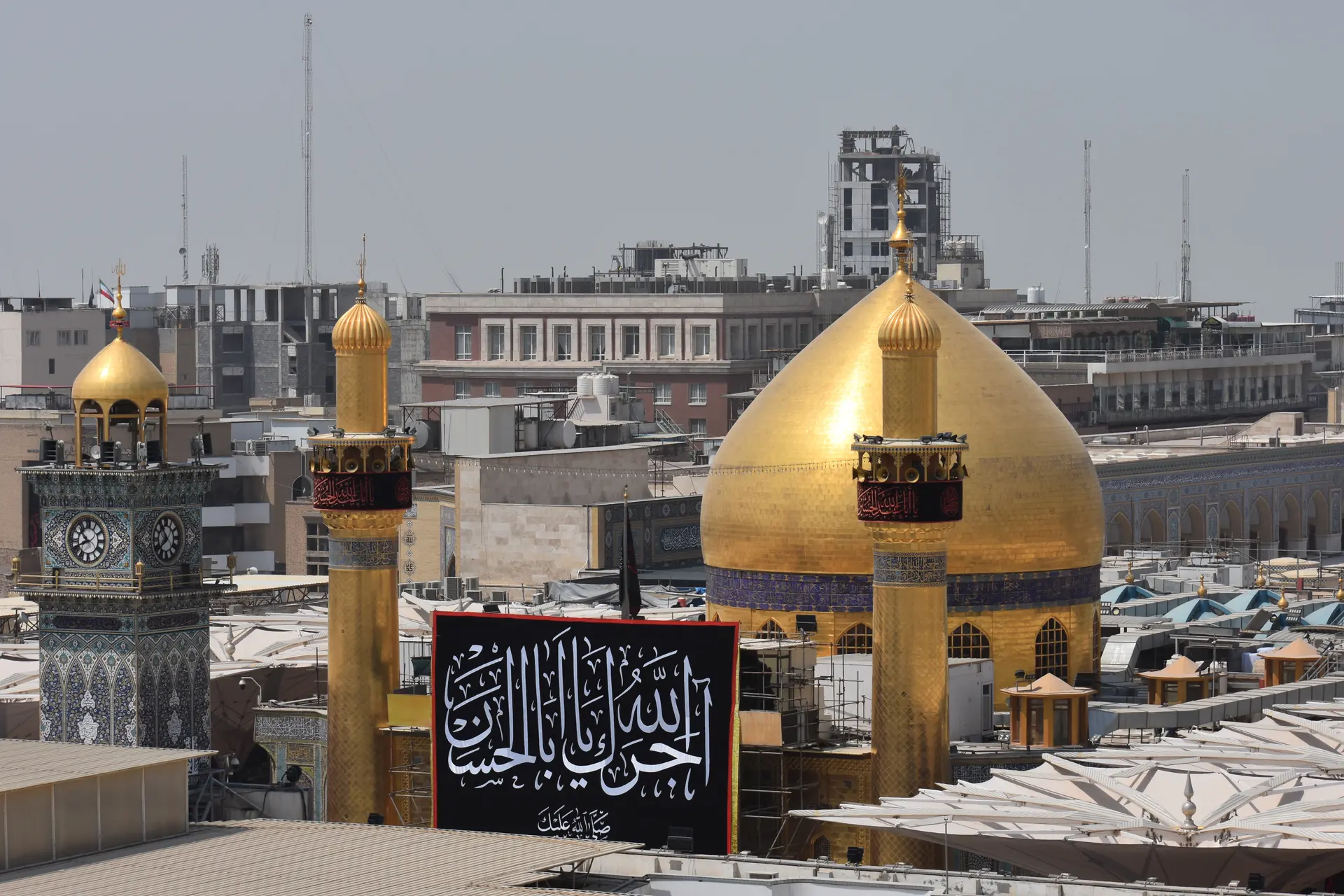
Mausoleum of Maytham Altammar, Kufa, Najaf
A Kufa shrine to the loyal companion of Imam Ali whose tongue, tradition says, never stopped praising him
Understand sacred places, explore living traditions, and learn how to engage respectfully with Pilgrim Map.
Access has not been verified. Check current local guidance before planning a visit.
Al Kufa, Najaf, Iraq
Read the sources
Image of Mausoleum of Maytham Altammar, Kufa, Najaf. Image source · CC-BY-3.0
Visit essentials
A quick read before you go
- Duration
- 20-45 minutes, often combined with a longer visit to the Great Mosque of Kufa.
- Access
- In Kufa, just west of the Great Mosque of Kufa, roughly a short drive or 7-minute walk from…
Overview
The shrine of Maytham al-Tammar honors steadfastness under persecution. Maytham ibn Yahya al-Tammar was a freed slave of Persian origin, a date merchant (tammar means 'the date-seller'), who became a devoted companion of Imam Ali, al-Hasan and al-Husayn, and a member of Ali's guard, the Shurtat al-Khamis. In Shia memory he is a paragon of loyalty (wala) to Imam Ali, a martyr who proclaimed Ali's virtues even under torture.
Tradition recounts that Imam Ali walked with Maytham to a palm tree and foretold that he would be crucified upon it and have his hands, feet and tongue cut. After the Umayyad governor Ubayd Allah ibn Ziyad ordered his mutilation and crucifixion around 60 AH (679-680 CE), Maytham continued to praise Ali; the governor then ordered his tongue cut out, fulfilling the prophecy. The site marks his grave and traditional place of martyrdom.
The present mausoleum is a modern reconstruction, rebuilt and expanded in 2011 with a new zarih (tomb-screen lattice) installed in 2017, fabricated in Isfahan and reassembled in Kufa; the original shrine's date and form are unknown. Pilgrims describe a quiet, intimate shrine close to the Great Mosque of Kufa, with gardens and a single domed chamber, often visited as part of a wider Najaf-Kufa ziyarat circuit.
It invites reflection on loyalty, steadfastness, and the cost of bearing witness to one's convictions.
Why this place is sacred
The thinness of Maytham al-Tammar's shrine arises from its association with prophetic foreknowledge and steadfast martyrdom. Tradition holds that Imam Ali himself foretold Maytham's crucifixion at this place, and that Maytham's tongue continued to praise Ali even after his mutilation. The shrine's proximity to the Great Mosque of Kufa, one of the holiest mosques in Shia Islam, deepens its resonance, as does the continuity of devotional visitation across the centuries.
It is an intimate place that draws reflection on loyalty and on the price of bearing witness.
The grave and traditional place of martyrdom of Maytham al-Tammar, marked and venerated as a shrine to a loyal companion of the Ahl al-Bayt.
The tomb dates to Maytham's burial after his execution around 60 AH (679-680 CE); the original shrine's construction date and form are unknown. The present mausoleum was rebuilt and expanded in 2011, with a new zarih added in 2017. It remains an active Shia shrine and a regular ziyarat stop near the Great Mosque of Kufa.
Experience and orientation
The shrine lies in Kufa, just west of the Great Mosque of Kufa, a short walk or drive from associated sites and a short drive from Najaf. Pilgrims describe a quiet, intimate shrine with gardens and a single domed chamber holding the zarih, often visited as part of a wider Najaf-Kufa ziyarat circuit rather than as a destination on its own.
The atmosphere invites reflection on loyalty, on steadfastness under persecution, and on the cost of bearing witness to one's convictions. Non-Shia and non-Muslim visitors are generally welcome to enter respectfully and observe, with participation in prayers optional. The shrine is busiest during Muharram and Arbaeen, when Najaf and Kufa receive large pilgrim numbers.
Approach the zarih quietly, removing shoes where indicated. The shrine is most naturally visited alongside the Great Mosque of Kufa nearby. Visitors who do not share the tradition may observe respectfully; prayer participation is optional.
Context and lineage
Maytham al-Tammar was a freed slave of Persian origin and a date merchant who became a close companion of Imam Ali and a member of his guard. Tradition recounts that Imam Ali walked with him to a palm tree and foretold that he would be crucified upon it and have his hands, feet and tongue cut.
After the Umayyad governor Ubayd Allah ibn Ziyad ordered his mutilation and crucifixion around 60 AH, Maytham continued to praise Ali, and the governor then ordered his tongue cut out — fulfilling, in tradition, Ali's prophecy.
Twelver Shia Islam, honoring the loyal companions of the Ahl al-Bayt.
Maytham ibn Yahya al-Tammar
Companion of Imam Ali and martyr
Imam Ali
First Shia Imam
Ubayd Allah ibn Ziyad
Umayyad governor
Modern Shia authorities
Builders of the present shrine
Traditions and practice
Ziyarat recitation at the zarih, two rakats of prayer, and recitation of Surah Yasin or al-Rahman; mourning and remembrance of Maytham's martyrdom.
Daily visitation, heightened during Muharram (Ashura mourning) and Arbaeen, when Najaf and Kufa receive large pilgrim numbers.
Pause at the zarih and consider the qualities Maytham is remembered for — loyalty and steadfastness in the face of torture. Visited alongside the Great Mosque of Kufa, the shrine deepens reflection on the cost of bearing witness to one's convictions.
Twelver Shia Islam
ActiveMaytham al-Tammar is venerated as a model of unwavering loyalty (wala) to Imam Ali and as a martyr who proclaimed Ali's virtues even under torture. His shrine is a focus of devotional visitation honoring the companions of the Ahl al-Bayt.
Ziyarat (visitation prayers), recitation of Surah Yasin or al-Rahman, two rakats of prayer, and mourning and remembrance of his martyrdom.
Perspectives and open questions
Maytham is accepted by historians as a real companion of Ali and venerated in Shia tradition as a loyal martyr.
Scholarly perspective
Historians accept Maytham al-Tammar as a historical companion of Ali executed under Ubayd Allah ibn Ziyad around 60 AH; the present shrine is a modern (2011) reconstruction over a traditionally venerated grave site. The exact death year is disputed between 679 and 680 CE renderings of 60 AH.
Living and traditional perspectives
Shia tradition venerates him as a loyal martyr and orator of the Ahl al-Bayt whose martyrdom fulfilled Ali's prophecy.
Alternative interpretations
Devotional accounts emphasize miraculous elements, especially his tongue continuing to praise Ali after his crucifixion.
Open questions
The original date and form of the shrine before the 20th century are not documented, and details of his life rest largely on later hagiographic sources. Precise GPS coordinates were not published in consulted sources.
Plan your visit
Access and arrival
In Kufa, just west of the Great Mosque of Kufa, roughly a short drive or 7-minute walk from associated sites and a short drive from Najaf. Approximate coordinates ~32.0289 N, 44.4006 E.
Najaf, a short drive away, is the main pilgrim base with extensive lodging; Kufa offers more limited options.
Respectful visit
Modest dress; women typically wear hijab and abaya, men long trousers and covered shoulders.
Generally permitted in courtyard areas; check for restrictions inside the shrine chamber and be discreet around worshippers.
No specific material offering is required; visitors recite prayers and may make donations.
Maintain silence and decorum near the zarih; remove shoes where indicated.
Maintain silence and decorum near the zarih; remove shoes where indicated. Be discreet with photography around worshippers inside the shrine chamber. This is a living place of worship in a conservative Shia region; respectful conduct is expected.
Current practical details
Address
29GW+H36, Kufa, Najaf Governorate, Iraq
Hours
Hours, fees, and access can change — verify on the official source before you travel. Practical details last checked Jun 2026.
Location
Map loads as you approach this section.
Pilgrim reflections
A portrait of encounter, not a score
Pilgrims describe what they felt, how present they could become, and whether the place would shape a journey. There are no stars and no ranking of traditions.
No reviewed reflections yet
The first pilgrims can help describe the character of being here.
Share a reflection
Available after an account-backed “Been there.” Every reflection is reviewed before publication.
Nearby sacred places
Explore other sacred places in the region. Proximity does not establish access or travel time; check each place’s guidance.

Mausoleums of Muslim bin Aqil, Hani bin Urwa and Almukhtar, Kufa Mosque, Najaf
Al Kufa, Najaf, Iraq
0.6 km away

Residence of the 12th Imam Muhammad Almahdi, Sahla Mosque, Najaf
Al Kufa, Najaf, Iraq
2.0 km away
Mausoleum of 1st Imam Ali bin Abu Talib, Najaf
Najaf, Iraq
8.3 km away

Mausoleum of Ezekiel, Kafel
Al Kifl, Babylon, Iraq
22.4 km away
References
Sources consulted for this page. Source categories describe the publication, not a guarantee that every claim is verified. Traditional accounts and outside interpretations may differ.
- 01Mausoleum of Maytham al-Tammar — Wikipedia — Wikipedia contributorsacademicConfirms location west of the Great Mosque of Kufa, 2011 rebuild and 2017 zarih, dome and minaret dimensions.
- 02Maytham al-Tammar — Wikipedia — Wikipedia contributorsacademicBiography: Persian freed slave, date merchant, companion of Ali, al-Hasan and al-Husayn; member of Shurtat al-Khamis; executed by Ubayd Allah ibn Ziyad.
- 03Crucifixion of Maytham at-Tammar — Suffering of the Ahl ul-Bayt and Their Followers Throughout History — Mateen Charbonneau / Al-Islam.orgspiritualTraditional Shia narration of Ali's prophecy and the crucifixion/mutilation account.
- 04The Personality of Maytham al-Thammar — Al-Shia — Al-Shia.orgspiritualDevotional account of his loyalty, oratory and martyrdom.
- 05Maytham al-Tammar — Companion of Ali (A.S) — Ziarat Planner — Ziarat PlannerSource contextPilgrim-oriented guidance; legacy and story, ziyarat practice notes.
- 06Maytham al-Tammar Shrine: A Testament of Faith — Evendo — EvendoSource contextVisitor information: opening hours, dress code, best times, gardens.
- 07Maytham al-Tammar — By the Dawn (Acts at al-Kufa Mosque) — By the DawnSource contextZiyarat instructions; proximity to the Great Mosque of Kufa.
Share a photo
Help visitors recognize Mausoleum of Maytham Altammar, Kufa, Najaf. Every submission is reviewed before publication.