Lassen Peak, California
Where the Atsugewi walked for 7,500 years before the mountain last breathed fire
Mineral, California, United States
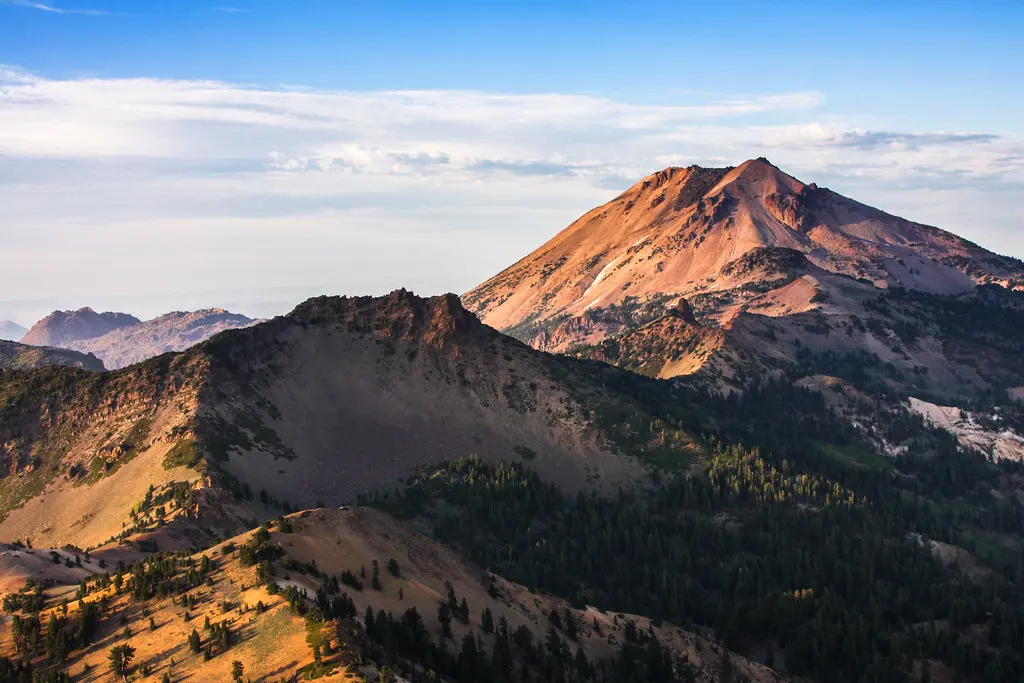
Image of Lassen Peak, California. Image source
Visit essentials
Before you go
- Access
- The park is accessible via Highway 89 from the north (from Highway 44) or Highway 36 from the…
- Address
- Lassen Peak, California, USA
- Duration
- Full day to explore multiple features including a summit attempt
- Etiquette
- Respect Indigenous sacred geography.
Overview
Long before the peak bore a Danish explorer's name, it was known to four Indigenous peoples who made these volcanic highlands their home. The Atsugewi, Yana, Yahi, and Mountain Maidu traveled through this landscape during warmer months, following hunting and gathering circuits that connected them to the seasonal rhythms of the mountains. They gave the peak names that captured its essence: the Native Americans called it 'Mill-u-la-ha' meaning 'Fire Mountain,' while the Maidu name 'Kohm Yah-mah-nee' means 'Snow Mountain.'
Archaeological evidence reveals human presence here at least as far back as 7,500 years, millennia of relationship between people and fire-born landscape. The descendants of these original inhabitants still live nearby and consider the entire park a sacred place, particularly the 10,457-foot peak that dominates the region.
When Lassen Peak erupted on May 22, 1915, it was one of only two volcanoes to erupt in the contiguous United States during the 20th century. The other was Mount St. Helens. The mountain's volcanic power, so evident today in bubbling mudpots, steaming fumaroles, and boiling springs, has always marked this as a place where the earth's inner forces break through.
The visitor center bears the Maidu name: Kohm Yah-mah-nee. This small gesture acknowledges what the Indigenous peoples have always understood. Fire Mountain, Snow Mountain, whatever name you give it, this peak is alive.
Why this place is sacred
Some thin places derive their quality from human history, from accumulated prayer or pilgrimage. Lassen Peak derives its power from geological force, from the earth itself breaking through. The volcano's 1915 eruption was not an anomaly but an expression of what the Indigenous peoples had always recognized: this is Fire Mountain, a place where the earth's interior forces reach the surface.
Walking among the hydrothermal features, visitors encounter thinness in visceral form. The ground steams. Mud bubbles. The sulfurous smell of volcanic activity fills the air. This is not metaphorical; the boundary between the earth's surface and its fiery interior is genuinely thin here, measured in temperature and chemistry rather than mystical perception.
Yet the Indigenous recognition of this landscape as sacred suggests something beyond geology. For 7,500 years, people have lived in relationship with Fire Mountain. The Atsugewi, Yana, Yahi, and Mountain Maidu traveled through this terrain, developing understandings that included but exceeded what we now call science. Their descendants still consider this place sacred.
The convergence of geological thinness and Indigenous sacred geography creates a site where both frameworks of understanding apply. The earth's forces break through here. Four peoples recognized this as sacred ground. Both statements are true, and neither fully explains the other.
The volcanic highlands served as hunting and gathering territory for the Atsugewi, Yana, Yahi, and Mountain Maidu peoples. The land's volcanic character was understood as a fundamental aspect of its nature, not a threat to be avoided but a quality to be recognized.
The mountain's significance to Indigenous peoples predates European contact and continues today. The 1915 eruption prompted national park designation in 1916, bringing federal protection and increased visitation. Park interpretation now includes tribal perspectives, with tribal members participating in cultural programming. The naming of the visitor center 'Kohm Yah-mah-nee' acknowledges the Maidu relationship with Snow Mountain.
Experience and orientation
Arriving at Lassen Volcanic National Park, visitors enter one of the most volcanically active regions in the Cascade Range. The park contains all four types of volcanoes found in the world: plug dome, shield, cinder cone, and stratovolcano. Lassen Peak itself is a plug dome volcano, its 10,457-foot summit the result of lava pushed up through older rock.
The hydrothermal areas provide the most immediate encounter with the earth's volcanic forces. At Bumpass Hell, named for a guide who scalded his leg in boiling water, boardwalks lead through a landscape of steaming fumaroles, hissing vents, and mud pots that bubble continuously. The sulfur smell is strong. The ground is hot. These are not relics of past activity but ongoing volcanic processes.
The summit trail climbs 2,000 feet over 2.5 miles to Lassen Peak's crater. Those who make the ascent stand where lava erupted in 1915, where the largest volcanic explosion in the contiguous US since 1880 threw debris into the atmosphere. The views extend across northern California, Mount Shasta visible to the north on clear days.
Throughout the park, the landscape reveals its fire-born origins. Dark volcanic rock, crater lakes, and meadows that occupy former lava flows create terrain unlike anywhere else. For the Atsugewi, Yana, Yahi, and Mountain Maidu who traveled here for millennia, this was homeland, the context in which they developed their relationships with the land.
Lassen Volcanic National Park lies in northern California's Shasta Cascade region, accessible via Highway 89 from the north or Highway 36 from the south. The Kohm Yah-mah-nee Visitor Center near the southern entrance provides orientation and interpretation including Indigenous history.
Context and lineage
Specific origin narratives for Lassen Peak from the Atsugewi, Yana, Yahi, or Mountain Maidu peoples are not available in public sources. What is documented is that these peoples considered the land sacred, that they traveled through during hunting and gathering circuits, and that the volcanic nature of the landscape was understood as fundamental to its character.
The names they gave the peak reflect this understanding: Fire Mountain and Snow Mountain capture the mountain's nature in ways that 'Lassen Peak' does not.
The Atsugewi territory historically extended from Lassen Peak to Mount Shasta. Along with the Mountain Maidu, Yahi, and Yana, they made this volcanic landscape their home for at least 7,500 years based on archaeological evidence. The descendants of these original inhabitants still live nearby and continue their relationship with the land through cultural programming and ongoing recognition of its sacred status.
Selena LaMarr
The park's first woman naturalist and a member of the Atsugewi tribe. Beginning in the 1950s, she conducted demonstrations of traditional lifeways including basket weaving, helping to maintain the connection between the Indigenous peoples and their ancestral homeland.
Traditions and practice
The Atsugewi, Yana, Yahi, and Mountain Maidu traveled through the land now within the park during warmer months as they made their hunting and gathering circuits. This was not casual movement but patterned relationship with the landscape, following routes and timing developed over thousands of years.
Traditional uses included hunting, fishing, and spiritual practices connected to the volcanic landscape. The specific nature of spiritual practices has not been publicly shared in detail, but the recognition of this as sacred ground implies practices of attention and reverence.
Basket weaving was a traditional craft documented by Selena LaMarr's demonstrations beginning in the 1950s. Materials gathered from the landscape were transformed into functional and beautiful objects, connecting makers to their ancestral homeland.
Tribal members continue to participate in cultural programming at the park, demonstrating traditional practices and sharing their histories. The National Park Service regularly invites enrolled tribal members to engage with visitors, maintaining the living connection between Indigenous peoples and their ancestral homeland.
The naming of the visitor center 'Kohm Yah-mah-nee,' the Maidu name for Snow Mountain, represents institutional acknowledgment of Indigenous relationship with the land. This small gesture carries significance, placing Indigenous naming at the entrance to the park.
Approach this landscape with awareness that you are visiting land sacred to four Indigenous peoples for at least 7,500 years. The volcanic features that draw most visitors exist within a context of Indigenous sacred geography.
At the hydrothermal areas, experience the earth's volcanic forces directly. The ground steaming, the mud bubbling, the heat rising, these are not attractions but expressions of what the Indigenous peoples have always known: this is Fire Mountain.
If summit conditions allow, consider the climb to Lassen Peak's crater. Standing where the mountain erupted in 1915 places you in direct relationship with volcanic force. The Indigenous peoples who traveled through this landscape for millennia knew this power.
Visit the Kohm Yah-mah-nee Visitor Center and engage with the Indigenous history presented there. The descendants of those who named this Snow Mountain still live nearby. Their relationship with this place continues.
Atsugewi, Yana, Yahi, and Mountain Maidu
ActiveThis volcanic landscape is the ancestral homeland of four Indigenous peoples who have lived here for at least 7,500 years. They named the peak Fire Mountain and Snow Mountain, recognizing its volcanic nature. Descendants still live nearby and consider the park sacred.
Traditional hunting and gathering circuits brought people through these highlands during warmer months. Basket weaving and other traditional crafts connected people to the landscape. Today, tribal members participate in cultural demonstrations and share their histories through park programming.
Perspectives and open questions
Lassen Peak's significance is understood through both Indigenous traditional knowledge and geological science. Both frameworks recognize this as a place of power, describing that power in different vocabularies.
Scholarly perspective
Geological studies document Lassen Peak as an active plug dome volcano, part of the Cascade Volcanic Arc. The 1915 eruption sequence is well-documented, making Lassen one of two volcanoes to erupt in the contiguous US during the 20th century. Ongoing monitoring tracks volcanic activity in the region.
Archaeological evidence confirms at least 7,500 years of human presence in what is now the park. The significance of the land to the Atsugewi, Yana, Yahi, and Mountain Maidu peoples is recognized in park interpretation and management.
Living and traditional perspectives
The Atsugewi, Mountain Maidu, Yahi, and Yana peoples maintain their connection to this ancestral homeland. Descendants still live nearby and consider the park sacred. The naming of the visitor center 'Kohm Yah-mah-nee' acknowledges the Maidu relationship with Snow Mountain.
The names Fire Mountain and Snow Mountain capture what Indigenous peoples have always understood: this peak is defined by its volcanic nature and its snowcapped presence. Both aspects are essential to its character.
Alternative interpretations
Mount Shasta to the north attracts significant New Age and alternative spiritual interest, but Lassen does not have a comparable alternative spiritual community. The park is primarily appreciated for its geological significance and natural beauty.
Open questions
The specific spiritual practices and ceremonial uses of this landscape by the Atsugewi, Yana, Yahi, and Mountain Maidu peoples are not comprehensively documented in public sources. This privacy may be intentional and should be respected.
Plan your visit
Access and arrival
The park is accessible via Highway 89 from the north (from Highway 44) or Highway 36 from the south. The park road connects these two entrances, passing through the park's major features.
Camping is available at multiple campgrounds within the park. Lodging is available in Chester, Mineral, and surrounding communities. No food services are available within the park.
Respectful visit
Appropriate mountain hiking attire with layers for rapidly changing weather. Be prepared for cold temperatures at altitude even in summer.
Permitted throughout the park. The hydrothermal areas and volcanic landscapes offer remarkable photography opportunities.
Not traditional for visitors to this site.
Stay on designated trails in hydrothermal areas. Follow Leave No Trace principles. Standard national park regulations apply.
Stay on designated trails in hydrothermal areas. The ground can be dangerously thin; scalding water lies just below the surface. The guide Bumpass Hell is named for lost his leg to burns.
The summit trail is strenuous, climbing 2,000 feet at high altitude. Weather can change rapidly. Be prepared for the mountain's nature: unpredictable and powerful.
Volcanic activity is ongoing. While a major eruption is not predicted, the mountain is monitored for good reason. Treat Fire Mountain with appropriate respect.
Current practical details
Address
Lassen Peak, California, USA
Hours, fees, and access can change — verify on the official source before you travel. Practical details last checked Jun 2026.
Location
Map loads as you approach this section.
Pilgrim reflections
A portrait of encounter, not a score
Pilgrims describe what they felt, how present they could become, and whether the place would shape a journey. There are no stars and no ranking of traditions.
No reviewed reflections yet
The first pilgrims can help describe the character of being here.
Share a reflection
Available after an account-backed “Been there.” Every reflection is reviewed before publication.
Nearby sacred places
Explore other sacred places in the region. Proximity does not establish access or travel time; check each place’s guidance.

References
Sources consulted for this page. Source categories describe the publication, not a guarantee that every claim is verified. Traditional accounts and outside interpretations may differ.
- 01American Indian Heritage — National Park Service - Lassen Volcanic National ParkofficialOfficial NPS documentation
- 02The Indigenous History of Lassen Volcanic National Park — RVsharespiritualCultural history
- 03Lassen Peak — WikipediaencyclopediaGeneral reference
- 047 Sacred Sites in California — Visit CaliforniaguideTourism perspective
Share a photo
Help visitors recognize Lassen Peak, California. Every submission is reviewed before publication.