Labna
Where Maya priests once passed through the most perfect arch of the ancient world to invoke the rain god's blessing
Understand sacred places, explore living traditions, and learn how to engage respectfully with Pilgrim Map.
Access has not been verified. Check current local guidance before planning a visit.
Santa Elena, Yucatán, Mexico
Read the sources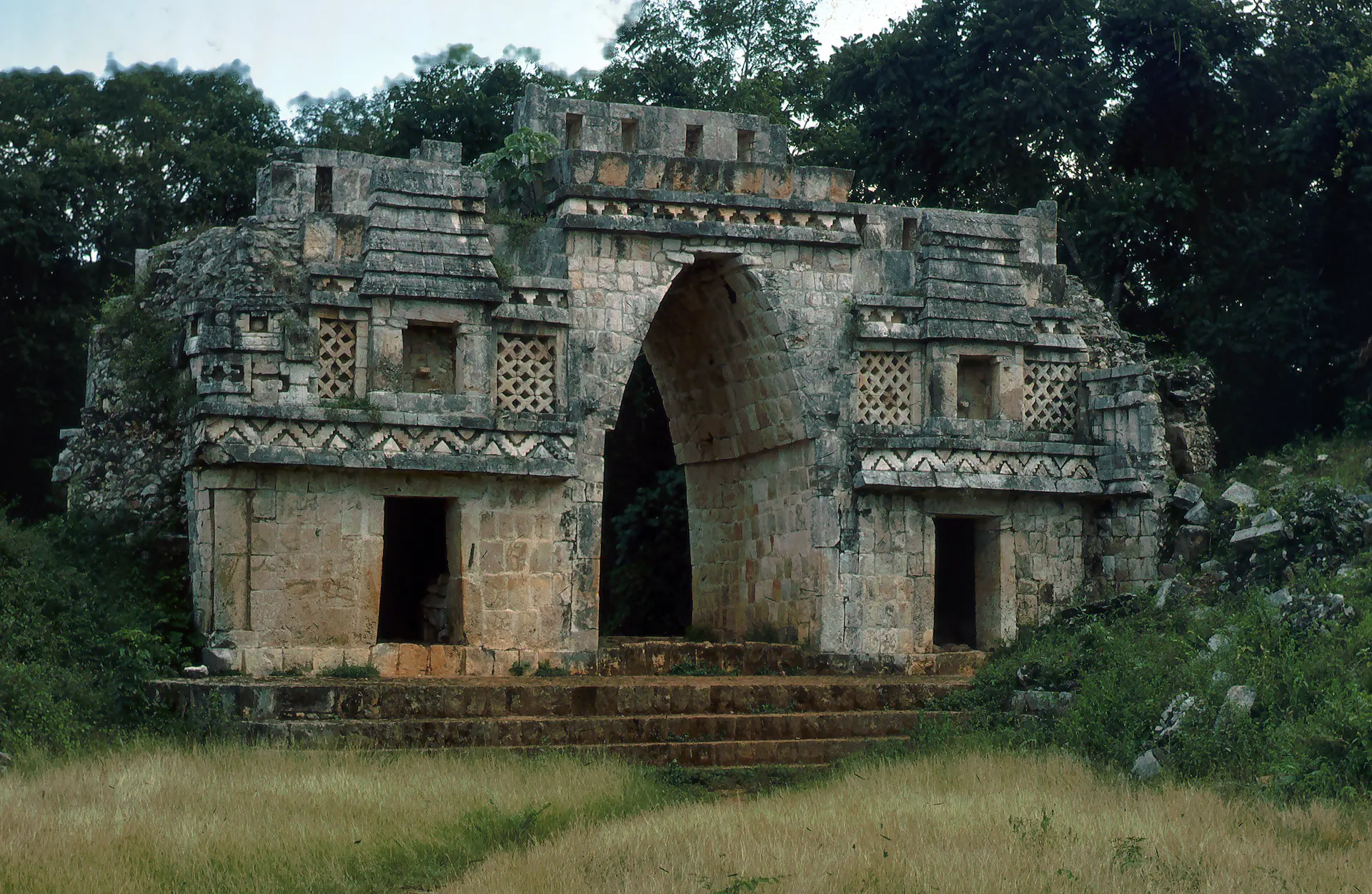
Visit essentials
A quick read before you go
- Duration
- 1-2 hours allows thorough exploration of this compact site.
- Access
- Located on the Puuc Route approximately 30 km south of Uxmal in Yucatán state, Mexico.
Overview
In Yucatan's dry limestone hills, Labna's Maya ceremonial center joined water need to worship of Chaac, the long-nosed rain god whose masks cover its walls. It flourished from 800 to 1000 AD, perhaps reaching 3,000 people before an abandonment scholars still debate.
El Arco, a masterpiece of Puuc mosaic architecture whose carved patterns and faces survived jungle reclamation, was not a city gate but a ritual passage between public plaza and restricted sacred space, a threshold once honored by priests.
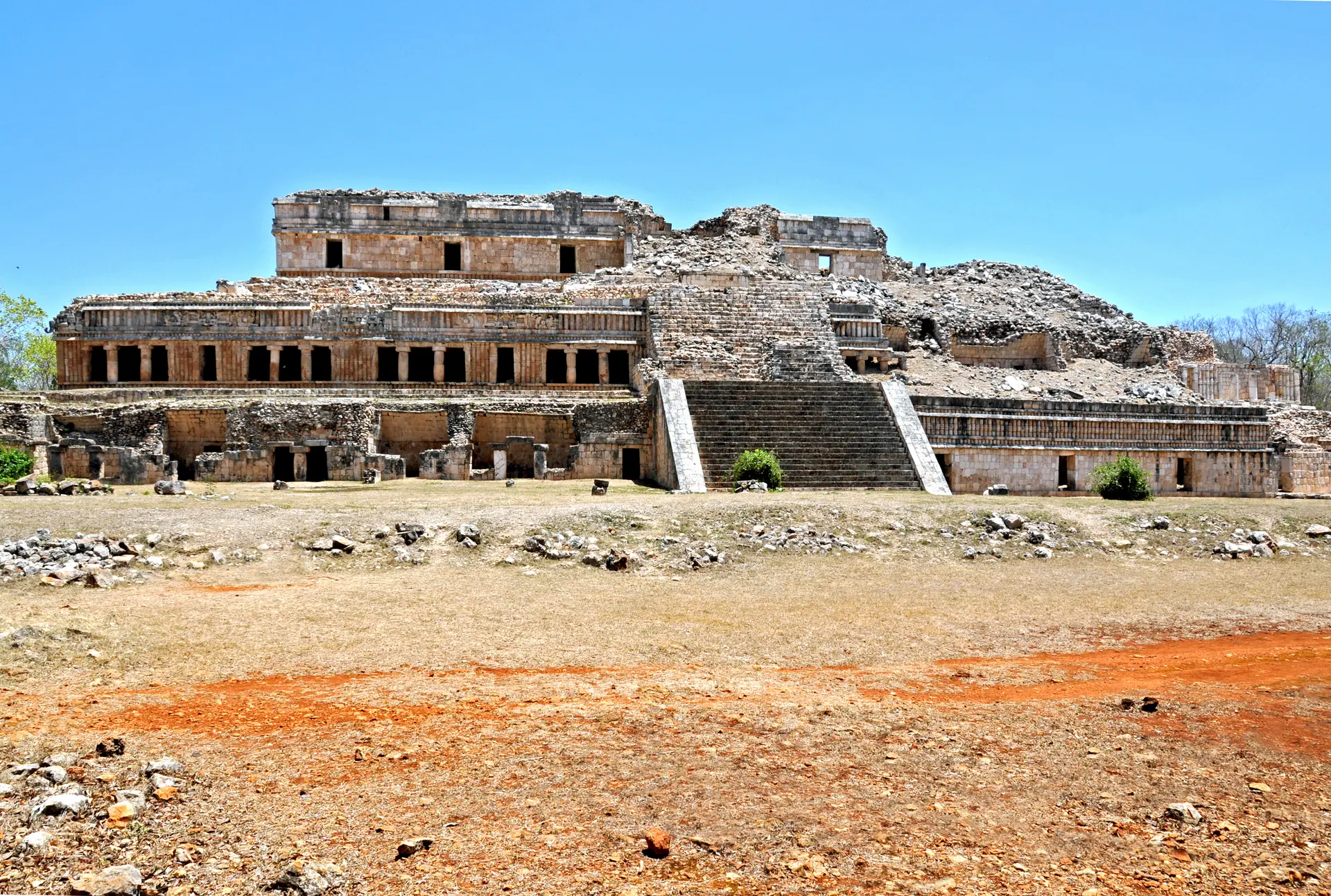
Nearby, the Conjuring House—Itzam Nah in Maya—hosted priestly magic with sacred substances. The 120-metre Long Palace is among the Puuc region's largest contiguous structures. Sixty bottle-shaped chultunes collected rainwater, joining engineering and spirituality.
Quieter than nearby Uxmal, Labna offers communion with Maya ceremonial ground where rain prayers and royal pronouncements remain in stone.
Why this place is sacred
The thinness of Labna centers on the arch that remains its most celebrated feature. This was not merely decorative architecture but functional sacred technology—a passage that transformed those who walked through it, marking transition from public plaza into restricted ceremonial space. The arch created threshold, and thresholds are where the ordinary world thins.
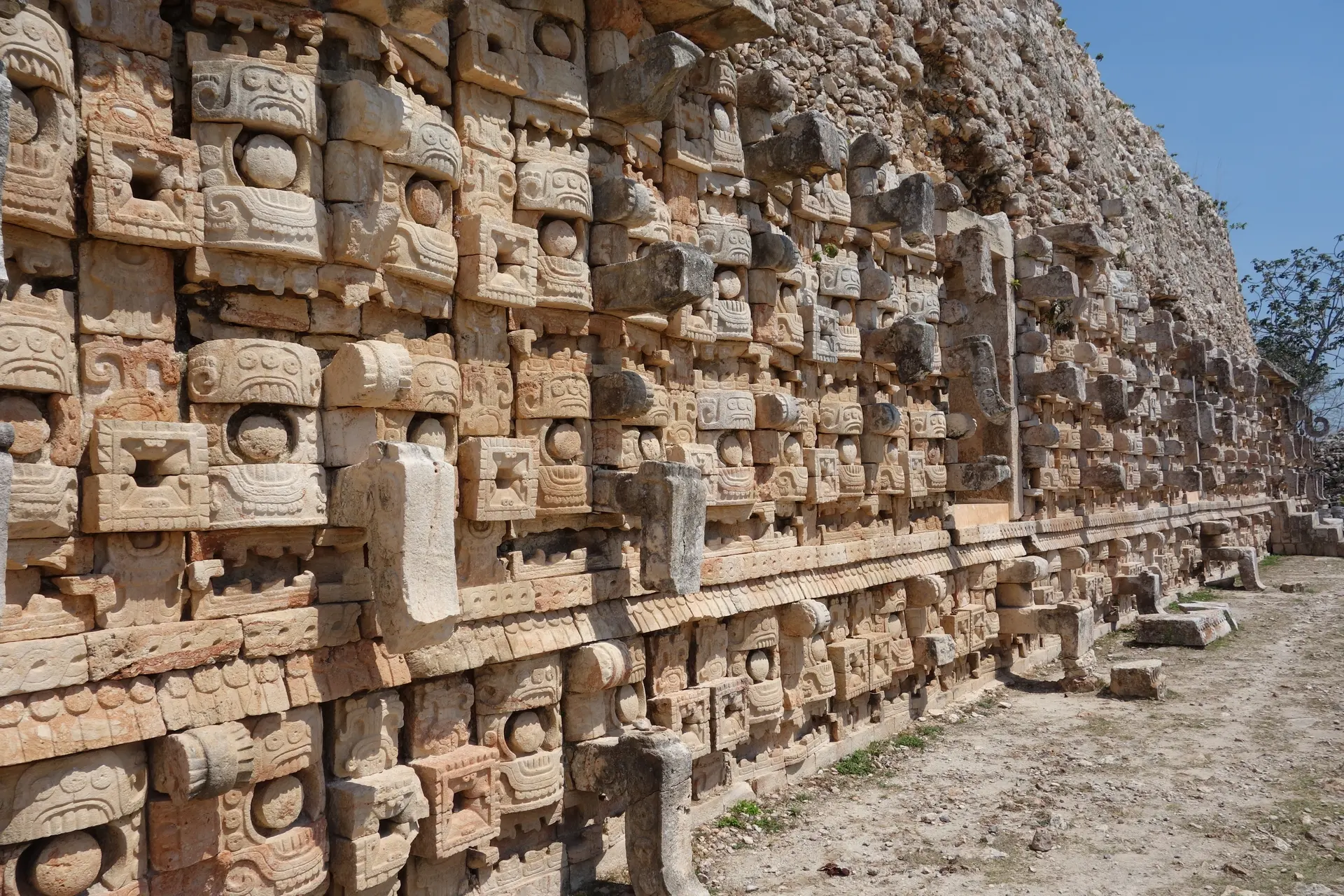
Chaac's masks multiply across the site, the rain god's long nose protruding from walls that once witnessed his invocation. In the dry Puuc hills, no deity mattered more. The king served as both political ruler and high priest, his legitimacy bound to his ability to call forth the rains that meant survival. This was not abstract theology but urgent necessity encoded in stone.
The Conjuring House adds another dimension. Here priests worked with sacred substances—itz, meaning nectar, sap, dew, and other holy liquids—to make magic. The building's very name announces its function: a place where the boundary between material and spiritual thinned sufficiently for transformation to occur.
Unlike larger sites overwhelmed by tourism, Labna offers space for contemplation. Its quiet allows the ancient function of these structures to remain perceptible to those who approach with attention.
Labna served as a Maya ceremonial and administrative center, focused particularly on the worship of Chaac and the performance of rain-invoking rituals essential to agricultural survival in the dry Puuc region.
The site flourished during the Late Classic period before being abandoned around 1000 AD. It lay hidden until John Lloyd Stephens and Frederick Catherwood documented it in 1842. UNESCO World Heritage inscription in 1996 (with Uxmal, Kabah, and Sayil) ensures ongoing preservation.
Experience and orientation
Labna offers something increasingly rare at Maya sites: quiet encounter. Fewer visitors than Uxmal or Chichen Itza allow the space to speak. The Long Palace stretches along one side, its Chaac masks projecting from façades that once announced royal power and priestly authority. The pyramid called El Mirador rises near the arch, its temple summit offering perspective across the ancient ceremonial center.
But the arch draws the eye and holds attention. Visitors instinctively want to pass through it, to experience bodily the threshold that structured Maya ritual life. The passage is brief—three meters wide, six meters high—but the sense of crossing something persists. The carved figures on either side, the geometric patterns, the undeniable perfection of stonework a thousand years old: these elements combine to create transition space that still functions.
The site reveals the Maya genius for integrating practical and sacred. Sixty chultunes beneath the structures collected rainwater—precious technology in a region without rivers. This was not mere engineering but spiritual response to environment, the same impulse that elevated Chaac to supreme importance here.
Those who take time to sit quietly, perhaps in the shade of the palace colonnade, may find Labna offering what it always offered: a place where the boundary between worlds grows permeable.
Approach Labna as you would any place of former worship—with awareness that these stones witnessed centuries of prayer. The arch invites passage; accept the invitation consciously, noting what shifts as you cross the threshold Maya priests once honored. Allow more time than the site's compact size might suggest. Quietude reveals what rushing obscures.
Context and lineage
Labna belongs to the Puuc architectural tradition that flourished in the limestone hills of the northern Yucatan Peninsula during the Late Classic period. The site shares UNESCO World Heritage status with Uxmal, Kabah, and Sayil, representing the finest achievements of Puuc Maya civilization.
Chaac
Maya rain god whose worship centered at Labna; his masks adorn the buildings
John Lloyd Stephens
American explorer who documented Labna in 1842 with artist Frederick Catherwood
Traditions and practice
Maya priests performed rain ceremonies to invoke Chaac's blessing. The Conjuring House served as a place for priestly magic involving sacred substances. Ritual processions passed through the arch from public plaza to sacred precincts.
Pass consciously through the arch, noting the transition from one space to another. Sit quietly near the Chaac masks and consider what it meant to depend on divine favor for rain. Walk the ceremonial pathways (sacbé) that connected the site's complexes. If traveling the Puuc Route, visit Labna last for its quieter atmosphere.
Ancient Maya
HistoricalLabna was a ceremonial center dedicated to Chaac worship, featuring the most elaborate arch in Maya architecture. The site served both civic and religious functions during its peak from 800-1000 AD.
Rain ceremonies invoking Chaac, priestly magic in the Conjuring House, processional rituals through the sacred arch, community gatherings in plazas
Perspectives and open questions
Labna invites encounter with Maya ceremonial architecture at human scale. The famous arch—considered the finest in all Maya territory—speaks to the importance of sacred thresholds in Maya religious life.
Scholarly perspective
Labna flourished as a Maya ceremonial and administrative center during the Late Classic period (600-1000 AD), reaching its architectural peak between 800-1000 AD with approximately 3,000 inhabitants. The site exemplifies Puuc architectural style with its distinctive mosaic decoration and abundant Chaac imagery. The arch is considered the masterpiece of Puuc mosaic architecture. Abandonment around 1000 AD coincided with regional Maya collapse whose causes remain debated.
Living and traditional perspectives
The Maya understood Labna as a center for invoking Chaac's protection and ensuring agricultural prosperity through rainfall. The Conjuring House served as location for priestly magic involving sacred substances (itz). The arch functioned as ritual passage between public and sacred realms, its threshold marking transformation of those who crossed.
Open questions
The precise reasons for Labna's abandonment around 1000 AD remain uncertain. The full scope of rituals performed in the Conjuring House is not completely understood. The site's political relationships with other Puuc centers continue to be investigated.
Plan your visit
Access and arrival
Located on the Puuc Route approximately 30 km south of Uxmal in Yucatán state, Mexico. Usually reached by rental car or organized Puuc Route tour from Mérida. Entrance fee required. Open daily 8am-5pm.
Most visitors stay in Mérida (80 km north) or at lodges near Uxmal. Day trip logistics work best.
Respectful visit
Comfortable clothing; sturdy shoes for uneven terrain. Sun protection essential—there is limited shade.
Permitted without flash. Commercial or professional shoots may require permits.
Not applicable; leave nothing behind.
Do not climb structures. Do not remove any artifacts. Standard INAH archaeological site rules apply.
Current practical details
Address
Carretera Uman - Hopelchen km 101, 97887 Mérida, Yuc., Mexico
Phone
Hours
Hours, fees, and access can change — verify on the official source before you travel. Practical details last checked Jun 2026.
Location
Map loads as you approach this section.
Pilgrim reflections
A portrait of encounter, not a score
Pilgrims describe what they felt, how present they could become, and whether the place would shape a journey. There are no stars and no ranking of traditions.
No reviewed reflections yet
The first pilgrims can help describe the character of being here.
Share a reflection
Available after an account-backed “Been there.” Every reflection is reviewed before publication.
Nearby sacred places
Explore other sacred places in the region. Proximity does not establish access or travel time; check each place’s guidance.


References
Sources consulted for this page. Source categories describe the publication, not a guarantee that every claim is verified. Traditional accounts and outside interpretations may differ.
- 01Labna - Wikipedia — WikipediaencyclopediaOverview with historical and architectural details
- 02Labná Ruins Guide | Lost Ruins of the Americas — Lost Ruins of the AmericasacademicDetailed archaeological information
- 03The Mayan Ruins Website - Labna — The Mayan Ruins WebsiteguideSite description and visitor information
Photo gallery
3 curated photos
Share a photo
Help visitors recognize Labna. Every submission is reviewed before publication.