La Ciudad Perdita
A living Tairona city in the jungle, older than Machu Picchu, still sacred to its guardians
Understand sacred places, explore living traditions, and learn how to engage respectfully with Pilgrim Map.
Access has not been verified. Check current local guidance before planning a visit.
Santa Marta, Magdalena, Colombia

Visit essentials
A quick read before you go
- Duration
- 4-6 day round-trip trek.
- Etiquette
- Visitors are guests in a living sacred space belonging to four indigenous peoples.
Overview
The city was never lost: the Kogi always knew Teyuna was there. Treasure hunters followed jungle stone steps to it in 1972; archaeology began in 1976 and documented one of the Tairona network's largest cities—169 terraces cut into steep slopes at 1,200 metres, linked by tiled roads and stone stairs, with drainage systems functioning for twelve centuries.
Built around 800 CE and maintained for roughly eight hundred years, Teyuna outlasted unusually long and fierce Tairona resistance to the 16th-century Spanish invasion. When resistance failed, people retreated into the Sierra Nevada's highest reaches with their knowledge and ceremonies; jungle covered the city and outsiders forgot it.
The Kogi, Wiwa, Arhuaco, and Kankuamo descendants call the Sierra Nevada the Heart of the World and themselves its guardians. Their Mamos hold—literally, not metaphorically—that ceremonies at Teyuna help sustain the world, and they warn that environmental destruction threatens that capacity.
No road or helicopter shortcut reaches Teyuna. The only approach is a 44-kilometre, four-to-six-day trek through rivers and jungle. Its difficulty prepares receptivity; when the terraces emerge, arrival carries the weight of every preceding step.
Why this place is sacred
The quality of encounter at La Ciudad Perdida is inseparable from the effort required to reach it. The multi-day trek through tropical forest, across rivers, up steep mountain terrain, does the work that ritual preparation does in other traditions: it strips away the assumptions and comfort of ordinary life and creates a condition of openness.
The city reveals itself in stages. On the final approach, 1,200 stone steps ascend from the Buritaca River through dense vegetation. The steps are worn smooth by feet that have climbed them for twelve centuries. At the top, the terraces open into the jungle like rooms in a house whose roof has been replaced by canopy. The effect is not of a ruin but of a negotiation between human intention and natural force, neither having fully prevailed.
The terraces themselves communicate something about the Tairona's relationship with the mountain. They are carved into the slope rather than imposed upon it, working with the terrain rather than against it. The drainage systems that have functioned for twelve centuries suggest an understanding of water and stone that goes beyond engineering into something like partnership.
What distinguishes La Ciudad Perdida from most archaeological sites is the presence of living custodians. The Kogi and Wiwa communities maintain their connection to Teyuna not as cultural heritage but as active spiritual practice. The September closure for ceremonies is not a concession to tradition but an assertion of ongoing sacred function. When the Mamos perform pagamento here, they are not reenacting the past but maintaining the present.
The Kogi understanding of the Sierra Nevada as the Heart of the World, a microcosm that contains and sustains the entire earth, gives the site a significance that extends beyond its archaeological value. The terraces are not merely the remains of a city but nodes in a sacred geography that, according to its custodians, holds the world in balance.
Built around 800 CE by the Tairona civilization as a political and ceremonial center for an estimated 2,000-8,000 people. The terraces served both practical (agriculture, housing) and ritual purposes, their arrangement reflecting cosmological principles and the sacred geography of the Sierra Nevada.
The city was maintained for approximately 800 years before gradual abandonment during the Spanish colonial period, as the Tairona retreated to higher elevations. The jungle reclaimed the site over centuries. Rediscovery by treasure hunters in 1972 led to looting before archaeological restoration began in 1976. The city has been on the UNESCO World Heritage Tentative List since 2012. The Kogi and related peoples have maintained their spiritual connection throughout.
Experience and orientation
The trek begins roughly two hours from Santa Marta by road, at a trailhead where the paved world ends. From this point, everything is on foot. The trail passes through indigenous Kogi and Wiwa communities, crosses the Buritaca River multiple times, and climbs through jungle terrain that shifts from lowland heat to mountain coolness.
The physical demands are real. The trail is steep, muddy, and exposed to tropical weather. River crossings require wading through waist-deep water. Nights are spent in hammocks or basic bunks at trail camps. The simplicity of the accommodation, after the exertion of the day's walking, produces a quality of tiredness that modern life rarely provides: honest physical fatigue that makes sleep immediate and waking refreshing.
Interactions with indigenous communities along the trail offer glimpses of a living culture rather than a preserved one. The Kogi and Wiwa who live in the Sierra Nevada maintain their traditional dress, governance, and spiritual practices. These encounters are on their terms, not the visitor's.
The final ascent to the city begins with the 1,200 stone steps rising from the river into the forest. The steps are the first unambiguous sign that something built lies ahead, and climbing them produces a physical anticipation that builds with each worn stone underfoot.
The terraces open gradually, not all at once. The first platforms appear through the trees before the full extent of the city becomes clear. Walking across the main ceremonial terrace at the summit, surrounded by jungle on all sides, with the sound of the river far below and the Sierra Nevada's peaks above, the visitor occupies a space that was designed for exactly this kind of encounter: the awareness of human presence within a landscape that dwarfs it.
The descent and return trek takes another two to three days, providing time for the experience to settle. Many trekkers report that the return journey, retracing steps through now-familiar terrain, produces a different quality of attention than the outward trek, as if the city has recalibrated how they see.
The trek is accessible only through licensed tour operators based in Santa Marta. The 44-kilometer round trip takes 4-6 days depending on the operator and pace. The trailhead is approximately 2 hours from Santa Marta by road. There is no independent access. The site closes entirely in September for indigenous ceremonies.
Context and lineage
The Kogi teach that the Great Mother, Haba, created the Sierra Nevada as the heart of the world, and that the Tairona were placed there as its guardians. The cities they built, including Teyuna, were expressions of the sacred geography, each terrace and path aligned with spiritual forces. When the Spanish came, the Kogi retreated to higher mountains to continue their guardianship in secret.
In 1972, local treasure hunters found stone steps in the jungle and followed them to the hidden city, triggering a period of looting before archaeologists arrived in 1976.
La Ciudad Perdida is part of a network of Tairona cities connected by stone pathways throughout the Sierra Nevada de Santa Marta. The Kogi, Wiwa, Arhuaco, and Kankuamo peoples maintain the Tairona's spiritual traditions, including the understanding of the Sierra Nevada as the Heart of the World.
The Tairona
Builders of the city around 800 CE, one of the most sophisticated pre-Columbian civilizations in South America
Kogi Mamos
Spiritual leaders who continue to perform ceremonies at Teyuna and throughout the Sierra Nevada
Alvaro Soto Holguín
Archaeologist who led formal excavation and restoration beginning in 1976
Kogi, Wiwa, Arhuaco, and Kankuamo peoples
Direct descendants of the Tairona who maintain living spiritual connection to the site
Traditions and practice
The Tairona conducted elaborate ceremonies on the terraces, including offerings to mountain spirits and ancestor veneration. Circular terraces served as ceremonial spaces where the community gathered for rituals aligned with agricultural and astronomical cycles. Stone seats indicate spaces reserved for spiritual leaders.
Kogi Mamos perform pagamento (offering) ceremonies at Teyuna and throughout the Sierra Nevada. The September closure allows for extended private ceremonies. Indigenous communities maintain their own governance and spiritual practices independently of the tourist infrastructure. The Kogi have increasingly engaged with the outside world to warn about environmental destruction, seeing this as part of their guardianship role.
Approach the trek as pilgrimage rather than adventure tourism. The physical demands are the preparation, not the obstacle. At the city itself, sit on the main terrace and allow the space to work on you before filling it with photography. Listen to what the guide offers about the indigenous understanding of the site. If you encounter Kogi or Wiwa community members, respond to their cues rather than initiating contact.
Carry awareness through the return trek that you have been a guest in a living sacred space.
Kogi-Wiwa-Arhuaco-Kankuamo Indigenous Spirituality
ActiveThe four indigenous peoples descended from the Tairona consider the Sierra Nevada the Heart of the World and Teyuna one of its most important sacred sites. The Mamos maintain that their ceremonies are necessary for the survival of the entire world.
Pagamento (offering) ceremonies at sacred sites. September closure for private rituals. The Kogi practice aluna, a form of deep contemplative communication with the spiritual dimension. Traditional governance maintained throughout the Sierra Nevada.
Tairona Civilization
HistoricalThe Tairona built a network of stone cities throughout the Sierra Nevada, of which Teyuna was one of the largest. Their engineering integrated urban planning with the sacred geography of the mountains.
Ceremonies on stone terraces aligned with cosmological principles. Agricultural and astronomical rituals. Community governance from ceremonial centers.
Perspectives and open questions
La Ciudad Perdida invites interpretation as one of the great pre-Columbian archaeological sites, as a living sacred space for indigenous peoples, and as a challenge to the assumption that 'lost' civilizations belong to the past.
Scholarly perspective
Archaeologists recognize Ciudad Perdida as one of the largest and most significant pre-Columbian cities in the Americas, demonstrating sophisticated urban planning, engineering, and ecological integration comparable to and predating Machu Picchu. The Tairona city network throughout the Sierra Nevada is the subject of ongoing research.
Living and traditional perspectives
For the Kogi, Wiwa, Arhuaco, and Kankuamo, Teyuna is not lost but has always been known. The city is one of many sacred sites in the Heart of the World that their Mamos maintain through ceremony. Their primary concern is the ecological health of the Sierra Nevada, which they view as essential to the survival of all life on earth.
Alternative interpretations
The Sierra Nevada's unique geography, the world's highest coastal mountain range, has drawn interest from those who see it as a planetary energy center. The Kogi's description of the Sierra as the Heart of the World resonates with earth-based spiritual traditions worldwide.
Open questions
How extensive the Tairona city network is, and how many cities remain undiscovered in the jungle, is not yet fully mapped. The specific ceremonies conducted on different terrace levels are not shared with outsiders. The full significance of the Kogi's understanding that their ceremonies maintain global ecological balance remains beyond outside verification.
Plan your visit
Access and arrival
Trail camps with hammocks or basic bunks are provided by tour operators along the route. Santa Marta offers a full range of accommodations before and after the trek.
Respectful visit
Trek-appropriate clothing: sturdy hiking boots, rain gear, layers for variable mountain weather. The trail involves river crossings and steep, muddy sections.
Permitted at the archaeological site. Do not photograph indigenous people or their ceremonies without explicit permission. Some areas may have restrictions.
Not expected from visitors. Do not disturb any offerings left by indigenous peoples.
September closure for indigenous ceremonies is absolute | Licensed tour operators required — no independent trekking | No removal of artifacts or stones | Respect all marked boundaries | Do not photograph indigenous ceremonies without permission | Minimize environmental impact throughout
The trek is physically demanding and not suitable for everyone. River crossings, steep terrain, humidity, and tropical insects are genuine challenges. Respect the September closure absolutely. Do not disturb any offerings left by indigenous peoples. Do not photograph indigenous people or their ceremonies without explicit permission.
Current practical details
Address
23QF+7W, Santa Marta, Magdalena, Colombia
Phone
Hours, fees, and access can change — verify on the official source before you travel. Practical details last checked Jun 2026.
Location
Map loads as you approach this section.
Pilgrim reflections
A portrait of encounter, not a score
Pilgrims describe what they felt, how present they could become, and whether the place would shape a journey. There are no stars and no ranking of traditions.
No reviewed reflections yet
The first pilgrims can help describe the character of being here.
Share a reflection
Available after an account-backed “Been there.” Every reflection is reviewed before publication.
Nearby sacred places
Explore other sacred places in the region. Proximity does not establish access or travel time; check each place’s guidance.

El Infiernito
Villa de Leyva, Boyacá, Colombia
600.7 km away
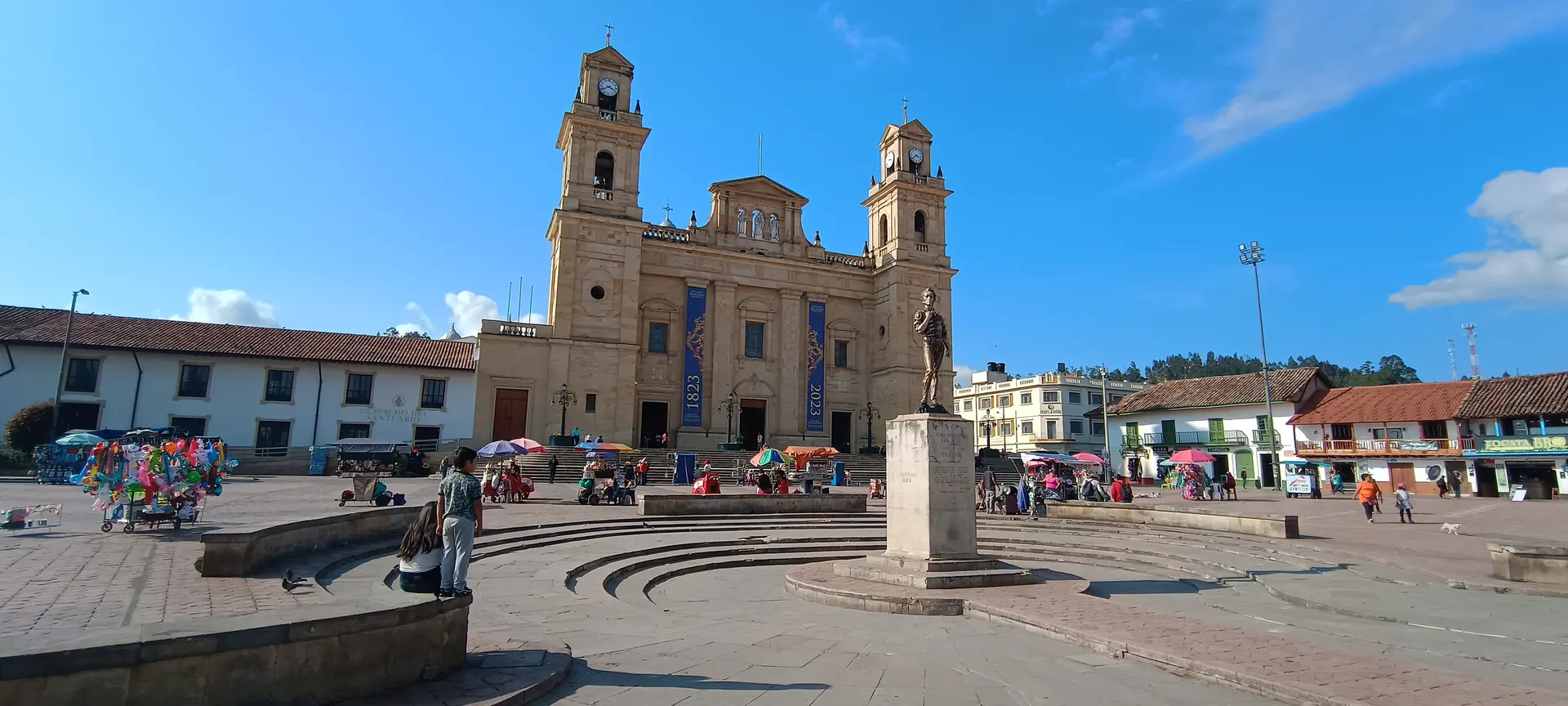
Basilica of Our Lady of the Rosary of Chiquinquirá
Boyacá, Boyacá, Colombia
602.7 km away

Church of Our Lady of the Rosary of the Renewal
Boyacá, Boyacá, Colombia
603.0 km away

Salt Cathedral of Zipaquirá
Zipaquirá, Cundinamarca, Colombia
669.4 km away
Share a photo
Help visitors recognize La Ciudad Perdita. Every submission is reviewed before publication.