Knap of Howar
The oldest preserved stone house in northwest Europe, standing on Papa Westray's coast for nearly six thousand years
Understand sacred places, explore living traditions, and learn how to engage respectfully with Pilgrim Map.
Access has not been verified. Check current local guidance before planning a visit.
Papa Westray, Scotland, United Kingdom
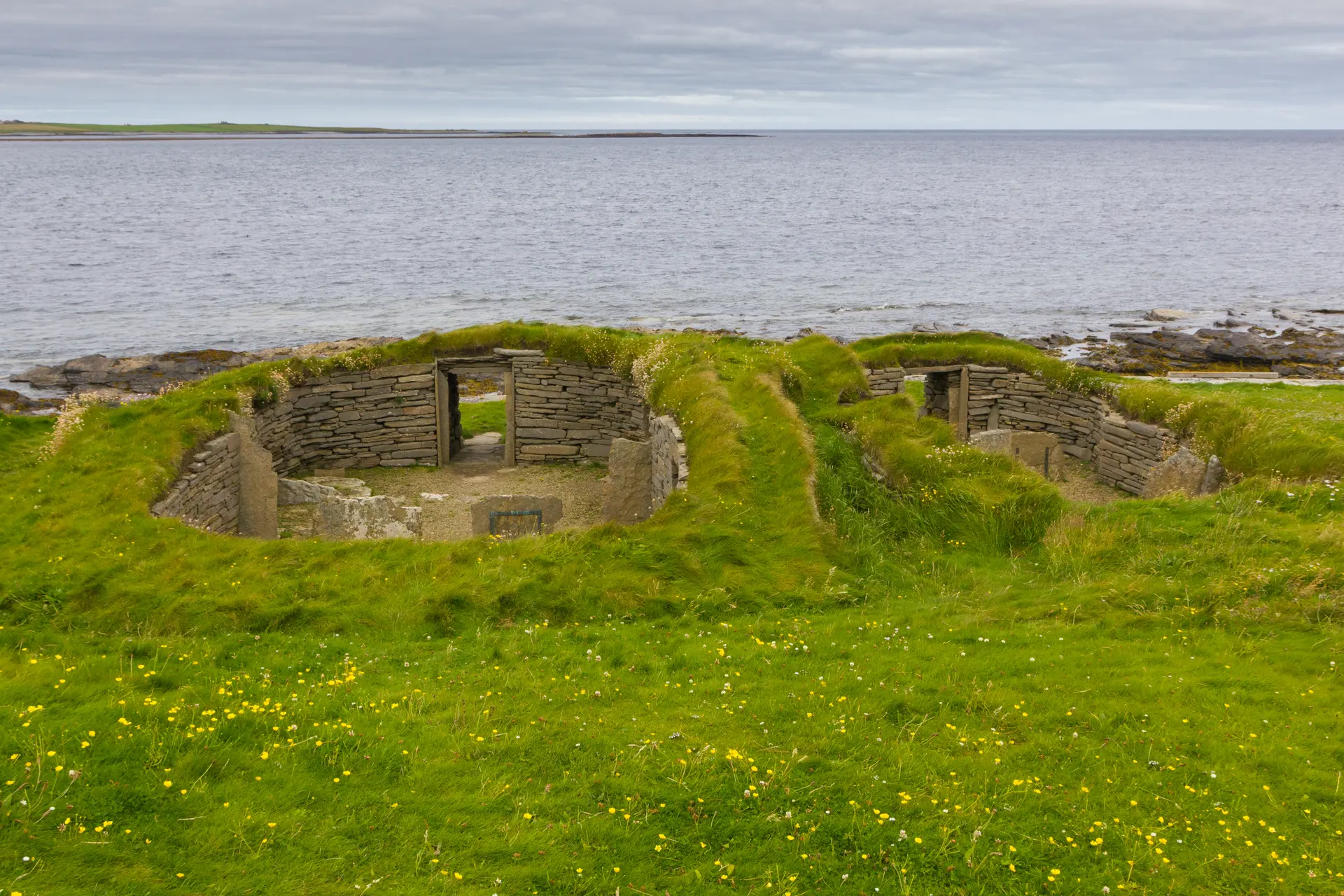
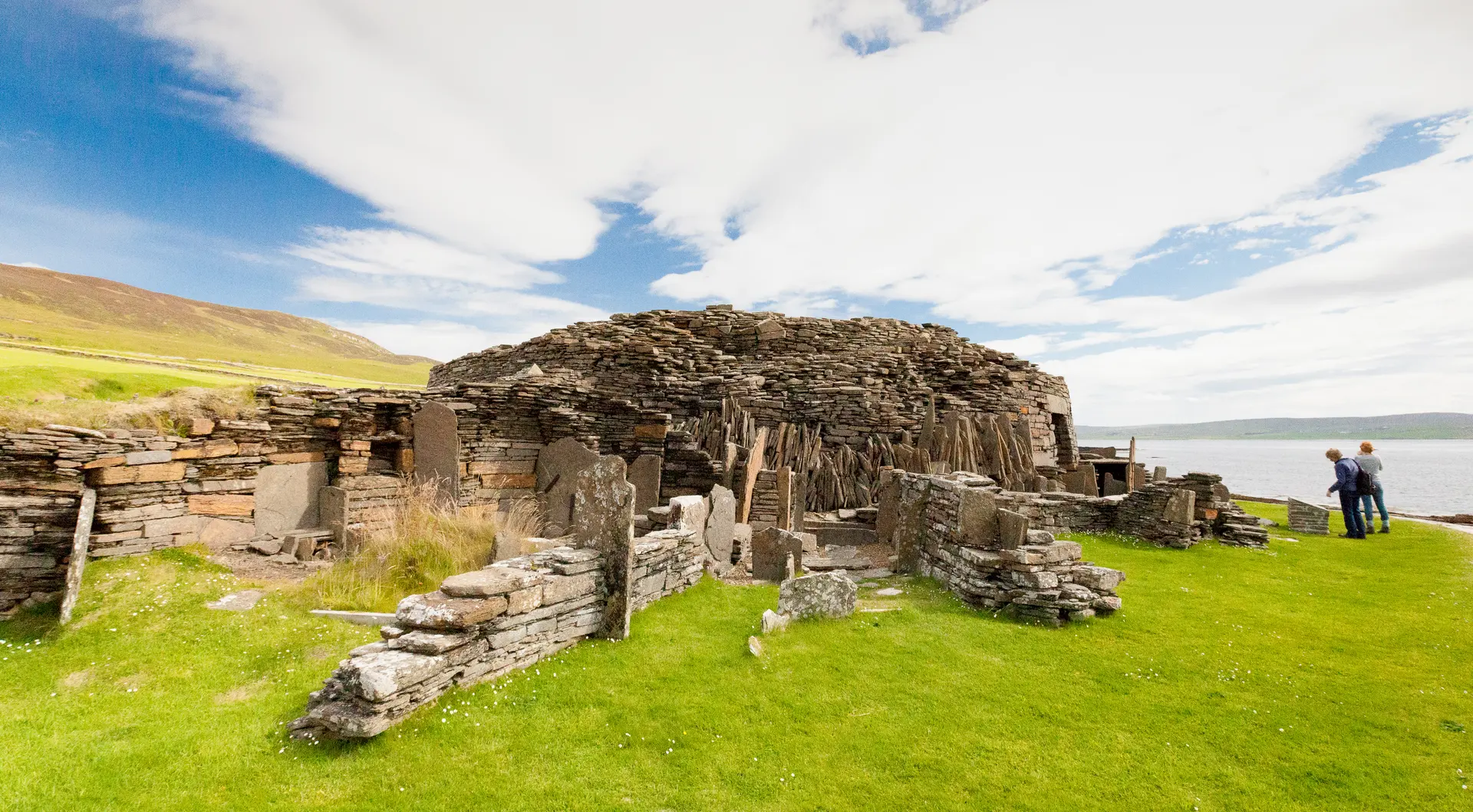
Image of Knap of Howar. Image source · CC-BY-SA-3.0
Visit essentials
A quick read before you go
- Duration
- One hour to fully explore the buildings, their coastal setting, and the immediate surroundings.
- Access
- Papa Westray is reached by Orkney Ferries from Westray (approximately twenty-five minutes) or by…
Overview
The Knap of Howar occupies an unassuming stretch of Papa Westray's western coast. The two buildings sit side by side in the turf, their stone walls standing to a height of roughly 1.6 metres, their rounded rectangular forms still clearly defined after nearly six thousand years. The larger and older structure is connected to the smaller by a low stone passage. Both face the sea.
This is not a temple, not a tomb, not a monument designed to impress. This is a house. A place where Neolithic people lived, cooked, ate, slept, raised children, and eventually died. The stone partitions that divide the interior into rooms are still in place. Stone benches line the walls. A hearth occupied the floor. The doorways are so low that you must bend to enter, as the original inhabitants did daily for a thousand years.
Radiocarbon dating established the farmstead's occupation between approximately 3700 and 2800 BCE. This makes it older than Skara Brae by several centuries, older than the great chambered tombs of the Orkney Mainland, older than the Ring of Brodgar and the Stones of Stenness. When these buildings were first occupied, the Neolithic revolution in Orkney was still young.
The people who lived here were among the first farmers in the archipelago, growing barley and wheat, raising cattle, sheep, and a few pigs.
The smaller building, connected to the larger by the low passage, has been interpreted as either a workshop or a second dwelling. Stone tools, pottery, and animal bones were recovered during excavation, the detritus of daily life preserved in the sand that eventually buried the buildings and protected them through the millennia.
Anna Ritchie's excavations in the 1970s and 1980s established the site's date and significance. A 2025 re-analysis by researchers from the University of Stirling and others has refined understanding of the site's chronology and its place within the broader Neolithic settlement of Orkney. The buildings were buried by windblown sand sometime after abandonment, which protected their walls from the erosion that destroyed most contemporary structures.
The site's coastal position means that the sea has gradually eroded the land around it. The buildings that survive may be only part of a larger farmstead that has been lost to the waves. What remains is remarkable enough: a window into domestic life at the dawn of farming in northern Europe.
Why this place is sacred
Most thin places achieve their quality through spiritual intention: they were built for prayer, for burial, for ceremony. The Knap of Howar was built for living. And yet the encounter with these buildings can be as affecting as any cathedral or cairn, because what they reveal is not the extraordinary but the profoundly ordinary: the daily life of people who lived nearly six thousand years ago.
The doorways are low. You bend to enter, as they bent. The stone benches line the walls. You can see where they sat, where they slept. The partitions divide the space into rooms with functions you can infer: cooking, storage, sleeping. The hearth, now empty, once held fire. The passage between the two buildings suggests connected activities, perhaps domestic in one building and craft or animal processing in the other.
This level of domestic detail from the fourth millennium BCE is almost unique in Europe. At most Neolithic sites, you encounter monumental architecture designed to impress or to house the dead. At the Knap of Howar, you encounter the spaces of everyday life. The distance between your daily routines and theirs collapses. They cooked food. They slept. They woke to the sound of the sea. They passed through these same doorways, thousands of times, over generations.
The coastal setting adds to the quality of the experience. The sea is close, audible from the buildings, visible through the doorways. Papa Westray is small and remote, its population measured in dozens. The same qualities that made this coast attractive to Neolithic farmers, sheltered from the worst of the Atlantic weather, with good agricultural land, continue to define the landscape today.
Time works differently at the Knap of Howar. The buildings look ancient, but they also look habitable. The walls are sound. The partitions stand. The benches await occupants. You could, in imagination, move in. This immediacy, this sense of a home waiting to be lived in again, is what makes the site so affecting.
The buildings functioned as a Neolithic farmstead: domestic living quarters and an associated workshop or second dwelling. The inhabitants grew cereals, kept livestock, and supplemented their diet with fish and shellfish. This was not a ceremonial or sacred site in the conventional sense, but a place of everyday life sustained over approximately a thousand years.
The farmstead was occupied from approximately 3700 to 2800 BCE. After abandonment, the buildings were buried by windblown sand, which preserved their walls to an extraordinary degree. They were rediscovered and first investigated in the twentieth century. Anna Ritchie's excavations in the 1970s and 1980s established the site's date and significance. The site is now in the care of Historic Environment Scotland.
Experience and orientation
Papa Westray is reached by ferry from Westray or by the world's shortest scheduled flight from Kirkwall. Either approach establishes the island's character: small, quiet, agricultural, surrounded by sea.
The Knap of Howar lies on the western coast, a short walk from the road. The buildings appear as two stone enclosures set into the turf, their walls standing to approximately 1.6 metres. The sea is immediately adjacent, the coast eroding slowly toward the buildings.
You can enter the larger building through its original doorway, bending low to pass through. Inside, the space is remarkably clear: stone walls, stone partitions dividing the interior into distinct areas, stone benches along the walls. The floor is bare earth. The ceiling, originally of organic materials supported on driftwood, is gone, leaving the interior open to the sky. But the walls and fittings are so well-preserved that the room's function is immediately legible.
The passage to the smaller building is low but passable. The second structure has a similar interior, with stone fittings suggesting a different function, perhaps food preparation, craft work, or animal processing.
Standing in these buildings, you occupy domestic space that is nearly six thousand years old. The stone benches are the right height for sitting. The partitions create rooms of human scale. The doorways frame the sea. The experience is one of recognition rather than awe: you have been in rooms like these, though never rooms this old.
Papa Westray itself rewards exploration. The Holm of Papay, a tidal island off the eastern coast, contains one of the most elaborate Neolithic chambered tombs in Orkney, with remarkable carved stonework. St Boniface Kirk dates from the twelfth century. The island's community-run hostel and heritage trail make it one of the most welcoming small islands in Orkney.
The Knap of Howar is on the western coast of Papa Westray, signposted from the main road. Papa Westray is reached by ferry from Westray (approximately twenty-five minutes) or by Loganair flight from Kirkwall. The Holland House heritage trail passes near the site. The Holm of Papay chambered tomb is accessible at low tide from the island's eastern coast.
Context and lineage
No origin narrative survives from the Neolithic inhabitants. The farmstead was established around 3700 BCE by farming people who grew barley and wheat, kept cattle, sheep, and pigs, and supplemented their diet with fish and shellfish. They were among the first settlers to establish permanent homes on Papa Westray.
Their buildings represent the domestic infrastructure of a society that would go on to produce the chambered tombs, stone circles, and settlements that make Orkney one of the most important Neolithic landscapes in Europe.
No continuous tradition connects the present to the Neolithic inhabitants. The farmstead was abandoned around 2800 BCE and buried by sand. It was rediscovered in the modern era and excavated in the twentieth century. Its significance is primarily archaeological, but the site also serves as a powerful point of connection to the earliest chapter of settled life in Orkney.
Anna Ritchie
Traditions and practice
The Neolithic inhabitants practised mixed farming: growing cereals, keeping livestock, and harvesting marine resources. These activities were the daily practices of the site. No evidence of specifically ritual or ceremonial activity has been identified in the excavated material, though the distinction between domestic and sacred may not have existed in Neolithic thought.
No organised spiritual practices take place. Visitors come for archaeological interest, historical curiosity, and the experience of standing in one of the oldest preserved buildings in Europe.
Enter the buildings through their original doorways. Sit on the stone benches, if comfortable doing so. Look through the doorways at the sea. Imagine the daily routines of the people who lived here: cooking, eating, sleeping, working, watching the weather. The Knap of Howar does not require meditation or ceremony to generate its effect. Simply being present in these spaces, aware of their age and domestic purpose, is sufficient.
Neolithic Farming Settlement
HistoricalThe Knap of Howar represents the earliest phase of permanent stone-built settlement in Orkney, established around 3700 BCE. The farmstead's inhabitants practised mixed agriculture, growing barley and wheat, raising cattle, sheep, and pigs, and supplementing their diet with fish and shellfish. This domestic economy formed the foundation of the Neolithic civilisation that would produce Orkney's world-famous monuments.
Daily farming activities: growing cereals, managing livestock, fishing, shellfish gathering. Pottery production in the Unstan ware tradition. Stone tool manufacture. The domestic routines of cooking, eating, and sleeping in stone-built rooms with stone furniture. These practices sustained a community on this coast for approximately a thousand years.
Perspectives and open questions
The Knap of Howar challenges the conventional hierarchy of archaeological significance that privileges monuments over dwellings. These are not the grandest Neolithic structures in Orkney, but they may be the most revealing, offering a window into the daily life that underpinned the monumental achievements of the Orcadian Neolithic.
Scholarly perspective
Anna Ritchie's excavations established the Knap of Howar as the oldest preserved stone house in northwest Europe, with radiocarbon dates placing occupation between approximately 3700 and 2800 BCE. This predates Skara Brae by several centuries. The pottery recovered shows affinities with the Unstan ware tradition, linking the site to the broader Neolithic cultural horizon of Orkney. The 2025 re-analysis by researchers from the University of Stirling and others has refined the chronological understanding.
The farmstead provides crucial evidence of the domestic basis of Neolithic society in Orkney, the agricultural economy that supported the construction of chambered tombs, stone circles, and monumental settlements.
Living and traditional perspectives
No oral tradition survives from the Neolithic inhabitants. The specific beliefs and worldview of the farmstead's occupants are irrecoverable. The domestic character of the site means that whatever spiritual practices they maintained are likely to have left no archaeological trace.
Alternative interpretations
Some visitors experience the buildings' domestic immediacy as a form of spiritual encounter, finding sacred quality in the preservation of everyday life across nearly six millennia. The idea that the sacred and the domestic were not separate categories in Neolithic thought lends support to this perspective.
Open questions
The full extent of the original farmstead is unknown; coastal erosion has likely destroyed adjacent buildings. Whether any ritual or ceremonial activity took place within or near the buildings is uncertain. The reason for the farmstead's abandonment around 2800 BCE is not established. The relationship between the inhabitants and the builders of the nearby Holm of Papay tomb is unclear.
Plan your visit
Access and arrival
Papa Westray is reached by Orkney Ferries from Westray (approximately twenty-five minutes) or by Loganair flight from Kirkwall Airport (approximately two minutes, the world's shortest scheduled flight). The Knap of Howar is on the western coast, a short walk from the main road. Signposted. No vehicular access to the site itself.
Papa Westray has a community-run hostel (Beltane House) and a small number of B&Bs. Book well in advance. More extensive options on Westray and in Kirkwall.
Respectful visit
No specific requirements. Walking shoes sufficient for the short walk from the road. Windproof and waterproof clothing advisable.
Unrestricted. The interiors, doorways, and coastal setting all offer compelling images.
Not appropriate. Do not leave objects inside or near the buildings.
Do not climb on, lean against, or damage the walls. Do not remove any material. Stay within marked areas near the coastal edge.
The coastal site is subject to erosion. Stay within marked paths. The buildings are ancient and fragile despite their apparent solidity. Do not climb on or lean against walls.
Current practical details
Address
Papa Westray, Orkney KW17 2BU, UK
Hours
Hours, fees, and access can change — verify on the official source before you travel. Practical details last checked Jun 2026.
Location
Map loads as you approach this section.
Pilgrim reflections
A portrait of encounter, not a score
Pilgrims describe what they felt, how present they could become, and whether the place would shape a journey. There are no stars and no ranking of traditions.
No reviewed reflections yet
The first pilgrims can help describe the character of being here.
Share a reflection
Available after an account-backed “Been there.” Every reflection is reviewed before publication.
Nearby sacred places
Explore other sacred places in the region. Proximity does not establish access or travel time; check each place’s guidance.
Share a photo
Help visitors recognize Knap of Howar. Every submission is reviewed before publication.