Katori Shrine
Birthplace of Japan's oldest martial art and shrine of the sword deity
Understand sacred places, explore living traditions, and learn how to engage respectfully with Pilgrim Map.
Access has not been verified. Check current local guidance before planning a visit.
Katori, Chiba Prefecture, Japan
Read the sources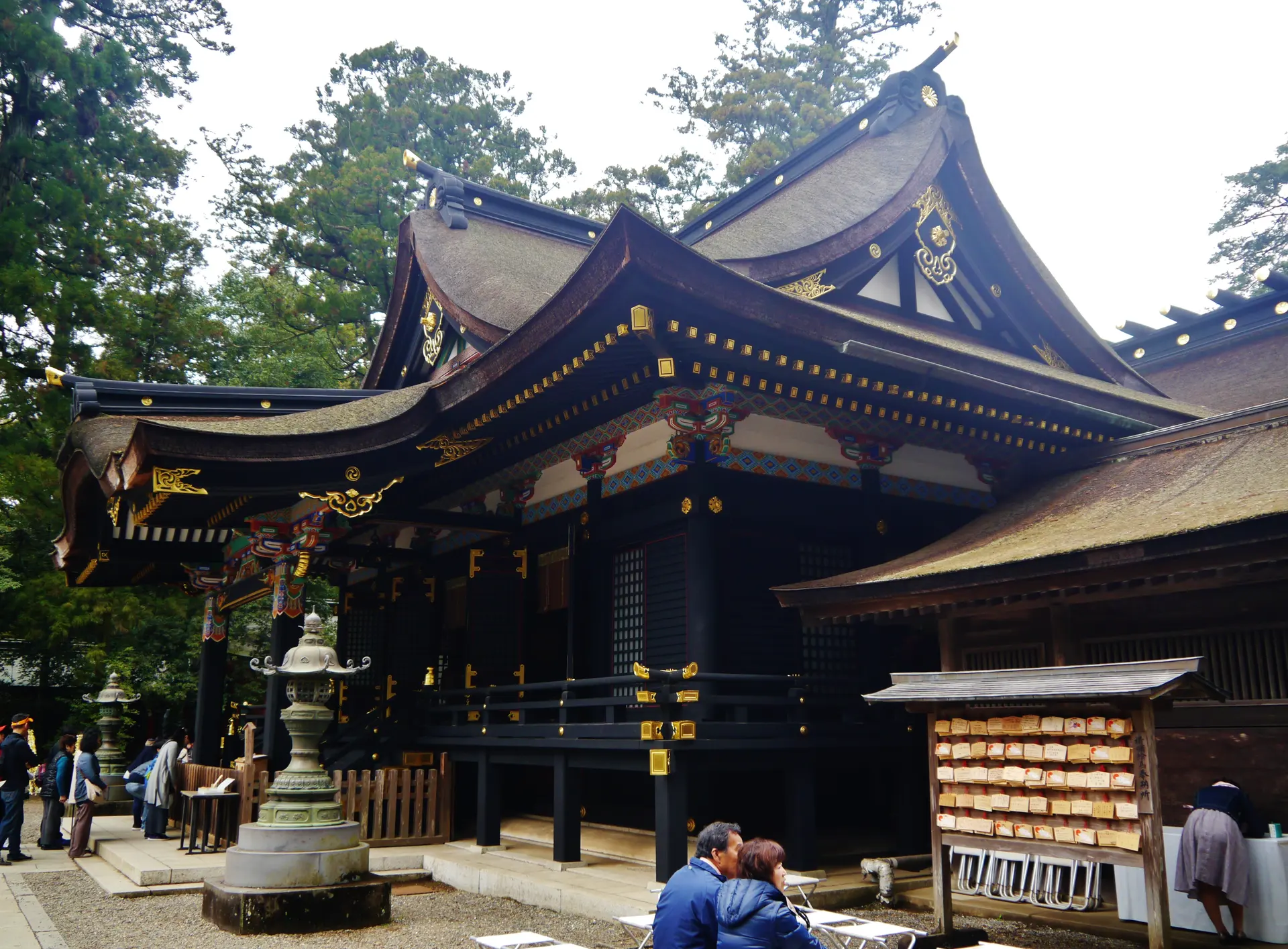
Image of Katori Shrine. Image source · CC-BY-SA-4.0
Visit essentials
A quick read before you go
- Duration
- 1-2 hours to explore the main shrine areas.
- Access
- Train: JR Narita Line to Sawara Station, then bus to the shrine.
Overview
Before Tokugawa peace and systematized samurai culture, Katori was so sacred that only Ise and Kashima shared its Jingū designation before the Second World War. Its deity, Futsunushi-no-kami, is god of swords, victory, and lightning—one of two warriors Amaterasu sent after earlier envoys failed to subdue the earthly realm. His success made him a model for samurai victory with dignity.
In the mid-15th century, Iizasa Chōisai Ienao practiced austerely here for a thousand days. Tradition says Futsunushi then appeared as a boy atop a plum tree and declared him 'master of all swordsmen under the sun.' The resulting divine transmission, Tenshin Shōden Katori Shintō-ryū, became a wellspring for many Japanese martial arts. It remains active; practitioners sign a blood oath to Futsunushi and the Buddhist warrior deity Marishiten before training. Japan designated it the first martial-art cultural asset in 1960.
An ancient forest surrounds the 1700 Honden, or main hall, preserved through centuries. Nearby Sawara's historic district adds Edo-period canals and merchant houses recalling pre-modern Japan.
Why this place is sacred
What makes Katori thin is the unbroken transmission of divine martial power from the 15th century to the present. At most sacred sites, the connection to tradition is historical—revered but distant. At Katori, the tradition lives. Practitioners of Katori Shinto-ryu still come to this shrine, still train in techniques transmitted from Iizasa Chōisai Ienao, still sign blood oaths to the deities before beginning their study.
The blood oath is not metaphor or formality: practitioners make a small cut and press their thumbprint to the document, accepting divine punishment should they violate the oath's terms. This gravity of commitment, maintained for over 500 years, creates accumulated spiritual presence. The shrine itself concentrates similar energy from even longer periods. The traditional founding date of 643 BCE places Katori among Japan's most ancient sacred sites.
Whether that date is literal or symbolic, the shrine's Heian-period documentation and pre-WWII Jingū status confirm extraordinary antiquity. The deity Futsunushi represents a particular kind of power—not mere force but victory with dignity, the ideal that samurai culture would elaborate through bushido. Visitors sensitive to such things report feeling this quality in the shrine's atmosphere.
The Kaname-ishi stone, complementing the similar stone at Kashima, extends the shrine's protective function to cosmic scale—suppressing earthquake-causing forces, guarding Japan not just spiritually but geophysically.
The shrine was established to enshrine Futsunushi-no-kami, the sword deity who subdued the earthly realm for the heavenly lineage.
In the 15th century, Iizasa Chōisai Ienao's thousand days of practice and subsequent divine transmission added the living martial tradition of Katori Shinto-ryu, which continues today with blood-oath practitioners.
Experience and orientation
Katori Shrine reveals itself through atmosphere before artifacts. The ancient forest surrounding the shrine creates separation from ordinary Japan, the towering trees establishing a world apart. The approach to the main hall builds anticipation through the characteristic sequence of Japanese sacred architecture: torii, pathway, purification basin, worship hall. The Honden (main hall), dating to 1700, has been preserved through centuries—not rebuilt but maintained, carrying the presence of original construction into the present.
For those familiar with martial arts history, the shrine's resonance deepens. Somewhere in the forest, Iizasa Chōisai Ienao practiced for a thousand days. At the end of that practice, Futsunushi appeared to him. The techniques he received have been transmitted without interruption for over 500 years, designated Japan's first martial art cultural asset. Current practitioners still train here during festivals, their demonstrations connecting the contemporary moment to medieval origins.
The Oku-no-Miya (inner shrine) serves as the grave of Iizasa Chōisai Ienao himself—those who find it stand at the resting place of the tradition's founder. The Kaname-ishi stone, like its complement at Kashima, marks the shrine's cosmic protective function. The nearby Sawara historic district extends the visit: Edo-period canals, preserved merchant houses, and a pace of life that suggests pre-modern Japan has not entirely vanished.
Begin with formal worship at the main shrine. The ancient forest rewards those who walk its paths slowly. Seek out the Oku-no-Miya if connection to martial arts history draws you. The Kaname-ishi stone and the main Honden represent the shrine's core sacred geography. If time permits, Sawara's historic district is worth the short journey.
Context and lineage
When Amaterasu needed the earthly realm subdued so her grandson Ninigi could descend and establish the heavenly lineage, her first envoys failed. She then sent Futsunushi and Takemikazuchi. They descended to negotiate with Ōkuninushi, the ruler of the land. The negotiations succeeded: the land was transferred to heaven's representatives. Futsunushi's victory—achieved through martial power but concluded through negotiation—established the model for samurai ideals: strength with wisdom, victory with dignity.
Centuries later, around 1447-1480, Iizasa Chōisai Ienao came to Katori Shrine after a career as a successful warrior. He practiced austerely for a thousand days. According to tradition, at the end of this period Futsunushi appeared to him in the form of a boy standing atop a plum tree, declaring him 'master of all swordsmen under the sun' and transmitting martial secrets. The art that emerged—Tenshin Shōden Katori Shintō-ryū—became one of the three source schools of Japanese martial arts.
Katori Shrine heads approximately 400 branch shrines and is part of the Togoku Sansha pilgrimage alongside Kashima and Ikisu shrines. Katori Shinto-ryu maintains unbroken transmission from its founding.
Futsunushi-no-kami
The enshrined deity—god of swords, lightning, and victory who pacified the land for the heavenly lineage
Iizasa Chōisai Ienao
Founder of Katori Shinto-ryu (c. 1387-1488), who received divine transmission of martial secrets after a thousand days of practice at the shrine
Traditions and practice
Iizasa Chōisai Ienao established the template for warrior practice at Katori: a thousand days of austerity culminating in divine transmission. The blood oath tradition that emerged requires practitioners to accept the deities Futsunushi and Marishiten as witnesses and to accept divine punishment should the oath be violated. This is not formality—practitioners make a small cut and press their thumbprint to the document. The gravity of this commitment has been maintained for over 500 years.
Daily worship continues. The main festival occurs April 14, with the Grand Festival shared with Kashima every twelve years. A rice planting festival in April maintains agricultural connections. Katori Shinto-ryu practitioners continue to train and demonstrate during festival periods, their techniques preserving 15th-century martial knowledge.
For those with martial arts background, worship at the main shrine and time at the Oku-no-Miya (Iizasa Chōisai Ienao's grave) create connection to the tradition's source. The Kaname-ishi stone completes the shrine's protective dimension. Combining the visit with Sawara's historic district allows deeper immersion in the region's character.
Shinto
ActiveKatori Shrine is one of only three shrines historically granted the Jingū designation (alongside Ise and Kashima). It enshrines Futsunushi-no-kami, the god of swords and victory who subdued the earthly realm. It heads approximately 400 branch shrines and is part of the Togoku Sansha pilgrimage.
Daily worship continues. The main festival occurs April 14, with a Grand Festival shared with Kashima every twelve years. Prayers for victory and martial success are traditional.
Katori Shinto-ryu
ActiveTenshin Shōden Katori Shintō-ryū, founded at this shrine around 1447-1480 by Iizasa Chōisai Ienao, is one of the oldest extant Japanese martial arts and the source from which many others evolved. It was designated Japan's first martial art cultural asset in 1960.
Practitioners must sign a blood oath to the deities of Katori Shrine before training. Training includes swordsmanship, spear, naginata, staff, and strategy. The tradition maintains direct lineage to its founder and conducts demonstrations at the shrine during festivals.
Perspectives and open questions
Katori Shrine can be understood as the spiritual source of Japanese swordsmanship, as one of Japan's three most sacred Jingū, or as the living center of an unbroken martial tradition.
Scholarly perspective
Historians recognize Katori Shrine as one of the oldest and most important Shinto institutions in eastern Japan. The Heian-period Engishiki confirms its status as one of three original Jingū. The founding of Katori Shinto-ryu in the 15th century is documented, though exact dates remain debated. The tradition's designation as Japan's first martial art cultural asset (1960) confirms its cultural significance and the authenticity of its transmission.
Living and traditional perspectives
Within Shinto tradition, Futsunushi is a living deity who continues to bestow victory and martial power. Iizasa Chōisai Ienao's divine transmission is understood as the literal appearance of the kami, conferring genuine martial secrets. The blood oath tradition maintains authentic submission to divine authority. The Kaname-ishi stone actively works with Kashima's stone to suppress earthquake-causing forces.
Alternative interpretations
Some visitors experience the shrine as a power spot for accessing victory energy and martial spirit. The martial tradition's blood oath adds to perceptions of concentrated spiritual intensity.
Open questions
The precise dating of the shrine's actual founding is uncertain, with the 643 BCE date being traditional. The exact nature of Iizasa Chōisai Ienao's spiritual experience during his thousand days of practice remains within the realm of faith.
Plan your visit
Access and arrival
Train: JR Narita Line to Sawara Station, then bus to the shrine. From Narita Airport: JR connection to Sawara is straightforward. From Tokyo: JR Sobu Line to Chiba, transfer to JR Narita Line.
Day trip from Tokyo or Narita is feasible. Sawara has traditional ryokan for those wanting to stay overnight.
Respectful visit
Modest dress appropriate for shrine visits.
Generally permitted in public areas.
Monetary offerings at the main shrine. Omamori for victory available.
Standard Shinto shrine etiquette. Blood oath required for Katori Shinto-ryu training.
Katori Shinto-ryu training requires the blood oath—serious practitioners should understand this before seeking instruction.
Current practical details
Address
1697 Katori, Chiba 287-0017, Japan
Phone
Hours
Hours, fees, and access can change — verify on the official source before you travel. Practical details last checked Jun 2026.
Location
Map loads as you approach this section.
Pilgrim reflections
A portrait of encounter, not a score
Pilgrims describe what they felt, how present they could become, and whether the place would shape a journey. There are no stars and no ranking of traditions.
No reviewed reflections yet
The first pilgrims can help describe the character of being here.
Share a reflection
Available after an account-backed “Been there.” Every reflection is reviewed before publication.
Nearby sacred places
Explore other sacred places in the region. Proximity does not establish access or travel time; check each place’s guidance.


References
Sources consulted for this page. Source categories describe the publication, not a guarantee that every claim is verified. Traditional accounts and outside interpretations may differ.
- 01Katori Shrine - Visit Chiba — Chiba Prefecture TourismofficialOfficial regional tourism resource
- 02Tenshinsho-den Katori Shinto Ryu - Shinbukan — Shinbukan Katori Shinto RyuspiritualOfficial martial arts school documentation
- 03Katori Shrine - Wikipedia — Wikipedia contributorsencyclopediaComprehensive historical overview
- 04Katori Shrine - Japan Guide — Japan GuideguidePractical visitor information
- 05Tenshin Shōden Katori Shintō-ryū - Wikipedia — Wikipedia contributorsencyclopediaMartial arts tradition documentation
Pilgrim glossary
- Torii
- The traditional Japanese gate marking the entrance to a Shinto sacred area.
Share a photo
Help visitors recognize Katori Shrine. Every submission is reviewed before publication.