Kashima Shrine
Birthplace of Japanese martial arts and guardian against earthquakes
Understand sacred places, explore living traditions, and learn how to engage respectfully with Pilgrim Map.
Access has not been verified. Check current local guidance before planning a visit.
Kashima, Ibaraki Prefecture, Japan
Read the sources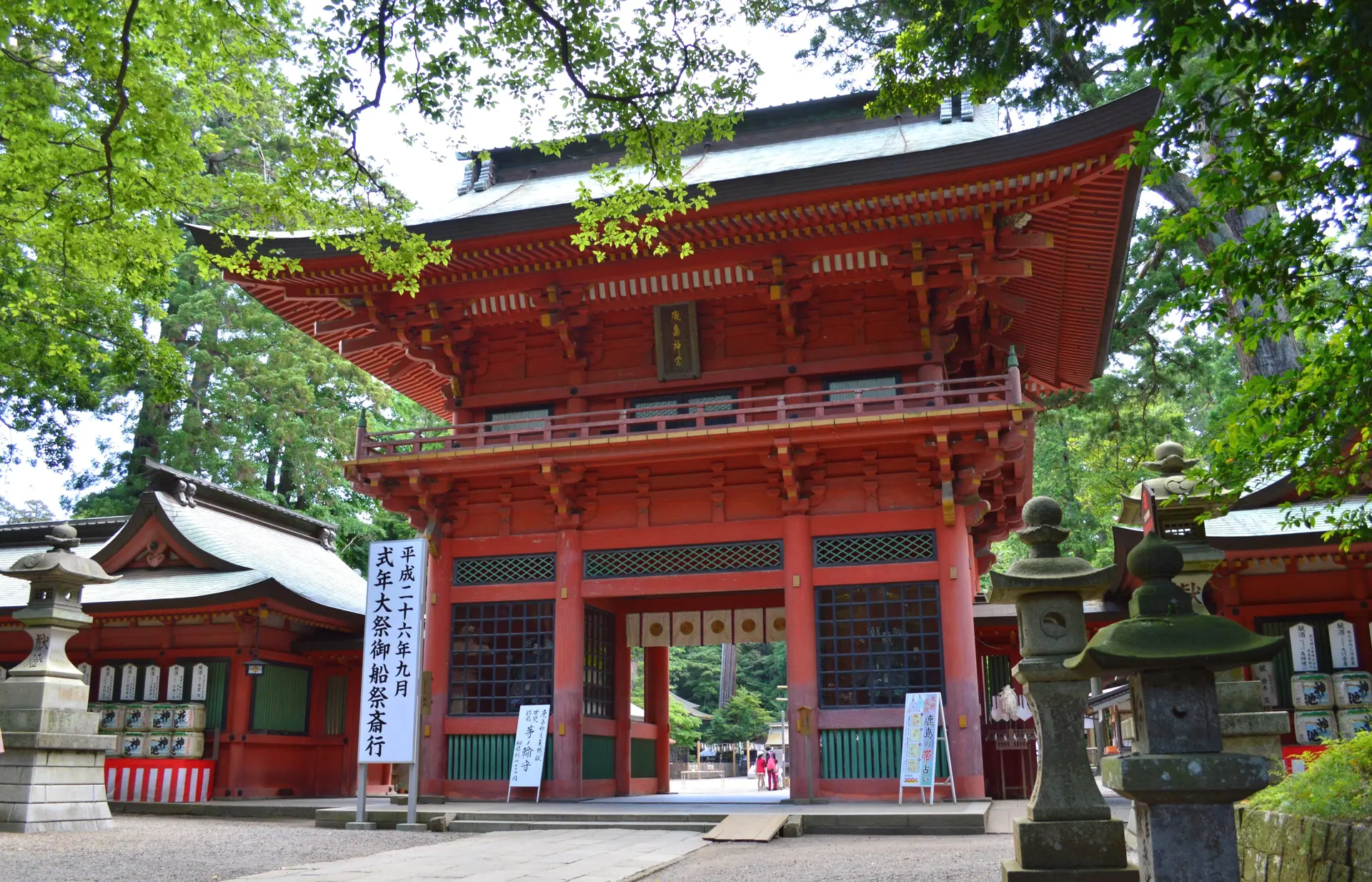
Image of Kashima Shrine. Image source · CC0
Visit essentials
A quick read before you go
- Duration
- 1-2 hours to explore the main areas thoroughly.
- Access
- Highway bus: Kashima-go from Tokyo Station Yaesu South Exit to Kashima Jingu (about 2 hours) is…
Overview
Before bushido or formal sword schools, Kashima was the spiritual source of Japanese martial arts. Tradition gives the shrine more than 2,600 years and enshrines Takemikazuchi-no-Ōkami, the thunder god born when Izanagi killed the fire god Kagutsuchi and blood fell from his sword—violence transformed into protective power. Chosen to subdue rebellious earthly gods for Amaterasu's grandson's descent, Takemikazuchi won and became warriors' natural patron.
For centuries Japan's greatest swordsmen came here; Tsukahara Bokuden later spent a thousand days in ascetic practice here, emerging with sword techniques he attributed to divine revelation. Japanese dojos still display the deity's name on kamidana, household shrines.
An ancient forest of massive cedars surrounds the approach through a bright vermilion tower gate. Free-roaming deer are divine messengers whose ancestors are said to have carried Takemikazuchi when his spirit was transferred to establish Kasuga Taisha in Nara; DNA analysis confirms a connection between the Kashima and Nara populations. Deeper within, the Kaname-ishi is said to pin down Namazu, the great catfish whose movements cause earthquakes, extending the shrine's protection beyond human conflict.
Why this place is sacred
What makes Kashima thin is the concentration of warrior devotion over inconceivable time spans. The shrine claims founding in 660 BCE—whether that date is literal or symbolic matters less than what it represents: this place has been understood as sacred for as long as Japan has existed as a concept. The deity enshrined here was born from violence—the blood of Izanagi's sword—yet his power protects rather than destroys.
He defeated the rebellious earthly gods not for conquest but to enable the descent of divine order. This paradox, destruction in service of protection, defines the martial ethos that Japan would later elaborate through samurai culture. Generations of warriors understood this and came here. Tsukahara Bokuden, one of history's greatest swordsmen, spent a thousand days in ascetic practice at Kashima and attributed his subsequent martial insights to divine transmission.
That pattern repeated across centuries: warriors came, trained, prayed, and attributed their victories to the deity's blessing. The accumulation of martial intention creates a particular spiritual atmosphere—visitors sensitive to such things consistently report feeling it. The Kaname-ishi stone extends Kashima's protection beyond human conflict. This stone, found deep in the shrine grounds, is believed to pin down Namazu, the cosmic catfish whose thrashing causes earthquakes.
Japan is one of the most seismically active places on earth, and Kashima's function as earthquake suppressor gives the shrine cosmic protective significance beyond martial matters.
The shrine was established to enshrine Takemikazuchi-no-Ōkami, the martial deity who pacified the land for the heavenly lineage's establishment in Japan.
Over millennia, the shrine became the spiritual center of Japanese martial arts, with countless warriors seeking blessing and training here. The deer populations, originally kept as divine messengers, became the ancestors of Nara's famous sacred deer when Takemikazuchi's spirit was transferred there in 768 CE.
Experience and orientation
The approach to Kashima establishes the shrine's character immediately. The ancient sacred forest of massive cedars creates a world apart from ordinary Japan. The vermilion Rōmon tower gate marks the transition into sacred precinct, its bright color startling against the forest's green depths. Within the grounds, deer move freely—these are divine messengers, ancestors of the Nara deer, fed by visitors who understand their sacred role. The main shrine buildings convey age and gravitas.
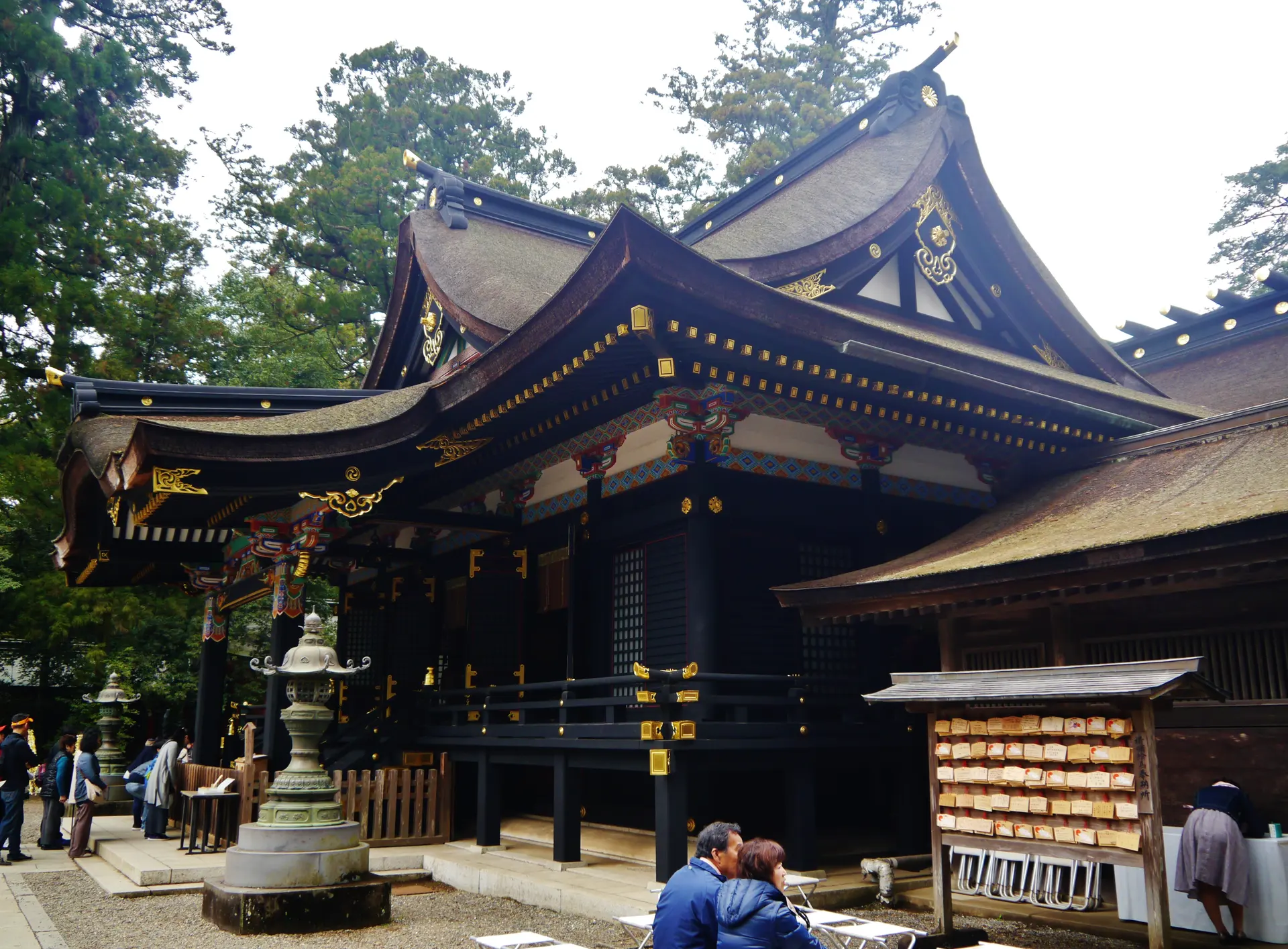
The current structures date to the Tokugawa period, but the sense of accumulated worship reaches much further back. Martial arts practitioners often report feeling particular significance here, as if standing at the source of something that has flowed through Japanese history. The Treasure House contains the shrine's most impressive artifact: the Futsu-no-Mitama sword, over 2.7 meters long and Japan's oldest and largest extant blade. This is not merely a weapon but the spiritual embodiment of the deity's power.
For those who seek it, the Kaname-ishi stone lies deeper in the grounds—a modest-looking rock whose power extends to cosmic scale. The Mitarashi Pond, whose water level reportedly never changes regardless of weather conditions, marks the purification point before approaching the innermost sacred areas. During festivals, particularly the Jinkosai in early September, the shrine transforms: mikoshi processions fill the grounds, and teams compete carrying eight-meter lantern poles through the night.
Enter through the Rōmon gate and proceed to the main shrine for worship. The deer garden allows close encounter with the divine messengers. The Treasure House rewards those interested in martial history with the remarkable Futsu-no-Mitama sword. Seek out the Kaname-ishi stone and Mitarashi Pond for the full experience of the shrine's protective power.
Context and lineage
According to the Kojiki and Nihon Shoki, Takemikazuchi was born when Izanagi killed his son Kagutsuchi, the fire god who had caused Izanami's death during childbirth. Blood dripped from Izanagi's sword Totsuka-no-Tsurugi, and from that blood Takemikazuchi emerged—a deity born from violence, destined to become the patron of controlled violence. When Amaterasu needed the earthly realm subdued so her grandson Ninigi could descend and establish the heavenly lineage, she sent envoys who failed. Then she sent Takemikazuchi and Futsunushi.
They descended to negotiate with Ōkuninushi, the ruler of the land. When Ōkuninushi's son refused to yield, Takemikazuchi defeated him in a contest resembling sumo. The land was transferred to heaven's representatives. Centuries later, in 768 CE, when the Fujiwara clan established Kasuga Taisha in Nara, they transferred Takemikazuchi's spirit there, and the deity rode on a white deer from Kashima. The deer of Nara descend from this journey.
Kashima Shrine heads approximately 600 branch shrines throughout Japan and is part of the Togoku Sansha (Three Eastern Shrines) pilgrimage alongside Katori and Ikisu shrines.
Takemikazuchi-no-Ōkami
The enshrined deity—god of thunder, martial arts, and victory, born from the blood of Izanagi's sword
Tsukahara Bokuden
Legendary swordsman (1489-1571) who spent a thousand days in ascetic practice at Kashima, receiving what he understood as divine transmission of martial secrets
Traditions and practice
The shrine's connection to martial arts runs through Japanese history. Legendary swordsman Tsukahara Bokuden's thousand days of practice here established a template for warrior pilgrimage. His claim to divine transmission was taken seriously—such claims were how martial knowledge was understood to flow from the sacred to the human realm.
The Grand Ofuna Festival, held once every twelve years in the Year of the Horse (next in 2026), celebrates both Takemikazuchi and Futsunushi of Katori Shrine with boats carrying mikoshi across the waters.
Daily worship continues. The Jinkosai festival (September 1-2) features five mikoshi in procession and a spectacular lantern parade with fifteen teams carrying eight-meter poles. The Oumei-sai festival includes a sacred white horse running through the grounds. Martial artists continue to display Takemikazuchi's name in their dojos and seek blessing before competitions and training.
For martial practitioners, formal worship at the main shrine creates connection to the source of Japanese martial spirituality. The Treasure House's Futsu-no-Mitama sword rewards close attention. Seeking the Kaname-ishi stone completes the experience of the shrine's protective power. Those able to visit during the 2026 Grand Ofuna Festival will witness one of Japan's largest festival events.
Shinto
ActiveKashima Shrine is one of the oldest and most important Shinto shrines in Japan, traditionally dated to 660 BCE. It enshrines Takemikazuchi-no-Ōkami, the god of thunder, martial arts, and victory. Prior to WWII, it was one of only three shrines permitted the title Jingū alongside Ise and Katori. It heads approximately 600 branch shrines and is part of the Togoku Sansha pilgrimage.
Daily worship continues. The Jinkosai festival (September 1-2) features mikoshi processions and lantern parades. The Grand Ofuna Festival occurs once every twelve years. Martial artists seek blessings for victory and display Takemikazuchi's name in dojos worldwide.
Perspectives and open questions
Kashima Shrine can be understood as the spiritual source of Japanese martial arts, as mythological geography made manifest, or as Japan's protection against cosmic forces.
Scholarly perspective
Historians recognize Kashima Shrine as one of the oldest Shinto institutions in eastern Japan, with documentation predating the 8th century. The shrine's pre-WWII ranking alongside Ise and Katori (the three original Jingū) reflects its historical religious importance. The Futsu-no-Mitama sword is confirmed as Japan's oldest and largest extant blade. Genetic research has confirmed the connection between Kashima and Nara deer populations, with the Nara population differentiating approximately 1,400 years ago—aligning with the 768 CE founding of Kasuga Taisha.
Living and traditional perspectives
Within Shinto tradition, Takemikazuchi is a living deity who continues to bestow martial power, victory, and protection. The Kaname-ishi stone literally pins down the cosmic catfish whose thrashing causes earthquakes—this is understood as actual spiritual technology, not metaphor. The deer are true messengers of the kami. Martial arts power flows from this shrine as its origin point.
Alternative interpretations
Some visitors experience the shrine as a power spot for accessing martial and victory energy. The earthquake-suppressing stone is sometimes interpreted through energetic frameworks as grounding cosmic forces.
Open questions
The precise dating of the shrine's actual founding is uncertain, with the 660 BCE date being traditional rather than archaeologically confirmed. The original form of worship before historical documentation remains unknown.
Plan your visit
Access and arrival
Highway bus: Kashima-go from Tokyo Station Yaesu South Exit to Kashima Jingu (about 2 hours) is the simplest option. By train: JR to Kashima-jingu Station, then 7-10 minute walk.
Day trip from Tokyo is feasible. For deeper immersion, ryokan in the Kashima area are available.
Respectful visit
Modest dress appropriate for shrine visits.
Generally permitted in public areas.
Monetary offerings at the main shrine. Omamori (protective charms) for victory and martial success are available.
Standard Shinto shrine etiquette. Bow before entering through torii.
The shrine is popular during New Year and festival periods—plan accordingly if seeking contemplative atmosphere.
Current practical details
Address
2306-1 Kyūchū, Kashima, Ibaraki 314-0031, Japan
Phone
Hours
Hours, fees, and access can change — verify on the official source before you travel. Practical details last checked Jun 2026.
Location
Map loads as you approach this section.
Pilgrim reflections
A portrait of encounter, not a score
Pilgrims describe what they felt, how present they could become, and whether the place would shape a journey. There are no stars and no ranking of traditions.
No reviewed reflections yet
The first pilgrims can help describe the character of being here.
Share a reflection
Available after an account-backed “Been there.” Every reflection is reviewed before publication.
Nearby sacred places
Explore other sacred places in the region. Proximity does not establish access or travel time; check each place’s guidance.


References
Sources consulted for this page. Source categories describe the publication, not a guarantee that every claim is verified. Traditional accounts and outside interpretations may differ.
- 01Kashima Jingu Grand Shrine - Visit Ibaraki Guide — Ibaraki Prefecture TourismofficialOfficial regional tourism resource
- 02Meet the god of victory at Kashima-jingu Shrine - ANA — All Nippon AirwaysofficialTravel guide with historical context
- 03Kashima Shrine - Wikipedia — Wikipedia contributorsencyclopediaComprehensive overview with historical details
- 04Kashima Jingū - Shinto Wiki — Shinto WikispiritualShinto religious reference
- 05Kashima: the navel of budo — BUDO JAPANspiritualMartial arts cultural documentation
- 06Join The Kashima Shrine JINKOSAI — MATCHAguideFestival guide
Pilgrim glossary
- Torii
- The traditional Japanese gate marking the entrance to a Shinto sacred area.
- Mikoshi
- A portable Shinto shrine carried during festivals to bring a deity into the community.
Share a photo
Help visitors recognize Kashima Shrine. Every submission is reviewed before publication.