Kataragama Temple, Sri Lanka
Where four faiths meet in living harmony at the sacred confluence of mountain, river, and god
Understand sacred places, explore living traditions, and learn how to engage respectfully with Pilgrim Map.
Access has not been verified. Check current local guidance before planning a visit.
Kataragama, Monaragala, Sri Lanka
Read the sources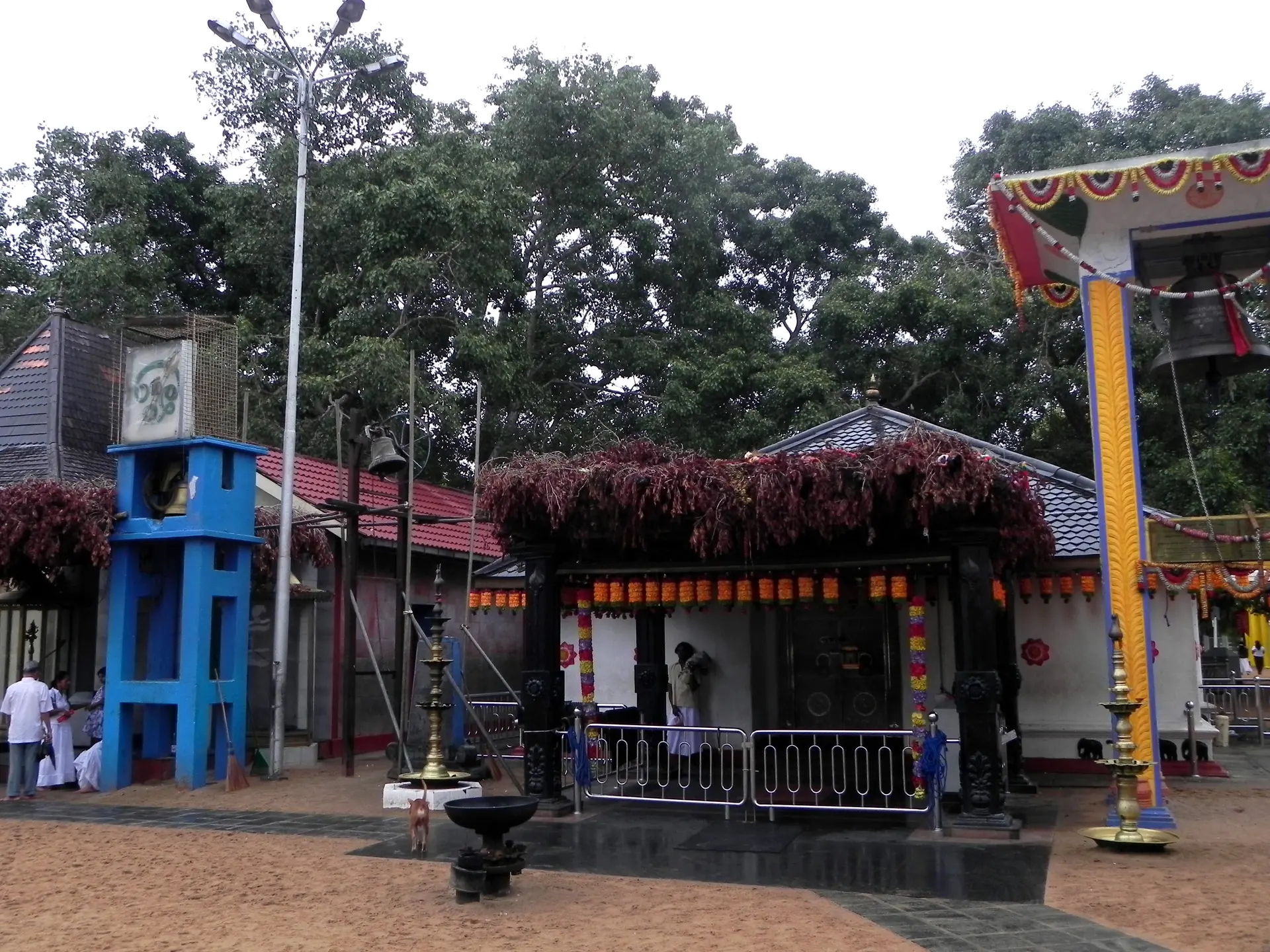
Visit essentials
A quick read before you go
- Duration
- A minimum of half a day allows for bathing, visiting multiple shrines, and sitting in…
- Etiquette
- Kataragama is an active site of multi-faith worship requiring respectful behavior.
Overview
Four faiths. One sacred ground. This is not tolerance performed for visitors but harmony lived daily by pilgrims who have gathered here for over two thousand years.
Kataragama rises from the jungle of southern Sri Lanka where the Menik Ganga, the River of Gems, flows beneath the gaze of Vedahiti Kanda, the mountain where a god once fell in love with a mortal woman. Buddhists venerate this as one of the sixteen holiest sites in Sri Lanka, where the Buddha himself meditated and left sacred relics.
Hindus know it as the abode of Lord Murugan, the six-faced warrior deity who stationed his army here and married the Vedda princess Valli. Muslims come seeking al-Khidr, the immortal Green Man who discovered the Fountain of Life. And the Veddas, Sri Lanka's indigenous people, honor their ancestral sacred ground and celebrate their princess's divine marriage.
What makes Kataragama extraordinary is not that these traditions coexist despite their differences but that they have woven themselves together. The annual Esala Perahera festival cannot officially begin or end without ceremonies at the mosque. The temple priests trace their lineage to the indigenous Veddas. Hindu devotees walk on fire while Buddhist monks offer blessings. Muslim faqirs perform ecstatic rituals of self-mortification in the name of Allah.
Pilgrims arrive having walked for weeks through the jungle. They bathe in the sacred river before approaching the shrines. They witness devotees piercing their bodies with hooks and skewers, walking unharmed across beds of burning coals. They encounter faith as embodied practice rather than abstract belief. And they discover that what separates religions may be less fundamental than what draws humans toward the sacred.
Why this place is sacred
The Veddas knew this place was sacred before anyone else arrived. Their ancestors venerated Kande Yakka, the Lord of the Rock, on the mountain now called Vedahiti Kanda. When the great god came and fell in love with their princess, it confirmed what they already understood: this is where the worlds touch.
For Buddhists, the Buddha himself made this place holy. According to tradition, during his third visit to the island, he came to what was then called Kajaragama and meditated in a garden of Kihir trees. Before departing, he gave King Mahasena a lock of his hair and the sword he had used when renouncing his princely life. The king built the Kiri Vehera stupa on this spot, enshrining these relics.
The Buddha's bodily presence remains here, making the earth itself sacred.
For Hindus, the sacred Vel resides here. This is not an idol but the aniconic form of Skanda-Murugan himself, the six-faced god with twelve arms who came to battle the asuras and remained to marry Valli. The Vel is Jnana Shakti, the power of divine wisdom that pierces through ignorance. Where the Vel rests, the god is present.
For Muslims, Kataragama is Khidr-gama, the home of al-Khidr. This mysterious figure, mentioned in the Quran as a servant of Allah who taught the Prophet Moses, discovered the Fountain of Life while accompanying Alexander the Great. While Alexander sought the Water of Life through relentless effort, Khidr found it without seeking. His immortal presence pervades the shrine, making Kataragama a place of mystical encounter.
The Menik Ganga adds another dimension. This river is believed to carry gems with healing properties, its waters purifying all who bathe before approaching the shrines. The confluence of sacred water, holy mountain, and divine presence creates conditions where transformation becomes possible.
What ultimately makes Kataragama thin is not any single tradition's claim but their convergence. For over two millennia, pilgrims from different faiths have added their devotion to this ground. The accumulated weight of human intention, the continuous practice unbroken across centuries, the living presence of multiple traditions in harmony, the willingness of devotees to pierce their flesh and walk through fire as demonstration of faith that transcends ordinary limitation.
All of this creates a site where something beyond the everyday becomes accessible.
The earliest sacred use of Kataragama predates recorded history. Archaeological evidence suggests the Veddas, Sri Lanka's indigenous people, venerated the site as the abode of their forest deity long before Buddhist or Hindu traditions arrived. When Buddhism reached Sri Lanka, the site became one of the sixteen sacred places blessed by the Buddha's presence. The Hindu dimension honoring Murugan developed alongside Buddhist veneration, with the two traditions interwoven rather than competing.
The Islamic presence arrived later but integrated fully into the site's sacred calendar.
Kataragama has grown rather than replaced its traditions. The 6th century BCE brought the Buddha's visit and the construction of Kiri Vehera. By the 4th century CE, Sinhala Buddhists worshipped Skanda-Kumara as a guardian deity. The medieval period saw decline, then revival in the 16th-17th century when Kalyanagiri Swamy from North India reestablished the Hindu shrines.
In 1845, Seyed Jabbar Ali Shah arrived from Bukhara in response to what he described as a divine summons, establishing the Sufi presence that continues today. The 1950s brought government recognition of the entire complex as a holy place. Throughout this evolution, each new tradition added to rather than displaced what came before, creating a site that demonstrates religion's capacity for integration rather than conflict.
Why pilgrims come
Protection and fulfillment of vows
Devotees seek help from Kataragama or Skanda and may make a vow in connection with a petition. The shrine belongs to a wider pilgrimage landscape used by several religious communities.
How devotees visit
Pilgrims bring offerings and prayers, including during the Esala festival and the long journey from the north. Accounts of demanding acts of devotion describe practitioners’ commitments, not instructions for visitors to imitate them.
These are religious traditions and devotional practices, not promises of an outcome. Follow the community’s current guidance.
Experience and orientation
The first thing that strikes most visitors is the harmony. Not the peaceful coexistence of separate communities maintaining polite distance, but genuine integration. You will see a Buddhist family making offerings at the Hindu shrine, a Muslim devotee bathing in the sacred river before the mosque's flag-hoisting ceremony, a Vedda dancer performing the traditional steps his ancestors taught for millennia. The boundaries that seem so firm elsewhere dissolve here.
The second thing is the intensity. Kataragama is not a museum of religion but a place where faith is practiced with the body. During the Esala Perahera festival, devotees pierce their cheeks, tongues, and backs with metal skewers. They suspend themselves from iron hooks. They walk across beds of burning coals without injury. These practices are not performances for tourists but fulfillments of vows made to the deity, demonstrations that faith can transcend what the body normally endures.
Those who witness fire-walking for the first time often struggle to explain what they see. The coals are hot enough to burn. The devotees walk through without protection. Their feet emerge unharmed. Whether you attribute this to altered states of consciousness, the power of belief, or divine intervention, the phenomenon is real and challenges assumptions about the relationship between mind and matter.
The bathing in Menik Ganga before entering the shrines creates a transition, a crossing from ordinary consciousness into sacred space. The river water is surprisingly clear, believed to carry gem dust with healing properties. Many pilgrims report feeling genuinely cleansed, not just physically but of the burdens they carried to this place.
The Maha Devale's inner sanctum, where the sacred Vel resides, holds a particular charge. The air is thick with camphor smoke and devotion. The Vel is not visible, concealed within its shrine, but devotees describe feeling its presence. The energy here is not peaceful but powerful, requiring a certain readiness to receive.
The tranquility of Kiri Vehera offers contrast. This Buddhist stupa, where the Buddha's relics rest, provides space for quiet contemplation amid the site's intensity. Dawn and dusk bring particular stillness. Those who sit in meditation here often report unusual depth and clarity.
For visitors who arrive during the Esala Perahera, the experience is overwhelming in the truest sense. Elephants caparisoned in ceremonial cloth. Drummers whose rhythms seem to alter consciousness. Fire dancers. Kavadi devotees in ecstatic trance. Crowds of pilgrims who have walked for weeks to be here. The procession that carries the sacred Vel and yantra through the night.
And beneath it all, the remarkable ecumenism: the festival that cannot begin without the mosque's ceremony, that honors all traditions equally, that demonstrates what religions could be if they chose.
Kataragama rewards preparation. The journey itself, traditionally undertaken on foot through the jungle, serves as purification for the encounter to come. Contemporary pilgrims can approximate this by approaching with similar intention.
Consider what you are coming for. A vow to fulfill, a blessing to seek, a question to hold, healing to request. The site does not require agenda, but it responds to sincerity. Arriving as a spectator to interesting customs is possible; arriving as a seeker opens different doors.
Bathe in the Menik Ganga before entering the shrines. This is not merely custom but transition. Let the river water carry away what you no longer need. Emerge ready to receive.
If you visit during the Esala Perahera, prepare for crowds, intensity, and experiences that challenge comfortable assumptions. If you seek contemplation, come during ordinary days when the grounds are quieter and the shrines more accessible.
Approach with respect for the living traditions you will witness. This is not your heritage to claim, but you may be welcomed into it. The shrine's ecumenism extends to sincere visitors of any background.
Context and lineage
Three origin stories interweave at Kataragama, none displacing the others.
The Buddhist narrative tells of the Buddha's third visit to Sri Lanka. He came to Kajaragama and meditated in a garden of Kihir trees. King Mahasena, inspired by the Awakened One's presence, took refuge in the Three Jewels. Before departing, the Buddha gave the king a lock of his hair and the sword he had used when renouncing his princely life.
The king built a stupa to enshrine these relics, the Kiri Vehera, making this ground sacred with the Buddha's own bodily presence.
The Hindu narrative centers on Lord Murugan's arrival. The six-faced, twelve-armed god, second son of Shiva, came to southern Lanka to battle the asuras. He stationed his army at what would become Kataragama. While there, he encountered Valli, a beautiful Vedda princess guarding her father's millet fields against wild animals. Murugan was struck by her beauty and pursued her through various disguises.
When his brother Ganesha appeared as a wild elephant, the frightened Valli ran to Murugan, then disguised as an old ascetic, for protection. He revealed his divine form, they married on Vedahiti Kanda, and he remained.
The Islamic narrative speaks of al-Khidr, the immortal servant of Allah. This mysterious figure, who in the Quran taught even the Prophet Moses, discovered the Fountain of Life while accompanying Alexander the Great. While Alexander sought immortality through conquest and effort, Khidr found it without seeking. His presence pervades Kataragama, making this Khidr-gama, his home. The shrine is believed to be where seekers may encounter him.
The temple's Kapurala priests, who perform rituals at the Maha Devale, trace their lineage to the Vedda people, maintaining continuity with the site's oldest sacred tradition. This priestly succession has continued unbroken for centuries, passing knowledge and ritual authority from generation to generation.
The Buddhist presence at Kiri Vehera has been maintained by monks of the Theravada tradition since the stupa's construction. The Sufi lineage traces to Seyed Jabbar Ali Shah's arrival from Bukhara in 1845, with the Qadiriyya and Refai orders maintaining practices at the mosque.
What makes Kataragama's lineage distinctive is not any single line of transmission but the four traditions' interwoven continuity. Each maintains its own inheritance while participating in the others' ceremonies. The annual festival cannot proceed without the mosque's involvement. Buddhist monks bless Hindu devotees. The Vedda dancers perform at celebrations honoring the god who married their princess.
Skanda-Murugan
deity
The six-faced, twelve-armed warrior god who came to battle demons and remained for love. Worshipped by both Hindus and Buddhists, he presides over the Maha Devale as Kataragama Deviyo, guardian of the island and granter of boons.
Valli Amma
deity
The Vedda princess who married Lord Murugan. Her divine marriage validates the indigenous connection to the sacred site and demonstrates that spiritual attainment transcends social birth.
Al-Khidr
deity/saint
The immortal Green Man of Islamic mysticism, teacher of Moses, discoverer of the Fountain of Life. His presence pervades the Kataragama shrine, making it a site of Sufi encounter.
The Buddha
deity/historical
The Awakened One who visited Kataragama during his third journey to Sri Lanka, meditated here, and left relics that remain enshrined in the Kiri Vehera.
Traditions and practice
The sacred practices of Kataragama emerge from each tradition yet blend in practice.
Ablution in the Menik Ganga precedes entry to the shrines. Pilgrims bathe in the sacred river, letting its waters purify body and intention before approaching the divine. The river is believed to carry gem dust with healing properties, its name meaning River of Gems.
Offerings form the core of devotion. Baskets of fruit, especially bananas, are the most common. Lotus flowers for Buddhist shrines, other blooms for Hindu worship. Coconuts are broken as acts of ego-surrender, the hard shell representing the self that must crack open before the divine.
Kavadi is the distinctive devotional dance of Murugan worship. Devotees carry decorated arches, often covered with peacock feathers sacred to the god, attached to their bodies by hooks piercing the skin. They dance in procession, entering states of ecstatic trance, fulfilling vows made to the deity.
Fire-walking occurs at the annual festival. Devotees cross beds of burning coals without injury, demonstrating that faith transcends the body's ordinary limitations. This practice fulfills vows and demonstrates devotion.
The more extreme mortifications include piercing cheeks and tongues with metal skewers, inserting hooks through back flesh, and Thooku Kavadi, suspension from iron hooks. These practices, undertaken after spiritual preparation and with proper ritual context, are understood as offerings of the body to the divine.
At the mosque, Sufi practices include zikr (remembrance of Allah) and the Ratheeb ceremony performed by Refai faqirs, which can include acts of self-mortification in the name of Allah. The flag-hoisting ceremony at the mosque officially begins the annual festival.
Daily worship continues at all shrines. Pujas are performed throughout the day at the Maha Devale, where devotees make offerings and receive blessings. The sacred Vel, though hidden within its shrine, is understood as present and responsive to sincere petition.
Buddhist worship at Kiri Vehera follows traditional Theravada forms: offering flowers and incense, circumambulation, meditation, and veneration of the Buddha's relics enshrined within.
Pilgrims still undertake the Pada Yatra, the foot pilgrimage from Jaffna through the jungle to Kataragama. This journey of hundreds of kilometers, taking weeks to complete, serves as purification and preparation. The hardship of the journey is itself devotion.
The Esala Perahera, held annually in June-July for fifteen days, remains the site's most intense period. Elephants carry sacred relics in procession. Drummers maintain rhythms throughout the night. Fire dancers, Kavadi devotees, and temple dignitaries parade through the grounds. The final night brings the Diya Kepeema, the Water Cutting Ceremony, concluding the festival at the Menik Ganga.
Muslim worship at Khalir Makam continues daily, with increased intensity during the festival when the mosque's ceremonies open and close the celebrations.
For visitors seeking meaningful engagement rather than mere observation, several practices are open.
Bathe in the Menik Ganga before visiting the shrines. Enter the water with intention, letting it carry away what you no longer need. This is not performance but genuine transition into sacred space.
Make an offering. Purchase a fruit basket from vendors near the entrance. Approach the shrine with sincerity. You need not share the tradition's theology to offer respect and petition.
Circumambulate Kiri Vehera, walking clockwise around the stupa. This Buddhist practice of veneration is open to all and allows contemplative movement through sacred space.
Sit in silence at one of the quieter areas of the grounds. Let the atmosphere work without agenda. Notice what arises.
If you visit during the Esala Perahera, approach as participant rather than spectator. The crowd's devotion is contagious. Allow yourself to be moved.
Theravada Buddhism
ActiveKataragama is one of the sixteen sacred places (Solosmasthana) in Sri Lanka, sites believed to have been visited and blessed by the Buddha himself. The Kiri Vehera stupa enshrines relics of the Buddha including a lock of his hair and the sword used at his renunciation. Kataragama Deviyo is venerated as a guardian deity of Buddhism and protector of the Sinhala nation, worshipped at Buddhist temples throughout Sri Lanka.
Buddhist practice at Kataragama centers on veneration at Kiri Vehera. Pilgrims offer flowers and incense, circumambulate the stupa clockwise, and sit in meditation on the grounds. The site is visited as part of pilgrimage to the Solosmasthana, often combined with other sacred sites. Poya days bring increased Buddhist activity. Monks from throughout Sri Lanka visit to pay respects to the Buddha's relics.
Shaiva Hinduism (Murugan/Skanda worship)
ActiveFor Hindus, particularly Tamil Shaivites, Kataragama is the sacred abode of Lord Murugan (Skanda), second son of Shiva, the six-faced warrior god who defeated the asuras and married the Vedda princess Valli. The site is one of the most important pilgrimage destinations for Murugan worship, housing the sacred Vel (spear) that is worshipped as the aniconic form of the deity himself.
Hindu worship at the Maha Devale centers on veneration of the Vel and seeking the deity's blessing. Kavadi, the devotional dance performed carrying decorated arches attached to the body by piercings, is the distinctive practice of Murugan devotion. Fire-walking fulfills vows made to the deity. During the Esala Perahera, more extreme mortifications including body-piercing and hook-suspension demonstrate faith that transcends bodily limitation. Daily pujas are performed throughout the day.
Sufi Islam (Khidr veneration)
ActiveMuslims venerate Kataragama as Khidr-gama, the home of al-Khidr, the mysterious immortal servant of Allah mentioned in the Quran as a teacher of the Prophet Moses. The shrine is believed to be pervaded by Khidr's living presence, making it a site of potential mystical encounter. The Sufi orders, particularly the Qadiriyya and Refai, maintain Islamic worship at the site.
Muslim worship occurs at Khalir Makam (Khidr's Sanctuary). Daily prayers follow standard Islamic forms. The Ratheeb ceremony performed by Refai Sufi faqirs during the festival includes rhythmic zikr and can involve acts of self-mortification in the name of Allah. The annual festival cannot officially begin or end without ceremonies at the mosque, integrating Islamic practice into the site's broader sacred calendar. The Pada Yatra pilgrimage from Jaffna historically followed ancient Sufi routes.
Vedda Indigenous Traditions
ActiveThe Veddas, Sri Lanka's indigenous people, have the oldest claim to Kataragama. Their ancestors venerated the site as the abode of Kande Yakka, the Lord of the Rock, before Buddhist or Hindu traditions arrived. The divine marriage of their princess Valli to Lord Murugan validates their sacred connection and demonstrates that spiritual attainment is available regardless of social status or background. The Kapurala priests are believed to descend from Vedda lineage.
Vedda practices include the Kiri Koraha ancestor worship ritual and traditional dancing performed during the annual festival. The propitiation of Kande Yakka maintains connection to pre-Buddhist indigenous veneration. Shamanic practices including possession and spirit communication continue in some Vedda communities. The Pada Yatra foot pilgrimage honors Valli Amma's journey to meet her divine husband.
Perspectives and open questions
Kataragama invites interpretation from multiple frameworks, each illuminating aspects the others might miss. Scholars see religious syncretism. Each tradition sees its own sacred significance. Esoteric interpreters find cosmic symbolism. And genuine mysteries remain beyond all frameworks. Honest engagement holds these perspectives together without forcing resolution.
Scholarly perspective
Scholars recognize Kataragama as one of the world's most remarkable examples of religious syncretism, where multiple traditions have coexisted and interpenetrated for over two millennia. Paul Younger and Heinz Bechert identify the core ritual practices as survivals of pre-Buddhist, pre-Hindu Vedda indigenous veneration, later overlaid with Buddhist, Hindu, and Islamic elements. The site demonstrates the capacity of Sri Lankan culture to integrate diverse religious influences while maintaining distinct practices.
The phenomenon of interfaith harmony at Kataragama has drawn particular scholarly attention. Cambridge researchers have noted the remarkable tone of ecumenism and tolerance that stands in clear contrast to mutual mistrust in other social institutions. This harmony appears genuine rather than performed, embedded in the site's ritual calendar where the annual festival cannot proceed without the mosque's participation.
Archaeological evidence suggests veneration at the site extending back to the Mesolithic era, with megalithic remains and cave art predating historical traditions. The Kiri Vehera dates to the 6th century BCE or possibly 1st century BCE, depending on which inscription dates scholars credit. The site's continuous sacred use across these millennia represents an unusual case of religious continuity and accumulation.
Living and traditional perspectives
Each tradition holds Kataragama as central to its practice in Sri Lanka.
For Buddhists, this is one of the sixteen sacred places (Solosmasthana) marking the Buddha's presence on the island. The relics enshrined in Kiri Vehera connect this ground to the Awakened One's physical body. Kataragama Deviyo serves as a guardian deity of Buddhism and the Sinhala nation.
For Hindus, particularly Tamil Shaivites, Kataragama is the southern abode of Lord Murugan, one of the most important pilgrimage sites for Skanda worship. The deity's presence in the form of the sacred Vel makes this a place of direct divine encounter.
For Muslims, Kataragama is Khidr-gama, pervaded by the presence of al-Khidr. The Sufi orders who maintain the mosque understand this as a site where the boundary between the seen and unseen worlds thins, where the immortal guide may be encountered.
For the Veddas, Kataragama validates their ancient connection to this land. The divine marriage of their princess to the great god confirms the sacred status of their ancestors and traditions.
Alternative interpretations
Esoteric interpretations focus on the shatkona yantra, the six-pointed star associated with Skanda-Murugan. This symbol, representing the balanced union of ascending and descending triangles, is understood as cosmic wholeness, the integration of masculine and feminine principles. The deity's six faces homologize to this hexagram, representing the six directions of space-time and the six philosophical viewpoints.
The sacred Vel is interpreted as Jnana Shakti, the power of divine wisdom. Its spear-point represents the piercing clarity that cuts through illusion. The yantra carried in procession during the festival, closely guarded and never publicly displayed, is believed to contain concentrated spiritual power.
Some interpret Kataragama's interfaith character as evidence that the site predates religious differentiation, representing an original unity that subsequent traditions have accessed through their different frameworks. The Vedda connection to pre-Aryan indigenous spirituality is sometimes extended to suggest links with ancient shamanic traditions found throughout South and Southeast Asia.
Open questions
Genuine mysteries remain at Kataragama that no framework fully explains.
The mechanism by which devotees walk unharmed across burning coals defies simple physiological explanation. The coals are genuinely hot. The feet are genuinely unprotected. The phenomenon is reliably reproducible under proper ritual conditions. Science has proposed explanations involving the Leidenfrost effect, altered states of consciousness, and the limited thermal conductivity of wood coals, but none fully accounts for the extended crossings observed.
The exact contents of the casket carried in the Esala procession remain a closely guarded secret. Believed to contain a shatkona yantra, this object has never been publicly displayed. What precisely it contains, and how it relates to the Vel within the Maha Devale, is known only to the Kapurala priests.
The identity and nature of al-Khidr remains one of Islam's enduring mysteries. Whether prophet, saint, or angel; whether still living in embodied form, existing in some transcendent state, or present only in spirit; and how his presence manifests at Kataragama are questions without definitive answers.
Perhaps the greatest mystery is the site's remarkable interfaith harmony itself. Why here? Why has this place escaped the religious conflict that marks much of South Asian history? The explanations offered are never quite sufficient. Something about Kataragama seems to dissolve the boundaries that elsewhere prove so intractable.
Plan your visit
Access and arrival
The town of Kataragama offers lodging at various price points, from simple pilgrim rest houses to more comfortable hotels. During the Esala Perahera, accommodation fills quickly and should be booked well in advance. Tissamaharama, one hour away, provides additional options and serves as a base for combining Kataragama with Yala National Park.
Respectful visit
Dress modestly. Shoulders and knees should be covered for all visitors. White is traditional for Buddhist worship and appropriate throughout the grounds. Red is traditional for Hindu devotees, especially during the Esala festival, and is welcomed at the Maha Devale. Avoid clothing with images that could be considered disrespectful.
Photography is generally permitted in the public areas of the temple complex. Photography inside the inner sanctums is typically prohibited. Do not photograph devotees during rituals, in trance states, or performing mortification practices without their explicit permission. Flash photography should be avoided in all shrine areas. Be present before being documentary.
Traditional offerings include baskets of fruit, particularly bananas, lotus and other flowers, coconuts, and camphor. These can be purchased from vendors near the temple entrance. Offerings are presented at shrine entrances to priests who receive them on behalf of the deity. Cash donations are also accepted and support the temple's maintenance.
{"Remove all footwear before entering shrines","Bathe in Menik Ganga before approaching sacred areas","Do not point feet toward shrines or sacred images","Do not turn your back to shrines when departing","Avoid alcohol and meat before visiting","Do not touch ritual objects without permission","Maintain silence or quiet speech in sacred areas","Women may face restrictions during menstruation","Do not photograph devotees without permission"}
Do not attempt fire-walking, Kavadi, or body-piercing practices without proper preparation and ritual context. These are not casual experiences but serious devotional acts requiring spiritual preparation, often years of practice, and proper guidance.
The extreme mortification practices sometimes shown in photographs represent the exceptional, not the typical. Most pilgrims make offerings and receive blessings without physical ordeal.
Avoid treating the site's practices as spectacle. Photography of devotees should be done only with permission and discretion. These are not performances for outsiders but fulfillments of sacred vows.
If you have heart conditions, mobility issues, or difficulty with heat and crowds, the Esala Perahera period may be challenging. The festival brings hundreds of thousands of devotees, extreme heat from fire ceremonies, and limited accessibility.
Current practical details
Address
C89M+G6V, Kataragama 91400, Sri Lanka
Phone
Hours
Hours, fees, and access can change — verify on the official source before you travel. Practical details last checked Jun 2026.
Location
Map loads as you approach this section.
Pilgrim reflections
A portrait of encounter, not a score
Pilgrims describe what they felt, how present they could become, and whether the place would shape a journey. There are no stars and no ranking of traditions.
No reviewed reflections yet
The first pilgrims can help describe the character of being here.
Share a reflection
Available after an account-backed “Been there.” Every reflection is reviewed before publication.
Nearby sacred places
Explore other sacred places in the region. Proximity does not establish access or travel time; check each place’s guidance.
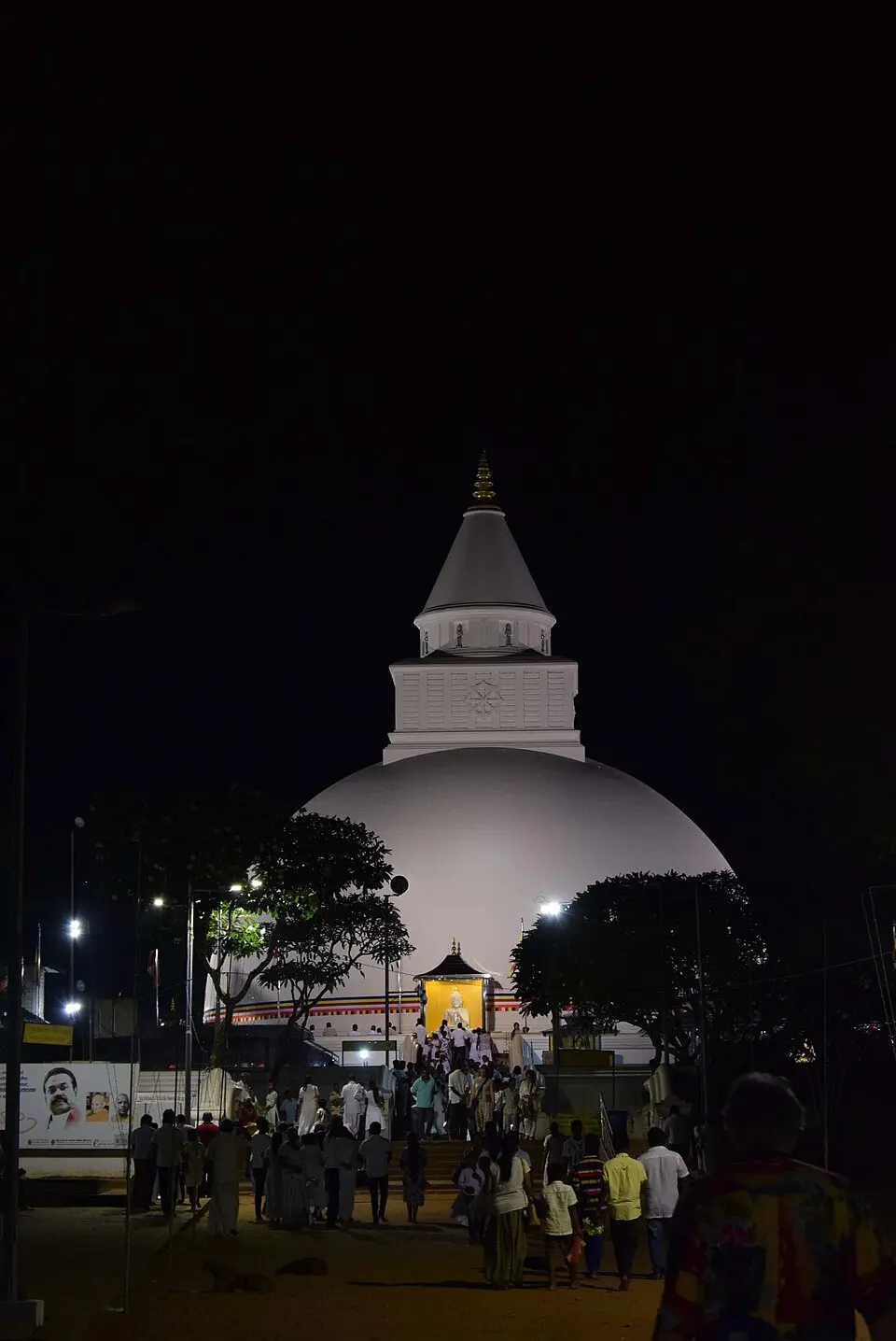
Kiri Vehera
Kataragama, Monaragala, Sri Lanka
0.8 km away

Tissamaharama Raja Maha Vihara
Tissamaharama, Tissamaharama, Hambantota District, Southern Province, Sri Lanka
16.0 km away

Muthiyangana Raja Maha Vihara
Badulla, Badulla, Badulla District, Uva Province, Sri Lanka
70.0 km away
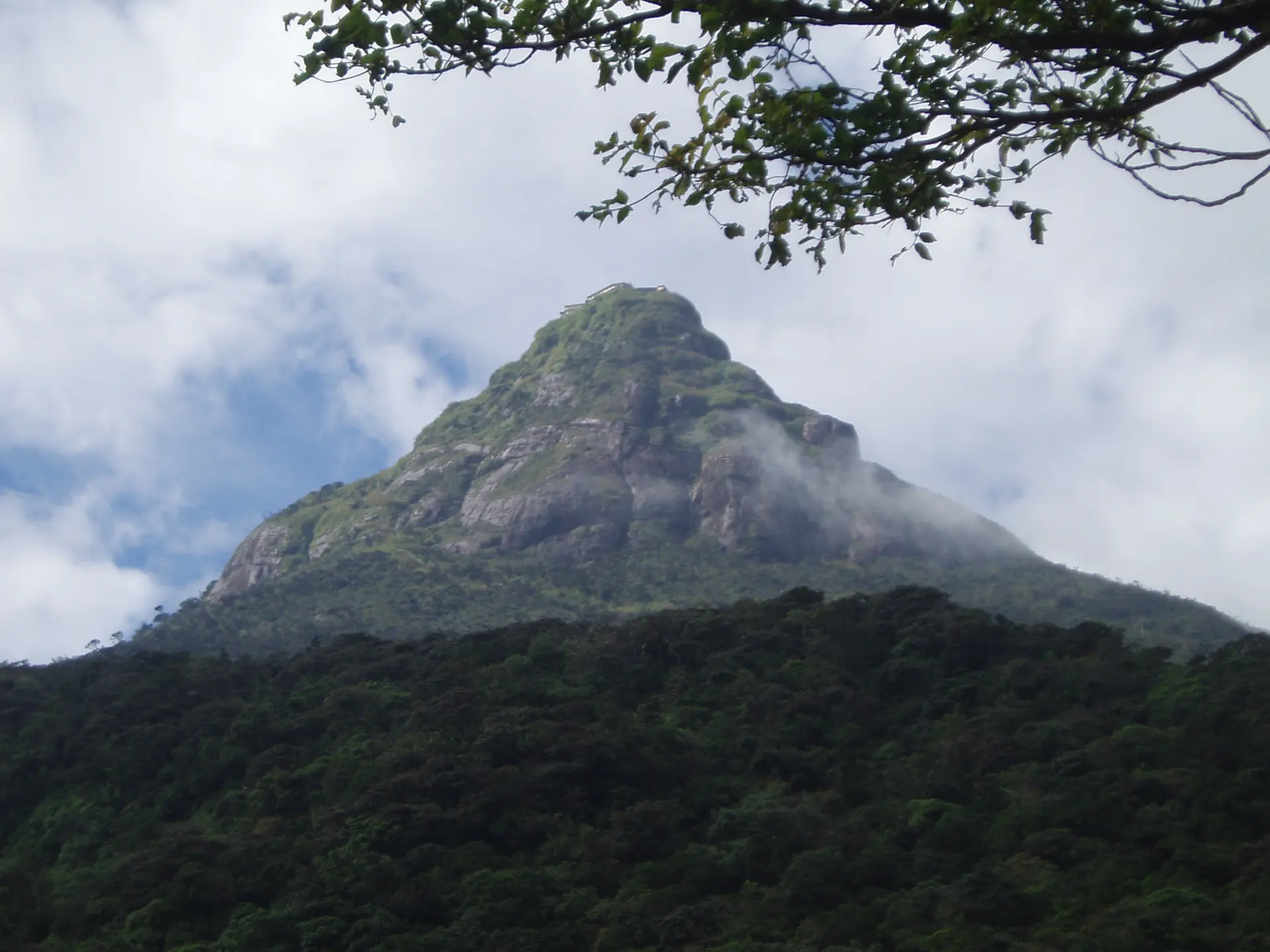
Adam's Peak (Sri Pada)
Dalhousie, Ratnapura, Sri Lanka
102.7 km away
References
Sources consulted for this page. Source categories describe the publication, not a guarantee that every claim is verified. Traditional accounts and outside interpretations may differ.
- 01Kataragama Temple - WikipediaencyclopediaPrimary encyclopedic source with comprehensive historical information
- 02Kataragama - WikipediaencyclopediaTown overview with multi-religious context
- 03Ruhunu Maha Kataragama Devalaya Official WebsiteofficialOfficial temple website with authoritative information
- 04Kataragama.org - Kathirkamam, the Abode of Skanda — Patrick HarriganacademicScholarly resource on Kataragama traditions
- 05Islamic Kataragama: The Home of al-KhidracademicDetailed Islamic significance
- 06Murugan and Valli Romance — Kamil ZvelebilacademicScholarly analysis of Valli mythology
- 07Kataragama Esala Perahera 2025 — Universal Travel PagesguideFestival dates and descriptions
- 08Holidify - Kiri VeheraguideBuddhist stupa information
- 09Serene Colombo - Kiri Vehera Sacred PlacesguideBuddhist pilgrimage context
- 10Tsem Rinpoche - The Beautiful & Sacred Kiri VeheraacademicBuddhist perspective on sacred relics
Pilgrim glossary
- Stupa
- A dome-shaped Buddhist monument that holds relics or marks a sacred place.
Share a photo
Help visitors recognize Kataragama Temple, Sri Lanka. Every submission is reviewed before publication.