Kastelli Giant’s Church
A Stone Age stone rampart, once an island, now stranded inland by uplift
Understand sacred places, explore living traditions, and learn how to engage respectfully with Pilgrim Map.
Access has not been verified. Check current local guidance before planning a visit.
Raahe, North Ostrobothnia, Finland
Read the sources
Visit essentials
A quick read before you go
- Duration
- A short visit: the walk from parking to the rampart takes only a few minutes, and most visitors…
- Access
- Free and unstaffed, accessible year-round.
Overview
Kastelli's rounded-cornered stone rampart measures roughly 58 to 62 metres by 33 to 36 metres and rises one to nearly two metres above the pine-forest floor. It is the largest known jätinkirkko, or 'Giant's Church,' in a building tradition found nowhere beyond Finland's North Ostrobothnian coast, where around forty to fifty enclosures survive between Kokkola and Kemi.
Comb Ceramic Culture hunter-fisher-gatherers built it roughly 4,500 years ago, when the site was a small island. Post-glacial uplift has since raised the ground as the sea retreated more than fifty metres, carrying the monument with it. Six wall gaps serve as gateways. A 2009 archaeoastronomical study found several oriented toward sunrise and sunset on key seasonal dates, suggesting ritual or calendrical intent without settling the structure's purpose.
Local folklore credited giants with moving so much stone, giving the site its name.
Why this place is sacred
What makes Kastelli strange to stand inside is less the stonework itself than the ground beneath it. The enclosure was raised on what was, around 2700 BCE, a small rocky island rising from a sea roughly forty-five to fifty-five metres higher than today's.
Finland's landmass is still rebounding from the weight of the last Ice Age's glaciers, lifting slowly out of the Baltic, and over the millennia since Kastelli was built that uplift has carried the site far from any shoreline, leaving a monument to seafaring, fishing, or seal-hunting people stranded many kilometres inland in quiet coastal forest. Nothing about the rampart's low grass- and moss-covered walls announces this history; the drama is legible only if you already know to look for it.
The second source of the site's thinness is simply its unresolved purpose. Soil-phosphorus readings inside and around the enclosure are exceptionally high -- consistent with the intensive processing of fish, seal meat, and seal fat -- which points toward a working camp rather than a purely symbolic space.
Yet the same enclosure has gateways that a 2009 study found aligned with solar risings and settings on the summer solstice, an autumn harvest-season date, and the winter solstice, an orientation pattern researchers read as more likely ritual than incidental. Archaeologists no longer treat these as competing answers so much as evidence that, for the people who built Kastelli, practical and symbolic uses of the same ground may not have been separate categories at all.
Unresolved and actively debated. Leading theories include a seasonal seal-hunting and fish-processing base (supported by unusually high soil-phosphorus levels), a meat or blubber storage facility, a hunting or herding enclosure, a dwelling site, a defensive structure, and a ceremonial or ritual enclosure whose gateways were oriented to track the sun across the year. No theory has been established to the exclusion of the others.
Early 20th-century excavators Julius Ailio and Sakari Pälsi concluded in 1920 that the rampart was a natural coastal rock formation rather than a human construction -- a verdict that discouraged serious archaeological interest in Giant's Churches for roughly the next fifty years.
Later fieldwork (vegetation clearing in 1990, phosphorus and radiocarbon analysis in 2000, thermoluminescence and OSL dating in 2001, and archaeoastronomical survey in 2009) reversed that judgment and reframed Kastelli as a deliberately built Sub-Neolithic monument at the center of a wider settlement landscape, with evidence of continued or renewed use into the Bronze Age transition and even scattered Iron Age hearth activity centuries later.
Experience and orientation
The approach is a short, clearly marked forest path from a small parking area off Linnalantie in Raahe's Pattijoki district, past an outhouse and picnic tables, through pine and moss-floored moraine woodland typical of this stretch of North Ostrobothnian coast.
The rampart itself announces its size gradually: from any single vantage point it reads as a long, grass-grown mound curving away through the trees, and only by walking its perimeter -- roughly sixty metres by thirty-five -- does its full footprint register.
The wall's scale is closer to a low earthwork than a fortification: generally a metre to a metre and a half high externally, occasionally nearing two metres, and seven to eleven metres wide at its base, wide enough that its cross-section reads more as a broad stony bank than a wall in any conventional sense.
Six lower breaks in the perimeter mark the gateways; walking through one and turning to look back is the clearest way to feel the deliberateness of their placement, particularly if timed near a solstice, when the alignment research suggests certain gateways face the rising or setting sun.
Beyond the rampart, the surrounding 3.5-hectare zone holds more than thirty further features -- dwelling-pit depressions, hearth mounds, and stone cairns -- easy to miss without knowing where to look, and part of what makes this landscape a settlement rather than a single monument. Visitor accounts describe the atmosphere as still and unresuming, mysterious less because of any single dramatic feature than because so much of what happened here is legible only in outline.
One recorded visitor impression: standing at the rampart in the quiet forest, struck by the mystery it holds.
From the parking area at Linnalantie 74, Raahe, a signed forest path (marked 'Linnanraunio') leads a few hundred metres to the enclosure. The path is unpaved and uneven in places; the walk itself takes only a few minutes, though the full site -- rampart plus surrounding settlement features -- rewards thirty to sixty minutes of unhurried walking.
Context and lineage
The name jätinkirkko -- 'giant's church' -- comes from Finnish folk tradition, which attributed the sheer scale of stonework to giants rather than to the ordinary hunter-fisher-gatherer communities who actually built it.
Those builders belonged to the Comb Ceramic Culture, specifically its Pöljä pottery (asbestos ware) tradition, and worked the site around 2700-2500 BCE according to radiocarbon and OSL/thermoluminescence dating of heated stones, with later intermittent activity into the Bronze Age transition (radiocarbon peat dates around 1880-1220 BCE) and even Iron Age hearth-mound use (charcoal-dated 40-540 CE).
At the time of construction, the site sat at the edge of a sea some 45-55 metres higher than today; post-glacial land uplift has since carried it far inland.
Kastelli belongs to a regional building tradition of roughly forty to fifty known Giant's Churches strung along the Ostrobothnian coast between Kokkola and Kemi, with a notable concentration -- eight examples -- around Raahe itself. All are attributed to Comb Ceramic Culture communities of the Sub-Neolithic period; Kastelli is the largest known example by enclosed area.
Traditions and practice
The Comb Ceramic Culture builders left no written or orally transmitted record of what, if anything, they practiced at Kastelli. What can be inferred comes from the ground itself: exceptionally high soil-phosphorus concentrations point to intensive processing of fish, seal meat, and seal fat, suggesting the enclosure served -- at least in part -- as a working base tied to the surrounding sea's resources.
Whether any ceremony accompanied that work, and whether the gateway alignments to solstice and seasonal solar positions reflect ritual observance, remains inferential rather than documented.
There is no contemporary ceremonial or devotional practice tied to Kastelli. Present-day engagement is archaeological, educational, and recreational: ongoing scholarly research into the Giant's Church phenomenon (including archaeoastronomy), heritage-tourism interpretation managed by the Finnish Heritage Agency (Museovirasto) and Visit Raahe, and informal recreational use of the site's nature trail, including geocaching.
Walk the full perimeter of the rampart slowly rather than viewing it from a single point -- its scale only becomes legible over the full circuit. Pause at each of the six gateways and look outward through it before moving on; if visiting near a solstice, note where the sun sits relative to the gateway you're standing in.
Extend the visit into the surrounding forest to find the dwelling-pit depressions and hearth mounds, which are easy to overlook but are what turn the rampart from an isolated curiosity into evidence of a lived, worked landscape.
Comb Ceramic Culture / Pöljä pottery tradition (Finnish Stone Age)
HistoricalKastelli and its surrounding 3.5-hectare complex of dwelling pits, hearth mounds, and stone cairns represent the largest known example of a jätinkirkko, or 'Giant's Church' -- a monumental stone-enclosure tradition unique to the North Ostrobothnian coast of Finland, with roughly forty to fifty known examples between Kokkola and Kemi. Built by Comb Ceramic Culture hunter-fisher-gatherers of the Pöljä pottery tradition around 2700-2000 BCE, the enclosure sat at the edge of a sea now retreated more than fifty metres through post-glacial land uplift.
Original use remains debated: proposed functions include a seasonal seal-hunting and fish-processing base (supported by exceptionally high soil-phosphorus readings of 428-2,127 mg/kg), a meat or blubber storage facility, a hunting or herding enclosure, a dwelling site, a defensive structure, and a ceremonial enclosure whose gateways were oriented toward solar risings and settings at the summer solstice, an autumn harvest-period date, and the winter solstice (per Ridderstad's 2009 archaeoastronomical study). No single theory has been established to the exclusion of the others.
Archaeoastronomy and heritage conservation research
ActiveKastelli remains an active subject of scholarly inquiry: its 2009 inclusion in Marianna Ridderstad's orientation study of 23 Ostrobothnian Giant's Churches, and the site's continued management and interpretation by the Finnish Heritage Agency (Museovirasto) and Visit Raahe, represent an ongoing living tradition of research and stewardship distinct from -- but built on top of -- the extinct Stone Age practices the monument itself represents.
Archaeoastronomical measurement of gateway orientations, continued dating and soil analysis, heritage-site maintenance (interpretive signage installed 1994, marked trails, and vegetation clearing), and visitor education through Visit Raahe and Visit Finland listings.
Perspectives and open questions
Kastelli's original purpose has no settled answer, and the honest account of the site is one of genuine, ongoing disagreement among researchers rather than a resolved mystery.
Scholarly perspective
Archaeological opinion has moved twice. Julius Ailio and Sakari Pälsi's 1920 excavation concluded the rampart was a natural coastal accumulation formation, not a human construction -- a judgment that discouraged Giant's Church research for roughly fifty years. Later fieldwork, particularly Jari Okkonen's 2001 dating studies and Marianna Ridderstad's 2009 archaeoastronomical survey, firmly re-established Kastelli as a deliberate Sub-Neolithic construction.
Current scholarship treats the enclosure as a significant occupation and activity zone: exceptionally high soil-phosphorus readings point to intensive processing of fish, seal meat, and seal fat consistent with a seasonal hunting-and-fishing base, while several gateway orientations toward solar risings and settings on key seasonal dates suggest the structure also carried ritual or calendrical meaning.
Most current researchers treat the practical and ceremonial functions as potentially overlapping rather than competing explanations, and no single theory -- dwelling, storage, hunting enclosure, defensive structure, or ceremonial site -- has been established to the exclusion of the others.
Living and traditional perspectives
No indigenous or descendant community maintains a continuous cultural claim to Kastelli; the Comb Ceramic Culture builders left no unbroken tradition connecting their beliefs to the present. The only surviving traditional layer is the later Finnish folk etymology of the name jätinkirkko itself -- the attribution of the stonework to giants, reflecting how inexplicable the scale of construction seemed to people encountering the ruin long after its builders were gone.
Alternative interpretations
Beyond Ridderstad's peer-reviewed archaeoastronomical orientation study -- a mainstream academic finding rather than a fringe claim -- no distinct esoteric or alternative interpretive tradition specific to Kastelli was identified in the sources reviewed for this entry.
Open questions
The central open question remains simply what this place was for: a practical base exploiting a rich seal-and-fish coastline, a ceremonial enclosure whose gateways tracked the sun through the year, or a structure whose builders drew no sharp line between those purposes at all.
The scale of coordinated labor required to move and stack so much stone -- for a society usually understood as small, mobile hunter-fisher-gatherer bands -- is itself part of what keeps Kastelli an active subject of archaeological inquiry rather than a settled case.
Plan your visit
Access and arrival
Free and unstaffed, accessible year-round. Set GPS navigation to Linnalantie 74, Raahe (in the Pattijoki district of North Ostrobothnia); follow 'Linnanraunio' directional signage from the road. A parking area lies a few hundred metres from the enclosure, connected by a clearly marked forest path, with an outhouse and picnic tables at the parking area and a seasonal summer café reported nearby. No accessibility services for visitors with mobility impairments are available on the trail.
No information on mobile phone signal coverage at the site was found in research for this entry -- given the rural forest setting, signal should not be assumed reliable; visitors relying on navigation or emergency contact should confirm coverage before relying on a phone at the site, or check with Visit Raahe (tel. +358 44 439 3240, matkailu@raahe.fi) for current conditions.
Respectful visit
No specific dress code. Sturdy outdoor footwear is advisable given the uneven forest path and the low, uneven stonework of the rampart itself.
No photography restrictions are documented; the site is open and unstaffed with no posted prohibitions.
No offering tradition exists at this site, historically or in the present -- it is not a location where any faith community makes offerings.
Do not move, remove, or climb on the rampart's stones, cairns, or any surface material, and stay on the marked path through the surrounding 3.5-hectare zone to avoid disturbing the unexcavated dwelling-pit and hearth-mound features scattered through it.
This is an unstaffed, self-guided site with no ranger presence; move carefully on the uneven forest path and stay off the rampart's stonework itself to avoid erosion. Adders (Finland's only venomous snake) are present in the surrounding forest from April through September and generally avoid people, but watch your footing in undergrowth during those months.
Location
Map loads as you approach this section.
Pilgrim reflections
A portrait of encounter, not a score
Pilgrims describe what they felt, how present they could become, and whether the place would shape a journey. There are no stars and no ranking of traditions.
No reviewed reflections yet
The first pilgrims can help describe the character of being here.
Share a reflection
Available after an account-backed “Been there.” Every reflection is reviewed before publication.
Nearby sacred places
Explore other sacred places in the region. Proximity does not establish access or travel time; check each place’s guidance.

Rajakangas Giant’s Church
Haukipudas (Oulu), North Ostrobothnia, Finland
81.5 km away
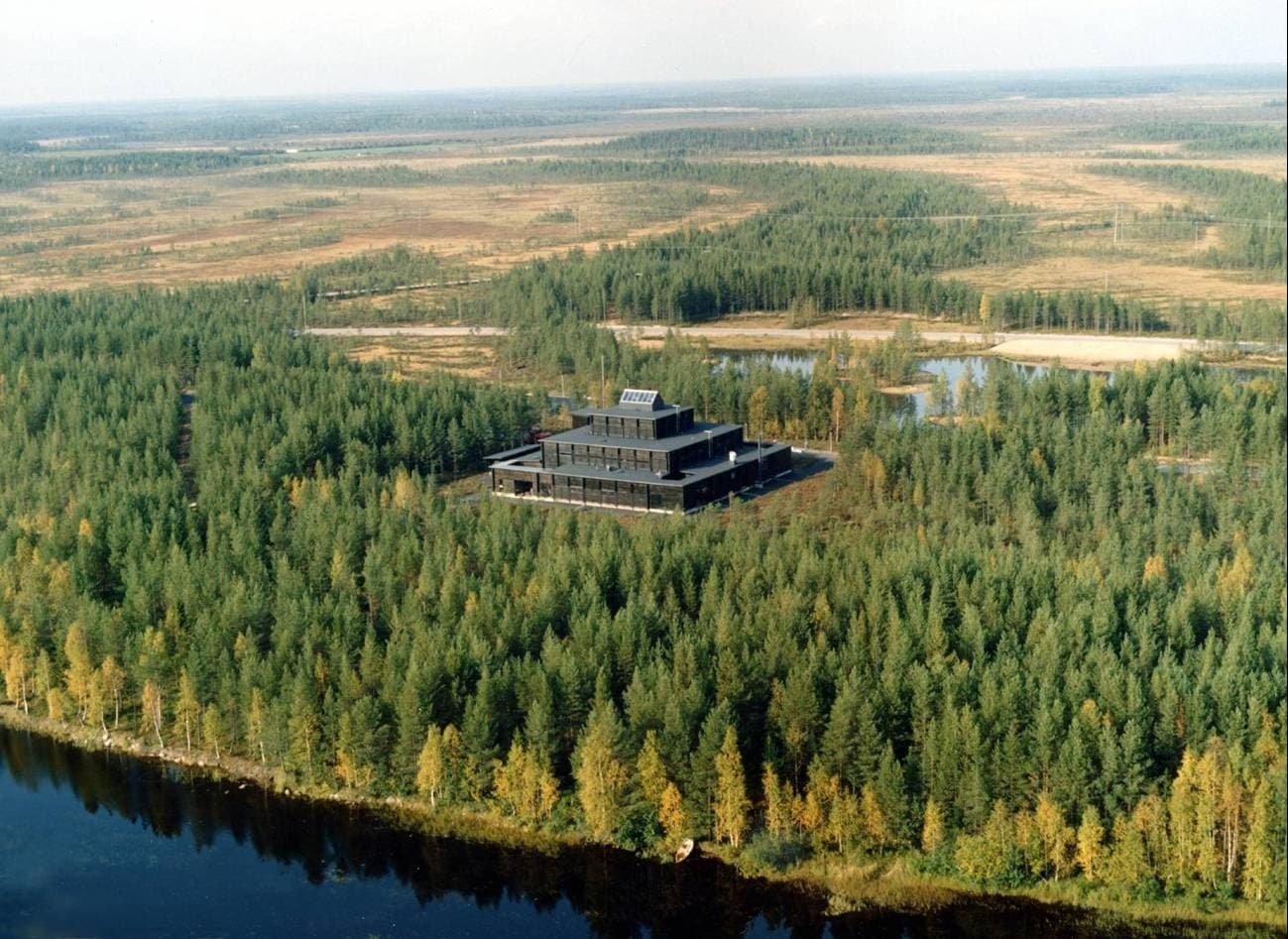
Kierikki Stone Age Centre
Yli-Ii (Oulu), North Ostrobothnia, Finland
99.5 km away

Yli-Ii Kierikki Settlement Area
Yli-Ii (Oulu), North Ostrobothnia, Finland
99.8 km away

Levänluhta
Isokyrö, South Ostrobothnia, Finland
218.6 km away
References
Sources consulted for this page. Source categories describe the publication, not a guarantee that every claim is verified. Traditional accounts and outside interpretations may differ.
- 01Pattijoen Kastelli - Wikipedia (Finnish) — Wikipedia contributorsacademicMost detailed source: coordinates, full excavation history (Ehrström/Wallenius 1854-55, Calamnius 1861/1868, Ailio & Palsi 1920, Parssinen 1990, Eilola & Sala 2000, Okkonen 2001), dating methods, phosphorus analysis, Ridderstad orientation findings, conservation/access status.
- 02Orientations of the Giant's Churches in Ostrobothnia, Finland — Marianna RidderstadacademicAcademic archaeoastronomy study measuring orientations of 23 Giant's Churches (2500-2000 BCE); found many gateways align to solar risings/settings on key solar dates. Conclusion (per secondary citation): orientation likely held ritual significance rather than functioning as a precise observatory. Milton Núñez credited as an advisor on the research. Full PDF text could not be parsed directly; findings drawn from search-result summaries and citations in wiki-fi-pattijoen-kastelli.
- 03Kastelli Giant's Church | Visit Raahe — Visit Raahe (municipal tourism office)officialOfficial visitor info: address (Linnalantie 74, Raahe), parking, outhouse, picnic tables, geocache, contact details. No mobile-signal or seasonal-closure info provided.
- 04Kastelli Giant's Church | Visit Finland — Visit Finland (national tourism board)officialStates site is 'suitable all year', free admission, same parking/amenity details as Visit Raahe.
- 05Kastelli Giant's Church - Wikipedia — Wikipedia contributorsacademicCoordinates (64°37'52.7"N 24°42'41.8"E), dimensions, 1920s excavation date, six gateways, storage-hole theory.
- 06Giant's Church - Wikipedia — Wikipedia contributorsacademicGeneral category page: geographic distribution (Kokkola to Kemi), ~40-50 known examples, Poljä ceramic culture / Comb Ceramic tradition attribution, dating 3500-2000 BCE, land uplift context.
- 07Pattijoen Kastellin jätinkirkko, mystinen ja näyttävä muinaisjäännös - Retkipaikka — Retkipaikka.fiSource contextFinnish outdoor/hiking guide: describes site as 'mystical and impressive', notes former higher sea level (45-55m) making the site an island at time of construction, summer cafe nearby, folklore attribution to giants.
- 08Raahen Pattijoen Kastellin jätinkirkko — Sadan Vuoden SatoaSource contextCovers folklore naming tradition, quotes Ailio & Palsi's 1920 'natural coastal formation' verdict that suppressed research for decades, later multi-theory purpose discussion, and later excavation of dwelling remains.
- 09Kastelli Giant's Church in Raahe is the largest of its kind — Out in the Nature (travel blogger)Source contextFirst-person visitor account: recommends visiting when ground is snow-free, notes presence of adders (Finland's only venomous snake, active April-September), states no disabled-access services, short nature trail. Used only for visitor-experience color, with epistemic markers.
Share a photo
Help visitors recognize Kastelli Giant’s Church. Every submission is reviewed before publication.