Jeshoreshwari Kali Shaktipeeth Temple
A remote Shakti Pitha near the Sundarbans where a stone palm glows with the Goddess's ancient touch
Understand sacred places, explore living traditions, and learn how to engage respectfully with Pilgrim Map.
Access has not been verified. Check current local guidance before planning a visit.
Shyamnagar, Khulna, Bangladesh
Read the sources
Visit essentials
A quick read before you go
- Duration
- 1 to 2 hours at the temple.
- Access
- Approximately 205 km southwest of Dhaka, in Shyamnagar upazila, Satkhira district.
Overview
Jeshoreshwari Kali Temple lies in a remote corner of Satkhira district in southwestern Bangladesh, about 205 kilometres from Dhaka near the Sundarbans. Reaching Ishwaripur through Khulna's flat green landscape, rivers, and rice paddies is itself pilgrimage to a village where Kali has been worshipped since at least the 13th century.
One of the 51 Shakti Pithas, this is where Sati's palm is held to have fallen. A layered legend says the Brahmin Anari built the first hundred-door temple; it has largely vanished, leaving pillars. Centuries later, a general of Raja Pratapaditya of Jessore reportedly followed a luminous ray from bushes to a palm-shaped stone. The raja renovated the temple in the late 16th century, and successive caretakers sustained worship through political upheaval.
The Yogeshwari aspect of Kali is approached by those who deliberately seek this place. Nearby Sundarbans wilderness adds untamed nature to its sacred geography. Noon worship on Saturdays and Tuesdays keeps a rhythm the remoteness has both protected and threatened.
Why this place is sacred
The discovery story holds the key to this site's particular quality. A general wanders in the bushes and sees light where there should be none. He finds a stone that is also a palm — not a representation of the divine but a fragment of the Goddess's actual body, rendered in mineral form.
The stone occupies a space between categories: it is not sculpture (it was found, not made), not natural formation (it resembles a human hand), not relic (the Goddess is not dead). It exists in the gap between what can be explained and what insists on being present.
The hundred-door temple that Brahmin Anari built has dissolved into time, leaving pillars that mark where doors once stood — a structure defined more by its openings than its walls. The current temple is simpler, smaller, maintained by caretakers who keep the flame burning in a place that the wider world rarely notices.
The Sundarbans add their own dimension. The largest mangrove forest in the world presses against the margins of human settlement here, a reminder that the boundary between the cultivated and the wild is thin and negotiable. The Goddess who chose this edge-place as the resting site of her palm may be understood as choosing the boundary itself — the threshold where the familiar meets the unknown.
Identified as a Shakti Pitha where Sati's palm fell. First temple attributed to Brahmin Anari, possibly in the 13th century or earlier.
From Anari's hundred-door temple through Lakshman Sen's 13th-century renovation and Pratapaditya's 16th-century rebuilding to its current form. The 2021 visit by India's Prime Minister brought brief international attention.
Experience and orientation
The journey from Dhaka or any major city requires commitment. The roads pass through the flat, water-rich landscape of the Khulna region — a world of rivers, ponds, and rice fields that gradually gives way to the wilder terrain approaching the Sundarbans. By the time Ishwaripur is reached, the sense of having traveled to a place apart from ordinary life is complete.
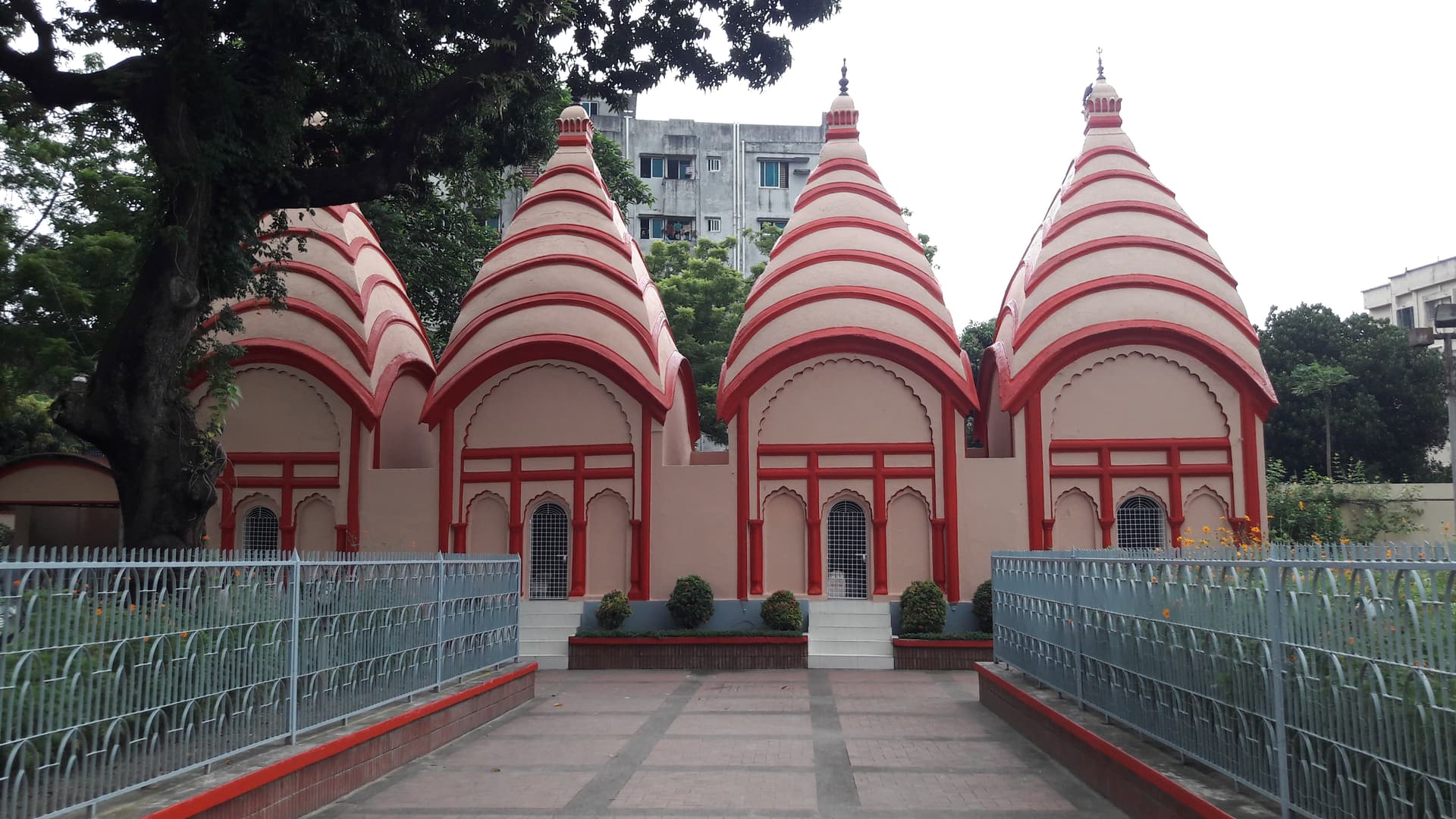
The temple itself is modest. The Natmondir — a covered platform adjacent to the main shrine — allows devotees to view the face of the Goddess. The atmosphere on Saturdays and Tuesdays, when noon worship is conducted, carries the concentrated energy of regular practice sustained over centuries. On other days, the temple is quieter, the remoteness more palpable.
The stone palm is the center. This is not a grand sculptural representation but a found object — a stone that resembles a hand, discovered in the undergrowth and recognized as the Goddess's own. Its simplicity is its power. The annual Kali Puja brings larger gatherings and a Mela around the compound, transforming the quiet site into a temporary festival.
Plan the journey carefully given the distance from major cities. Time your arrival for a Saturday or Tuesday to witness the noon worship. The temple rewards quiet attention rather than quick touring.
Context and lineage
A Brahmin named Anari built a temple with a hundred doors at this site — a structure now largely vanished. Centuries later, a general serving Raja Pratapaditya of Jessore discovered a luminous light in the undergrowth and found a stone carved in the form of a human palm, confirming the site as a Shakti Pitha. Pratapaditya renovated the temple, establishing the form of worship that continues today.
The temple belongs to the network of 51 Shakti Pithas. Its maintenance by successive caretakers, across centuries and political systems, demonstrates the persistence of Shakta devotion in Bengal's southwestern margin.
Brahmin Anari
Legendary founder of the original hundred-door temple
Raja Pratapaditya
Ruler of Jessore who renovated the temple after the discovery of the stone palm
Traditions and practice
The priest conducts worship every Saturday and Tuesday at noon — the two days of the week sacred to the Goddess in Bengali Hindu tradition. The annual Kali Puja (October-November) is the major festival, with a Mela filling the temple compound.
The temple caretakers maintain regular worship. The 2021 visit by India's Prime Minister briefly elevated the temple's profile. Pilgrims visit throughout the year, though the remote location limits casual tourism.
A Saturday or Tuesday visit at noon offers the most active worship experience. The Kali Puja period provides the festival atmosphere. The journey itself should be treated as part of the pilgrimage.
Shaktism
ActiveOne of 51 Shakti Pithas. The palm of Sati fell here. The Goddess is worshipped as Kali / Yogeshwari.
Biweekly worship on Saturdays and Tuesdays. Annual Kali Puja with Mela.
Perspectives and open questions
Jeshoreshwari invites reflection on what it means for the sacred to persist at the margins — remote, quiet, maintained by few, yet connected to a theological geography spanning the subcontinent.
Scholarly perspective
The temple's connection to Raja Pratapaditya, one of medieval Bengal's most notable Hindu rulers, and its place within the Shakti Pitha network demonstrate how political patronage and sacred geography reinforced each other in pre-modern Bengal.
Living and traditional perspectives
The Goddess chose this remote place for her palm to rest — the hand that touches, that acts, that blesses. Her presence at the edge of the wild suggests that divine power does not require centrality or grandeur.
Alternative interpretations
The stone palm, found rather than made, challenges the distinction between natural and sacred. The Goddess's body became stone, and the stone was recognized as the Goddess — a dissolution of categories that the Sundarbans nearby, where land and water and forest refuse to stay separate, seems to echo.
Open questions
What the original hundred-door temple looked like and why it required so many openings. Whether the stone palm was naturally shaped or worked by human hands.
Plan your visit
Access and arrival
Approximately 205 km southwest of Dhaka, in Shyamnagar upazila, Satkhira district. Accessible by road from Satkhira town.
Limited near the temple. Hotels available in Satkhira town.
Respectful visit
Modest dress. Remove shoes before entering the temple.
Permitted with discretion. Ask before photographing the deity or worship.
Flowers and sweets are traditional Kali offerings.
Remove shoes before entering | Maintain respectful behavior | Do not touch the sacred stone | Be mindful of the site's vulnerable context
The remote location requires significant travel planning. Accommodations near the temple are limited. The political sensitivity around Hindu sites in Bangladesh should be respected.
Current practical details
Address
Ishwaripur, Bangladesh
Phone
Hours
Hours, fees, and access can change — verify on the official source before you travel. Practical details last checked Jun 2026.
Location
Map loads as you approach this section.
Pilgrim reflections
A portrait of encounter, not a score
Pilgrims describe what they felt, how present they could become, and whether the place would shape a journey. There are no stars and no ranking of traditions.
No reviewed reflections yet
The first pilgrims can help describe the character of being here.
Share a reflection
Available after an account-backed “Been there.” Every reflection is reviewed before publication.
Nearby sacred places
Explore other sacred places in the region. Proximity does not establish access or travel time; check each place’s guidance.


References
Sources consulted for this page. Source categories describe the publication, not a guarantee that every claim is verified. Traditional accounts and outside interpretations may differ.
- 01Jeshoreshwari Kali Temple - Wikipedia — Wikipedia contributorsencyclopediaComprehensive overview of temple history and significance
- 02Jeshoreshwari Kali Temple - Mahakal.com — Mahakal.comguideHistorical details and Shaktipeeth context
- 03Jeshoreshwari Kali Temple - Temple Folks — Temple FolksguideShakti Pitha listing with deity information
- 04Jeshoreshwari Kali Temple - Offroad Bangladesh — Offroad BangladeshguidePractical visitor information
- 05Jeshoreshwari Yogeshwari Shaktipeeth - The Temple Guru — The Temple GuruguideDeity details and worship information
- 06Jeshoreswari Shaktipeeth - Shaktipeeth Darshan — Shaktipeeth DarshanguidePilgrimage tour context
Photo gallery
2 curated photos
Share a photo
Help visitors recognize Jeshoreshwari Kali Shaktipeeth Temple. Every submission is reviewed before publication.