Chandranath Shaktipeeth Temple
A hilltop Shakti Pitha where Sati's arm fell, drawing Bangladesh's largest Hindu pilgrimage each year
Understand sacred places, explore living traditions, and learn how to engage respectfully with Pilgrim Map.
Access has not been verified. Check current local guidance before planning a visit.
Sitakunda, Chattogram, Bangladesh
Read the sources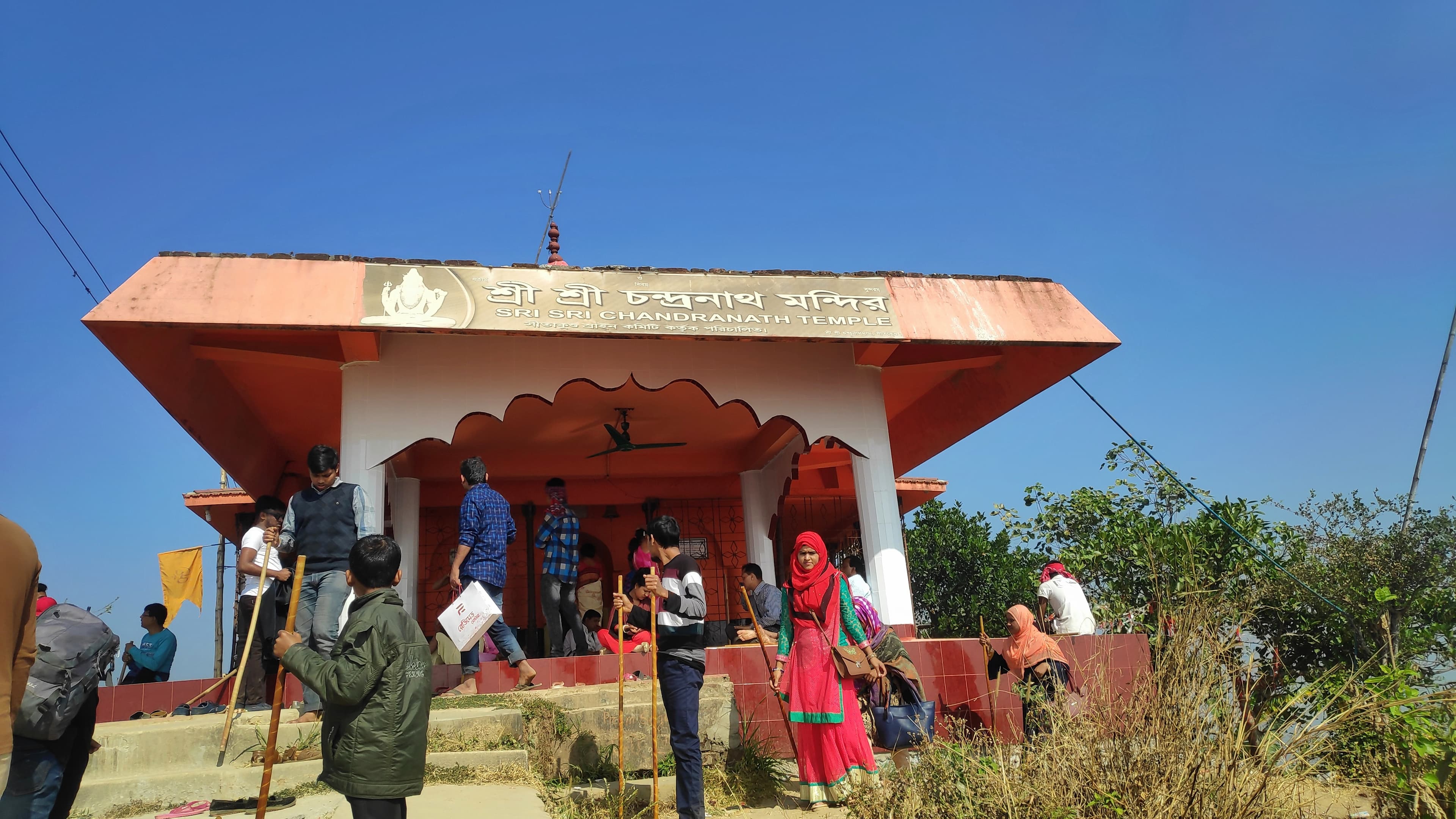
Image of Chandranath Shaktipeeth Temple. Image source · CC-BY-SA-4.0
Visit essentials
A quick read before you go
- Duration
- 2 to 4 hours including ascent and descent.
- Access
- Pilgrims start from Sitakunda railway station, a few kilometres from the hill base.
Overview
Atop Chandranath Hill at Sitakunda, Chandranath Temple is a Shakti Pitha joining Sati mythology to a steep hilltop pilgrimage. Believed to date from the 12th-century Sena dynasty, it enshrines Bhavani, the form of Sati worshipped here, and Chandrashekhar, Shiva bearing the crescent moon.
The hill rises 310 metres from the coastal plain. Its demanding climb makes the pilgrim's body work toward a place where tradition holds the divine body met earth with force. A famous medieval chariot with wood carvings, coastal panoramas, and wind across the exposed summit make the encounter physical as well as devotional.
During Shiva Chaturdashi in Phalgun, the hill hosts Bangladesh's largest Hindu pilgrimage. Saints, devotees, and visitors from across the country and beyond ascend together, while a fair fills the lower slopes with music and commerce around a site cherished by the community.
Why this place is sacred
Chandranath Hill does what sacred geography does at its most effective: it makes the approach to the sacred visible and physical. The 310-metre elevation gain from Sitakunda to the summit cannot be bypassed. Every pilgrim who reaches the temple has climbed to get there, and the climb strips away casual intention.
The dual presence of Shakti and Shiva at the summit introduces a particular theological charge. In Shakta-Shaiva understanding, these two forces — feminine creative power and masculine divine consciousness — are complementary aspects of ultimate reality. Their co-presence at one hilltop concentrates what is usually distributed across separate temples.
The Sena dynasty attribution adds historical depth. King Ballal Sen's 12th-century patronage places the temple within a period of sophisticated Hindu cultural production in Bengal. The legend of Chandranath Yogi presenting a gem to King Lakshmanasena weaves the site into the narrative fabric of the Sena court.
But the thinness is most palpable during Shiva Chaturdashi, when the sheer volume of collective devotion — lakhs of pilgrims climbing a single hill — creates an atmosphere that individual visits cannot replicate.
Established as a Shakti Pitha recognizing the site where Sati's right arm fell. Developed as a temple under Sena dynasty patronage in the 12th century.
From a 12th-century temple to the site of Bangladesh's largest annual Hindu pilgrimage, the temple's significance has grown through centuries of continuous devotion. The Shiva Chaturdashi fair has become a major cultural event beyond its purely religious dimensions.
Experience and orientation
Begin at Sitakunda, where the hill rises from the coastal flatlands. The path climbs steeply through vegetation that thins as elevation increases. The effort of the ascent occupies the body and quiets the mind — a natural form of preparation that no built threshold could improve upon.
As the summit approaches, the views open outward. The Chittagong coast unfolds below, and the sense of having risen above the everyday landscape becomes tangible. The temple appears at the top, modest in scale but immense in the weight of what it holds: a Shakti Pitha, a Shiva shrine, and centuries of accumulated devotion.
Inside, the deity Bhavani and the Shiva lingam Chandrashekhar share the sacred space. The darkness of the temple interior, after the brightness of the open hilltop, creates a moment of adjustment — the eyes must find a new way of seeing. The famous medieval chariot, with its intricate wood carvings, rewards close attention.
During Shiva Chaturdashi, the entire experience transforms. The solitary climb becomes a communal procession. The quiet hilltop becomes a place of bhajans, bells, and the collective breathing of hundreds of thousands. The temple holds the same deities, but the context shifts everything.
Allow 2 to 4 hours for the round trip including the climb. Wear sturdy footwear. Carry water. The temple is open from 6 AM to 6 PM. If visiting during Shiva Chaturdashi, expect crowds and plan for a longer ascent.
Context and lineage
When Vishnu's discus severed Sati's body to end Shiva's destructive dance, her right arm fell upon this hill above the coast. The Sena kings recognized the site's sanctity — King Ballal Sen is credited with establishing the temple in the 12th century. A later legend tells of Chandranath Yogi presenting a gem to King Lakshmanasena, suggesting the site held significance for ascetic practitioners as well as royal patrons.
The temple belongs to the network of 51 Shakti Pithas and simultaneously to the tradition of hilltop Shiva worship. Its association with the Sena dynasty places it within the golden age of Hindu cultural expression in Bengal.
King Ballal Sen
Sena dynasty ruler credited with establishing the temple in the 12th century
Traditions and practice
Daily worship of both Bhavani (Sati) and Chandrashekhar (Shiva) with traditional Hindu rituals. The medieval chariot with its wood carvings is associated with festival processions. Pilgrimage to the hilltop is itself a devotional act.
The Shiva Chaturdashi in Phalgun (February-March) draws hundreds of thousands. The fair that accompanies it includes bhajans, cultural performances, and commercial activity. The temple receives regular worship throughout the year.
The Shiva Chaturdashi offers the most intense experience but also the largest crowds. A quiet visit outside festival season allows for a more contemplative encounter with the hilltop temple. Either way, the climb is the essential preparation.
Shaktism
ActiveOne of 51 Shakti Pithas. Sati's right arm fell here. The Shakti is worshipped as Bhavani.
Daily worship, pilgrimage ascent, annual Shiva Chaturdashi gathering.
Shaivism
ActiveShiva is worshipped as Chandrashekhar (bearer of the crescent moon) alongside the Shakti.
The Shiva Chaturdashi draws the largest annual gathering. Daily Shiva worship continues.
Perspectives and open questions
Chandranath Temple invites reflection on the relationship between physical effort and spiritual encounter — and on what it means for a community to climb toward its most sacred place.
Scholarly perspective
The Sena dynasty's patronage is consistent with the period's extensive Hindu temple building in Bengal. The Shakti Pitha tradition maps a sacred geography across the subcontinent that has sustained pilgrimage networks for centuries.
Living and traditional perspectives
For devotees, the right arm of the Goddess rests at this hilltop, and climbing to reach her is both an act of devotion and a reenactment of the approach to the divine that requires effort, intention, and surrender.
Alternative interpretations
The hilltop as a meeting point of Shakti and Shiva embodies the tantric understanding that ultimate reality emerges from the union of complementary forces — feminine power and masculine consciousness, both present at this wind-swept summit.
Open questions
The layered site names — Sitakunda (Sita's pool) beneath Chandranath (moon-lord) — suggest multiple mythological geographies mapped onto this hill across different eras, each adding significance without erasing what came before.
Plan your visit
Access and arrival
Pilgrims start from Sitakunda railway station, a few kilometres from the hill base. Shah Amanat International Airport (Chittagong) is approximately 55 km south.
Basic accommodations in Sitakunda. More options in Chittagong city.
Respectful visit
Modest dress covering shoulders and knees. Remove shoes before entering the temple.
Permitted outside. Ask before photographing inside or during worship.
Flowers, milk, and traditional Shiva offerings are customary.
Remove shoes before entering | Maintain reverence near the deities | Do not touch deity images | Wear appropriate footwear for the climb
The climb is steep and physically demanding. Wear proper footwear and carry water. The hilltop is exposed to sun and wind. During Shiva Chaturdashi, crowds are very large.
Location
Map loads as you approach this section.
Pilgrim reflections
A portrait of encounter, not a score
Pilgrims describe what they felt, how present they could become, and whether the place would shape a journey. There are no stars and no ranking of traditions.
No reviewed reflections yet
The first pilgrims can help describe the character of being here.
Share a reflection
Available after an account-backed “Been there.” Every reflection is reviewed before publication.
Nearby sacred places
Explore other sacred places in the region. Proximity does not establish access or travel time; check each place’s guidance.

References
Sources consulted for this page. Source categories describe the publication, not a guarantee that every claim is verified. Traditional accounts and outside interpretations may differ.
- 01Chandranath Temple - Wikipedia — Wikipedia contributorsencyclopediaOverview including Shaktipeeth status and historical background
- 02Chandranath Temple, Sitakunda - Temple Purohit — Temple PurohitguideTemple timings, history, and visitor information
- 03Chandranath Shaktipeeth - The Temple Guru — The Temple GuruguideShaktipeeth context and deity information
- 04Chandranath Temple - Offroad Bangladesh — Offroad BangladeshguideVisitor experience and practical access details
- 05Day Trip to Chandranath Hill Sitakunda - ShareTrip — ShareTripguidePractical travel information for visitors
- 06Chandranath Temple - AlightIndia — AlightIndiaguideHistorical context including Sena dynasty connection
Share a photo
Help visitors recognize Chandranath Shaktipeeth Temple. Every submission is reviewed before publication.