Dhakeshwari Temple, Dhaka
The National Temple of Bangladesh, where the Goddess who named a city persists through centuries of upheaval
Understand sacred places, explore living traditions, and learn how to engage respectfully with Pilgrim Map.
Access has not been verified. Check current local guidance before planning a visit.
Dhaka, Dhaka, Bangladesh
Read the sources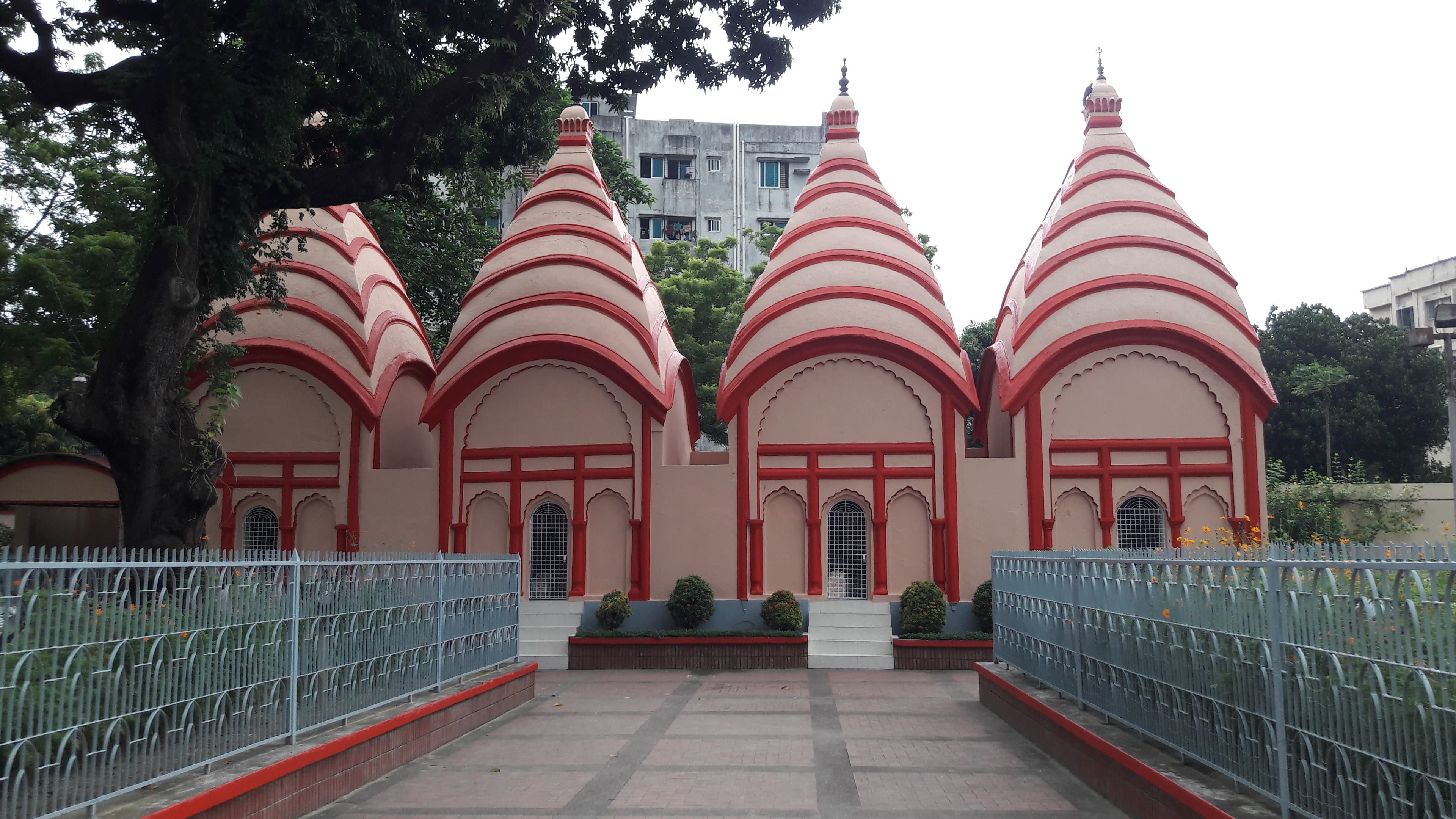
Image of Dhakeshwari Temple, Dhaka. Image source · CC-BY-SA-4.0
Visit essentials
A quick read before you go
- Duration
- 30 minutes to 1 hour.
- Access
- Located in Old Dhaka.
Overview
Dhakeshwari Temple in Old Dhaka is Bangladesh's most important Hindu temple and, in a Muslim-majority country, its only state-owned National Temple. King Ballal Sen of the Sena dynasty built it in the 12th century for Dhakeshwari—the Goddess of Dhaka—from whom tradition says the city takes its name.
Considered a Shakta Pitha, the temple survives rupture: Sati's crown gem is said lost, and Partition in 1947 carried the ancient metal idol to Kumortuli, West Bengal; a replica now receives unbroken worship. After the Pakistan Army destroyed Ramna Kali Mandir during the 1971 Liberation War, Dhakeshwari became Bangladesh's Hindu community's primary sanctuary.
Dhaka's largest Durga Puja fills these grounds, where the President, Prime Minister, and other dignitaries honour a minority festival of national significance. Thousands arrive daily for prasad and morning and evening aarti. This is no relic but a living centre of devotion in a city of millions that may bear its Goddess's name.
Why this place is sacred
Consider what is absent: the crown gem of Sati that once marked this as a Shakti Pitha, lost to time. The original metal idol, carried across the border to Kumortuli during Partition by a priest who feared for its safety. The Ramna Kali Mandir, which once shared the weight of Dhaka's Hindu devotion, destroyed in 1971. Each loss has concentrated more significance into this remaining temple.
The replica idol that now receives worship carries a particular theological weight. In one reading, it is a substitute, a stand-in for what was taken away. In another, it demonstrates that the sacred is not contained in any single object but in the act of devotion itself — that a community's sustained attention can sanctify whatever vessel it chooses.
The temple's designation as the National Temple by a Muslim-majority state in 1996 added yet another layer. This is not merely a Hindu temple but a national acknowledgment that Bangladesh's identity includes the Goddess who may have named its capital. The thinness here is political as well as spiritual: the boundary between majority and minority, between state and faith, between the city's Muslim present and its Hindu etymology, becomes permeable within these grounds.
During Durga Puja, when the dignitaries arrive and the prasad flows and the crowds fill the compound, the temple briefly becomes what it may always have been: the spiritual center of a city that carries the Goddess in its name.
Built in the 12th century by Ballal Sen of the Sena dynasty as a Shakta Pitha temple dedicated to the Goddess Dhakeshwari.
From a Sena-era royal temple through Mughal and British periods, Partition, the Liberation War, and independence, the temple has survived by absorbing each era's challenges. Its designation as National Temple in 1996 marked its transformation from a community shrine to a symbol of Bangladesh's pluralistic identity.
Experience and orientation
Approach through the streets of Old Dhaka, where the density and noise of one of the world's most crowded cities press in from every direction. The temple compound offers immediate contrast: space, relative quiet, the scent of incense and flowers replacing the street's diesel and spice.
Several thousand worshippers pass through daily. The rhythm of the temple is established by the morning and evening aarti — prayer ceremonies that anchor the day with bell, flame, and chanting. Between these fixed points, the compound fills with a steady flow of devotees receiving prasad, offering prayers, and simply being present in a space that has held their community's devotion for nine centuries.
The temple architecture reflects its long history of renovation — the current structures cannot be dated to the 12th century, but the accumulated weight of the site's significance is present in every surface. The compound includes the main temple and several subsidiary structures, creating a complex that rewards slow exploration.
During Durga Puja, the experience transforms entirely. The compound becomes the center of Dhaka's Hindu festival life, with elaborate pandals, cultural programs, and the Bijaya Sammilan that follows. The presence of national political leaders during this period underscores the temple's significance beyond its religious function.
Time your visit to coincide with the morning or evening aarti for the most devotional atmosphere. The temple is open 8 AM to 12:30 PM and 4:30 PM to 7:30 PM. During Durga Puja (September-October), plan for larger crowds and extended festivities.
Context and lineage
King Ballal Sen of the Sena dynasty built the temple around 1100 CE, recognizing this site as a Shakta Pitha where the gem of Sati's crown had fallen. The Goddess Dhakeshwari became the presiding deity of the settlement that grew around the temple, and tradition holds that Dhaka takes its name from her. Over centuries, the gem was lost and the original idol was relocated, but the devotion persisted.
The temple connects the Sena dynasty's Hindu patronage in Bengal to the present-day Hindu community of Bangladesh. Its Shakti Pitha status places it within the network of 51 seats of the Goddess's power across the subcontinent.
King Ballal Sen
Sena dynasty ruler who built the original temple around 1100 CE
Traditions and practice
Daily morning and evening aarti ceremonies conducted by temple priests. Puja rituals with flowers, incense, and lamps. Distribution of prasad — usually rice and lentils — to several thousand worshippers daily.
The Durga Puja celebration is the year's highlight, drawing national attention and political participation. The Bijaya Sammilan cultural program follows, extending the festival beyond its strictly religious dimensions. Daily worship continues year-round without interruption.
Attending the evening aarti offers an accessible entry point into the temple's devotional life. During Durga Puja, the entire compound becomes an immersive experience of sound, colour, and collective devotion. Receiving prasad is open to all visitors.
Shaktism
ActiveConsidered a Shakti Pitha and the National Temple of Bangladesh. The Goddess Dhakeshwari may have given the capital city its name.
Daily aarti and puja. Annual Durga Puja — the largest in Dhaka. Prasad distribution to thousands.
Perspectives and open questions
Dhakeshwari Temple invites reflection on what persists when nearly everything that originally sanctified a place has been lost or removed — and on what it means for a city to carry a goddess's name.
Scholarly perspective
The Sena dynasty's temple construction in Bengal is well-documented. Dhakeshwari's transformation from a royal temple to a national minority symbol represents a significant case study in the social history of South Asian religious sites.
Living and traditional perspectives
For the Hindu community, this is the Goddess's own ground — the place where her crown gem touched the earth and where her presence sustains a community through every historical disruption.
Alternative interpretations
The temple's survival through Partition, war, and social upheaval, despite the loss of its original idol and crown gem, suggests that the sacred power of a Shakti Pitha may reside in the site itself and in the collective devotion it generates, rather than in any particular sacred object.
Open questions
Whether the name Dhaka truly derives from Dhakeshwari or represents a folk etymology. The fate of the original crown gem. The full history of the temple through the Mughal and British periods.
Plan your visit
Access and arrival
Located in Old Dhaka. Accessible by rickshaw or auto-rickshaw from central Dhaka. No entry fee.
Extensive hotel options throughout Dhaka.
Respectful visit
Cover shoulders and knees. Remove shoes before entering the temple premises.
Generally permitted in the courtyard. Ask before photographing worship or the inner sanctum.
Flowers are the most common offering. Prasad is distributed freely.
Remove shoes before entering | Maintain respectful quiet during aarti | Do not touch deity images | Non-Hindus welcome to observe but should not participate in rituals unless invited
The temple serves a minority community that has endured periods of vulnerability. Approach with awareness of this context. During Durga Puja, crowds are very large.
Current practical details
Address
Dhaka, Bangladesh
Hours
Hours, fees, and access can change — verify on the official source before you travel. Practical details last checked Jun 2026.
Location
Map loads as you approach this section.
Pilgrim reflections
A portrait of encounter, not a score
Pilgrims describe what they felt, how present they could become, and whether the place would shape a journey. There are no stars and no ranking of traditions.
No reviewed reflections yet
The first pilgrims can help describe the character of being here.
Share a reflection
Available after an account-backed “Been there.” Every reflection is reviewed before publication.
Nearby sacred places
Explore other sacred places in the region. Proximity does not establish access or travel time; check each place’s guidance.

Bhabanipur Shaktipeeth Temple
Chandaikona, Rajshahi, Bangladesh
134.1 km away

Puthia Rajbari Temple complex
Puthia, Rajshahi, Bangladesh
173.1 km away

Mahasthangarh Buddhist temples
Shibganj Upazila (Bogura), Rajshahi, Bangladesh
173.9 km away
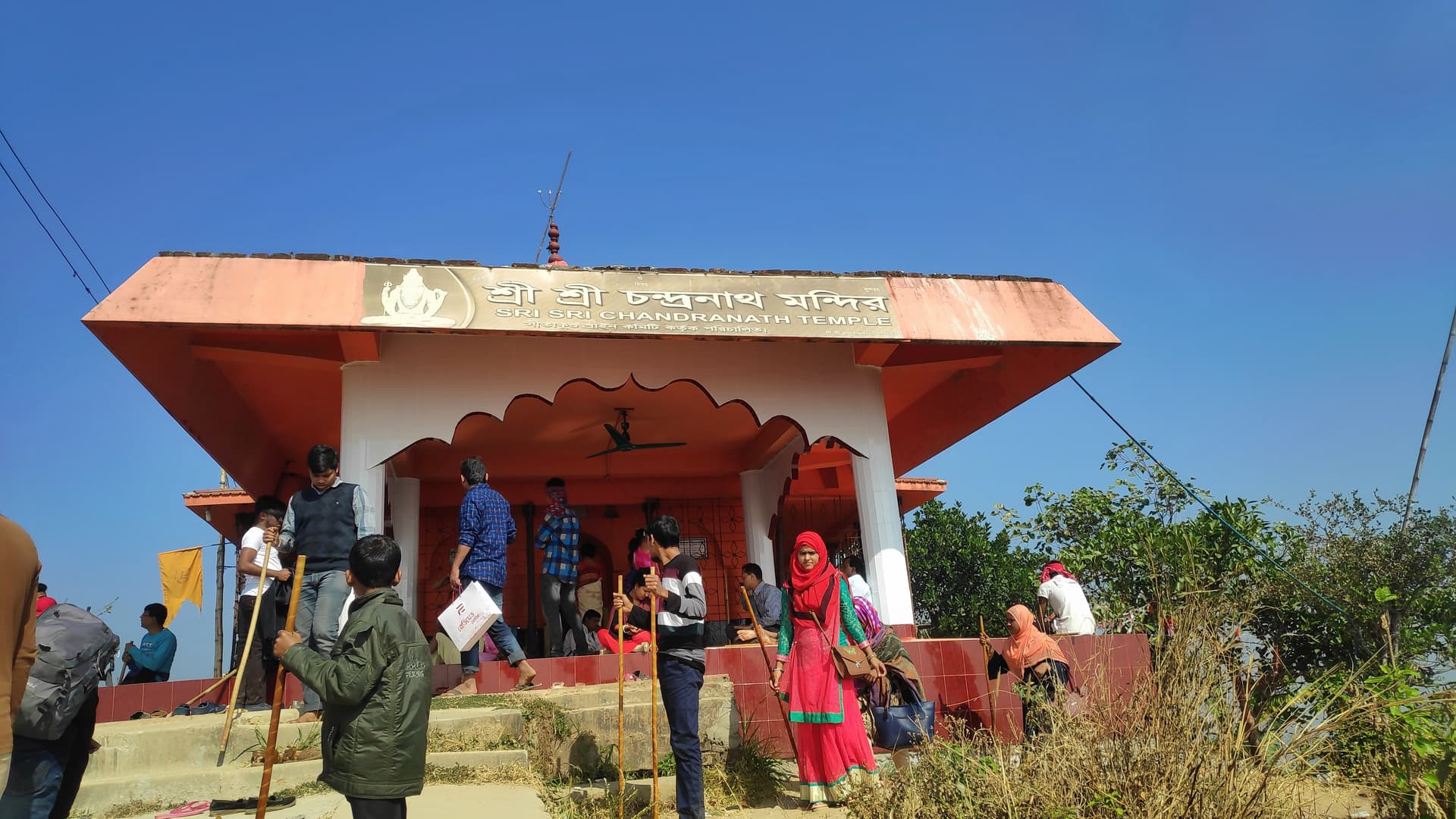
Chandranath Shaktipeeth Temple
Sitakunda, Chattogram, Bangladesh
179.4 km away
References
Sources consulted for this page. Source categories describe the publication, not a guarantee that every claim is verified. Traditional accounts and outside interpretations may differ.
- 01Dhakeshwari temple - Beautiful Bangladesh — Government of BangladeshofficialOfficial government tourism listing
- 02Dhakeshwari Temple - Wikipedia — Wikipedia contributorsencyclopediaComprehensive article on temple history, significance, and status
- 03Dhakeshwari Temple, Dhaka - World Pilgrimage Guide — Sacred Sites / Martin GrayguideSpiritual and pilgrimage context
- 04Dhakeshwari: the Goddess of Dhaka - Hindu American Foundation — Hindu American FoundationacademicCultural and religious significance from diaspora perspective
- 05Dhakeshwari Temple Dhaka - Koryo Tours — Koryo ToursguideVisitor guide with practical information
- 06Dhakeshwari Temple - The Statesman — The StatesmannewsDurga Puja celebrations at the temple
Share a photo
Help visitors recognize Dhakeshwari Temple, Dhaka. Every submission is reviewed before publication.