Island Lake, Colorado
A contemporary pilgrimage through 3,000 feet of elevation to turquoise glacial waters
Understand sacred places, explore living traditions, and learn how to engage respectfully with Pilgrim Map.
Access has not been verified. Check current local guidance before planning a visit.
Silverton, Colorado, United States
Read the sources
Visit essentials
A quick read before you go
- Duration
- Full day with early start and unhurried time at the lakes
- Access
- South Mineral Campground trailhead is reached via Forest Road 585 from Highway 550 north of…
Overview
Some places carry millennia of continuous practice; Island Lake near Silverton, Colorado, offers a different pilgrimage through demanding terrain toward transcendent natural beauty.
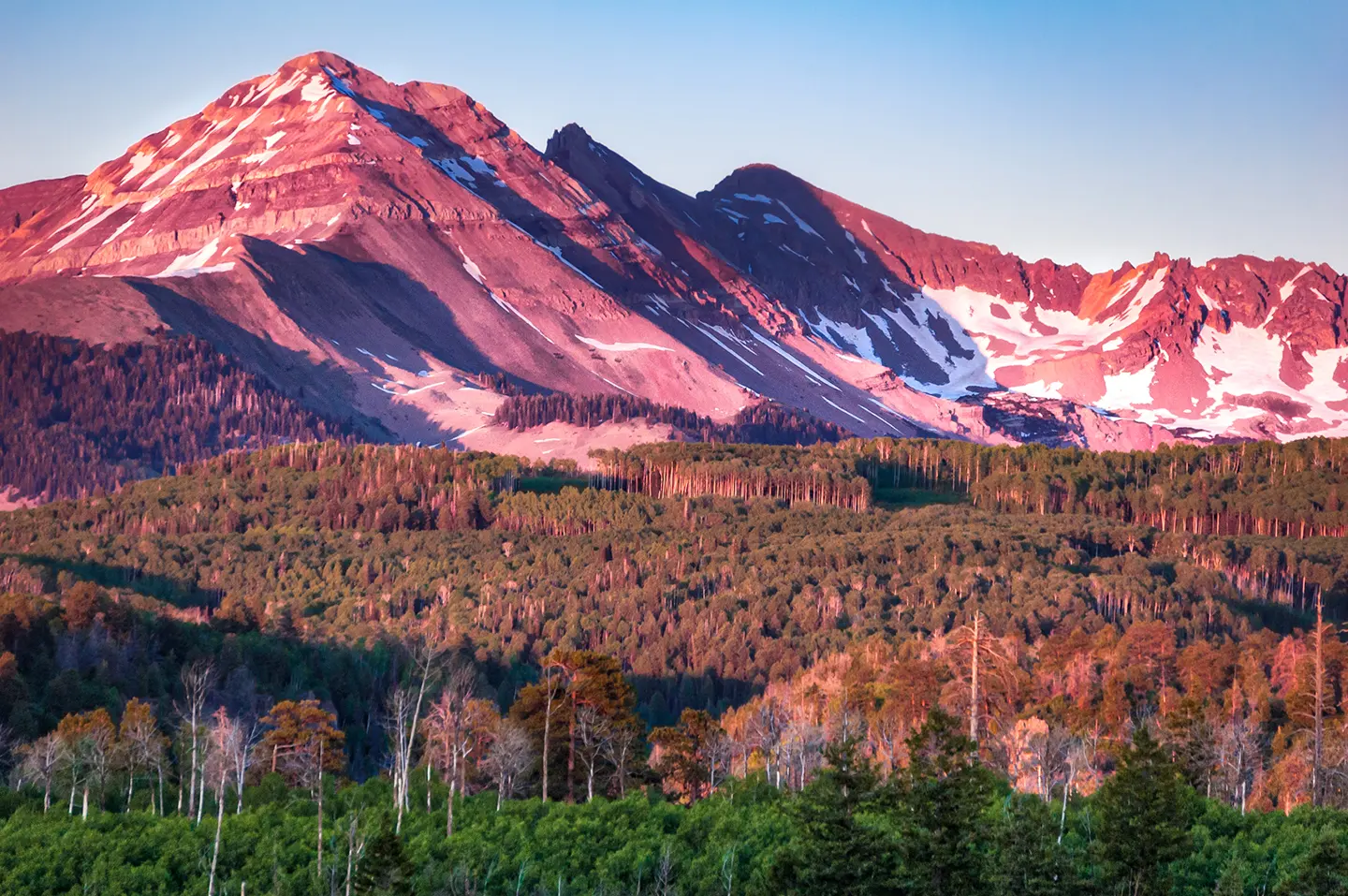
From South Mineral Campground the hike gains 3,000 feet over 4 miles, crossing spruce forest and alpine meadows before emerging above treeline in the Ice Lake Basin. At approximately 12,400 feet below Ulysses S. Grant Peak, turquoise-green glacial water surrounds the rock island that names the lake.
Island Lake is not documented as an Indigenous sacred site, unlike Blanca Peak or the Great Sand Dunes. The San Juan Mountains were Ute territory before forced removal in the late 1800s; while no specific sacred tradition is documented here, the wider landscape holds Indigenous memory.
For contemporary seekers, physical effort can open into sublime encounter: altitude demands attention to breath and pace, and the basin gradually reveals itself above treeline. One reviewer, after catching breath 'physically and spiritually' at nearby Ice Lake, describes continuing to Island Lake. Such visitor language supports its place among sites drawing seekers while remaining distinct from traditional Indigenous sacred geography.
Why this place is sacred
The concept of thin places typically draws on accumulated human practice: centuries of pilgrimage, prayer, and ceremony create the conditions where the boundary between ordinary and sacred seems permeable. Island Lake offers a different model: thinness through natural sublimity and the pilgrimage structure of the journey itself.
The 3,000 feet of elevation gain over 4 miles creates a filter. Those who reach Island Lake have invested effort, have attended to breath and body, have moved through changing terrain from forest to alpine meadow to above-treeline basin. This journey is not mere transportation but transformation: by the time visitors reach the lake, they are different than when they started.
The lake itself presents natural beauty that many describe in spiritual terms. The turquoise-green color of glacial water, the rock island rising from the surface, the surrounding peaks reaching to 13,000 feet, the quality of light at high altitude, all combine to create an environment that exceeds normal categories of 'pretty' or 'scenic.'
Whether this constitutes thinness in the traditional sense is a question without definitive answer. No documented tradition has named Island Lake sacred. Yet visitors consistently use language that points toward something more than recreational enjoyment. The convergence of difficult journey and transcendent destination creates its own kind of thin-place dynamics.
Experience and orientation
The experience of Island Lake begins with the approach: driving the sometimes-rough road to South Mineral Campground trailhead near Silverton. The trailhead parking fills early on popular days, particularly during peak wildflower season in mid-July, requiring predawn arrivals in busy periods.
The trail climbs steadily through spruce and fir forest before opening into meadows where wildflowers carpet the slopes in summer. The grade is consistent but demanding, the 3,000 feet of elevation gain accumulating mile by mile. At altitude, even fit hikers feel their breath.
Above treeline, the landscape transforms. Alpine tundra replaces forest. Views open to surrounding peaks. The Ice Lake Basin emerges, with Ice Lake's stunning blue-green waters the first destination for most hikers. Those continuing to Island Lake climb higher still, another push of effort for those already tested by the approach.
Island Lake rewards this final effort. The turquoise-green glacial water, the rock island at its center, the backdrop of Ulysses S. Grant Peak at 13,767 feet, the sense of having arrived in a hidden basin, all combine into an experience that many describe as transformative.
The quality of light at 12,400 feet differs from lower elevations. Colors seem more vivid. The air has a clarity that sharpens perception. Those who arrive with intention, rather than mere hiking ambition, find conditions conducive to whatever practice they bring: meditation, photography, quiet contemplation, or simply presence.
Island Lake lies in the San Juan National Forest near Silverton, Colorado. The trailhead at South Mineral Campground is accessed via Forest Road 585 from Highway 550.
Context and lineage
The Ute peoples historically used the San Juan Mountains, though they were forcibly removed from Colorado in the late 1800s. Silverton was established during the mining era in the 1870s. In recent decades, the Ice Lake Basin has become recognized as one of Colorado's most spectacular alpine destinations, drawing hikers seeking both physical challenge and natural beauty.
Traditions and practice
No documented traditional Indigenous practices are associated with Island Lake specifically, though the broader San Juan region was Ute territory.
Contemporary visitors approach Island Lake through what might be called nature pilgrimage: intentional journey through challenging terrain to encounter transcendent natural beauty. The practices are individual rather than traditional: hiking, photography, quiet contemplation, camping in the basin.
The physical difficulty of the approach creates conditions for presence. By the time visitors reach the lake, they have been stripped of distraction through sustained effort. What remains is attention.
Approach the hike as pilgrimage rather than recreation. Set intention before beginning. Let the physical challenge become practice.
Arrive early enough to have solitary or quiet time at the lake. The experience transforms when others are not present. Predawn starts are common in peak season.
If camping overnight in the basin, experience dawn and dusk at the lake. The changing light reveals different aspects of what the place holds.
Consider what you bring beyond camera and snacks. A question to hold, a grief to carry, an intention to set, anything that gives the journey meaning beyond exercise.
Contemporary nature pilgrimage
ActiveIsland Lake represents a contemporary form of nature pilgrimage where physical challenge through alpine terrain leads to encounter with transcendent natural beauty. While not a traditional sacred site, the strenuous journey and sublime destination create conditions many experience as spiritually meaningful.
Hiking the 4-mile, 3,000-foot elevation gain trail. Photography. Quiet contemplation. Camping in the basin. The physical journey itself functions as practice.
Perspectives and open questions
Island Lake is not documented as a traditional sacred site but has emerged as a destination for contemporary nature-based spiritual practice.
Scholarly perspective
No scholarly documentation of Island Lake as a sacred site exists. The San Juan Mountains generally have archaeological evidence of Indigenous habitation, but specific traditions at Island Lake are not documented.
Living and traditional perspectives
The Ute peoples historically used the San Juan Mountains. Specific sacred traditions at Island Lake are not documented. This may reflect absence of such traditions, or it may reflect the loss of knowledge through forced removal and cultural disruption.
Alternative interpretations
Island Lake is described in spiritual terms by many contemporary visitors, representing a form of nature-based spirituality where transcendent landscape and challenging journey create conditions for meaningful experience.
Plan your visit
Access and arrival
South Mineral Campground trailhead is reached via Forest Road 585 from Highway 550 north of Silverton. Some rough road sections. High clearance helpful but not required.
Camping at South Mineral Campground near the trailhead. Lodging in Silverton (6 miles). Backcountry camping in the basin with Leave No Trace practices.
Respectful visit
Layered hiking attire appropriate for alpine conditions. Expect cold temperatures even in summer. Rain gear is essential given afternoon storm probability.
Permitted and popular. The lake's distinctive features make it one of Colorado's most photographed destinations.
Leave no trace. Do not leave anything at the lake or in the basin.
San Juan National Forest regulations apply. Camp 100 feet from water. No fires above treeline.
Afternoon thunderstorms are common and dangerous above treeline. Start early and plan to descend by early afternoon.
Altitude affects everyone differently. The summit elevation of 12,400 feet can cause altitude sickness in those unacclimatized. Descend if you experience symptoms.
The trail is popular; solitude is not guaranteed, especially on summer weekends. Those seeking quiet should consider weekday visits or early/late season.
Current practical details
Address
Island Lake, Colorado 81301, USA
Hours, fees, and access can change — verify on the official source before you travel. Practical details last checked Jun 2026.
Location
Map loads as you approach this section.
Pilgrim reflections
A portrait of encounter, not a score
Pilgrims describe what they felt, how present they could become, and whether the place would shape a journey. There are no stars and no ranking of traditions.
No reviewed reflections yet
The first pilgrims can help describe the character of being here.
Share a reflection
Available after an account-backed “Been there.” Every reflection is reviewed before publication.
Nearby sacred places
Explore other sacred places in the region. Proximity does not establish access or travel time; check each place’s guidance.


References
Sources consulted for this page. Source categories describe the publication, not a guarantee that every claim is verified. Traditional accounts and outside interpretations may differ.
- 01Island Lake in Colorado — Colorado.comguideTourism information
- 02Ice Lake Trail — San Juan Mountain AssociationguideTrail information
- 03Ice Lake + Island Lake Hike — AllTrailsguideTrail reviews
Share a photo
Help visitors recognize Island Lake, Colorado. Every submission is reviewed before publication.