Hovenweep Ruins, Utah
Towers built to track the sun, then left silent for seven centuries beneath 15,000 stars
Understand sacred places, explore living traditions, and learn how to engage respectfully with Pilgrim Map.
Access has not been verified. Check current local guidance before planning a visit.
Shiprock Agency, Utah, United States

Visit essentials
A quick read before you go
- Duration
- Two to four hours for the Square Tower Group.
- Etiquette
- The structures at Hovenweep are extremely fragile.
Overview
Hovenweep asks why Ancestral Puebloans built towers here rather than cliff dwellings, aligned them so precisely, and then departed, leaving them empty through seven centuries. Across six sites, towers perch on canyon rims; their masonry preserves builders' fingerprints and corncob impressions in the mortar. At Hovenweep Castle, sunlight enters carefully placed ports at summer and winter solstices and the equinoxes, marking sacred time on interior walls. At Holly House, sun daggers bisect spiral petroglyphs at the seasons' turn.
Pueblo scholar Rina Swentzell called Hovenweep “the most symbolic of places in the Southwest.” The towers connected earth and sky, community and cosmos, and the need for rain with powers believed to deliver it. Descendant Hopi, Zuni, and Rio Grande Pueblo communities understand Hovenweep not as ruins but as a living ancestral landscape and a stop on migrations continued in their communities today.
The solstice light that entered the ports in 1277 still does so. Under Hovenweep's Gold Tier dark sky—one of the nation's clearest—the same stars rise, some 15,000 visible today.
Why this place is sacred
There is a particular quality to places where something significant happened and then stopped. Hovenweep carries this quality. The towers stand as they stood seven hundred years ago, but the people who built them are gone—not vanished, but migrated south, their descendants living today in the pueblos of Arizona and New Mexico. What remains is structure without activity, alignment without observation, doorways no one enters.
This creates a thin place of a distinctive kind. At actively sacred sites, the veil thins through ongoing practice, through the accumulated weight of pilgrimage and prayer. At Hovenweep, the veil thins through absence. The towers still function—still catch solstice light, still mark equinox with sun daggers—but no one stands within them to record the moment. The astronomy continues without astronomers.
The night sky amplifies this quality. Hovenweep holds Gold Tier status as an International Dark Sky Park, one of the darkest sites in the nation. On clear nights, up to 15,000 stars become visible—not a metaphor but a verified count. The Milky Way arcs overhead as it did for the builders. Whatever they saw in those stars, whatever meaning they found in the patterns overhead, remains available to anyone willing to stay the night.
And then there is the question that hangs over everything: What happened? Why did they leave? Drought, almost certainly. Resource depletion, probably. Social stress, possibly. The pull of new religious centers to the south, perhaps. No single explanation satisfies. The departure itself becomes part of Hovenweep's thin quality—an event significant enough to empty an entire region, unexplained enough to invite contemplation seven centuries later.
Hovenweep was home. Between 1150 and 1300 CE, approximately 2,500 Ancestral Puebloan people lived in six village groups scattered across this high desert landscape. The towers served multiple purposes: astronomical observation, residence, storage, possibly defense. The kivas indicate organized ceremonial life. The masonry demonstrates sophisticated construction techniques—dressed and rough stone coursed together with clay mortar, some joints still showing fingerprints and corncob impressions from the original builders.
But Hovenweep was more than practical. The Ancestral Puebloans sought harmony with a harsh environment that delivered only six to fifteen inches of rain per year. They vested sacred power in the agents of rain—clouds, lightning, mountains, thunder—and built structures that connected human time to cosmic time, tracking the sun's movements so they could plant at the right moment, pray at the right moment, maintain the balance their survival required.
Around 1300 CE, the people left. Whether driven by extended drought, drawn by emerging religious centers in the south, or pushed by some combination of social and environmental stress, the Ancestral Puebloans departed Hovenweep and the entire Four Corners region. They did not disappear—they migrated to what are now the Hopi mesas of Arizona and the pueblos of New Mexico's Rio Grande Valley, where their descendants live today.
The Ute and Navajo peoples who later moved into the region found the towers already empty. They named the place Hovenweep—deserted valley—and considered it haunted. When Euro-American explorers arrived in 1854, their Ute and Navajo guides urged them to stay away from the silent structures.
Protection came in 1923, when President Harding proclaimed Hovenweep a National Monument. Archaeological surveys confirmed the age and sophistication of the towers. In 2014, the site received International Dark Sky Park status at the Gold Tier, recognizing what the builders knew: this is a place where the sky matters.
Experience and orientation
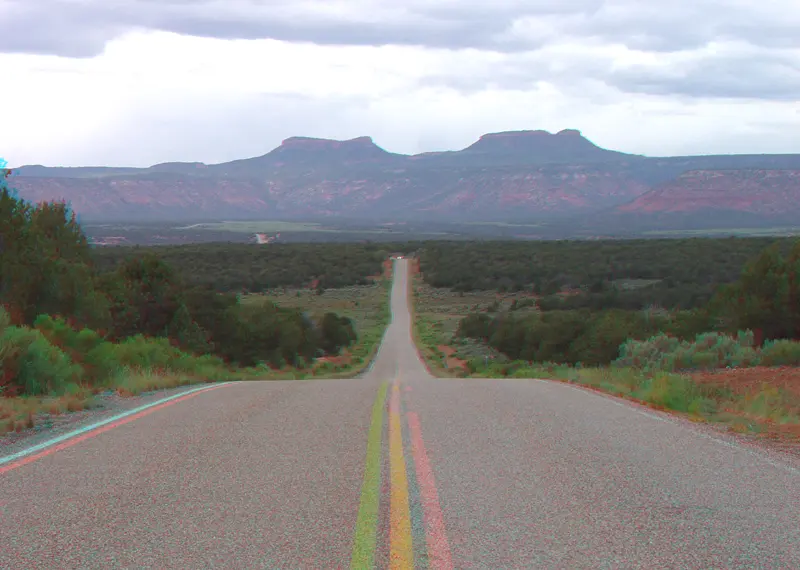
The drive to Hovenweep is itself a preparation. The paved road gives way to gravel as you leave behind the last towns, entering a landscape of sage, juniper, and distant mesas. Sleeping Ute Mountain—sacred to the Ute people—takes shape on the horizon. By the time you reach the visitor center, you have already entered a different register of attention.
The Square Tower Group is the heart of most visits. A two-mile trail loops around the rim of Little Ruin Canyon, passing the major structures: Hovenweep Castle, the tallest and most complex tower; Square Tower itself, balanced improbably at the canyon's edge; Twin Towers, Stronghold House, and the sites beyond. The trail descends and climbs through modest elevation changes, manageable for most visitors in reasonable fitness.
What you see requires explanation to fully appreciate. The towers are not monuments but instruments—their ports and windows precisely positioned to catch light at specific moments of the solar year. At Hovenweep Castle, a room added in 1277 (tree-ring dated) appears designed specifically as a solar observatory, its apertures aligned with solstice and equinox sunrises. At Holly House, an outlying site requiring more commitment to reach, spiral petroglyphs receive sun daggers at the season's turning.
The experience is quiet. Hovenweep receives a fraction of the visitors that nearby Mesa Verde does, and the landscape absorbs sound. No reconstruction, no interpretation centers, no ambient music—just the structures as they have stood, the wind, the sky. This can feel anticlimactic to those expecting spectacle. It rewards those who approach with patience.
If you can stay the night—the small campground fills on a first-come basis—the experience transforms after dark. The Milky Way becomes visible as a structural feature of the sky, not a faint wash but a river of light. The same stars that rose for the builders rise for you. Whatever meaning they found in the patterns above, the patterns themselves remain available.
Most visitors spend two to four hours at the Square Tower Group, walking the loop trail at a contemplative pace. The outlying sites—Holly, Horseshoe, Hackberry, Cutthroat, and Cajon—require additional driving on unpaved roads and add hours or a full day. An overnight stay in the campground is the only way to experience the dark sky fully. The visitor center offers orientation and, when staffed, ranger-led programs. The current schedule is limited—call ahead to confirm hours.
Context and lineage
For the Puebloan peoples, movement is not departure but continuation. Their origin stories speak of emergence from the underworld and journeys across the land in search of the center place—a home where humans, land, and spiritual forces exist in proper relationship. The migration away from Hovenweep around 1300 CE was not abandonment but fulfillment of this pattern, a continuation of the journey that their ancestors had always been on.
This understanding reframes what visitors see at Hovenweep. The towers are not monuments to a vanished civilization but waypoints in an ongoing journey. The people who built them are not gone; they live in the pueblos of Arizona and New Mexico, their traditions carried forward, their connection to this place maintained through memory and occasional pilgrimage.
The builders of Hovenweep are the ancestors of today's Hopi, Zuni, and the Pueblos of New Mexico's Rio Grande Valley. Archaeological and oral evidence traces the migration routes south from the Four Corners region to these present-day communities. The Hopi specifically recognize their descent from the Ancestral Puebloans and maintain connection to sites like Hovenweep as part of their living sacred landscape.
The Ute Mountain Ute Tribe also maintains relationship with this land, which they named and have known since moving into the region after 1400 CE.
The Builders
The Ancestral Puebloan architects and astronomers who designed and constructed Hovenweep's towers, creating structures that aligned with solar events and served as both residences and observatories. Their masonry shows remarkable skill—fingerprints and corncob impressions remain visible in the mortar.
Rina Swentzell
Pueblo scholar who called Hovenweep 'the most symbolic of places in the Southwest,' articulating the ceremonial significance that Tribal Nation partners are helping the NPS to understand.
J. Walter Fewkes
Smithsonian ethnologist who surveyed Hovenweep in 1917-18 and recommended federal protection, documenting the site's significance and the vandalism it had already suffered.
Ray A. Williamson
Archaeoastronomer who documented the solar alignments at Hovenweep Castle and Unit Type House, demonstrating that astronomical observation was 'democratized' here—practiced by ordinary households, not just elites.
Traditions and practice
The religious life of the Ancestral Puebloans centered on maintaining harmony with a demanding environment. They vested sacred power in the agents of rain and water: clouds, which produced rainfall; mountains, which issued streams; lightning and thunder, which accompanied storms; fish and frogs, which signified water's presence. They danced to honor deities, mark the seasons, and celebrate harvests. They chiseled symbols on rock surfaces, using them as ritual entranceways to the spirit world.
The kivas—circular, semi-subterranean chambers—served as the centers of ceremonial life. Entry was restricted. What happened within them is not fully documented in the archaeological record, but parallel practices among descendant Puebloan peoples suggest religious observances tied to agricultural cycles, initiations, and community decision-making.
The astronomical alignments embedded in the towers suggest that tracking the sun was itself a sacred practice. The solstices and equinoxes marked not just planting seasons but moments when the relationship between human and cosmic time could be observed and, perhaps, renewed.
No public ceremonies occur at Hovenweep today. The site is managed as archaeological and cultural heritage, not as an active ceremonial space. Descendant Pueblo peoples maintain their connection to ancestral sites through pilgrimage, song, prayer, and the continuation of practices that originated in places like this—but these practices are not conducted publicly at Hovenweep.
The National Park Service notes that 'Tribal Nation partners have shared information about Hovenweep that will change the way we interpret this place, refocusing from its agricultural to ceremonial uses.' This suggests ongoing dialogue between descendant communities and land managers about how Hovenweep's significance should be understood and presented.
Visitors cannot participate in ceremonies at Hovenweep. What is available is contemplative engagement: walking the trails slowly, observing the structures from appropriate distance, noting the relationship between architecture and landscape. If you visit near a solstice or equinox and the timing allows, you may be able to witness the same solar alignments the builders tracked—light entering the ports of Hovenweep Castle at sunrise, bisecting the spiral petroglyphs at Holly House.
Spending a night in the campground offers another form of practice: watching the stars rise over the canyons as they rose for the builders, allowing the dark sky to work on you without the interpretive overlay of explanation. Whatever the builders found in those stars, the stars themselves remain.
Ancestral Puebloan
HistoricalThe Ancestral Puebloans built Hovenweep between 1150 and 1300 CE, creating a community of approximately 2,500 people across six village groups. They were skilled masons, astronomers, and farmers who developed sophisticated techniques for tracking the sun and praying for rain in a harsh environment. The kivas indicate organized ceremonial life; the towers suggest deep engagement with cosmic cycles.
Kiva ceremonies, solstice and equinox observations, prayers to the agents of rain (clouds, lightning, mountains, thunder), seasonal dances, rock art as ritual entranceways to the spirit world. Specific ceremonial content is not fully documented.
Hopi Ancestral Connection
ActiveThe Hopi of Arizona recognize their descent from the Ancestral Puebloans who built Hovenweep. For the Hopi, this is not a ruin but an ancestral place within their sacred landscape—a stop on the migration journey that continues in their communities today.
Pilgrimages to ancestral sites, songs and prayers honoring ancestors, oral traditions preserving migration stories. Contemporary Pueblo peoples still use sun-watching methods like horizon calendars and light patterns on walls—the same techniques employed at Hovenweep.
Zuni and Rio Grande Pueblo Connection
ActiveThe Zuni and the Pueblos of New Mexico's Rio Grande Valley also descend from the Ancestral Puebloans. Archaeological and cultural evidence traces migration from the Four Corners region to present-day communities. These peoples maintain cultural continuity with the builders of Hovenweep.
Sun-watching traditions, ceremonial practices descended from ancestral forms, oral traditions preserving knowledge of migration and connection to ancestral lands.
Ute Mountain Ute Relationship
ActiveThe Ute peoples moved into the Four Corners region after 1400 CE, finding Hovenweep already empty. They named it 'deserted valley' and developed their own relationship with the land. Sleeping Ute Mountain, visible from Hovenweep, is sacred to the Ute Mountain Ute Tribe.
Traditional relationship with the surrounding landscape; oral traditions about the abandoned ruins; sacred geography centered on Sleeping Ute Mountain.
Perspectives and open questions
Hovenweep invites multiple readings: archaeological, astronomical, ancestral, and contemplative. Each reveals something the others miss. The towers are simultaneously instruments, homes, ceremonies in stone, and questions without answers.
Scholarly perspective
Archaeologists recognize Hovenweep as a significant Pueblo III period (1150-1300 CE) site with distinctive tower architecture found nowhere else in the Ancestral Puebloan world. Tree-ring dating provides precise construction dates, including 1166 for early structures and 1277 for Hovenweep Castle's solar observation room.
The astronomical alignments have been extensively documented. At Hovenweep Castle, ports and doorways channel sunlight onto interior walls at summer solstice, winter solstice, and the equinoxes. At Holly House, spiral petroglyphs receive sun daggers at seasonal transitions. Research by archaeoastronomer Ray Williamson suggests this was 'democratized' astronomy—practiced by ordinary households, not restricted to elites.
The departure around 1300 CE aligns with the broader abandonment of the Four Corners region. Extended drought documented in tree-ring records likely played a role. Resource depletion, social stress, and the emergence of new religious and cultural centers to the south are contributing factors. No single explanation suffices.
Living and traditional perspectives
For the Hopi, Zuni, and Rio Grande Pueblos, Hovenweep is not a ruin but an ancestral place within a living sacred landscape. Migration was not abandonment but continuation of a sacred journey—the movement toward harmony that Puebloan origin stories describe. The people who built these towers are their ancestors; the traditions born here continue in their communities today.
The National Park Service acknowledges this perspective, noting that Tribal Nation partners have shared information 'that will change the way we interpret this place, refocusing from its agricultural to ceremonial uses.' Pueblo scholar Rina Swentzell called Hovenweep 'the most symbolic of places in the Southwest'—a statement that reframes the towers as spiritual architecture, not merely practical construction.
For the Ute Mountain Ute, this is land they have known since moving into the region after 1400 CE. They named it Hovenweep—deserted valley—and their sacred landscape includes Sleeping Ute Mountain, visible from the monument.
Alternative interpretations
Hovenweep attracts some interest from those drawn to astronomical alignments and ancient observatories, though it is not a major destination for esoteric tourism. The Gold Tier dark sky designation draws astronomy enthusiasts. The mystery of the departure invites speculation, but scholarly explanations focusing on environmental and social factors remain more credible than alternative theories.
Open questions
The precise reasons for the departure remain debated. The full ceremonial purpose of the towers—beyond astronomical observation—is not fully understood. Why some alignments point to dates four days after the equinox rather than the equinox itself presents an astronomical puzzle. The meaning of spiral petroglyphs extends beyond their function as solar markers. Why this particular architectural form—towers on canyon rims—developed here and nowhere else in the Puebloan world remains unexplained.
Plan your visit
Access and arrival
Hovenweep Campground offers 26 sites on a first-come, first-served basis. No hookups, no showers, no hot water. Vehicles over 26 feet are discouraged. Cortez, Colorado (40 miles) and Blanding, Utah (40 miles) offer the nearest motels and services.
Respectful visit
Practical hiking attire appropriate for high desert conditions. Sturdy footwear is essential; trails involve uneven terrain and modest elevation changes. Sun protection is critical. In summer, visit early morning to avoid heat.
Photography is generally permitted, but do not touch or enter structures for the sake of a photograph. Do not move artifacts for composition. Respect the site as cultural heritage, not merely as scenic backdrop.
Leaving offerings is not appropriate for general visitors. Descendant Pueblo peoples may have their own practices, which are not for outsiders to imitate.
{"Remain on marked trails at all times","Do not enter, climb, or touch any structures","Do not disturb, collect, or move any artifacts","Do not touch, chalk, or wet rock art","No digging of any kind","Pack out all waste; human waste must be at least 200 feet from archaeological sites","Report vandalism or illegal collecting to rangers"}
Respect the distinction between visitor experience and ceremonial practice. This is ancestral ground for descendant Pueblo peoples. Do not attempt to conduct ceremonies, leave offerings, or treat the site as a venue for personal spiritual practices that do not belong here.
Location
Map loads as you approach this section.
Pilgrim reflections
A portrait of encounter, not a score
Pilgrims describe what they felt, how present they could become, and whether the place would shape a journey. There are no stars and no ranking of traditions.
No reviewed reflections yet
The first pilgrims can help describe the character of being here.
Share a reflection
Available after an account-backed “Been there.” Every reflection is reviewed before publication.
Nearby sacred places
Explore other sacred places in the region. Proximity does not establish access or travel time; check each place’s guidance.


Share a photo
Help visitors recognize Hovenweep Ruins, Utah. Every submission is reviewed before publication.