Guarda Cathedral
A fortress built as a cathedral, granite towers guarding Portugal's highest city
Understand sacred places, explore living traditions, and learn how to engage respectfully with Pilgrim Map.
Access has not been verified. Check current local guidance before planning a visit.
Guarda, Guarda, Portugal
Read the sources
Visit essentials
A quick read before you go
- Access
- Located on Praça Luís de Camões in Guarda's historic center; no entrance fee reported by travel…
- Etiquette
- No official dress code, photography policy, or offerings guidance was documented for Guarda…
Overview
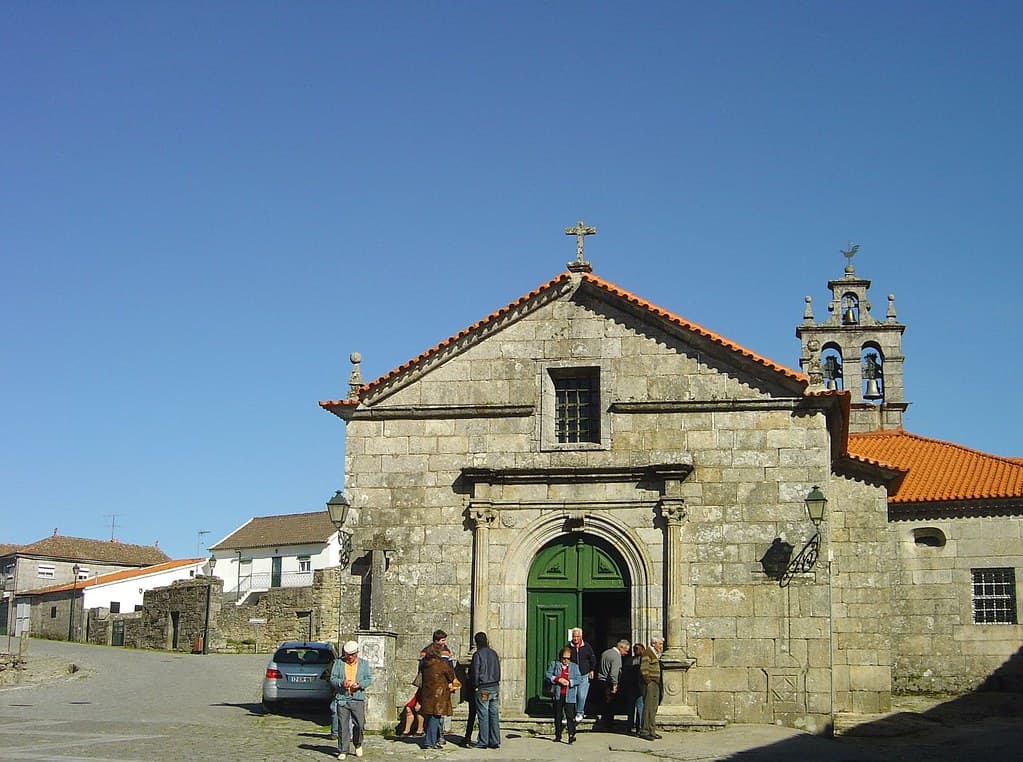
Guarda Cathedral resembles a keep: thick granite walls and severe octagonal towers reflect medieval-frontier anxiety as well as devotion. King Sancho I founded Guarda in 1199 as a defended town against Castile and León; its name means ‘the guard,’ and the cathedral carries that origin. Inside, Manueline stonework and a carved Renaissance altarpiece soften the fortress exterior, products of a 1390-to-mid-sixteenth-century campaign spanning generations of bishops and craftsmen.
The cathedral remains seat of the active diocese transferred from Egitânia in 1199. It holds Mass and a confirmed full Holy Week program; some sources also report an annual patronal feast, but no regular Mass schedule beyond Holy Week was independently confirmed. It remains a working church expressed through border-fortress architecture.
Why this place is sacred
Guarda's origin story, as told locally, involves a battle between King Alfonso III of Asturias and Moorish forces, after which the victorious king is said to have discovered that the soldier who led the decisive charge was a maiden named Ana, disguised to fight alongside him.
It is a vivid founding tale, but it is attached to the city generally rather than to the cathedral specifically, and Alfonso III of Asturias died in 910 — nearly three centuries before Guarda's documented founding under Sancho I in 1199. The legend and the historical record do not reconcile, and no academic source corroborates the story; it survives as local folklore rather than verified history, and this account leaves that tension unresolved rather than picking a winner.
What is documented is more prosaic and, in its way, just as telling: Sancho I founded Guarda in 1199 explicitly as a fortified frontier town, transferring the bishopric here the same year. The cathedral's construction, beginning in 1390, produced a building whose octagonal towers and thick granite walls read as defensive architecture as much as ecclesiastical form — a fusion that scholars read as a deliberate statement of both faith and nationhood on ground that changed hands more than once.
As the transferred seat of the Diocese of Guarda from 1199, the cathedral was built to serve as the bishop's church and a visible anchor of Catholic authority on a Portuguese frontier still being contested with Castile and León.
Construction spanned two phases: a Gothic beginning in 1390 under Bishop Vasco de Lamego, and a Manueline phase from 1504 to 1517 — sources vary slightly on whether the building was structurally complete by 1517 or whether most building activity wrapped up somewhat later — with decorative work, including the Pina Chapel and the stone altarpiece, continuing to around 1540. A significant restoration followed in 1898 under architect Rosendo Carvalheira. The cathedral has been a Portuguese National Monument since 1907.
Experience and orientation
Approach Guarda Cathedral from the Praça Luís de Camões, where a statue of Sancho I stands watch over the square he founded. The building's octagonal towers and unbroken granite walls give little away about what waits inside — this is architecture built to withstand, not to invite.
Step through the door and the register changes. Manueline stone carving climbs the piers, restrained compared to the more famous vaulting at Batalha or Belém but still unmistakably of that idiom. The main chapel's altarpiece, carved by French sculptor João de Ruão's workshop in the 1550s, is the interior's finest single object — Renaissance figure work in stone, commissioned under Bishop Cristóvão de Castro.
Because Guarda sits over 1,000 meters above sea level at the foot of the Serra da Estrela, the cathedral's largely unheated granite interior can be genuinely cold, especially in winter — worth factoring into how long you plan to linger.
There is no confirmed official schedule or entrance fee for the cathedral itself; travel sources report free entry, but visitors should check with the Guarda Tourist Office or the cathedral directly before planning a visit. Come dressed for the interior's chill outside of summer months.
Context and lineage
King Sancho I founded Guarda in 1199 as a fortified frontier town against Castilian and León incursions — the city's name means, straightforwardly, 'to guard' — and transferred the bishopric here that same year, with the transfer confirmed by Pope Innocent III. Construction of the current, third cathedral building began in 1390 under Bishop Vasco de Lamego, during the reign of King João I.
The building rose in two documented phases: a Gothic campaign starting in 1390, and a Manueline phase from 1504 to 1517 under Bishop Pedro Gavião. Sources differ on exactly when construction concluded — some cite the structure as complete by 1517, others describe decorative work, including the Pina Chapel, continuing to around 1540 — and this account treats both dates as describing different stages of the same long process rather than choosing between them.
A local legend attributes the city's founding to a battle in which a disguised maiden named Ana led a decisive charge for Alfonso III of Asturias; the story is tied to the city rather than the cathedral and its chronology does not align with the documented 1199 founding under Sancho I, so it is presented here as folklore rather than history.
The Diocese of Guarda has held its seat here since 1199, and the cathedral continues as the bishop's church today, holding regular Mass and a full Holy Week liturgical program; some sources also describe an annual patronal Assumption feast each August 15, though no independently confirmed regular Mass schedule beyond Holy Week was found — a continuous institutional presence stretching back more than eight centuries.
Sancho I
historical
King of Portugal who founded Guarda as a frontier town in 1199 and transferred the bishopric here the same year.
Vasco de Lamego
historical
Bishop under whom construction of the current cathedral began in 1390.
Pedro Gavião
historical
Bishop who oversaw the Manueline building phase of 1504 to 1517; the architects of this phase are named as Pedro and Felipe Henriques in some sources, and as Huguet and Diogo de Boitaca in others — the discrepancy is not resolved in available research.
João de Ruão
historical
French sculptor whose workshop carved the main chapel's Renaissance stone altarpiece in the 1550s, commissioned by Bishop Cristóvão de Castro.
Rosendo Carvalheira
historical
Architect who led a significant restoration of the cathedral in 1898.
Traditions and practice
The cathedral's early function combined liturgical use with the defensive purpose typical of Portuguese frontier cathedrals of its era, when church-building doubled as a statement of territorial and religious claim on contested ground.
Current worship includes regular diocesan Mass, though no confirmed schedule for it was found beyond the well-documented Holy Week program: a Palm Sunday Via Sacra procession, a Holy Thursday Chrism Mass with blessing of oils, and Good Friday Passion and Adoration of the Cross. Some sources also describe a patronal feast of Our Lady of the Assumption on August 15, with a solemn Eucharist usually at 18:00 presided by the Bishop of Guarda, though this is not independently confirmed.
Visiting during Holy Week or on the August 15 patronal feast offers the fullest sense of the cathedral as a living institution rather than a monument; outside those dates, attending a regular Mass provides a quieter version of the same encounter.
Roman Catholicism
ActiveGuarda Cathedral has served as the seat of the Diocese of Guarda since the bishopric was transferred here from Egitânia in 1199 under King Sancho I and Pope Innocent III, anchoring Catholic worship on a historically contested Portuguese frontier for over eight centuries.
Regular Mass and a full Holy Week program including a Palm Sunday Via Sacra, Holy Thursday Chrism Mass, and Good Friday Adoration of the Cross; some sources also report an annual patronal feast of the Assumption on August 15 with a solemn Eucharist typically presided by the bishop, though this is not independently confirmed beyond travel sources.
Perspectives and open questions
Guarda Cathedral sits at the intersection of two readings that don't fully resolve into one another: the scholarly account of a fortress-cathedral built for a nation-building frontier, and a local founding legend whose chronology doesn't match the documented history. Both are worth holding.
Scholarly perspective
Architectural historians classify the cathedral as Late Gothic with pronounced Manueline influence, tracing stylistic links to the Batalha Monastery workshop tradition, and read its fortress-like massing as a deliberate expression of Portugal's medieval frontier anxieties fused with religious function. It has been protected as a National Monument since 1907.
Living and traditional perspectives
Within local tradition, the maiden Ana story functions as Guarda's founding legend, told about the city rather than the cathedral specifically — a tale of disguised courage during a border battle that gave the settlement its identity, independent of whether it aligns with the documented 1199 founding under Sancho I.
Open questions
The attribution of architects across the cathedral's building phases is inconsistent between sources — Pedro and Felipe Henriques in one account, Huguet and Diogo de Boitaca in another — and the exact chronology bridging the 1517 structural completion with decorative work continuing to around 1540 is not fully resolved.
Plan your visit
Access and arrival
Located on Praça Luís de Camões in Guarda's historic center; no entrance fee reported by travel sources; exact official opening hours are not confirmed by an official source.
Respectful visit
No specific restrictions were documented beyond standard active-church etiquette: quiet, modest dress, and no visits during active Mass. No confirmed official hours or entrance fee policy exists in available sources — visitors are advised to check with the Guarda Tourist Office (Praça Luís de Camões, 21, tel. +351 271 205 530) or the cathedral directly (+351 271 212 993).
No confirmed regular Mass schedule outside Holy Week and the patronal feast was found in research; visitors should check with the Guarda Tourist Office or the cathedral directly before planning around a specific service.
Location
Map loads as you approach this section.
Pilgrim reflections
A portrait of encounter, not a score
Pilgrims describe what they felt, how present they could become, and whether the place would shape a journey. There are no stars and no ranking of traditions.
No reviewed reflections yet
The first pilgrims can help describe the character of being here.
Share a reflection
Available after an account-backed “Been there.” Every reflection is reviewed before publication.
Nearby sacred places
Explore other sacred places in the region. Proximity does not establish access or travel time; check each place’s guidance.



References
Sources consulted for this page. Source categories describe the publication, not a guarantee that every claim is verified. Traditional accounts and outside interpretations may differ.
- 01Sé Catedral da Guarda — Turismo de PortugalofficialOfficial tourism board description of history, architecture, altarpiece iconography, address and contact details
- 02Guarda Cathedral — Wikipedia — Wikipedia contributorsSource contextConstruction history (1390 start, two building phases, 1898 renovation by Rosendo Carvalheira), architects, Pina Chapel, João de Ruão altarpiece, National Monument status since 1907
- 03Guarda Cathedral - Portugal Visitor Guide — Portugal All OverSource contextConfirms granite construction, 1390-1540 build span, location adjacent to Praça Luís de Camões and Sancho I statue, no entrance fee
- 04Guarda, Portugal — Wikipedia — Wikipedia contributorsSource contextCity founding by Sancho I in 1199 for frontier defense against Castile/León, meaning of 'Guarda' (to guard), surviving medieval ramparts and gates
- 05Sancho I The Populator — Portugal VisitorSource contextBackground on King Sancho I's town-founding and population policy relevant to Guarda's establishment
- 06Guarda: the five F's, the cathedral's backside and a beautiful guardian — Portugal ResidentSource contextSource for the local legend of the maiden Ana / Alfonso III battle story associated with Guarda's founding
- 07Paróquias da Sé e S. Vicente - Guarda — Diocese of Guarda parish websiteofficialParish of the Sé (cathedral) documented as an active administrative/liturgical unit of the Diocese of Guarda, though no confirmed regular Mass schedule was found beyond the documented Holy Week program; source for the Holy Week program (Palm Sunday Via Sacra, Holy Thursday Chrism Mass, Good Friday Adoration of the Cross)
- 08Guarda Cathedral — GrokipediaSource contextCorroborates founding history (1199 transfer of bishopric under Sancho I), fortress-cathedral description, National Monument status, patronal feast of Our Lady of the Assumption on August 15
- 09Guarda | festaspopulares — Festeiros de PortugalSource contextLists regional Marian festivals in the Diocese of Guarda, including Festas de Nossa Senhora da Ajuda (Sept 5-9), described as the largest pilgrimage in the diocese, though not held at the cathedral itself
Share a photo
Help visitors recognize Guarda Cathedral. Every submission is reviewed before publication.