Group of Monuments at Hampi
Where a lost empire's grandeur meets unbroken devotion along the sacred Tungabhadra
Understand sacred places, explore living traditions, and learn how to engage respectfully with Pilgrim Map.
Access has not been verified. Check current local guidance before planning a visit.
Hampi, Karnataka, India
Read the sources
Visit essentials
A quick read before you go
- Duration
- A rushed visit of one day sees only highlights and misses the site's depth.
- Etiquette
- Hampi spans active temples requiring traditional Hindu etiquette and archaeological sites…
Overview
Something remarkable happens at Hampi. You walk among ruins of staggering ambition and watch a civilization's entire arc inscribed in stone: founding vision, imperial glory, catastrophic fall. Then you round a corner and encounter incense smoke, the rhythmic clang of temple bells, priests performing rituals unchanged for a millennium. The dead city is not entirely dead.
The Vijayanagara kings chose this landscape deliberately. The Tungabhadra River, identified in Hindu tradition with the goddess Pampa herself, curves around massive granite boulders that seem placed by giants. According to the Ramayana, this is Kishkindha, the monkey kingdom where Lord Rama met Hanuman. Across the river, pilgrims still climb 575 steps to the hill where tradition holds Hanuman was born.
In 1565, a coalition of Sultanates destroyed this city after a decisive battle. For six months, armies looted and burned what had taken two centuries to build. Temples were demolished, streets erased, a population of perhaps half a million scattered to the wind. Yet the Virupaksha Temple survived, its sanctum spared, its rituals continuing through the chaos and the centuries that followed.
Hampi offers the coexistence of ruin and resilience. You feel the weight of impermanence among the fallen mandapas. You witness endurance in the morning puja at Virupaksha. The boulder landscape creates natural contemplative spaces, sunset light falls on stones that remember both glory and grief, and somehow the synthesis is not contradiction but completeness.
Places within this site
Why this place is sacred
Before the Vijayanagara kings, before the temples, before recorded history, people recognized something in this landscape. Neolithic and Chalcolithic settlements dot the region, drawn by the river and perhaps by something harder to name. The granite boulders, balanced in seemingly impossible configurations, create a terrain that feels arranged by forces beyond human engineering.
The mythological layer runs deep. Hindu tradition identifies this region as Kishkindha from the Ramayana, where Lord Rama, searching for his abducted wife Sita, met the monkey king Sugriva and his minister Hanuman. Rishyamukha Hill, Matunga Hill, Pampa Sarovar, the Tungabhadra River itself, all figure in the sacred narrative. Anjeyanadri Hill across the river is venerated as Hanuman's birthplace, where the goddess Anjana gave birth to the son of the Wind.
Another layer comes from Shaiva tradition. The goddess Pampa, daughter of Brahma, performed intense austerities on Hemakuta Hill to win Lord Shiva as her husband. Shiva, pleased by her devotion, became Pampapathi, the Consort of Pampa. The Tungabhadra itself is understood as Pampa in river form, and bathing in its waters carries purifying significance. The Virupaksha Temple, where Shiva has been worshipped continuously since at least the seventh century, stands as the living heart of this tradition.
Then came the Vijayanagara Empire. Founded in 1336, it made Hampi its capital and poured two centuries of devotion into stone. At its height under Krishna Deva Raya, this was the world's second-largest city, rivaling contemporaneous Rome. The kings understood themselves as protectors of dharma, and they built accordingly: temple after temple, each with astronomical alignments, each with sculptural programs encoding sacred narrative.
The destruction of 1565 adds a layer of tragic thinness. Where magnitude of creation existed, so too magnitude of loss. Visitors consistently report that the ruins carry emotional weight beyond their aesthetic impact. To walk through the fallen columns of the Vittala Temple is to feel something still reverberating. Yet the Virupaksha Temple survived, its rituals unbroken, as if something insisted on continuity amid the devastation. This conjunction, ruin beside resilience, forms the distinctive quality of Hampi's sacredness.
The Virupaksha Temple predates the empire, its core shrines established by the seventh century under Chalukya patronage. But the Vijayanagara kings transformed Hampi into something larger: a capital designed as sacred theater. The Royal Center's Mahanavami Dibba platform hosted nine-day festivals where the emperor enacted rituals connecting state power with cosmic order. The Vittala Temple, dedicated to Vishnu, anchored a pilgrimage center for Tamil Vaishnavism.
The Hazara Rama Temple recorded the entire Ramayana in sculptured panels, placing the king within that sacred narrative. This was urban planning as devotional act, a city designed to be a thin place.
After 1565, Hampi emptied. The jungle returned. For centuries, only the Virupaksha Temple maintained activity, served by a reduced community continuing traditions under vastly diminished circumstances. Scottish surveyor Colin Mackenzie documented the ruins in 1800. Robert Sewell's 1900 book 'A Forgotten Empire' brought global attention. UNESCO inscription in 1986 began the modern era of protection and tourism.
Today Hampi receives hundreds of thousands of visitors annually. They come as tourists seeking spectacle, as pilgrims seeking blessing, as seekers drawn by something they struggle to articulate. The boulder landscape has attracted a community of climbers. The ruins draw archaeologists whose excavations continue to reveal new findings. And through it all, the morning puja at Virupaksha continues as it has for over thirteen hundred years.
Experience and orientation
The first encounter is often disorientation. The scale of Hampi defies expectation. Ruins extend to every horizon, punctuated by boulder-topped hills, the river glinting beyond. Guidebooks prepare you intellectually. They cannot prepare you for the sheer presence of what was built here and what was lost.
Many visitors describe a slowing that happens involuntarily. The pace of tourism, tick-box and efficient, yields to something else. You find yourself sitting on a boulder, watching light change on temple walls, time becoming less urgent. The contemplative spaces seem designed for this, though whether by the Vijayanagara planners or by the landscape itself is unclear.
At the Vittala Temple, the stone chariot and musical pillars draw the obvious attention. But those who linger often report something subtler: standing in the ruins of what was once one of the most elaborate Vaishnava temples in India, you feel the absence of what once animated these stones. The rituals are gone. The priests are gone. The devotees who once processed through these halls are dust. What remains is architecture that reaches toward heaven, empty.
This is not a sad feeling exactly. More like encountering impermanence made visible, undeniable, and somehow peaceful.
The contrast comes at Virupaksha. Here the stones are not empty. The temple elephant Lakshmi accepts offerings and bestows blessings with her trunk. Smoke rises from oil lamps. The morning abhisheka to Shiva continues as it has for centuries uncounted. Pilgrims who came by train from Hospet stand beside backpackers who wandered in from the ruins, all receiving prasad from priests whose families have served this temple for generations.
Sunrise from Hemakuta Hill is frequently cited as transformative. You sit among Jain and Hindu temples whose origins predate the empire, watching light fill the Virupaksha gopuram below, the boulder landscape taking form out of shadow. Some weep. Some feel the kind of stillness usually accessed only through formal practice. Many simply sit, grateful for the excuse to be present.
Across the river, the climb to Anjeyanadri Hill offers a different register. This is pilgrimage in its physical dimension: 575 steps up a steep hill to a rock-carved Hanuman. Devotees make the climb in the dark to reach the temple by dawn. The exertion becomes part of the practice. At the top, the view encompasses the entire ruined city, the winding river, the hills that figure in the Ramayana. You have walked where Rama walked, according to tradition.
Whether or not you believe, the body has its own way of knowing.
Hampi rewards multiple days. Those who come for a single afternoon see only surface. Those who stay, who return to the Virupaksha Temple for evening aarti, who watch multiple sunsets from different hills, who cross the river and explore the quieter sites around Anegundi, begin to understand the layers.
Consider arriving with openness rather than agenda. The site contains both ruins and living temples, both archaeology and active worship. Let both registers inform each other. Sit with the destruction at Vittala, then walk to the continuation at Virupaksha. Let the contrast speak.
The boulders themselves seem to invite contemplation. Find one with a view, bring water, and simply be present. The landscape was sacred before anyone built temples. Some of what visitors report may be response to the architecture of devotion. Some may be older.
Context and lineage
The traditional founding narrative of the Vijayanagara Empire speaks of brothers named Harihara and Bukka. Warriors serving the Kampili kingdom, they were captured when it fell to the Delhi Sultanate, forcibly converted to Islam, and sent south to administer newly conquered territory. There, tradition holds, they encountered the sage Vidyaranya, who reconverted them to Hinduism and inspired them to establish a kingdom that would protect dharma against northern invasions.
In 1336, they founded their capital at Hampi, calling it Vijayanagara, the City of Victory. Whether or not the details are historical, the founding intention shaped what followed: a kingdom understood as a bulwark of Hindu civilization, its capital as a statement of civilizational ambition. Over the following two centuries, successive dynasties, Sangama, Saluva, Tuluva, poured resources into making this vision stone.
The site they chose was already sacred. The Virupaksha Temple had received worship since at least the seventh century, its Shiva linga drawing pilgrims to the banks of the Tungabhadra. The landscape itself, with its mythological associations with the Ramayana and the legend of Pampa and Shiva, was already a thin place. The empire built upon layers of existing sacredness.
The Vijayanagara Empire fell in a single day: January 23, 1565, at the Battle of Talikota. King Aliya Rama Raya was killed on the battlefield. The victorious coalition of Deccan Sultanates marched on the undefended capital and spent six months looting and destroying what they found. Contemporary accounts describe systematic demolition: temples pulled down, sculptures defaced, an estimated population of half a million scattered.
Yet the Virupaksha Temple was spared. Whether by deliberate decision, divine protection, or simply the limitations of destruction, its sanctum survived. Worship continued, diminished but unbroken, through centuries of abandonment and jungle reclamation.
The 1986 UNESCO inscription marked a new phase. Archaeological Survey of India excavations have continued to reveal new findings. As recently as December 2024, excavations at the Pan Supari Bazaar uncovered coins, pottery, and artifacts illuminating the city's commercial life. The site remains a work of discovery, its full story not yet told.
Shiva as Virupaksha/Pampapathi
deity
The presiding deity of the Virupaksha Temple, Shiva is worshipped here as Pampapathi, the Consort of Pampa. The temple has maintained continuous worship for over 1,300 years, surviving the destruction of 1565 to remain active today.
Pampa Devi
deity
A form of the goddess Parvati, Pampa performed austerities on Hemakuta Hill to win Shiva as her husband. The Tungabhadra River is identified with her, and the region is known as Pampakshetra in her honor.
Krishna Deva Raya
historical
The greatest of the Vijayanagara emperors, ruling from 1509 to 1529. Under his reign, the empire reached its zenith in territory, prosperity, and cultural achievement. He commissioned major temple expansions and was renowned as a warrior, poet, and patron of the arts.
Vidyaranya
historical/spiritual
The sage credited with inspiring the founding of the Vijayanagara Empire. He served as spiritual advisor to the early kings and is honored in the Virupaksha Temple rituals to this day, where his padukas (sacred footwear) are ceremonially processed.
Hanuman
deity
According to tradition, Hanuman was born on Anjeyanadri Hill across the Tungabhadra. The monkey god's association with the region connects Hampi to the Ramayana narrative and draws pilgrims seeking his blessings for strength and devotion.
Traditions and practice
The Virupaksha Temple follows Shaiva agamic tradition with multiple daily rituals. Mornings begin before sunrise when idols of Virupaksha and Pampadevi are brought from the bedchamber, symbolizing the transfer of chaitanya (divine energy) to the main linga. Bali offerings are made at platforms around the temple. Paduka seva processes the sacred footwear of guru Vidyaranya around the temple three times while the priest chants mantras, honoring the sage credited with inspiring the empire's founding.
Ekanta seva, the evening procession, carries the deity images to the Adishesha shrine with community participation, described in temple tradition as nityotsava, a daily festival that connects god with community.
Historical Vijayanagara practice extended far beyond the surviving temple rituals. The Mahanavami platform in the Royal Center hosted nine-day festivals where the emperor performed rituals connecting state power with cosmic order. Dasara celebrations were legendary, drawing visitors from across Asia. The Vittala Temple complex hosted elaborate Vaishnava worship, now silent, its musical pillars perhaps once accompanying ritual chanting.
At Virupaksha, visitors can observe daily pujas, receive blessings from the temple elephant Lakshmi, and participate in aarti ceremonies. The Ranga Mandapa functions as a marriage hall, and Hindu weddings performed there are considered especially auspicious. Major festivals include the Virupaksha Rathotsava (Chariot Festival) in March-April, when chariots of Virupaksha and Sage Vidyaranya are pulled through Chariot Street during a nine-day fair.
Phalapuja in December features betrothal and wedding ceremonies of Pampa and Virupaksha, including a boat festival on Manmatha Tank.
Pilgrimage to Anjeyanadri Hill remains active. Devotees climb the 575 steps to worship at the rock-carved Hanuman, especially on Hanuman Jayanti. The physical exertion of the climb becomes part of the devotional practice.
Among the ruins, visitors find their own modes of practice. Sunset meditation from Hemakuta Hill draws both locals and travelers. Walking the processional streets, now empty of processions, becomes a form of contemplative movement. Some visitors follow the Ramayana trail, visiting sites associated with episodes from the epic, connecting to mythological geography through landscape.
At Virupaksha Temple, arrive before dawn for the first pujas. Stand at the back of the hall and observe. The rituals have continued for over thirteen centuries. You are witnessing living continuity. Afterward, receive blessing from the temple elephant. The touch of Lakshmi's trunk on your head is a form of darshan, a moment of contact with the sacred.
At Hemakuta Hill, arrive an hour before sunset. Choose a spot among the boulder-temples with a view of Virupaksha below. Do nothing. Watch the light change. Let the coexistence of ruin and worship work on you without interpretation.
If you cross the river to Anjeyanadri Hill, make the climb in the pre-dawn dark, arriving at the Hanuman Temple by sunrise. The physical effort is not incidental but integral. By the time you reach the top, the body has become quiet. Look out over the ruined city and remember what tradition holds: Hanuman was born here. Whether or not you believe, let the possibility inform your seeing.
Before leaving Hampi, spend time at Vittala Temple when crowds are thin. Stand in the mandapa, surrounded by musical pillars that once sang. Let the silence speak of what was and what endures.
Shaivism (Virupaksha/Pampapathi tradition)
ActiveThe Virupaksha Temple stands as the spiritual heart of Hampi, dedicated to Lord Shiva as Virupaksha and Pampapathi. Predating the Vijayanagara Empire, with continuous worship since at least the seventh century, this is one of India's oldest functioning temples. According to the Sthala Purana, the goddess Pampa performed austerities on Hemakuta Hill to win Shiva as her husband, and the region became Pampakshetra in her honor. The temple survived the 1565 destruction and has maintained daily rituals unbroken for over thirteen hundred years.
Daily rituals follow Shaiva agamic tradition. Morning ceremonies bring the idols of Virupaksha and Pampadevi from the bedchamber, transferring divine energy to the main linga. Bali offerings are made at platforms around the temple. Paduka seva processes the sacred footwear of guru Vidyaranya. Ekanta seva, the evening procession, carries deity images through the temple with community participation. Major festivals include the Virupaksha Rathotsava (Chariot Festival) and Phalapuja, featuring the marriage ceremonies of Virupaksha and Pampa.
Vaishnavism (Vittala/Krishna tradition)
HistoricalThe Vittala Temple complex was the center of Vaishnava worship during the Vijayanagara period, dedicated to Lord Vishnu as Vittala. The temple region hosted a Vaishnava matha designed as a pilgrimage center for the Alvar tradition of Tamil Vaishnavism. The Krishna Temple nearby was built by Emperor Krishna Deva Raya after his Odisha conquest. These temples represent the religious pluralism of the Vijayanagara kings, who patronized both Shaiva and Vaishnava traditions.
Historical practices included elaborate rituals at the Vittala Temple, with the musical pillars perhaps accompanying liturgical chanting. The stone chariot represents Garuda's vehicle carrying Lord Vishnu. Today, the complex is an archaeological monument. Visitors can observe the architectural heritage but active worship is not conducted.
Hanuman worship (Kishkindha tradition)
ActiveHampi is identified in Hindu tradition as Kishkindha, the monkey kingdom from the Ramayana where Lord Rama met Hanuman. Anjeyanadri Hill across the Tungabhadra is believed to be Hanuman's birthplace, where the goddess Anjana gave birth to him. This mythological identification gives Hampi special significance for devotees of Hanuman and connects the site to the living pilgrimage landscape of the Ramayana.
Pilgrims climb the 575 steps to the Hanuman Temple on Anjeyanadri Hill to worship at the rock-carved Hanuman idol. The Yantroddharaka Anjaneya Temple and Kodandarama Temple are other active sites. Devotees visit throughout the year, with special significance on Hanuman Jayanti.
Ramayana pilgrimage tradition
ActiveThe Hampi region is venerated as the sacred landscape of the Kishkindha chapters of the Ramayana. Key sites include Rishyamukha Hill where Hanuman met Rama, Matunga Hill whose name derives from a sage in the epic, and Pampa Sarovar where Shabari directed Rama southward. The Hazara Rama Temple features extensive bas-relief panels depicting the entire Ramayana, placing the Vijayanagara kings within sacred narrative.
Pilgrims visit sites associated with Ramayana episodes, following trails that connect mythological geography. Ritual bathing in the Tungabhadra connects to traditions of river pilgrimage. The Hazara Rama Temple's sculptural program allows contemplation of the complete epic in stone.
Perspectives and open questions
Hampi invites multiple readings that coexist without requiring resolution. Archaeologists see an exceptional example of medieval urban planning and Dravidian architecture. Traditional practitioners experience a living sacred landscape inseparable from the Ramayana and Shaiva mythology. Contemporary seekers find in the ruins and rituals something that speaks to universal questions of creation, destruction, and endurance.
Scholarly perspective
UNESCO inscribed Hampi under three criteria: for the unique artistic achievement integrating planned city, exemplary temple architecture, and spectacular natural setting; for exceptional testimony to the vanished Vijayanagara civilization at its zenith; and for the outstanding example of a historical situation where the 1565 destruction preserved living temples alongside archaeological remains.
Art historians recognize Hampi-Vijayanagara as the greatest expression of medieval Dravidian architecture, characterized by massive scale, cloistered enclosures, and lofty gopurams with intricately decorated pillars. The Vittala Temple is considered the culmination of this architectural tradition. The musical pillars, whose exact construction method remains debated, demonstrate sophisticated understanding of acoustic properties of stone.
Ongoing ASI excavations continue to reveal new findings. December 2024 excavations at the Pan Supari Bazaar uncovered coins, potsherds, and artifacts illuminating commercial life. The site remains a work of active discovery, its full scope not yet mapped.
Living and traditional perspectives
For Hindu devotees, Hampi is Pampa Devi Tirtha Kshetra, a shakti peetha where the goddess Pampa won Lord Shiva through devoted austerities. The Tungabhadra is not merely a river but the goddess in flowing form. The Virupaksha Temple is the living presence of Shiva as Pampapathi, its rituals maintaining cosmic order through daily reciprocity between deity and devotee.
The Ramayana identification runs equally deep. This is Kishkindha, where the pivotal alliance between Lord Rama and Hanuman was forged. Each hill, each river crossing, each boulder field has its place in sacred narrative. Pilgrims walking these sites are walking where Rama walked, their steps joining those of countless devotees across millennia.
The destruction of 1565 is remembered as civilizational trauma. Yet the survival of Virupaksha Temple demonstrates divine protection and the resilience of dharma. What could not be destroyed endures.
Alternative interpretations
Some visitors are drawn to Hampi's unique geological landscape of massive boulders as having special energetic or cosmic significance. The placement of temples relative to hills and river is sometimes interpreted as intentional sacred geometry reflecting cosmic principles. The musical pillars inspire speculation about lost acoustic knowledge or vibrational healing traditions.
The boulder landscape is occasionally described as having a primordial or otherworldly quality that facilitates meditation and altered states. Whether these experiences reflect the landscape's intrinsic properties, the accumulated weight of centuries of worship, or the psychological effects of an extraordinary environment remains a question the site poses rather than answers.
Open questions
Genuine mysteries remain at Hampi. Why was the Virupaksha Temple spared during the 1565 destruction when other temples were systematically demolished? What ceremonies were performed on the Mahanavami Dibba during the nine-day festival, and what did the sculptured processions signify? How did the Vijayanagara engineers achieve the musical properties of the SaReGaMa pillars, and what was their original liturgical function? What was the exact function of the Lotus Mahal: women's pavilion, council chamber, or something else entirely?
What secrets might the unexplored eastern areas of the city reveal as excavations continue? The site resists complete explanation, which is perhaps part of its continuing power.
Plan your visit
Access and arrival
Hampi village offers basic guesthouses and budget accommodations. For more comfort, Hospet (13 km) has mid-range hotels. Across the river, Anegundi and Virupapur Gadde offer quieter, more atmospheric lodging with a backpacker atmosphere. No luxury hotels exist in immediate proximity. Those seeking retreat-style accommodation may need to stay in Hospet and commute.
Respectful visit
Active temples prohibit shorts, sleeveless tops, and other revealing clothing. Visitors wearing inappropriate attire at Virupaksha are provided a free dhoti at the entrance, which must be returned upon departure. Conservative dress, covering shoulders and knees, is appropriate for any temple visit.
For the ruins, practicality takes precedence. Temperatures can be extreme; light, loose clothing helps. Sturdy footwear with grip is essential, as terrain is uneven and often rocky. Carry sun protection and water.
Photography is generally permitted at monuments and ruins, subject to any posted restrictions. Inside active temple sanctums, restrictions may apply. Ask if uncertain. Flash photography is typically prohibited in sensitive areas. Drones require permits and are prohibited in most zones.
Consider periods without camera. The site is large enough that you can photograph comprehensively and still have hours for unmediated presence. Some of what Hampi offers does not translate to images.
At active temples, offerings of flowers, fruits, and coconuts are customary. These can be purchased from vendors near temple entrances. At Virupaksha, small offerings to the temple elephant are traditional, and Lakshmi will bless you with a touch of her trunk.
No offerings or rituals should be performed at archaeological sites. These are protected monuments. Anything left behind, however spiritually intended, becomes litter.
Footwear must be removed at all temples. Stone floors can be hot in afternoon sun and rough on bare feet. Shoe storage is available for a small fee. The Vittala Temple complex requires a ticket (500 INR for foreign visitors, 30 INR for Indian nationals as of 2024). Most other sites are free. Temple hours are typically 6 AM to 6 PM. Monsoon season may affect accessibility at some sites.
Respect the distinction between active temples and archaeological monuments. At Virupaksha and other functioning temples, you are a guest in a place of worship. Photography may be restricted in inner sanctums. Dress modestly and remove footwear. At archaeological sites, the etiquette shifts to preservation: do not climb on structures, touch carvings, or remove anything.
Be cautious of self-styled guides offering spiritual tours or ceremonies. Legitimate temple practice is conducted by established priests within the temple system. If ceremony is important to your visit, consult with the temple authorities rather than freelance operators.
Current practical details
Address
Hampi, Karnataka 583239, India
Hours
Hours, fees, and access can change — verify on the official source before you travel. Practical details last checked Jun 2026.
Location
Map loads as you approach this section.
Pilgrim reflections
A portrait of encounter, not a score
Pilgrims describe what they felt, how present they could become, and whether the place would shape a journey. There are no stars and no ranking of traditions.
No reviewed reflections yet
The first pilgrims can help describe the character of being here.
Share a reflection
Available after an account-backed “Been there.” Every reflection is reviewed before publication.
Nearby sacred places
Explore other sacred places in the region. Proximity does not establish access or travel time; check each place’s guidance.
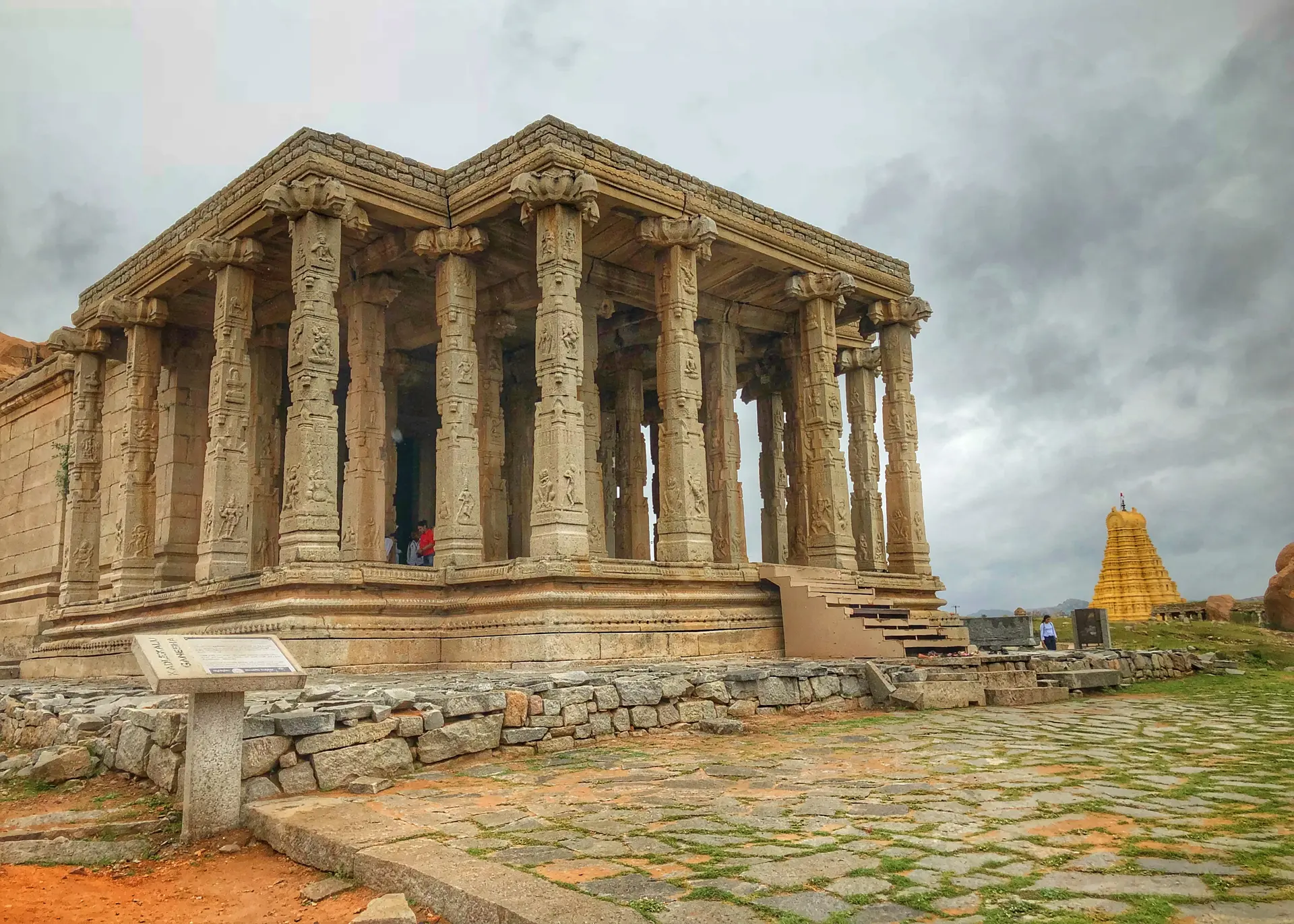
Kadalekalu Ganesha Temple, Hampi, Karnataka
Hampi, Karnataka, India
0.0 km away
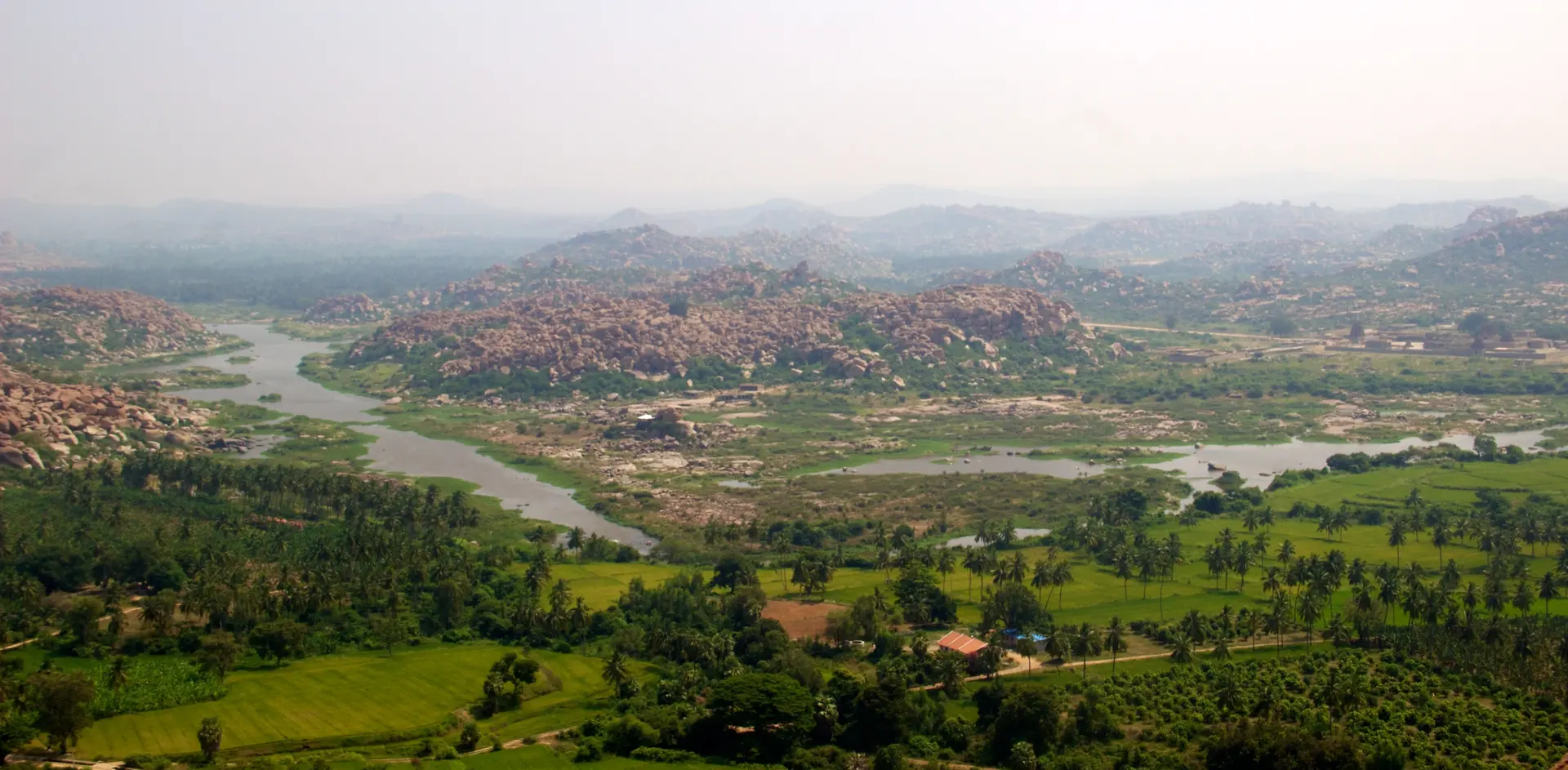
Anjeyanadri (Anjanadri) Hill, Hampi, Karnataka
Hanumanahalli, Karnataka, India
2.3 km away

Badami Cave Temples, Badami, Karnataka
Badami, Karnataka, India
104.7 km away

Chandramouleshwara Temple, Hubli, Karnataka
Hubli, Karnataka, India
144.1 km away
References
Sources consulted for this page. Source categories describe the publication, not a guarantee that every claim is verified. Traditional accounts and outside interpretations may differ.
- 01Group of Monuments at Hampi — UNESCO World Heritage CentreofficialOfficial UNESCO documentation for World Heritage Site inscribed in 1986
- 02World Heritage Site - Hampi — Archaeological Survey of IndiaofficialOfficial ASI documentation of protected monuments
- 03A journey through the sacred sites of Hampi — Incredible India (Government of India)officialOfficial tourism documentation from Government of India
- 04Visit the Virupaksha Temple in Hampi — Incredible India (Government of India)officialOfficial documentation of Virupaksha Temple
- 05Musical Pillars & Stone Chariot at Vitthala Temple in Hampi — Incredible India (Government of India)officialOfficial documentation of Vittala Temple complex
- 06Karnataka Tourism - Hampi pages — Karnataka TourismofficialState tourism authority documentation
- 07Hampi - Deccan Heritage Foundation — Deccan Heritage FoundationacademicArchaeological and conservation perspective
- 08Hampi — Wikipedia contributorsencyclopediaComprehensive overview with extensive references to scholarly sources
- 09Vijayanagara Empire — Wikipedia contributorsencyclopediaDetailed empire history with citations to primary sources
- 10Virupaksha Temple, Hampi — Wikipedia contributorsencyclopediaDocumentation of the primary active temple at Hampi
- 11Krishnadevaraya — Wikipedia contributorsencyclopediaBiography of the greatest Vijayanagara emperor
- 12Art and architecture of the Vijayanagara empire — SmarthistoryacademicArt historical analysis of Vijayanagara architecture
- 13Photo story: a pilgrimage to the rock-hewn temples of Hampi, India — National GeographicacademicVisual documentation of pilgrimage experience
- 14Hampi.in - Various temple pages — Hampi.inSource contextComprehensive tourism site with detailed information on individual monuments
- 15Hampi's Hidden Treasures: ASI excavates Pan Supari Bazaar — OrganiseracademicReport on December 2024 archaeological excavations
- 16Sacred Hampi - Tracing the Ramayana & the Legend of Pampa Devi — Explore HampiSource contextSpiritual tour documentation connecting Hampi to Ramayana
- 17Mahanavami Celebrations in Vijayanagara — Explore HampiSource contextHistorical documentation of Dasara/Mahanavami celebrations
Photo gallery
3 curated photos
Pilgrim glossary
- Mandala
- A symbolic diagram of the cosmos used in meditation and ritual.
- Dharma
- The teachings of the Buddha; also the universal law underlying them.
Share a photo
Help visitors recognize Group of Monuments at Hampi. Every submission is reviewed before publication.