Badami Cave Temples, Badami, Karnataka
India's oldest dated cave temple, where the gods were carved straight from a red sandstone cliff
Understand sacred places, explore living traditions, and learn how to engage respectfully with Pilgrim Map.
Access has not been verified. Check current local guidance before planning a visit.
Badami, Karnataka, India
Read the sources
Visit essentials
A quick read before you go
- Duration
- About 2 to 3 hours for the four caves, the climb, and views; allow more time to include the…
- Access
- In Badami town, Bagalkot district, northern Karnataka; reached by road and rail (Badami railway…
Overview
At Badami in northern Karnataka, sixth-century carvers excavated sanctuaries from a red sandstone escarpment above a lake, cutting pillared verandahs into living rock and filling them with colossal gods. This was Vatapi, early Chalukya capital, where Indian temple architecture took monumental rock-cut form.
Four numbered caves climb the cliff. Shiva's Cave 1 holds a multi-armed dancing Nataraja and Harihara, fusing Shiva and Vishnu. Vishnu's Caves 2 and 3 include Cave 3's monumental Trivikrama, boar-headed Varaha, man-lion Narasimha, and seated Vishnu. Its inscription of Prince Mangalesha—Saka 500, 578/579 CE—makes it India's oldest firmly dated Hindu cave temple and a foundational Chalukya monument. Cave 4, easternmost and latest, is Jain, with Mahavira in the sanctum and Tirthankara reliefs including Parshvanatha and Bahubali.
Now an Archaeological Survey of India-protected monument visited largely for archaeology and art, the caves stand within a devotionally living landscape. Worship continues at the nearby Bhutanatha temples beside Agastya Lake, named for the Puranic story of sage Agastya and the demon Vatapi. The fragile sculptures and fresco traces are sacred art of two living traditions and require care.
Why this place is sacred
Badami concentrates its sense of the sacred in stone and scale. The shrines are carved directly from the sandstone cliff above Agastya Lake, fusing landscape and sanctuary so that the rock itself becomes holy. Within, the reliefs give the gods overwhelming physical presence—Shiva caught mid-dance, Vishnu measuring the universe in three strides, the Tirthankaras held in liberating stillness—images that make the divine immediate rather than abstract.
The caves are also among the oldest precisely dated sacred-art ensembles in India, with Cave 3's 578/579 dedication a hinge point in the history of Hindu sacred art. That two living traditions, Hindu and Jain, meet in a single cliff face deepens the place: a contemplative encounter with monumental divine images set against the lake and the open sky, a meditation on the antiquity and continuity of devotion in stone.
Experience and orientation
Visitors describe climbing stone steps up the cliff to a series of pillared verandahs that frame the gods, dramatic views over Agastya Lake to the Bhutanatha temples, and astonishment at the scale and dynamism of the carvings—especially the dancing Shiva of Cave 1 and the Vishnu reliefs of Cave 3. Move slowly through the four caves, giving time to the monumental reliefs and any surviving fresco traces; do not touch or climb on the carvings.
The encounter with these divine images carved from the cliff, set against the lake and open sky, can be quietly awe-inspiring. Visitors may pay respects quietly; organized ritual is not held within the caves, though it continues at the nearby active temples.
Enter via the stepped climb up the cliff above Agastya Lake, with an ASI ticket. Work upward through Caves 1–4, allowing 2–3 hours; early morning or late afternoon gives the best light on the sandstone reliefs and views. Wear sturdy footwear for steep, uneven steps, and extend the visit to the Bhutanatha temples, Badami Fort, and the Archaeological Museum if time allows.
Context and lineage
Badami, ancient Vatapi, was the capital of the early Chalukyas, and the caves were excavated as royal religious foundations. Cave 3 was dedicated by the Chalukya prince Mangalesha in 578/579 CE, the dated anchor for the whole group. The name Vatapi recalls the Puranic story of the demon Vatapi and the sage Agastya, after whom the adjacent Agastya Lake is named.
Early Chalukya Brahmanical temple cult (Shiva, Vishnu, Harihara, Trivikrama) alongside early Karnataka Jain tradition; living Hindu worship continues at adjacent temples.
Mangalesha
Chalukya prince and dedicator
The early (Badami) Chalukya dynasty
Royal patrons and builders
The Chalukya rock-cut sculptors
Carvers
Mahavira and the Tirthankaras
Jain objects of veneration
The Archaeological Survey of India
Custodian and conservator
Traditions and practice
Historically, Chalukya royal temple dedication and worship of Shiva, Vishnu, and the Jina; the caves were active shrines in the early medieval period.
The numbered caves are now primarily a heritage monument; living worship continues at the nearby Bhutanatha temples on Agastya Lake and at other Badami shrines.
Treat the climb as a slow looking rather than a checklist: pause before the dancing Shiva of Cave 1 and the striding Vishnu of Cave 3 long enough to take in their scale, and turn to the lake and the Bhutanatha temples to set the carvings in their landscape before descending.
Hinduism (Shaivism and Vaishnavism)
ActiveCaves 1–3 are Brahmanical: Cave 1 is dedicated to Shiva, famed for a multi-armed dancing Nataraja and a Harihara (Shiva-Vishnu) form; Caves 2 and 3 are dedicated to Vishnu, with Cave 3's monumental reliefs of Trivikrama, Varaha, Narasimha, and a seated Vishnu. Cave 3 bears the dated inscription of Mangalesha (578/579 CE), making it the oldest firmly dated Hindu cave temple in India and a foundational monument of Chalukya art.
Historically royal Chalukya temple dedication and worship; today primarily veneration through heritage visitation, with living worship continuing at the nearby Bhutanatha temples on Agastya Lake.
Jainism
ActiveCave 4, the easternmost and latest of the numbered caves, is Jain, with an image of Mahavira in the sanctum and reliefs of Tirthankaras including Parshvanatha and Bahubali, representing early Jain rock-cut art in Karnataka.
Historically Jain dedication and worship; today venerated as Jain heritage within the protected monument.
Perspectives and open questions
Badami is read as a chronological anchor of early Chalukya art, as enshrined deities within a living sacred landscape, and as cosmological statements in stone.
Scholarly perspective
Art historians regard the Badami caves as foundational monuments of early Chalukya rock-cut architecture (late 6th–7th c.), with Cave 3's dated dedication (578/579 CE) a key chronological anchor; the caves illustrate the fusion of Nagara and Dravida idioms and the coexistence of Hindu and Jain patronage at Vatapi.
Living and traditional perspectives
For Hindus and Jains the caves enshrine the great deities and Tirthankaras and form part of the sacred Badami–Aihole–Pattadakal landscape, with living worship continuing at adjacent temples.
Alternative interpretations
The reliefs are read as cosmological statements—Shiva's dance as the rhythm of creation and destruction, Vishnu's Trivikrama stride measuring the universe, the Tirthankaras' stillness as liberation from it.
Open questions
The exact dates and sequence of Caves 1, 2, and 4, the original colour scheme of the now-faded frescoes, and the relationship of a small additional Buddhist cave to the main group remain partly open questions.
Plan your visit
Access and arrival
In Badami town, Bagalkot district, northern Karnataka; reached by road and rail (Badami railway station). The caves are entered via a stepped climb up the cliff above Agastya Lake, with an ASI entry ticket. For current timings, ticket prices, and any closures, check ASI or local tourism details before visiting.
Respectful visit
Modest, comfortable dress and sturdy footwear for the steep stone steps.
Photography is generally permitted; do not use flash near any fragile painted surfaces, and follow ASI signage.
No formal offering protocol within the caves; respect any worship at the nearby active temples.
Do not touch, climb on, or deface the carvings; mind the steep steps and slippery surfaces; carry water.
Do not touch, climb on, or deface the carvings. Mind the steep, sometimes slippery steps, carry water, and avoid flash near any fragile painted surfaces.
Current practical details
Address
Badami, Karnataka 587201, India
Hours
Hours, fees, and access can change — verify on the official source before you travel. Practical details last checked Jun 2026.
Location
Map loads as you approach this section.
Pilgrim reflections
A portrait of encounter, not a score
Pilgrims describe what they felt, how present they could become, and whether the place would shape a journey. There are no stars and no ranking of traditions.
No reviewed reflections yet
The first pilgrims can help describe the character of being here.
Share a reflection
Available after an account-backed “Been there.” Every reflection is reviewed before publication.
Nearby sacred places
Explore other sacred places in the region. Proximity does not establish access or travel time; check each place’s guidance.

Chandramouleshwara Temple, Hubli, Karnataka
Hubli, Karnataka, India
86.0 km away
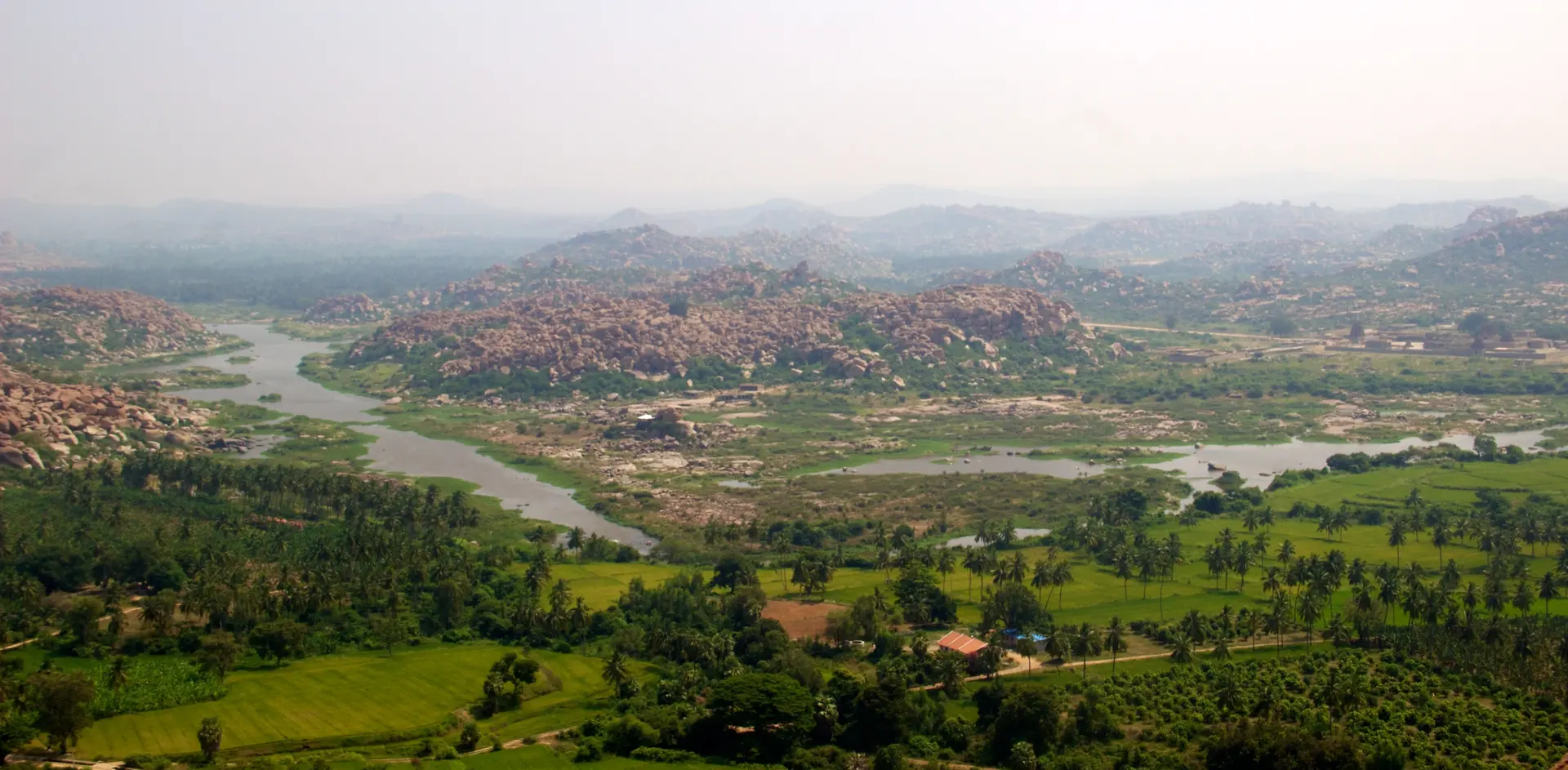
Anjeyanadri (Anjanadri) Hill, Hampi, Karnataka
Hanumanahalli, Karnataka, India
104.4 km away
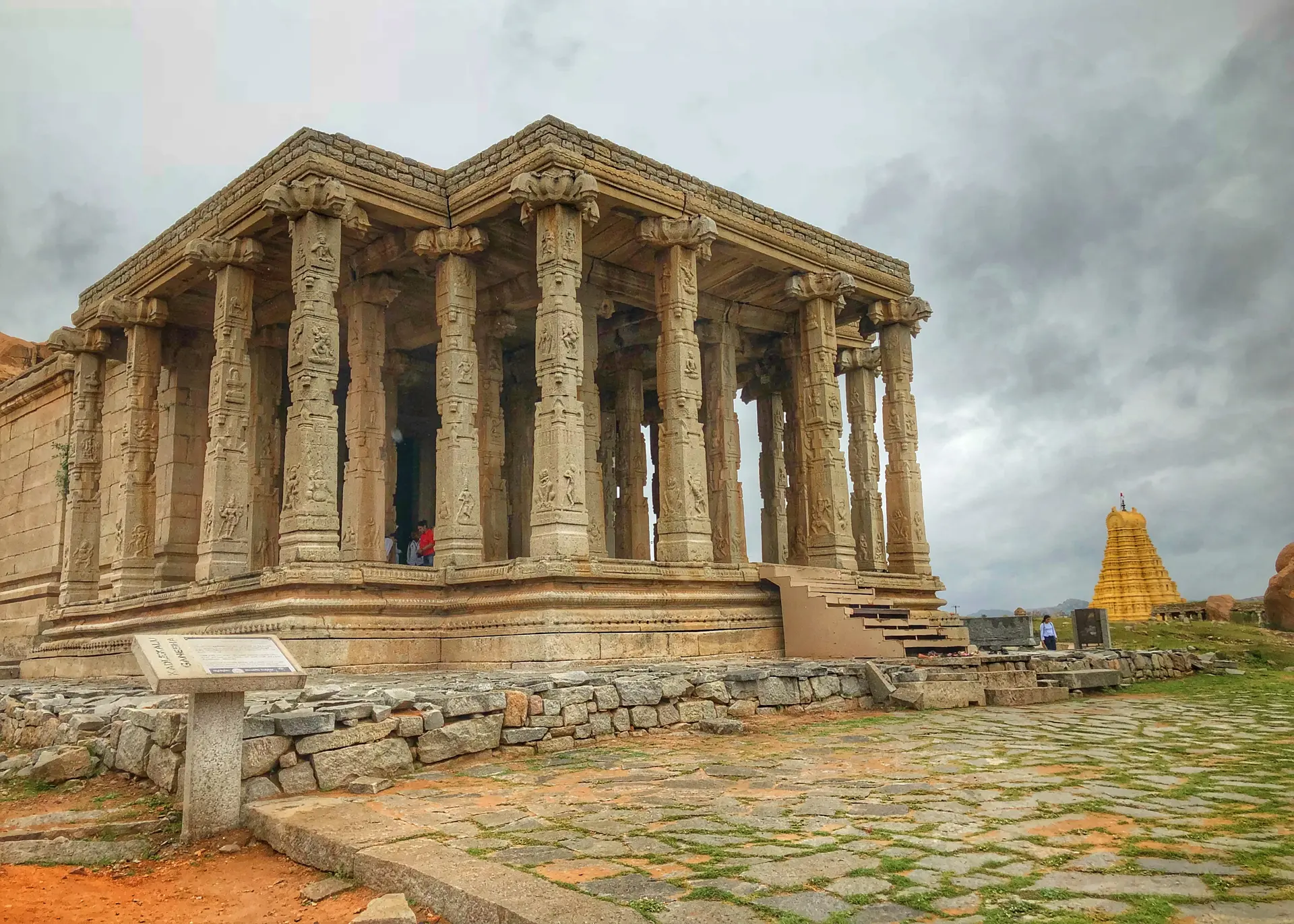
Kadalekalu Ganesha Temple, Hampi, Karnataka
Hampi, Karnataka, India
104.7 km away

Group of Monuments at Hampi
Hampi, Karnataka, India
104.7 km away
References
Sources consulted for this page. Source categories describe the publication, not a guarantee that every claim is verified. Traditional accounts and outside interpretations may differ.
- 01Explore the Ancient Cave Temples of Badami — Incredible India — Ministry of Tourism, Government of IndiaofficialOfficial tourism description of the four cave temples, their Chalukya rock-cut architecture, deities and setting above Agastya Lake; visitor orientation.
- 02Badami Caves — Bagalkote District (district administration) — Bagalkote District AdministrationofficialDistrict government page on the Badami caves, their history as Vatapi the Chalukya capital, the four caves, and nearby monuments (Bhutanatha temples, Agastya Lake, Badami Fort).
- 03Badami cave temples — Wikipedia — Wikipedia contributorsacademicFour rock-cut caves at Badami (ancient Vatapi), capital of the early Chalukyas; Caves 1–3 Hindu (Shiva, Vishnu), Cave 4 Jain; Cave 3 dated by Mangalesha's inscription to Saka 500 (578/579 CE), the oldest firmly dated Hindu cave temple in India; Nagara/Dravida fusion.
- 04Badami — Jain Caves of 6th–7th Century A.D. — Jain Heritage Centres — Jain Heritage CentresacademicFocused account of Cave 4, the Jain cave, with its image of Mahavira and other Jain iconography; situates Badami in early Karnataka Jain heritage.
- 05Visiting Badami Cave Temples — Hours, Tickets, and Tips — AudialaSource contextVisitor practicalities: timings, entry fees (INR for Indians, higher for foreigners), steep steps and uneven terrain, best season (October–March), and nearby attractions.
- 06Badami Cave Temples Guide: India's Oldest Dated Cave Temple — SocialMaharajSource contextDetailed first-person visitor guide to the four caves, the climb, the carvings (Nataraja, Harihara, Trivikrama, Mahavira) and views over Agastya Lake and the Bhutanatha temples.
Photo gallery
3 curated photos
Share a photo
Help visitors recognize Badami Cave Temples, Badami, Karnataka. Every submission is reviewed before publication.