Anjeyanadri (Anjanadri) Hill, Hampi, Karnataka
A boulder-crowned hill near Hampi revered as Hanuman's birthplace in the land of Kishkindha
Understand sacred places, explore living traditions, and learn how to engage respectfully with Pilgrim Map.
Access has not been verified. Check current local guidance before planning a visit.
Hanumanahalli, Karnataka, India
Read the sources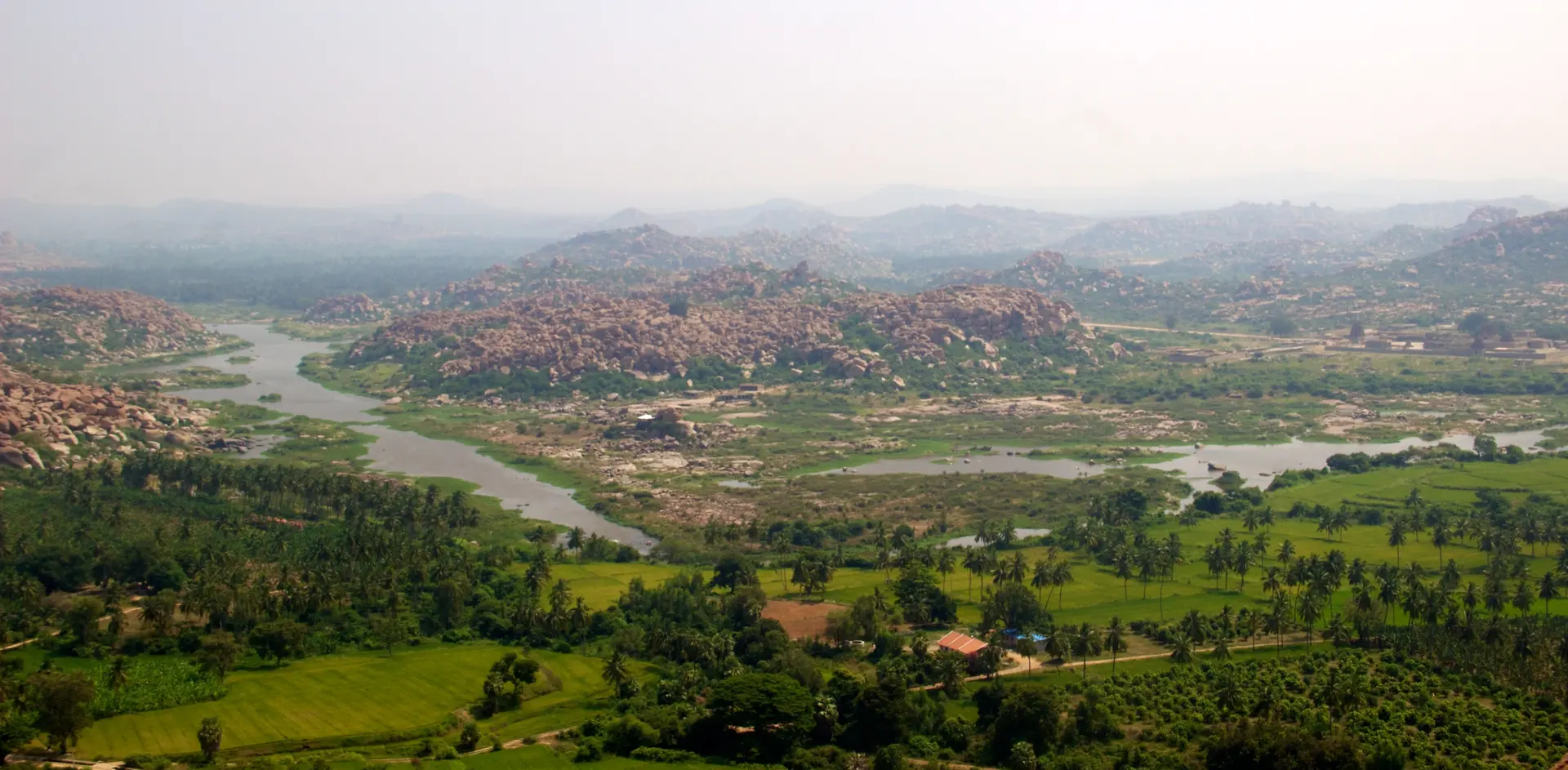
Image of Anjeyanadri (Anjanadri) Hill, Hampi, Karnataka. Image source · CC-BY-SA-4.0
Visit essentials
A quick read before you go
- Duration
- 2–3 hours, including the roughly 45-minute climb of 575 steps and time at the summit.
- Access
- Near Hanumanahalli/Anegundi, across the Tungabhadra River from central Hampi, in Vijayanagara…
Overview
Anjanadri Betta rises from the boulder-strewn landscape of Anegundi, across the Tungabhadra River from the ruins of Hampi. For many Hindus it is Anjaneyadri — Anjana's hill — the place where Hanuman, son of the goddess Anjana, was born, and the surrounding country is identified with Kishkindha, the monkey kingdom of the Ramayana where the exiled Rama allied with Sugriva and Hanuman to recover Sita.
Reaching the summit shrine means climbing some 575 steps, a stepped ascent that doubles as a devotional act. At the top stands a small whitewashed Hanuman temple with a rock-carved idol, and around it opens a 360-degree view over the Tungabhadra and the ancient landscape — a vista that draws pilgrims and travellers alike for sunrise and sunset. Troops of monkeys share the route, an apt presence on the hill of Hanuman.
The birthplace claim remains a matter of religious tradition rather than settled history. Anjanadri-Hampi is the long-held local tradition, but in 2021 the Tirumala Tirupati Devasthanams declared Tirumala Anjanadri in Andhra Pradesh to be Hanuman's birthplace and ruled out the Hampi-Kishkindha claim; other sites in India also assert it.
Why this place is sacred
The thinness of Anjanadri Betta lies in the ascent and the landscape it crosses. The climb of some 575 steps amid an ancient, boulder-strewn terrain is itself a devotional and contemplative act, and the summit shrine of Hanuman sits within a silence broken only by wind and birds. The identification of the region with Kishkindha gives the whole vista a deep epic resonance, and the sweeping sunrise and sunset views over the Tungabhadra can feel profoundly elevating.
The hill draws its charge as much from the act of climbing as from the shrine at the top.
A sacred hill venerated as the birthplace of Hanuman and as part of Kishkindha, the Ramayana's monkey kingdom, with a hilltop shrine to Anjaneya.
The sacred association is rooted in the Ramayana and the historic Vijayanagara-era landscape of Kishkindha around Anegundi and Hampi. The hilltop temple is of uncertain date; the site remains a living pilgrimage hill and, increasingly, a popular sunrise viewpoint within the greater Hampi region.
Experience and orientation
Pilgrims and travellers describe the demanding stepped climb, the troops of monkeys along the way, and the small whitewashed Hanuman temple at the top with its rock-carved idol. The reward at the summit is one of the finest sunrise and sunset panoramas in the Hampi region — a 360-degree sweep over the Tungabhadra and the boulder landscape.
Many find the ascent itself functions as a devotional and contemplative act, and that reaching the shrine amid the silent terrain can feel deeply elevating. Nearby shrines to Rama, Sita and Anjana extend the visit.
The hill lies near Hanumanahalli/Anegundi, across the Tungabhadra from central Hampi; reach it via Anegundi by road, noting that river-crossing and ferry routes vary. The climb is strenuous — allow about 45 minutes and avoid the midday heat. There are no restrooms at the summit. Remove footwear at the temple, secure food and belongings against monkeys, and do not provoke them.
Context and lineage
Tradition holds that Anjana performed intense penance on the hill seeking a child from Shiva; pleased, Shiva — through Vayu, the wind-god — granted her a son, Hanuman, born here and named Anjaneya after his mother. The northern bank of the Tungabhadra around Anegundi is identified with Kishkindha, where the exiled Rama and Lakshmana allied with Sugriva and Hanuman to recover Sita.
The birthplace identification is a matter of religious tradition: in 2021 the Tirumala Tirupati Devasthanams declared Tirumala Anjanadri the birthplace and ruled out the Hampi-Kishkindha claim, while Hampi and other sites maintain rival traditions.
Hinduism in its Hanuman / Vaishnava-Ramayana devotional strand, set within the historic Vijayanagara-era sacred landscape of Kishkindha around Hampi and Anegundi.
Hanuman (Anjaneya)
Venerated deity
Anjana
Mother of Hanuman
Rama and Sugriva
Ramayana figures
Tirumala Tirupati Devasthanams (TTD)
Religious authority
Traditions and practice
Darshan and offerings at the rock-carved Hanuman idol at the summit; Hanuman Jayanti and Rama Navami celebrated with large gatherings.
Daily pilgrim ascents, prayers at the summit and at nearby Rama, Sita and Anjana shrines; the climb open to all.
Let the ascent be the practice — climbing the steps slowly as a prayer, pausing at the small shrines along the way. Reaching the summit for sunrise, when the boulder landscape is quiet and the light long, draws the contemplative and devotional dimensions together.
Hinduism (Hanuman / Ramayana devotion)
ActiveRevered by many Hindus as Anjaneyadri — the hill where Hanuman (Anjaneya, son of Anjana) was born — and as part of the Kishkindha of the Ramayana, the monkey kingdom of Sugriva and Hanuman.
Darshan of the rock-carved Hanuman idol at the summit, Hanuman Jayanti and Rama Navami festivals, and climbing the steps as a devotional ascent.
Perspectives and open questions
Anjanadri is a living pilgrimage hill within the Kishkindha landscape, its birthplace claim a matter of devotion held open against rival traditions.
Scholarly perspective
Anjanadri/Anegundi lies within the historic Hampi-Kishkindha landscape long associated in tradition with the Ramayana's monkey kingdom; the hill is a living pilgrimage and viewpoint adjacent to the UNESCO Hampi monuments. The birthplace identification is a matter of religious tradition rather than settled history.
Living and traditional perspectives
Local and pan-Indian Hindu tradition holds Anjanadri to be the birthplace of Hanuman and identifies the region as Kishkindha; the climb is undertaken as devotion.
Alternative interpretations
The ascent of the hill is sometimes read as an inner ascent toward the qualities Hanuman embodies — strength, devotion and selfless service.
Open questions
Hanuman's birthplace is contested: the TTD officially declared Tirumala Anjanadri the birthplace in 2021, while Hampi-Kishkindha and other sites maintain rival claims. The question cannot be resolved historically and is presented here without taking a side.
Plan your visit
Access and arrival
Near Hanumanahalli/Anegundi, across the Tungabhadra River from central Hampi, in Vijayanagara district, Karnataka; reached via Anegundi by road, with river-crossing and ferry routes that vary.
Guesthouses and homestays cluster in Anegundi and across the river in Hampi and Hospet, serving pilgrims and travellers.
Respectful visit
Modest attire covering shoulders and knees; traditional dress encouraged at the shrine.
Generally permitted outdoors and for the views; follow any restrictions at the sanctum.
Flowers, prayers and devotional items to Hanuman.
Remove footwear at the temple; do not feed or provoke the monkeys; secure food and belongings; no restrooms at the summit.
The climb is strenuous; avoid the midday heat and carry water. Monkeys can be aggressive — do not feed or provoke them, and secure food and belongings. There are no restrooms at the summit.
Current practical details
Address
near Hampi, Chickrampur, Karnataka 583227, India
Hours
Hours, fees, and access can change — verify on the official source before you travel. Practical details last checked Jun 2026.
Location
Map loads as you approach this section.
Pilgrim reflections
A portrait of encounter, not a score
Pilgrims describe what they felt, how present they could become, and whether the place would shape a journey. There are no stars and no ranking of traditions.
No reviewed reflections yet
The first pilgrims can help describe the character of being here.
Share a reflection
Available after an account-backed “Been there.” Every reflection is reviewed before publication.
Nearby sacred places
Explore other sacred places in the region. Proximity does not establish access or travel time; check each place’s guidance.


References
Sources consulted for this page. Source categories describe the publication, not a guarantee that every claim is verified. Traditional accounts and outside interpretations may differ.
- 01Anjeyanadri Hill — Wikipedia — Wikipedia contributorsSource contextHanuman/Anjaneya birthplace tradition, Kishkindha association, Seshachala range, hilltop Hanuman temple with rock-carved idol.
- 02TTD declares Tirumala Anjanadri as Hanuman's birthplace; rules out Hampi-Kishkinda — Deccan HeraldSource contextDocuments the 2021 TTD declaration disputing the Hampi-Kishkindha birthplace claim — essential for the conflict note.
- 03Visit Anjanadri Hill, the birthplace of Lord Hanuman near Hampi — NativeplanetSource contextAnjana's penance to Shiva, 575 steps, Rama/Sita and Anjana shrines, precautions.
- 04Anjanadri Hill Temple / Kishkindha, Hampi — Timings, Festivals, History, Darshan — Trawell.inSource contextRama Navami and Hanuman Jayanti festivals, darshan context, Kishkindha.
- 05Anjeyanadri Hill — Sightseeing Hampi — Karnataka.comSource contextBirthplace tradition, summit views over Tungabhadra and Hampi landscape.
- 06Hampi Sunrise at Anjanadri Hill (Anegundi): Steps Count, Parking, Crowd Pattern and Tips — Visit SouthSource contextStep count, sunrise vantage, crowd patterns (Saturdays/festivals busiest), monkey precautions, timings.
Photo gallery
2 curated photos
Share a photo
Help visitors recognize Anjeyanadri (Anjanadri) Hill, Hampi, Karnataka. Every submission is reviewed before publication.