Great Sandhills
The Blackfoot afterworld, where spirits dwell among shifting sands on the open prairie
Understand sacred places, explore living traditions, and learn how to engage respectfully with Pilgrim Map.
Access has not been verified. Check current local guidance before planning a visit.
Sceptre, Saskatchewan, Canada
Read the sources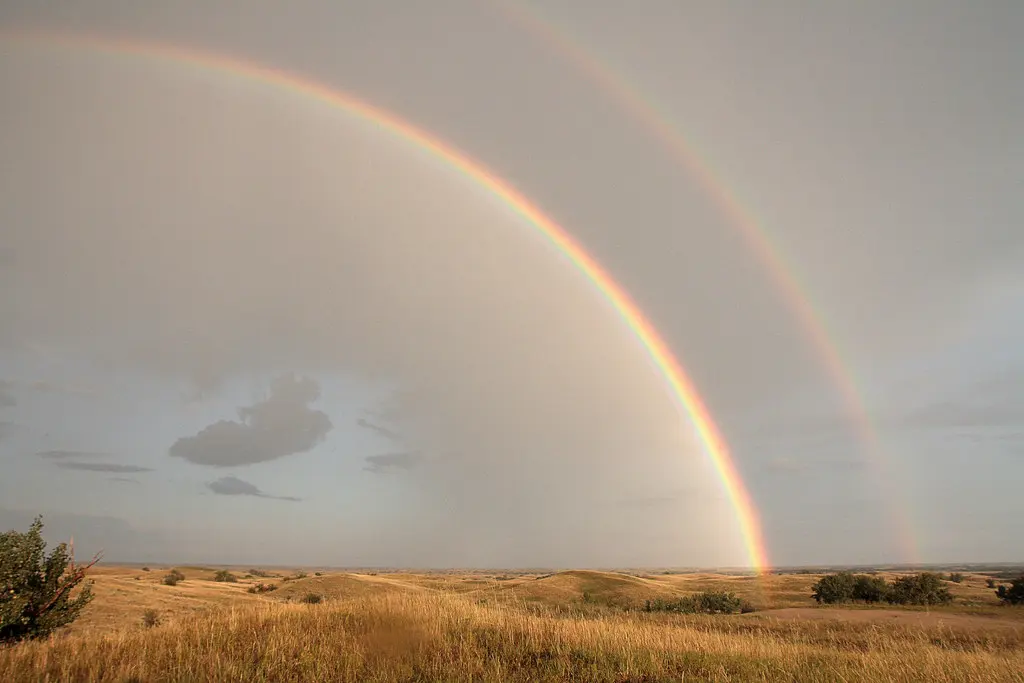
Image of Great Sandhills. Image source
Visit essentials
A quick read before you go
- Duration
- Two to three hours covers the main trail and initial dune exploration.
- Access
- From the village of Sceptre, take the first grid road east off Highway 32, then drive south…
Overview
In southwestern Saskatchewan, dunes up to thirty metres high stretch across nearly two thousand square kilometres of otherwise grassland prairie. The Great Sandhills are a twelve-thousand-year-old desert anomaly in the Canadian landscape.
For the Blackfoot Confederacy, these are the Sand Hills: the afterworld and destination of human spirits. After death, spirits journey eastward to the shifting dunes and live as shadows in an insubstantial echo of earthly life. Fallen warriors continue phantom battles on ghostly horses at night; owl hoots were understood as lost souls not yet arrived.
This remains living belief. In 2006 Edwin Small Legs of the Piikani Nation stated, 'When we die, our spirit goes to the Sand Hills.' Cree and Assiniboine peoples also hold the landscape sacred, though available sources document the specific contours of their relationships less extensively.
The Great Sandhills join geology and cosmology. Their impermanence, otherworldliness, and stark difference from the surrounding prairie may be precisely what led the Blackfoot to recognize a threshold between life and death. The dunes shift; the spirits remain.
Why this place is sacred
To arrive at the Great Sandhills is to experience a category failure. The Canadian prairies are grassland, flatness, horizon. Then the ground gives way to sand, the vegetation thins and vanishes, and dunes begin to rise in formations that belong to the Sahara or the Namib, not to Saskatchewan. The cognitive dissonance is itself a kind of thinning. The mind, unable to reconcile what it sees with what it expects, loosens its grip on the familiar.
The Blackfoot recognized something in this dissonance that went deeper than surprise. In their cosmology, the Great Sand Hills are not merely strange but liminal in the most fundamental sense: they are where the living world meets the world of the dead. The spirits who dwell here exist as shadows, their lives mirroring earthly existence but drained of substance. Everything is present but nothing is real. The landscape itself, with its shifting, impermanent, wind-erased terrain, embodies this quality of insubstantiality.
The dunes are never the same from one season to the next. Footprints vanish. Paths fill in. The land itself refuses to hold form.
This impermanence operates at every scale. Individual dunes migrate with the wind. The active sand fields, which make up roughly ten percent of the total area, are constantly being reshaped. Yet the system as a whole has persisted for twelve millennia. The tension between the permanent and the ephemeral, between a landscape that is always changing and never gone, mirrors the Blackfoot understanding of death: the person continues, but as shadow rather than substance.
The silence contributes to the thinness. Far from any settlement, with no facilities and little reason for casual visitors, the Sand Hills are profoundly quiet. The wind is constant, but wind across open sand creates a white noise that absorbs other sounds rather than adding to them. Visitors consistently report a quality of deep stillness beneath the surface movement, as though the landscape were holding its breath.
In a place understood as the dwelling of the dead, this silence takes on additional weight.
There is also the temporal dimension. Human beings have been present here for at least eight thousand years. The archaeological record includes a Midland Folsom point discovered and dated by the University of Saskatchewan, placing human hunters in this landscape at a time that predates the traditions we can name. The Sand Hills have been watched over, feared, revered, avoided, and argued over for longer than most sacred sites have existed.
This depth of accumulated human attention, even when that attention took the form of avoidance, contributes to the sense that the place is not empty but inhabited by something beyond the visible.
In Blackfoot cosmology, the Great Sand Hills have always been the afterworld. This is not a purpose assigned to the landscape but a recognition of what the landscape is. The spirits of the dead did not come to the Sand Hills because the Blackfoot chose the location; rather, the Blackfoot understood the Sand Hills as the place where spirits naturally gather.
The landscape's own qualities, its otherworldliness, its impermanence, its desolation, were read as evidence of its nature as a threshold between worlds. For the Cree and Assiniboine, the area held comparable sacred significance as part of a broader sacred landscape understanding, though the specific beliefs are less extensively recorded in available English-language sources.
The spiritual meaning of the Great Sandhills has remained remarkably stable across recorded time, even as the political and legal context has shifted dramatically. The Blackfoot afterlife belief documented by Adolf Hungry Wolf in 1977 appears consistent with much older oral traditions. Edwin Small Legs' 2006 statement confirmed the belief's continuity among contemporary practitioners.
What has changed is the site's legal and ecological status. The region was historically contested territory between the Blackfoot Confederacy and the Cree-Assiniboine Iron Confederacy. European settlement brought ranching and, eventually, the prospect of gas development. In 2002, the Saskatchewan government initiated a review of development in the area. By 2005, a 36,585-hectare Ecological Reserve was established with legislative protection, and a subsequent Regional Environmental Study in 2007 led to further safeguards.
The protection was ecological in framing, not spiritual. The reserve was created to safeguard one of Canada's largest active sand dune ecosystems, not to preserve a sacred site. Yet the effect has been to limit the industrial incursion that First Nations communities considered a desecration. The tension between ecological conservation and sacred site recognition remains unresolved. The Sand Hills are legally protected as habitat.
They are not formally recognized as a sacred landscape, despite the testimony of those for whom they are the dwelling place of the dead.
Experience and orientation
The drive from Sceptre takes you south on grid roads that grow increasingly rough and empty. The prairie around you is ordinary Saskatchewan grassland, flat and wide. Then the grass begins to thin. Sand appears between the stalks. The terrain lifts and breaks, and suddenly you are standing at the edge of something the prairies should not contain.
The first response is usually disbelief. Sand dunes, some towering well above the surrounding terrain, extend in every direction. The vegetation has retreated to patches of sage and grass between the ridges. The wind, which is always present here, has carved the sand into ridgelines and bowls that shift with the seasons. You are in Saskatchewan, but the landscape insists otherwise.
Walking onto the dunes changes the experience again. Sand gives way underfoot. The effort of walking increases. Sound dampens. The already-wide prairie horizon expands further, and a sense of exposure sets in. There is no shade, no shelter, no structure. The landscape strips away the familiar infrastructure of human presence and leaves you alone with sand, sky, and wind.
Visitors frequently describe a feeling of having crossed into another world. The phrase recurs in trail reports and travel accounts: 'like being on another planet.' For those who know the Blackfoot understanding of this place, the feeling acquires a different register. This is not merely an unusual landscape. It is the landscape the Blackfoot identified as the realm of the dead, the place where spirits dwell as shadows.
The otherworldliness that casual visitors note as a curiosity takes on existential weight.
The silence is central to the experience. Cellular coverage is absent. The nearest settlement is nearly thirty kilometres away. On a weekday outside of summer, you may see no one else. The wind creates a continuous, enveloping sound that paradoxically deepens the sense of silence by masking any evidence of human activity. Within minutes of leaving the parking area, the modern world falls away.
Wildlife punctuates the stillness. Pronghorn and mule deer move through the dune margins. Hawks and other raptors circle overhead. The rare Ord's kangaroo rat, a species found nowhere else in Canada, inhabits the sandy terrain. These presences reinforce the sense that the landscape is not barren but alive on its own terms, hosting forms of life adapted to conditions that most creatures avoid.
The Great Sandhills do not prepare you for what they are. There is no gate, no visitor centre at the dunes themselves, no gradual transition from ordinary to extraordinary. The grid road ends. A small parking area and a few interpretive signs mark the public access point. Beyond that, you are on your own.
Before visiting, stop at the Great Sandhills Museum and Interpretive Centre in Sceptre, which is open from mid-May through the end of August. The museum provides orientation, directions, and context that the dunes themselves do not offer. Without it, you may struggle to find the access point.
Bring everything you will need. There is no water, no shade, no washroom, and no emergency services at the site. Sun protection is essential: the reflected light off sand intensifies UV exposure. Sturdy footwear matters; the sand is deep and loose. Carry more water than you think you need.
If you are coming for the contemplative dimension rather than simple curiosity, consider timing your visit for early morning or late afternoon, when the light stretches long across the dunes and the shadows deepen the terrain's sculptural quality. These are also the cooler hours. Midday in summer can be fierce.
Tell someone where you are going and when you expect to return. Cell service is unreliable to nonexistent. The dune landscape can be disorienting, particularly if you wander beyond sight of the access point.
Carry with you the knowledge of what this landscape means. The Blackfoot call it the afterworld. The Cree and Assiniboine held it sacred. Humans have been present here for eight thousand years or more. You are not the first person to stand on these dunes and feel that the ordinary rules of the world have been suspended. That feeling is part of what the Sand Hills are.
Context and lineage
In Blackfoot tradition, the Great Sand Hills are where spirits go after death. This is not an origin story in the conventional sense, not a tale of creation or founding, but something more fundamental: an account of what the landscape is.
Most human spirits, according to Blackfoot belief, make the long journey to the Sand Hills after dying. Once there, they take up existence as shadows. Their afterlife mirrors the life they lived, good or bad, but everything is insubstantial, an echo rather than the thing itself. A warrior who was brave in life fights phantom battles in death. A person who was generous continues in generosity, but the gifts have no weight.
The spirits of warriors who died in battle are especially present. Blackfoot people who camped near the Sand Hills reported hearing the sounds of ghostly combat at night, the clash of weapons and the thundering of phantom horses as Blackfoot and Cree spirits continued their territorial conflicts beyond death. Sacred pipes were placed beside deceased medicine men so their spirits could carry them on the journey.
The owl's hoot carried special meaning. Blackfoot tradition held that the cries of owls were the voices of lost souls who had not yet found their way to the Sand Hills, still wandering between the world of the living and their final destination.
Adolf Hungry Wolf, writing from within Blackfoot tradition in 1977, documented these beliefs as living knowledge among the Piikani people. Nearly three decades later, Edwin Small Legs confirmed their continuing vitality: 'It's a place that, when we die, our spirit goes to the Sand Hills.'
The human relationship with the Great Sandhills stretches back at least eight thousand years, documented by the Midland Folsom point and likely extending further. The specific spiritual traditions we can name, Blackfoot, Cree, Assiniboine, represent the most recent layers of a relationship between humans and this landscape that may be as old as the dunes themselves.
The Blackfoot Confederacy, whose traditional territory extended from the Rocky Mountains to the Great Sand Hills, understood the dunes as the eastern boundary of their world and the threshold of the next. The Cree-Assiniboine Iron Confederacy contested the region from the east. Both sides held the landscape as sacred, though their specific understandings differed and, in the case of the Cree and Assiniboine, are less extensively documented.
European settlement brought ranching, and the Sand Hills became grazing land. The spiritual dimension was largely invisible to the new occupants. It was the prospect of gas development in the early 2000s that brought the indigenous relationship with the site back into public view, as First Nations advocates like Edwin Small Legs insisted that the landscape's significance went far beyond ecology.
The ecological protection that followed was a partial victory: the land was saved, but its sacredness was not the stated reason.
Today, the Great Sandhills exist in a layered condition. They are an ecological reserve, a national wildlife area, ranch land, a geological curiosity, and, for the Blackfoot, the dwelling place of the dead. All of these identities occupy the same shifting sand.
Edwin Small Legs
advocate and spiritual witness
Piikani Nation member who in 2006 publicly protested gas development in the Great Sand Hills, bringing the Blackfoot spiritual understanding of the site to national attention through CBC News. His statement, 'when we die, our spirit goes to the Sand Hills,' remains the most widely cited contemporary testimony to the living nature of Blackfoot afterlife beliefs regarding the site.
Adolf Hungry Wolf
ethnographer and author
Ethnographer who documented Blackfoot traditions regarding the Sand Hills afterworld in 1977, preserving oral traditions about the spiritual significance of the landscape. His work, archived by the University of Utah's Ethics of Suicide Digital Archive, remains an important written record of Blackfoot eschatological beliefs.
Unknown Midland Folsom Hunters
earliest known inhabitants
The anonymous hunters whose Midland Folsom point was discovered and dated by the University of Saskatchewan, placing human presence in the Great Sand Hills at eight to nine thousand years before present. They represent the deepest known layer of human engagement with this landscape.
Saskatchewan Environmental Stewards
conservation architects
The collective of government scientists, policymakers, and environmental advocates who between 2002 and 2007 conducted the Great Sand Hills Regional Environmental Study and established the 36,585-hectare Ecological Reserve, providing legislative protection that, while framed in ecological terms, also safeguarded a sacred landscape from industrial development.
Traditions and practice
The Blackfoot relationship with the Great Sand Hills was defined less by what people did there than by what they understood the place to be. As the afterworld, the dwelling place of spirits, the Sand Hills were approached with deep respect and, often, deliberate avoidance. Traditional Blackfoot people did not go to the Sand Hills to seek visions or conduct ceremonies; they understood the Sand Hills as belonging to the dead.
Those who found themselves near the dunes, whether by necessity of travel or hunting, were careful. Night travel through the Sand Hills was especially avoided. Those forced to camp in the area reported hearing the sounds of phantom battles: the clash of ghostly Blackfoot and Cree warriors riding spirit horses through the darkness. These encounters were not sought. They were endured.
Sacred pipes were placed beside deceased medicine men to accompany their spirits on the journey to the Sand Hills. The preparation of the dead for their passage to the afterworld was a central element of Blackfoot funeral practices, and the Sand Hills were the destination that gave those practices their meaning.
This tradition of reverent distance, of acknowledging a power that is not meant to be approached casually, is itself a form of sacred practice. The Sand Hills were honoured precisely by not being treated as a destination for the living.
Treaty rights, including hunting, continue to be exercised by First Nations peoples within the Ecological Reserve. Traditional Blackfoot beliefs about the Sand Hills as the afterworld remain actively held among traditional practitioners, as Edwin Small Legs confirmed in 2006. However, there are no publicly documented organized ceremonies at the site, and the nature of any private spiritual observances that may occur is not recorded in available sources.
The site's primary contemporary function for most visitors is ecological: birdwatching, hiking, and wildlife observation. The spiritual dimension exists alongside but apart from the recreational use, held by those who carry the traditional knowledge.
The Great Sandhills do not require ceremony. They require presence.
Walk onto the dunes slowly. Let the sand absorb the pace of your arrival. As the familiar prairie gives way to this unexpected terrain, notice what happens in your body when the landscape stops making sense. The disorientation is not a problem to solve. It is the beginning of the Sand Hills' teaching.
Find a place to sit where you cannot see the parking area or any sign of the road. Let the wind work on you. It will strip away thoughts that need stripping. What remains, after the noise has blown through, is often closer to what matters.
Consider the Blackfoot understanding of this place. You are sitting in the afterworld, the place where spirits dwell as shadows. You do not need to believe this literally to let it inform your attention. What would it mean to sit in a landscape that the dead inhabit? What changes in your awareness when you hold that possibility alongside the geological explanation?
Watch how the sand moves. Individual grains are picked up, carried, set down elsewhere. The dune you are sitting on is not the dune it was last month. It will not be this dune next month. Yet the Sand Hills endure. This tension between impermanence and persistence is available as a meditation on mortality, on what survives the dissolution of form.
When you leave, carry nothing but your attention. Leave nothing but the footprints the wind will erase.
Blackfoot Confederacy (Niitsitapi)
ActiveThe Great Sand Hills are the Blackfoot afterworld, the destination of human spirits after death. In Blackfoot cosmology, most spirits journey to the Sand Hills after dying and take up existence as shadows, living an insubstantial echo of their earthly lives. The Sand Hills sit at the eastern boundary of traditional Blackfoot territory and are central to Blackfoot understanding of death, the soul, and the continuity of existence beyond physical life. This belief was confirmed as actively held by Edwin Small Legs of the Piikani Nation in 2006.
Traditional Blackfoot practice regarding the Sand Hills was primarily one of reverent avoidance: the landscape was understood as belonging to the dead and was not casually entered, especially at night. Sacred pipes were placed with deceased medicine men for the spirit journey. Those near the Sand Hills reported hearing phantom battles between Blackfoot and Cree spirits at night. The afterlife belief remains actively held by traditional practitioners today and informed the Piikani Nation's public advocacy against gas development in the area.
Cree (Nehiyawak)
ActiveThe Cree are among the First Nations who consider the Great Sand Hills sacred. The area was part of the contested territory between the Cree-Assiniboine Iron Confederacy and the Blackfoot Confederacy, and Cree spiritual associations with the landscape are documented in CBC reporting and broader ethnographic sources, though specific Cree beliefs about the Sand Hills are less extensively recorded than the Blackfoot traditions.
Specific Cree ceremonial practices at the Sand Hills are not well documented in available English-language sources. The Cree relationship to the site appears embedded in a broader understanding of the Great Plains as a sacred landscape. Treaty rights continue to be exercised in the area.
Assiniboine (Nakoda/Nakota)
ActiveThe Assiniboine peoples, whose traditional territory encompassed much of southwestern Saskatchewan, also held the Great Sand Hills as sacred. As allies of the Cree in the Iron Confederacy, they contested the region with the Blackfoot and maintained their own spiritual relationships with the landscape.
Specific Assiniboine ceremonial practices at the Sand Hills are not well documented in the sources available. Traditional Assiniboine spirituality centred on a deep connection between humans, the land, animals, and natural forces. Treaty rights continue to be exercised in the area.
Ecological Conservation
ActiveSince 2005, the Great Sand Hills have been recognized as one of Canada's most significant dune ecosystems, hosting species found nowhere else in the country. The 36,585-hectare Ecological Reserve and the federal National Wildlife Area designation represent a modern tradition of stewardship that, while framed in scientific rather than spiritual terms, has effectively protected a sacred landscape from industrial development.
Ongoing ecological monitoring, species surveys, and habitat management. Environmental research continues through federal and provincial agencies. Public education through the Great Sandhills Museum and Interpretive Centre in Sceptre. The ecological stewardship tradition maintains the physical integrity of the landscape that carries both biological and spiritual significance.
Perspectives and open questions
The Great Sandhills sit at the intersection of multiple ways of knowing. Geologists read them as a product of glacial retreat and wind dynamics. Ecologists see one of Canada's rarest and most significant dune ecosystems. The Blackfoot understand them as the afterworld. These perspectives do not compete so much as they occupy different registers, each illuminating something the others cannot reach.
Scholarly perspective
Geological research establishes the Great Sand Hills as a formation approximately twelve thousand years old, created from rock flour deposited by Glacial Lake Bursary as the Wisconsin ice sheet retreated. Wind action shaped the exposed glacial sediments into the dune system that continues to shift and evolve. The area is recognized as one of Canada's largest active sand dune complexes, second only to the Athabasca Sand Dunes in northern Saskatchewan.
Archaeologically, the Midland Folsom point discovered at the site and dated by the University of Saskatchewan confirms human presence extending back eight to nine thousand years. This places the Great Sand Hills among the oldest continuously known human landscapes on the northern Plains.
Ethnographic work, particularly Adolf Hungry Wolf's 1977 documentation of Blackfoot traditions, establishes the Sand Hills as central to Blackfoot eschatology. The afterlife belief is not marginal folklore but a core element of Blackfoot cosmological understanding. Environmental studies conducted between 2002 and 2007 by the Saskatchewan government led to formal ecological protection, though the studies focused primarily on ecological rather than cultural significance.
Ecologically, the site supports over 220 species of terrestrial arthropods, several of which are found nowhere else in Canada. The Ord's kangaroo rat, the only kangaroo rat species in Canada, depends on this habitat. The ecological uniqueness of the site parallels its spiritual uniqueness in indigenous understanding.
Living and traditional perspectives
For the Blackfoot Confederacy, the Great Sand Hills are the afterworld, the destination of human spirits after death. This is not metaphor or legend but a description of reality as understood within Blackfoot cosmology. Edwin Small Legs of the Piikani Nation stated in 2006: 'It's a place that, when we die, our spirit goes to the Sand Hills.' The present tense is deliberate.
The belief is active, held by living practitioners within a tradition that shows no sign of relinquishing it.
In Blackfoot understanding, the spirits who dwell in the Sand Hills live as shadows, their existence mirroring earthly life but emptied of substance. Warriors continue to fight phantom battles at night. The hooting of owls carries the voices of lost souls still seeking the Sand Hills. Sacred pipes were placed with deceased medicine men so their spirits could carry them on the journey.
The Cree and Assiniboine also held the Great Sand Hills as sacred, though the specific nature of their beliefs is less extensively documented in English-language sources. The area sat at the contested boundary between the Cree-Assiniboine Iron Confederacy and the Blackfoot Confederacy, and both sides understood the spiritual weight of the terrain they disputed.
From the traditional indigenous perspective, the ecological protection of the Sand Hills, while welcome, misses the point. The site does not need protection because it hosts rare insects. It needs protection because it is the dwelling place of the dead.
Alternative interpretations
The Great Sandhills attract interest from those drawn to liminal landscapes and places where the boundary between ordinary reality and other dimensions is perceived as permeable. The Blackfoot afterlife beliefs resonate with cross-cultural concepts of the land of the dead found in traditions worldwide, from the Greek Asphodel Meadows to the Irish Tech Duinn.
Some visitors describe unusual sensory experiences or feelings of presence, though these are anecdotal and not systematically documented. The landscape's radical departure from its surroundings, its status as a desert anomaly in the grasslands, produces a cognitive dissonance that some interpret through spiritual or paranormal frameworks.
These interpretations exist alongside rather than within the indigenous traditions. They reflect a real quality of the landscape, its capacity to shift perception and unsettle assumptions, but they lack the cosmological specificity of the Blackfoot understanding.
Open questions
Substantial questions remain unanswered about the Great Sandhills' full history and significance. The archaeological record of the region is only partially explored; the Midland Folsom point represents a single confirmed data point in what is likely a much richer story of prehistoric human engagement with the landscape.
The question of why the Blackfoot identified this specific landscape as the afterworld remains open. Whether the geological character of the terrain, its shifting impermanence and otherworldly appearance, influenced the cosmological association, or whether the belief arose independently and the landscape was subsequently recognized as matching the afterworld's description, is not resolved in available sources.
The Cree and Assiniboine spiritual understanding of the Sand Hills is poorly documented in English-language scholarship. Oral traditions within these communities may hold knowledge that has not entered the published record. The same may be true for other indigenous peoples who had historical connections to the region.
Reports of phantom battles and ghostly encounters, while firmly embedded in Blackfoot oral tradition, have not been investigated through any systematic methodology. Whether they reflect historical memory of actual conflicts in the contested borderland, psychological effects of the landscape's isolation and sensory qualities, or something else entirely, remains genuinely unknown.
Plan your visit
Access and arrival
From the village of Sceptre, take the first grid road east off Highway 32, then drive south following signs to the Great Sand Hills public access point. The access point is approximately 27 kilometres south of Sceptre. Off-road parking is available at the designated access point. Access roads are unpaved and may be impassable when wet; a vehicle with reasonable clearance is recommended. Entrance is free.
The terrain at the dunes is sandy and challenging for those with mobility limitations; there are no paved paths or accessibility infrastructure. The hike from parking to the active dunes is relatively short but involves walking on loose sand. Nearest towns with services: Sceptre (27 km north, museum and basic services), Leader (47 km northwest), Swift Current (159 km southeast, full services), Kindersley (137 km north).
Mobile phone signal is unreliable to nonexistent at the dune site; inform someone of your plans and expected return time before visiting. Nearest reliable signal and emergency access is in Sceptre or along Highway 32.
There are no accommodations at or near the dune site. Sceptre, 27 kilometres north, is a small village with limited services. Leader (47 km) and Kindersley (137 km) offer basic lodging. Swift Current (159 km) is the nearest city with full hotel and service options. Visitors should plan the Great Sandhills as a day trip from one of these centres.
The Great Sandhills Museum and Interpretive Centre in Sceptre (open mid-May through end of August) is the essential first stop for orientation, directions, and interpretive context before heading to the dunes.
Respectful visit
No formal dress code. Practical considerations dominate: sturdy footwear for walking on loose sand, sun protection including a hat and sunscreen, wind-resistant layers as the area is consistently windy and exposed. Bring sufficient water as there are no facilities on site.
Photography of the landscape and wildlife is permitted and welcomed. No specific restrictions are documented. However, if you encounter any indigenous ceremonial or spiritual activity, do not photograph without explicit permission. Even landscape photography benefits from approaching the subject with awareness of its significance rather than treating the dunes as merely photogenic terrain.
There is no tradition of visitor offerings at this site. The Blackfoot spiritual relationship with the Sand Hills was one of reverence and avoidance, not pilgrimage with offerings. Do not leave any items in the ecological reserve. If you wish to honour the place, do so through the quality of your presence and the care of your departure.
No overnight camping within the Ecological Reserve. No fires. No off-road vehicles; parking only in designated areas. Pack out all waste. Do not disturb wildlife or vegetation. Gas development and industrial activity are prohibited within the reserve. Treaty rights, including hunting, are preserved for First Nations peoples.
The Great Sandhills are physically demanding in ways that are easy to underestimate. Dehydration, heat exhaustion, and disorientation are real risks. Carry ample water. Protect yourself from the sun. Stay within sight of landmarks or your access route.
The spiritual dimension of this landscape belongs to the Blackfoot, Cree, and Assiniboine peoples. Visitors should not attempt to conduct indigenous ceremonies, leave offerings in imitation of indigenous practice, or claim spiritual authority over a site that carries meaning for living indigenous communities. If you encounter anyone engaged in private spiritual observance, give them space and silence.
Do not treat the Sand Hills as a novelty or a backdrop for social media content. For the Blackfoot, this is the dwelling place of their ancestors' spirits. Approach accordingly.
Current practical details
Address
SK-32, Sceptre, SK S0N 2H0, Canada
Phone
Hours
Hours, fees, and access can change — verify on the official source before you travel. Practical details last checked Jun 2026.
Location
Map loads as you approach this section.
Pilgrim reflections
A portrait of encounter, not a score
Pilgrims describe what they felt, how present they could become, and whether the place would shape a journey. There are no stars and no ranking of traditions.
No reviewed reflections yet
The first pilgrims can help describe the character of being here.
Share a reflection
Available after an account-backed “Been there.” Every reflection is reviewed before publication.
Nearby sacred places
Explore other sacred places in the region. Proximity does not establish access or travel time; check each place’s guidance.


References
Sources consulted for this page. Source categories describe the publication, not a guarantee that every claim is verified. Traditional accounts and outside interpretations may differ.
- 01Sand Hills sacred, First Nations protester says - CBC News — CBC NewsSource context2006 CBC News report on Piikani Nation protest against gas development, with direct quotes from Edwin Small Legs about spiritual significance
- 02BLACKFOOT#22 The Sandhills (Adolf Hungry Wolf, 1977) — Ethics of Suicide Digital Archive, University of UtahSource contextAcademic archive citing Adolf Hungry Wolf's 1977 documentation of Blackfoot Sandhills afterlife beliefs
- 03Great Sandhills National Wildlife Area - Canada.ca — Environment and Climate Change CanadaofficialOfficial Canadian government NWA designation information, ecology, and management details
- 04Province Provides Further Protection for the Great Sand Hills — Government of Saskatchewanofficial2005 government press release on establishment of the 36,585 hectare Ecological Reserve with legislative protection
- 05Government Responds to the Great Sand Hills Regional Environmental Study — Government of Saskatchewanofficial2007 government response to regional environmental study, addressing gas development and protection measures
- 06Great Sand Hills | Tourism Saskatchewan — Tourism SaskatchewanSource contextOfficial provincial tourism listing with visitor information
- 07Why are there sand dunes in the middle of Saskatchewan? — Nature CanadaSource contextNational conservation organization with geological and ecological overview
- 08Great Sandhills Museum and Interpretive Centre — Great Sandhills MuseumSource contextLocal museum and interpretive centre in Sceptre dedicated to the Great Sandhills
- 09Great Sand Hills - Wikipedia — Wikipedia contributorsSource contextComprehensive overview of geography, geology, ecology, history, and indigenous significance with multiple cited references
- 10Great Sandhills - Discover Southwest Saskatchewan — Discover Southwest SaskatchewanSource contextRegional tourism authority with practical visitor information
- 11Undead Warriors in Blackfoot Tradition — Mysteries of CanadaSource contextDocuments Blackfoot beliefs about the Great Sand Hills as the afterworld, spirit journeys, and ghostly warrior encounters
- 12The Funeral Practices of the Blackfoot and Cheyenne Tribes — West of the Frontier: Death and Dying on the Great PlainsSource contextAcademic blog documenting Blackfoot funeral customs and afterlife beliefs connected to the Sand Hills
- 13Great Sand Hills Trail - AllTrails — AllTrailsSource contextTrail information and user reviews for the public access hiking trail
- 14Giant Owls in Canada? - Mysteries of Canada — Mysteries of CanadaSource contextDocuments Blackfoot belief that owl hoots are cries of lost souls who have not yet found their way to the Great Sand Hills afterworld
- 15Blackfoot Confederacy - Wikipedia — Wikipedia contributorsSource contextConfirms the Great Sand Hills as the eastern boundary of traditional Blackfoot territory
- 16Great Sand Hills - Atlas Obscura — Atlas ObscuraSource contextPopular travel and curiosity site with overview of the Great Sand Hills
- 17Hiking the Great Sand Hills of Saskatchewan — I Backpack CanadaSource contextDetailed visitor experience and practical hiking guide
- 18Legends of the Ancient Blackfoot — Legends of AmericaSource contextDocuments Blackfoot spiritual traditions and beliefs including Sand Hills afterlife
Share a photo
Help visitors recognize Great Sandhills. Every submission is reviewed before publication.