Giants' Grave of Sa Domu e s'Orcu
Where Bronze Age Sardinians housed generations of their sacred dead
Understand sacred places, explore living traditions, and learn how to engage respectfully with Pilgrim Map.
Access has not been verified. Check current local guidance before planning a visit.
Siddi, South Sardinia, Italy
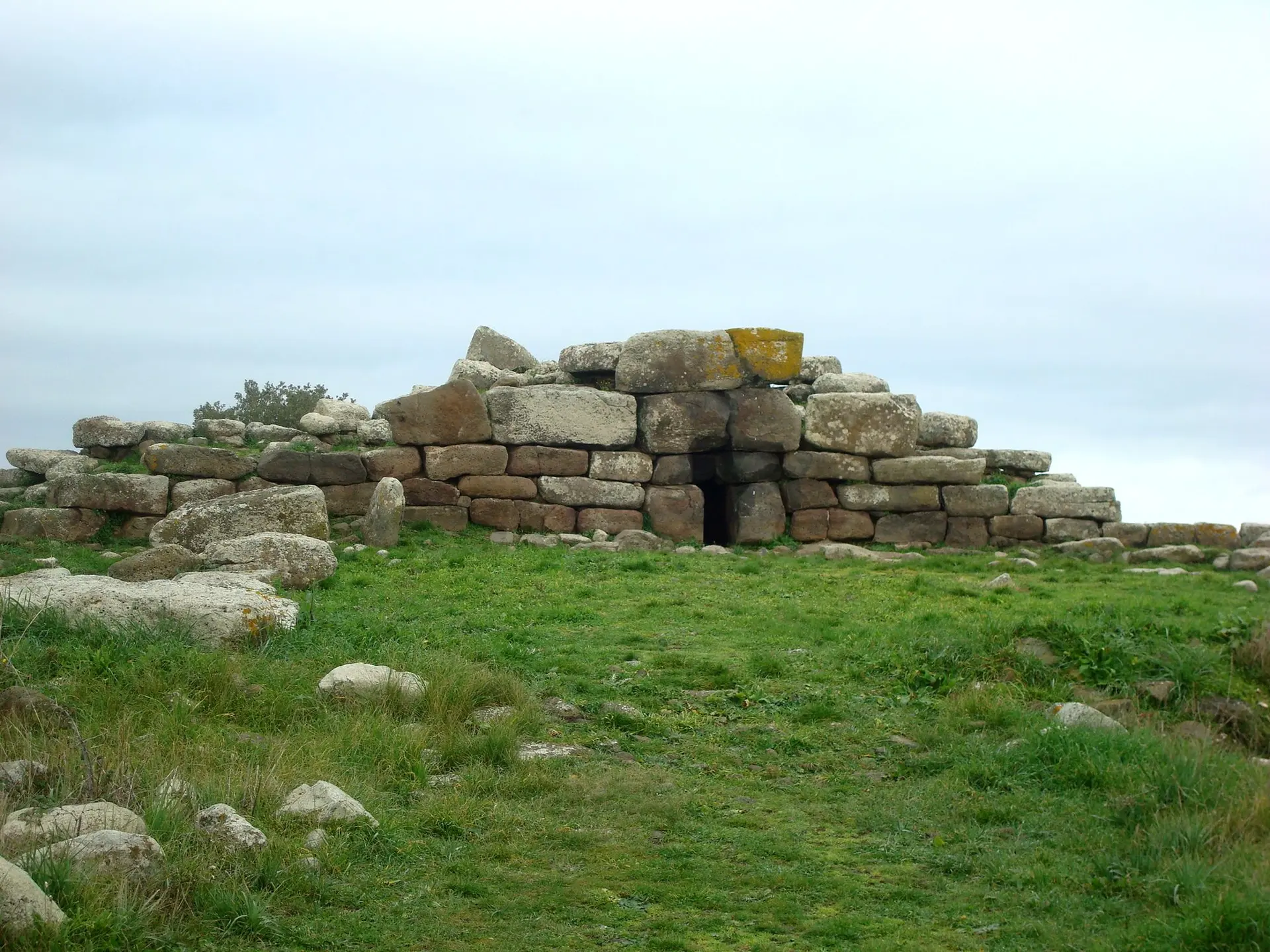
Image of Giants' Grave of Sa Domu e s'Orcu. Image source · CC-BY-SA-4.0
Visit essentials
A quick read before you go
- Duration
- 30-45 minutes
- Access
- Near Siddi in the Marmilla region.
Overview
Sa Domu e s'Orcu, “House of the Ogre,” records later Sardinians' sense that this megalithic work exceeded ordinary human making; the ogre, like giants in other tomb names, represents the effort required to move such stones. Giants' graves are Nuragic Bronze Age collective tombs, built approximately 1600–1200 BCE. About 800 survive across Sardinia, with long galleries and curved façades. The semicircular exedra gave the living space to gather and honor those within.
Behind it, generations placed multiple community members in a shared corridor, keeping the departed connected even in death.
Why this place is sacred
The giants' grave tradition reveals Nuragic understanding of death as communal, ongoing, relational. Single burials isolate the dead; collective tombs connect them. The gallery that extends behind the exedra held not individuals but communities—generations who joined those who preceded them, creating an ever-growing company of ancestors.
The exedra facade is characteristic of giants' graves: a curved, semi-circular front that creates enclosed outdoor space. This is where the living gathered—for funerals, for commemorations, for whatever rites maintained relationship between the quick and the dead. The architecture separated inside from outside, the realm of the departed from the realm of those who remained.
A central stele often marks the boundary. The tall stone at the exedra's center created a focal point, a threshold between worlds. At Sa Domu e s'Orcu, as at other giants' graves, this stele announced the transition from gathering space to burial corridor.
The name 'House of the Ogre' belongs to a pattern. Across Sardinia, giants' graves bear names that attribute their construction to supernatural beings: giants, ogres, fairies, paladins. The names acknowledge what visitors feel: that ordinary humans could not have created such monuments. Whether this represents folk memory of actual builders or simply recognition of superhuman scale, the pattern is consistent.
Approximately 800 giants' graves have been discovered in Sardinia. This frequency indicates not isolated practice but widespread tradition, a shared understanding across communities of how the dead should be housed. The builders of Sa Domu e s'Orcu participated in something larger than local custom—a Bronze Age funerary culture that marked the entire island.
Nuragic collective tomb for multiple generations. Exedra facade for ritual gatherings. Gallery for burial of community members. Part of Bronze Age funerary tradition.
Bronze Age (approximately 1600-1200 BCE): Tomb constructed and used. Later periods: Continued local memory, name 'House of the Ogre.' Modern era: Archaeological study.
Experience and orientation
The approach to Sa Domu e s'Orcu leads through the Marmilla landscape—rolling agricultural land in southern-central Sardinia. The region's fertility supported Bronze Age civilization; the tomb stands as reminder that this has long been inhabited country.
The megalithic structure appears amid the fields. The exedra facade curves outward, creating the semi-circular gathering space characteristic of giants' graves. Standing in this space, you occupy ground where Nuragic communities gathered for funerary rites—the liminal zone between the living world and the corridor of the dead.
The gallery extends behind the facade. This is where the collective burials occurred, where generation after generation joined those who preceded them. The long corridor, roofed with massive slabs, created passage from the light of the exedra to the darkness where the ancestors lay.
The construction demonstrates Bronze Age engineering. The stones were quarried, transported, and fitted by communities who understood their materials and their purpose. The result has endured over three millennia—testimony to the skill of builders whose names we will never know.
The name 'House of the Ogre' adds folk dimension to the archaeological encounter. Later Sardinians, confronting a monument they did not build and could not easily explain, attributed it to supernatural beings. The name acknowledges appropriate wonder: something extraordinary happened here.
Sa Domu e s'Orcu is located in the Marmilla region of southern-central Sardinia, near the town of Siddi.
Context and lineage
During the Bronze Age, Nuragic communities across Sardinia built megalithic gallery graves for their collective dead. Near what is now Siddi in the Marmilla region, they constructed Sa Domu e s'Orcu—creating an exedra facade where the living could gather and a long gallery where generations of the dead would accumulate. Later Sardinians, encountering the monument, named it the 'House of the Ogre,' attributing to supernatural beings what ordinary humans seemed unable to achieve.
Built by Nuragic civilization. Part of giants' grave tradition (~800 known examples). No descendant tradition preserves original practices.
Traditions and practice
Collective burials in gallery. Funerary gatherings at exedra. Ancestor commemoration over generations.
Archaeological site visitation.
Stand in the exedra to experience the gathering space. Consider the collective nature of the burials—communities joined in death. Appreciate the megalithic construction that has endured three millennia.
Nuragic Burial Tradition
HistoricalSa Domu e s'Orcu exemplifies the giants' grave tradition—approximately 800 collective tombs across Sardinia where Bronze Age communities housed generations of their dead.
No longer practiced. Archaeological evidence indicates collective burial with gatherings at the exedra facade.
Perspectives and open questions
Sa Domu e s'Orcu offers encounter with Nuragic collective burial tradition—a megalithic gallery grave where Bronze Age communities housed generations of their dead.
Scholarly perspective
Giants' graves are Nuragic Bronze Age collective tombs, approximately 800 known in Sardinia. Characteristic exedra facade with burial gallery. Used for multi-generational collective burial.
Living and traditional perspectives
Local tradition names the tomb 'Sa Domu e s'Orcu' (House of the Ogre), attributing construction to supernatural beings.
Alternative interpretations
The exedra has been interpreted as creating ritual space for ancestor communion.
Open questions
The specific burial rituals. The ceremonies at the exedra. The identity of those interred.
Plan your visit
Access and arrival
Near Siddi in the Marmilla region. Car recommended.
Accommodations in Marmilla region.
Respectful visit
No dress code.
Photography permitted.
None; archaeological site.
Respect archaeological structure
Check locally for access information.
Current practical details
Address
SP44, 09020 Siddi VS, Italy
Hours
Hours, fees, and access can change — verify on the official source before you travel. Practical details last checked Jun 2026.
Location
Map loads as you approach this section.
Pilgrim reflections
A portrait of encounter, not a score
Pilgrims describe what they felt, how present they could become, and whether the place would shape a journey. There are no stars and no ranking of traditions.
No reviewed reflections yet
The first pilgrims can help describe the character of being here.
Share a reflection
Available after an account-backed “Been there.” Every reflection is reviewed before publication.
Nearby sacred places
Explore other sacred places in the region. Proximity does not establish access or travel time; check each place’s guidance.

Photo gallery
2 curated photos
Share a photo
Help visitors recognize Giants' Grave of Sa Domu e s'Orcu. Every submission is reviewed before publication.