Edfu
Where myth became architecture—the falcon god's victory over chaos preserved so completely you can walk his sacred path
Understand sacred places, explore living traditions, and learn how to engage respectfully with Pilgrim Map.
Access has not been verified. Check current local guidance before planning a visit.
Idfu City, Aswan, Egypt

Visit essentials
A quick read before you go
- Duration
- 1-2 hours depending on depth of interest and whether engaging a guide.
- Access
- Located on the west bank of the Nile in the town of Edfu, approximately 115 km south of Luxor…
Overview
Edfu survived because desert sand and Nile silt buried it so completely that villagers built homes above the debris, unaware of the temple below. Auguste Mariette's 1860 excavation revealed an exceptionally intact processional path from bright courtyard to dark sanctuary.
Construction lasted 180 years, from the first stone in 237 BCE to Lebanese cedar doors installed in 57 BCE, across six Ptolemaic rulers. Its faithful pharaonic form helped the Greek Ptolemies legitimise their rule. The Edfu Texts identify the temple with the Island of Creation, the primordial mound rising from infinite waters: building it recreated the world, and sustaining its rites maintained cosmic order.
Why this place is sacred
The Edfu Texts state clearly what this temple was: not a representation of sacred reality but sacred reality itself. According to Egyptian theology, the universe began as infinite waters—Nun—from which emerged a mound, the Island of Creation. Here the first gods took form and established the first shrine. Every subsequent temple was understood as recreating this primordial space, but Edfu makes the claim explicit in inscriptions covering nearly every surface.
The Building Texts describe Seven Sages, divine beings who survived a great flood that destroyed their original homeland, who came to the Island of Creation bearing knowledge of how temples should be built. They established the prototype, and all sacred architecture follows their plan. Each column, each doorway, each ritual space corresponds to features of that original shrine. When the Ptolemaic builders laid stones at Edfu, they understood themselves as participating in cosmogony—the ongoing creation of the world.
Edfu was also the site of Horus's victory over Seth. The cosmic conflict between the falcon god and the lord of chaos determined whether order or disorder would govern existence. Horus's triumph established the template for legitimate rule: the pharaoh as living Horus, maintaining Ma'at through divine authority. Every year, priests enacted this victory in the Festival of Victory, harpooning Seth in hippopotamus form. The performance was not commemorative. It was operational—each enactment renewed the cosmic victory.
Visitors today walk through a space conceived as the Island of Creation itself, where the prototype of legitimate authority was established, where chaos was defeated and bound, where the very structure holds reality together.
The temple served as the principal cult center of Horus of Behdet (Horus the Behdetite), housing the divine triad of Horus, Hathor of Dendera, and their son Harsomtus. It functioned as a site for maintaining cosmic order through daily rituals and major festivals, as a destination for the sacred marriage between Horus and Hathor, and as the location of the annual Festival of Victory where the triumph of order over chaos was ritually renewed.
The site held sacred significance long before the Ptolemaic temple. Fragments suggest earlier structures under New Kingdom pharaohs Ramesses I, Seti I, and Ramesses II, though oriented east-west rather than north-south. The Ptolemaic temple, begun in 237 BCE, took 180 years to complete through six successive reigns. Active worship continued until the late 4th century CE when Emperor Theodosius banned pagan practice. The temple was then abandoned, gradually buried by sand and silt over centuries.
This burial preserved the structure in extraordinary condition. Auguste Mariette began excavation in 1860, revealing Egypt's best-preserved temple. Since 1986, the German Edfu Project has systematically translated the Edfu Texts, providing unprecedented access to ancient Egyptian theology.
Experience and orientation
The approach announces scale. The entrance pylon rises 36 meters, its twin towers framing a gateway that once held Lebanese cedar doors. Relief carvings show the pharaoh smiting enemies before Horus—the conventional image of divine kingship that adorned every Egyptian temple. But at Edfu, the carvings remain sharp, the proportions commanding. What other sites suggest through fragments, Edfu declares complete.
Beyond the pylon, the open court blazes with Upper Egyptian sunlight. Colonnades line the sides, their column capitals carved with varying floral designs. The walls carry the Edfu Texts—inscriptions so dense they required the German Edfu Project decades to translate. Somewhere among these signs is preserved the oldest complete play surviving from antiquity: The Triumph of Horus, the sacred drama performed during the Festival of Victory.
Through successive doorways, the space darkens. The first hypostyle hall holds 18 columns beneath a ceiling lost to darkness. The second hall narrows further. By the time visitors reach the innermost sanctuary—where the cult statue of Horus once resided—they have journeyed from full desert sun to near-total darkness. This was the point. Ancient Egyptian temples were machines for this transition, moving worshippers from the profane world of light into the divine presence dwelling in darkness.
What makes Edfu singular is experiencing this transition complete. At ruined temples, visitors must imagine the roofing, the progression, the darkness. At Edfu, the darkness remains.
Enter through the main pylon and take time in the open courtyard to observe the relief carvings and inscriptions. Allow your eyes to adjust as you move through successive hypostyle halls toward the sanctuary. Notice the ceiling height decreasing and light levels falling as you progress inward. The sanctuary itself may require a moment of stillness to appreciate—the darkness is the point.
The mammisi (birth house) to the left of the entrance deserves separate attention for its reliefs depicting the divine birth of Harsomtus. Consider visiting in the early morning when crowds are smaller and the atmospheric progression from light to dark is most affecting.
Context and lineage
The Edfu Texts preserve a creation narrative. Before time, only Nun existed—the infinite primordial waters. From these waters emerged a mound, the Island of Creation, where the first gods took form. Seven Sages came to this island, survivors of a flood that destroyed their original homeland, bearing knowledge of sacred architecture. They established the first shrine, and all subsequent temples are recreations of this prototype.
The temple's Building Texts describe each architectural element as corresponding to features of that original sacred space—the construction of Edfu was literally the reconstruction of the world's origin.
The Horus-Seth mythology layers onto this cosmogonic foundation. Edfu was the site where the falcon god Horus finally defeated Seth, the lord of chaos. This victory established the model for legitimate kingship: the pharaoh as living Horus, maintaining order through divine authority. The temple preserves the script for The Triumph of Horus, the sacred drama enacted during the Festival of Victory, possibly the oldest complete play in human history.
Horus worship at Edfu predates the Ptolemaic temple by millennia. The region associated with the falcon god since at least the Old Kingdom. Earlier New Kingdom structures on the site—oriented east-west and possibly including building programs under Ramesses I, Seti I, and Ramesses II—were replaced by the Ptolemaic temple with its north-south axis. The Ptolemaic construction connected Greek rule to this deep history, presenting the Ptolemies as legitimate continuators of pharaonic religion.
The temple's theology, expressed in the Edfu Texts, synthesized and codified traditions reaching back to Egypt's earliest dynasties while serving the contemporary purpose of legitimizing foreign rule.
Horus of Behdet
Deity
Hathor of Dendera
Deity
Harsomtus
Deity
Ptolemy III Euergetes
Builder
Auguste Mariette
Archaeologist
Traditions and practice
The Festival of Victory (Hab Nakhtet) fell in early January, commemorating Horus's defeat of Seth through a sacred drama. Priests enacted The Triumph of Horus—possibly the oldest complete play surviving from antiquity—harpooning Seth in hippopotamus form. Whether the target was a real hippopotamus or an effigy remains debated. The performance renewed the cosmic victory of order over chaos, with the pharaoh participating as the living Horus.
The Feast of the Joyous Union celebrated the sacred marriage of Horus and Hathor over 15 days. Hathor's statue departed Dendera by boat, sailing upriver for 14 days. Her arrival at Edfu inaugurated celebrations: feasting, drinking, music, visits to ancestral burial mounds, and rituals uniting the divine couple. On the 14th day, Hathor returned to Dendera, the cosmic harmony renewed through sacred marriage.
The Festival of the Living Falcon annually crowned a sacred falcon—raised within the temple precincts—as the living manifestation of Horus and the reigning pharaoh. Through an oracle, the statue of Horus selected his successor, renewing royal authority through divine choice.
Daily rituals maintained the cult: the opening of the sanctuary at dawn, purification rites, presentation of offerings, the clothing and adornment of the cult statue. These practices continued for roughly four centuries until Emperor Theodosius banned pagan worship.
No religious practices occur at Edfu today. The temple functions as an archaeological site visited primarily by tourists, many arriving on Nile cruises for which Edfu is a standard stop. Visitors walk the processional route and examine reliefs and inscriptions with the assistance of guides who provide historical and mythological context.
Walk the processional path slowly, allowing time for the atmospheric shift from bright courtyard to dark sanctuary. This progression was the point of Egyptian temple architecture—the journey from profane world to divine presence. In the sanctuary, where the cult statue once resided, stand in the darkness and consider what it meant for ancient worshippers to reach this innermost space. Notice the density of inscriptions: the Edfu Texts preserve theological knowledge available nowhere else.
The mammisi deserves separate contemplation—its reliefs depicting divine birth connected royal legitimacy to cosmic origins. If timing permits, experience the temple at different hours: morning light creates different relationships with the stone than afternoon shadows.
Ancient Egyptian Religion
HistoricalEdfu served as the principal cult center of Horus of Behdet, the falcon god in his local form. The site marked where Horus defeated Seth in their cosmic battle—the conflict between order (Ma'at) and chaos (Isfet) that determined the universe's fate. The temple housed the divine triad: Horus, Hathor of Dendera, and their son Harsomtus. Its architecture was understood as recreating the Island of Creation, the primordial space where the first gods established the first shrine.
Three major festivals defined the ritual year. The Festival of Victory (January) commemorated Horus's triumph through a sacred drama—possibly the oldest complete play surviving from antiquity—in which priests enacted the harpooning of Seth. The Feast of the Joyous Union (15 days in summer) celebrated the sacred marriage with Hathor, whose statue arrived by boat from Dendera. The Festival of the Living Falcon crowned a sacred falcon as Horus's manifestation. Daily rituals maintained the cult through offerings, purifications, and the ceremonial tending of the cult statue.
Ptolemaic Egyptian Religion
HistoricalThe Ptolemaic rulers, though Greek in origin, built Edfu in traditional Egyptian style to legitimize their rule. The temple represents this cultural synthesis at its most complete—pharaonic conventions followed in every detail by Greek-speaking patrons. The Edfu Texts codify ancient theology while the temple's construction connected Ptolemaic authority to millennia of sacred tradition. Building the temple was a political act: foreign rulers demonstrating they could fulfill pharaonic obligations to the gods.
Ptolemaic priests maintained the ancient festival calendar while integrating Edfu into their administrative network. The sacred marriage festival connected the temple to Dendera, creating ritual geography that bound cult centers across Upper Egypt. The detailed Building Texts may reflect Ptolemaic-era systematization of older traditions—an attempt to preserve and codify Egyptian theology that produced our most comprehensive source for ancient religious understanding.
Perspectives and open questions
The Temple of Edfu invites multiple interpretations: scholarly analysis of Ptolemaic religious policy, theological reconstruction of ancient Egyptian cosmology, and alternative readings that find in the Edfu Texts evidence of deeper antiquity. The temple's exceptional preservation makes it central to all these approaches.
Scholarly perspective
Egyptologists recognize Edfu as the best-preserved temple in Egypt and an invaluable source for understanding ancient religion. The Edfu Texts, comprehensively studied since the German Edfu Project began in 1986, provide information on temple theology, ritual practice, and mythology unavailable elsewhere. The sacred drama The Triumph of Horus is considered the oldest complete play surviving from antiquity. The Building Texts—describing the temple as recreation of the Island of Creation—reveal how Egyptians understood sacred architecture as cosmogonic participation.
The temple's 180-year construction under six successive Ptolemaic rulers demonstrates the dynasty's commitment to traditional Egyptian religion as a legitimizing strategy. Though built by Greek-speaking pharaohs, the temple follows pharaonic conventions so faithfully that only inscriptional evidence reveals its Ptolemaic date.
Living and traditional perspectives
Ancient Egyptian understanding held that the Temple of Edfu was not a representation of cosmic order but its active maintenance. The daily rituals, annual festivals, and the temple's very existence held the universe together. The Horus-Seth mythology enacted in the Festival of Victory was not commemorative but operational—each performance was a real victory over chaos. The temple as Island of Creation meant that its construction was cosmogony, the literal building of the world.
The sacred marriage of Horus and Hathor renewed fertility and cosmic harmony. The pharaoh, as living Horus, derived his authority from this place where the prototype of legitimate kingship was established. To neglect the temple's rituals was to risk the dissolution of order into chaos.
Alternative interpretations
Some researchers interpret the Edfu Texts' references to Seven Sages and the destruction of their original homeland as evidence of a pre-flood civilization. The Island of Creation and primeval mound are sometimes connected to theories about Atlantis or advanced prehistoric cultures. The Building Texts' detailed architectural instructions are occasionally read as encoding astronomical or geodetic information. Contemporary seekers interested in ancient mystery traditions sometimes view Edfu as preserving initiatory knowledge in architectural form.
These interpretations diverge significantly from scholarly consensus, which treats the texts as mythological rather than historical records of actual events.
Open questions
Genuine mysteries persist despite the temple's excellent preservation. The precise nature of the Festival of Victory's sacred drama remains unclear—whether real hippopotami were harpooned or only effigies, and how the performance unfolded. The complete meaning of the creation mythology preserved in the Edfu Texts and its relationship to other Egyptian cosmogonies continues to be studied. The exact appearance of the original cult statue of Horus—and its fate after the temple's abandonment—remains unknown.
How the mammisi rituals related to actual royal births and coronations is incompletely understood. The full significance of the temple's astronomical alignments and ceiling decorations awaits further research.
Plan your visit
Access and arrival
Located on the west bank of the Nile in the town of Edfu, approximately 115 km south of Luxor and 105 km north of Aswan. Most visitors arrive on Nile cruise ships—Edfu is a standard stop on Luxor-Aswan itineraries. Horse-drawn carriages (calèches) transport visitors from the riverbank or town center to the temple; agree on price before departure. Independent travelers can reach Edfu by road from Luxor (2-2.5 hours) or Aswan (1.5-2 hours).
Entry fees vary by source (100-450 EGP reported for foreign adults)—verify current prices. Open daily approximately 6:00 AM to 5:00 PM with possible seasonal variation.
Edfu has limited tourist accommodations, as most visitors arrive on Nile cruises that provide housing. Some basic hotels exist in Edfu town for independent travelers. Day trips from Luxor or Aswan are common alternatives.
Respectful visit
No strict dress code applies, though modest clothing is recommended both for cultural respect and practical comfort. The site offers limited shade, making sun protection essential—hats, light long sleeves, and sturdy comfortable shoes for walking on uneven surfaces.
Handheld photography is generally permitted throughout the temple. Tripods, professional video equipment, and drones may require special permits or be prohibited. Flash photography may be restricted in certain areas with painted reliefs. Always check for current signage or ask a guard about specific restrictions.
Not expected or traditional at this archaeological site.
Do not touch reliefs, inscriptions, or carvings. Do not climb on structures. Stay on marked pathways. Some areas may be restricted for ongoing conservation work. The inner sanctuary has limited lighting—proceed carefully.
Midday heat can be intense, and shade is limited outside the temple proper. The atmospheric darkness of the inner halls requires time for eyes to adjust—proceed carefully on uneven surfaces. Horse-drawn carriage rides from the riverbank can be negotiated but may involve persistent touts; agree on price before departure.
Current practical details
Address
Edfu, Adfo, Edfu, Aswan Governorate, Egypt
Hours, fees, and access can change — verify on the official source before you travel. Practical details last checked Jun 2026.
Location
Map loads as you approach this section.
Pilgrim reflections
A portrait of encounter, not a score
Pilgrims describe what they felt, how present they could become, and whether the place would shape a journey. There are no stars and no ranking of traditions.
No reviewed reflections yet
The first pilgrims can help describe the character of being here.
Share a reflection
Available after an account-backed “Been there.” Every reflection is reviewed before publication.
Nearby sacred places
Explore other sacred places in the region. Proximity does not establish access or travel time; check each place’s guidance.
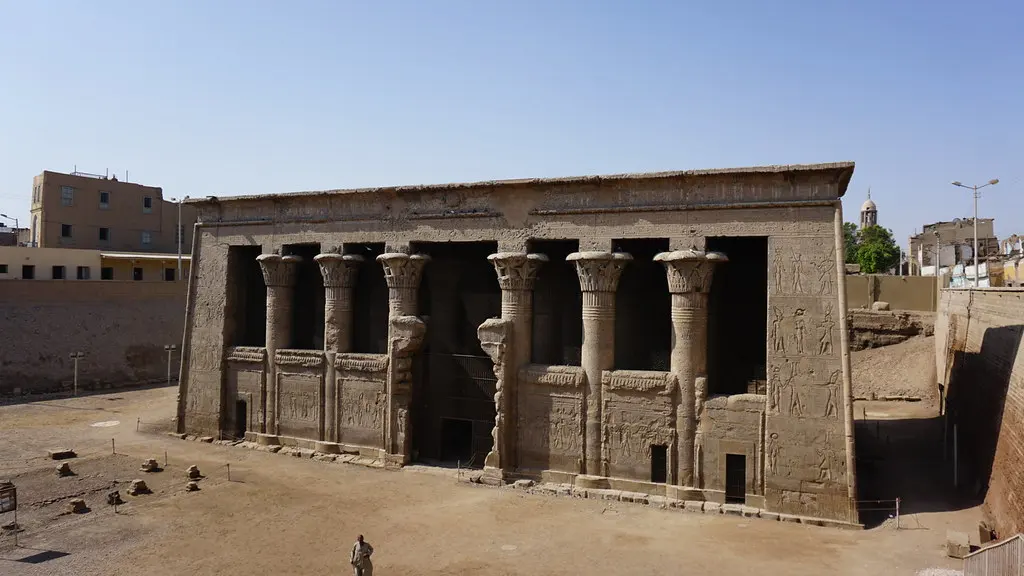
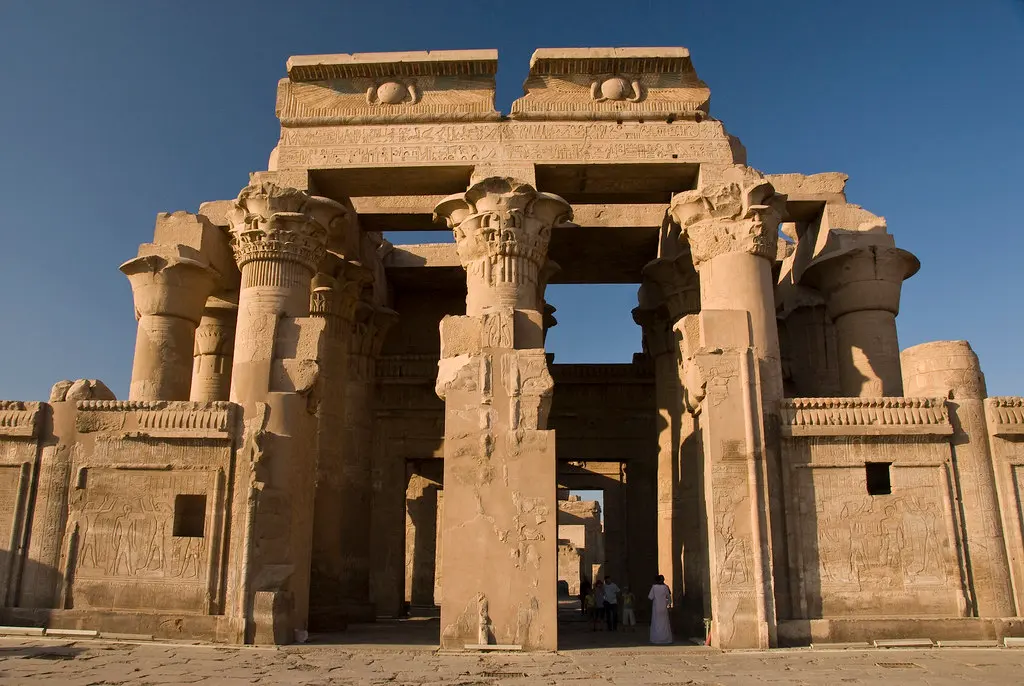

Photo gallery
3 curated photos
Share a photo
Help visitors recognize Edfu. Every submission is reviewed before publication.