Daorson Illyrian City
An Illyrian acropolis where Greek myth and Balkan stone converge above the Neretva
Understand sacred places, explore living traditions, and learn how to engage respectfully with Pilgrim Map.
Access has not been verified. Check current local guidance before planning a visit.
Stolac, Herzegovina-Neretva, Bosnia and Herzegovina
Read the sources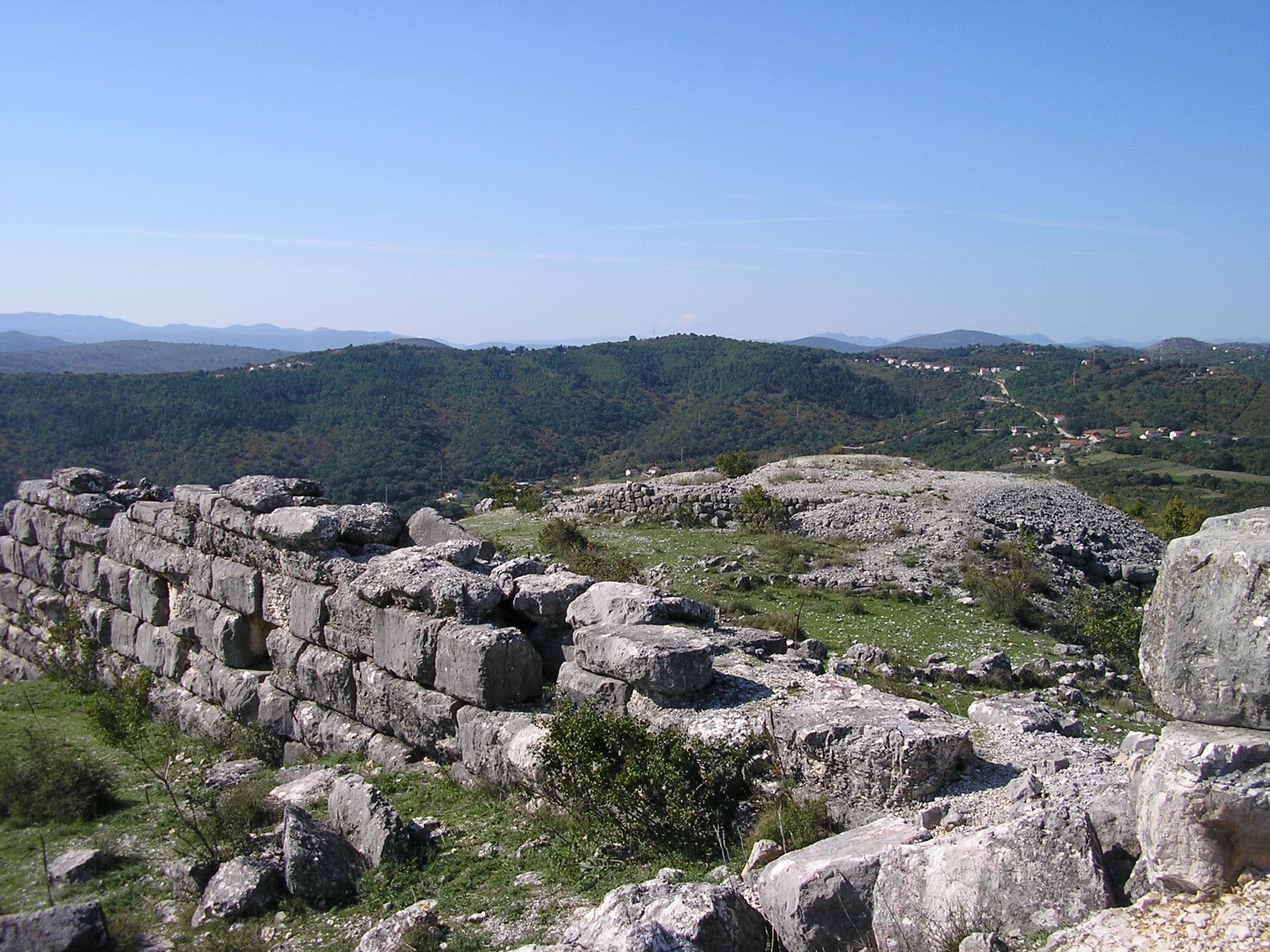
Image of Daorson Illyrian City. Image source · CC-BY-3.0
Visit essentials
A quick read before you go
- Duration
- One to two hours for a thorough visit to Daorson alone.
- Access
- Daorson is located at Ošanići, approximately 5 km from Stolac, reached via a 10-minute drive on…
Overview
Daorson does not hold its significance lightly. Its acropolis walls use stones so large and precisely fitted that visitors compare them to Mycenae. This was the Daorsi capital: an Illyrian people traded with Greeks, adopted their alphabet, minted coins, and vanished from history when Roman legions burned the city in the first century before the common era. Massive, unrestored walls have held the hilltop for over two thousand years.
Inside, archaeologists found a bronze helmet bearing Aphrodite, Nike, Helios, and Dionysus; granite fragments of Cadmus and Harmonia, whose son named all Illyrian peoples; and a relief of thirteen snakes and five pairs of eagle wings whose meaning remains lost. Daorson is neither reconstructed nor curated for comfortable consumption. On a Herzegovina hilltop, a civilization's bones remain in open air for anyone willing to climb and sit among them.
Why this place is sacred
The hilltop matters. The Daorsi chose this ridge above the Neretva for reasons that were simultaneously strategic and symbolic. Across the ancient Mediterranean, elevated sites served double duty as defensible positions and as places where the boundary between human and divine worlds thinned. The acropolis at Daorson follows this pattern. Its walls enclose both the administrative heart of a tribal state and the religious buildings where that state sought contact with forces larger than itself.
The cyclopean masonry itself carries a charge. Stones of this scale, fitted without mortar, produce an effect that transcends architectural appreciation. They speak of collective labor organized around something important enough to warrant the effort. At Mycenae, visitors feel this. At Tiryns, they feel it. At Daorson, far from the tourist circuits that smooth such encounters into manageable experiences, the effect arrives unfiltered.
The convergence of traditions deepens the site's resonance. Illyrian polytheism, with its hilltop sanctuaries and solar symbolism, met Greek mythology here in a way that was neither conquest nor submission but something more fluid. The Daorsi did not simply adopt Greek culture. They wove it into their own, producing a syncretism whose full character scholars are still working to understand.
The sculptural fragments of Cadmus and Harmonia, the serpent-and-eagle reliefs, the Greek inscriptions on Illyrian coins — these are traces of a civilization that held multiple sacred frameworks without apparent contradiction.
And then there is the silence. Daorson receives a fraction of the visitors that comparable Mediterranean sites draw. On most days, you will be alone on the hilltop, with the Neretva valley spreading below and the Herzegovina sky overhead. The absence of interpretation panels, audio guides, and gift shops is not a deficiency. It is a condition that allows the site to speak in its own register.
Archaeological evidence identifies Daorson as the political, economic, and religious capital of the Daorsi, who flourished from the fourth to the first century before the common era. The acropolis housed the main public and religious buildings of the settlement. The presence of sculptural fragments depicting Cadmus and Harmonia has led scholars to propose that the site contained a sanctuary dedicated to the mythic ancestors of the Illyrian people, though this remains interpretive rather than confirmed.
Coins bearing the image of Redon, tutelary deity of sailors and travelers, confirm that religious life was woven into civic identity. The hilltop was not merely a fortress. It was the place where a people enacted their understanding of who they were and what powers shaped their world.
Roman legions destroyed Daorson in the mid-to-late first century before the common era, during campaigns against the Delmati. The city was never rebuilt. For two millennia, the hilltop at Ošanići held its stones in silence, known to local communities but invisible to wider scholarship.
Archaeological work began in the 1960s, with major excavations led by Z. Marić between 1967 and 1972. These campaigns uncovered the bronze helmet, the coin-minting workshop, pottery fragments with Greek graffiti, and the sculptural remains that transformed understanding of Illyrian civilization. The site was designated a National Monument of Bosnia and Herzegovina and included in the broader Stolac ensemble on UNESCO's Tentative List.
The 1990s Bosnian War brought destruction to the Stolac region, though specific damage to the archaeological site is not well documented. Today, Daorson exists in a state between excavation and abandonment — partially uncovered, unrestored, open to anyone who finds their way to it.
Experience and orientation
The first thing that strikes visitors is the walls. Photographs do not prepare for the scale of the stones or the precision with which they are fitted. These are not rough piles of rubble but carefully shaped blocks, some weighing several tons, locked together without mortar in a technique that has held for twenty-four centuries. The instinct to reach out and touch them is strong.
The stone is warm in summer, cool in autumn, and textured in a way that registers something older than any category the mind offers.
The second thing is the emptiness. Daorson is unstaffed. There is no ticket booth, no visitor center, no explanatory signage of substance. On most days, you will encounter no other visitors. This emptiness is the site's gift. Without the social performance that crowds demand — the posing, the narrating, the comparison with other places visited — what remains is the hilltop, the walls, the valley below, and whatever you bring.
Visitors describe a feeling of walking through deep history in a state that most archaeological sites have been curated out of. The stones have not been rearranged for legibility. The ground has not been cleared for pathways. You are encountering a place that is still, in some meaningful sense, as the last people to leave it found it — minus what time and archaeology have taken.
The panoramic view over the Neretva valley adds another dimension. The Daorsi chose this hilltop in part because it commanded the landscape. Standing where they stood, looking over the same river valley they traded along, produces a compression of time that is difficult to achieve at more heavily interpreted sites. The view has not changed. The river still flows. The mountains still hold the horizon.
Climb the path slowly. The approach is part of the experience, not a preamble to it. As the modern landscape falls away and the walls begin to appear through the vegetation, pay attention to the shift in atmosphere. The hilltop has a different quality from the road below — more exposed, more quiet, more present.
Once inside the walls, resist the urge to map the site systematically. Instead, find a stone to sit on and spend ten minutes doing nothing. Let the scale of the walls register. Let the silence settle. The Daorsi built this place over generations. It does not yield its character to a quick survey.
If you visit in late afternoon, the low-angle light transforms the texture of the cyclopean masonry, picking out the fitted edges and revealing the care with which each stone was shaped. This is the light in which the walls are most legible as intentional construction rather than geological accident.
Context and lineage
According to Greek mythology, Cadmus — the legendary Phoenician who founded Thebes and brought the alphabet to Greece — was exiled with his wife Harmonia and traveled to Illyria. There he became king of the Illyrians and fought alongside the Enchelii tribe. Their youngest son, Illyrius, gave his name to all the Illyrian peoples.
This founding myth carried particular weight at Daorson. Sculptural fragments of Cadmus and Harmonia were found at the acropolis, along with a relief featuring thirteen snakes and five pairs of eagle wings — symbols resonant in both Illyrian and Greek sacred traditions.
Whether the Daorsi understood themselves as literal descendants of Cadmus or whether the myth functioned as a charter linking Illyrian and Greek civilizations, the sculptural evidence suggests they venerated this narrative as part of their civic and sacred identity.
The myth is layered with transformation. In its later episodes, Cadmus and Harmonia are turned into serpents — a metamorphosis that may illuminate the serpent imagery found at Daorson. The thirteen snakes of the Illyrian relief may not be decorative. They may be ancestral.
The Daorsi inhabited the Neretva valley for centuries, building their civilization through trade with the Greek world while maintaining their Illyrian identity. Their adoption of Greek language, coinage, and religious iconography was not assimilation but creative adaptation — they took what served them and made it their own.
The peace treaty with Rome in 168/167 BCE gave the Daorsi a period of relative autonomy, during which they minted coins and continued to develop their capital. But Roman expansion was relentless. By the mid-to-late first century before the common era, the wars of Praetor Vatinius against the Delmati brought destruction to Daorson. The city was burned and its population scattered or absorbed.
For nearly two millennia, the hilltop held its ruins in silence. Archaeological work beginning in the 1960s began to recover what had been lost, revealing a civilization far more sophisticated than earlier scholarship had assumed. The finds at Daorson transformed the understanding of Illyrian culture, demonstrating a degree of Hellenization and cultural complexity that challenged narratives of the Illyrians as peripheral barbarians.
Cadmus and Harmonia
mythological
The mythic couple whose exile to Illyria produced Illyrius, legendary ancestor of all Illyrian peoples. Sculptural remains at Daorson suggest the Daorsi maintained a sanctuary or veneration site dedicated to them on the acropolis.
Redon
deity
Tutelary deity of sailors and travelers, depicted on Daorsi coins wearing a petasos (traveler's hat). Redon's presence in the coinage confirms that religious identity was embedded in civic life at Daorson.
King Ballaios
historical
Illyrian king whose image appears on 29 coins found in Daorson's minting workshop. After the peace treaty with Rome in 168/167 BCE, the Daorsi began issuing coinage featuring Ballaios, a sign of political autonomy and cultural confidence.
Z. Marić
archaeologist
Lead researcher of the major archaeological excavation campaign at Daorson between 1967 and 1972, which uncovered pottery fragments with Greek graffiti and significantly advanced understanding of the Daorsi civilization.
The Daorsi
historical
The Hellenized Illyrian tribe who built Daorson as their capital in the Neretva valley. They adopted the Greek alphabet and language, maintained trade networks with the Greek world, and produced a syncretic culture that blended Illyrian and Hellenic sacred traditions.
Traditions and practice
The Daorsi practiced a form of Illyrian polytheism that included animal sacrifice performed at sanctuaries and natural settings such as caves and groves. Divination was central to their religious life: augury through the interpretation of bird flight, extispicy through the examination of animal entrails, and lot-casting. Priests or priestesses oversaw these rites.
The deer held particular significance as a solar symbol and sacrificial animal. Hilltop round temples dedicated to sun worship have been documented across Illyrian territory, and the acropolis at Daorson likely housed such a sanctuary. The veneration of Redon, protector of sailors and travelers, connected the Daorsi's religious life to the maritime trade networks that sustained their economy.
With Hellenization came the adoption of Greek mythological iconography. The decorated bronze helmet found at Daorson depicts Aphrodite, Nike, Helios, Dionysus, a Muse, and Pegasus — a constellation of figures that suggests either syncretic worship or cultural prestige display, or both. The wine amphorae found throughout the site hint at symposium culture with its own ritual dimensions.
Stand at the base of the cyclopean walls and look up. Run your gaze along the fitted edges where stone meets stone without mortar. Twenty-four centuries of weather, war, and neglect have not dislodged them. Notice what this precision does to your sense of the people who built here. They are not abstract historical figures when their handiwork surrounds you at this scale.
Walk the perimeter of the acropolis walls before entering. The circuit takes perhaps fifteen minutes at a slow pace, and it allows the full dimensions of the fortification to register. The walls are not uniform — observe how the stone size and fitting technique vary along different stretches. Some sections feel almost organic, as though the wall grew from the bedrock.
Once inside, find the highest point and sit. The Neretva valley opens below, and on clear days the view extends deep into Herzegovina. The Daorsi commanded this landscape from here. Try to see it as they might have: not as scenery but as territory, trade route, and sacred geography all at once. The river was their connection to the Greek world. The mountains were the domain of forces they sought to appease and invoke.
If you have read about Cadmus and Harmonia before arriving, the acropolis gains another layer. Somewhere in this enclosure, the Daorsi may have maintained a sanctuary to their mythic ancestors — the Phoenician prince and his divine wife whose son became the father of all Illyrians. The serpent imagery found here takes on a different character when you know the myth: Cadmus and Harmonia were transformed into serpents at the end of their story.
The thirteen snakes of the Illyrian relief may be watching over their descendants still.
Illyrian Polytheism
HistoricalDaorson was the capital of the Daorsi, whose religious life centered on a pantheon of deities including Redon, tutelary god of sailors and travelers. The acropolis housed religious buildings and was likely a center of ritual activity including animal sacrifice, divination through augury and extispicy, and worship at hilltop sanctuaries. The deer held special significance as a solar symbol. Illyrian religion at Daorson was inseparable from civic identity — the same coins that bore the king's image also bore the god's.
Traditional practices included animal sacrifice in sanctuaries and natural settings, divination through bird-flight interpretation and examination of animal entrails, lot-casting, and ritual worship at hilltop round temples dedicated to sun worship. Priests or priestesses oversaw these rites. The specific forms practiced at Daorson are inferred from broader Illyrian religious evidence rather than site-specific documentation.
Hellenistic Greek Syncretism
HistoricalThe Daorsi's engagement with Greek culture produced a syncretic religious landscape at Daorson. The bronze helmet depicting Aphrodite, Nike, Helios, Dionysus, a Muse, and Pegasus suggests either ritual use of Greek mythological imagery or cultural prestige display with sacred dimensions. Wine amphorae and fine Greek ceramics found at the site indicate participation in symposium culture, which carried its own ritual character in the Greek world.
Practices included the use of Greek mythological iconography on ritual and prestige objects, trade in wine amphorae suggesting adoption of symposium culture, and possible adaptation of Greek religious festivals and civic rites. The degree to which Greek religious practice was formally adopted versus culturally absorbed remains uncertain.
Cult of Cadmus and Harmonia
HistoricalThe discovery of sculptural fragments of Cadmus and Harmonia at the acropolis, alongside an Illyrian relief featuring thirteen snakes and five pairs of eagle wings, has led scholars to propose a sanctuary dedicated to the mythic ancestors of the Illyrian people. The myth of Cadmus and Harmonia's exile to Illyria and their son Illyrius's founding of the Illyrian nation provided a charter linking the Daorsi to both Illyrian and Greek sacred traditions. This remains an interpretive hypothesis rather than a confirmed archaeological finding.
Evidence suggests possible sanctuary worship at the acropolis, sculptural veneration of Cadmus and Harmonia, and the use of serpent and eagle symbolism in ritual art. The transformation of Cadmus and Harmonia into serpents in the later myth may connect to the prominent serpent imagery found at the site.
Archaeological Scholarship and Conservation
ActiveSince the 1960s, Daorson has been the subject of sustained archaeological research that has fundamentally reshaped understanding of Illyrian civilization. The site's designation as a National Monument of Bosnia and Herzegovina and its inclusion in the UNESCO Tentative List as part of the Stolac ensemble reflect its recognized heritage value. Ongoing scholarly work continues to refine interpretation of the Daorsi's culture, religion, and relationship with the Greek and Roman worlds.
Archaeological excavation campaigns, most notably Z. Marić's 1967-1972 research program that uncovered 73 pottery fragments with Greek graffiti. Academic publication and debate on questions of cultural continuity, religious practice, and the site's relationship to broader Illyrian and Mediterranean archaeology. Conservation and heritage management efforts, including the National Monument designation.
Perspectives and open questions
Daorson sits at the intersection of several interpretive frameworks, none of which fully accounts for the site on its own. Mainstream archaeology, mythological scholarship, and alternative interpretations each illuminate different aspects of a place whose original meanings were never recorded in writing and cannot be fully recovered.
Scholarly perspective
Archaeological consensus identifies Daorson as the political, economic, and religious capital of the Daorsi, a Hellenized Illyrian tribe that flourished from the fourth to the first century before the common era. The cyclopean walls are dated to the fourth century BCE and reflect Mediterranean fortification traditions, likely influenced by Greek architectural knowledge acquired through trade.
The Hellenization of the Daorsi is among the best-documented cases in Illyrian archaeology. Coins bearing the Greek inscription ΔΑΟΡΣΩΝ, pottery fragments with Greek graffiti, and the bronze helmet with its Greek mythological program all demonstrate deep cultural engagement with the Hellenic world. The proposed sanctuary of Cadmus and Harmonia rests on the sculptural finds at the acropolis, but scholars note that this interpretation, while plausible, remains a hypothesis rather than a confirmed archaeological conclusion.
The academic paper on continuity between the Daorsi settlement and later Roman Municipium Diluntum raises questions about whether sacred use of the hilltop persisted beyond the destruction of the Illyrian city. An Illyrian necropolis found beneath the walls suggests the hilltop held significance before the Daorsi built their capital, pointing to a deeper stratigraphy of sacred occupation.
Living and traditional perspectives
The Illyrian peoples left no written literary tradition that survives. Their understanding of Daorson's sacred significance is therefore filtered almost entirely through Greek and Roman sources, which carried their own cultural assumptions. The myth of Cadmus and Harmonia as ancestors of the Illyrians was likely part of a syncretic framework where Greek colonists and Illyrian elites negotiated shared narratives.
The serpent-and-eagle iconography found at Daorson may represent indigenous Illyrian sacred symbols predating Greek contact. Serpents carried chthonic significance across the ancient Mediterranean, while eagles represented celestial powers. The specific configuration at Daorson — thirteen snakes, five pairs of eagle wings — suggests a symbolic system whose grammar has been lost. Whatever it meant, it mattered enough to carve in stone.
Alternative interpretations
Some alternative archaeology sources describe Daorson as a megalithic site with possible astronomical alignments and sacred geometry, comparing it to other megalithic traditions worldwide. The site has been called the Stonehenge of Bosnia and Herzegovina in popular media. These interpretations lack support in peer-reviewed archaeological literature and should be understood as speculative. No confirmed astronomical alignments have been documented at the site through mainstream research.
Alternative sources also propose earlier megalithic origins for the cyclopean walls, predating the fourth-century BCE dating accepted by mainstream archaeology. While the monumental scale of the masonry invites such speculation, the archaeological evidence consistently supports construction by the Daorsi within their documented period of occupation.
Open questions
Genuine mysteries persist at Daorson. The exact nature and extent of religious practice at the acropolis sanctuary remains unclear, as systematic excavation of the religious precinct has not been completed. The full meaning of the serpent-and-eagle relief iconography continues to be debated — whether these represent purely Illyrian sacred symbols, Greek-influenced imagery, or a syncretic tradition remains an open question.
Why the Daorsi adopted Hellenistic culture so thoroughly compared to neighboring Illyrian tribes is not fully explained. Was it proximity to Greek trade routes, the particular character of their elites, or something about the cultural openness of the Neretva valley itself?
The relationship between the older Illyrian necropolis found beneath the walls and the later Daorsi settlement raises further questions about continuity of sacred use of the hilltop — whether the Daorsi built their capital on ground already considered holy, or whether the earlier burial ground was coincidental to their choice of location.
Plan your visit
Access and arrival
Daorson is located at Ošanići, approximately 5 km from Stolac, reached via a 10-minute drive on gravel roads. Stolac is 30 km south of Mostar, 85 km south of Sarajevo, and 35 km north of the Croatian border. No public transport serves the site directly; a car or taxi from Stolac is required. The site has no entrance fee, visitor center, toilet facilities, or potable water. Mobile phone signal may be unreliable on the hilltop; check coverage before ascending.
The nearest settlement with reliable services is Stolac. No keyholder or booking is required — the site is open and accessible at all times. No seasonal closures apply, though winter conditions may make the access road and hillside path difficult. Check with local tourism offices in Stolac or Mostar for current road conditions.
Stolac offers limited accommodation options, primarily small guesthouses and private rooms. Mostar, 30 km to the north, provides a wider range of hotels and hostels at all price points and serves as the most practical base for visiting Daorson and the surrounding sites. There are no accommodations at or near the archaeological site itself.
Respectful visit
No formal requirements. Sturdy footwear with good grip is essential — the hillside path and the acropolis terrain are uneven, rocky, and sometimes slippery. In summer, sun protection and water are necessary, as the exposed hilltop offers no shade.
Photography is unrestricted throughout the site. The late afternoon light reveals the texture and scale of the cyclopean walls most effectively. Consider spending time simply looking before reaching for a camera.
No tradition of offerings exists at this site. Leave nothing behind.
None. The site is unstaffed, unfenced, and freely accessible year-round. This openness is a privilege that depends on visitors treating the ruins with care.
The terrain at Daorson is uneven, rocky, and unstaffed. There are no guardrails, marked paths, or emergency facilities on the hilltop. Watch your footing, particularly on the loose stones near wall foundations. Do not climb on or remove any stones or artifacts. The site's unrestored condition is both its character and its vulnerability.
Current practical details
Address
4W3G+JP9, Ošanjići, Bosnia and Herzegovina
Phone
Hours, fees, and access can change — verify on the official source before you travel. Practical details last checked Jun 2026.
Location
Map loads as you approach this section.
Pilgrim reflections
A portrait of encounter, not a score
Pilgrims describe what they felt, how present they could become, and whether the place would shape a journey. There are no stars and no ranking of traditions.
No reviewed reflections yet
The first pilgrims can help describe the character of being here.
Share a reflection
Available after an account-backed “Been there.” Every reflection is reviewed before publication.
Nearby sacred places
Explore other sacred places in the region. Proximity does not establish access or travel time; check each place’s guidance.
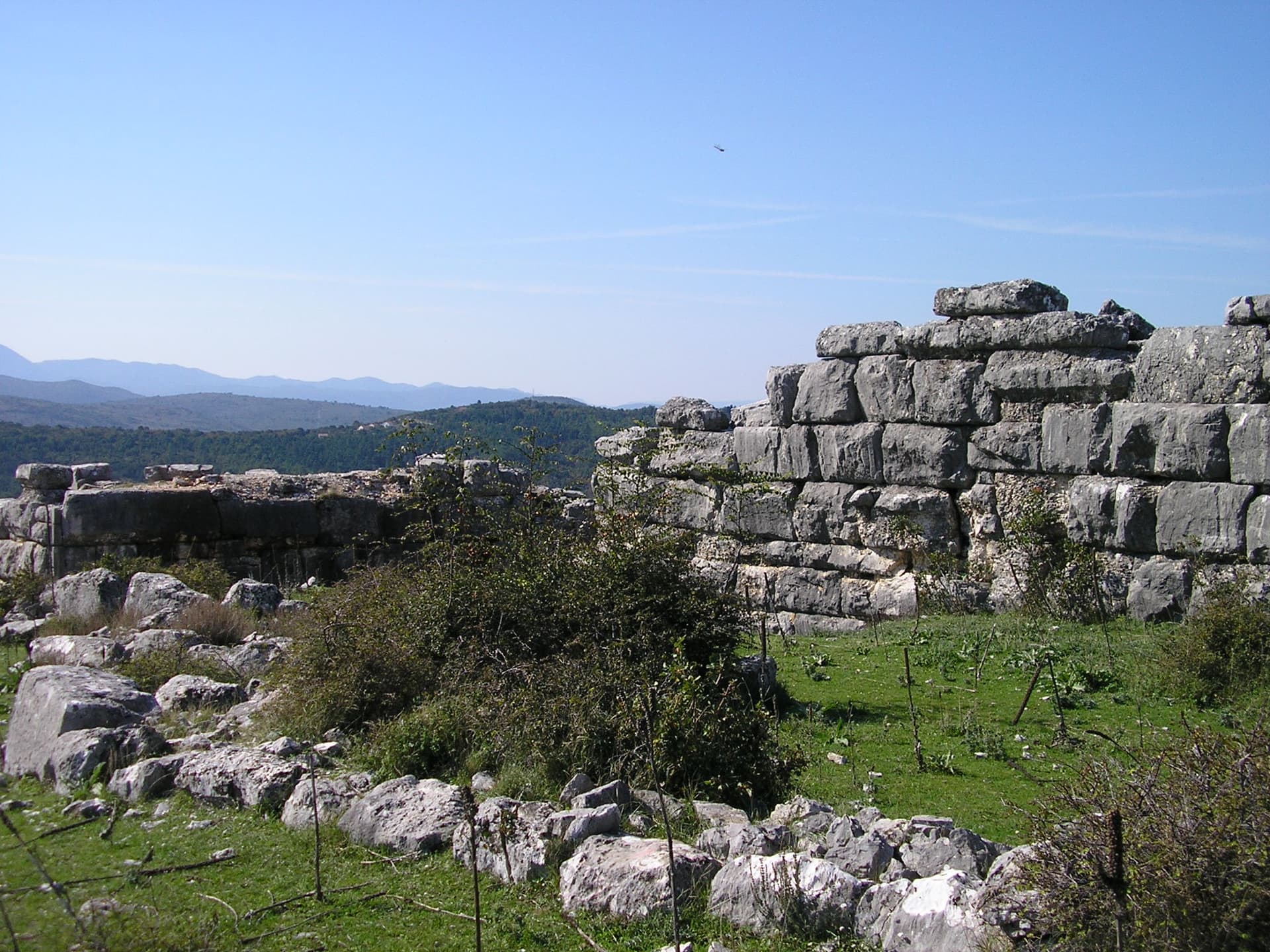
Daorson megalithic site, Bosnia
Poprati, Herzegovina-Neretva, Bosnia and Herzegovina
0.1 km away

Radimlja Stećak Necropolis
Near Stolac, Near Stolac, Herzegovina-Neretva Canton, Bosnia and Herzegovina
1.4 km away

Boljuni Stećak Necropolis
Boljuni, Boljuni, Stolac Municipality, Herzegovina-Neretva Canton, Bosnia and Herzegovina
9.5 km away

Žitomislić Monastery
Žitomislići, Žitomislići, Mostar, Herzegovina-Neretva Canton, Bosnia and Herzegovina
15.4 km away
References
Sources consulted for this page. Source categories describe the publication, not a guarantee that every claim is verified. Traditional accounts and outside interpretations may differ.
- 01The natural and architectural ensemble of Stolac — UNESCO World Heritage Centre — UNESCOofficialOfficial UNESCO Tentative List entry for the broader Stolac ensemble including Daorson
- 02The Daorsi, Daorson, Municipium Diluntum, and the Question of (Dis)continuity — Academia.edu publicationacademicPeer-reviewed academic paper on continuity of settlement
- 03Grafiti sa grčkih posuda iz razorenog ilirskog grada Daorson — Godišnjak Centra za balkanološka ispitivanja — Godišnjak academic journalacademicAcademic publication on graffiti found on Greek pottery vessels from Daorson
- 04Daorson — Wikipedia — Wikipedia contributorsacademicComprehensive overview with references to archaeological scholarship
- 05National monument near Stolac: The ancient Illyrian town Daorson — Visit B&H — Visit Bosnia & HerzegovinaofficialOfficial tourism portal with factual site description
- 06Illyrian city of Daorson — Herzegovina Wine Route — Herzegovina Wine RouteguideRegional heritage tourism resource
- 07Visiting Stolac, the Radimlja Necropolis & Megalithic Daorson — Sailingstone Travel — Sailingstone TravelguideDetailed visitor account with practical information
- 08Daorson — StolacX — StolacXofficialLocal heritage resource with archaeological detail
- 09Daorson megalithic site — Panacomp — PanacompguideTourism site with good factual overview
- 10Illyrian religion — Wikipedia — Wikipedia contributorsacademicOverview of Illyrian religious practices and deities
Share a photo
Help visitors recognize Daorson Illyrian City. Every submission is reviewed before publication.