Apparition Hill, Medjugorje
A rocky Herzegovinian hillside where millions have climbed toward something they cannot quite explain
Understand sacred places, explore living traditions, and learn how to engage respectfully with Pilgrim Map.
Access has not been verified. Check current local guidance before planning a visit.
Medjugorje, Herzegovina-Neretva, Bosnia and Herzegovina
Read the sources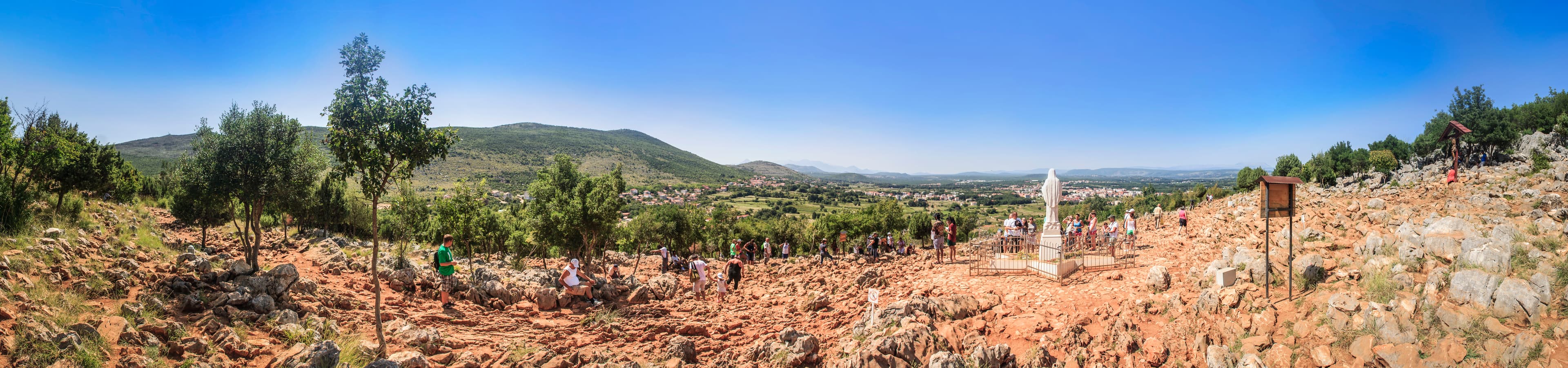
Image of Apparition Hill, Medjugorje. Image source · CC-BY-SA-4.0
Visit essentials
A quick read before you go
- Duration
- The climb takes thirty to forty minutes one way at a prayerful pace.
- Access
- The trailhead for Apparition Hill is a short walk from St.
Overview
Before 1981, Podbrdo was a barren shepherding slope. Then six teenagers said they saw a woman holding an infant among the boulders. That June afternoon remains a matter of faith and skepticism. After decades of investigation, the Vatican's careful position is that spiritual fruits are real and abundant while supernatural origin is neither confirmed nor denied. More than thirty million pilgrims have climbed. The thirty-to-forty-minute path has loose, uneven rocks, no shade, and a demanding Herzegovinian sun.
Bronze reliefs of the Rosary mysteries mark stations where prayer joins physical effort. At the summit, a white Virgin stands against open sky as pilgrims kneel on bare stone, weep, pray in a dozen languages, or share a silence shaped by collective intention. Whatever one believes about the apparitions, thirty million prayers have given the ground a density that resists easy naming.
Why this place is sacred
The hill itself offers nothing comfortable. No trees, no benches, no curated experience. Loose white rocks shift underfoot. The sun is relentless in summer, the wind bitter in winter. This austerity is not incidental to the site's spiritual quality; it is inseparable from it. The climb demands something of the body, and that demand creates an opening.
Pilgrims describe the ascent as a form of prayer that bypasses language. Each step becomes an act of intention. The bronze Rosary stations spaced along the path give structure to this intention, but many who climb are not Catholic, not even religious in any conventional sense. They come because something draws them, and the physical effort of arrival strips away the usual defenses.
What distinguishes Apparition Hill from other Marian pilgrimage sites is the claim of ongoing encounter. At Lourdes and Fatima, the apparitions belong to history. Here, three of the original six visionaries report daily apparitions continuing into the present day, over four decades after the first sighting. Whether one accepts this claim, it generates an atmosphere of immediacy that permeates the site. Pilgrims are not visiting a memorial; they are entering what many experience as an active field of encounter.
The Vatican's 2024 Nulla Osta acknowledged what pilgrims had been reporting for decades: conversions, returns to the sacraments, vocations, family reconciliations, and healings occur here with a frequency and consistency that the Church considers significant. The document carefully avoids confirming supernatural origin while affirming that something genuinely transformative is happening. This official ambiguity mirrors the experience of many visitors, who leave changed without being entirely certain by what.
Before June 1981, Podbrdo had no documented sacred history. It was agricultural land on the outskirts of Bijakovici, a hamlet in Herzegovina. The hill became sacred through reported encounter rather than through ancient tradition or geological significance. In Catholic Marian theology, apparition sites are understood as locations chosen by the divine for reasons that may not be apparent to human understanding. The barrenness of the hillside, some theologians suggest, echoes the Biblical pattern of divine encounter in wilderness and wasteland.
The transformation of a shepherding hillside into one of Europe's most visited pilgrimage sites unfolded rapidly. Within days of the first reported apparition in June 1981, crowds gathered despite communist Yugoslav authorities' attempts to restrict access. When police sealed the hill, the visionaries reported that apparitions simply moved to other locations, eventually returning to Podbrdo when restrictions eased.
In 1989, Florentine artist Carmelo Puzzolo's bronze reliefs of the Joyful and Sorrowful Mysteries were installed along the path, giving the climb its current devotional structure. The Glorious Mysteries followed in 2002. A white marble statue of the Queen of Peace was placed at the summit in 2006 for the twenty-fifth anniversary. The infrastructure of pilgrimage grew around the hill: guesthouses, prayer centers, multilingual confession facilities, and an evening program centered on St. James Church that draws thousands nightly.
The site's ecclesiastical status evolved through decades of investigation. Local bishops consistently opposed the apparitions. A Vatican-appointed commission found the first seven days of apparitions credible by a vote of thirteen to one, while giving zero votes to the supernaturality of apparitions from 1982 onward. The 2024 Nulla Osta threaded this needle by approving devotion while declining to pronounce on the supernatural question, granting Medjugorje the highest positive recognition available under current norms.
Experience and orientation
The climb begins in Bijakovici, where a path leaves the road and enters immediately onto rough, pale stone. Within minutes, the noise of the village recedes. Fellow pilgrims move at different speeds, some praying aloud, some in silence, some barefoot as an act of penance. The diversity is striking: elderly Italian women in black, young Korean pilgrims in hiking boots, African priests in white cassocks, American families, solitary seekers who would not call themselves religious.
The first bronze relief appears after a few minutes of climbing. These stations, depicting the mysteries of the Rosary, give rhythm to the ascent. Even those unfamiliar with the Rosary find themselves slowing at each one, drawn by the images and by the small groups gathered in prayer. The path steepens. The rocks demand attention.
Thoughts about work, about travel logistics, about the argument you had yesterday begin to fall away, replaced by the simple animal focus of placing one foot above the other.
At the summit, the atmosphere shifts. The white statue of the Virgin stands on a platform of rough stone, and pilgrims kneel around it in concentric circles. The silence here is not empty but full, a listening quality sustained by dozens of people praying inwardly in languages they do not share. Many report tears arriving without warning, not from sadness but from a release they struggle to articulate.
Others describe a profound sense of peace unlike ordinary relaxation, something more alert, more present.
Some pilgrims report unusual phenomena: the sun appearing to spin or pulse, rosary chains seeming to change color, sensations of warmth or fragrance with no apparent source. These reports are common enough to constitute a pattern, though they resist verification. The Vatican has neither endorsed nor dismissed them, and visitors should hold them with the same careful openness the Church itself maintains.
Those who climb at night describe a different quality entirely. With flashlights or candles, the hill becomes a place of deep interiority. The rocks underfoot demand even more attention in darkness, anchoring awareness in the body. The stars above Herzegovina are dense and close. Night pilgrims often say this is when the hill feels most itself, stripped of everything except the ascent and what waits at the top.
Apparition Hill meets you where you are. Devout Catholics with a lifetime of Rosary practice find their devotion deepened. Seekers with no religious framework find something they did not expect. Skeptics often find their skepticism intact but complicated by experiences they cannot easily dismiss.
Consider climbing slowly, more slowly than feels natural. Let the pilgrims who need to pass you pass. Stop at the bronze reliefs even if you do not pray the Rosary; the images carry their own weight. At the summit, find a place to kneel or sit and simply be present. You need not close your eyes or adopt any posture of devotion. The hill does not require a particular belief.
It requires only that you show up with some willingness to be changed.
If you are in a period of transition, grief, or searching, many who have come before you report that Apparition Hill has a way of clarifying what matters. Bring a question if you have one. Hold it lightly. The answer, if it comes, may not arrive on the hill itself but in the days that follow.
Context and lineage
On the afternoon of June 24, 1981, the Feast of St. John the Baptist, Ivanka Ivankovic and Mirjana Dragicevic were walking near Podbrdo when Ivanka saw a luminous figure of a woman holding an infant high on the rocky hillside. She told Mirjana it was the Gospa, Our Lady. Frightened, both girls ran.
The following day, June 25, they returned with four others: Vicka Ivankovic, Ivan Dragicevic, Marija Pavlovic, and ten-year-old Jakov Colo. All six reported seeing the Virgin Mary, who spoke to them. She identified herself as the Queen of Peace, Kraljica Mira, and began delivering messages organized around what would become known as the five stones: prayer, especially the Rosary; fasting on Wednesdays and Fridays; daily reading of Scripture; monthly Confession; and the Eucharist.
The apparitions occurred during communist-era Yugoslavia, which added a dimension of defiance to the devotion. Authorities attempted to suppress the gatherings, interrogating the children, restricting access to the hill, and pressuring the local parish. The crowds grew regardless. When police sealed Podbrdo, the visionaries reported that apparitions moved to fields, homes, and eventually to St. James Church. The Virgin, according to the visionaries, also entrusted each of them with ten secrets concerning future events, the contents of which remain undisclosed.
The context of communist oppression gave the apparitions a quality of resistance that resonated throughout Catholic Yugoslavia and beyond. Faith asserting itself against a system designed to extinguish it became part of the Medjugorje narrative, inseparable from the theological content of the messages themselves.
Medjugorje has no sacred lineage predating 1981. The hill was grazing land. The parish church of St. James, built between 1934 and 1969, served a small rural Catholic community in a region where Christianity and Islam had coexisted, sometimes violently, for centuries.
What emerged after the apparitions is a lineage of devotion rather than institutional succession. The Franciscan friars who administer the parish have been its spiritual stewards since the beginning, navigating tensions between the local bishop's opposition and the growing international pilgrim movement. The visionaries themselves carry forward the lineage of encounter, with three still reporting daily apparitions and all six fulfilling roles as speakers, prayer leaders, and witnesses within the global Medjugorje movement.
The 2024 Nulla Osta represents the Vatican's formal integration of this devotional lineage into recognized Catholic practice, though with careful limits. Medjugorje now stands alongside Lourdes and Fatima in the landscape of approved Marian pilgrimage, while maintaining a distinct status: approved for devotion, not confirmed as supernatural.
The Six Visionaries
visionary
Ivanka Ivankovic, Mirjana Dragicevic, Vicka Ivankovic, Ivan Dragicevic, Marija Pavlovic, and Jakov Colo were between ten and sixteen years old when the apparitions began. Three of them, Ivan, Vicka, and Marija, report continuing daily apparitions. The others report annual apparitions on specific dates. Medical studies have documented that during reported apparitions, the visionaries enter a synchronized state inconsistent with fraud, though interpretations of this state vary.
Carmelo Puzzolo
artist
The Florentine artist who created the bronze relief panels of the Rosary mysteries installed along the path up Apparition Hill in 1989 and 2002. These stations give the climb its devotional structure and have become integral to the pilgrim experience.
Archbishop Henryk Hoser
ecclesiastical
Appointed by Pope Francis as Special Apostolic Visitor to Medjugorje from 2017 until his death in 2021. His role was to assess the pastoral situation and improve the organization of pilgrimage, a step that signaled growing Vatican engagement with the site.
The Ruini Commission
investigative body
The Vatican commission led by Cardinal Camillo Ruini that investigated the Medjugorje apparitions from 2010 to 2014. Its findings, which voted thirteen to one in favor of the first seven apparitions but gave zero votes supporting those from 1982 onward, shaped the framework for the eventual 2024 Nulla Osta decision.
Sister Elvira Petrozzi
community founder
Italian nun who founded the Cenacolo Community near Medjugorje, a residential program for recovering addicts. The community's presence illustrates the broader spiritual ecosystem that has grown around Apparition Hill, extending the site's transformative reach beyond traditional pilgrimage.
Traditions and practice
The devotional practices at Medjugorje flow directly from the reported messages of the Virgin Mary to the visionaries. The five stones, as they are known, form the foundation: daily prayer of the Rosary, fasting on bread and water on Wednesdays and Fridays, daily reading of Scripture, monthly reception of the Sacrament of Reconciliation, and regular participation in the Eucharist. These are not abstract recommendations but lived disciplines that shape the rhythm of pilgrim life.
Climbing Apparition Hill while praying the Rosary is the practice most closely identified with the site. The path ascends through fifteen bronze relief stations created by Carmelo Puzzolo, each depicting a mystery of the Rosary: the Joyful Mysteries installed in 1989, the Sorrowful Mysteries the same year, and the Glorious Mysteries added in 2002. Pilgrims pause at each station, the physical effort of the climb merging with the meditative repetition of prayer until the two become indistinguishable.
The evening program at St. James Church anchors each day. The Rosary begins at five in the evening with the Joyful and Sorrowful Mysteries, followed by Holy Mass at six, then the Glorious Mysteries. On Thursdays, Eucharistic Adoration follows the evening Mass. On Wednesdays and Saturdays, a holy hour begins at nine in the evening, ten during summer months.
The Friday Way of the Cross on Cross Mountain, a steeper and longer climb to the concrete cross erected by parishioners in 1934, provides a complementary devotional experience.
Contemporary practice at Medjugorje extends beyond the formal prayer schedule. The Sacrament of Reconciliation is available daily in dozens of languages, and pilgrims consistently identify Confession here as among the most significant experiences of their visit. The sheer availability of confessors, the atmosphere of collective repentance, and the time given to each penitent create conditions for encounters that many describe as life-changing.
Organized pilgrimages typically include talks and testimonies from the visionaries or their associates, guided climbs of both hills, and scheduled confession appointments. The International Youth Festival, held annually from July 31 to August 6, gathers tens of thousands of young Catholics for catechesis, prayer, and communal pilgrimage. The June 25 anniversary celebration draws large crowds for special masses commemorating the first apparition.
Begin with the climb. Go early, before the heat and the crowds, when the hill is at its quietest. Move slowly. If you pray the Rosary, let the bronze stations pace your ascent. If you do not, let the stations slow you anyway; each image carries its own gravity.
At the summit, kneel or sit on the bare rock near the statue. Resist the impulse to photograph immediately. Give the place ten minutes of your undivided attention. Notice who is around you, the languages being murmured, the quality of silence between prayers. If tears come, let them. They are common here and carry no obligation to understand them.
Attend the evening Mass at St. James Church at least once. Even if you are not Catholic, even if you do not follow the liturgy, the collective devotion of thousands of pilgrims from every continent creates an atmosphere worth experiencing. Arrive by four-thirty to find a seat.
If time allows, climb Cross Mountain on a Friday afternoon with the communal Way of the Cross. The ascent is harder than Apparition Hill, steeper and longer, but the view from the summit cross encompasses the entire valley and places both sacred hills in relationship to each other.
Roman Catholicism (Marian Devotion)
ActiveApparition Hill is the site of one of the most widely followed alleged Marian apparition events in modern Catholic history. Since June 1981, six visionaries have reported messages from the Virgin Mary, identified as the Queen of Peace, centering on prayer, fasting, conversion, and reconciliation. Over thirty million pilgrims have visited. In September 2024, the Vatican's Dicastery for the Doctrine of the Faith granted Nulla Osta status, the highest positive recognition under current norms, acknowledging abundant spiritual fruits including mass conversions, returns to the sacraments, priestly vocations, family reconciliation, and deepened faith. Medjugorje now stands alongside Lourdes and Fatima in the landscape of significant Marian pilgrimage.
Daily climbing of Apparition Hill while praying the Rosary along bronze mystery stations. Evening prayer program at St. James Church beginning with the Rosary at five, Holy Mass at six. Sacrament of Reconciliation available daily in multiple languages. Sunday communal Rosary on Apparition Hill. Friday Way of the Cross on Cross Mountain. Thursday Eucharistic Adoration. Wednesday and Saturday holy hours. Annual International Youth Festival from July 31 to August 6. Anniversary celebrations on June 25.
Pilgrimage Studies and Sociology of Religion
ActiveMedjugorje is one of the most studied modern pilgrimage phenomena, offering researchers a living laboratory for understanding how apparition events generate devotional movements, how sacred sites are constructed through collective practice, and how institutional authority interacts with grassroots spiritual experience. The site's emergence under communism, its growth despite episcopal opposition, and the Vatican's decades-long process of investigation make it a significant case study.
Ongoing academic research including medical studies of the visionaries' altered states, sociological analysis of the pilgrimage movement, theological examination of the reported messages, and historical documentation of the site's development. Peer-reviewed publications continue to appear, and the 2024 Nulla Osta has generated a new wave of scholarly analysis.
Perspectives and open questions
Medjugorje resists simple conclusions. The Vatican itself, after decades of investigation, arrived at a position that holds multiple truths simultaneously: the spiritual fruits are genuine, the supernatural origin is not confirmed, and devotion is encouraged. Honest engagement with Apparition Hill requires a similar willingness to hold complexity without forcing resolution.
Scholarly perspective
The academic study of Medjugorje spans theology, medicine, sociology, and parapsychology. The Ruini Commission's findings represent the most authoritative institutional assessment: thirteen of fourteen members voted in favor of the supernaturality of the first seven apparitions in late June 1981, while zero members voted for the supernatural character of apparitions from 1982 onward. This split verdict suggests that whatever initiated the phenomenon may differ from what sustains it.
Medical and parapsychological research, including peer-reviewed studies, has documented that the visionaries enter a synchronized altered state during reported apparitions that is inconsistent with simulation or fraud. Electroencephalographic and other measurements confirm this. However, the interpretation of this state ranges from genuine mystical experience to a dissociative phenomenon to a learned psychophysiological response. The evidence establishes that something occurs; it does not establish what.
Sociologically, Medjugorje is studied as a significant modern pilgrimage phenomenon. Researchers note its emergence during communist rule, its role in revitalizing Catholic devotional life, its function as an engine of conversion and religious vocation, and its complex relationship with institutional authority. The sheer scale of the movement, over thirty million visitors and a global network of prayer groups, makes it one of the most consequential developments in contemporary Catholicism.
Living and traditional perspectives
Within Catholic Marian devotion, Apparition Hill is understood as a place chosen by the Mother of God for the delivery of urgent messages to humanity. The Virgin's identification as the Queen of Peace, and her emphasis on prayer, fasting, conversion, and reconciliation, are read within the tradition of Marian apparitions stretching from Guadalupe through Lourdes and Fatima.
The core messages resonate with mainstream Catholic teaching and devotional practice. The call to daily Rosary, monthly Confession, and Eucharistic adoration represents not innovation but intensification of existing practice. For believers, this is precisely the point: the Virgin comes not to deliver novelty but to recall the faithful to what they already know and have neglected.
The reported ten secrets entrusted to each visionary add an eschatological dimension that generates both devotion and controversy. Some Catholic commentators see parallels with the secrets of Fatima; others note that the open-ended nature of unrevealed prophecy creates a self-sustaining dynamic of anticipation that can be exploited. The tradition holds both possibilities without resolution.
Alternative interpretations
Some visitors who would not identify as Catholic or even religious interpret their experiences at Medjugorje through other frameworks. The site is sometimes described as an energy vortex or thin place in language drawn from New Age or earth-based spirituality. Reports of the spinning sun, unusual light phenomena, and physical healings are occasionally interpreted through energy healing or metaphysical lenses rather than Marian theology.
These interpretations are not endorsed by the Catholic Church or the parish. They do, however, point to something worth noting: the experiences people report at Apparition Hill cross boundaries of belief and interpretive framework. Something happens here that generates powerful responses in people who bring very different assumptions about what is possible. Whether this convergence points toward a common source or merely reflects common human psychology remains an open question.
Open questions
Genuine mysteries persist at Medjugorje, and intellectual honesty requires naming them. The nature of the visionaries' synchronized altered state during reported apparitions has been documented but not explained. The ten secrets remain unrevealed. The mechanism behind reported physical and spiritual healings eludes verification.
Perhaps the deepest mystery is temporal. Most recognized Marian apparitions lasted days, weeks, or months. The Medjugorje apparitions have continued, according to three visionaries, for over four decades of daily occurrence. This duration has no precedent in the Catholic tradition and troubles theologians on both sides: critics see it as evidence against authenticity, while supporters suggest it indicates the urgency of the messages.
The reported messages themselves occasionally contain statements that critics consider doctrinally problematic, including an early message that all religions are equal before God. The Vatican's Nulla Osta noted certain messages requiring doctrinal clarification. What the Virgin reportedly said, what the visionaries understood, and what was transmitted accurately across language and memory remains an open question that decades of investigation have not closed.
The contents of the Virgin's reported biography, dictated to visionary Vicka over an extended period, remain unpublished pending instructions to release them. Whether this document exists, what it contains, and when or whether it will be made public adds another layer to a phenomenon that seems designed to resist definitive resolution.
Plan your visit
Access and arrival
The trailhead for Apparition Hill is a short walk from St. James Church in central Medjugorje. The nearest airports are Mostar, twenty-five kilometers away, Split in Croatia at one hundred fifty kilometers, and Dubrovnik in Croatia at the same distance. Regular bus service connects Mostar to Medjugorje, about thirty minutes by car. Organized pilgrimage buses run from Split and Dubrovnik. Parking is available in the village.
The path up the hill is steep, uneven, and rocky with no handrails, paving, or improved surfaces. The climb is not suitable for those with significant mobility limitations and is not wheelchair accessible. Mobile phone signal is generally available in the Medjugorje area, including on Apparition Hill, though coverage can be intermittent on Cross Mountain. No specific booking or keyholder arrangements are required; the hill is freely open at all hours.
Medjugorje offers abundant pilgrim accommodation ranging from simple guesthouses run by local families to purpose-built pilgrim hotels. Many guesthouses are within walking distance of both Apparition Hill and St. James Church. Organized pilgrimages typically arrange accommodation as part of their packages. The village has restaurants, shops, and basic services oriented toward pilgrims. For those arriving independently, booking in advance is advisable during the Youth Festival in early August and around the June 25 anniversary.
Respectful visit
Modest dress is required throughout the pilgrimage area, with shoulders and knees covered. This applies on Apparition Hill, on Cross Mountain, and in and around St. James Church. Women may use a scarf or shawl to cover shoulders. Practical climbing footwear is essential for the hills; the terrain is rough, uneven stone that will punish sandals or smooth-soled shoes.
Photography is permitted on Apparition Hill and at outdoor sites. Be discreet and do not disrupt prayer or meditation. Avoid photographing pilgrims in moments of devotion without their awareness. Flash photography should not be used during Mass or prayer services inside St. James Church. Consider whether the impulse to document is serving you or preventing you from being fully present.
Monetary offerings may be made at St. James Church. Do not leave votive offerings, religious articles, photographs, or any objects on Apparition Hill or Cross Mountain. The parish explicitly requests this. If you wish to make an offering, make it internal: a prayer, an intention, a commitment to carry something of this place into your ordinary life.
No candles on Apparition Hill or Cross Mountain; candles may be lit only at the designated area on the west side of St. James Church, near the Wooden Cross. No leaving objects on the hills. Maintain silence and prayerful atmosphere. Help preserve the cleanliness of the site. The hill is open twenty-four hours with no formal access restrictions.
Do not light candles on Apparition Hill or Cross Mountain. Candles may only be lit at the designated area near St. James Church. Do not leave votive offerings, religious articles, photographs, or any objects on the hills. These restrictions are set by the parish and exist to preserve the sites.
The rocky terrain is genuinely demanding. Sturdy walking shoes are not optional. In summer, the exposed hillside reaches temperatures that can cause heat exhaustion; carry water, wear sun protection, and avoid the midday hours. In wet weather, the rocks become slippery and the descent requires particular care.
Be discerning about commercial operations in Medjugorje that claim special access or spiritual authority. The parish and the Franciscan friars who administer it are the legitimate pastoral presence. Organized pilgrimages through established operators provide reliable structure; improvised spiritual offerings from unofficial sources warrant caution.
Current practical details
Address
Međugorje, 5MHR+967, Bijakovići, Bosnia and Herzegovina
Hours
Hours, fees, and access can change — verify on the official source before you travel. Practical details last checked Jun 2026.
Location
Map loads as you approach this section.
Pilgrim reflections
A portrait of encounter, not a score
Pilgrims describe what they felt, how present they could become, and whether the place would shape a journey. There are no stars and no ranking of traditions.
No reviewed reflections yet
The first pilgrims can help describe the character of being here.
Share a reflection
Available after an account-backed “Been there.” Every reflection is reviewed before publication.
Nearby sacred places
Explore other sacred places in the region. Proximity does not establish access or travel time; check each place’s guidance.
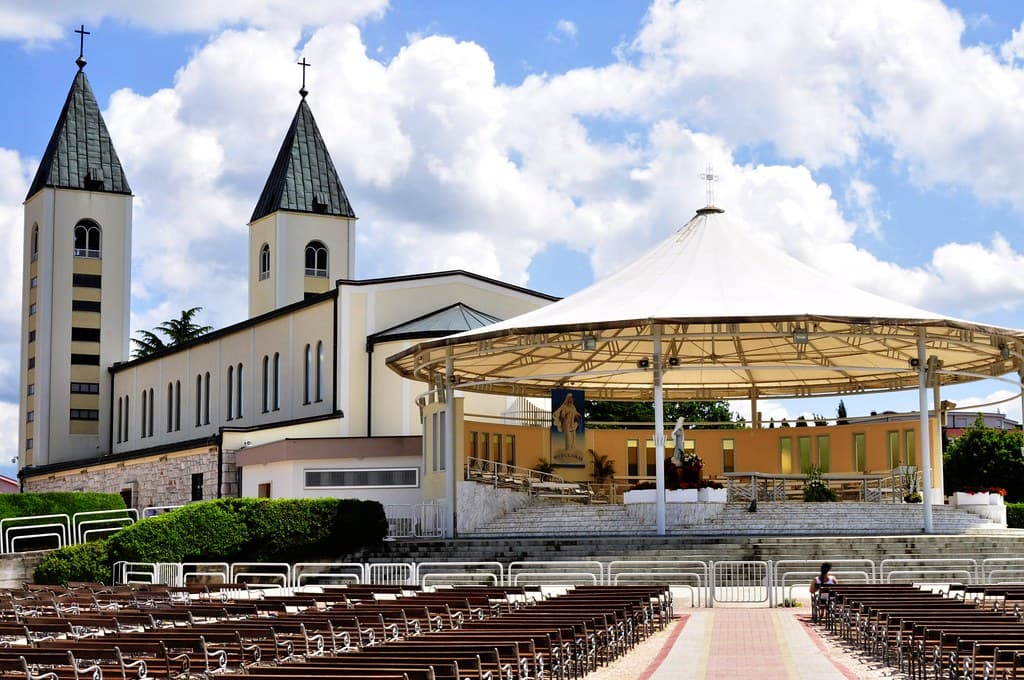
Shrine of the Queen of Peace at Medjugorje, Medjugorje
Međugorje, Herzegovina-Neretva, Bosnia and Herzegovina
0.6 km away
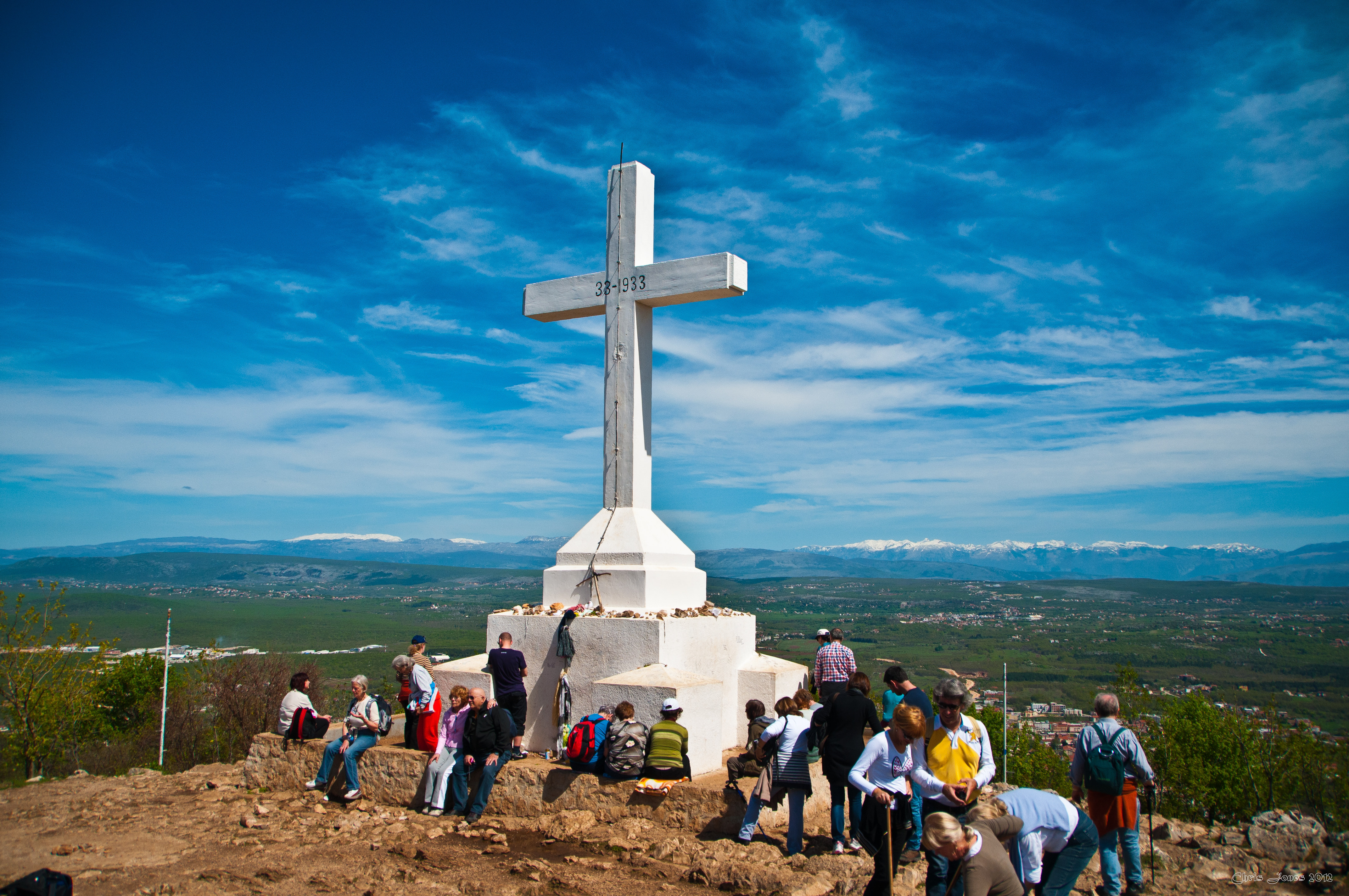
Cross Hill
Medjugorje, Herzegovina-Neretva, Bosnia and Herzegovina
1.2 km away

Church of Saint James the Greater (Apostle)
Medjugorje, Herzegovina-Neretva, Bosnia and Herzegovina
1.8 km away

Žitomislić Monastery
Žitomislići, Žitomislići, Mostar, Herzegovina-Neretva Canton, Bosnia and Herzegovina
9.8 km away
References
Sources consulted for this page. Source categories describe the publication, not a guarantee that every claim is verified. Traditional accounts and outside interpretations may differ.
- 01Pope Francis grants approval for Medjugorje devotion — Vatican NewsofficialOfficial Vatican announcement of the 2024 Nulla Osta decision
- 02Vatican sees spiritual value of Medjugorje, doesn't judge it supernatural — USCCBofficialU.S. bishops' conference coverage of the Vatican ruling
- 03Guide-lines for pilgrims and for priests — Parish of MedjugorjeofficialOfficial parish guidelines for pilgrims
- 04Understanding Medjugorje Apparitional Experiences: Medical and Parapsychological Perspectives — ResearchGate (peer-reviewed)academicAcademic paper analyzing the apparitional experiences from medical and parapsychological viewpoints
- 05Medjugorje - Wikipedia — Wikipedia contributorsacademicGeneral article covering history, geography, and apparitions
- 06Our Lady of Medjugorje - Wikipedia — Wikipedia contributorsacademicDetailed information on the visionaries, messages, Vatican investigations, and critical perspectives
- 07Medjugorje: What Catholics Should Know About the Alleged Marian Apparitions — National Catholic RegisterspiritualComprehensive analysis of the apparitions, commissions, and controversies
- 08Apparition Hill (Podbrdo) and Cross Mountain (Krizevac) - Guide through the Shrine — Medjugorje WebSitespiritualDetailed guide to the physical sites and their features
- 09Medjugorje Apparition Hill — Blue Heart TravelguidePractical travel guide with historical context
- 10The Story of Medjugorje — Tekton MinistriesspiritualNarrative account of the apparitions and their impact
Share a photo
Help visitors recognize Apparition Hill, Medjugorje. Every submission is reviewed before publication.