Dakshineswar Kali temple, Kolkata, West Bengal
The riverside Kali temple where Ramakrishna spent twelve years and saw the Divine Mother face to face
Understand sacred places, explore living traditions, and learn how to engage respectfully with Pilgrim Map.
Access has not been verified. Check current local guidance before planning a visit.
Kolkata, West Bengal, India
Read the sources
Visit essentials
A quick read before you go
- Duration
- 1.5–3 hours including the main shrine, Panchavati, ghats, and Shiva temples.
- Access
- On the eastern bank of the Hooghly River in Dakshineswar, northern Kolkata, West Bengal;…
Overview
Dakshineswar Kali Temple rises on the eastern bank of the Hooghly River in northern Kolkata, built between 1847 and 1855 and consecrated on the last day of May 1855. It was commissioned by Rani Rashmoni, a zamindar of the Mahishya community and a devotee of Kali, after a vision in a dream of the Divine Mother.
The presiding deity is Bhavatarini — 'she who liberates her devotees across the ocean of existence' — a form of Adya Kali standing on the chest of the supine Shiva upon a silver thousand-petalled lotus, a classic Shakta icon of the feminine divine as ultimate reality. The temple is built in the Bengali navaratna (nine-spired) style, flanked by twelve identical Shiva shrines along the riverfront and a Radha-Krishna temple, so that Shakta, Shaiva, and Vaishnava worship meet in one complex.
Yet what made Dakshineswar a place of worldwide pilgrimage was the man who became its head priest in 1856: Sri Ramakrishna Paramahamsa. Over twelve years of intense, multi-path sadhana here — guided in Tantric disciplines by the wandering teacher Bhairavi Brahmani, much of it in the Panchavati grove and a small meditation hut — he experienced the celebrated visions of the Divine Mother that catalysed the modern Vedanta movement and shaped Swami Vivekananda.
Today the temple fuses Shakta devotion with the living legacy of one of India's most beloved mystics.
Why this place is sacred
Dakshineswar feels thin in two ways at once. There is the Shakta charge of Bhavatarini, Kali as the Mother who liberates, met in the busy main shrine; and there is the quieter presence of Ramakrishna, felt by many at the Panchavati grove, the bel tree, his room, and the meditation hut where he sat in absorption. The riverside setting — water, ghat, and shrine together — adds another layer, linking the flow of the Ganga to the worship above it.
Pilgrims and seekers often report deep emotional and meditative absorption, drawn by the temple's association with Ramakrishna's direct experience of the goddess.
A Kali temple built by Rani Rashmoni in fulfilment of a dream-vision, to install the Divine Mother on the bank of the Ganga.
Through Ramakrishna's twelve years of sadhana and visions here, it became a foundational pilgrimage site of the Ramakrishna Mission and the worldwide Vedanta movement, and remains an intensely active temple.
Experience and orientation
Pilgrims describe a powerful devotional atmosphere, especially at aarti and during Kali Puja, when long queues form for sanctum darshan. Many feel a tangible sense of Ramakrishna's presence at the Panchavati, his room, and the meditation hut. The riverfront ghats and the row of twelve Shiva temples offer a contemplative counterpoint to the busy main shrine. Devotees and seekers often report deep meditative absorption, drawn by the maternal aspect of Kali as liberator.
Take darshan of Bhavatarini at the main shrine, then walk the quieter parts of the complex — the twelve riverside Shiva shrines, the ghats, and the Panchavati grove with Ramakrishna's associated spaces. Early morning offers the most peaceful visit; festival days bring large crowds and long queues.
Context and lineage
Rani Rashmoni, en route to a pilgrimage to Banaras, had a vision of the Divine Mother in a dream telling her there was no need to go to Banaras — she should install the goddess in a temple on the banks of the Ganga, and the Mother would manifest there. Rashmoni purchased the Dakshineswar land and built the temple accordingly.
Sri Ramakrishna's twelve years of sadhana in the Panchavati grove and meditation hut, where Bhairavi Brahmani guided him in Tantric disciplines, gave the temple its later spiritual fame.
Shakta (Kali) worship in the Bengali Tantric tradition, fused with the Ramakrishna–Vivekananda movement and modern Vedanta.
Rani Rashmoni
Patron and founder
Sri Ramakrishna Paramahamsa
Head priest and mystic
Bhairavi Brahmani
Teacher
Swami Vivekananda
Disciple
Traditions and practice
Daily worship of Bhavatarini, aarti, and offerings, with worship at the twelve Shiva shrines and the Radha-Krishna temple.
Kali Puja during Diwali, Durga Puja and Navaratri observances, Snana Yatra, and Kalpataru Day on 1 January; pilgrimage circuits through the Panchavati, the bel tree, Ramakrishna's room, and the meditation hut.
Move from the devotional intensity of the main shrine to the stillness of the Panchavati and the ghats, letting the two moods of the place — fervent worship and quiet absorption — balance each other.
Hinduism (Shaktism / Kali worship)
ActiveThe presiding deity Bhavatarini ('she who liberates her devotees across the ocean of existence') is a form of Adya Kali standing on the chest of the supine Shiva on a silver thousand-petalled lotus — a classic Shakta icon of the feminine divine as ultimate reality.
Daily aarti and puja, Kali Puja during Diwali, Navaratri/Durga Puja observances, and Snana Yatra.
Ramakrishna–Vivekananda movement / Vedanta
ActiveSri Ramakrishna Paramahamsa served as head priest and undertook twelve years of intense, multi-path sadhana here, where he experienced his celebrated visions of the Divine Mother. The temple is a foundational pilgrimage site of the Ramakrishna Mission and the modern Vedanta movement that influenced Swami Vivekananda.
Pilgrimage to Ramakrishna's room, the Panchavati grove, the bel tree, and the meditation hut; Kalpataru Day observance.
Perspectives and open questions
Dakshineswar is understood as a key monument of nineteenth-century Bengal, a living seat of the Divine Mother, and a Tantric icon, with Ramakrishna's inner experiences held as matters of faith.
Scholarly perspective
Historians treat Dakshineswar as a key monument of nineteenth-century Bengal religiosity and elite female patronage (Rani Rashmoni), and as the formative setting of Ramakrishna's mysticism that catalysed the modern Vedanta and Ramakrishna movements.
Living and traditional perspectives
Devotees revere Bhavatarini as the living Divine Mother who liberates souls, and regard the temple as sanctified by Ramakrishna's direct experience of the goddess.
Alternative interpretations
The icon of Kali on the supine Shiva is read in Tantric terms as the dynamic feminine Shakti animating the inert masculine principle; the Panchavati grove is seen as a charged seat of spiritual realization.
Open questions
The nature of Ramakrishna's recorded visions and samadhi at the site remains a matter of devotional faith rather than empirical verification.
Plan your visit
Access and arrival
On the eastern bank of the Hooghly River in Dakshineswar, northern Kolkata, West Bengal; reachable by Dakshineswar metro, suburban rail (Dakshineswar station), road, and river ferry from Belur Math.
Respectful visit
No strict dress code, but conservative, modest attire covering shoulders and knees is expected; remove footwear before entering shrines.
Permitted in the outer complex, ghats, and exterior; prohibited inside the main sanctum/prayer hall.
Flowers, sweets, and traditional puja offerings; donations accepted (entry is free).
Maintain silence and decorum near worshippers; sanctum photography and large bags often restricted; expect heavy crowds on festival days.
Maintain silence and decorum near worshippers; sanctum photography and large bags are often restricted; expect heavy crowds on festival days.
Current practical details
Address
Dakshineswar, Kolkata, West Bengal 700035, India
Hours
Hours, fees, and access can change — verify on the official source before you travel. Practical details last checked Jun 2026.
Location
Map loads as you approach this section.
Pilgrim reflections
A portrait of encounter, not a score
Pilgrims describe what they felt, how present they could become, and whether the place would shape a journey. There are no stars and no ranking of traditions.
No reviewed reflections yet
The first pilgrims can help describe the character of being here.
Share a reflection
Available after an account-backed “Been there.” Every reflection is reviewed before publication.
Nearby sacred places
Explore other sacred places in the region. Proximity does not establish access or travel time; check each place’s guidance.
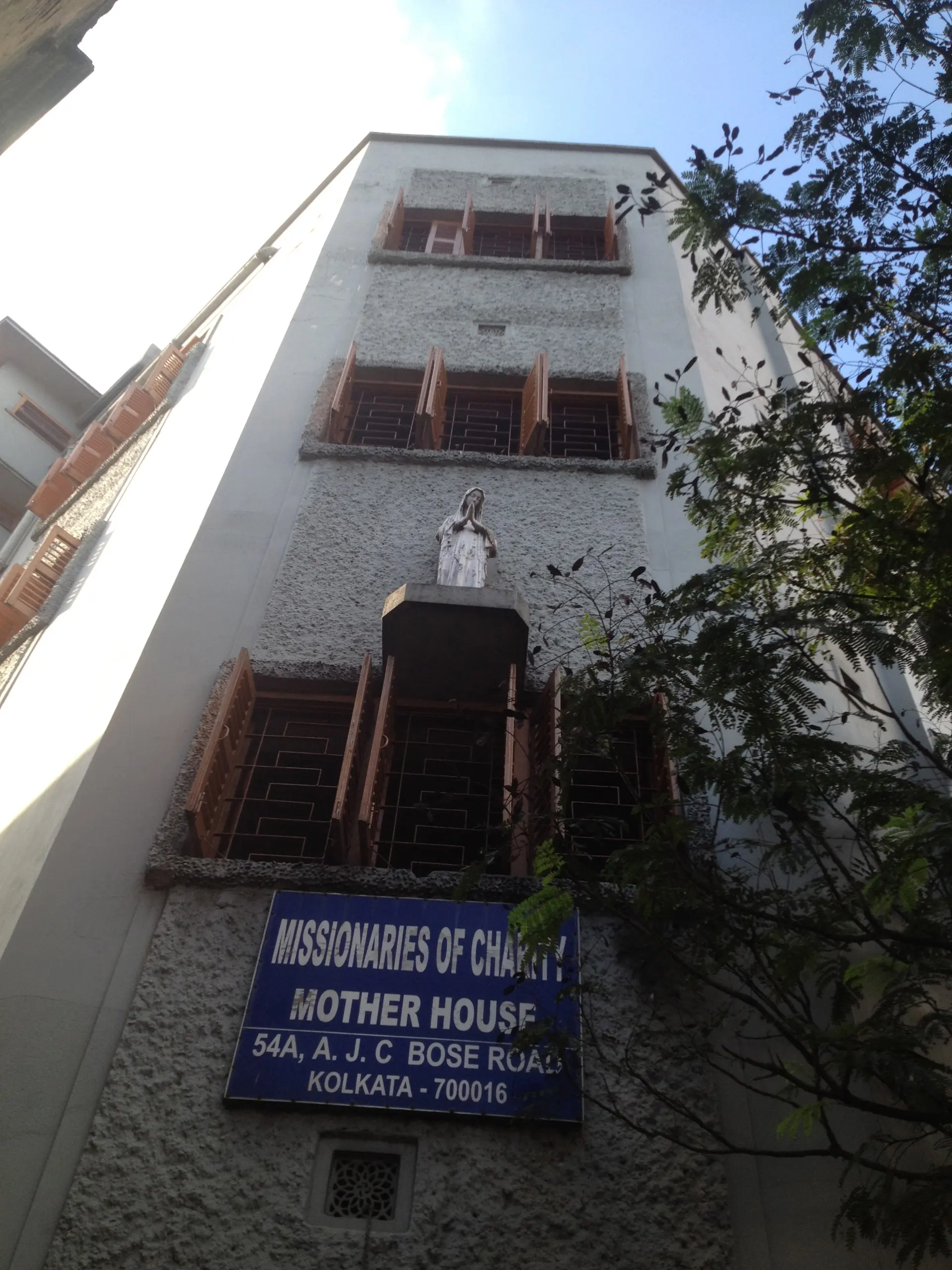
Mother House of the Missionaries of Charity
Kolkata, West Bengal, India
11.3 km away

Jeshoreshwari Kali Shaktipeeth Temple
Shyamnagar, Khulna, Bangladesh
86.7 km away

Puthia Rajbari Temple complex
Puthia, Rajshahi, Bangladesh
196.1 km away

Basukinath Temple, Jarmundi, Jharkhand
Jarmundi, Jharkhand, India
232.8 km away
References
Sources consulted for this page. Source categories describe the publication, not a guarantee that every claim is verified. Traditional accounts and outside interpretations may differ.
- 01Dakshineswar Kali Temple — Wikipedia — Wikipedia contributorsacademicConfirms 1847–1855 construction, Rani Rashmoni's dream, Bhavatarini idol on supine Shiva, navaratna architecture, twelve Shiva shrines, Ramakrishna as head priest.
- 02Dakshineswar Kali Temple — Encyclopaedia Britannica — Encyclopaedia Britannica editorsacademicAuthoritative overview of history, deity, and Ramakrishna association.
- 03Dakshineswar Kali Temple: Kolkata's Divine Landmark — Incredible India — Ministry of Tourism, Government of IndiaofficialGovernment tourism portal; architecture and pilgrimage significance.
- 04Dakshineswar Kali Temple: Architecture and Patronage in Nineteenth-Century Bengal — COG India Art — COG India ArtacademicAnalytical reading of the architecture as 'spatial theology' integrating Shakta, Shaiva, and bhakti traditions.
- 05Sri Ramakrishna at Dakshineswar — Kathamrita — Sri Ramakrishna Kathamrita (Gospel of Sri Ramakrishna)spiritualPrimary devotional source on Ramakrishna's life and sadhana at the temple.
- 06Dakshineshwar — Ramakrishna Math, Pune — Ramakrishna MathspiritualRamakrishna Order account of the Panchavati grove, meditation hut, and twelve years of sadhana.
- 07Dakshineswar Kali Temple, Kolkata: Visitor Guide 2026 — Audiala — AudialaSource contextVisitor logistics, timings, festivals.
- 08A Complete Visitor's Guide to Dakshineswar Kali Temple — The Lalit Blog — The LalitSource contextDress code, photography rules, etiquette.
Photo gallery
3 curated photos
Share a photo
Help visitors recognize Dakshineswar Kali temple, Kolkata, West Bengal. Every submission is reviewed before publication.