Church of St. Mary of Blachernae (Ayın Biri Kilisesi), Istanbul, Turkey
Where the Virgin's veil once shielded an empire, and her spring still flows for the weary
Understand sacred places, explore living traditions, and learn how to engage respectfully with Pilgrim Map.
Access has not been verified. Check current local guidance before planning a visit.
Istanbul, Istanbul, Turkey
Read the sources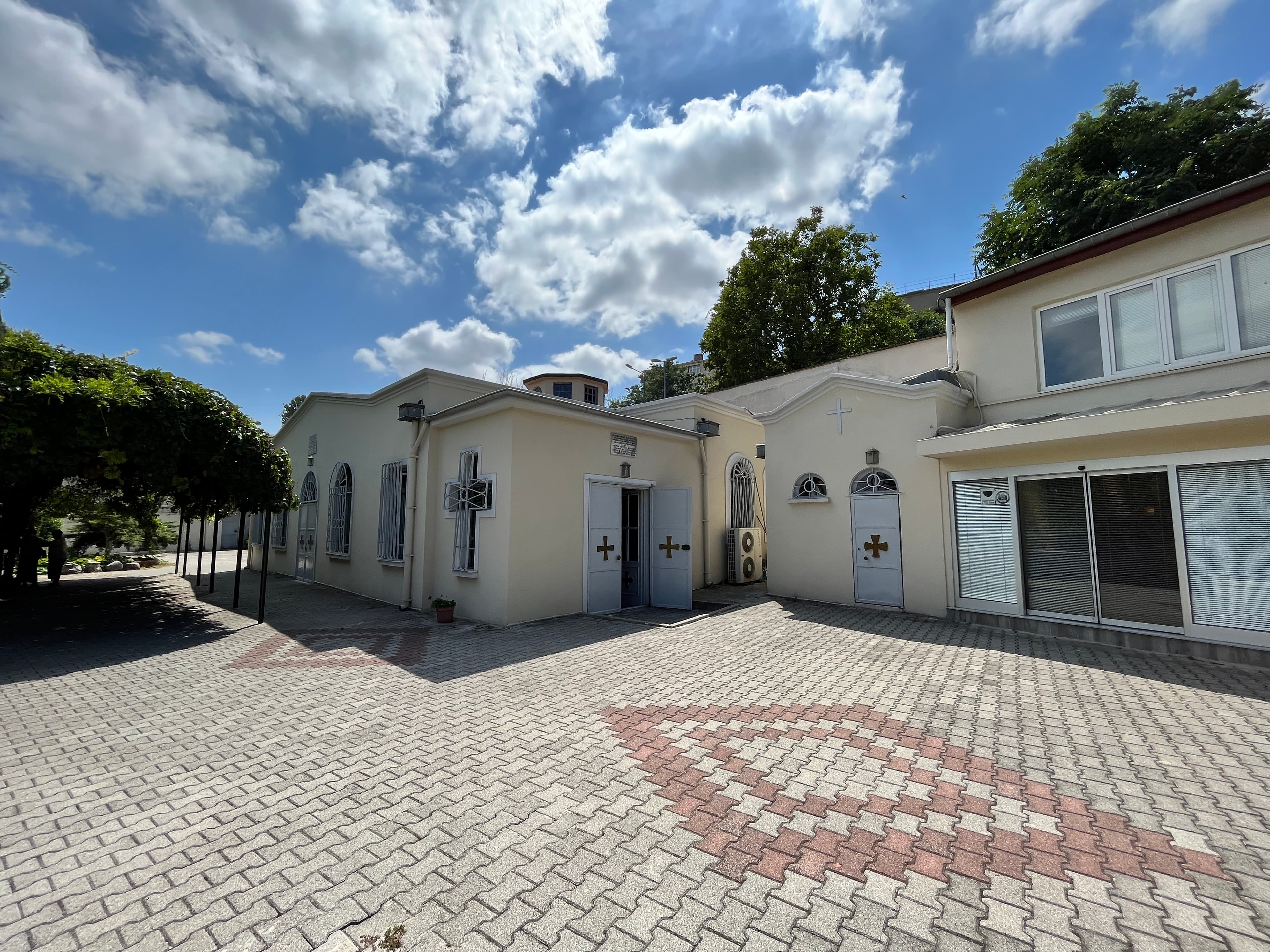
Image of Church of St. Mary of Blachernae (Ayın Biri Kilisesi), Istanbul, Turkey. Image source · CC-BY-SA-4.0
Visit essentials
A quick read before you go
- Duration
- One hour for a contemplative visit; longer if attending liturgy.
- Access
- The church is open daily from 9 AM to 5 PM.
Overview
The modest Church of St. Mary of Blachernae holds the memory of one of Christendom's mightiest sanctuaries. For nearly a millennium, Byzantine emperors processed here in crises around the maphorion, believed to be the Virgin Mary's veil or robe; victories after sieges were attributed to her protection. The great church burned in 1434. Today's nineteenth-century chapel, built by the Guild of Orthodox Furriers, encloses the older holy spring and the remembered setting of St.
Andrew the Fool-for-Christ's vision of Mary spreading her protective veil. The spring still flows, and Orthodox, Catholic, Muslim, and secular visitors still drink, wash their eyes, and carry water home, continuing fifteen centuries of seeking.
Why this place is sacred
The holy spring came first. Long before any church rose here, water emerged from the earth at the edge of what would become Constantinople. When Empress Pulcheria chose this site in the 450s, she built not only a church but a hospital—the spring already associated with healing.
The maphorion transformed the site's significance. Whether veil, robe, or sash—sources vary—this cloth was believed to have touched the body of the Theotokos herself. Emperor Leo I built a circular chapel to house it, the Hagia Soros. From the fifth century until the fire of 1434, this relic made Blachernae a spiritual fortress guarding the capital.
The siege of 626 gave the relic its legend. When Avars and Persians surrounded Constantinople, Patriarch Sergios carried the maphorion along the walls in procession. The siege lifted. The Akathistos Hymn—one of Orthodoxy's most beautiful liturgical poems—was composed to commemorate the deliverance. A century later, another siege lifted, another victory attributed to Mary's protection.
In 911, during yet another crisis, St. Andrew the Fool-for-Christ had his vision. He saw Mary enter through the church doors, attended by saints, prostrate herself in prayer, then take off her veil and spread it over all the faithful. This moment originated the Feast of the Protection, celebrated throughout the Orthodox world.
The 1434 fire ended Blachernae's era of grandeur. The maphorion disappeared—lost, perhaps destroyed, perhaps carried to safety and now lost to history. What remained was the spring. What was rebuilt, centuries later, was modest. Yet pilgrims still come. The spring still flows. Something persists here that transcends architecture.
Empress Pulcheria established the church as a Marian shrine serving both spiritual and charitable functions—a place of worship paired with a hospital utilizing the spring's waters. Emperor Leo I transformed it into the empire's primary reliquary of the Virgin when he enshrined the maphorion.
By the sixth century under Justinian, Blachernae had become a complex rivaling Hagia Sophia in importance, though serving a different function: not the cathedral of the patriarch, but the sanctuary of the Theotokos, protectress of the capital and empire.
For a thousand years, Blachernae grew in magnificence and importance. Emperors added buildings, treasuries, palaces. The church complex became so intertwined with imperial power that late Byzantine rulers sometimes resided in the adjacent palace rather than the traditional Great Palace. All of this perished in 1434. For over four centuries, only the spring remained, venerated quietly by the dwindling Greek Orthodox community.
The 1867 rebuilding by the Guild of Furriers was deliberately modest—a small chapel enclosing the spring, not attempting to recreate past glory. This humility may be part of its contemporary power. Visitors today encounter not a monument to Byzantine splendor but a living place of prayer, intimate and unpretentious, where the spring still flows as it did when emperors knelt here.
Experience and orientation
The first impression is of quiet. Though the neighborhood of Ayvansaray bustles with traffic and commerce, the church's garden courtyard offers immediate stillness. This is not the grand approach of Hagia Sophia, but something more like arriving at a beloved grandmother's home—modest, intimate, thick with accumulated meaning.
Inside, the chapel is small enough that the icons feel close. Modern frescoes line the walls, depicting the feast days and miracles associated with this site. The aesthetic is neither ancient nor particularly distinguished, yet many visitors find themselves unexpectedly moved. Perhaps it is the awareness of what once stood here. Perhaps it is the simple fact that worship has continued, interrupted but never abandoned, for fifteen centuries.
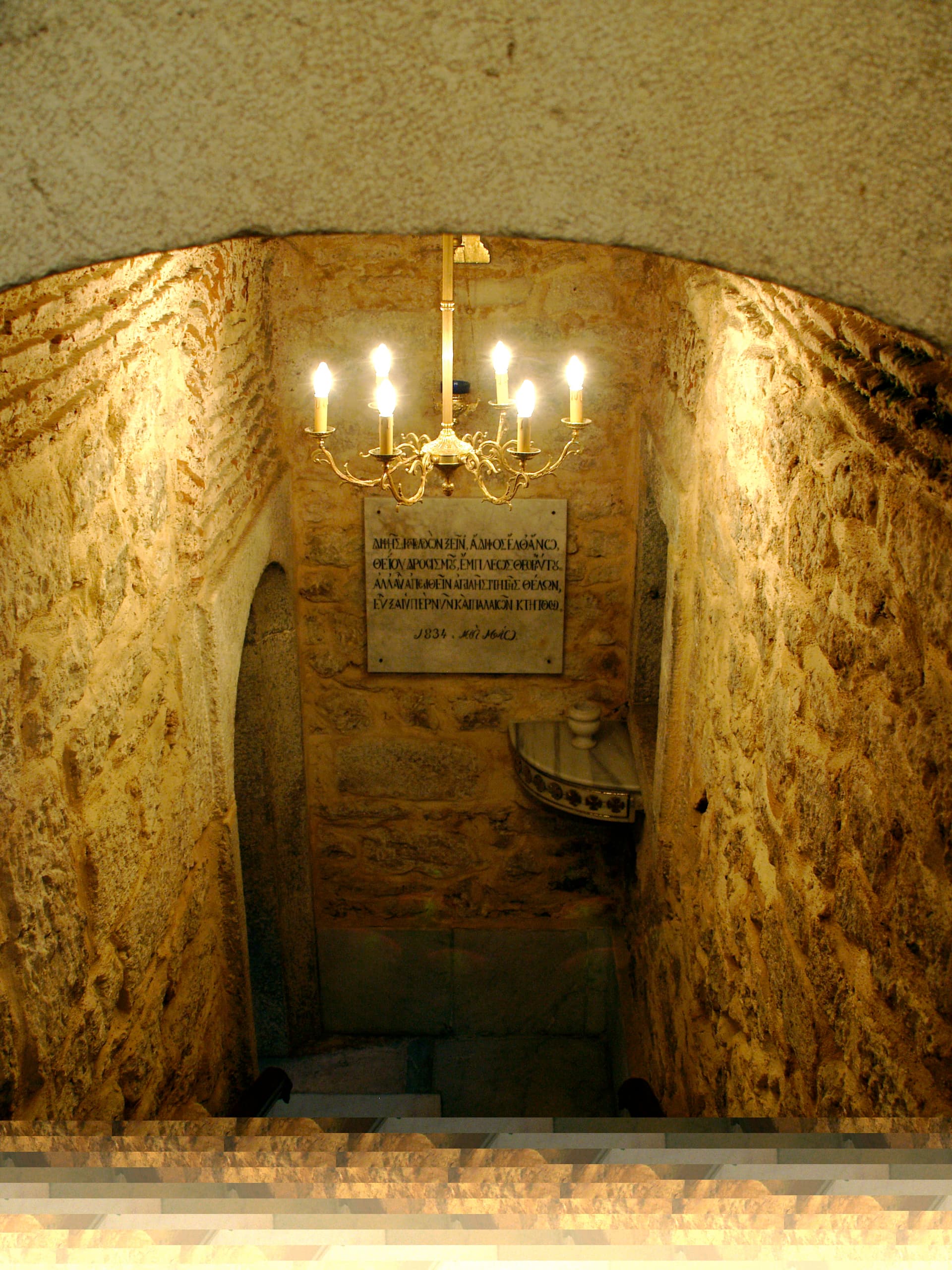
The spring draws most visitors. Steps lead down to the lower level where water emerges, gathered in a pool and available at taps. Above the taps, an inscription reads: 'Wash the sins not only the eyes.' Pilgrims drink the water, wash their faces and eyes, fill bottles to carry home. Orthodox visitors may cross themselves and offer silent prayers. Muslims sometimes visit too, part of a folk tradition that crosses confessional lines.
The ritual has a particular quality: not theatrical, not even particularly beautiful, but somehow grounding. There is something clarifying about drinking from a spring that has served pilgrims for over a millennium and a half. Whatever you believe about holy water, the act connects you to a chain of seekers stretching back to late antiquity.
Blachernae rewards a contemplative approach. Before entering, consider sitting briefly in the garden courtyard, letting the noise of the city fade. Inside, allow time simply to be present before approaching the spring. If you are of Orthodox faith, this is a significant pilgrimage site; come prepared to pray. If you are of other traditions or none, come with respect and openness—this place has welcomed seekers of all kinds for centuries.
The water ritual matters. Do not rush it. Drink slowly. If you wash your face, do so as though it means something. What it means is yours to discover.
Consider visiting on the first day of a month, when special observances are held. If you can visit on October 1 (Feast of the Protection) or July 2 (Feast of the Deposition of the Robe), you will experience the church in its fullest liturgical context.
Context and lineage
The story begins with two brothers, Galbius and Candidus, who traveled to Palestine in the fifth century. While lodging near Nazareth, they stayed with an elderly Jewish woman who guarded a secret: a chest containing a garment passed down through her family for generations, believed to be the robe or veil of the Virgin Mary herself. According to tradition, Mary had given this cloth to a pious maiden before her Dormition.
The brothers brought the relic to Constantinople, where Emperor Leo I enshrined it in a specially built chapel—the Hagia Soros, the Holy Relic. Thus began Blachernae's transformation from a healing spring to the empire's sacred armory. The Theotokos, through her relic, would guard Constantinople as she had promised to guard all who sought her protection.
A second origin story intertwines with the first. In 911, during a military crisis, a holy fool named Andrew and his disciple Epiphanius were praying in the church when they witnessed a vision. The doors opened, and the Virgin Mary entered, accompanied by saints and angels. She prostrated herself in prayer at the ambo, then rose, removed her veil, and spread it over all the faithful present.
This vision gave birth to the Feast of the Protection—Pokrov—beloved throughout the Orthodox world as a reminder that Mary's mantle shelters all who come to her.
The lineage of Blachernae is the lineage of Byzantine Christianity itself. For a thousand years, emperors processed here in triumph and in crisis. Patriarch Sergios carried the maphorion along the walls while the city trembled. Justinian added his dome. Artists created icons that would become models for all subsequent depictions of Mary as Protectress.
The 1434 fire ended the Byzantine chapter. The Greek Orthodox community that survived Ottoman conquest maintained quiet veneration at the spring. The 1867 rebuilding restored formal worship. Today, the church operates under the Ecumenical Patriarchate of Constantinople, maintaining the Orthodox liturgical tradition in a space that remembers—even if it cannot recreate—its former significance.
Empress Aelia Pulcheria
historical
Daughter of Emperor Arcadius, Pulcheria was instrumental in promoting Marian devotion in Constantinople. She founded the original church at Blachernae around 450-453 CE, combining sacred shrine with charitable hospital.
Emperor Leo I
historical
Leo I (r. 457-474) built the Hagia Soros chapel to house the Virgin's relic, transforming Blachernae from a healing shrine to the empire's most important Marian sanctuary.
St. Andrew the Fool-for-Christ
saint
A 'holy fool' who renounced worldly concerns for radical devotion. His vision of Mary spreading her veil over the faithful at Blachernae originated the Feast of the Protection.
The Theotokos (Virgin Mary)
deity
The God-Bearer, Mother of Christ, understood in Orthodox tradition as the most powerful intercessor with her Son. Blachernae was dedicated to her veneration and her protection of Constantinople.
Traditions and practice
Byzantine practice at Blachernae was spectacular. Emperors processed here for major feasts. In times of siege, the maphorion was carried in solemn procession around the city walls, the faithful following in prayer. Friday all-night vigils honored the miracle-working icon. On the feast days, Constantinople itself seemed to gather at this sanctuary.
The most dramatic ritual came during military crisis: the maphorion would be dipped into the sea, invoking Mary's protection over the waters. After the defeat of the Rus fleet in 860, a victory attributed to this practice, the ritual acquired legendary status.
At the annual feast on July 2, commemorating the maphorion's arrival, the relic was displayed for veneration. The faithful processed, prayed, touched what they believed to be the Virgin's own garment. Such proximity to the physical trace of the Theotokos made Blachernae unique among Constantinople's churches.
Today's practice is quieter but continuous. The Greek Orthodox community celebrates Divine Liturgy regularly. The feast days—Protection on October 1, Deposition of the Robe on July 2—bring special observances. Special services are held on the first day of each month, giving rise to the church's Turkish nickname, 'First Day of the Month Church.'
The spring ritual remains central. Visitors descend to drink the water, wash their faces and eyes, fill bottles. Above the taps, the inscription reminds them: 'Wash the sins not only the eyes.' Coins and hairpins are sometimes tossed into the pool, a folk practice of uncertain origin that persists across religious boundaries.
Muslim visitors come too, particularly women seeking healing or fertility blessings. The church welcomes them. This interfaith sharing of sacred space reflects a Turkish tradition older than the Republic, where the holy does not always respect confessional boundaries.
If you come seeking spiritual engagement, consider these approaches:
Arrive with intention. Before entering, articulate silently what you bring—a burden, a question, a gratitude. The place has witnessed centuries of intentions; add yours to the accumulation.
Participate in the water ritual. Drink slowly and deliberately. If you wash your face, do so as a symbolic act. Whether or not you believe the water carries special properties, the ritual itself is meaningful.
If possible, attend a liturgy. Even if you cannot understand the Greek, the experience of worship in this space offers something that casual visiting cannot. The feast days are particularly powerful.
Spend time in the courtyard. Before or after entering, sit quietly. Allow the peace of the space to do its work. The great emperors and desperate pilgrims who came before you also, at some moment, simply sat here.
Eastern Orthodox Christianity
ActiveBlachernae ranks among the most significant Marian shrines in Orthodox Christianity. For nearly a thousand years, it housed the maphorion—the Virgin's robe—making it the empire's foremost sanctuary of the Theotokos. The church is associated with the origin of the Feast of the Protection, celebrating Mary's sheltering presence. Though the great Byzantine church is lost, the site remains a functioning parish under the Ecumenical Patriarchate, maintaining liturgical continuity with its Byzantine heritage.
Divine Liturgy is celebrated regularly. Special observances mark the first day of each month, the Feast of the Protection (October 1), and the Feast of the Deposition of the Robe (July 2). Pilgrims drink from and wash at the holy spring, light candles, and venerate the icons. The intimacy of the current church creates a devotional atmosphere quite different from larger Orthodox pilgrimage sites.
Folk Healing Tradition
ActiveThe holy spring (ayazma) at Blachernae draws visitors seeking healing and blessing regardless of formal religious affiliation. This folk tradition, practiced by both Christians and Muslims, may predate the church itself—the spring was likely venerated before Empress Pulcheria built here. The practice of drinking the water, washing eyes and face, and taking water home for continued use represents a living continuation of ancient healing pilgrimage.
Visitors descend to the spring, drink the water, wash their faces and particularly their eyes, and fill bottles to take home. Coins and hairpins are sometimes thrown into the pool. Women seeking fertility blessings or healing for family members are particularly common. The inscription 'Wash the sins not only the eyes' adds a moral dimension to the physical ritual.
Perspectives and open questions
Blachernae invites multiple readings. Historians see a site of political and religious power, central to Byzantine imperial ideology. Orthodox believers encounter a living sanctuary where the Theotokos still offers protection. Folk tradition preserves healing rituals that cross confessional lines. Each perspective illuminates aspects the others might miss.
Scholarly perspective
Historians recognize Blachernae as one of the most consequential religious sites in Byzantine Constantinople. The cult of the Theotokos centered here was instrumental in Byzantine imperial ideology, providing both spiritual legitimacy and military morale. The maphorion functioned not merely as a relic but as a political tool, carried into battle, displayed during ceremonies of state.
Archaeological work has identified traces of the original complex, though much remains buried beneath modern construction. Scholars debate details—the exact nature of the maphorion, the historical reality of the military miracles, the relationship between official cult and folk devotion. What is not disputed is the site's extraordinary importance throughout the Byzantine millennium.
Living and traditional perspectives
For Orthodox Christians, Blachernae is not a historical curiosity but a living pilgrimage site. The Theotokos protected Constantinople through her relic, and she continues to protect those who seek her intercession. The holy spring carries genuine healing properties—gifts of divine grace, not mere hydrology.
The vision of St. Andrew is understood as a true mystical event, Mary genuinely appearing to spread her protective veil. The Feast of the Protection celebrated worldwide traces directly to this place, to that moment in 911 when heaven touched earth. Pilgrimage here participates in an unbroken chain of devotion.
Alternative interpretations
The interfaith dimension of Blachernae—Muslims visiting a Christian shrine, Christians and Muslims sharing the holy water—suggests a folk spirituality that predates and transcends official religion. Some visitors understand the spring's power in energetic or metaphysical terms rather than specifically Christian ones. The site's persistence through fifteen centuries of religious and political upheaval points, for some, to a sacred geography that exceeds any single tradition's ownership.
Open questions
Genuine mysteries remain. What happened to the maphorion? Did it perish in the 1434 fire, or was it carried to safety by someone whose descendants have forgotten what they guard? The Blachernitissa icon, which appeared on Mount Athos and now hangs in a Moscow museum, may or may not be the original that hung here. The exact location and extent of the original Byzantine church complex remains uncertain.
More subtly: what accounts for the continuity of experience at this site? Why do visitors—secular and religious, Christian and Muslim—so consistently report a quality of peace here that distinguishes it from other Istanbul churches? Such questions resist easy answers, which may be part of the site's persistent power.
Plan your visit
Access and arrival
The church is open daily from 9 AM to 5 PM. Admission is free, with donations welcomed. Reach the site by taking Bus 99 or 99A from Eminönü to Ayvansaray, or Tram T1 to Ayvansaray stop followed by a 10-minute walk. The church is located on Mustafa Paşa Bostanı Sokak in the Fatih district.
The Ayvansaray neighborhood offers limited tourist facilities. Most visitors stay in Sultanahmet or elsewhere and travel to Blachernae as a half-day excursion. Several boutique hotels near the Chora Church cater to visitors interested in Byzantine sites. For those prioritizing spiritual practice, inquire through the Ecumenical Patriarchate about accommodations with the Greek Orthodox community.
Respectful visit
Modest dress is required. Shoulders and knees should be covered. Some Orthodox visitors will cover their heads; this is not required but is respectful. Remove hats. There is no strict enforcement, but dressing appropriately demonstrates understanding that you are entering sacred space, not a museum.
Photography is permitted in the church and garden when no services are in progress. Be discreet. Do not photograph worshippers without permission. The spring area is particularly sensitive—people may be engaged in deeply personal rituals. When in doubt, put the camera away.
Candles are available for purchase and lighting. Donations are appreciated. When drinking from the spring, a small offering is customary but not required.
{"No loud conversation inside the church","No eating or drinking (except from the holy spring)","No flash photography","Do not interrupt those at prayer or at the spring","Be prepared to wait respectfully if the church is full during services"}
This is an active place of worship. If liturgy is in progress, enter quietly and observe respectfully without disrupting. Photography during services is inappropriate.
Do not treat the spring as a wishing well or tourist attraction. The rituals may seem quaint to secular visitors, but they are living practices for the faithful. Approach with the respect due to any sacred space.
The neighborhood is not heavily touristed. While generally safe, exercise normal urban awareness, particularly if visiting early morning or evening.
Current practical details
Address
Ayvansaray, Kuytu Sk., 34087 Fatih/İstanbul, Türkiye
Hours
Hours, fees, and access can change — verify on the official source before you travel. Practical details last checked Jun 2026.
Location
Map loads as you approach this section.
Pilgrim reflections
A portrait of encounter, not a score
Pilgrims describe what they felt, how present they could become, and whether the place would shape a journey. There are no stars and no ranking of traditions.
No reviewed reflections yet
The first pilgrims can help describe the character of being here.
Share a reflection
Available after an account-backed “Been there.” Every reflection is reviewed before publication.
Nearby sacred places
Explore other sacred places in the region. Proximity does not establish access or travel time; check each place’s guidance.

References
Sources consulted for this page. Source categories describe the publication, not a guarantee that every claim is verified. Traditional accounts and outside interpretations may differ.
- 01Church of the Virgin of Blachernae (Istanbul) - OrthodoxWiki — OrthodoxWikiofficialOrthodox perspective with theological context
- 02The Placing of the Honorable Robe of the Most Holy Mother of God at Blachernae — Orthodox Church in AmericaofficialOfficial Orthodox Church account of the feast
- 03Church of Panagia Blachernai — The Byzantine LegacyacademicScholarly overview of Byzantine architecture and history
- 04Deposition of the Precious Robe of the Theotokos in Vlachernae — Greek Orthodox Archdiocese of AmericaofficialOfficial Greek Orthodox feast day information
- 05Church of St. Mary of Blachernae - Wikipedia — Wikipedia contributorsencyclopediaComprehensive overview with citations
- 06Vlaherna Meryem Ana Church - TripAdvisor Reviews — Various visitorsguideContemporary visitor experiences and practical information
- 07Church of Mary of the Blachernae and the Maphorion — Hagia Sophia HistoryacademicHistorical analysis of the maphorion relic
- 08Blachernitissa - Wikipedia — Wikipedia contributorsencyclopediaInformation on the famous icon
Photo gallery
2 curated photos
Share a photo
Help visitors recognize Church of St. Mary of Blachernae (Ayın Biri Kilisesi), Istanbul, Turkey. Every submission is reviewed before publication.