Chottanikkara Bhagavathy Temple, Chottannikkara, Kerala
A Kerala goddess temple where people bring their afflicted to the Mother for relief of the mind and spirit
Understand sacred places, explore living traditions, and learn how to engage respectfully with Pilgrim Map.
Access has not been verified. Check current local guidance before planning a visit.
Kanayannur, Kerala, India
Read the sources
Visit essentials
A quick read before you go
- Duration
- 1–3 hours for darshan and the evening pooja; longer during the festival.
- Access
- About 18 km southeast of central Kochi, near Thrippunithura, Ernakulam district, Kerala…
Overview
Chottanikkara, about eighteen kilometres southeast of central Kochi near Thrippunithura, is one of Kerala's foremost Devi temples. Its presiding goddess Rajarajeswari — also called Adiparasakthi or Bhagavathy — is worshipped in three forms through the day: Saraswati at dawn, Lakshmi at noon, and Durga in the evening. Below the main shrine lies the Keezhkavu shrine of the fierce Bhadrakali, whose idol tradition says was installed by Saint Vilvamangalam Swamiyar.
What most distinguishes Chottanikkara is its reputation as a place of spiritual healing. Devotees suffering mental distress, or believed to be afflicted by malevolent spirits, come here seeking relief through the goddess's grace and the dramatic evening Guruthi Pooja at Keezhkavu. Academic study has described the temple as a folk-psychiatric site where ritual functions as culturally embedded care for people in distress; this is a sensitive matter, and the practices are not a substitute for medical treatment.
The temple's founding is uncertain: legend attributes it to Adi Shankaracharya in the eighth century, while other sources date it to around the tenth century or describe it as roughly fifteen hundred years old. Whichever is true, the goddess is revered here as a present and active power, both benevolent and fierce.
Why this place is sacred
The charge of Chottanikkara is unusually emotional. People come carrying real suffering, and the temple holds it openly. The pairing of the benevolent upper shrine (Melkavu) and the fierce lower Bhadrakali (Keezhkavu) gives the place a felt sense of two faces of the same Mother — one that consoles and one that drives out what torments.
The evening Guruthi Pooja, with its vessels of red guruthi, brings this to a pitch; the atmosphere is fervent, and for many families it is a last resort that carries hope when other avenues have failed.
A Shakti temple honouring the universal Mother Goddess in her benevolent and fierce aspects, long sought as a place where the goddess heals affliction of mind and spirit.
It has remained a living, heavily-visited pilgrimage temple, with daily poojas, the major annual Makam Thozhal festival, and an ongoing healing tradition drawing pilgrims from across India and abroad.
Healing traditions
Goddess protection and healing tradition
At Chottanikkara, devotees turn to Bhagavathy for protection and relief from bodily illness and mental distress. The temple's worship of the goddess in different forms, and the Guruthi Puja associated with Keezhkavu, give that appeal its particular setting. The published sources describe a continuing healing tradition; they do not establish that distress is caused by spirits or provide a verified individual cure for this section.
Ways to participate
Begin with ordinary darshan and ask temple staff about public worship that is appropriate for you. If accompanying someone in distress, let their wishes and comfort guide the visit. Do not film people receiving attention, force participation, or substitute a ritual for professional mental-health care.
These accounts describe religious traditions and reported experiences. They do not promise a cure or replace medical care.
Experience and orientation
Visitors describe dense devotional crowds, the triple manifestation of the goddess across the day, and above all the dramatic evening Guruthi Pooja at the lower Keezhkavu shrine. Many families bring relatives believed to be spirit-afflicted; the atmosphere is fervent and emotionally charged. Devotees report a profound sense of emotional release and of being unburdened. The temple opens very early, around 3:30 to 4:00 AM, for Nirmalya Darshanam, the first darshan of the day.
Non-Hindus may sit in the outer courtyard and arrange for priests to perform pujas; the inner sanctum is reserved for Hindus by custom. Observe the dress code and silence. The evening Guruthi Pooja, especially on Fridays, is the most sought-after ritual. Treat the presence of those who come seeking healing with respect and discretion.
Context and lineage
One legend holds that Adi Shankaracharya meditated on the Devi in the Kodachadri Hills in present-day Karnataka; pleased, the goddess agreed to follow him on the condition that he never look back. He looked back en route to Kerala and she remained at that spot, finally settling at Chottanikkara after his further prayers. A local tradition holds that the goddess revealed her full divine form to Vilvamangalam Swamiyar on the Makam asterism, the origin of the Makam Thozhal observance.
A founder legend connects the village to Kannappa, a medieval forest dweller said to have offered blood sacrifice to Kali, echoed today in the symbolic guruthi mixture.
Shakta (goddess-centred) Hinduism in the Kerala Tantric tradition, pairing benevolent and fierce shrines of the Mother.
Rajarajeswari (Chottanikkara Bhagavathy)
Presiding goddess
Adi Shankaracharya
Legendary founder
Vilvamangalam Swamiyar
Saint
Kannappa
Founder-legend figure
Traditions and practice
Nirmalya Darshanam (first darshan of the day), worship of the goddess in three forms across the day, and the evening Guruthi Pooja at Keezhkavu, in which vessels of guruthi — water, red dye, soil, and flowers symbolising former blood offerings — are offered.
Daily poojas, online pooja booking, free midday meals (annadanam), and the historically notable practice in which afflicted devotees press their foreheads against a large tree (paala maram) near the temple, believing it expels the afflicting spirit. The Makam Thozhal festival is the peak annual observance.
Sit with the rhythm of the day and the goddess's changing forms. If you witness the Guruthi Pooja, do so as a respectful observer, mindful that for many present it is an act of deep need rather than display.
Hinduism (Shaktism / Devi worship)
ActiveThe presiding goddess Rajarajeswari (Adiparasakthi/Bhagavathy) is worshipped in three forms through the day — Saraswati at dawn, Lakshmi at noon, Durga in the evening — making the temple a major Shakti pilgrimage centre. The Keezhkavu shrine venerates the fierce Bhadrakali form.
Daily poojas, Nirmalya Darshanam, the evening Guruthi Pooja at Keezhkavu (associated with relief from spirit affliction and mental distress), and offerings.
Perspectives and open questions
Chottanikkara is read at once as a great Tantric Shakti temple, a literal seat of the healing Mother, and an esoteric pairing of gentle and wrathful divinity, with its origins uncertain.
Scholarly perspective
Scholars treat Chottanikkara as a major Kerala Shakti temple in the Tantric tradition; academic work documents its role as a folk-psychiatric healing site where ritual functions as culturally embedded care for the mentally distressed.
Living and traditional perspectives
Devotees regard the goddess as a literal, present power who heals affliction and expels malevolent spirits; the Adi Shankara and Vilvamangalam legends anchor the temple's sanctity.
Alternative interpretations
The pairing of the benevolent upper shrine and the fierce Bhadrakali lower shrine is read as the complementary gentle and wrathful aspects of the Mother, and the guruthi ritual as a sublimation of older blood-sacrifice practice.
Open questions
The temple's precise founding date and the historical origins of its distinctive exorcism and healing tradition remain uncertain, layered under centuries of legend.
Plan your visit
Access and arrival
About 18 km southeast of central Kochi, near Thrippunithura, Ernakulam district, Kerala (682312); reachable by road, with Kochi the nearest major transport hub.
Respectful visit
Traditional attire required: men in dhoti (often without shirt, with angavastram); women in sari, churidar, pavadai-chattai, or salwar kameez. Jeans, shorts, sleeveless tops, and T-shirts not permitted.
Prohibited inside the inner sanctum; check with temple authorities for permitted areas.
Offerings include the guruthi pooja and traditional vazhipadu; annadanam (free food) is provided in the afternoon.
Inner-sanctum access restricted to Hindus; maintain silence and decorum; remove footwear before entering.
The healing rituals for the mentally distressed are a sensitive subject. Approach them with respect for the devotees and without treating the practice as a medical remedy. Inner-sanctum access is restricted to Hindus by custom.
Current practical details
Address
Chottanikkara, Kochi, Kerala 682312, India
Phone
Hours
Hours, fees, and access can change — verify on the official source before you travel. Practical details last checked Jun 2026.
Location
Map loads as you approach this section.
Pilgrim reflections
A portrait of encounter, not a score
Pilgrims describe what they felt, how present they could become, and whether the place would shape a journey. There are no stars and no ranking of traditions.
No reviewed reflections yet
The first pilgrims can help describe the character of being here.
Share a reflection
Available after an account-backed “Been there.” Every reflection is reviewed before publication.
Nearby sacred places
Explore other sacred places in the region. Proximity does not establish access or travel time; check each place’s guidance.

Thrikkakara Vamanamoorthy Temple
Thrikkakara, Kerala, India
13.2 km away

Basilica of Our Lady of Ransom, Ernakulam, Kerala
Ernakulam, Kerala, India
16.7 km away

Thottuva Sree Dhanwanthari Moorthi Temple
Thottuva, Koovappady, Kerala, India
29.5 km away
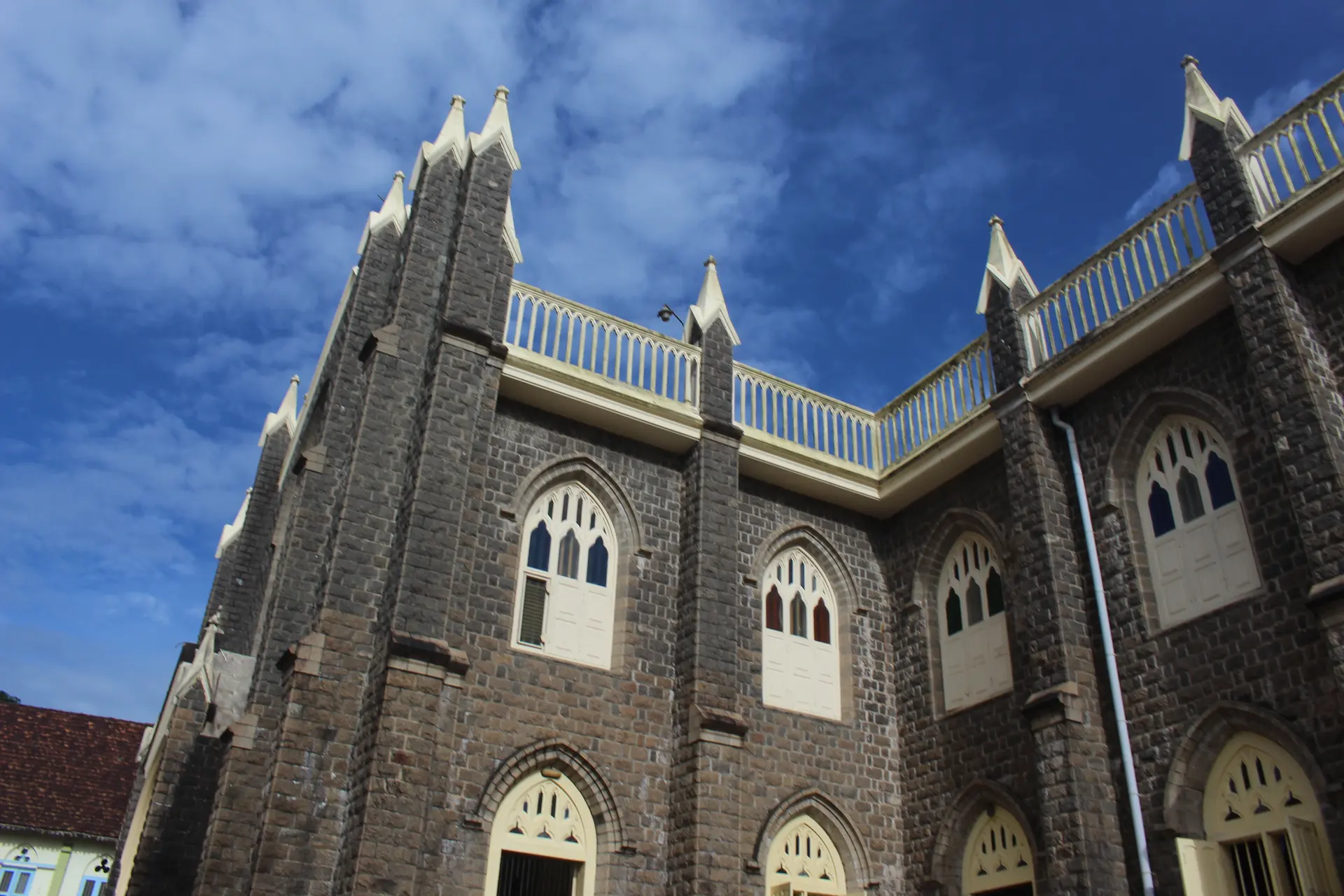
St. Andrew's Basilica, Arthunkal
Arthunkal, Kerala, India
31.8 km away
References
Sources consulted for this page. Source categories describe the publication, not a guarantee that every claim is verified. Traditional accounts and outside interpretations may differ.
- 01Chottanikkara Temple — Wikipedia — Wikipedia contributorsacademicConfirms location, three forms of the goddess (Saraswati/Lakshmi/Durga), Keezhkavu Bhadrakali shrine, Adi Shankara legend.
- 02Chottanikkara Bhagavathy Temple & Makam Thozhal — Kerala Tourism — Kerala Tourism (Govt. of Kerala)officialOfficial tourism board; confirms Makam Thozhal festival, ritual procession, Kerala temple architecture.
- 03Experience the Chottanikkara Bhagavathy Temple Kochi — Incredible India — Ministry of Tourism, Government of IndiaofficialGovernment tourism portal; confirms goddess as Rajarajeswari/Adiparasakthi, healing reputation.
- 04Secret Healing of Mental Illness at Chottanikkara Devi Temple, Kerala — academic authors (ResearchGate)academicAcademic study of the temple's mental-illness healing tradition and Guruthi Pooja practice.
- 05Goddess Therapy — Killing the Buddha — Killing the Buddha (longform feature)Source contextReportage on the guruthi ritual, its mixture (water, red dye, dirt, flowers) and Kannappa founder tradition.
- 06Chottanikkara Makam Thozhal Mahotsavam 2026 — Temples of KeralaSource contextFestival details: seven-day festival, Makam asterism in Kumbham, Vilvamangala Swamiyar vision legend.
- 07Chottanikkara Temple, Kerala — Map, Facts, Location, Hours, Tickets — Maps of World — Maps of WorldSource contextLocation and visiting facts; address Chottanikkara, Thrippunithura, Ernakulam 682312.
- 08Chottanikkara Temple Guide — Timings, Vazhipadu, Dress Code, and History — MyOksha TravelsSource contextDress code and visitor etiquette details.
- 09Chottanikkara Bhagavathy Temple — Incredible IndiaofficialSupports the attributed account or visitor practice in the healing section; not evidence of clinical efficacy.
- 10Chottanikkara temple — Kerala TourismofficialSupports the attributed account or visitor practice in the healing section; not evidence of clinical efficacy.
Share a photo
Help visitors recognize Chottanikkara Bhagavathy Temple, Chottannikkara, Kerala. Every submission is reviewed before publication.