Basilica of Our Lady of Ransom, Ernakulam, Kerala
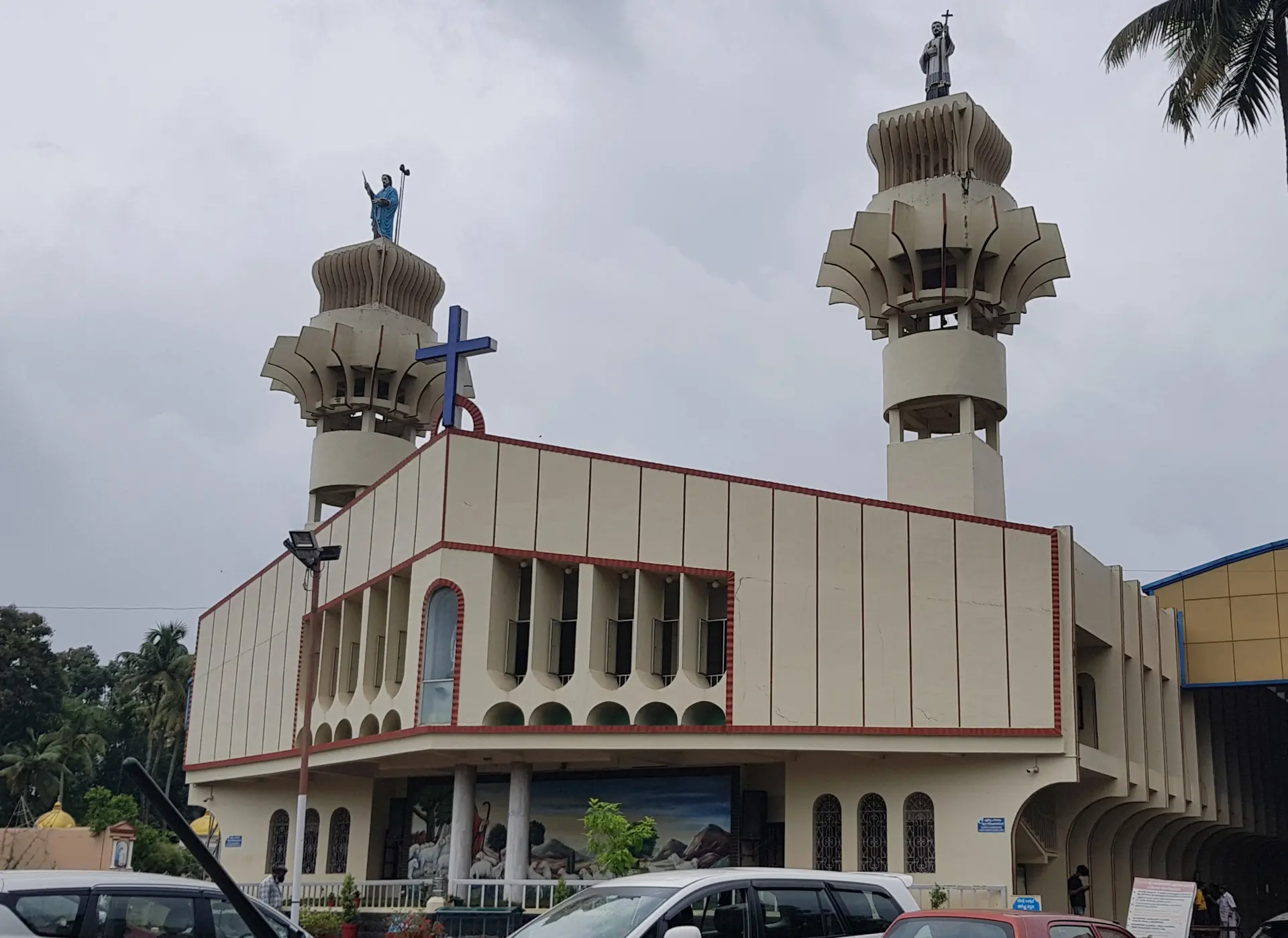
A white twin-towered Marian basilica on the Kochi backwaters, mother to seafarers and the storm-tossed
Understand sacred places, explore living traditions, and learn how to engage respectfully with Pilgrim Map.
Access has not been verified. Check current local guidance before planning a visit.
Ernakulam, Kerala, India
Read the sources
Visit essentials
A quick read before you go
- Duration
- 1–2 hours for a typical visit; longer during the feast.
- Access
- On Vallarpadam Island, Ernakulam/Kochi, reachable by road via the Goshree bridges, about 10–12…
Overview
The white, twin-towered National Shrine Basilica of Our Lady of Ransom stands beside Kochi's backwaters on Vallarpadam Island. One of India's foremost Marian pilgrimage centers, it honors Our Lady of Mercy as Vallarpadathamma, 'the mother of Vallarpadam.' Portuguese missionaries enshrined her portrait in 1524. After a 1676 flood destroyed the church, the recovered portrait entered a new church on land donated by Paliyath Valiyachan, Diwan of Cochin.
The central deliverance tradition remembers Meenakshi-Amma and her son surviving three days after their boat capsized in 1752, following her prayer and a priest's dream; they were baptized Mary and Jesudas. Vallarpadathamma became protectress of seafarers, fishers, and people facing storm, flood, and danger. Elevated to National Shrine and minor basilica in 2004, the church holds daily Masses in Malayalam, English, and Tamil and a major September feast.
Pilgrims across Christian, Hindu, and Muslim communities bring petitions for safety and healing, and some sweep the floor in thanksgiving.
Why this place is sacred
Water surrounds Vallarpadam and shapes its devotion: backwaters sustain fishing families while shrine traditions remember a portrait recovered from flood and a mother and son returned alive after three days at sea. Centuries of unbroken Marian prayer have made Vallarpadathamma a maternal protector honored across Christian, Hindu, and Muslim communities. Sweeping the church floor in thanksgiving gives that devotion a humble, embodied form.
A Portuguese-founded church (1524) enshrining a portrait of Our Lady of Mercy, marking the reception of Vallarpadam's Christians into the Latin rite.
Destroyed by the 1676 flood and rebuilt on donated waterside land, the shrine grew through the 1752 deliverance narrative into a major Marian pilgrimage centre, and was raised to a National Shrine and minor basilica in 2004.
Experience and orientation
The white twin-towered basilica beside Kochi's backwaters has a serene, prayerful atmosphere. Visitors bring petitions for safety at sea, healing, and family needs, seeking maternal protection. They may attend daily Mass, light a candle, pray at the shrine, or sweep part of the floor in thanksgiving. There is no entry fee.
Outside the large September feast, weekday mornings are especially calm. Pilgrims often report consolation and answered prayers, while the sweeping custom offers a tangible gesture of humility and gratitude.
The white twin-towered basilica (towers about 85 ft) stands on Vallarpadam Island beside the Kochi backwaters; a Portuguese portrait of Our Lady of Mercy is enshrined at the high altar. Masses are held in Malayalam, English and Tamil.
Context and lineage
A Portuguese-brought portrait of Our Lady of Mercy was enshrined in 1524 to mark the reception of Vallarpadam's Christians into the Latin rite on Pentecost. After the 1676 flood destroyed the church, the portrait was recovered from the water and a new church built on land donated by Paliyath Valiyachan.
The shrine's central devotional story is the 1752 deliverance of Meenakshi-Amma and her son, whose capsized boat and three-day survival after her prayer led to their baptism as Mary and Jesudas. Sources give the miracle's date as both 23 May 1752 and simply 'May 1752.'
Latin Rite Roman Catholicism, under the Metropolitan Archdiocese of Verapoly, within the Marian devotional tradition of coastal Kerala.
Portuguese missionaries
Founders
Paliyath Valiyachan
Patron
Meenakshi-Amma (Mary)
Devotee in the central miracle
Pope John Paul II
Ecclesiastical authority
Traditions and practice
Marian novenas, votive lamps and offerings, processions, and the blessing of boats and nets brought by local fishing families.
Daily Masses, multiple and in Malayalam, English and Tamil; confession; and the nine-day feast culminating on 24 September. All visitors may attend Mass, light candles and pray at the shrine.
Light a candle and sit a while in the calm beside the water. If it speaks to you, take part in the floor-sweeping custom as a small act of gratitude — a gesture that asks for humility rather than words. There is no entry fee and no requirement; come as a petitioner or simply as a quiet visitor.
Latin Rite Roman Catholicism
ActiveOne of India's foremost Marian pilgrimage centres, dedicated to Our Lady of Ransom (Vallarpadathamma), revered as protectress of seafarers, fishermen and those in distress.
Daily Mass, novenas, the September Feast of Vallarpadathamma, votive offerings, and the local custom of devotees sweeping the church floor as thanksgiving.
Perspectives and open questions
The shrine is read as a Portuguese colonial foundation, a living miracle-working presence, and an example of Kerala's shared sacred landscape.
Scholarly perspective
Historically a Portuguese-era foundation of 1524 reflecting the Latin Catholic Christianisation of the Kochi backwaters, rebuilt after the 1676 flood; one of the oldest European churches in India, now a minor basilica under the Archdiocese of Verapoly.
Living and traditional perspectives
Devotees hold Vallarpadathamma to be a living, miracle-working mother who repeatedly saves her children from storms, floods and shipwreck; the 1752 deliverance of Meenakshi-Amma is the central devotional narrative.
Alternative interpretations
The shrine's cross-community draw is sometimes read as a syncretic Kerala folk-Marian devotion, in which a maternal figure is honoured across religious lines.
Open questions
The precise origins of the Portuguese altar portrait and the historicity of the 1752 deliverance rest on parish tradition rather than documentary verification, and annual pilgrim figures vary widely between sources.
Plan your visit
Access and arrival
On Vallarpadam Island, Ernakulam/Kochi, reachable by road via the Goshree bridges, about 10–12 km from central Kochi. Nearest major station Ernakulam; Cochin International Airport about 35 km.
Respectful visit
Modest dress appropriate to a place of worship; no formally enforced dress code.
Generally permitted in the church grounds; be discreet during Mass and prayer.
Candles, flowers and votive offerings; some devotees offer coins or sweep the floor in thanksgiving.
Maintain silence and reverence during services; no entry fee.
Maintain silence and reverence during services. During the September feast the crowds are very large; plan for longer visits and limited quiet.
Current practical details
Address
Vallarpadam, Kochi, Kerala 682504, India
Phone
Hours
Hours, fees, and access can change — verify on the official source before you travel. Practical details last checked Jun 2026.
Location
Map loads as you approach this section.
Pilgrim reflections
A portrait of encounter, not a score
Pilgrims describe what they felt, how present they could become, and whether the place would shape a journey. There are no stars and no ranking of traditions.
No reviewed reflections yet
The first pilgrims can help describe the character of being here.
Share a reflection
Available after an account-backed “Been there.” Every reflection is reviewed before publication.
Nearby sacred places
Explore other sacred places in the region. Proximity does not establish access or travel time; check each place’s guidance.

Thrikkakara Vamanamoorthy Temple
Thrikkakara, Kerala, India
10.1 km away

Chottanikkara Bhagavathy Temple, Chottannikkara, Kerala
Kanayannur, Kerala, India
16.7 km away

Cheraman Juma Masjid, Kodungallur, Kerala
Sringapuram, Kerala, India
25.4 km away
Saint Mary's Forane Church, Koratty
Koratty, Kerala, India
32.4 km away
References
Sources consulted for this page. Source categories describe the publication, not a guarantee that every claim is verified. Traditional accounts and outside interpretations may differ.
- 01National Shrine Basilica of Our Lady of Ransom, Vallarpadam — Wikipedia — Wikipedia contributorsacademicConfirms 1524 Portuguese foundation, Latin rite, minor basilica status, Vallarpadathamma veneration.
- 02Brief history of Vallarpadam — Vallarpadam Basilica official site — Vallarpadam BasilicaofficialPrimary parish account: 1524 foundation, 1676 flood, Paliyath Valiyachan land donation, 1752 miracle, National Shrine and Basilica elevation dates.
- 03National Shrine Basilica of Our Lady of Ransom, Vallarpadam — Archdiocese of Verapoly — Roman Catholic Archdiocese of VerapolyofficialConfirms ecclesiastical jurisdiction under Metropolitan Archdiocese of Verapoly, Latin rite.
- 04Feast of Vallarpadathamma — Kerala Tourism — Kerala TourismofficialOfficial tourism source for the September feast and pilgrimage scale.
- 05National Shrine Basilica of Our Lady of Ransom, Vallarpadam — GCatholic — GCatholic.orgofficialConfirms minor basilica designation and address Vallarpadam, Kerala 682031.
- 06Vallarpadam Basilica — Timings, History & Darshan Guide — IndianpanoramaSource contextMass timings, patroness-of-seafarers tradition, floor-sweeping thanksgiving practice, no entry fee.
- 07Our Lady of Ransom Basilica, Vallarpadam — Timings, Festivals, History — Trawell.inSource contextFeast dates 16–24 September, architecture (twin towers ~85 ft), darshan information.
- 08Marian Apparitions (80) – Kerala, India — Jornal O ClarimspiritualCatholic press account of the Meenakshiyamma rescue narrative and her baptism as Mary.
Photo gallery
3 curated photos
Share a photo
Help visitors recognize Basilica of Our Lady of Ransom, Ernakulam, Kerala. Every submission is reviewed before publication.