Carnarvon Gorge Art Gallery
A 62-metre sandstone gallery of stencils and engravings, still under living custodianship
Understand sacred places, explore living traditions, and learn how to engage respectfully with Pilgrim Map.
Access has not been verified. Check current local guidance before planning a visit.
Carnarvon Gorge, Queensland, Queensland, Australia
Read the sources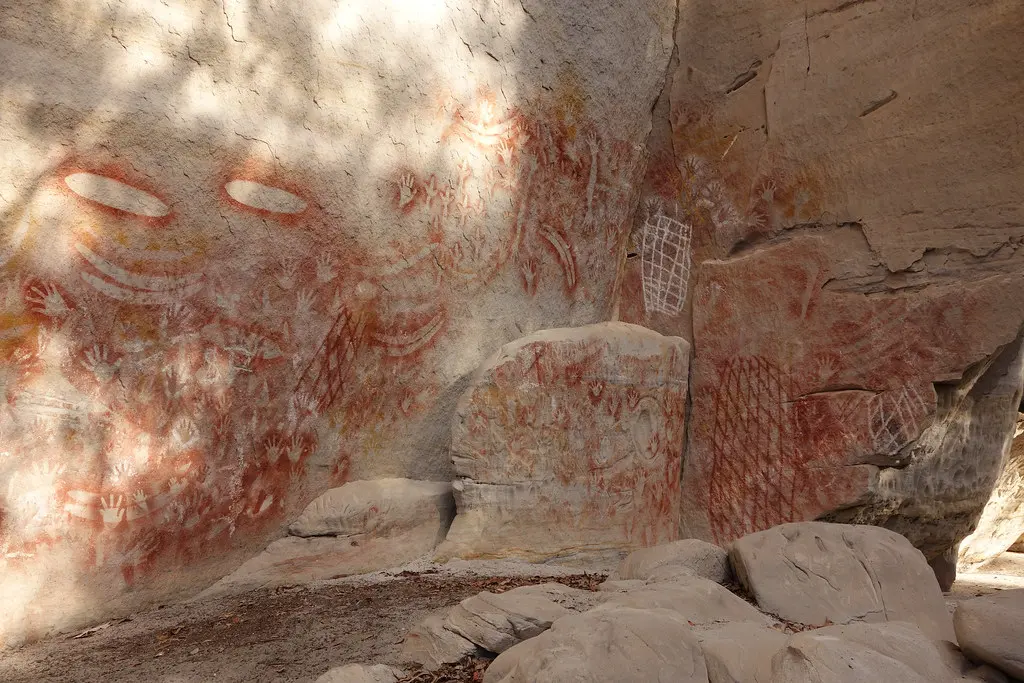
Image of Carnarvon Gorge Art Gallery. Image source
Visit essentials
A quick read before you go
- Duration
- Approximately four hours for the 10.8-kilometre return walk from the main visitor area on a…
- Access
- The Art Gallery is reached via the Main Gorge Track, 5.1 kilometres from the Carnarvon Gorge…
Overview
The Art Gallery is a sandstone shelter in Carnarvon Gorge, Queensland's Central Highlands. Its continuous 62-to-65-metre panel holds one of Australia's densest documented concentrations of Aboriginal rock art: hand and boomerang stencils, engraved emu and kangaroo tracks, and freehand ochre paintings layered over thousands of years. Queensland Parks and Wildlife Service credits Bidjara and Karingbal peoples as its makers; they, Kara Kara, Nguri, and neighbouring nations gathered seasonally in the wider gorge for ceremony, law, initiation, and trade.
Dreaming narrative understands the gorge as the work of Mundagurra, the Rainbow Serpent, who carved its sandstone gorges and waterways by moving through the landscape in and out of water. For Bidjara Elder and scholar Jackie Huggins, whose mother's Country this is, connection is a live physical inheritance passed through family.
Queensland Parks and Wildlife Service and Traditional Owner accounts confirm that the panel includes women's business and the wider gorge holds other sites not shown publicly. This material is not described, in accordance with cultural protocol. After 10.8 kilometres through gorge Country, visitors see the panel from a boardwalk and on custodians' terms.
Why this place is sacred
What makes the Art Gallery a place apart is not one image or one moment but accumulation — generation after generation of hands pressed to the same rock face, boomerangs and message sticks stencilled beside engraved animal tracks, new marks layered over or beside older ones across a span QPWS and academic sources place at somewhere between 3,650 and over 4,000 years for the gorge's rock art broadly, with occupation evidence at Kenniff's Cave elsewhere in the wider national park reaching back some 19,500 years.
The density itself is a kind of testimony: this was not an occasional stopping place but a location returned to repeatedly, across an unbroken thread of use that predates almost every built monument elsewhere in the world.
Traditional Owner testimony frames the gorge — not only the Art Gallery panel, but the wider landscape around it — as functioning like a cemetery, a place where ancestors are present and where behaviour is accordingly governed by respect rather than curiosity. Kristine Sloman, a Traditional Owner quoted in an official Queensland Government release, made this comparison directly, describing unauthorised entry into restricted zones as analogous to disturbing a grave.
Jackie Huggins writes of the sense of physical, ancestral connection she and her family feel on returning to this Country, a sense that is personal and multigenerational rather than something transferable to a passing visitor.
What this means for a visitor is not that the place withholds all meaning, but that its full meaning is not for outside eyes. The panel is generously documented and interpreted for the public in some respects — QPWS signage explains stencilling and engraving techniques, walk distances, conservation concerns — while remaining, in other respects, deliberately closed.
Both are true at once: an open invitation to witness scale and technique, and a firm boundary around content classified as gender-restricted or family/community-restricted. Standing at the boardwalk rail, at some distance from the panel itself, a visitor is asked to hold both facts together.
The panel functioned, over millennia, as a site tied to ceremony, initiation, law and the recording of totemic and everyday material culture for the Bidjara, Karingbal and other groups who gathered seasonally at Carnarvon Gorge.
QPWS and academic sources describe this gathering function explicitly — the gorge as a meeting ground between otherwise distinct language groups — while noting that the specific ceremonial content and meaning of particular motifs, especially gender-restricted material, is not detailed in publicly available sources, by design.
The panel was not made in a single episode but built up incrementally across thousands of years, with later stencils and engravings added alongside or over earlier ones.
In the twentieth and twenty-first centuries, its status shifted from a site known primarily within Aboriginal cultural networks to a nationally significant, publicly accessible destination within Carnarvon National Park, protected by boardwalks and Restricted Access Area declarations, and increasingly shaped by academic partnership with Traditional Owners — a 2019 Australian Archaeology journal article on "safekeeping" the site explicitly addresses this shift toward Indigenous-led research and management frameworks.
Experience and orientation
Reaching the Art Gallery is itself part of the encounter. From the main Carnarvon Gorge visitor area, the route follows the Main Gorge Track for 5.1 kilometres — a walk through creek-crossing country, past cycads and towering sandstone walls — before a marked side track leads to the site itself, for a return distance of 10.8 kilometres and roughly four hours of walking on a Grade 3 track with no wheelchair access.
The gorge narrows and widens as the track proceeds; the temperature drops in shaded sections; the sound of the creek is a near-constant companion. By the time the panel comes into view, a visitor has spent hours inside the landscape the art describes, which changes how the wall itself is met — not as an isolated attraction but as one further feature of a place already saturated with evidence of long human presence.
At the site, a boardwalk sets the terms of viewing. The panel itself runs some 62 to 65 metres along a sheltered sandstone face, carrying an estimated 2,000 individual stencils, engravings and freehand paintings — hands, boomerangs, emu and kangaroo tracks, and other forms repeated and layered across the rock in a density that visitors consistently describe as striking.
There is no single focal image to linger on; the experience is closer to reading a long accumulated text, one whose full vocabulary is not translated for the reader. Signage explains general technique — how stencils were made by holding an object against the rock and blowing ochre from the mouth, how engravings were pecked or abraded into the sandstone surface — without explaining the meaning of specific motifs, several of which remain restricted.
Visitors are asked to stay on the boardwalk and not touch the rock; skin contact, sunscreen and sweat cause measurable cumulative damage to sandstone that has already carried thousands of years of exposure. Some sections of the site are marked as Restricted Access Areas, fenced or signed apart from the main viewing path, and entering them carries a documented fine of AUD $431.
The overall tone of the encounter is not one of open access but of witnessed distance — permission to see scale and pattern, without permission to approach, touch, or know everything the wall holds.
Expect a full-day undertaking rather than a brief stop: budget the better part of a day for the return walk alone, carry sufficient water for warm-weather conditions, and arrive prepared to view the panel from a fixed boardwalk distance rather than up close. The walk itself, through cycad groves and narrowing sandstone corridors, is part of what the site asks of a visitor before the panel is even reached.
Context and lineage
The Dreaming narrative most consistently recorded across official and academic sources describes Mundagurra, the Rainbow Serpent, carving Carnarvon Gorge's sandstone cliffs and creek system by moving in and out of the water as it travelled through the landscape — the sinuous, water-carved gorge walls understood as the physical trace of that journey.
Historically, this same landscape drew Bidjara, Karingbal, Kara Kara, Nguri and other neighbouring peoples together seasonally for ceremony, initiation, law and trade, a convergence of otherwise distinct language groups that QPWS and academic sources describe as central to the gorge's significance as "a place of learning."
The Art Gallery panel itself accumulated across this same span of use, its stencils and engravings built up by successive generations rather than created at a single, datable founding moment — no source pins the panel's first creation to a specific year or figure, only broad estimates of several thousand years of continuous use.
The Art Gallery sits within a documented lineage of shared custodianship rather than a single unbroken line of ownership. QPWS names Bidjara and Karingbal peoples as the art's makers; Karingbal hold formal Native Title over parts of the area, while Jackie Huggins records that Karingbal people have themselves described Bidjara as the site's "spiritual owners" even where Karingbal hold the formal title — a layered arrangement rather than a contradiction.
Beyond these two groups, the Ngarrngga education case study identifies Kara Kara and Nguri as two further principal peoples historically converging at the gorge, with Huggins' account additionally naming Gungabula/Gunggari, Yiman and Wadja peoples as having documented ties to the broader cultural landscape, connections that vary in depth and are less extensively documented than the Bidjara and Karingbal roles.
Jackie Huggins
Bidjara/Birri-Gubba Juru Elder, scholar and essayist
Writes in first person of Carnarvon Gorge as her mother's ancestral Country, describing a strong, ongoing, multigenerational sense of physical and spiritual connection to the gorge and to sites within it that are shown only to family and community members rather than to the public.
Uncle Fred "Cotto" Conway OAM
Long-serving ranger and cultural knowledge holder
Named across multiple sources, including Jackie Huggins' account and the Ngarrngga education case study, as a key figure in ranger-led interpretation and protection of the gorge, and as a central cultural knowledge holder for the area.
Kristine Sloman
Traditional Owner
Quoted directly in an official Queensland Government media release describing unauthorised entry into the site's restricted zones as comparable to disturbing a cemetery, underscoring the gorge's status as sacred ground rather than a conventional tourist attraction.
Mundagurra
Rainbow Serpent, creator figure in Dreaming narrative
The figure to whom the carving of Carnarvon Gorge's sandstone gorges and waterways is attributed, said to have shaped the landscape while travelling through it, moving in and out of the water.
Traditions and practice
Historically, the gorge — including areas at and near the Art Gallery — was used seasonally by Bidjara, Karingbal, Kara Kara, Nguri and other neighbouring peoples for initiation, law, ceremony and broader social and trade exchange between language groups. Specific ceremonial content tied to particular motifs or restricted areas, including any material connected to gender-designated men's business or women's business sites, is not detailed in available research, consistent with the cultural protocols that govern this material.
Bidjara and Karingbal Traditional Owners continue active custodianship today: cultural education programs, ranger-led site protection and interpretation (a role long associated with Uncle Fred "Cotto" Conway), and restricted family or community visits to sites that are not disclosed to the general public.
Queensland Parks and Wildlife Service enforces physical protection measures — boardwalks, marked Restricted Access Areas, and a park-wide drone ban — in coordination with Traditional Owner input, though the extent of formal joint management, as opposed to advisory involvement, is described inconsistently across available sources and remains an open governance question.
A visitor's appropriate practice here is one of attention without intrusion: walking the full approach rather than rushing it, reading the interpretive signage provided, observing the panel's scale and density from the boardwalk, and treating the absence of explanation for certain motifs as itself a form of information rather than an omission to be filled in through guesswork.
Bidjara
ActiveThe Bidjara people, from the west of the gorge, are credited together with the Karingbal by Queensland Parks and Wildlife Service as creators of the Art Gallery rock art panel. Bidjara Elder Jackie Huggins describes Carnarvon Gorge as her mother's ancestral Country and a place of deep, ongoing spiritual and physical connection for her family.
Continuing custodianship, cultural education programs, and ranger-led interpretation, notably by Elder and long-serving ranger Uncle Fred "Cotto" Conway OAM, with some sites shown only to family and community members rather than to the public.
Karingbal (Garaynbal)
ActiveKaringbal people, from the east of the gorge, hold formal Native Title over parts of the area and are named by Queensland Parks and Wildlife Service as co-creators of the Art Gallery art. Per Jackie Huggins' account, Karingbal people have themselves described Bidjara people as the site's "spiritual owners" even where Karingbal hold formal title, reflecting a layered and shared custodial relationship rather than a single line of ownership.
Native Title holder rights, shared stewardship, and ongoing cultural exchange with Bidjara and other neighbouring groups.
Kara Kara
ActiveThis people, from the north, are one of the four principal groups identified by the Ngarrngga education case study as historically converging at Carnarvon Gorge for ceremony, trade and social gathering.
Historical seasonal gathering at the gorge; contemporary connection maintained through community and cultural heritage links, though less extensively documented in available sources than the Bidjara and Karingbal roles.
Wider regional Aboriginal groups (Nguri, Gungabula/Gunggari, Yiman, Wadja and others)
ActiveAdditional First Nations groups, including Nguri, Gungabula/Gunggari, Yiman and Wadja peoples, are documented as having ties to the broader Carnarvon Gorge cultural landscape as a shared meeting and ceremonial place, per Jackie Huggins' account and the Ngarrngga case study.
Cultural exchange networks connected to the gorge's role as a gathering place; contemporary connection varies by group and is less extensively documented in available public sources than for Bidjara and Karingbal.
Perspectives and open questions
The Art Gallery is read through at least three distinct lenses — archaeological, Traditional Owner, and a lower-reliability outside spiritual commentary — which this record holds separately rather than blending into a single account.
Scholarly perspective
Archaeologists regard the Art Gallery panel as among the most sophisticated and extensive stencil art traditions documented globally, with continuous use estimated at several thousand years, and current academic work increasingly emphasises incorporating Indigenous agency and knowledge frameworks directly into research and site management — a 2019 Australian Archaeology journal article addressing exactly this shift toward Indigenous-led "safekeeping" of the site.
Some earlier twentieth-century interpretations, such as readings of the ceremonial significance of cycad and Macrozamia seed deposits at nearby Cathedral Cave, have since been revisited and challenged by more recent re-analysis, a reminder that even the scholarly record here continues to be revised.
Living and traditional perspectives
Bidjara, Karingbal and other connected Traditional Owners describe Carnarvon Gorge as a living cultural landscape of continuing spiritual significance, shaped in the Dreaming by the Rainbow Serpent Mundagurra. Elders and cultural custodians such as Jackie Huggins and Uncle Fred Conway describe the entire park, not the Art Gallery panel alone, as sacred ground warranting the same respect owed to a cemetery, and maintain that some sites and knowledge remain restricted to community and family members rather than disclosed publicly.
Alternative interpretations
Some non-Indigenous spiritual or new-age travel writing has framed elements of the site's rock art through external goddess-worship or feminist-spirituality lenses. This record treats such readings as low-reliability outside interpretation rather than an authoritative account of Bidjara, Karingbal or Kara Kara tradition, and does not elaborate on them further, given the site's documented restricted content.
Open questions
The precise ceremonial meaning and full extent of restricted motifs and sites — including specific content classified as men's business or women's business — are, by design and cultural protocol, not fully disclosed in public sources and are not detailed in this record. The exact chronology of when specific sections of the Art Gallery panel were created, relative to the much older occupation evidence at Kenniff's Cave elsewhere in the park, also remains an open question for site-specific archaeological dating.
Plan your visit
Access and arrival
The Art Gallery is reached via the Main Gorge Track, 5.1 kilometres from the Carnarvon Gorge visitor area, then a marked side track to the site itself. The visitor area is reachable by conventional vehicle via sealed roads from Roma or Emerald in central Queensland.
Mobile phone signal within the gorge is unreliable to absent in most sections; visitors undertaking the full return walk should plan for limited ability to call for help and should register their intentions and carry adequate water, food and sun protection accordingly. No specific keyholder or booking contact beyond standard QPWS park booking channels was identified in research; check the Queensland Parks and Wildlife Service Carnarvon Gorge park page for current access arrangements and alerts.
Camping is available within Carnarvon Gorge only during Easter and the June-July and September-October school holiday periods, with advance booking required through QPWS. Outside those windows, visitors typically base themselves outside the park and day-trip in; specific commercial accommodation options were not detailed in available research.
Respectful visit
No specific dress code is stipulated in official QPWS materials for this site. Given the length and exposure of the approach walk, practical bushwalking clothing, sturdy footwear and sun protection are sensible rather than obligatory.
Photography is permitted from the designated boardwalk viewing areas. Leaving the boardwalk to get closer photographs, including for social media, is prohibited and has led to fines; drones are banned throughout Carnarvon Gorge without exception.
No source documents a visitor offering practice at this site.
Visitors must remain on the boardwalk at all times and must not touch the rock art; sunscreen, sweat, hand sanitizer and general skin contact cause cumulative damage to the sandstone surface. Entry into marked Restricted Access Areas carries a documented fine of AUD $431.
The Art Gallery includes content classified by Traditional Owners and Queensland Parks and Wildlife Service as women's business, and the wider gorge contains further sites restricted to specific community or family members and not shown to the public at all.
Visitors should understand that this classification exists and structures what is and is not shown or explained at the site — its content is not something this record, or general visitor materials, describe or interpret, and it should not be guessed at, asked about on-site in ways that press custodians for detail, or treated as a curiosity to be resolved.
Do not leave the boardwalk or enter marked Restricted Access Areas; do not touch the rock art, as skin contact, sunscreen and sweat cause cumulative, irreversible damage to the sandstone; do not use drones anywhere in the gorge; and do not seek out, speculate about, or attempt to photograph any restricted content — several nearby sites are, by design, not disclosed to the public at all.
Location
Map loads as you approach this section.
Pilgrim reflections
A portrait of encounter, not a score
Pilgrims describe what they felt, how present they could become, and whether the place would shape a journey. There are no stars and no ranking of traditions.
No reviewed reflections yet
The first pilgrims can help describe the character of being here.
Share a reflection
Available after an account-backed “Been there.” Every reflection is reviewed before publication.
Nearby sacred places
Explore other sacred places in the region. Proximity does not establish access or travel time; check each place’s guidance.

Mount Wollumbin
Tweed Shire Council, New South Wales, Australia
623.2 km away
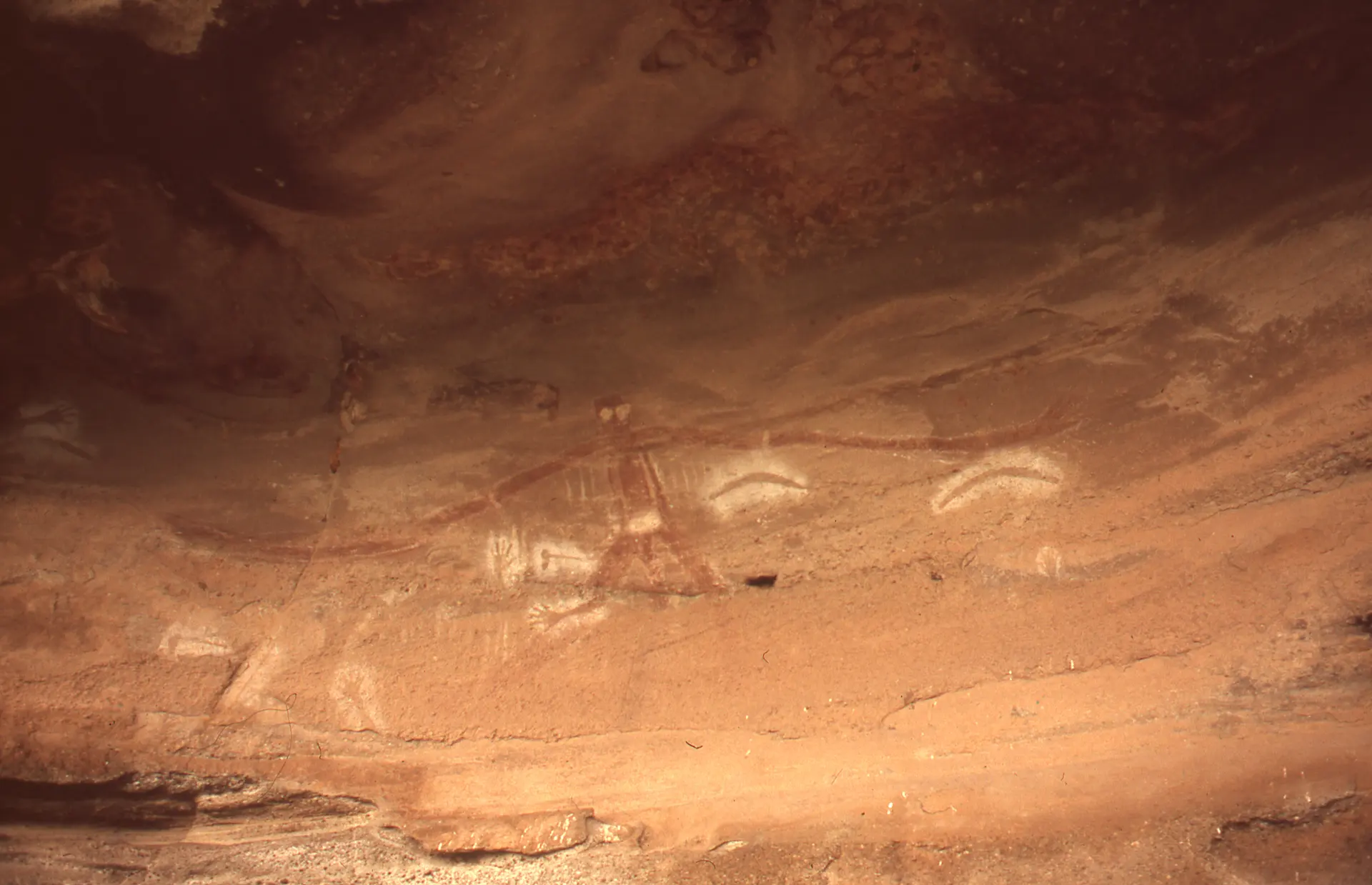
Baiame Cave
Milbrodale / Singleton, New South Wales, New South Wales, Australia
884.9 km away
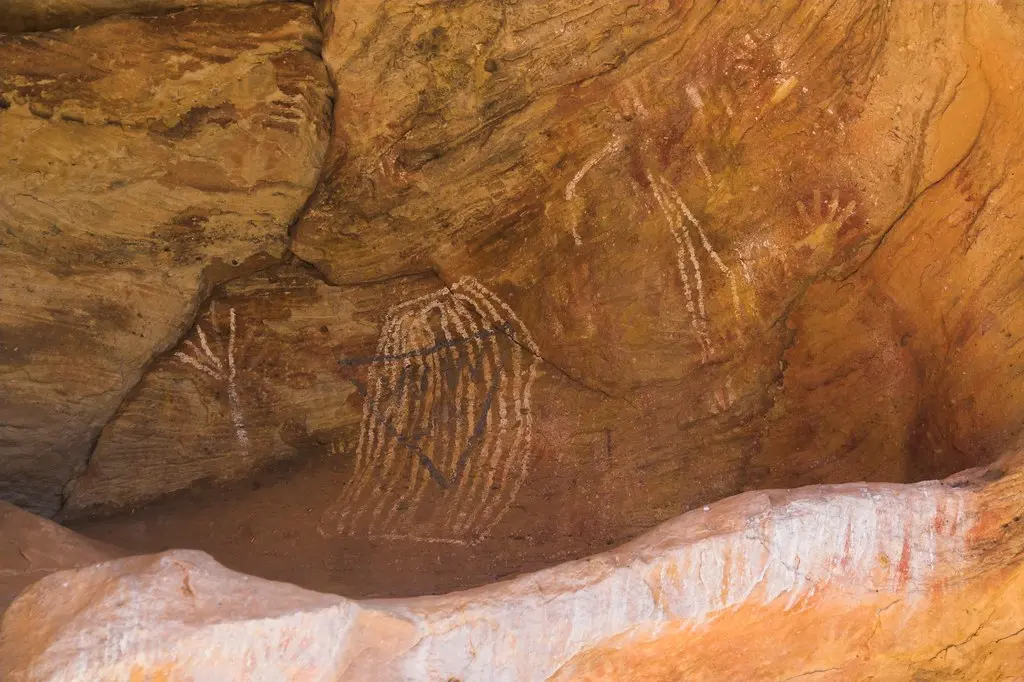
Mutawintji Historic Site
Mutawintji / Broken Hill region, New South Wales, New South Wales, Australia
907.6 km away
Mount Yengo
Wollombi / Yengo National Park, New South Wales, New South Wales, Australia
908.4 km away
References
Sources consulted for this page. Source categories describe the publication, not a guarantee that every claim is verified. Traditional accounts and outside interpretations may differ.
- 01Art Gallery walk | Carnarvon Gorge, Carnarvon National Park — Queensland Department of the Environment, Tourism, Science and Innovation (QPWS)officialOfficial park authority page: access, distance, walk grade, and description of the 62m-long sandstone panel of stencils, engravings and freehand paintings created by Bidjara and Karingbal peoples.
- 02Nature, culture and history | Carnarvon Gorge, Carnarvon National Park — Queensland Department of the Environment, Tourism, Science and Innovation (QPWS)officialOfficial acknowledgment of Traditional Owners/custodians, Mundagurra rainbow serpent Dreaming narrative, description of the gorge as 'a place of learning' of great spirituality.
- 03Selfish selfies put Carnarvon rock art at risk — Queensland Department of the Environment, Tourism, Science and Innovation (DETSI)officialOfficial media release on boardwalk rules, restricted access zones, $431 fines, and a direct quote from Traditional Owner Kristine Sloman describing the site's sacred/cemetery-like status.
- 04Friday essay: 'An oasis in the desert' – Jackie Huggins reflects on her deep history with Carnarvon Gorge — Jackie Huggins (Bidjara/Birri-Gubba Juru), published via The ConversationSource contextFirst-person account by a Bidjara Elder/scholar describing ancestral connection, restricted sites shown only to family/community members, and the role of ranger and cultural custodian Uncle Fred 'Cotto' Conway.
- 05Case Study 1: Carnarvon Gorge, Queensland — Ngarrngga (Aboriginal and Torres Strait Islander histories and cultures education initiative, University of Melbourne partnership)academicEducation-sector case study naming Kara Kara, Karingbal, Nguri and Bidjara as the four groups converging at the Gorge; describes known men's and women's business sites without detailing restricted content; names Uncle Fred Conway as key knowledge holder.
- 06Carnarvon Gorge: safekeeping a place and Indigenous agency within rock art research and management — Australian Archaeology, Vol 85, No 2 (2019)academicPeer-reviewed archaeology journal article (abstract/citation accessed; full text paywalled) on Indigenous agency in rock art research and site management at Carnarvon Gorge.
- 07Aboriginal rock art, Carnarvon Gorge — University of Queensland eSpace repositoryacademicUniversity repository record relating to academic documentation of the rock art.
- 08Carnarvon National Park — Wikipedia contributorsacademicGeneral encyclopedic background on the park, including Kenniff's Cave excavation evidence of occupation to c. 19,500 years, used for park-wide archaeological context distinct from the Art Gallery panel itself.
- 09Carnarvon Gorge | Human History — Australian Nature GuidesSource contextTourism/naturalist guide site; used only to corroborate widely-repeated facts (age estimates, panel description) also found in official/academic sources, not as a standalone authority.
- 10Carnarvon Gorge - an Aboriginal Rock Stencil Art site, with engravings of vulvas, emu and kangaroo tracks — Don Hitchcock (donsmaps.com)Source contextIndependent enthusiast archaeology-photography site; corroborates motif types already documented by official/academic sources but is not treated as a primary authority given the sensitivity of the specific motifs it names.
Share a photo
Help visitors recognize Carnarvon Gorge Art Gallery. Every submission is reviewed before publication.