Burgos Cathedral
Where Spain's first Gothic cathedral shelters El Cid and welcomes pilgrims on their way to Santiago
Understand sacred places, explore living traditions, and learn how to engage respectfully with Pilgrim Map.
Access has not been verified. Check current local guidance before planning a visit.
Burgos, Burgos, Spain
Read the sources
Visit essentials
A quick read before you go
- Duration
- 1.5-2 hours for thorough visit including nave, major chapels, Golden Staircase, cloister, and…
- Etiquette
- As an active Catholic cathedral, modest dress, quiet behavior, and respect for worship are…
Overview
Founded in 1221 by King Ferdinand III and Bishop Maurice, Burgos Cathedral expressed Castile's Christian identity through French Gothic forms. Its three-and-a-half-century construction joined the thirteenth-century nave, the fifteenth-century Colonia family's spires and domes, and Diego de Siloé's Renaissance Golden Staircase into a single history of Gothic art.
Beneath the crossing dome, Rodrigo Díaz de Vivar—El Cid—rests beside his wife Jimena, where history, national myth, and sacred memory meet. The cathedral remains the Archbishop of Burgos's seat, a parish church, and a living Camino de Santiago station.
Why this place is sacred
Burgos Cathedral exists at the intersection of faith, power, art, and identity. Its sacredness cannot be understood through any single lens; all must be held together.
As the seat of the Archbishop of Burgos, the cathedral has been a mother church for eight centuries—a place where the sacraments have been celebrated continuously since its consecration in 1260. Every mass adds to the accumulated devotion; every baptism, wedding, and funeral deepens the human meaning that saturates the stones. The dedication to the Virgin Mary connects the cathedral to one of Christianity's most powerful devotions, and the celebrations of Marian feast days still draw the faithful.
The royal dimension cannot be separated from the religious. King Ferdinand III—later canonized as Saint Ferdinand—founded the cathedral. Members of the early Castilian royal house lie beneath the main altar. The Chapel of the Constables, one of the most beautiful funerary chapels in the world, houses the tombs of Pedro Fernández de Velasco and Mencía de Mendoza, their star-shaped vault admitting light that transforms their resting place. Power and faith were inseparable in medieval Castile; the cathedral embodies that union.
El Cid's tomb adds another dimension. Rodrigo Díaz de Vivar became, after his death, a legendary figure embodying Christian resistance during the Reconquista. His historical reality—a complex warrior who fought for both Christian and Muslim rulers—was transformed into myth: the perfect knight of Christendom. Placing his remains in the cathedral in 1919 fused national mythology with sacred space. To stand at his tomb is to encounter not just a historical figure but a symbol shaped by centuries of imagination.
The Camino de Santiago provides the final layer. For eight centuries, pilgrims walking toward the apostle's tomb have stopped at Burgos Cathedral—to rest, to worship, to receive blessing before continuing their journey. The cathedral thus exists not only as destination but as station, a point on a longer path of seeking.
Bishop Maurice of Burgos, who had studied in Paris and admired French Gothic architecture, convinced King Ferdinand III of Castile to fund a cathedral that would express Castile's growing power and Christian identity. The foundation stone was laid June 20, 1221, replacing an earlier Romanesque church. The cathedral was intended to serve as the mother church of the diocese, a royal statement, and a pilgrimage station on the Camino de Santiago.
The cathedral accumulated over centuries. The thirteenth-century French Gothic core received fifteenth-century additions from the Colonia family (originally from Cologne)—the famous spires, the dome over the crossing, the Chapel of the Constables. Diego de Siloé's Renaissance Golden Staircase (1519) connected street and cathedral floor. Major construction concluded in 1567, but additions and restorations continued. El Cid's remains arrived in 1919. UNESCO inscription in 1984 recognized the cathedral's exceptional universal value—the only Spanish cathedral so designated independently.
Experience and orientation
The spires announce the cathedral from across Burgos, their openwork silhouettes distinctive against the Castilian sky. These fifteenth-century additions by the Colonia family transformed the cathedral's profile, creating landmarks visible from the surrounding plains. Approaching through the old city, the west front gradually reveals itself—portals carved with prophets and apostles, stone dense with medieval narrative.
Entering, the nave demonstrates why this was Spain's first Gothic cathedral. The French influence is immediate: the three-story elevation, the clustered columns drawing the eye upward, the vaulting that seems to float. Bishop Maurice had studied in Paris; he brought that city's architectural revolution to Castile. Light falls through clerestory windows, illuminating an interior designed to inspire awe.
The crossing marks the cathedral's heart. Here, beneath the great dome, El Cid lies with his wife Jimena—Spain's legendary warrior at rest in Spain's greatest Gothic church. A simple slab marks the spot; the simplicity contrasts with the magnificence above. To stand here is to encounter the fusion of history and myth that characterizes Spanish Christianity. Pilgrims on the Camino pause here, paying respects before continuing their journey.
The Chapel of the Constables demands its own time. Commissioned by the Constable of Castile and his wife, this flamboyant Gothic masterpiece functions as a small cathedral within the cathedral. The star-shaped vault opens to a lantern that floods the space with light—a dramatic contrast to the darker nave. Effigies of the Constable and his wife recline in marble serenity. This is what medieval patronage at its height could achieve: a private chapel that rivals the cathedral it adorns.
The Golden Staircase offers another revelation. Diego de Siloé created this Renaissance masterpiece to connect the Door of the Apostles (at street level) to the cathedral floor, eight meters below. The result—twin flights ascending to a landing then converging—became famous enough to inspire the staircase of the Paris Opera centuries later. The gilded ironwork gives the stair its name; the proportions demonstrate the Renaissance discovery of harmony.
Above the cathedral clock, the Papamoscas—'the Flycatcher'—waits to mark the hour. This eighteenth-century automaton opens its mouth and rings a bell as the clock strikes, delighting visitors for over two centuries. Some claim it inspired Victor Hugo's hunchback; regardless, it adds a note of whimsy to the sacred gravity.
The cloister provides transition from cathedral intensity. Fourteenth-century arcades frame a garden of contemplation. The museum and treasury house artifacts accumulated over eight centuries—textiles, goldwork, manuscripts, the material culture of a major medieval institution.
Enter through the main west portals. Allow time for the nave to register before moving forward. At the crossing, pause at El Cid's tomb beneath the dome. The Chapel of the Constables opens from the ambulatory behind the main altar—follow signs or ask. The Golden Staircase is in the north transept. Time your visit to see the Papamoscas strike (on the hour). The cloister entrance is to the right from the main nave.
Context and lineage
King Ferdinand III of Castile and Bishop Maurice of Burgos laid the foundation stone on June 20, 1221. Maurice had studied in Paris and was determined to bring French Gothic architecture to Spain. The cathedral replaced an earlier Romanesque church and was intended to express Castile's growing power during the Reconquista—the Christian campaign to reclaim the Iberian Peninsula. The cathedral was consecrated in 1260, though construction continued for centuries.
Ferdinand III was later canonized, adding another layer of sanctity to the foundation.
Burgos Cathedral represents the mainstream of Spanish Catholic tradition. As seat of the archbishop, it maintains apostolic succession and diocesan authority. Its position on the Camino de Santiago connects it to the pilgrimage tradition extending back to the discovery of Saint James's relics in the ninth century. The cathedral's royal foundations and burials link it to the formation of Spanish Christian identity during and after the Reconquista.
Ferdinand III of Castile
Royal founder
El Cid (Rodrigo Díaz de Vivar)
Buried at crossing
Juan de Colonia
15th-century architect
Diego de Siloé
Renaissance architect
Traditions and practice
The cathedral served as site for royal ceremonies of Castile, including the dubbing of knights. Pilgrims on the Camino de Santiago would attend mass, venerate relics, and receive blessing before continuing. Major feast days of the Virgin Mary brought elaborate liturgy. Memorial masses for the royal dead and other benefactors were celebrated according to their endowments.
Regular masses continue throughout the year. Pilgrims on the Camino de Santiago stop for worship and receive credential stamps validating their journey. The cathedral celebrates the full liturgical calendar with particular emphasis on Marian feast days. Holy Week brings special ceremonies and larger crowds. The tomb of El Cid draws visitors for both historical interest and a form of secular pilgrimage.
If walking the Camino, bring your credential for stamping—the cathedral has received pilgrims for eight centuries. Attend mass to experience the building in its liturgical function. Visit on the hour to see the Papamoscas automaton strike. The Chapel of the Constables deserves extended time—find a seat and observe how light transforms the space through the day.
Roman Catholicism
ActiveBurgos Cathedral is the seat of the Archbishop of Burgos, making it the mother church of a major Spanish archdiocese. Founded by King Ferdinand III (later canonized) and Bishop Maurice, the cathedral has served continuous worship since its consecration in 1260. The royal tombs and El Cid's burial connect faith to Spanish Christian identity formed during the Reconquista. As a major station on the Camino de Santiago, the cathedral has welcomed pilgrims for eight centuries, receiving them for worship and blessing before they continue toward the apostle's tomb.
Regular masses throughout the year. Pilgrimage services for Camino walkers including credential stamping. Celebration of the liturgical calendar with emphasis on Marian feast days and Holy Week. Memorial services continuing medieval endowments. Sacraments of baptism, marriage, and funeral linking the cathedral to the life cycle of the community.
Perspectives and open questions
Burgos Cathedral stands at the intersection of art history, religious tradition, national identity, and pilgrimage practice. Its meaning shifts depending on the lens through which it is viewed.
Scholarly perspective
Art historians recognize Burgos as a comprehensive example of Gothic evolution—from 13th-century French clarity through Flamboyant exuberance to Renaissance synthesis. UNESCO inscription emphasizes its role in diffusing French Gothic forms into Spain and its internationally significant workshop where northern European artists trained Spanish successors. The cathedral is the only Spanish church designated as a standalone World Heritage Site, testament to its exceptional artistic significance.
Living and traditional perspectives
For Catholic faithful, Burgos Cathedral is the mother church of the archdiocese, a place of continuous worship since the thirteenth century. The royal tombs connect faith to Spanish identity; El Cid's burial adds national mythology. For Camino pilgrims, it represents a major station—a place where the path pauses for rest, worship, and blessing before continuing toward Santiago. The traditions of pilgrimage and devotion continue unbroken.
Alternative interpretations
Some visitors are drawn by the cathedral's geometry, its interplay of light and stone, and the symbolic resonance of Gothic sacred architecture. The ascent from street to cathedral floor via the Golden Staircase suggests passage between realms. El Cid's tomb draws those interested in the intersection of history and mythology, regardless of religious affiliation.
Open questions
Mysteries remain. How did Bishop Maurice persuade Ferdinand III to fund such an ambitious project in 1221? What was the original appearance before the Colonia family's transformations? What ceremonies accompanied El Cid's transfer in 1919? The Papamoscas has delighted visitors for centuries, but its full symbolic meaning—if any beyond entertainment—remains debated.
Plan your visit
Access and arrival
Hotels throughout Burgos from budget to luxury. Pilgrim hostels (albergues) serve Camino walkers. The historic center offers restaurants and cafes within walking distance of the cathedral.
Respectful visit
Modest dress covering shoulders and knees. Remove hats except for religious reasons. The interior is cool; bring a layer in any season.
Permitted except during services. No flash in chapels with sensitive artwork. Be discreet and respectful of worshippers.
Donations appreciated and support ongoing maintenance. Candles may be lit at designated side altars.
Silence during services. Do not cross the nave during mass. Some chapels may be closed for ceremonies or restoration. Entry fee required except during free Tuesday afternoon hours.
The cathedral is an active place of worship; services take precedence over tourism. Arrive early to avoid midday crowds. Tuesday afternoon free entry is popular; expect more visitors. Some areas may be closed for ceremonies or restoration.
Current practical details
Address
Pl. Sta. María, s/n, 09003 Burgos, Spain
Phone
Hours
Hours, fees, and access can change — verify on the official source before you travel. Practical details last checked Jun 2026.
Location
Map loads as you approach this section.
Pilgrim reflections
A portrait of encounter, not a score
Pilgrims describe what they felt, how present they could become, and whether the place would shape a journey. There are no stars and no ranking of traditions.
No reviewed reflections yet
The first pilgrims can help describe the character of being here.
Share a reflection
Available after an account-backed “Been there.” Every reflection is reviewed before publication.
Nearby sacred places
Explore other sacred places in the region. Proximity does not establish access or travel time; check each place’s guidance.

Ex-Collegiate Church of Santa María del Manzano
Castrojeriz, Burgos, Spain
36.0 km away

Convent of San Antón, Castrojeriz
Castrojeriz, Burgos, Spain
36.9 km away

Monastery of Santo Domingo de Silos
Santo Domingo de Silos, Burgos, Spain
48.3 km away
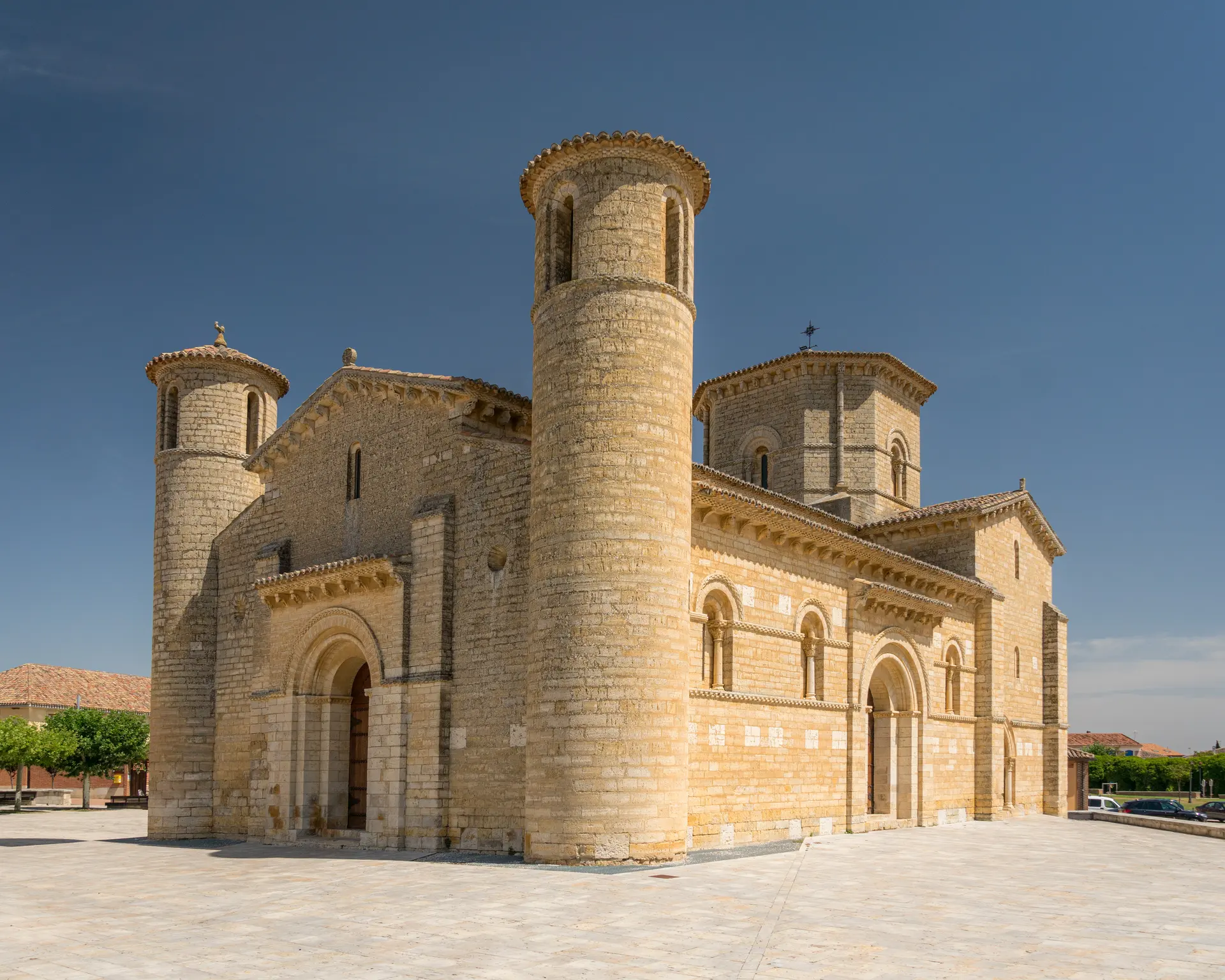
Church of San Martín de Tours
Frómista, Palencia, Spain
58.3 km away
References
Sources consulted for this page. Source categories describe the publication, not a guarantee that every claim is verified. Traditional accounts and outside interpretations may differ.
- 01Burgos Cathedral — UNESCO World Heritage CentreofficialOfficial UNESCO documentation
- 02The history of Burgos Cathedral — spain.infoofficialOfficial Spanish tourism
- 03Catedral de Burgos — Turismo BurgosofficialOfficial local tourism information
- 04Burgos Cathedral — Wikipedia contributorsencyclopediaComprehensive historical overview
Photo gallery
3 curated photos
Share a photo
Help visitors recognize Burgos Cathedral. Every submission is reviewed before publication.