Kalahasteeswarar Temple, Kumbakonam, Tamil Nadu
Where Rahu worshipped Shiva, and pilgrims find relief from planetary afflictions
Understand sacred places, explore living traditions, and learn how to engage respectfully with Pilgrim Map.
Access has not been verified. Check current local guidance before planning a visit.
Kumbakonam, Tamil Nadu, India
Read the sources
Visit essentials
A quick read before you go
- Duration
- 30 minutes to 1 hour for a standard visit.
- Etiquette
- The Kalahasteeswarar Temple requires standard Hindu temple etiquette: removing footwear, modest…
Overview
In Kumbakonam, where 188 temples rise along the Kaveri, Kalahasteeswarar Temple offers access to the spiritual efficacy of Srikalahasti without travel to Andhra Pradesh. Devotees seek relief from Rahu-Ketu dosham, following the tradition that Rahu performed penance to Shiva at Srikalahasti. The Chola-period temple was substantially expanded under the Nayaks in the 17th century and is one of twelve Shiva temples connected to Mahamaham, held once every twelve years. Tradition says its bell produces the primordial sound OM.
At the Jeerageswarar sub-shrine, devotees continue to anoint the deity with hot water for relief from fevers.
Why this place is sacred
In Tamil temple tradition, certain sites are understood to replicate the power of distant pilgrimage destinations. This is not imitation but transmission. The Kalahasteeswarar Temple is believed to hold the same spiritual efficacy as Srikalahasti, one of the Pancha Bhuta Sthalams representing the element of air and one of the most powerful Shiva temples in South India.
The connection to Rahu is central. In Hindu astrology, Rahu and Ketu are the shadow planets, the north and south lunar nodes that cause eclipses. When poorly placed in a birth chart, they bring confusion, obstacles, and suffering. Traditional remedies include worship at temples associated with these grahas. Rahu is believed to have worshipped Shiva at Kalahasti, and temples that share this association carry power to mitigate his malefic effects.
The temple bell is said to produce the sound OM, the primordial vibration from which creation emerged. While this claim might seem fanciful, devotees who ring the bell and listen carefully often describe an unusual resonance, a quality that goes beyond ordinary metal. Whether this reflects the bell's construction, the temple's acoustics, or something less explicable, it adds to the site's thin-place character.
The shrine of Jeerageswarar within the complex has been associated with healing for centuries. The practice of anointing this deity with hot water to relieve fever reflects Hindu understanding that divine images are not representations but presences. The deity experiences what is offered, and the devotee receives blessing in return.
The original small temple dates from the late Chola period, built to serve devotees who could not travel to the distant Srikalahasti. The concept of creating local equivalents of major pilgrimage sites has deep roots in Hindu tradition, allowing the blessings of distant sacred places to be accessed by those unable to make the journey.
Major expansion occurred in the 17th century under Serfoji I during the Nayak period. This expansion was undertaken partly for the convenience of the Kanchi Mutt's peetadhipati, connecting the temple to one of South India's most important Shaivite institutions. The temple underwent Mahasamprokshanam (Kumbabishegam) in 2015, a major reconsecration ceremony that renewed its spiritual power.
Experience and orientation
Approaching the Kalahasteeswarar Temple, you encounter the characteristic elements of Tamil sacred architecture: the gopuram rising above the streets, the stone walls enclosing the sacred precinct, the threshold between ordinary and sacred space.
Inside, the temple follows traditional Dravidian layout. The central shrine houses Kalahasteeswarar, the form of Shiva worshipped here. The atmosphere is one of active devotion: the sound of bells, the fragrance of flowers and incense, the movements of priests performing rituals that have continued for centuries.
Devotees seeking relief from Rahu-Ketu dosham come here with specific intentions. Many have consulted astrologers who identified planetary afflictions in their charts and prescribed worship at this temple. The prayers offered are not abstract devotion but targeted petition for relief from specific obstacles: blocked careers, delayed marriages, persistent bad luck, mental confusion.
The temple bell draws particular attention. Pilgrims ring it and listen, hoping to hear the OM resonance that tradition describes. Whether they perceive it varies, but the act of listening deeply, expecting something sacred, shifts the quality of attention.
The shrine of Jeerageswarar offers a different kind of encounter. Here, devotees bring their physical ailments, particularly fevers, seeking the deity's healing intervention. The practice of anointing the murti with hot water enacts the principle that what is given to the deity is received in blessing.
Visitors coming without specific astrological concerns can still appreciate the temple's devotional atmosphere. The Kumbakonam temple circuit offers dozens of sites, and this temple's connection to planetary remediation makes it distinctive among them.
If you come for Rahu-Ketu parihara, consult the temple priests about specific rituals. They can guide you through the appropriate offerings and prayers. If you come simply to experience traditional Tamil temple worship, join the flow of devotees, receive darshan of the main deity, and let the atmosphere of centuries of devotion work on you.
Ring the temple bell and listen. Whether or not you hear OM, the act of listening with expectation is itself a practice. Visit the Jeerageswarar shrine if healing is part of your intention.
Context and lineage
The temple is associated with the legend of Rahu worshipping Shiva to gain relief from afflictions. Just as Rahu performed penance at Srikalahasti, devotees believe similar worship here provides equivalent spiritual benefits. The creation of Then Kalahasti, Southern Kalahasti, allowed those unable to travel to Andhra Pradesh to access the same remediation.
The temple maintains connection to the Kanchi Mutt, one of South India's most important Shaivite institutions. Its expansion was undertaken partly for the convenience of the Mutt's peetadhipati. This institutional connection places the temple within a living lineage of Shaivite learning and practice stretching back centuries.
Kalahasteeswarar
deity
The form of Shiva worshipped at this temple, equivalent to the deity at Srikalahasti. The name derives from the three creatures (spider, serpent, elephant) associated with the original temple legend.
Rahu
deity/planet
The north lunar node, considered a shadow planet that causes obstacles and confusion when poorly placed in a birth chart. Rahu is believed to have worshipped Shiva at Kalahasti, making temples with this association powerful for remediation.
Jeerageswarar
sub-deity
A sub-deity within the temple complex associated with healing, particularly for fevers. Devotees anoint this deity with hot water seeking relief from illness.
Traditions and practice
Traditional practices include daily poojas at morning and evening, abhishekam (ritual bathing of the Shiva lingam), and worship with vilva leaves sacred to Shiva. The temple follows Tamil Agamic traditions under Kanchi Mutt guidance.
Daily poojas are held from 7:00 AM to 12:00 PM and 4:30 PM to 7:30 PM. Devotees seeking Rahu-Ketu parihara should consult temple priests about specific rituals, which may include special offerings and prayers during Rahu Kalam (the inauspicious period ruled by Rahu each day). The annual celebration of Lord Kalahasteeswarar's wedding occurs on Thai Pongal/Makara Sankranti.
The Jeerageswarar shrine offers healing rituals where devotees anoint the deity with hot water for relief from fever and illness.
If seeking Rahu-Ketu parihara, arrive prepared to spend time and consult with priests about appropriate rituals. Bring offerings of flowers, coconut, and camphor. Consider timing your visit during Rahu Kalam for maximum efficacy, though this requires consulting a Hindu calendar.
For general visitors, the morning hours offer the fullest experience of temple worship. Receive darshan of Kalahasteeswarar, ring the temple bell and listen, and visit the Jeerageswarar shrine.
Shaivism
ActiveThe temple is dedicated to Shiva in his form as Kalahasteeswarar, equivalent to the deity at Srikalahasti. It is one of twelve Shiva temples connected to the Mahamaham festival and is considered a Rahu-Ketu parihara sthalam, a site for remedying planetary afflictions.
Daily poojas, abhishekam, worship with vilva leaves, special Rahu-Ketu parihara rituals, celebration of Lord's wedding on Thai Pongal, participation in Mahamaham festival.
Tamil Temple Tradition
ActiveThe temple follows Tamil Agamic traditions and maintains connection to the Kanchi Mutt. It is part of the Kumbakonam temple circuit, one of the most concentrated collections of sacred sites in South India.
Traditional Tamil temple worship, Agamic rituals, pilgrimage as part of the broader temple circuit.
Perspectives and open questions
The Kalahasteeswarar Temple represents the South Indian tradition of creating equivalent sacred sites that carry the spiritual power of distant pilgrimage destinations. This practice reflects a sophisticated understanding of how the sacred can be transmitted and accessed.
Scholarly perspective
Scholars of South Indian religion recognize the practice of creating replica or equivalent sacred sites as an important feature of Hindu sacred geography. These temples are not considered imitations but genuine transmissions of spiritual power, allowing devotees access to distant blessings. The temple's expansion under Nayak patronage and its connection to Kanchi Mutt demonstrate the institutional structures that maintained Tamil temple traditions.
Living and traditional perspectives
For devotees, the Kalahasteeswarar Temple genuinely provides the spiritual benefits of Srikalahasti. Rahu's worship is present here as at the original site. The healing powers of Jeerageswarar are understood as real and accessible through proper ritual. The temple bell truly produces OM for those with ears to hear.
Open questions
The full sthala purana (temple legend) of this specific site has not been fully documented in accessible sources. The mechanism by which the bell produces its distinctive sound, and whether it truly resonates at the frequency of OM, remains unexplained. The complete history of the original Chola-period temple is not well documented.
Plan your visit
Access and arrival
Kumbakonam offers lodging at various price points, from dharamshalas (pilgrims' rest houses) to comfortable hotels. The town is a major pilgrimage center with good infrastructure for visitors.
Respectful visit
Traditional modest dress. Men: dhoti or formal pants, often bare-chested for inner sanctum. Women: sarees or salwar kameez with shoulders covered.
Generally not permitted inside the sanctum sanctorum. Ask before photographing anywhere in the temple. Never photograph poojas or rituals without explicit permission.
Flowers, fruits, coconuts, camphor. Special offerings for Rahu-Ketu rituals available at shops near the temple.
{"Remove footwear before entering","Dress in traditional modest attire","Maintain silence in sanctum","Follow priests' instructions","Non-Hindus may face restrictions in certain areas"}
The inner sanctum may have restrictions for non-Hindus. Observe standard temple etiquette: remove footwear, dress modestly, maintain silence in the sanctum. Do not take photographs inside without explicit permission.
Current practical details
Address
Madathu Street, Kumbakonam, X98H+G2H, Swaminatha Nagar, Valayapettai Agraharam, Kumbakonam, Tamil Nadu 612001, India
Phone
Hours
Hours, fees, and access can change — verify on the official source before you travel. Practical details last checked Jun 2026.
Location
Map loads as you approach this section.
Pilgrim reflections
A portrait of encounter, not a score
Pilgrims describe what they felt, how present they could become, and whether the place would shape a journey. There are no stars and no ranking of traditions.
No reviewed reflections yet
The first pilgrims can help describe the character of being here.
Share a reflection
Available after an account-backed “Been there.” Every reflection is reviewed before publication.
Nearby sacred places
Explore other sacred places in the region. Proximity does not establish access or travel time; check each place’s guidance.
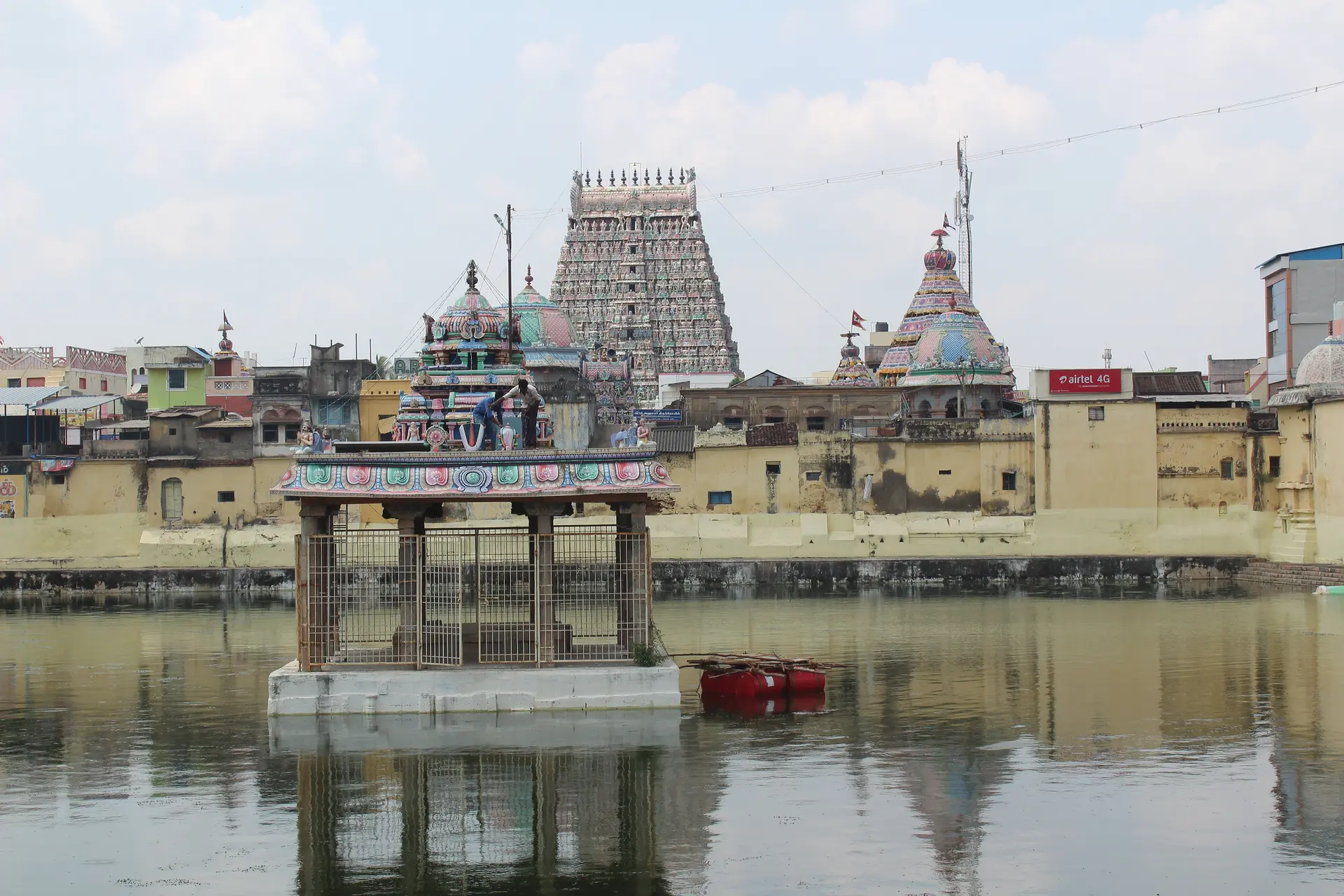
Adi Kumbeswarar Temple, Kumbakonam, Tamil Nadu
Kumbakonam, Tamil Nadu, India
1.1 km away
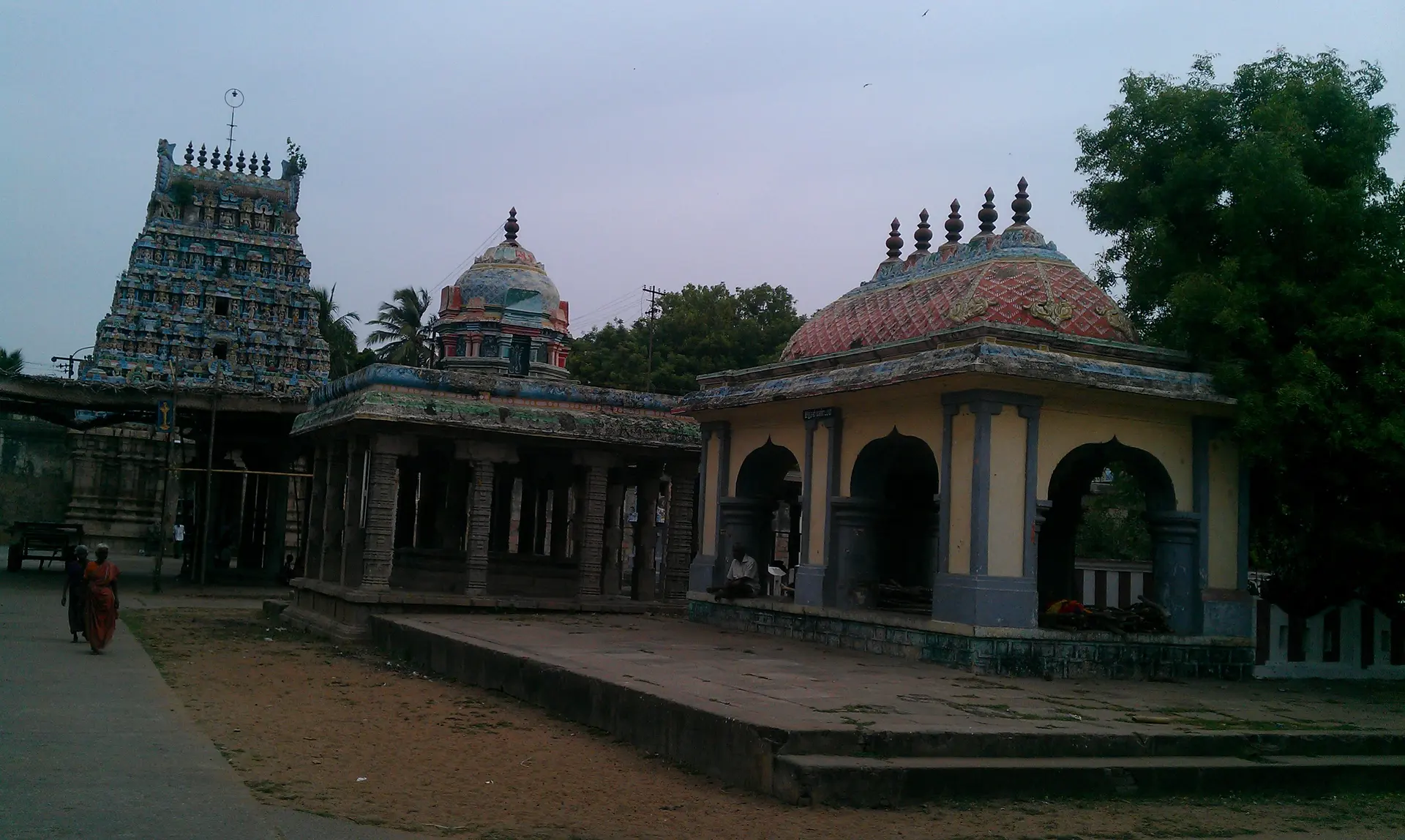
Sri Mahalingaswamy Temple
Priranavidagam, Tamil Nadu, India
8.8 km away

Garbharakshambigai Temple, Thirukkarugavur
Thirukkarugavur, Tamil Nadu, India
15.6 km away

Punnainallur Mariamman Temple
Punnainallur, Thanjavur, Tamil Nadu, India
28.7 km away
References
Sources consulted for this page. Source categories describe the publication, not a guarantee that every claim is verified. Traditional accounts and outside interpretations may differ.
- 01Kalahasteeswarar Temple - Wikipedia — Wikipedia contributorsencyclopediaOverview with historical context
- 02Srikalahasteeswarar, Kumbakonam - TN Temples Project — TN Temples ProjectspiritualDetailed temple information
- 03Kalahastheeswarar Temple Details — Dinamalar Temple GuidespiritualTamil temple database
- 04Kalahasteeswarar Temple Kumbakonam — Famous Temples of IndiaspiritualTemple guide with practical information
- 05Kumbakonam Kalahasteeswarar Temple — LightUp TemplesspiritualTemple information resource
Photo gallery
3 curated photos
Share a photo
Help visitors recognize Kalahasteeswarar Temple, Kumbakonam, Tamil Nadu. Every submission is reviewed before publication.