Basilica di Sant’ Agostino, Rome, Italy
Where a mother's tears became a saint's conversion
Understand sacred places, explore living traditions, and learn how to engage respectfully with Pilgrim Map.
Access has not been verified. Check current local guidance before planning a visit.
Rome, Rome, Italy
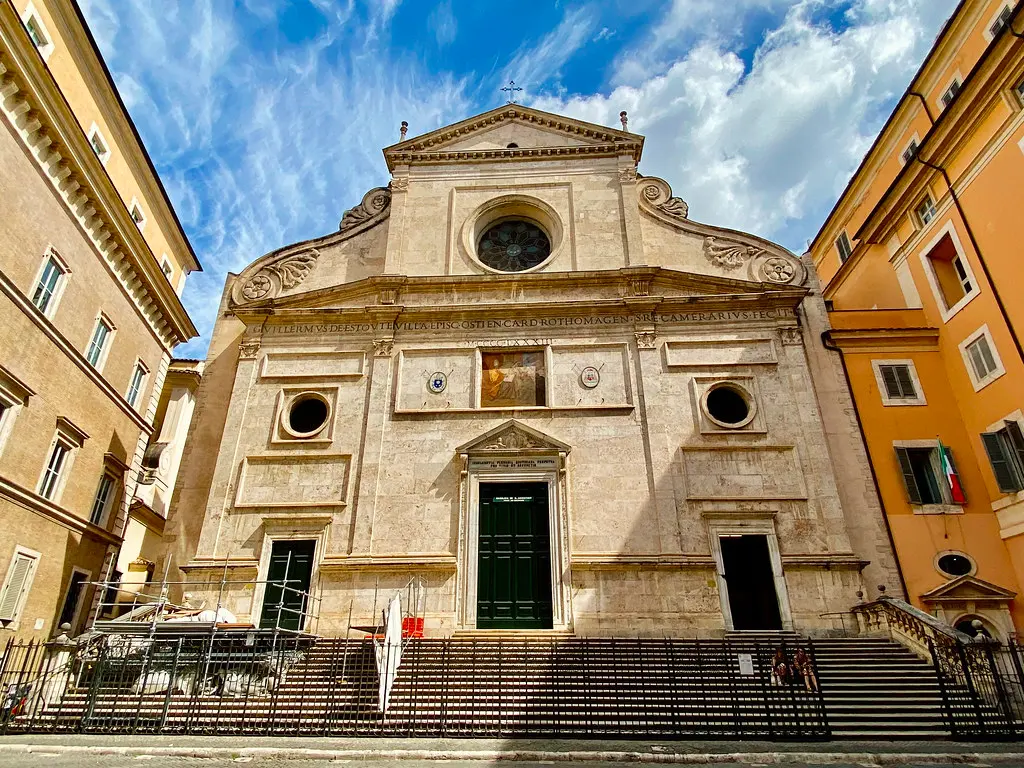
Image of Basilica di Sant’ Agostino, Rome, Italy. Image source
Visit essentials
A quick read before you go
- Duration
- 30 minutes to 1 hour allows appreciation of major artworks and time for personal prayer.
- Access
- A 3-5 minute walk northeast from Piazza Navona.
Overview
Steps from Piazza Navona, Sant'Agostino gathers maternal faith in many forms. Founded as the Augustinian Order's Roman home in 1286, it was rebuilt in the late fifteenth century as one of Rome's first Renaissance churches, with a facade of travertine salvaged from the Colosseum.
In the chapel left of the apse, Saint Monica's sarcophagus receives people who have prayed for prodigal children or waited through years of heartbreak for conversion. Monica wept for Augustine for seventeen years before his baptism, and those approaching her tomb often know such waiting.
Near the entrance, the Madonna del Parto—Our Lady of Childbirth—draws expectant mothers and those hoping to become mothers; nearly five hundred years of kisses have smoothed her marble foot. In the first chapel on the left, Caravaggio's Madonna of Loreto leans from her doorway to bless two road-worn, dirty-footed pilgrims. Here the sacred is intimate, maternal, and immediate.
Why this place is sacred
Some sacred spaces accumulate power through age or architecture. Sant'Agostino accumulates something different: the prayers of mothers. For six centuries, women have come here seeking intercession—for wayward children, for safe delivery, for hope when hope seemed exhausted.
Monica's presence anchors this gathering. Her story is known: seventeen years of prayer for a son devoted to philosophy, rhetoric, and a life that caused her anguish. She followed Augustine from Africa to Milan, weeping and imploring bishops to speak with him. When Ambrose finally baptized him in 387, she declared her life's purpose fulfilled and died months later at Ostia while waiting for a ship home.
Her relics were brought to Rome in 1430, and the church that houses them has become a destination for those who understand long waiting. Pilgrimage leaders report that visits to Monica's tomb produce among the most emotional responses they witness in Rome—more affecting, some say, than the Scala Santa itself.
The Madonna del Parto near the entrance represents a different form of maternal prayer. Since the early sixteenth century, expectant mothers have come to kiss her foot and pray for safe childbirth. The accumulated devotion of half a millennium has worn the marble smooth. Each smoothed edge represents hopes fulfilled and hopes still waiting.
Caravaggio's contribution transforms the maternal encounter into art. His Madonna of Loreto, painted 1604-1606, caused scandal by depicting Mary as approachable rather than celestial, using a known courtesan as his model, showing the pilgrims with dirty bare feet. But what shocked his contemporaries speaks to visitors now: the sacred welcomes the poor and travel-stained, bends toward their need.
The Augustinian Order established their Roman presence here in 1286, naming the church for their founder Augustine of Hippo. The current Renaissance building was constructed 1479-1483 under Cardinal d'Estouteville, serving as the motherhouse of the Augustinians. The translation of Monica's relics from Ostia established the church as a pilgrimage destination.
The church evolved from medieval convent to Renaissance showcase, with the facade using Colosseum travertine and the dome being the first Renaissance dome in Rome. Luigi Vanvitelli transformed the interior to Baroque style in 1756. The addition of major artworks—Raphael's Prophet Isaiah in 1512, Sansovino's Madonna del Parto in 1516, Caravaggio's Madonna of Loreto in 1606, Bernini's high altar in 1627—accumulated the artistic treasury that now draws visitors alongside pilgrims.
Pope John Paul II elevated it to minor basilica in 1999, confirming its significance within Roman sacred geography.
Experience and orientation
Entry through the Renaissance facade leads immediately to encounter with the Madonna del Parto on the right, just past the entrance. Jacopo Sansovino's 1516 statue depicts Mary holding the Christ child, but attention focuses on her left foot—worn smooth and pale by centuries of kisses. Women often kneel here, some pregnant, some hoping to become so, some offering thanks. The devotion is physical and immediate: lips touch marble worn by countless lips before.
Moving deeper into the nave, Raphael's Prophet Isaiah appears on the third pilaster of the left aisle, painted in 1512 as part of a funerary monument. Isaiah holds a Hebrew scroll: "Open the doors, so that the people who believe may enter." Below, Andrea Sansovino's Saint Anne with the Virgin and Child adds another layer of maternal imagery.
The first chapel on the left houses Caravaggio's Madonna of Loreto, painted 1604-1606. The Virgin stands on a crumbling doorstep, the house of Nazareth miraculously transported to Loreto according to medieval tradition. Two pilgrims kneel before her, their dirty feet and worn clothing marking them as poor travelers. Contemporary critics were outraged by the realism; visitors now recognize its theological power. The sacred does not remain distant but comes to meet human need in its actual condition.
The high altar, designed by Bernini in 1627, displays a Byzantine icon said to have come from the church of Hagia Sophia in Constantinople. The tradition cannot be verified, but the icon's presence creates a bridge to Eastern Christianity within this Augustinian church.
The Chapel of Saint Monica, left of the apse, houses her sarcophagus designed by Isaia da Pisa in 1455. Here the emotional intensity increases. Pilgrimage leaders observe visitors approaching with tears, laying hands on the marble, speaking quietly to the mother who never stopped praying. Pope Francis has visited multiple times to pray here, his devotion to Monica well documented.
Sant'Agostino stands on its eponymous piazza, a few minutes' walk northeast of Piazza Navona. The approach from Navona passes through narrow streets that open suddenly onto the church's Renaissance facade—travertine blocks from the Colosseum reshaped for sacred purpose.
Context and lineage
Monica died at Ostia in 387, just months after witnessing Augustine's baptism in Milan. Her relics remained there until 1430, when Pope Martin V ordered their translation to Rome. Miracles were reported along the route. Cardinal d'Estouteville, protector of the Augustinians, funded the construction of the current basilica (1479-1483) to provide a worthy setting for Monica's tomb.
Her sarcophagus, designed by Isaia da Pisa in 1455, established the church as a pilgrimage destination for those who identified with her maternal struggle.
The Augustinian Order has maintained continuous presence since 1286. The church serves as their Roman motherhouse, connecting it to Augustinian communities worldwide. The order's emphasis on Augustine's spiritual journey—from wayward youth to Doctor of the Church—gives Monica's intercession particular resonance.
Saint Monica
Saint Augustine of Hippo
Cardinal Guillaume d'Estouteville
Caravaggio
Traditions and practice
Devotion to Monica's relics began immediately upon their translation in 1430. The Madonna del Parto devotion, involving physical veneration by kissing the statue's foot, has continued since Sansovino created the statue in 1516. As a Lenten station church, Sant'Agostino hosts special liturgies during the week of Ash Wednesday, connecting it to ancient Roman penitential practice.
Augustinian friars celebrate daily Mass. Pope Francis has visited multiple times to pray at Monica's tomb, demonstrating ongoing papal devotion. The church is included in the Jubilee Year 2025 pilgrimage route honoring Women Patrons of Europe and Doctors of the Church. Expectant mothers continue to venerate the Madonna del Parto, maintaining an unbroken tradition of nearly five centuries.
Visitors may attend Mass or simply enter for prayer and contemplation. Approaching the Madonna del Parto to venerate is welcomed; the practice involves kissing the left foot of the statue. Time at Monica's tomb allows reflection on patience in prayer. Viewing Caravaggio's Madonna of Loreto in its original chapel setting differs significantly from encountering reproductions—the intimacy of the space and the angle of light contribute to the experience.
Roman Catholicism (Augustinian Order)
ActiveSant'Agostino serves as the Roman motherhouse of the Order of Saint Augustine, directly connecting it to Augustinian communities worldwide. The presence of Monica's relics makes it a major pilgrimage destination, while the artistic treasury (Caravaggio, Raphael, Bernini) draws visitors who may discover devotional dimensions beyond art appreciation.
Daily Mass in the Augustinian tradition. Veneration of Monica's relics. Devotion at the Madonna del Parto. Lenten station liturgies during the week of Ash Wednesday. Participation in Jubilee Year pilgrimage routes.
Perspectives and open questions
Sant'Agostino gathers maternal intercession in multiple forms—Monica's patient prayer, Mary's protection of mothers, the Virgin's welcome of humble pilgrims. Different visitors find different resonances within this constellation.
Scholarly perspective
Architectural historians recognize Sant'Agostino as one of Rome's earliest Renaissance churches, with the first Renaissance dome in the city. The facade's use of Colosseum travertine exemplifies Renaissance attitudes toward classical antiquity. Caravaggio's Madonna of Loreto remains central to study of his middle period and the controversy surrounding his use of naturalistic, even humble, sacred imagery. The model for Mary, identified as a courtesan named Maddalena Antognetti, added to contemporary scandal.
Art historians analyze how the painting's reception illuminates Counter-Reformation debates about appropriate sacred imagery.
Living and traditional perspectives
Catholic tradition presents Monica as the model of maternal perseverance. Her seventeen years of prayer and tears for Augustine's conversion exemplify faith that does not give up. Augustine's Confessions record her role: she followed him from Africa to Italy, sought help from bishops, and never ceased praying. Her feast day (August 27) celebrates not only her holiness but her instrumental role in producing one of the Church's greatest theologians.
The Madonna del Parto devotion continues centuries of Catholic practice seeking Mary's intercession for mothers.
Alternative interpretations
The concentration of maternal imagery in Sant'Agostino—Monica's tomb, the Madonna del Parto, Caravaggio's welcoming Virgin, Saint Anne with Mary and Child—has attracted interpretation as evidence of the church's particular resonance with feminine spiritual experience. Some visitors experience the accumulation of these images as creating a distinctly maternal sacred space within Rome's predominantly patriarchal ecclesiastical landscape.
Open questions
The exact provenance of the Byzantine icon on the high altar remains uncertain. Tradition attributes it to the church of Hagia Sophia in Constantinople, but documentation is lacking. The specific circumstances of Monica's death at Ostia and the history of her relics before translation to Rome contain gaps. The identity of the women represented by nearly five centuries of kisses on the Madonna del Parto's foot remains known only to God.
Plan your visit
Access and arrival
A 3-5 minute walk northeast from Piazza Navona. The nearest metro station is Spagna (Line A), approximately 15 minutes' walk. Multiple bus routes serve the Navona area.
The centro storico offers abundant accommodation options. The area around Piazza Navona provides easy walking access to major sites while remaining residential in character.
Respectful visit
Shoulders and knees must be covered, as in all Roman churches.
Photography is generally permitted but should not disturb those at prayer. Flash is typically prohibited near artworks. During Mass or services, photography should cease.
Standard church offerings welcome. Candles may be lit.
Silence during services | Respectful distance from those engaged in devotional prayer | No flash photography near artworks
Be aware that many visitors are engaged in personal devotion, particularly at Monica's tomb and the Madonna del Parto. The church is intimate in scale; large tour groups can overwhelm the space.
Current practical details
Address
P.za di S. Agostino, 00186 Roma RM, Italy
Phone
Hours
Hours, fees, and access can change — verify on the official source before you travel. Practical details last checked Jun 2026.
Location
Map loads as you approach this section.
Pilgrim reflections
A portrait of encounter, not a score
Pilgrims describe what they felt, how present they could become, and whether the place would shape a journey. There are no stars and no ranking of traditions.
No reviewed reflections yet
The first pilgrims can help describe the character of being here.
Share a reflection
Available after an account-backed “Been there.” Every reflection is reviewed before publication.
Nearby sacred places
Explore other sacred places in the region. Proximity does not establish access or travel time; check each place’s guidance.
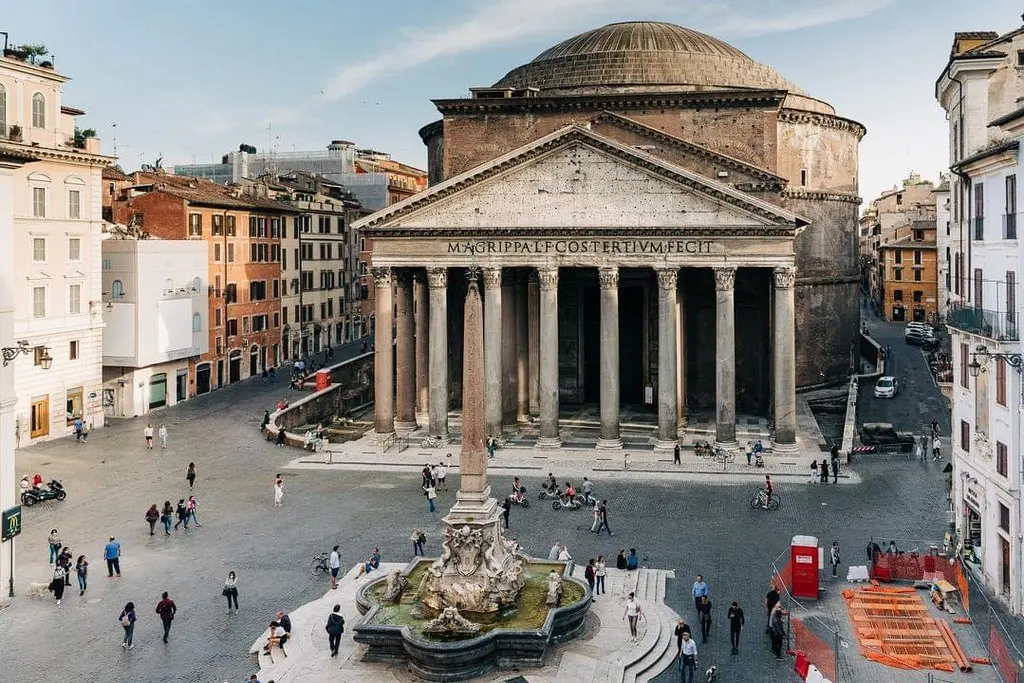


Photo gallery
3 curated photos
Share a photo
Help visitors recognize Basilica di Sant’ Agostino, Rome, Italy. Every submission is reviewed before publication.