Ausevika Rock Carvings
Stone Age hunters carved their world into slate above a Norwegian fjord six thousand years ago
Understand sacred places, explore living traditions, and learn how to engage respectfully with Pilgrim Map.
Access has not been verified. Check current local guidance before planning a visit.
Floro, Vestland, Norway
Read the sources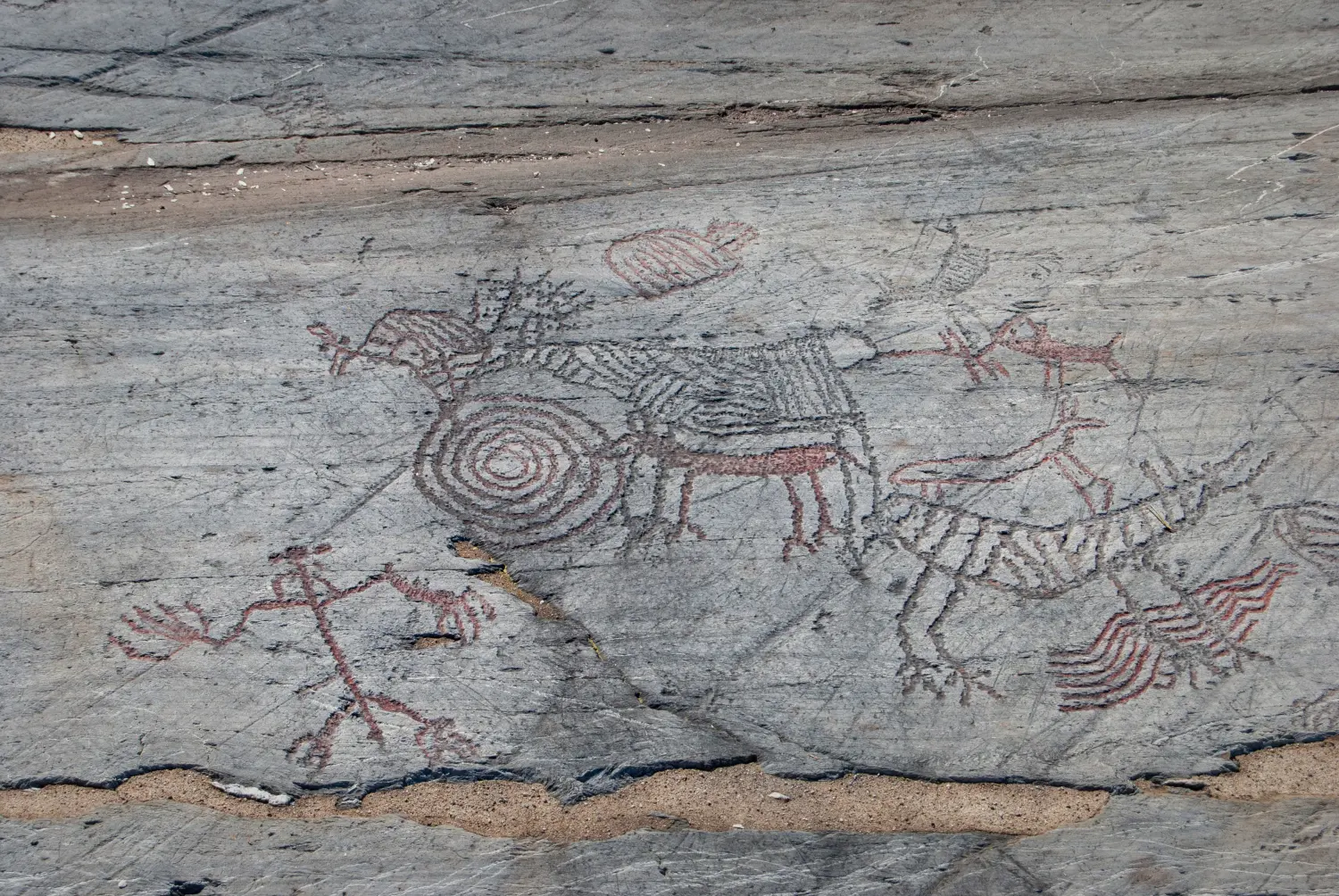
Image of Ausevika Rock Carvings. Image source · CC-BY-SA-4.0
Visit essentials
A quick read before you go
- Duration
- Sixty to ninety minutes for a thorough exploration of the carving field, including use of the…
- Access
- Located in Kinn municipality (formerly Flora), Vestland county, Norway.
Overview
Six thousand years ago, on the north face of Skalefjellet mountain, people began carving into soft slate. They carved what sustained them: red deer, the animal at the centre of their existence. They carved what moved them: human figures in ritual dance, bodies arched in postures that suggest ceremony rather than daily life.
And they carved what they could not easily explain, or perhaps what explanation could not contain: spirals, labyrinths, geometric shapes, cup-marks, abstract figures whose meaning scholars still debate.
Ausevika holds more than three hundred registered figures across a field exceeding 1,500 square metres. It is the second largest rock art site in Norway, classified as veidekunst, the hunter's art tradition that represents the oldest form of Scandinavian rock carving. What distinguishes Ausevika from other veidekunst sites is the unusual density of abstract and geometric imagery alongside the naturalistic hunting scenes. At most hunter's art sites, animal figures dominate.
Here, the carvers moved between the representational and the symbolic with a fluency that suggests a worldview more complex than hunting magic alone.
The fjord landscape has changed since the carvings were made. When the first figures were cut into this rock, the sea level was higher and the shoreline closer. The carvers worked in a coastal context, looking out over waters that provided as much sustenance as the forest. Today the site overlooks Hoydalsfjorden from a modest elevation, the rock panels angled northward, the carvings weathered but legible to patient eyes.
Scholars believe the site was used over an extended period, with motifs evolving across centuries, perhaps millennia, each generation adding its own marks to a living record of belief.
Why this place is sacred
What makes a place thin is not always monumental architecture or documented miracle. Sometimes it is the sheer persistence of human intention inscribed into stone. At Ausevika, people carved images that mattered to them, images connected to survival, community, ceremony, and cosmology, and those images have remained, exposed to wind and frost and lichen, for roughly six thousand years. The carvings are not passive. They make a claim on the present.
The elevated setting on Skalefjellet's north face contributes to the site's atmosphere. The rock panels look out over Hoydalsfjorden, and scholars have noted that the carvers likely chose this location deliberately, drawn by a landscape where mountain and fjord created a natural amphitheatre. The water below reflects the sky and the land, a mirroring effect that may have held symbolic significance for people whose worldview did not separate the physical from the spiritual.
The combination of naturalistic and abstract imagery intensifies the sense of encountering something that exceeds utilitarian explanation. A deer carved with anatomical accuracy sits alongside spirals and labyrinths whose purpose remains genuinely unknown. This juxtaposition, the everyday and the mysterious sharing the same rock surface, suggests that the carvers saw no boundary between the two. Hunting was sacred. Ceremony was practical. The spiral held meaning as real as the deer.
Time itself is a factor. To place your hand near a figure carved by a Stone Age hunter is to bridge a gap wider than most of recorded history. The sensation is not of visiting a museum exhibit but of standing in someone's sacred space, a space they chose and marked with care, whose precise meaning has been lost but whose intentionality remains unmistakable.
Scholars interpret Ausevika as a site of communal ritual gathering where multiple ceremonial functions overlapped. Evidence suggests the carvings served hunting magic, with animal figures created to ensure successful hunts or give thanks for catches. Human figures in dance postures indicate ceremonial gatherings. The abstract symbols, spirals, cup-marks, and labyrinths, point toward cosmological or shamanic practices that went beyond practical concerns.
The site likely functioned as a place where the community gathered for ritual festivals to affirm the continuity of their life and culture.
The rock art at Ausevika developed over an extended period, with motifs evolving over time in a pattern similar to the sites at Alta and Vingen. The earliest carvings likely date to approximately 5000-4000 BCE, placing them firmly in the Stone Age. Some tourism sources date the carvings to approximately 3,000 years ago, but scholarly consensus based on their veidekunst classification supports the earlier dating.
When the carvings were first made, the sea level was higher and the site was closer to the shoreline, placing the carvers in a more immediate coastal context than the present landscape suggests. In modern times, visitor infrastructure has been developed including car parking, footpaths, ramp access, and information boards. A digital cultural trail now offers mobile audio and video interpretation. Some rock panels have been temporarily covered to reduce lichen growth as part of ongoing conservation efforts.
Experience and orientation
The drive from Floro follows the coastal road south toward Stavang, roughly forty minutes through a landscape of fjords, rocky headlands, and scattered farms. Western Norway does not prepare you gently. The terrain is immediate, insistent in its beauty without being theatrical. By the time you reach the car park at Ausevika, you have already entered a different register of attention.
From the car park, footpaths lead to the carving field on the north side of Skalefjellet. The paths include ramp access, making portions of the site available to visitors with mobility limitations. Information boards provide context before you reach the carvings themselves, and a digital cultural trail offers audio and video stories through a mobile device.
The first encounter with the rock surface can be disorienting. Slate weathers in complex ways, and the carvings, made by pecking and grinding the relatively soft stone, have been exposed to six millennia of Norwegian weather. Patience is required. Allow your eyes to adjust, let the light work with the surface. Morning and evening light, arriving at low angles, often renders the carvings more visible than the flat illumination of midday.
When the figures resolve, they command attention. Red deer appear with a naturalism that reveals close observation, their bodies decorated with internal patterns that suggest something beyond simple depiction. Dogs accompany hunting scenes, their postures alert and purposeful. Human figures stand in postures that scholars identify as ritual dance, their bodies arranged in ways that suggest ceremony rather than everyday movement. A bird appears, and a fish, connecting the hunting community to sky and water as well as forest.
Then there are the abstract figures. Spirals turn inward or outward. Cup-marks punctuate the rock in patterns that resist obvious interpretation. Geometric shapes occupy panels alongside the animal and human forms, as though the carvers moved freely between depicting what they could see and encoding what they could only feel or intuit. The labyrinths are particularly striking, their winding paths suggesting something about passage, transition, or the relationship between interior and exterior worlds.
The fjord below provides a constant presence. Hoydalsfjorden stretches toward the open sea, and the water catches light and cloud in ways that shift throughout the day. The Stone Age carvers worked within sight of these same waters, though the shoreline was closer then. The relationship between site and landscape is not incidental. The carvers chose this elevated, north-facing rock above the fjord, and the choice speaks of intentionality even if the specific reasons are lost.
Most visitors arrive by car from Floro, following the RV 614 coastal road south toward Stavang. The drive takes approximately forty minutes. The site has a dedicated car park, and footpaths with ramp access lead to the carving field. Information boards and a digital cultural trail with mobile audio and video stories are available. No admission fee is charged.
Allow forty-five to ninety minutes for a thorough visit, longer if you wish to sit with the carvings and absorb the landscape.
Context and lineage
The Stone Age communities who carved at Ausevika left no origin narratives, no written accounts. The carvings themselves are the primary evidence of their beliefs, and those carvings suggest a people for whom the boundary between the seen and the unseen was fluid. The red deer that dominates the imagery was more than prey. It was sustenance, symbol, and likely spiritual presence.
The ritual dances depicted alongside hunting scenes point to ceremonies where the community gathered to affirm their relationship with the animal world and with forces beyond the visible. The abstract symbols, spirals, labyrinths, and geometric shapes, suggest a cosmological framework that scholars can detect but cannot reconstruct with certainty. What is clear is that these were not casual marks.
The effort required to carve slate, even relatively soft slate, combined with the sheer number and variety of figures, indicates sustained, purposeful activity over generations.
The lineage connecting the present to Ausevika's creators is fundamentally broken. The Stone Age hunter-fisher-gatherer communities who carved these images spoke languages now lost, held beliefs now irrecoverable, and left no descendants who maintained continuity of practice at this site. The veidekunst tradition itself eventually gave way to the jordbruksristninger of the Bronze Age, a different art form made by farming communities with different cosmologies.
Between the last carving at Ausevika and the modern rediscovery of the site, millennia passed without documented engagement. What survives is the rock itself and what was carved into it. The scholarly tradition that now studies and interprets the carvings represents a different kind of lineage, one of attention and care rather than practice and belief.
Archaeologists, conservators, and heritage managers have become the site's stewards, ensuring that images made six thousand years ago remain legible to those who come to look.
Stone Age hunter-fisher-gatherer communities
Gutorm Gjessing
Trond Klungseth Lodoen
Vestnorsk Bergkunstsenter (West Norwegian Rock Art Center)
Traditions and practice
The exact rituals performed at Ausevika are unknown, but the carved imagery and comparative analysis provide several lines of interpretation. Scholars propose that animal figures were carved as hunting magic, created to ensure successful hunts or to give thanks for catches. Human figures depicted in dance postures suggest communal ceremonial gatherings. The site likely served as a place where the community came together for ritual festivals affirming the continuity of life and culture.
The spirals, labyrinths, and geometric symbols point toward practices that transcended practical hunting concerns, possibly indicating cosmological or shamanic dimensions. The extended period of carving activity, with motifs evolving over centuries, suggests that the site held sustained ceremonial importance rather than serving a single, time-limited purpose.
No organised religious or spiritual practices take place at Ausevika today. The site serves as a protected cultural heritage monument with interpretive infrastructure designed for educational and contemplative engagement. The digital cultural trail offers audio and video stories accessible through mobile devices, providing narrative context for the carvings.
Approach the rock panels slowly. The carvings do not announce themselves from a distance, and the eye needs time to distinguish carved lines from natural weathering patterns in the slate. Begin at whatever panel first catches your attention, and let yourself stay with it. Notice the internal decoration of the deer figures, the way the carvers filled animal bodies with patterns that suggest something more than anatomical accuracy.
Follow the spirals with your gaze, tracing the lines inward or outward without trying to assign meaning. When you find the human figures in their dance postures, consider what it would mean to carve a dancer into stone, to make permanent a moment of movement and ceremony.
Step back periodically and take in the broader landscape. The fjord below, the rock face above, the quality of light on the carved surface. The carvers worked within this same visual field, though the shoreline was closer in their time. The relationship between art and setting is not accidental.
If the digital cultural trail is available, use it selectively rather than continuously. Allow periods of unmediated encounter between the stories, letting the carvings speak on their own terms before returning to interpretive narrative. Silence is appropriate here. The site rewards stillness and sustained looking over rapid movement between panels.
Low-angle light in morning or evening hours often renders the carvings more visible than midday illumination, and the changing light transforms the appearance of the rock surface throughout a visit.
Veidekunst (Stone Age Hunter's Art)
HistoricalAusevika represents one of the most extensive and varied expressions of veidekunst, the hunter's art tradition that constitutes the oldest form of Scandinavian rock carving. Created by Stone Age hunter-fisher-gatherer communities approximately 5000-4000 BCE, the site contains more than three hundred figures including red deer, dogs, a bird, a fish, human dancers, spirals, labyrinths, cup-marks, and geometric shapes. The unusual abundance of abstract symbolism alongside naturalistic hunting imagery distinguishes Ausevika from most other veidekunst sites and suggests a worldview in which the practical and the numinous were inseparable. As the second largest rock art site in Norway, Ausevika holds a central place in the study and understanding of Stone Age spiritual expression in Scandinavia.
Scholars interpret the carvings as evidence of multiple interwoven ceremonial practices. Animal figures likely served hunting magic functions, created to ensure successful hunts or express gratitude for catches. Human figures in dance postures indicate communal ritual gatherings. The site probably functioned as a place where the community assembled for festivals affirming the continuity of life and culture. The spirals, labyrinths, and geometric symbols point toward cosmological or shamanic practices that transcended immediate practical concerns. The extended period of carving activity suggests that ceremony at this site was not a singular event but a sustained tradition spanning generations.
Archaeological Research and Conservation
ActiveThe study and preservation of Ausevika's rock art represents an ongoing scholarly and conservation tradition. Gutorm Gjessing's 1936 classification of veidekunst provided the foundational framework for understanding the site. Contemporary researchers including Trond Klungseth Lodoen have addressed the challenges of managing and presenting rock art in its contemporary context. The Scandinavian Society for Prehistoric Art maintains photographic documentation and promotes research. Conservation efforts include temporary covering of panels to manage lichen growth and the development of visitor infrastructure that balances access with preservation.
Active practices include archaeological survey and documentation, photographic recording of carved figures, lichen management through temporary covering of panels, development and maintenance of visitor infrastructure including paths and information boards, and the creation of digital interpretation tools such as the mobile cultural trail with audio and video content. The Vestnorsk Bergkunstsenter (West Norwegian Rock Art Center) initiative has worked to make the carvings more accessible while contributing to their long-term preservation.
Perspectives and open questions
Ausevika invites multiple lines of interpretation while resisting definitive resolution. The carvings are old enough to predate any surviving oral tradition, any written record, any cultural memory. What we have is the rock itself, the figures carved into it, and the scholarly frameworks through which we attempt to understand them. The gap between what the carvers meant and what we can know is honest and irreducible. Within that gap, several perspectives offer partial illumination.
Scholarly perspective
Archaeological consensus places the Ausevika carvings securely in the Stone Age, approximately 5000-4000 BCE, based on their classification as veidekunst (hunter's rock art). This is the oldest tradition of Scandinavian rock art, associated with hunter-fisher-gatherer communities rather than the later Bronze Age farming societies who produced jordbruksristninger (agricultural rock art). Gutorm Gjessing established this classificatory distinction in 1936, and it remains fundamental to Scandinavian rock art studies.
Ausevika is recognized as the second largest rock art site in Norway, with more than three hundred registered figures across a field exceeding 1,500 square metres. The scholarly community notes the unusual variety of motifs here. While most veidekunst sites are dominated by animal figures, Ausevika contains an exceptional number of abstract and geometric images, including spirals, cup-marks, and labyrinths.
This combination is rare in the hunter's art tradition and suggests a more complex system of beliefs than simple hunting magic.
Researchers at the University of Oslo have placed Ausevika alongside Alta and Vingen as sites where motifs developed over extended periods, indicating sustained ceremonial use across centuries or possibly millennia. The soft slate medium, while enabling the carvings, also makes them vulnerable to frost weathering, a conservation concern that has led to measures including temporary covering of some panels to reduce lichen growth.
Living and traditional perspectives
No indigenous oral tradition survives from the Stone Age communities who carved at Ausevika. The carvings predate historical Norse and Sami cultural periods by millennia. The people who created them spoke languages now lost, and no transmitted knowledge connects the present to their beliefs. The carvings themselves are the only testimony, and they communicate in a visual language whose grammar we can observe but whose full meaning remains beyond recovery.
Alternative interpretations
The presence of spirals and labyrinths among the hunting imagery has drawn attention from researchers interested in altered states of consciousness and shamanic practices. Some interpret the geometric and abstract symbols as entoptic phenomena, visual patterns experienced during trance states, suggesting that at least some of the carvings may record visionary experiences rather than external observations. The labyrinth motifs in particular have attracted interest from those who see them as journey symbols, cosmological maps, or representations of passage between worlds.
These interpretations cannot be confirmed or refuted on the basis of the available evidence. They represent one framework among several through which contemporary observers attempt to engage with imagery whose original context is irrecoverable.
Open questions
The open questions at Ausevika are substantial. Why does this site contain such an unusual density of abstract and geometric figures alongside naturalistic hunting imagery, when most veidekunst sites show primarily animal forms? What do the spirals and labyrinths mean in the context of a Stone Age hunting community? Why was this particular rock surface on Skalefjellet chosen over the thousands of other available surfaces in the region?
How long was the site in active ceremonial use, and how did the meanings of the carvings shift across the centuries of their creation? What is the relationship between Ausevika and the nearby Vingen rock art site, whether they were used by the same communities or by different groups with distinct traditions? The significance of the internal decoration patterns found on many of the carved figures also remains debated. These questions are unlikely to be resolved.
The communities who could answer them have been gone for six thousand years.
Plan your visit
Access and arrival
Located in Kinn municipality (formerly Flora), Vestland county, Norway. Approximately forty minutes drive south of Floro along the coastal road RV 614 toward Stavang, roughly ten kilometres from Floro. The site has a dedicated car park, designated footpaths, ramp access for visitors with mobility limitations, and information boards. Coordinates are approximately 61.533N, 5.267E. Free and open access with no ticketing or admission fees.
Floro, approximately forty minutes north, offers the nearest range of accommodation options including hotels, guesthouses, and Airbnb rentals. The smaller communities along the coastal road provide limited bed and breakfast options. Camping opportunities exist in the region for those with appropriate equipment.
Respectful visit
No specific dress code applies. Sturdy footwear is recommended as the terrain includes natural rock surfaces that may be slippery when wet. Weather-appropriate outdoor clothing is advisable for the exposed coastal Norwegian setting, where conditions can change quickly at any time of year.
Photography appears to be freely permitted. No restrictions are documented in any available source. The site is an open-air archaeological area actively promoted for tourism. Low-angle light produces the most visible rendering of the carved figures.
Not applicable. Ausevika is a heritage site with no active devotional practice. Leaving objects at the site is discouraged to protect the archaeological context.
Stay on designated footpaths to prevent damage to the rock carvings and surrounding archaeological context. Do not touch, scratch, or mark the carved surfaces. The carvings are on soft slate and are vulnerable to physical damage. Some panels may be temporarily covered for conservation purposes. Do not remove or disturb the covering materials.
The carvings are made in soft slate, which is vulnerable to physical damage. Do not touch, scratch, or mark the carved surfaces. Stay on designated footpaths to protect both the carvings and the surrounding archaeological context. Some rock panels may be temporarily covered for conservation purposes, particularly to manage lichen growth. The slate surfaces can be slippery when wet, requiring careful footing.
Current practical details
Address
Kinn, Norway
Hours
Hours, fees, and access can change — verify on the official source before you travel. Practical details last checked Jun 2026.
Location
Map loads as you approach this section.
Pilgrim reflections
A portrait of encounter, not a score
Pilgrims describe what they felt, how present they could become, and whether the place would shape a journey. There are no stars and no ranking of traditions.
No reviewed reflections yet
The first pilgrims can help describe the character of being here.
Share a reflection
Available after an account-backed “Been there.” Every reflection is reviewed before publication.
Nearby sacred places
Explore other sacred places in the region. Proximity does not establish access or travel time; check each place’s guidance.
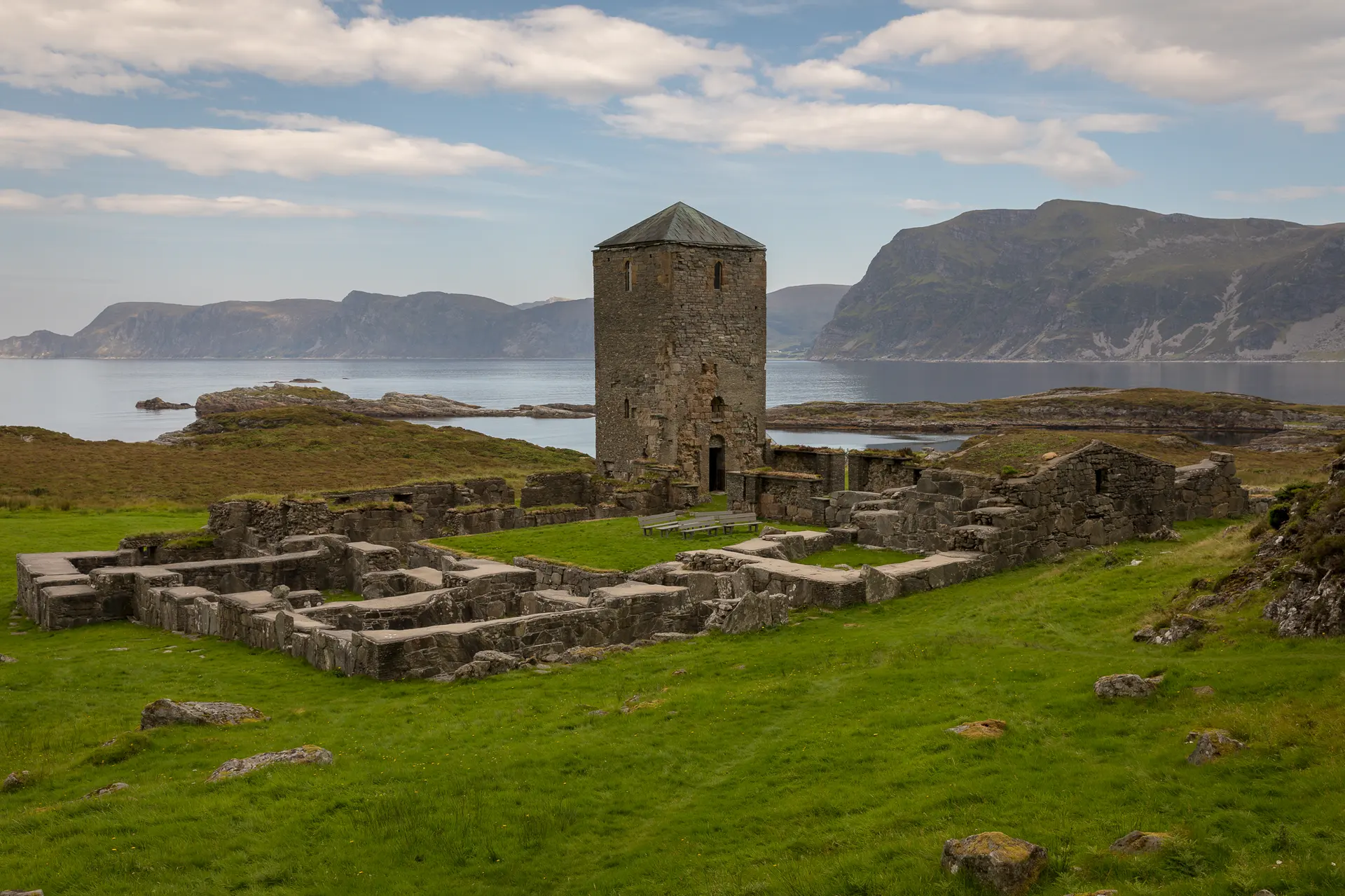
Selja monastery, Selja Island, Norway
Stad, Vestland, Norway
57.6 km away
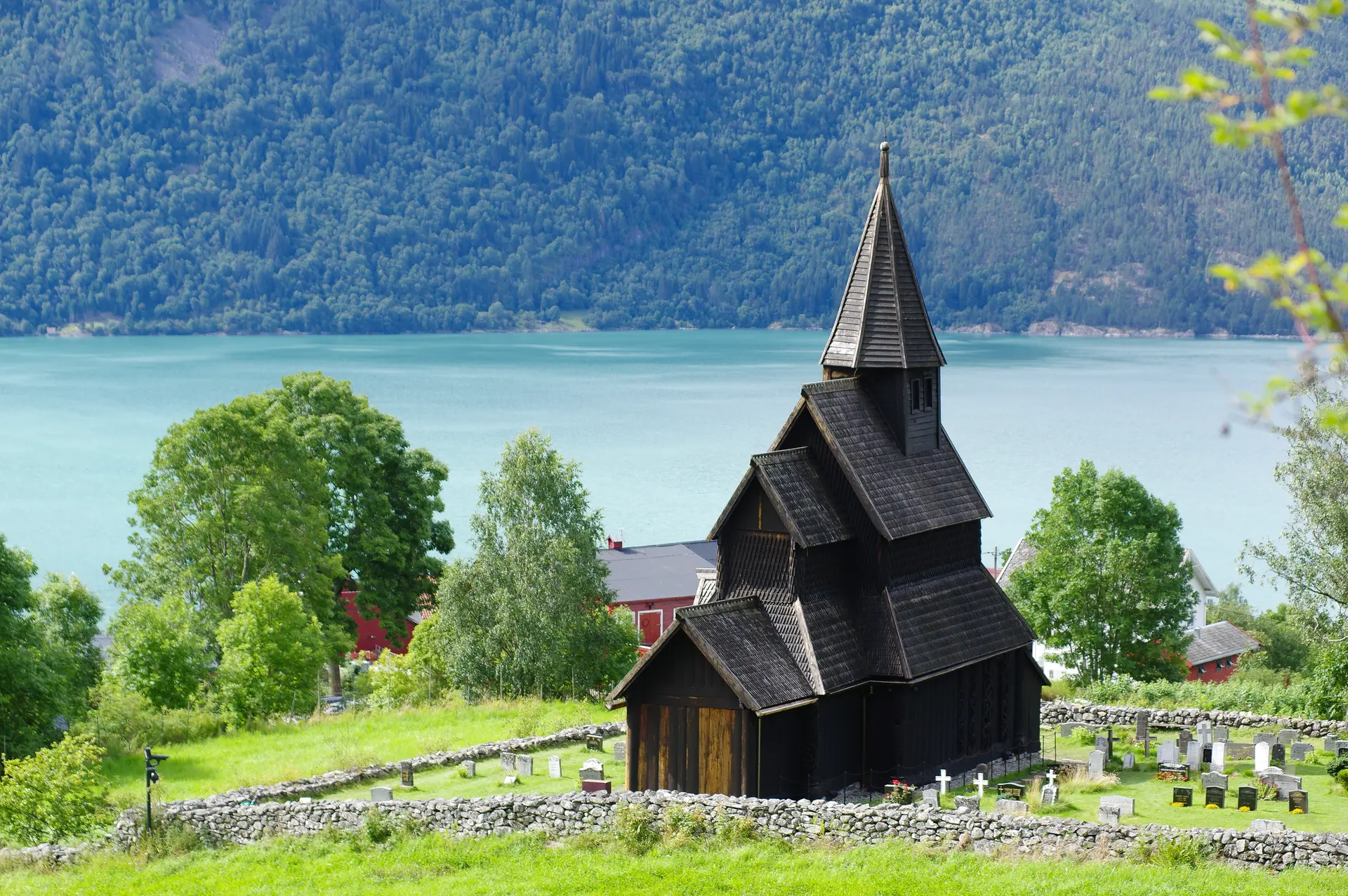
Urnes Stave Church
Luster, Vestland, Norway
112.4 km away

Lyse Abbey Ruins
Lysekloster / Bjørnafjorden, Lysekloster / Bjørnafjorden, Vestland, Norway
145.3 km away

Borgund Stave Church
Borgund / Lærdal, Borgund / Lærdal, Vestland, Norway
146.3 km away
References
Sources consulted for this page. Source categories describe the publication, not a guarantee that every claim is verified. Traditional accounts and outside interpretations may differ.
- 01Ausevika Rock carvings | Cultural Heritage | Eikefjord | Norway — Visit NorwayofficialOfficial Norwegian tourism authority listing with visitor facilities, access directions, and cultural trail information
- 02Ausevika Rock carvings - Fjord Norway — Fjord NorwayofficialRegional tourism authority with description, access details, and visitor information
- 03Scandinavian Society for Prehistoric Art - Photo Albums: Ausevik — Scandinavian Society for Prehistoric ArtacademicProfessional society dedicated to Scandinavian rock art research. Describes Ausevik as second largest rock art site in Norway, with panels partially covered to reduce lichen growth
- 04Exploring the contemporary context of rock art (Trond Klungseth Lodoen) — Trond Klungseth LodoenacademicAcademic article on rock art management and contemporary context, referencing Ausevik
- 05Introduction to the Rock Art of Scandinavia - Bradshaw Foundation — Bradshaw FoundationacademicComprehensive overview of Scandinavian rock art traditions including veidekunst classification
- 06Helleristninger og veidekunst - Norgeshistorie — Norgeshistorie (University of Oslo)academicUniversity of Oslo history portal contextualizing helleristninger and veidekunst traditions, mentions Ausevik alongside Alta and Vingen as sites where motifs developed over time
- 07Ausevik Rock Art: Real And Mythical World Of Stone Age People Of Norway — Ancient PagesSource contextDetailed article on motifs, dating (5000-6000 years), slate material, ritual significance, and the mix of hunting figures with abstract/geometric symbols
- 08Ausevika - Wikipedia (Norwegian) — Wikipedia contributorsencyclopediaNorwegian Wikipedia article. States field is on north side of Skalefjellet, covers over 1500 m2, more than 300 registered figures, dated 5000-4000 BCE
- 09Helleristingane i Ausevika - GeoAtlas — GeoAtlasofficialNorwegian geological/heritage atlas entry with local details
- 10Ausevik Map - Maplandia — MaplandiaSource contextGeographic coordinates: 61 32' 0" N, 5 16' 0" E
- 11Rock carvings at Vingen - Wikipedia — Wikipedia contributorsencyclopediaContext on nearby Vingen site, also in Vestland county, described as holy place for coastal Stone Age community
- 12Ausevika Rock Carvings Reviews - TripAdvisor — Various visitorsguideVisitor reviews providing practical access details and visitor experience descriptions
Share a photo
Help visitors recognize Ausevika Rock Carvings. Every submission is reviewed before publication.