Amruteshvara Temple, Tarikere, Karnataka
A Hoysala jewel where the great epics are carved in soapstone around a living Shiva sanctum
Understand sacred places, explore living traditions, and learn how to engage respectfully with Pilgrim Map.
Access has not been verified. Check current local guidance before planning a visit.
Neralekere, Karnataka, India
Read the sources
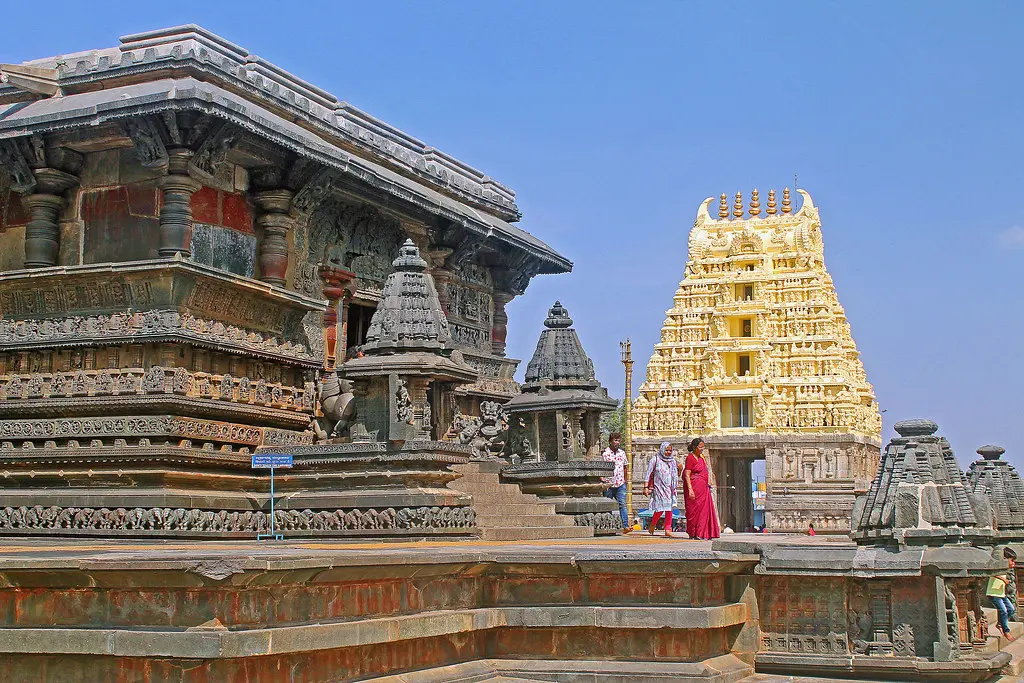
Image of Amruteshvara Temple, Tarikere, Karnataka. Image source · CC-BY-2.0
Visit essentials
A quick read before you go
- Duration
- 1–2 hours to take darshan and study the sculptural panels.
- Access
- In Amruthapura village, Tarikere taluk, Chikkamagaluru district, Karnataka, near the Bhadra…
Overview
In Amruthapura near the Bhadra reservoir, Amruteshvara offers a quieter Hoysala encounter than Belur or Halebidu. Amruteshwara Dandanayaka, a commander under King Veera Ballala II, built this single-shrine (ekakuta) Shiva temple in 1196 from soft, dark soapstone. Long relief bands unfold the Ramayana anti-clockwise and also depict the Mahabharata and Krishna’s life; the site is linked to master sculptor Ruvari Mallitamma’s early career and bears verses by Kannada poet Janna.
Daily Bilva Archane and Kumkuma Archane continue, while Maha Shivaratri draws large crowds for all-night observance. Its protected ASI fabric and unbroken worship keep carved story and offered prayer within one living devotion.
Why this place is sacred
The thinness of Amruteshvara comes from continuity and from the way story and devotion are woven together. For nearly 830 years worship has continued at the sanctum while the surrounding walls hold the Ramayana, Mahabharata and Krishna's life in carved relief. The anti-clockwise unfolding of the Ramayana invites a slow, deliberate reading rather than a glance, and the serene Malnad setting near the Bhadra reservoir keeps crowds away outside festival days.
Visitors describe an unhurried, meditative engagement here — the act of following the panels around the shrine becoming itself a form of contemplation.
An ekakuta temple dedicated to Shiva and adorned with extensive narrative sculpture as both an act of devotion and a teaching in stone.
It has remained a living centre of Shaiva worship for over eight centuries, and is today simultaneously an ASI-protected Monument of National Importance and an active temple. The Archaeological Survey of India has highlighted it as a jewel of Hoysala architecture.
Experience and orientation
Visitors tend to slow down at Amruteshvara. The large-format relief panels reward close, patient looking, and people often praise the lathe-turned pillars, the domed ceilings and the original perforated outer wall. The setting helps: green Malnad country near the Bhadra reservoir, away from the larger crowds of Belur and Halebidu. Within, daily pooja continues at the Shivalinga, so the carved stories surround a still-living devotion — an unhurried engagement with both story and worship that many report as meditative.
The temple is in Amruthapura village, Tarikere taluk; remove footwear before the sanctum and dress modestly. To read the Ramayana panels in sequence, follow them anti-clockwise. Daylight hours give the best light on the soapstone reliefs.
Context and lineage
The temple was built in 1196 by Amruteshwara Dandanayaka, a commander of the Hoysala army, under King Veera Ballala II, who dedicated it to Shiva and lent it his name. The ceiling and sculptural work are associated with the early career of the master artist Ruvari Mallitamma, and an inscription bears poems by the Kannada poet Janna.
A popular tradition holds that the present Trimurti Shivalinga was brought from a river in Nepal some three centuries ago — a claim repeated locally but not confirmed by scholarship.
Shaivism within the Hoysala-period temple tradition of Karnataka, in the Vesara idiom blending Dravida and Nagara forms; maintained today as a living temple and an ASI monument.
Amruteshwara Dandanayaka
Patron and builder
Veera Ballala II
Hoysala king
Ruvari Mallitamma
Master sculptor
Janna
Kannada poet
Traditions and practice
Daily abhishekam and archana of the Shivalinga, including Bilva Archane (offering of bilva leaves) and Kumkuma Archane.
Regular daily worship continues, with the major annual observance of Maha Shivaratri marked by all-night prayers, music and dance.
Give yourself time to read the epic panels slowly — following the Ramayana anti-clockwise — and let the rhythm of the daily pooja set the pace at the sanctum. Studying a single sequence in depth often rewards more than trying to take in everything at once.
Shaivism (Hinduism)
ActiveAn ekakuta Hoysala temple of 1196 dedicated to Shiva, celebrated for its soapstone craftsmanship and extensive narrative reliefs of the Ramayana, Mahabharata and Krishna's life; it remains a living centre of Shaiva worship and the place where the master sculptor Ruvari Mallitamma began his career.
Daily pooja including Bilva Archane and Kumkuma Archane; all-night worship, music and dance at Maha Shivaratri.
Perspectives and open questions
Amruteshvara is valued both as a documented work of Hoysala art and as a sanctum of living Shaiva devotion, with a few traditions held open as community memory.
Scholarly perspective
Art historians and the ASI regard Amrutesvara as a fine Hoysala soapstone temple, notable for its large narrative relief panels and as an early work in the career of Ruvari Mallitamma; its style blends Dravida and Nagara (Vesara) elements typical of Hoysala building.
Living and traditional perspectives
Local Shaiva tradition venerates the sanctum's Shivalinga as Amrutesvara and maintains uninterrupted worship, with stories such as the linga's Nepalese origin forming part of community memory.
Alternative interpretations
There is no prominent esoteric tradition here; the significance is centred on Shaiva devotion and on the temple's epic narrative art as a vehicle of dharmic teaching.
Open questions
The provenance of the present Shivalinga and the precise authorship and sequence of the sculptural panels remain partly uncertain and rest on tradition more than documentation; the total panel count is itself cited variously.
Plan your visit
Access and arrival
In Amruthapura village, Tarikere taluk, Chikkamagaluru district, Karnataka, near the Bhadra reservoir; nearest railway station Tarikere (~11 km) on NH-206; buses serve Tarikere; nearest major airports at Mangalore (~220 km) and Bengaluru (~282 km).
Lodging is concentrated in Tarikere and more widely in Chikkamagaluru town; nearby Kemmannugundi offers hill-station stays.
Respectful visit
Modest, traditional dress to enter the temple; remove footwear before the sanctum.
Generally permitted on the premises; avoid flash near the delicate carvings and follow any ASI or temple signage.
Bilva leaves, kumkuma, flowers and donations are customary; there is no entry fee.
Do not touch or climb the carved panels; respect both the active worship and the protected monument; observe daylight visiting hours.
Do not touch or climb on the carved panels; the soapstone is delicate. Hold the tradition of the linga's Nepalese origin as community memory rather than documented fact.
Current practical details
Address
Amruthapura, Karnataka 577228, India
Hours, fees, and access can change — verify on the official source before you travel. Practical details last checked Jun 2026.
Location
Map loads as you approach this section.
Pilgrim reflections
A portrait of encounter, not a score
Pilgrims describe what they felt, how present they could become, and whether the place would shape a journey. There are no stars and no ranking of traditions.
No reviewed reflections yet
The first pilgrims can help describe the character of being here.
Share a reflection
Available after an account-backed “Been there.” Every reflection is reviewed before publication.
Nearby sacred places
Explore other sacred places in the region. Proximity does not establish access or travel time; check each place’s guidance.

References
Sources consulted for this page. Source categories describe the publication, not a guarantee that every claim is verified. Traditional accounts and outside interpretations may differ.
- 01Amrutesvara Temple, Amruthapura — Wikipedia — Wikipedia contributorsacademicBuilt 1196 CE by Amruteshwara Dandanayaka under Hoysala king Veera Ballala II; soapstone ekakuta plan; 70 Ramayana panels (anti-clockwise), 25 Krishna and 45 Mahabharata panels; sculptor Ruvari Mallitamma began here; inscription with poems by Janna.
- 02Amruthapura – The Amruteshvara Temple — Puratattva — Puratattva (heritage portal)academicDetailed heritage account of the temple's plan, sculptural narrative panels, lathe-turned pillars and Hoysala context.
- 03ASI Features Amritesvara Temple as a Jewel of Hoysala Architecture — IBC World News — IBC World News (reporting ASI)officialReports the Archaeological Survey of India highlighting the temple as a jewel of Hoysala architecture; it is an ASI-protected monument.
- 04Tarikere Amrutapura — Rural Tourism, Government of India — Ministry of Tourism (Rural Tourism portal)officialOfficial tourism listing locating the Amruteshvara temple at Amruthapura in Tarikere taluk.
- 05Amrutesvara Temple, Chikmagalur — Amruthapura — Karnataka.com — Karnataka.comSource contextLocation near Bhadra reservoir in the Malnad region; ekakuta Hoysala design; epic panels; setting and access.
- 06Amrutesvara Temple, Amruthapura — Pooja Timings, Rituals, Significance & History — Oneindia — OneindiaSource contextLiving temple with daily pooja; Bilva Archane and Kumkuma Archane; Maha Shivaratri festival; open 6 AM–6 PM, no entry fee.
- 07Amrutesvara Temple 1196 AD: A Timeless Marvel of Hoysala Art — Rangataana — RangataanaSource contextHistory of the 1196 foundation, Dandanayaka patron, sculptural program and the claim of a Trimurti Shivalinga said to be brought from Nepal.
Photo gallery
3 curated photos
Share a photo
Help visitors recognize Amruteshvara Temple, Tarikere, Karnataka. Every submission is reviewed before publication.