Temple of Amun (Amon Temple), Siwa Oasis
Where Alexander the Great was proclaimed son of Zeus and changed the course of history
Understand sacred places, explore living traditions, and learn how to engage respectfully with Pilgrim Map.
Access has not been verified. Check current local guidance before planning a visit.
أغورمي, Matruh, Egypt
Read the sources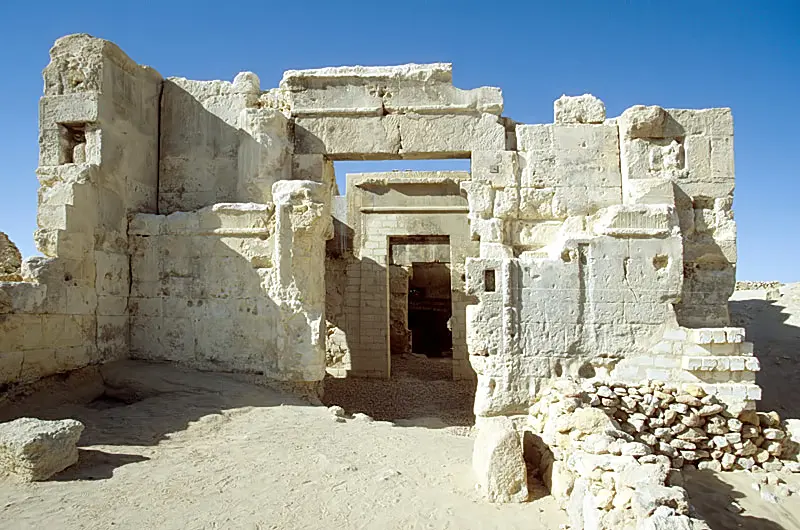
Visit essentials
A quick read before you go
- Duration
- 1-2 hours for the temple site.
- Access
- Siwa is 560 km from Cairo (approximately 8-9 hours by road) and 300 km from Marsa Matruh on the…
Overview
On a rocky outcrop above Aghurmi’s palm groves, the Oracle of Amun preserves one of the ancient world’s most famous places of consultation. Priests spoke for Amun—identified by Greeks with Zeus—to pilgrims who crossed a desert capable of swallowing armies; Siwa remains 560 kilometers from Cairo and 300 kilometers from the Mediterranean coast. The cult’s Libyan founder, Cambyses’ lost force, Greek delegations, and Alexander the Great’s defining pilgrimage in 331 BCE belong to the temple’s long memory.
Its ruined sanctuary still marks the threshold between fertile oasis and open desert that gave the oracle much of its force.
Why this place is sacred
The thinness at Siwa begins with isolation. The oasis lies hundreds of kilometers from the nearest major settlement, surrounded by desert that has claimed armies. To reach this place in antiquity required commitment that filtered out casual inquirers. Those who arrived had crossed terrain that tested their resolve. The journey itself became preparation for encounter.
The oracle's reputation intensified the site's significance. Croesus of Lydia, the famously wealthy king, consulted Siwa before his war with Persia. The Greeks trusted the oracle's pronouncements alongside their own at Delphi. Cambyses of Persia feared its power enough to send an army against it, an army the desert devoured. The stories accumulated, each consultation adding to the temple's accumulated spiritual gravity.
The physical setting reinforced the sense of liminality. The temple rises from a rocky outcrop above the oasis, surveying both the green fertility below and the endless desert beyond. This is an edge place, where cultivation meets wilderness, where the human world yields to something vaster. Such boundaries have traditionally been understood as thin.
Alexander's visit provides the site's defining moment. Here a young conqueror sought confirmation of what he suspected or hoped about his own nature. The priest's greeting, 'son of Amun,' whether diplomatic flattery or oracular truth, changed Alexander's self-conception. He began styling himself divine. He demanded proskunesis, the prostration due to gods. The Alexander who left Siwa was not the Alexander who arrived.
The mystery of what else was spoken adds final depth. Alexander told no one what he asked or learned. He carried those secrets to his early death. The oracle's answers, whatever they were, remained between Alexander and the god. This unknowing invites projection. Each visitor since has wondered what wisdom might emerge from this silent place.
The Temple of the Oracle served as the seat of one of antiquity's most famous oracles. Pilgrims came from across the ancient world to consult the god Amun, known to Greeks as Zeus-Ammon, about matters ranging from personal decisions to affairs of state. The oracle delivered responses through elaborate rituals involving a barque procession and the movements of the divine image.
The temple also served as a religious center for the oasis community and a symbol of Egyptian divine kingship in this remote region.
The oracle's history stretches back to at least the 7th century BCE, possibly earlier. The 26th Dynasty pharaohs expanded Egyptian influence to Siwa and likely enhanced the temple. The oracle achieved Mediterranean-wide fame by the 6th century BCE, when Croesus of Lydia reportedly consulted it. Alexander's visit in 331 BCE marked the apex of its prestige. The Ptolemaic period saw continued attention and possible temple expansion. Cleopatra VII may have visited in the 1st century BCE.
The oracle's influence declined as Christianity spread, and the temple was abandoned by the 4th century CE. The modern village of Aghurmi occupies the ancient fortress area, with residents living among the ruins until the 1926 collapse of the mud-brick structures after heavy rains.
Experience and orientation
The journey to Siwa replicates, in modern comfort, something of the ancient ordeal. From Cairo, the drive crosses 560 kilometers of desert, mostly on paved highway but with increasingly sparse services. From Alexandria, the distance is shorter but the route more challenging. Either way, the traveler experiences the isolation that gave the oracle its character.
The oasis appears suddenly, green against brown, palms rising from the desert floor. Siwa is substantial, home to approximately 25,000 people who speak their own Berber language and maintain traditions distinct from mainstream Egyptian culture. The town of Siwa proper serves tourists; the oracle temple lies at the nearby village of Aghurmi.
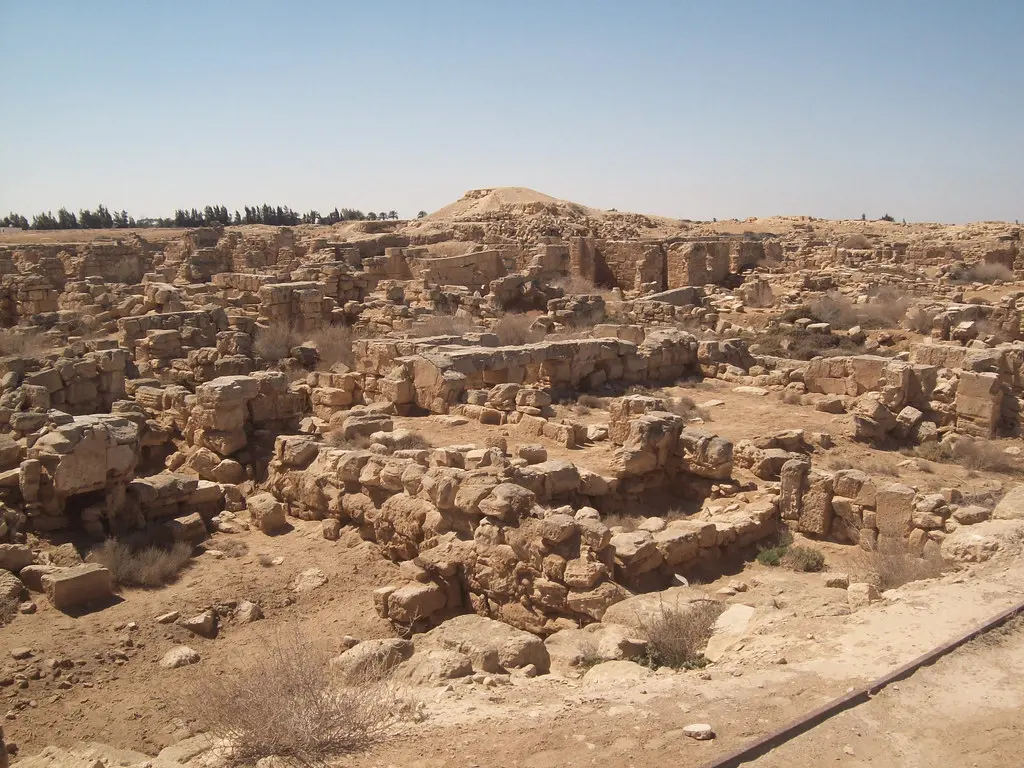
The ancient village of Aghurmi crowned a rocky outcrop now known as the Rock of Aghurmi. Mud-brick houses climbed the steep slopes, eventually surrounding and incorporating the temple itself. After heavy rains in 1926, most of the village collapsed. Residents relocated to the base, leaving the temple ruins accessible.
The climb to the temple is brief but atmospheric. Crumbling mud-brick walls line the narrow path. The desert stretches in every direction. At the summit, the Temple of the Oracle reveals itself as a modestly sized structure, its walls still standing in places, its sanctuary chamber open to the sky.
The oracle chamber is the heart of the site. This roofless room, approximately 6 by 3 meters, is where the god spoke through his priests. A corridor connected it to a deeper chamber that may have housed the divine image. The walls bear hieroglyphic inscriptions naming Amun and various pharaohs. Here Alexander stood. Here he heard whatever he heard.
The view from the temple completes the experience. The oasis spreads below, date palms and olive groves fed by natural springs. Beyond the green, the desert extends to infinity. You stand at the junction of fertility and wasteland, civilization and wilderness, the same threshold that drew pilgrims three millennia ago.
The Temple of the Oracle (Temple of Amun at Aghurmi) stands on a rocky outcrop at the edge of Siwa Oasis in Egypt's Western Desert, approximately 560 km from Cairo. The temple sits at the summit of the Rock of Aghurmi, which was once covered by a fortified mud-brick village. The structure includes an entrance passage, courtyard, oracle chamber (now roofless), and an inner sanctuary connected by a narrow corridor. Hieroglyphic inscriptions decorate surviving walls.
The modern town of Siwa lies approximately 3 km to the east. A second temple, the Temple of Umm Ubayda, stands 400 meters away but is almost entirely destroyed.
Context and lineage
According to local tradition, the oracle was founded by Egyptian priests from Thebes who were blown off course during a journey. More plausibly, the oracle developed from indigenous Libyan worship of Amun combined with Egyptian influence during the 26th Dynasty. The Greeks identified the ram-horned Amun with their supreme god Zeus, calling him Zeus-Ammon and incorporating Siwa into their network of sacred oracles.
The oracle's fame spread throughout the ancient world. Croesus of Lydia, the proverbially wealthy king, reportedly consulted Siwa among other oracles before his disastrous war with Persia. Greek city-states sent delegations seeking guidance. The Spartans maintained a special connection to the oracle, and Lysander, the Spartan general, consulted it.
Cambyses of Persia, having conquered Egypt in 525 BCE, sent an army of 50,000 to destroy the oracle. According to Herodotus, the entire force vanished in a sandstorm, never reaching Siwa. Whether literally true or not, the story demonstrates the oracle's reputation as divinely protected.
The Oracle of Amun at Siwa participated in two overlapping traditions: the Egyptian cult of Amun centered at Thebes and the Greek network of oracles including Delphi, Dodona, and Didyma. The syncretic deity Zeus-Ammon, worshipped here, became significant throughout the Hellenistic world after Alexander's visit. The oracle's method of response through barque procession resembled practices at Theban temples but adapted to the Libyan context.
Alexander the Great
Amun (Zeus-Ammon)
Cambyses II
Croesus of Lydia
Traditions and practice
The oracle delivered its pronouncements through an elaborate ritual. The god's image was carried in a gilded barque borne by eighty priests. The barque's movements, interpreted by priests, provided the divine response. Pilgrims did not hear spoken words but witnessed the god's presence through the motions of the sacred vessel.
Alternative accounts suggest responses were sometimes spoken by priests, possibly from a hidden chamber behind the sanctuary. The greeting to Alexander, 'son of Amun,' may have been delivered in this manner. The distinction between oracular voice and priestly interpretation was perhaps deliberately blurred.
Consultants brought questions about personal matters, political decisions, and military campaigns. The process required preparation, offerings, and appropriate questions. Not everyone received favorable responses; the oracle was believed to punish presumption.
The oasis community participated in regular festivals honoring Amun. The connection between local worship and international pilgrimage created a site that served both indigenous religious practice and Mediterranean consultation.
No active religious practices occur at the Temple of the Oracle. The site functions as an archaeological and historical destination visited for its connection to Alexander the Great and the broader history of ancient oracles.
The Siwi people of the oasis maintain their own distinct culture, including Berber language and traditions, but these are not directly connected to ancient oracular practice. The modern population is Muslim, and their religious life centers on the town's mosques rather than ancient temples.
Approach the site with awareness of what brought ancient visitors here. They crossed lethal terrain to ask questions that mattered enough to risk their lives. What questions would be worth such a journey?
Stand in the oracle chamber and consider what Alexander might have asked and heard. You occupy the same space where that exchange occurred.
Take time to observe the landscape from the temple summit. The oasis below, the desert beyond, the sense of standing at an edge.
Ancient Egyptian Religion
HistoricalThe Temple of the Oracle was a major cult center for Amun, the king of the Egyptian gods. The oracle's fame spread throughout the ancient world, drawing pilgrims from across the Mediterranean. The site represents the extension of Egyptian religious authority into the Western Desert.
Oracular consultation through the movements of a barque bearing the divine image. Ritual processions by priests bearing the god's image. Offerings and questions by pilgrims. Regular festivals honoring Amun.
Greek Religion (Zeus-Ammon)
HistoricalGreeks identified the ram-horned Amun with their supreme god Zeus, creating the syncretic deity Zeus-Ammon. The oracle at Siwa was considered comparable to the Greek oracles at Delphi and Dodona. Alexander's visit cemented the oracle's place in Greek religious geography.
Greek-style consultation of the oracle for personal and political guidance. Dedication of offerings in Greek tradition. Integration of Siwa into the network of Mediterranean oracles.
Perspectives and open questions
The Temple of the Oracle invites engagement as historical site, as locus of one of antiquity's most famous consultations, and as meditation on the human need to seek guidance from powers beyond ordinary understanding.
Scholarly perspective
Historians recognize the Oracle of Amun at Siwa as one of the major oracles of the ancient Mediterranean world, though less documented than Delphi due to its remote location. The cult of Zeus-Ammon worshipped here represents an important channel of cultural exchange between Egyptian and Greek religion.
Alexander's visit is extensively documented but its details remain debated. What he asked, what he was told, and how the experience affected him are reconstructed from contradictory ancient sources. Some scholars emphasize the political utility of divine legitimation; others take Alexander's subsequent behavior as evidence of genuine religious transformation.
The temple's architecture and inscriptions date primarily to the 26th Dynasty, with possible later additions. Archaeological work has been limited by the site's remoteness and the complexity of the collapsed village surrounding the temple.
Living and traditional perspectives
In ancient understanding, the god Amun genuinely spoke at Siwa. The oracle's pronouncements were divine communication, not priestly interpretation. The danger of the journey and the fame of the oracle testified to divine power; Cambyses' lost army was read as proof that the god protected his own sanctuary.
For Alexander and his contemporaries, the oracle's greeting was not flattery but revelation. The god recognized Alexander's true parentage and destiny. This was not a political claim but a divine truth communicated through the oracle's established methods.
Alternative interpretations
Some researchers emphasize the oracle's psychological function, providing seekers with frameworks for decision-making regardless of actual divine communication. Others explore the site's energetic qualities, noting that sacred sites worldwide often occupy locations with distinctive geological or geographical characteristics.
The mystery of what Alexander learned adds to speculation. Some propose he received prophecies about his future campaigns or death. Others suggest he sought confirmation of mysteries related to his own nature or destiny.
Open questions
What Alexander asked and was told remains unknown. Whether the oracle delivered spoken responses or only communicated through barque movements is unclear. The exact mechanism by which priests interpreted divine will is not fully documented. Whether the oracle's fame reflected actual successful predictions or accumulated reputation cannot be determined. The site's earlier history before Egyptian influence remains obscure.
Plan your visit
Access and arrival
Siwa is 560 km from Cairo (approximately 8-9 hours by road) and 300 km from Marsa Matruh on the Mediterranean coast (approximately 4-5 hours). Buses operate from Cairo and Alexandria. Private car or organized tour provides more flexibility. Within Siwa, the temple at Aghurmi is approximately 3 km from the town center, accessible by taxi, bicycle, or walking.
Siwa town offers a range of accommodations from budget guesthouses to eco-lodges. The Adrere Amellal eco-lodge is renowned for its traditional construction and desert setting. Book in advance during peak season and festivals.
Respectful visit
Modest, practical clothing suitable for desert conditions. Sun protection including hat, sunscreen, and lightweight long sleeves. Sturdy walking shoes for climbing to the temple.
Photography is permitted at the archaeological site. Be respectful when photographing in the village. Do not photograph local residents without permission.
Not applicable. This is an archaeological site with no active religious practice.
Do not climb on or touch ancient structures. Follow any site signage or guard instructions. Respect the privacy of local residents.
Siwa is remote. Ensure reliable transportation and sufficient supplies. The desert climate is extreme, hot in summer and cold at night. Water is essential. Security conditions in the Western Desert should be verified before travel.
Current practical details
Address
6G4V+4C6, Siwa, Marsa Matrouh Governorate 5011632, Egypt
Hours
Hours, fees, and access can change — verify on the official source before you travel. Practical details last checked Jun 2026.
Location
Map loads as you approach this section.
Pilgrim reflections
A portrait of encounter, not a score
Pilgrims describe what they felt, how present they could become, and whether the place would shape a journey. There are no stars and no ranking of traditions.
No reviewed reflections yet
The first pilgrims can help describe the character of being here.
Share a reflection
Available after an account-backed “Been there.” Every reflection is reviewed before publication.
Nearby sacred places
Explore other sacred places in the region. Proximity does not establish access or travel time; check each place’s guidance.



References
Sources consulted for this page. Source categories describe the publication, not a guarantee that every claim is verified. Traditional accounts and outside interpretations may differ.
- 01Oracle of Ammon — Livius.orgacademicScholarly analysis of ancient sources
- 02Arrian on Alexander visits Siwa — Livius.orgacademicPrimary source translation and analysis
- 03Ammon: a Pleiades place resource — Pleiades Gazetteer of Ancient PlacesacademicAuthoritative archaeological coordinates
- 04Structural preservation of the Temple of the Oracle in Siwa Oasis, Egypt — Conservation and Management of Archaeological SitesacademicPeer-reviewed conservation study
- 05Siwa Oasis: a Forgotten Heritage under Threat — ResearchGateacademicAcademic study on preservation challenges
- 06Siwa archaeological area — UNESCO World Heritage CentreofficialOfficial UNESCO tentative list documentation
- 07Sanctuary of Zeus Amun at Siwa, Egypt — University of WarwickacademicAcademic database on Greek religion
- 08Ammon (Deity) — World History EncyclopediaacademicScholarly overview of deity
- 09The Oracle of Siwa: How a remote oasis in Egypt drew history's most powerful men — Middle East EyeacademicHistorical overview with cultural context
- 10Temple of Amun - History and Facts — History HitacademicHistorical overview and visitor information
- 11Siwa Oasis — Wikipedia contributorsacademicComprehensive overview with historical citations
- 12Alexander the Great's Perilous Pilgrimage to the Siwa Oracle — Greek ReporteracademicDetailed account of Alexander's journey
- 13The mysterious message Alexander the Great received when he visited the Siwa Oracle — History SkillsacademicAnalysis of historical sources on Alexander's visit
- 14Temple of Amun, Siwa oasis — Sacred SitesSource contextSpiritual significance documentation
- 15Temple of the Oracle — Lonely PlanetguideVisitor guide and practical information
- 16The Temple of Umm Ubaydah at the Siwa Oasis in Egypt — Tour EgyptguideInformation on companion temple
Share a photo
Help visitors recognize Temple of Amun (Amon Temple), Siwa Oasis. Every submission is reviewed before publication.