Abu Mena
Where a soldier's tomb became a holy city and pilgrims sought healing for fifteen centuries
Understand sacred places, explore living traditions, and learn how to engage respectfully with Pilgrim Map.
Access has not been verified. Check current local guidance before planning a visit.
Izbat Muhammad Farid, Alexandria, Egypt
Read the sources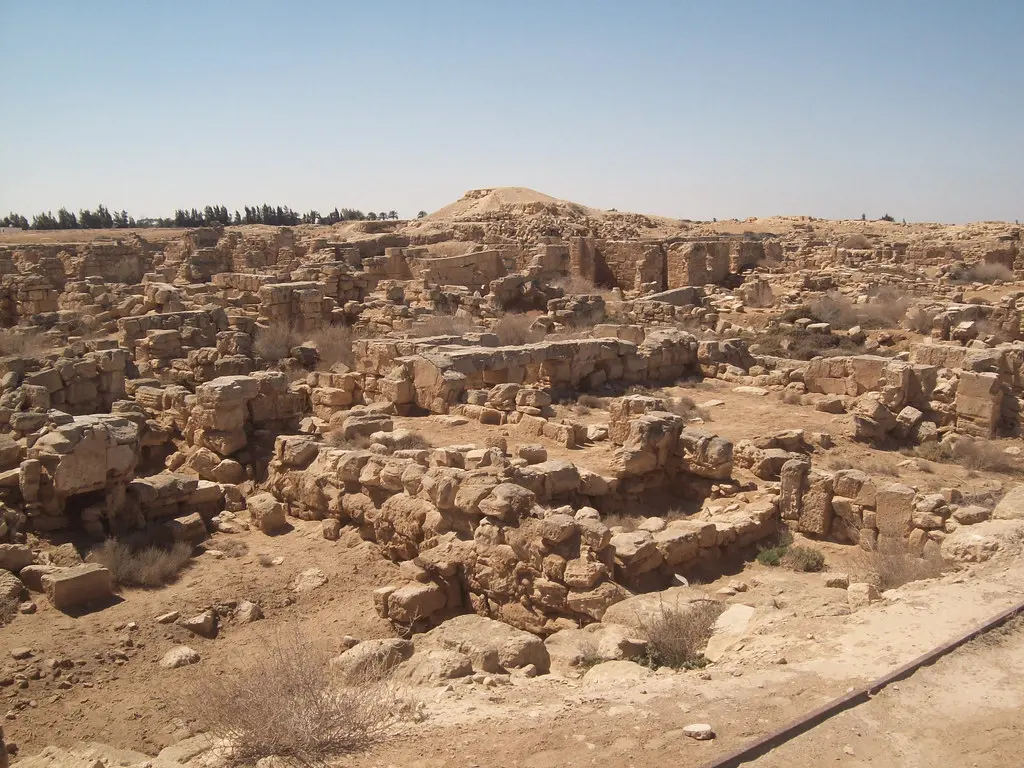
Visit essentials
A quick read before you go
- Duration
- Two to four hours to explore the archaeological ruins.
- Etiquette
- Dress modestly for a religious site.
Overview
A sick lamb crossed a spot in the desert and was healed. So begins the legend of Abu Mena—the discovery that beneath the sand lay the tomb of a soldier who had died for his faith.
Saint Menas was martyred around 296 CE during Diocletian's persecution, and around his lost-and-rediscovered desert tomb near Alexandria grew one of the most remarkable developments in early Christianity. By the 5th century a whole pilgrimage city had risen—the place called Martyroupolis, city of the martyr—drawing visitors from as far as England, France, Germany, and Turkey, who carried home sacred water in the distinctive Menas flasks.
The Arab conquest brought decline, and the holy city was gradually abandoned. But the sand that first hid the tomb preserved the ruins. Excavations beginning in 1905 revealed the scale of what had been. Today Abu Mena is a UNESCO World Heritage Site, its ruins witnessing to the infrastructure of ancient faith. And the veneration continues: a Coptic Orthodox monastic community guards the site, and relics of Saint Menas still draw those who seek his intercession.
Why this place is sacred
What makes Abu Mena thin is the continuous thread of faith that connects the present to the earliest centuries of Christianity. A soldier died for his faith. His body was buried in the desert. The tomb was lost and found. Healings occurred. A city of pilgrimage arose.
The architecture that remains testifies to how seriously early Christians took the presence of holy power. The Great Basilica was built over the tomb itself, creating a structure where prayer could occur in the saint's immediate presence. The baptistry, built adjacent, allowed converts to enter the faith in proximity to the martyr. The baths acknowledged that healing could work through physical means—the therapeutic springs were understood as channels of sacred power.
The xenodocheion, the pilgrim hostel, could accommodate crowds from across the Mediterranean. Wine presses and workshops sustained the community that served the shrine.
The Menas flasks are perhaps the most eloquent testimony to what pilgrims sought. These small pottery vessels, depicting the saint between two camels, were filled with water from the sacred springs and carried home. The flasks have been found in archaeological sites from Ireland to Iran, documenting how far pilgrims traveled and how much they valued what they found. The water itself was believed to carry healing power—physical substance infused with sacred significance.
The site's fifteen-century continuity through the Coptic Orthodox Church maintains this understanding. The ruins are not merely archaeological; they remain sacred ground where veneration occurs. The monks who guard the site continue the prayers that pilgrims have offered since the tomb was discovered. The sand that buried and preserved the ancient city has given way to ongoing devotion.
Abu Mena developed organically around the tomb of Saint Menas as a place where Christians could seek the martyr's intercession and experience miraculous healing. The infrastructure of pilgrimage—basilica, baths, hostels, monasteries—grew to serve the thousands who came from across the Mediterranean.
From a simple tomb in the desert, Abu Mena grew into the largest pilgrimage center in Egypt by the 7th century. The Arab conquest brought decline, and the city was gradually abandoned. Sand covered the ruins for centuries. Excavations beginning in 1905 revealed the site's extent. UNESCO inscribed Abu Mena as a World Heritage Site in 1979. Rising water tables from agricultural development threatened the structures, leading to Danger List placement from 2001 to 2025.
Throughout these changes, the Coptic Orthodox Church has maintained the site's sacred significance.
Experience and orientation
The approach to Abu Mena crosses desert landscape southwest of Alexandria. The Mediterranean's influence fades; the air dries; the terrain flattens into the edge of the Western Desert that stretches toward Libya. This isolation was intentional—the desert fathers of Egyptian Christianity sought distance from the Roman cities where persecution could find them.
The ruins appear gradually. What was once a bustling holy city is now a field of archaeological remains: foundations, walls, column fragments. The scale becomes apparent as you walk. The Great Basilica's footprint reveals a structure that could accommodate hundreds at worship. The baptistry nearby preserves the pool where converts were immersed. The baths spread along the basilica's flanks.
Walk the ancient streets. Pilgrims from across the Mediterranean walked here—Romans, Greeks, Egyptians, visitors from what would become France and Germany and England. They came seeking the healing the martyr's tomb promised, bathed in the springs, prayed at the tomb, and carried sacred water home in the distinctive Menas flasks.
The xenodocheion's foundations reveal how pilgrims were housed—separate wings for men and for women with children, accommodations for rich and poor. Wine presses and workshops show how the community sustained itself. This was not merely a shrine but a functioning city organized entirely around the cult of a healing saint.
The modern Coptic monastery nearby continues what the ancient city began. If timing permits, observe the monks at prayer—the same liturgies, essentially, that were celebrated in the Great Basilica when it stood. The relics of Saint Menas still rest here. The faith that built a city in the desert persists.
The archaeological site contains ruins of the Great Basilica, baptistry, baths, pilgrim hostels, and other structures. A modern Coptic monastery is adjacent. Verify current access policies before visiting—conservation work may limit entry to certain areas. The site is exposed to sun and heat; bring water and sun protection. Allow time for the modern monastery if you wish to observe Coptic practice.
Context and lineage
Menas was an Egyptian who served as a Roman soldier. During the Great Persecution under Diocletian (303-311 CE), he publicly declared his Christian faith and was executed around 296 CE. His body was transported by camel to be buried in the desert near Alexandria.
According to tradition, windblown sand covered the tomb, and its location was lost. The rediscovery came through animals—a shepherd noticed that sick livestock became well when they crossed a particular spot in the desert. The synaxarium relates that Emperor Constantine I sent his sick daughter to the healing place, where she discovered the saint's body. Constantine ordered a church built over the tomb.
Subsequent emperors expanded the complex. Emperor Arcadius (395-408 CE) initiated major building phases that transformed a simple shrine into a pilgrimage city. By the late 5th century, Abu Mena was known as Martyroupolis—city of the martyr—and drew pilgrims from across the Mediterranean seeking miraculous healing.
Abu Mena belongs to the tradition of early Christian martyr veneration that produced pilgrimage centers across the Mediterranean world. The cult of Saint Menas developed within Egyptian Christianity and spread through the entire Christian world. The Coptic Orthodox Church has maintained Abu Mena's sacred significance for over 1,500 years, and the monastic community that guards the site continues the tradition of prayer and pilgrimage established in late antiquity.
Saint Menas
Martyr and patron
Emperor Arcadius
Imperial patron
Karl Maria Kaufmann
Excavator
Traditions and practice
In late antiquity, pilgrimage to Abu Mena centered on seeking healing through Saint Menas's intercession. Pilgrims bathed in the therapeutic springs fed by the site's limestone rocks, believing the water carried sacred power. They prayed at the saint's tomb in the Great Basilica. Before departing, they purchased Menas flasks—small pottery vessels depicting the saint between two camels—and filled them with sacred water to carry home.
These flasks have been found across the Mediterranean world, from Ireland to Iran, documenting the pilgrimage's extraordinary reach.
The baptistry received converts who wished to enter the faith in the saint's presence. The xenodocheion housed pilgrims during their stay. The entire complex was organized around facilitating encounter with sacred presence.
The Coptic Orthodox Church maintains the site. A monastic community guards the relics of Saint Menas and continues liturgical life. Pilgrims, primarily Coptic Christians, continue to visit and venerate the saint. The Coptic calendar commemorates Menas's feast day. While the therapeutic baths no longer function, the tradition of seeking the saint's intercession continues.
Walk the ancient site with awareness that you are crossing ground sacred to Christians for over 1,500 years. If timing permits and access is available, observe the Coptic monastic community at prayer. Approach the experience not merely as tourism but as pilgrimage—the same impulse that drew ancient visitors here. Whether or not you seek miraculous healing, consider what it meant for pilgrims to travel vast distances for the hope the saint's intercession offered.
Coptic Orthodox Christianity
ActiveAbu Mena is one of the most important pilgrimage sites in Coptic Christianity, built around the tomb of Saint Menas, one of the church's most venerated martyrs. Menas's cult developed in the centuries after his martyrdom around 296 CE and grew to draw pilgrims from across the Mediterranean. The Menas flasks that pilgrims carried home have been found from Ireland to Iran. Though the ancient city is now ruins, the Coptic Orthodox Church has maintained the site's sacred significance for over 1,500 years.
A monastic community guards the site and maintains liturgical life. Pilgrims continue to venerate the relics of Saint Menas. The saint's feast day is commemorated in the Coptic calendar. The tradition of seeking miraculous healing through the saint's intercession, which drew ancient pilgrims in the thousands, continues in modified form.
Perspectives and open questions
Abu Mena invites multiple readings: as archaeological site preserving early Christian pilgrimage infrastructure, as sacred ground where a martyr's intercession continues to be sought, as testimony to the development of Christian healing cults. All perspectives acknowledge the site's exceptional importance for understanding how early Christians organized their approach to sacred power.
Scholarly perspective
Archaeologists and historians view Abu Mena as an outstanding example of early Christian pilgrimage architecture. The site demonstrates how martyr cults could generate entire cities to serve pilgrims from across the Mediterranean, and how the surviving Menas flasks document that pilgrimage's international reach. Its development from simple tomb to major complex illustrates how imperial patronage transformed Christian holy places.
UNESCO inscription recognizes Abu Mena's exceptional value for understanding early Christianity and late antique pilgrimage. The site's placement on the Danger List (2001-2025) due to rising water tables highlighted conservation challenges facing archaeological heritage.
Living and traditional perspectives
For Coptic Orthodox Christians, Abu Mena remains sacred ground where Saint Menas's intercession is available—not merely an archaeological site but a living holy place. The unbroken veneration across fifteen centuries, sustained by the monastic community and the relics it guards, is itself the testimony to the martyr's enduring power.
Alternative interpretations
Some researchers have noted the therapeutic springs' role in healing practices, connecting Abu Mena to broader traditions of sacred waters in Egypt and the Mediterranean. The site's desert location places it within the tradition of desert spirituality that shaped Egyptian Christianity.
Open questions
Questions remain about the exact circumstances of the tomb's original discovery. The full extent of the ancient pilgrimage city before decline is not completely documented. The reasons for abandonment beyond the Arab conquest are debated. Unexplored areas of the site may contain further structures. The relationship between the healing cult and the therapeutic springs—whether the springs predated Christian veneration—remains unclear.
Plan your visit
Access and arrival
Alexandria provides the nearest range of accommodations. Day trips from Alexandria are typical. Basic facilities may be available near the site; verify in advance.
Respectful visit
Modest clothing covering shoulders and knees, especially for monastery visits.
Photography of ruins generally permitted. Ask permission for photographing monks or religious ceremonies.
Inquire with the monastic community about appropriate donations.
Conservation may limit access to certain structures. Monastic areas may be restricted. Respect both archaeological and religious requirements.
The site is in the Egyptian desert; bring water and sun protection. Conservation concerns may limit access to certain structures. Respect monastic privacy and religious observances. Verify current access policies before visiting.
Current practical details
Address
9 Mar-Mina Rd, Qetaa Maryout, Borg El Arab, Alexandria Governorate 21934, Egypt
Phone
Hours
Hours, fees, and access can change — verify on the official source before you travel. Practical details last checked Jun 2026.
Location
Map loads as you approach this section.
Pilgrim reflections
A portrait of encounter, not a score
Pilgrims describe what they felt, how present they could become, and whether the place would shape a journey. There are no stars and no ranking of traditions.
No reviewed reflections yet
The first pilgrims can help describe the character of being here.
Share a reflection
Available after an account-backed “Been there.” Every reflection is reviewed before publication.
Nearby sacred places
Explore other sacred places in the region. Proximity does not establish access or travel time; check each place’s guidance.

Monastery of Saint Minas
Izbat Muhammad Farid, Alexandria, Egypt
1.2 km away

Monastery of Saint Pishoy (St Bishoi)
Wadi El Natrun, Beheira, Egypt
83.3 km away

Monastery of Saint Macarius the Great
Wadi El Natrun, Beheira, Egypt
85.9 km away

Church of the Virgin Mary, Daqadus, Egypt
Mit Ghamr City, Dakahlia, Egypt
153.2 km away
References
Sources consulted for this page. Source categories describe the publication, not a guarantee that every claim is verified. Traditional accounts and outside interpretations may differ.
- 01Abu Mena — UNESCO World Heritage CentreofficialOfficial World Heritage documentation
- 02Abu Mena — SmarthistoryacademicArt historical analysis
- 03Abu Mena — Wikipedia contributorsencyclopediaComprehensive overview with archaeological citations
- 04Abu Mina, The Ancient Christian Pilgrimage Site — Tour EgyptacademicDetailed site description
Photo gallery
3 curated photos
Share a photo
Help visitors recognize Abu Mena. Every submission is reviewed before publication.