Grampians National Park
Over four thousand rock art motifs across twenty thousand years, in a landscape at the centre of creation
Understand sacred places, explore living traditions, and learn how to engage respectfully with Pilgrim Map.
Access has not been verified. Check current local guidance before planning a visit.
Shire of Northern Grampians, Victoria, Australia
Read the sources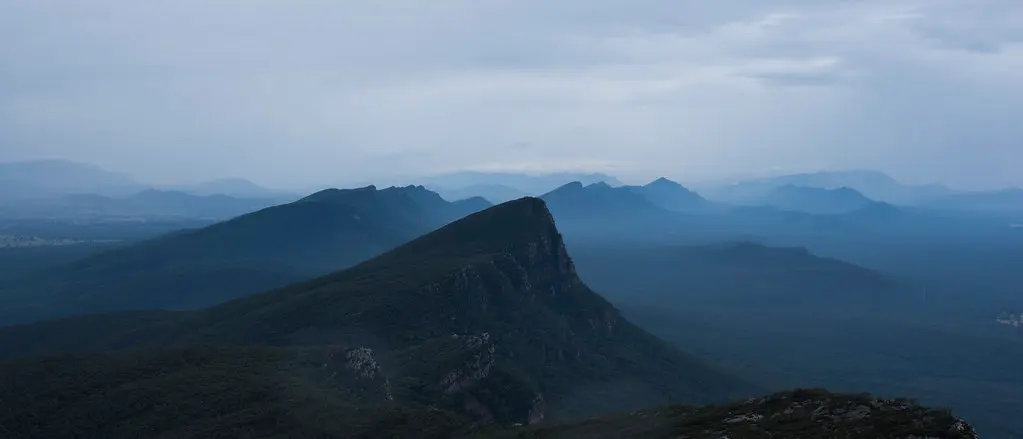
Image of Grampians National Park. Image source
Visit essentials
A quick read before you go
- Duration
- Full day minimum.
- Access
- Approximately 260 km west of Melbourne (3 hours by car).
Overview
Gariwerd—the ranges European settlers named the Grampians—rises from western Victoria’s plains in sandstone ridges, waterfalls, and sheltered valleys that have supported human habitation for over 30,000 years. Its Traditional Owners, the Jardwadjali and Djab Wurrung peoples, maintain connection through one of southeastern Australia’s densest concentrations of Aboriginal rock art. Approximately 200 sites contain over 4,000 motifs: hand stencils, emu tracks, human figures, geometric patterns, and images whose meanings remain with the communities that created them.
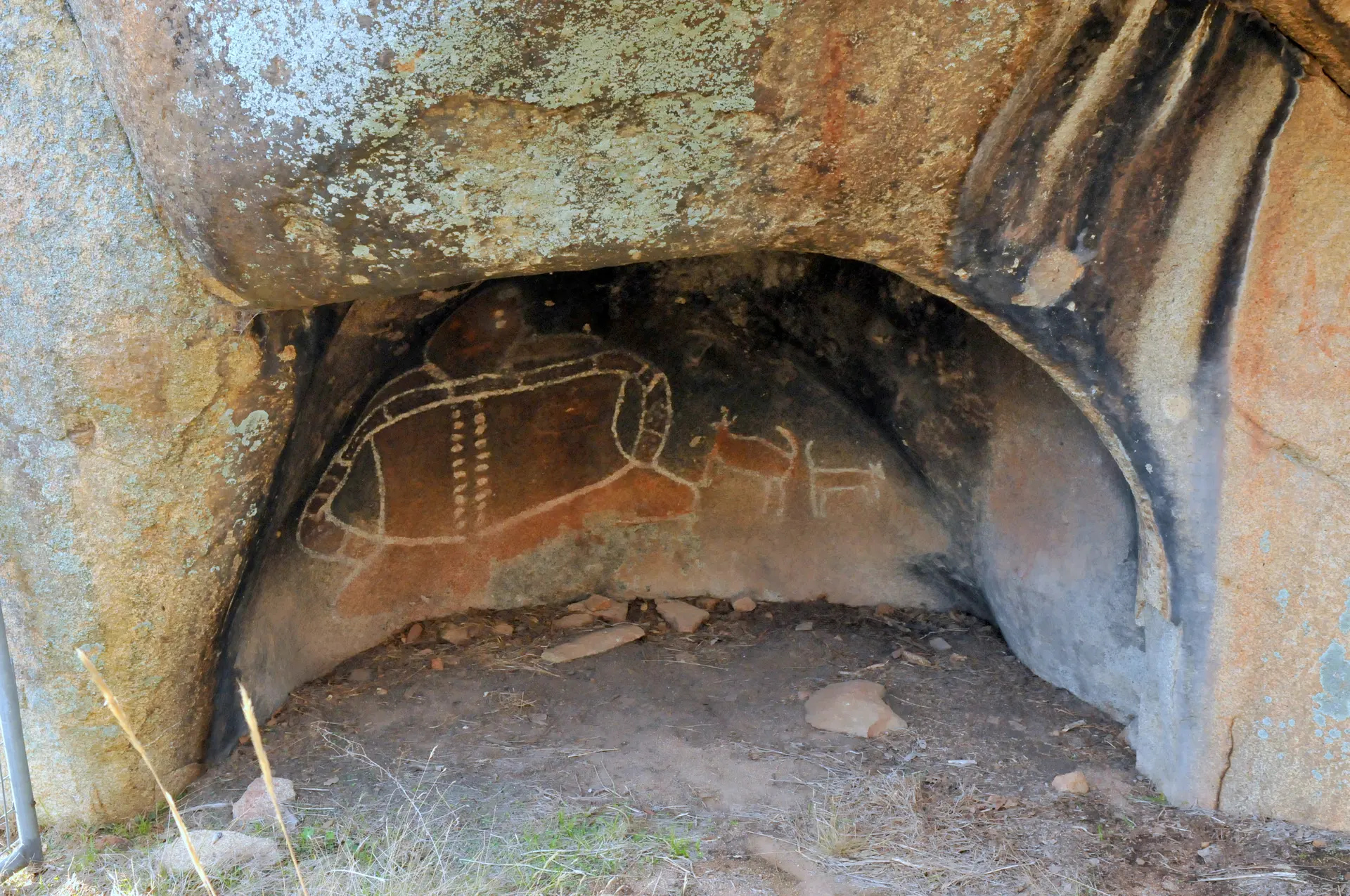
Only five sites are public; 195 are deliberately unpublicised for cultural protection, making access itself a statement about knowledge. The shelters were places of habitation, ceremony, and cultural transmission, not decoration. At Gulgurn Manja—‘Hands of Young People’—children’s stencils evoke ancient childhood. Near Stawell, Bunjil’s Shelter portrays the creator being with two dingo companions at one of Australia’s most significant cultural heritage sites. Brambuk Cultural Centre in Halls Gap provides the community-led gateway from visual curiosity to living heritage.
Why this place is sacred
The power of Gariwerd's rock art is inseparable from its distribution. Only five of approximately 200 sites are publicly accessible. The other 195 exist in the landscape, known to Traditional Owners and researchers, deliberately unpublicised. A visitor walking through the ranges knows that the art they cannot see vastly outnumbers the art they can. This awareness creates a quality of attention unlike any museum or managed heritage site.
At the accessible sites, the art is immediate and unmediated. The hand stencils at Gulgurn Manja are not behind glass. They are on rock, in shelter, in a place where rain and wind have touched them for thousands of years. The hands of children are among them — small, definite, unmistakable. Someone held a child's hand against rock and blew pigment around it twenty thousand years ago, and the outline remains.
The connection this creates is not intellectual but physical: hand to hand across millennia.
Bunjil's presence in the landscape extends beyond the shelter that bears his painting. As the creator being of this Country, Bunjil is the landscape — the ranges, the waterfalls, the rock shelters themselves are expressions of his creative act. The painting is not a representation of Bunjil but a mark of his presence in a place that is already his.
The rock art served multiple purposes: ceremonial (possibly associated with initiation rites and funerals), territorial (marking connection to Country), documentary (recording significant events), and spiritual (expressing and maintaining relationship with Dreaming beings).
The rock art tradition at Gariwerd spans at least 20,000 years, with different styles and techniques appearing across different periods. Much cultural knowledge was lost following European settlement from 1840. The Brambuk Cultural Centre, established by the Aboriginal community, represents a contemporary effort to maintain and share cultural knowledge.
Experience and orientation
Begin at the Brambuk Cultural Centre in Halls Gap. The centre, built and operated by Aboriginal communities, provides the cultural framework that transforms what follows from sightseeing into something more considered. Interactive exhibits, art displays, and storytelling areas share the heritage and Dreaming stories of the Jardwadjali and Djab Wurrung peoples.
From Brambuk, the five publicly accessible rock art sites are distributed across the park. At Gulgurn Manja, a fifteen-minute walk from Hollow Mountain car park leads to a rock shelf bearing painted hand stencils — including children's hands — alongside emu tracks and other symbols. The shelter faces a landscape of ridges and valleys that the artists knew intimately.
At Ngamadjidj, near a small waterhole on the western edge of the ranges, remains of campfires and stone tools have been found alongside the art, confirming that this was a place of extended habitation.
Billimina Shelter offers an impressive rock overhang with many red paintings left by Jardwadjali people who camped here periodically. The art is not isolated from its context; it exists within a landscape of use — camping, tool-making, ceremony — that the shelters preserve.
Guided cultural walks with Aboriginal guides, available through the Brambuk Cultural Centre, add a dimension that self-guided visits cannot provide. Walking with someone whose ancestors made the art, in a landscape that remains their Country, changes the quality of seeing.
Start at the Brambuk Cultural Centre before visiting any rock art sites. If possible, join a guided cultural walk. Visit Gulgurn Manja for the hand stencils, then Bunjil's Shelter if time permits. Allow the cultural context from Brambuk to inform what you see at the sites.
Context and lineage
Bunjil, the creator being, shaped this landscape during the Dreaming. His painting at Bunjil's Shelter — depicted with his two dingo companions — is one of the most significant cultural heritage images in Australia. The ranges, waterfalls, and rock shelters are expressions of Bunjil's creative act and remain his Country.
The Jardwadjali and Djab Wurrung peoples maintain continuous connection to Gariwerd despite the disruptions of European colonisation from 1840. The Brambuk Cultural Centre represents a contemporary expression of ongoing custodianship.
Bunjil
Creator being in Jardwadjali and Djab Wurrung Dreaming, whose painting at Bunjil's Shelter is among the most significant cultural heritage images in Australia
Traditions and practice
Ceremonies, initiations, and cultural gatherings have been held in Gariwerd for millennia. The rock art may have been associated with initiation rites, funerals, and seasonal ceremonies.
The Brambuk Cultural Centre serves as a living cultural institution. Guided cultural walks are available. Traditional Owners continue ceremonial practices.
Visit the Brambuk Cultural Centre first. Join a guided cultural walk if available. At rock art sites, sit quietly and allow the art to emerge — the stencils and paintings reveal themselves gradually as the eye adjusts to the rock surface.
Jardwadjali and Djab Wurrung
ActiveGariwerd is the ancestral Country of the Jardwadjali and Djab Wurrung peoples. The rock art, spanning 20,000+ years, is a record of continuous cultural practice and spiritual relationship with the landscape. Bunjil the creator being is central to the Dreaming of this place.
Cultural transmission through the Brambuk Cultural Centre. Guided cultural walks. Ongoing ceremonial practices. Joint management of the national park.
Perspectives and open questions
Gariwerd holds 30,000 years of human presence in a landscape that remains Country for its Traditional Owners — a place where rock art, creation narrative, and ongoing cultural practice are inseparable.
Scholarly perspective
Gariwerd is recognised as holding the richest concentration of Aboriginal rock art in southeastern Australia. National Heritage listing acknowledges both natural and cultural values. The art spans multiple styles and periods, providing evidence of evolving cultural expression across at least 20,000 years.
Living and traditional perspectives
For the Jardwadjali and Djab Wurrung peoples, Gariwerd is Country — the landscape shaped by Bunjil, the creator being, and maintained through ongoing relationship. The rock art is not 'art' in the Western sense but a record of this relationship, made over millennia and continuing to hold meaning for contemporary communities. Much knowledge was lost through colonisation; the surviving sites and the Brambuk Cultural Centre are critical to cultural continuity.
Alternative interpretations
The antiquity and density of the art have drawn interest from those seeking evidence of ancient spiritual practices in southern Australia.
Open questions
The exact purposes of many rock art motifs remain uncertain. The relationship between different art styles and periods is still being researched. Much Indigenous knowledge about the sites was lost during colonisation.
Plan your visit
Access and arrival
Approximately 260 km west of Melbourne (3 hours by car). Halls Gap is the main base within the park. Brambuk Cultural Centre is in Halls Gap.
Halls Gap offers hotels, cabins, and camping. Additional accommodation in Ararat and Stawell.
Respectful visit
Walking/hiking attire appropriate for the ranges.
Photography permitted at public rock art sites. No flash. Do not touch surfaces to enhance visibility for photographs.
None expected.
Do not touch rock art | Do not seek out unpublicised sites | Stay on marked trails | No flash photography | Do not remove any natural or cultural material
Do not seek out unpublicised rock art sites. The 195 sites that are not open to the public are protected for cultural reasons. Do not touch rock art surfaces — oils from skin can damage the pigments.
Current practical details
Address
Victoria, Australia
Phone
Hours, fees, and access can change — verify on the official source before you travel. Practical details last checked Jun 2026.
Location
Map loads as you approach this section.
Pilgrim reflections
A portrait of encounter, not a score
Pilgrims describe what they felt, how present they could become, and whether the place would shape a journey. There are no stars and no ranking of traditions.
No reviewed reflections yet
The first pilgrims can help describe the character of being here.
Share a reflection
Available after an account-backed “Been there.” Every reflection is reviewed before publication.
Nearby sacred places
Explore other sacred places in the region. Proximity does not establish access or travel time; check each place’s guidance.
Bunjil's Shelter
Stawell / Black Range, Victoria, Victoria, Australia
45.3 km away
Lake Mungo
Willandra Lakes, New South Wales, Australia
392.6 km away
Mutawintji Historic Site
Mutawintji / Broken Hill region, New South Wales, New South Wales, Australia
653.6 km away

Wilpena Pound
Pastoral Unincorporated Area, South Australia, Australia
721.2 km away
References
Sources consulted for this page. Source categories describe the publication, not a guarantee that every claim is verified. Traditional accounts and outside interpretations may differ.
- 01Rock Art in the Grampians - Visit Grampians — Visit GrampiansofficialOfficial tourism body
- 02Gulgurn Manja Aboriginal Rock Art Site - Parks Victoria — Parks VictoriaofficialOfficial park management
- 03Bunjil's Shelter - Visit Grampians — Visit GrampiansSource contextCultural context for key site
- 04Grampians National Park - Wikipedia — Wikipedia contributorsencyclopediaGeneral overview
- 05Indigenous History of Grampians - Go West Tours — Go West ToursguideCultural tour operator perspective
Photo gallery
3 curated photos
Share a photo
Help visitors recognize Grampians National Park. Every submission is reviewed before publication.