Valle dei Templi
Seven ancient temples on a ridge above the Mediterranean, where Greek devotion became stone
Understand sacred places, explore living traditions, and learn how to engage respectfully with Pilgrim Map.
Access has not been verified. Check current local guidance before planning a visit.
Agrigento, Agrigento, Italy
Read the sources
Visit essentials
A quick read before you go
- Duration
- 2-4 hours minimum for the main ridge; a full day to explore the entire 1,300-hectare park
- Access
- Located on the southern edge of Agrigento, accessible by car or bus from the city center…
Overview
Along Agrigento's southern ridge, seven ancient Greek temples stand in golden calcarenite under Sicilian light. Valle dei Templi, a UNESCO World Heritage Site, preserves one of the world's most complete assemblages of Greek sacred architecture.
Colonists from Gela founded Akragas around 580 BC, and it quickly became one of the Mediterranean's wealthiest cities. Pindar called it 'the most beautiful city of mortals' and 'the dwelling place of Persephone.' Its 6th- and 5th-century BC temples honored Hera, Concordia, Heracles, Olympian Zeus, Castor and Pollux, Hephaestus, and the chthonic divinities of the underworld.
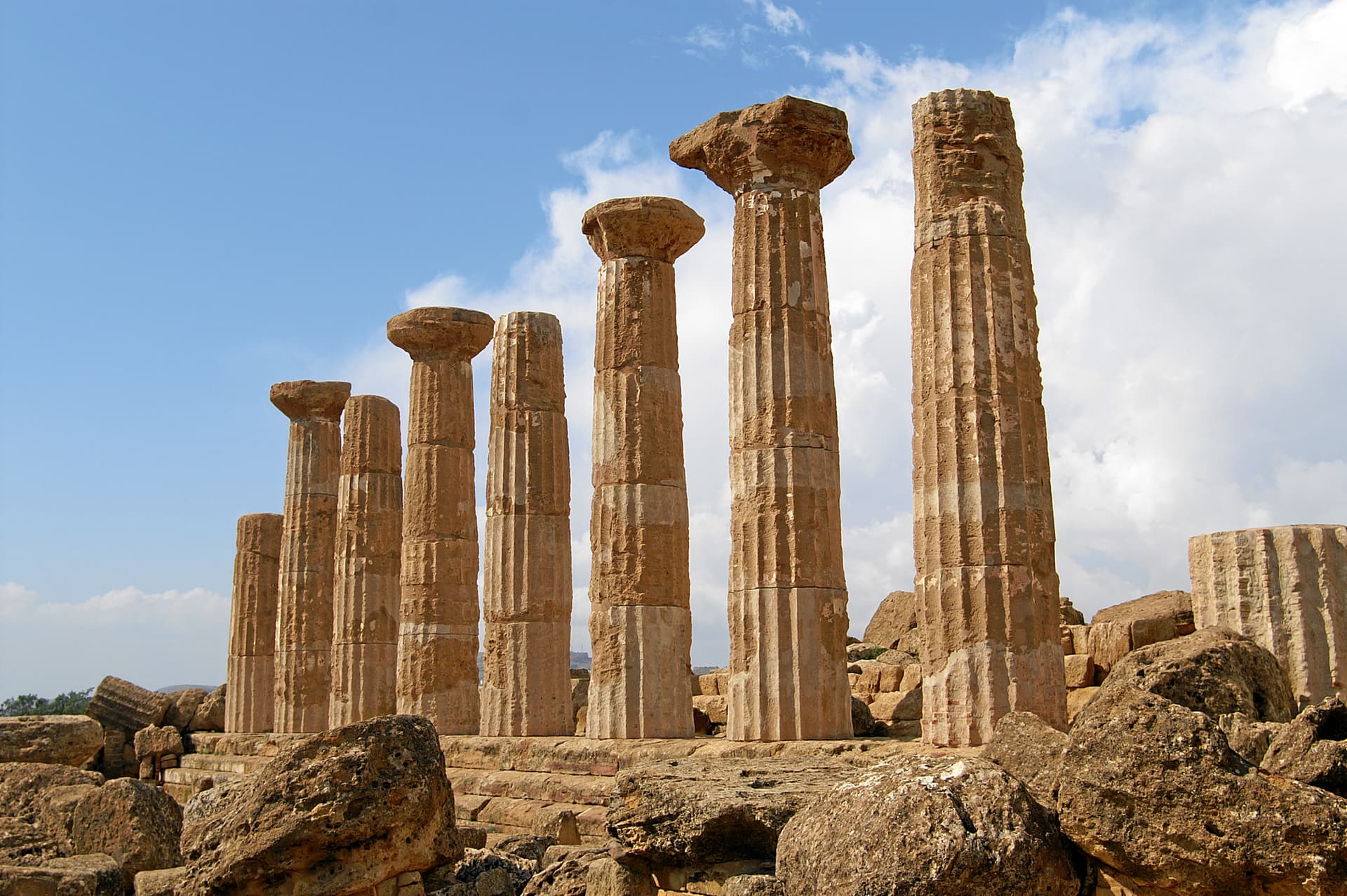
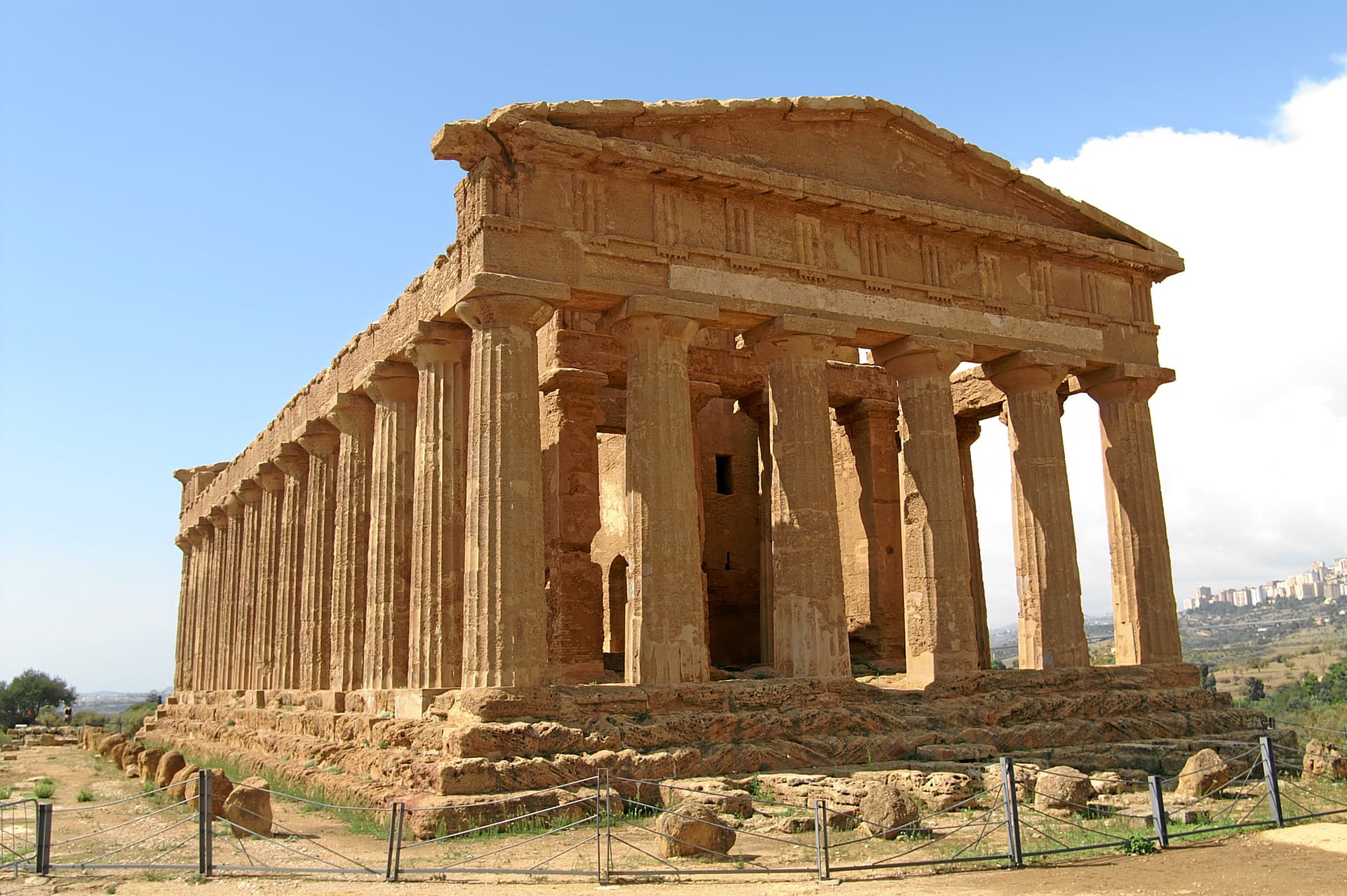
The Temple of Concordia rivals Athens's Hephaisteion among the best-preserved Greek temples. The ridge's oldest, the Temple of Heracles, retains eight columns restored in 1924. At the western end, the Sanctuary of the Chthonic Deities pairs intimate altars and earth-oriented worship spaces against the sky-reaching temples above.
The 1,300-hectare archaeological and landscape park also holds olive groves, almond orchards, and unexcavated remains of a city once inhabited by 200,000 people. Much of Akragas remains underground; its temples are visible traces of a largely hidden civilization.
Why this place is sacred
The Valle dei Templi is thin through concentration. Seven temples dedicated to different deities line a single ridge, each addressing a different dimension of the divine — marriage, heroism, sovereignty, the mysteries of death and renewal. Walking the ridge is not merely an archaeological tour but a traversal of the Greek theological imagination, from the sky-oriented worship of Hera at the eastern summit to the earth-directed rites of Demeter and Persephone at the western end.
The south-facing orientation means the temples receive the full arc of Mediterranean light across the day, their calcarenite stone shifting from white to gold to amber. At night, when the temples are illuminated during summer visits, they become luminous presences in the darkness — a quality that ancient worshippers, approaching with torches, would have recognized.
Sacred perimeter of the ancient city of Akragas, with temples honoring the full range of Greek deities from Olympian gods to chthonic earth goddesses.
Founded 580 BC. Major building period under Theron (488-472 BC). Damaged during Carthaginian siege of 406 BC. Roman period restoration and continued use. Medieval conversion of Temple of Concordia into a church. UNESCO inscription 1997. Ongoing archaeological investigation of the unexcavated city.
Experience and orientation
The eastern entrance leads uphill toward the Temple of Hera, which commands the highest point of the ridge. From here, the Via Sacra — the ancient sacred way — stretches westward along the crest, connecting the temples in sequence. The walk is not flat; the path rises and falls with the natural terrain, and the temples reveal themselves gradually as the ridge unfolds.
The Temple of Concordia, encountered after the Temple of Hera, stops most visitors in their tracks. Its preservation is extraordinary — columns, entablature, and pediment substantially intact, the result of its conversion to a Christian church in the 6th century AD. Standing before it, one encounters a building that has survived twenty-five centuries through transformation rather than abandonment.
Continuing westward, the Temple of Heracles presents its eight restored columns — a more fragmentary encounter that requires imagination to complete. The Via Sacra passes through groves of ancient olive trees and almond orchards, the agricultural landscape continuous with the sacred one.
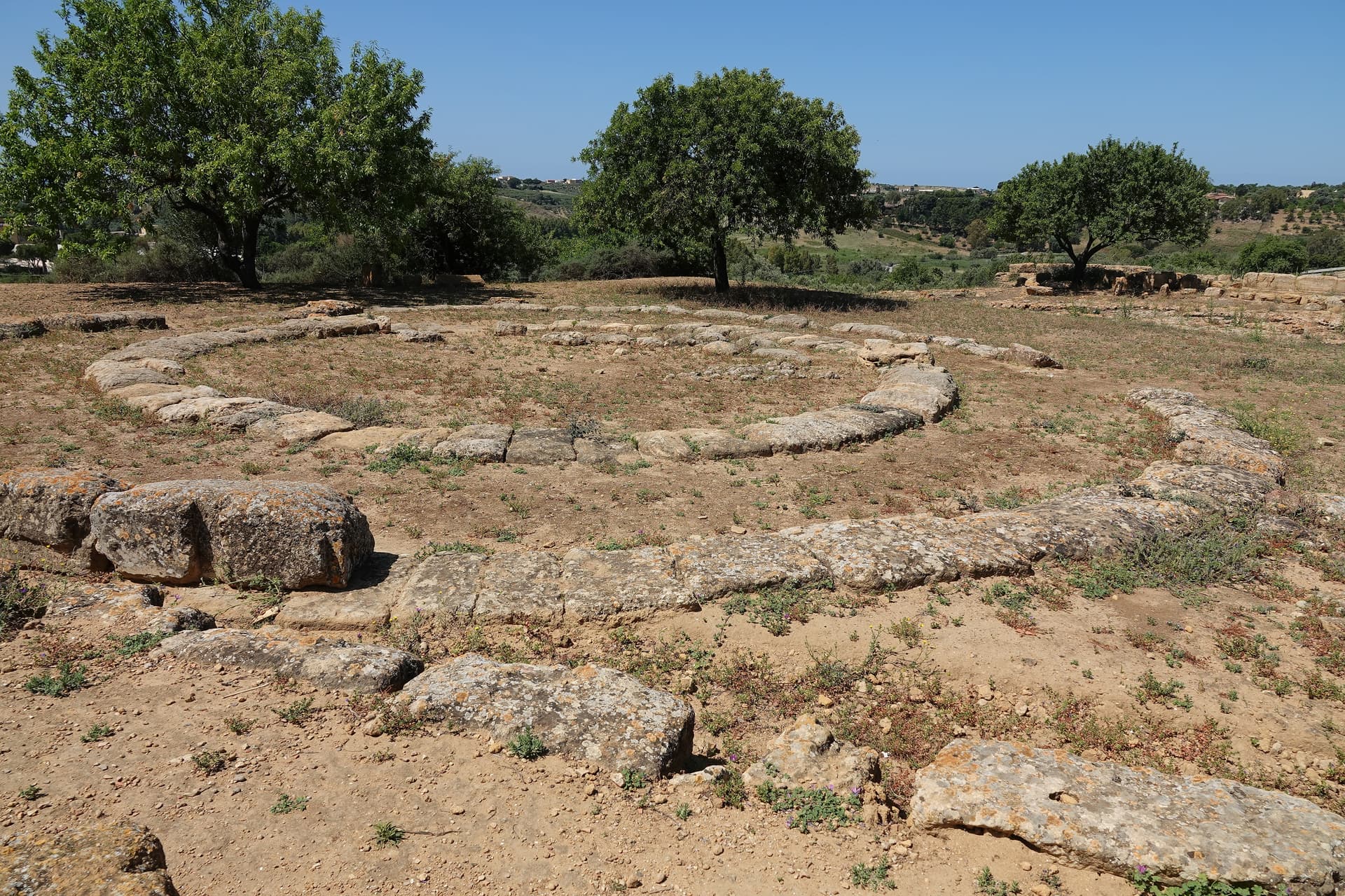
The western end of the ridge brings a shift in register. The Sanctuary of the Chthonic Deities abandons the vertical ambition of the temples for intimate, ground-level spaces — circular and rectangular altars, small enclosures, and the remains of temples dedicated to Demeter and Persephone. Here the sacred direction reverses: not upward toward the sky gods but downward, into the earth, toward the powers that govern fertility, death, and return.
For those who visit in summer, the night openings transform the experience entirely. The illuminated temples float in darkness, their stone glowing with artificial light that evokes the torchlit processions of antiquity.
Enter from the eastern gate and walk westward along the Via Sacra for the traditional sequence. Begin with the Temple of Hera at the summit, proceed through the Temple of Concordia, past the Temple of Heracles, and end at the Sanctuary of the Chthonic Deities. This east-to-west journey mirrors the movement from sky gods to earth goddesses.
Context and lineage
Akragas was established around 580 BC by settlers from Gela, itself a colony founded by Greeks from Rhodes and Crete. The city grew rapidly under a succession of rulers, reaching its zenith under the tyrant Theron (488-472 BC), who defeated the Carthaginians at Himera in 480 BC and initiated an ambitious building program. At its peak, the city may have held 200,000 inhabitants and was among the wealthiest in the Mediterranean.
The Carthaginian siege of 406 BC devastated the city, but the temples — built of the local golden calcarenite — survived. Roman conquest in 210 BC brought new modifications, and the conversion of the Temple of Concordia to a Christian church in the 6th century AD ensured its remarkable preservation.
The Valle dei Templi represents the full arc of Greek Doric temple architecture in Sicily, from the archaic Temple of Heracles (c. 510 BC) to the classical Temple of Concordia (c. 430 BC). The site documents the development of an architectural tradition that would become one of the defining achievements of Western civilization.
Theron
Tyrant of Akragas who initiated major temple construction
Pindar
Greek poet who praised Akragas as 'the dwelling place of Persephone'
Traditions and practice
Each temple served its specific deity through appropriate sacrifice, libation, and prayer. The temples of the Olympian gods received offerings directed upward — the smoke of burnt sacrifice rising toward the sky. The Sanctuary of the Chthonic Deities reversed this orientation, with libations poured into the earth through circular altars and offerings of grain and oil directed downward toward the underworld powers. Processional routes connected the temples, creating a choreography of civic-religious movement along the ridge.
The park is managed as a UNESCO World Heritage Site with ongoing archaeological research, conservation work, and cultural programming. Night visits during summer, the February almond blossom festival, and educational programs engage contemporary audiences with the ancient landscape.
Walk the full ridge from east to west, allowing at least three hours. At the Temple of Concordia, sit and observe the proportions rather than photographing immediately. At the Sanctuary of the Chthonic Deities, notice the shift from vertical to horizontal sacred space. If visiting in summer, return for a night visit to see the temples illuminated — an experience that evokes the torchlit rituals of antiquity.
Ancient Greek Polytheism
HistoricalThe Valle dei Templi preserves the sacred landscape of one of the wealthiest Greek colonies, with temples spanning the full Doric architectural tradition from archaic to classical.
Sacrifice, libation, procession, and votive offering at each temple according to the requirements of its specific deity. Chthonic rites at the Sanctuary of the Chthonic Deities.
Perspectives and open questions
The Valle dei Templi offers one of the most complete surviving testimonies of Greek sacred architecture and the civilization that produced it.
Scholarly perspective
UNESCO recognizes the Valle dei Templi for its exceptional preservation of Greek temple architecture from the archaic to the classical period. The site documents the development of the Doric order through successive buildings and provides evidence of Greek colonial urbanism, religious practice, and artistic achievement. Much of the ancient city remains unexcavated, and ongoing research continues to reveal new structures and refine understanding of the site's chronology.
Living and traditional perspectives
The temples of Akragas embodied the Greek understanding that the gods required houses worthy of their nature. Each temple's proportions, orientation, and decoration were determined by the character of the deity it served. The city's particular devotion to Persephone, celebrated by Pindar, gave the entire site a chthonic dimension — a connection to the underworld that complemented the sky-reaching ambition of the Doric columns.
Alternative interpretations
The alignment of temples along the ridge and the concentration of chthonic worship at the western end have invited speculation about telluric energy, astronomical orientation, and sacred geography. While these interpretations exceed the archaeological evidence, they respond to a genuine quality of the site — its sense of deliberate placement within the landscape.
Open questions
Much of ancient Akragas remains unexcavated beneath modern fields and orchards. The exact dedications of several temples continue to be debated. The nature of the mystery rites performed at the Sanctuary of the Chthonic Deities remains only partially understood.
Plan your visit
Access and arrival
Located on the southern edge of Agrigento, accessible by car or bus from the city center (approximately 3 km). Open from 8:30 AM; closing times vary seasonally (7 PM to midnight in summer). Admission approximately 10 euros; free first Sunday of each month. Combined ticket available with the Archaeological Museum.
Agrigento city center offers hotels at various price points, approximately 3 km from the park entrance. Some agriturismo options in the surrounding countryside.
Respectful visit
Comfortable walking shoes essential for the ridge path; sun protection in warmer months; a layer for evening visits
Permitted throughout the park
Not applicable
Stay on designated paths | Do not touch or climb temples | Respect cordoned restoration areas | Do not disturb agricultural areas within the park
The site is large and exposed. Summer temperatures can exceed 35 degrees Celsius. Bring water, wear sun protection, and consider early morning or late afternoon visits during warm months.
Current practical details
Address
92100 Agrigento, AG, Italy
Phone
Hours
Hours, fees, and access can change — verify on the official source before you travel. Practical details last checked Jun 2026.
Location
Map loads as you approach this section.
Pilgrim reflections
A portrait of encounter, not a score
Pilgrims describe what they felt, how present they could become, and whether the place would shape a journey. There are no stars and no ranking of traditions.
No reviewed reflections yet
The first pilgrims can help describe the character of being here.
Share a reflection
Available after an account-backed “Been there.” Every reflection is reviewed before publication.
Nearby sacred places
Explore other sacred places in the region. Proximity does not establish access or travel time; check each place’s guidance.

References
Sources consulted for this page. Source categories describe the publication, not a guarantee that every claim is verified. Traditional accounts and outside interpretations may differ.
- 01Archaeological Area of Agrigento - UNESCO — UNESCO World Heritage CentreSource contextOfficial UNESCO listing and description
- 02Valle dei Templi - Official Website — Parco della Valle dei TempliofficialOfficial park website with visitor information
- 03Valle dei Templi - Italia.it — ENITofficialItalian national tourism board
- 04Valle dei Templi - Wikipedia — Wikipedia contributorsencyclopediaComprehensive overview of all temples and history
- 05Valley of the Temples - Agrigento Visitor Guide — Agrigento.orgguideDetailed visitor information
Share a photo
Help visitors recognize Valle dei Templi. Every submission is reviewed before publication.