Trethevy Quoit
A Neolithic threshold between worlds, where ancestors once bridged the living and the divine
Understand sacred places, explore living traditions, and learn how to engage respectfully with Pilgrim Map.
Access has not been verified. Check current local guidance before planning a visit.
St Cleer, England, United Kingdom
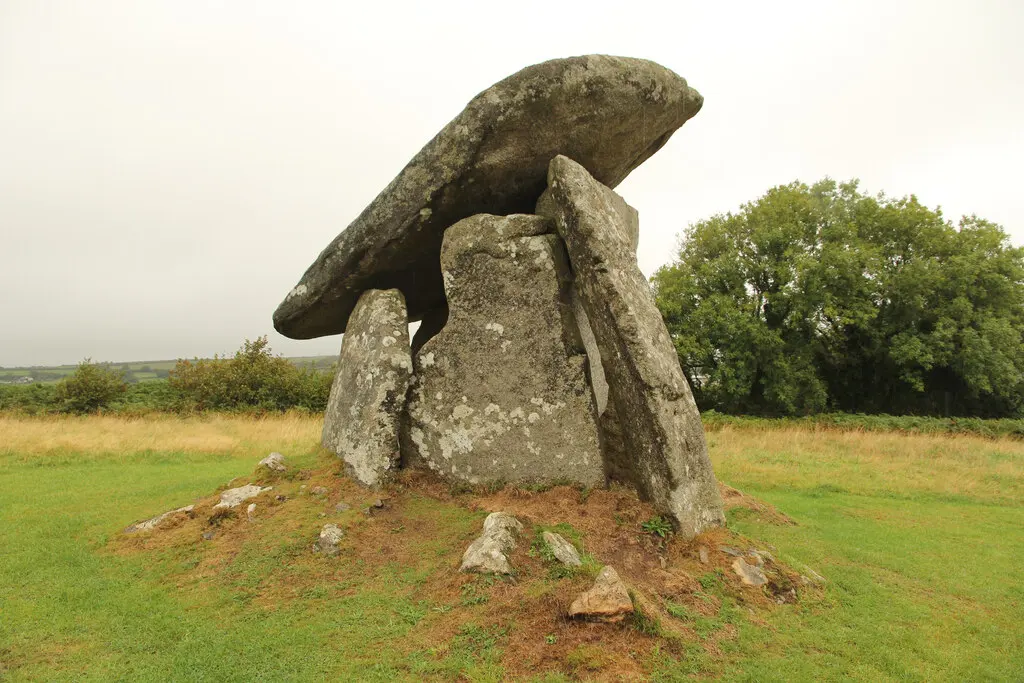
Image of Trethevy Quoit. Image source · CC-BY-SA-2.0
Visit essentials
A quick read before you go
- Duration
- A focused visit takes thirty to sixty minutes.
- Etiquette
- Trethevy Quoit is an open-access heritage site requiring respectful behavior appropriate to a…
Overview
Trethevy Quoit has watched a Cornish field for five millennia, posing an architectural question about those who raised its capstone and placed ancestors beneath it. Built around 3500 BC, it is among Britain's best-preserved portal dolmens. Six uprights support a massive capstone tilted dramatically skyward over a chamber that once held ancestral remains. Its entrance faces east-south-east toward the rising sun and Bodmin Moor.
No one worships here now. The Neolithic builders' bones dissolved in Cornwall's acidic soil, and their practices went unrecorded. Yet they deliberately created a threshold between the living world and whatever lay beyond. Local folklore fills that silence with giants and attributes the quoit to King Arthur.
The monument still asks why ordinary farmers without metal tools or writing devoted extraordinary effort to a house for their dead. The answer is lost; the question remains potent.
Why this place is sacred
The Neolithic communities who built Trethevy Quoit understood certain places as thresholds. This promontory above the confluence of streams that form the River Seaton was such a place: a liminal location where waters met, overlooked by the sacred heights of Caradon Hill and Minions Moor.
Portal dolmens like Trethevy were not merely tombs. English Heritage describes them as 'multipurpose shrines' where the ancestral dead 'were considered to be mediators between the community and its gods.' The structure itself embodies threshold: a chamber for the dead accessed through a deliberate entrance, positioned between earth and sky, oriented toward celestial horizons.
The 2019 archaeological excavation revealed something unexpected: a substantial greenstone platform extending from the quoit into the field. This suggests the monument was approached ceremonially, perhaps in procession. People came here not merely to deposit remains but to enact relationships between worlds.
A hole pierces the capstone. Its purpose remains unknown. Some suggest astronomical observation, others a symbolic passage for spirits. The uncertainty itself contributes to the site's power: we stand before an intention we cannot fully recover, confronting the gap between our understanding and theirs.
The name Trethevy comes from Cornish: 'place of the graves.' Even after millennia, the memory of what happened here persisted in local knowledge. Cornish folklore populated the site with giants and spriggans, supernatural guardians who protected buried treasure. These stories may seem distant from Neolithic cosmology, yet they preserve the essential intuition: this is a place between worlds, requiring respect.
Archaeological consensus holds that Trethevy Quoit served as a communal burial chamber during the early to middle Neolithic period. Portal dolmens functioned as ossuaries where the bones of ancestors were deposited over extended periods, possibly after initial burial or exposure elsewhere. This created a collective ancestral presence, a community of the dead who remained in relationship with the living.
The structure's placement suggests sophisticated cosmological awareness. The entrance faces east-south-east, possibly toward significant celestial events. The promontory location, overlooking the joining of waters, connects the monument to the Neolithic reverence for liminal landscape features. The Inca had huacas; the builders of Trethevy understood similar principles five thousand years ago on the other side of the world.
For perhaps a thousand years, Neolithic communities continued to bring their dead to this chamber. Then practices changed. During the Bronze Age, the quoit was reused for cremation burials, urns placed within or near the monument by people whose culture had shifted from communal bone deposition to individual interment.
Eventually, active use ceased altogether. The site remained in the landscape, known to local Cornish people who gave it names and stories. Giants had thrown the capstone in games. King Arthur had placed it with superhuman strength. Spriggans guarded it against disturbance. These tales preserved, in transformed form, the sense that this was no ordinary place.
By the 16th century, antiquarians were documenting the quoit. John Norden recorded it in 1584, the first written description. Centuries of visitors followed, each generation bringing its own interpretive frameworks: Druid altars in the Victorian imagination, portal dolmens in modern archaeology. The structure absorbed each interpretation while remaining itself: stones set carefully by hands that understood something we are still trying to recover.
Experience and orientation
The approach across the field sets the encounter. The quoit rises from pastoral land, sheep grazing nearby, ordinary Cornish countryside. Then the scale becomes apparent. The capstone alone weighs perhaps ten to twenty tonnes. The uprights that support it have stood for five thousand years.
Visitors frequently pause at the entrance, a rectangular hole cut deliberately into the closure stone. This was not damage but design: a way to enter the chamber, perhaps for ritual access while keeping the space sealed from the casual world. To step through is to cross a threshold the builders intended, entering the same space where ancestral remains once rested.
The hole in the capstone draws attention and resists explanation. Looking up through it, the sky frames itself differently. Some stand beneath it and feel watched. Others photograph the effect of light passing through. The uncertainty of purpose contributes to the experience: we cannot know what the Neolithic builders intended, but we can feel that intention persisted in the stone.
The landscape context matters. From the quoit, the eye moves to the heights of Bodmin Moor, where the Hurlers stone circles stand, where the Cheesewring balances its improbable granite. This was a sacred landscape, and Trethevy Quoit exists in relationship to other monuments the builders understood as connected.
Those who sit quietly with the monument rather than photographing it quickly often report a particular quality of stillness. Not dramatic experiences but subtle ones: a sense of time's depth, mortality contemplated without distress, kinship with the unnamed ancestors who came here with their dead.
Trethevy Quoit rewards those who approach it as more than a photo opportunity. The structure has stood for five millennia; you might give it more than five minutes.
Consider entering the chamber through the original entrance hole in the closure stone. This is not merely convenient access but the passage the builders designed. Inside, the space is intimate, the capstone close overhead. You stand where bones once accumulated, where families came to add their dead to the community of ancestors.
Look up at the hole in the capstone. Let the uncertainty of its purpose remain uncertain. Notice what arises in the presence of something you cannot fully explain.
Before leaving, take in the landscape setting. The quoit was not placed randomly but in relationship to horizon features, water confluences, and possibly other monuments. The Neolithic world was woven with connections we can trace but not entirely recover. Your visit adds one more thread.
Context and lineage
No founding narrative survives from Neolithic builders who left no written records. What remains is the monument itself and the landscape in which they placed it.
Archaeology tells us they were farmers, part of the agricultural revolution that transformed Britain in the fourth millennium BC. These communities cleared forests, raised cattle, cultivated crops, and built monuments of stone that required communal effort far exceeding practical necessity. Something in their understanding of the world demanded these structures.
Cornish folklore offers origin stories of a different kind. Giants threw the capstone in games, or competing giants raised it in contests of strength. King Arthur and his knights placed it with supernatural power. These tales, recorded centuries after the builders lived, preserve the intuition that ordinary human effort cannot explain the quoit. They are not history but memory transformed.
The name itself carries meaning. Trethevy derives from Cornish 'Tre' (place) and a word related to graves. Thousands of years after the last burial, the local language remembered what this place was for.
The practice tradition at Trethevy Quoit ended thousands of years ago. What remains is a lineage of attention.
For perhaps a millennium, Neolithic communities brought their dead here, depositing bones in the chamber, perhaps returning for ceremonies that maintained the relationship between living and ancestral. Bronze Age people later added cremation burials, continuing the mortuary function in changed form.
Then active use ceased. The site remained in the landscape, known to Cornish people who gave it names and stories but did not worship there. When antiquarians arrived, they brought new frameworks: Druid altars, Celtic temples, eventually the archaeological understanding of portal dolmens.
In 2017, the site was placed on the Heritage at Risk Register due to damage from fencing and erosion. Cornwall Heritage Trust purchased the field, and in 2019, archaeologists conducted the first modern excavation, revealing the greenstone platform that suggests ceremonial procession. The monument continues to teach those who attend carefully.
The Ancestors
spiritual
The bones deposited here over centuries constituted a community of the dead who served, according to scholarly interpretation, as mediators between the living and their gods. Their individual names and stories are lost; their collective presence defined the site's purpose.
John Norden
historical
The first documented observer of Trethevy Quoit, recording it in 1584. His account, published in 1728, begins the written history of a monument that had already stood for three millennia.
Spriggans
mythological
Supernatural guardians believed to protect the quoit and punish those who disturbed it. Part of the Cornish fairy tradition, these beings represent the continued sense that the site requires respect and that interference brings consequences.
Traditions and practice
Neolithic practice at the site likely centered on communal deposition of ancestral remains. Bodies may have been exposed elsewhere, then bones brought to the chamber and arranged among those of previous generations. The 2019 excavation's discovery of a greenstone platform suggests formal procession toward the monument, implying ceremony rather than simple burial.
The chamber's design emphasizes threshold. The entrance cut into the closure stone created a deliberate passage, perhaps opened periodically for ritual access while keeping the interior sealed. Ceremonies may have occurred at calendrically significant moments, though no direct evidence confirms this.
Bronze Age reuse involved cremation burials in urns, a shift from communal bone deposition to individualized remains. The continued use of the same site suggests enduring significance even as practices changed.
No continuous practice lineage connects these ancient ceremonies to the present. Cornish folk traditions about giants and spriggans represent transformed memory rather than liturgical continuity.
Heritage visitors come to appreciate the archaeological and historical significance of one of Britain's best-preserved portal dolmens. The site offers no formal programming or interpretation on location, though information is available from English Heritage and Cornwall Heritage Trust.
Those seeking contemplative engagement may enter the chamber through the original entrance in the closure stone, experiencing the space as the builders designed it to be entered. The capstone hole invites attention, though its original purpose remains unknown.
The surrounding landscape offers context: a short drive reaches the Hurlers stone circles, King Doniert's Stone, the Cheesewring, and St Cleer Holy Well. A meaningful visit to Trethevy might include these related sites, building a sense of the sacred landscape the Neolithic builders inhabited.
If you come seeking more than photography, consider these approaches.
Enter the chamber through the rectangular hole in the closure stone. This is not merely convenient but intentional: the builders designed this entrance. Inside, you occupy the space where ancestral bones accumulated over centuries. Let that register.
Look up at the hole in the capstone. Do not require yourself to explain it. Let the unknown purpose remain unknown, and notice what arises in you when confronted with deliberate mystery.
Before leaving, sit outside the monument facing the landscape. The quoit was placed in relationship to horizon features and water confluences. You cannot reconstruct the Neolithic worldview, but you can sense that everything here was intentional.
If time permits, visit the Hurlers stone circles nearby. The connection between sites adds depth, suggesting a landscape woven with meaning rather than isolated monuments.
Neolithic Mortuary Practice
HistoricalTrethevy Quoit was constructed as a portal dolmen during the early to middle Neolithic period, serving as a communal burial chamber where ancestral remains accumulated over extended periods. The structure functioned as more than a tomb: English Heritage describes such monuments as 'multipurpose shrines' where the dead served as mediators between living communities and their gods. The careful placement in the landscape, overlooking the confluence of streams and oriented toward significant horizon features, suggests deliberate cosmological positioning.
Communal deposition of ancestral remains characterized the primary use of the monument. Bodies may have been exposed elsewhere before bones were collected and placed in the chamber, creating a community of the dead across generations. The greenstone platform discovered in 2019 suggests formalized ceremonial approaches, perhaps processional. Specific ritual details are unrecoverable, as the builders left no written accounts.
Bronze Age Cremation Practice
HistoricalLike many portal dolmens, Trethevy Quoit appears to have been reused during the Bronze Age for the burial of cremated remains placed in urns. This continued veneration over more than a millennium indicates the enduring sacred significance of the site, even as cultural practices shifted from communal bone deposition to individual cremation burial.
Cremation urns were deposited within or near the chamber, repurposing a monument that had already stood for over a thousand years. The shift from collective ancestral presence to individualized remains reflects broader cultural changes during the Bronze Age.
Cornish Folk Tradition
HistoricalLocal Cornish folklore regarded the quoit as the dwelling of giants and associated it with supernatural guardians. The site was understood as a liminal space between physical and spiritual worlds, requiring respect and caution. These traditions represent transformed memory of the monument's sacred character, persisting long after the original practices ended.
Oral transmission of giant legends and origin stories preserved the sense that the monument was extraordinary. Avoidance of disturbing the stones was understood as prudent, as spriggans punished those who showed disrespect. The name Trethevy, 'place of the graves,' maintained awareness of the mortuary function.
Perspectives and open questions
Trethevy Quoit invites interpretation but resists certainty. Archaeologists, folklorists, and contemporary seekers each offer genuine insight, yet the builders left no texts and their bones have dissolved in acidic soil. Honest engagement holds these perspectives together, acknowledging what remains unknown.
Scholarly perspective
Archaeological consensus classifies Trethevy Quoit as a portal dolmen constructed during the early to middle Neolithic period, approximately 3700-3300 BC. Portal dolmens served as communal burial chambers where ancestral remains accumulated over extended periods. The 2019 excavation by Cornwall Archaeological Unit revealed a substantial greenstone platform extending from the quoit, suggesting formalized ceremonial approaches.
English Heritage interprets these structures as 'multipurpose shrines' where the dead functioned as mediators between living communities and their gods. The placement in the landscape, at the confluence of streams forming the River Seaton with views to Caradon Hill and Minions Moor, suggests deliberate cosmological orientation.
Portal dolmens are rare nationally, with only about twenty known in Britain. Trethevy's survival as one of the best-preserved examples makes it significant for understanding Neolithic mortuary architecture. Scholarly debates center on the original position of the capstone, whether the tilt is original or the result of partial collapse, and the function of the hole pierced through it.
Living and traditional perspectives
Cornish folk tradition understood the quoit through the lens of supernatural explanation. Giants threw the massive capstone in games, explaining how ordinary humans could not have placed such weight. Alternatively, King Arthur and his knights raised it with superhuman strength, linking the monument to Britain's most persistent legendary figure.
Spriggans, supernatural guardians from Cornish fairy tradition, were believed to protect the quoit and punish those who disturbed it. These beings suggest the site was understood as requiring respect, as a threshold between the ordinary world and something other.
These traditions do not record Neolithic belief but preserve, in transformed form, the intuition that the monument was sacred. The continued Cornish name Trethevy, 'place of the graves,' indicates the mortuary function was remembered even when the original practices had been forgotten for millennia.
Alternative interpretations
Victorian-era romantics associated sites like Trethevy Quoit with Druids, calling them 'Druid altars.' This interpretation has no archaeological basis, as the quoits predate Celtic culture by over two thousand years. Contemporary esoteric traditions sometimes describe the site as a point on earth energy lines or a location of heightened spiritual power.
The hole in the capstone has attracted particular speculation. Some suggest astronomical observation, others a passage for spirits of the dead, still others a symbolic representation of birth or rebirth. These interpretations attempt to recover meaning the builders did not record.
Taking seriously the experiences visitors report does not require accepting any particular explanatory framework. Something about standing where ancestors once rested, confronting deliberate mystery, affects people across different belief systems.
Open questions
Genuine mysteries persist. The exact construction date remains uncertain, with estimates ranging from 3700 to 2500 BC. The original appearance of the monument is unclear; whether the capstone's dramatic tilt is intentional or the result of partial collapse cannot be determined.
No human remains have been recovered. Cornwall's acidic soil has dissolved the bones that once made this place a home for the dead. We know from comparable sites that remains were deposited, but we cannot know whose.
The purpose of the hole in the capstone remains debated. The rectangular entrance in the closure stone may be original or a later modification. The full extent and function of the greenstone platform discovered in 2019 require further study.
These uncertainties are not failures of research but honest acknowledgments of what the evidence does not tell us. The builders left stone, not text. Their intentions survive only as inference.
Plan your visit
Access and arrival
Liskeard offers the nearest range of accommodations, from B&Bs to small hotels. For those wishing to explore the wider Bodmin Moor landscape, options in Bodmin and surrounding villages provide good bases. No retreat centers specifically serving Trethevy Quoit exist, though Cornwall's broader sacred landscape attracts spiritual tour groups.
Respectful visit
permitted: Yes
Do not leave physical offerings. This is an archaeological site rather than an active shrine. Objects left behind require removal by site managers and can damage the monument over time. Offer attention and silence instead.
Dogs should be kept on leads due to occasional sheep grazing | The surrounding land is privately owned by Cornwall Heritage Trust | No climbing on the stones | Take all litter away | No camping or overnight stays
Do not climb on the stones. The structure has survived five thousand years; it should survive your visit. No touching of the capstone or uprights is appropriate, however strong the impulse.
Do not leave offerings. This is a heritage site, not an active shrine. Objects left behind become litter and must be removed by site managers. If you wish to offer something, make it internal: attention, silence, respect.
Current practical details
Address
Trevethy Quoit, Liskeard PL14 5JY, UK
Hours, fees, and access can change — verify on the official source before you travel. Practical details last checked Jun 2026.
Location
Map loads as you approach this section.
Pilgrim reflections
A portrait of encounter, not a score
Pilgrims describe what they felt, how present they could become, and whether the place would shape a journey. There are no stars and no ranking of traditions.
No reviewed reflections yet
The first pilgrims can help describe the character of being here.
Share a reflection
Available after an account-backed “Been there.” Every reflection is reviewed before publication.
Nearby sacred places
Explore other sacred places in the region. Proximity does not establish access or travel time; check each place’s guidance.
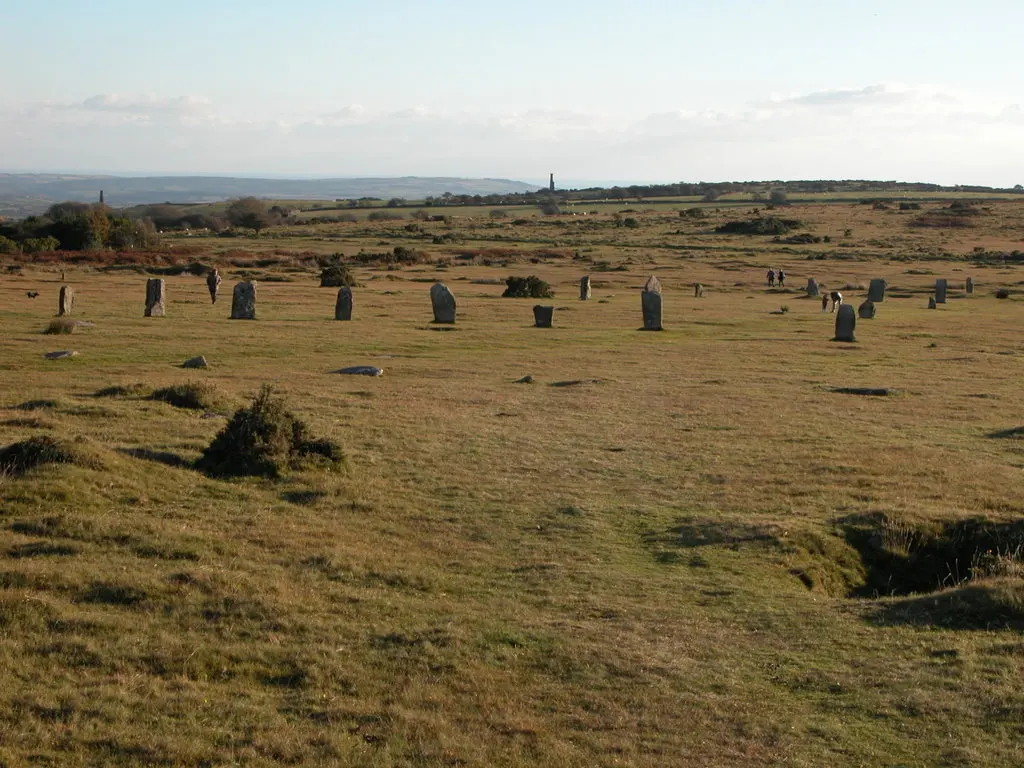
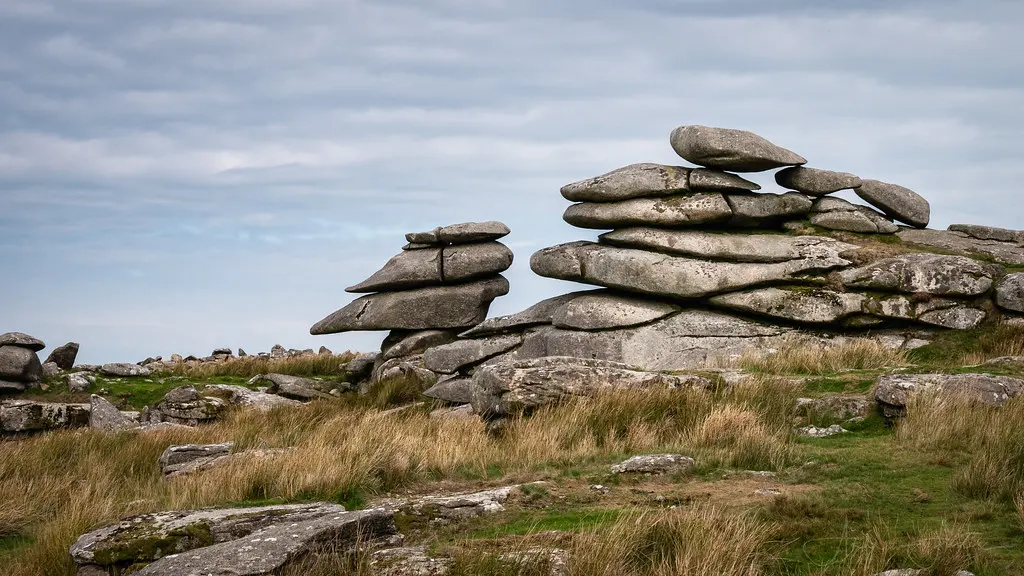

Photo gallery
2 curated photos
Share a photo
Help visitors recognize Trethevy Quoit. Every submission is reviewed before publication.