Hurlers Stone Circles
Three Bronze Age circles on Cornish moorland where ancient ceremony and modern seeking converge
Understand sacred places, explore living traditions, and learn how to engage respectfully with Pilgrim Map.
Access has not been verified. Check current local guidance before planning a visit.
Cornwall, England, United Kingdom
Read the sources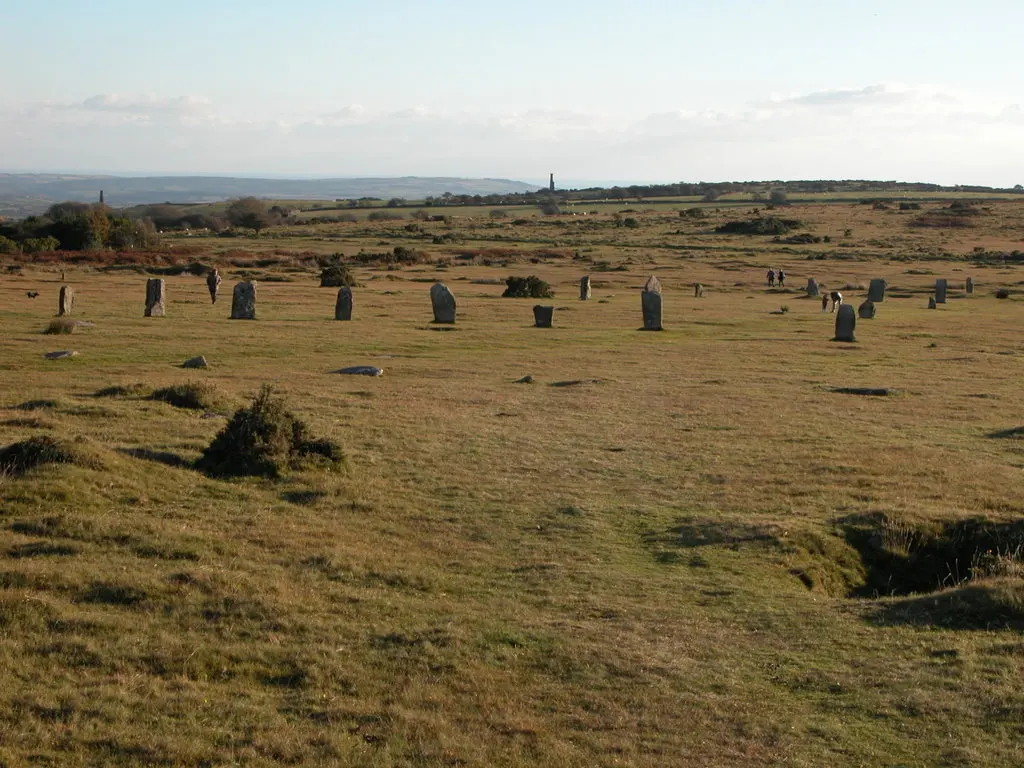
Image of Hurlers Stone Circles. Image source
Visit essentials
A quick read before you go
- Duration
- The circles themselves can be walked in thirty minutes.
- Access
- From Minions village, a free car park provides the starting point.
Overview
Across the Cornish moor's wind, silence, and cloud-filtered light, the Hurlers appear as three stone rings arranged in a deliberate line. Beneath the central circle, 1930s excavations found a floor of quartz crystals—the only known example in the British Isles. Its Bronze Age meaning remains uncertain; its effect on visitors is often personal and profound.
Medieval Christians recast the stones as people petrified for hurling on the Sabbath, with the two outlying Pipers punished alongside them. The legend reflects medieval anxieties rather than Bronze Age intention, yet catches the circles' human quality, like assemblies frozen mid-gesture. Modern druids and pagans now meet the solstice dawn here. The continuity is not of practice but of attention to the same landscape.
Why this place is sacred
The builders of the Hurlers did not choose this location casually. The site sits in a moorland pass between Stowe's Hill to the north and Caradon Hill to the south, positioned between the headwaters of two rivers. In many ancient traditions, such liminal spaces, places that are neither one thing nor another, held particular power.
The alignment speaks of deliberate design. The three circles run in a line from north-northeast to south-southwest. The axis through the centers of the two northern circles points directly at Rillaton Barrow, an important Bronze Age burial mound on the skyline. This connection between circles and tomb suggests a relationship between the living and the dead, between ceremony and remembrance, that we can recognize even if we cannot fully reconstruct its meaning.
Alexander Thom, the Scottish engineer who spent decades surveying megalithic sites, proposed several astronomical alignments at the Hurlers, including orientations to the sun and to stars like Vega and Arcturus. These claims remain debated among archaeologists, but they point to a possibility: that these circles served to connect earthly ceremony with celestial rhythm.
The quartz floor changes everything we might assume about simple stone circles. Quartz carries significance in many traditions, associated with light, energy, and transformation. That Bronze Age builders created an entire floor of quartz crystals, probably from the process of shaping the stones themselves, suggests the central circle held particular ritual importance. To stand there is to stand where something was meant to happen.
Visitors today speak of a quality difficult to name. Not dramatic or overwhelming, but persistent, a stillness that seems to intensify rather than dissolve the longer one stays. The moor amplifies whatever the stones hold. Wind, heather, granite, sky: the landscape strips away distraction, leaving only presence.
Archaeological evidence places the Hurlers in the late Neolithic or early Bronze Age, around 1500 BCE. The central circle appears to have been built first, with the northern and southern circles added subsequently. This phased construction suggests the site's significance grew over time, or that the vision expanded with each generation.
What ceremonies took place here remains unknown. The alignment with Rillaton Barrow, where a golden cup of extraordinary craftsmanship was discovered in 1837, suggests connection to funerary rites. The granite paving found running between the central and northern circles implies processional movement, people walking a designated path as part of whatever rituals occurred. The quartz floor indicates the central circle as the sacred heart of the complex.
Scholars suggest gathering, ceremony, astronomical observation, and ancestor veneration. The truth likely encompasses all of these and more, woven together in ways that made sense within a cosmology we can only glimpse through stones and alignment.
For three thousand years after their construction, the Hurlers stood while the world changed around them. Celtic peoples arrived, bringing their own traditions. Romans came and went. Christianity spread across Cornwall, bringing with it the need to explain, or explain away, such sites.
The legend of men turned to stone appears in the historical record by 1610, when William Camden documented it. By then, the original purpose had long been forgotten. What remained was the undeniable presence of the stones and the human need to account for them. The Christian tale served to warn people away from both Sabbath-breaking and pagan association, suggesting the site retained power that needed discouraging.
Modern rediscovery began with antiquarians like William Borlase, who published the first detailed description in 1754. Ralegh Radford's excavations in the 1930s revealed the quartz floor, adding archaeological wonder to folk memory. Today the Hurlers draw visitors seeking something the medieval church tried to suppress: direct encounter with the sacred in stone.
Experience and orientation
Approaching the Hurlers on foot from Minions, you cross moorland that has changed little in centuries. The village falls behind. Ahead, the stones resolve slowly from the landscape, grey against green, their arrangement becoming apparent only as you near them.
The first impression is often of companionship. These stones seem to stand together, leaning slightly in some cases, oriented toward one another as though in arrested conversation. The medieval legend of hurlers frozen mid-game captures something true about their quality, even if the explanation misses the point entirely.
Morning visits, before other visitors arrive, offer the site at its most atmospheric. Mist is common on Bodmin Moor, and when it lies low across the heather, the stones emerge from whiteness like figures from dream. One solstice participant described watching around fifty people greet the sunrise as mist was pierced by the rising sun, an incredibly beautiful and peaceful experience.
The central circle draws the most attention. Knowing that beneath its surface lies a floor of quartz crystals adds dimension to standing there. You are not simply among stones but above something deliberately created, a prepared surface for ritual whose nature we can only imagine.
Time behaves differently here. An hour passes like minutes, or a few minutes stretch into something uncountable. This is not an effect visitors strain to produce; it seems to happen of its own accord, as though the site operates on different temporal terms than the world beyond the moor.
The Pipers, two standing stones about 120 meters west of the main circles, deserve their own attention. Separated from the circles, they serve as outliers, perhaps marking a boundary or entrance. Walking between the main site and these stones extends the experience into the landscape, making clear that the Hurlers are not isolated monuments but nodes in a larger ceremonial terrain.
Arrive without agenda. The Hurlers reward those who come seeking nothing in particular, only willing to be present. Bring layers against the weather, which changes rapidly on Bodmin Moor, and sturdy shoes for the uneven ground.
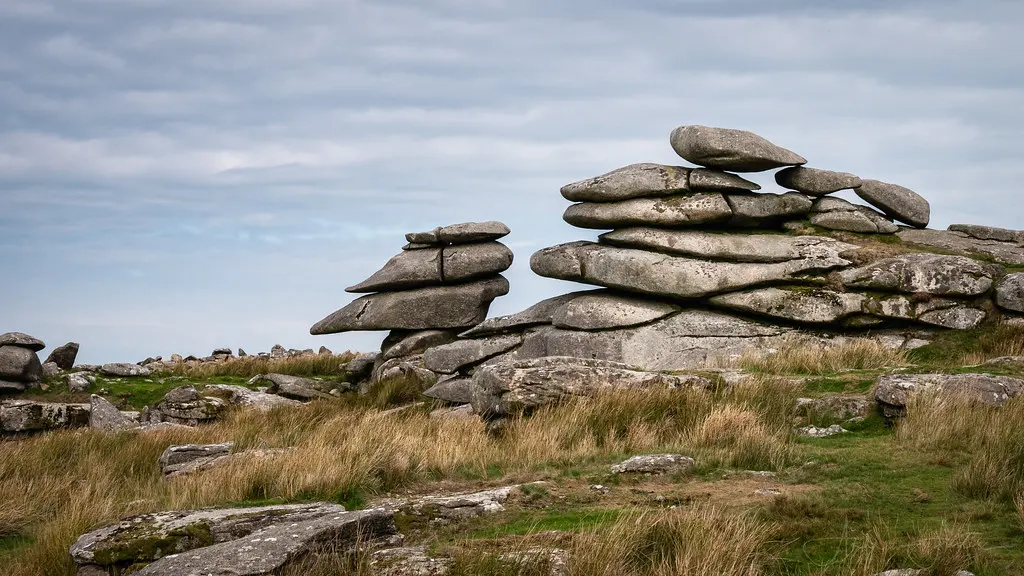
Consider walking the full ceremonial landscape rather than stopping at the circles alone. The Cheesewring, a dramatic natural granite formation, lies a twenty-minute walk away. Rillaton Barrow sits 200 meters to the northeast. Stowe's Hill rises nearby. Together these sites constitute a Bronze Age sacred complex. Visiting only the circles misses the larger conversation.
If solitude matters to you, come early in the morning or during weather that keeps casual visitors away. Light rain can make the stones glisten and intensifies the moorland atmosphere. The site is freely accessible at all hours, though darkness brings genuine isolation and the practical challenges of navigating moorland at night.
Those who feel drawn to mark solstices should expect small gatherings of like-minded seekers. These are typically quiet, respectful assemblies, not organized events. Simply arriving at dawn places you among others doing the same.
Context and lineage
We have no account from the people who built the Hurlers. Their language, their beliefs, their names for these circles are lost beyond recovery. What remains is the evidence of their labor and intention: stones selected, transported, shaped, and erected according to a plan that spanned generations.
The moor in the Bronze Age was more hospitable than today. Climate was warmer, and the uplands supported agriculture and settlement. The people who lived here invested enormous effort in monuments that served purposes beyond the practical. Circles, barrows, standing stones: these were the infrastructure of meaning, built to last.
Rillaton Barrow, aligned with the Hurlers, yielded the Rillaton Gold Cup when miners accidentally broke into the burial chamber in 1837. This vessel, now in the British Museum, speaks of wealth, craftsmanship, and the importance accorded to certain deaths. Whoever was buried there mattered enough for gold. The alignment with the Hurlers suggests the circles mattered to whoever they were.
The Hurlers passed from active use into folk memory, from folk memory into antiquarian curiosity, from curiosity into archaeological investigation. At each stage, people have tried to understand what the stones mean, projecting their own frameworks onto monuments that predate their frameworks by millennia.
18th-century scholars imagined druids presiding over ceremonies, a romantic interpretation that owed more to imagination than evidence. 19th-century antiquarians measured and mapped, beginning the slow accumulation of data. 20th-century archaeologists excavated, finding the quartz floor that no previous interpreter had suspected.
Now, in the 21st century, a new lineage emerges: modern druids and pagans who approach the stones not as artifacts but as living sacred space. This relationship does not reconstruct Bronze Age practice, which is irrecoverable, but creates something new from very old elements. The stones continue to gather meaning.
John Norden
historical
Historian who made the earliest known record of the Hurlers around 1584, describing the stones as resembling men performing hurling.
William Camden
historical
Antiquarian who documented the site in his work Britannia (1586) and recorded the legend of men turned to stone for Sabbath-breaking in 1610.
William Borlase
historical
Cornish antiquarian who published the first detailed scholarly description of the Hurlers in 1754, interpreting them within the 'druidical' framework then fashionable.
C. A. Ralegh Radford
historical
Archaeologist whose 1930s excavations discovered the quartz crystal floor in the central circle and the granite paving between circles.
Alexander Thom
historical
Scottish engineer who proposed astronomical alignments at the Hurlers in 1967, including solar and stellar orientations.
Traditions and practice
The original practices at the Hurlers are unknown. The quartz floor suggests the central circle held particular ritual significance. The alignment with Rillaton Barrow implies connection to funerary rites or ancestor veneration. The granite paving between circles indicates processional movement was part of whatever ceremonies occurred.
Bronze Age peoples across Britain and Ireland built stone circles for purposes that likely included seasonal observation, community gathering, and communication with forces beyond the ordinary. The Hurlers, as part of a larger ceremonial landscape, would have functioned within this broader pattern. But specifics are beyond recovery. The practices died with the people who performed them.
Modern druids and pagans have adopted the Hurlers as a place of spiritual significance. Gatherings at solstices bring small groups to greet the dawn, continuing an ancient attention to astronomical moments even if the specific forms of observance are contemporary inventions.
Personal practice varies widely. Some visitors walk the circles in meditation. Others sit in silence within the central circle, attuned to whatever qualities the quartz floor might confer. Some bring intentions, silently stated, treating the visit as pilgrimage. Others simply come to be present in a place where presence seems to deepen.
The site's open access means no gatekeeping of practice. Those who feel called to ritual can perform it, within the bounds of respect for the monument and other visitors. Those who prefer simple contemplation find the landscape supportive of that approach.
If you come seeking more than historical interest, consider these approaches. Walk the full landscape first. Visit the Pipers, look toward Rillaton Barrow, take in the view from Stowe's Hill. Understand the Hurlers as part of something larger before focusing on the circles themselves.
In the central circle, acknowledge the quartz beneath your feet. You stand where Bronze Age peoples prepared a special surface for purposes that mattered enough to warrant the labor. That intention persists in the ground, regardless of how you interpret it.
If you feel called to leave something, let it be internal. A moment of gratitude, a stated intention, attention itself. The site needs nothing from you. What you need from it must be discovered in the encounter.
Solstice visits offer communal context. Arriving at dawn on the summer or winter solstice places you among others marking the same moment. No formal ceremony structures these gatherings. People simply come, watch the light change, and share a silence that requires no organization.
Prehistoric British Religion
HistoricalThe Hurlers were constructed during the Bronze Age by peoples whose religious practices are known only through their monuments. The site's ceremonial complexity, with three circles, a quartz floor, processional paving, and alignment to burial sites and astronomical events, indicates it held central importance in the spiritual life of these communities. The investment of labor required for construction reflects significance that transcended the practical.
Specific practices are irrecoverable. Archaeological evidence suggests seasonal ceremony, processional movement between circles, ritual activity concentrated in the quartz-floored central circle, and connection to funerary rites given the alignment with Rillaton Barrow. Comparison with other Bronze Age sites suggests gathering, observation of astronomical events, and communication with ancestors or deities.
Celtic Spirituality
HistoricalCeltic-speaking peoples who arrived in Britain during the Bronze and Iron Ages encountered the Hurlers as existing monuments. Historical sources suggest they may have incorporated such sites into their own practices. Antiquarians like William Borlase attributed the site to druids, though this interpretation reflected 18th-century romanticism rather than historical evidence.
Whether Celtic peoples used the Hurlers for ceremony is unknown. The site's continued presence in local consciousness, evidenced by the later legend, suggests it retained significance through cultural transitions even if specific practices changed or ceased.
Modern Druidry
ActiveContemporary druids recognize the Hurlers as a place of spiritual significance, part of the broader heritage of sacred sites in Britain. Members of organizations such as the Order of Bards, Ovates and Druids occasionally hold ceremonies at the site. The stones serve as connection point to ancestral tradition, even where direct continuity cannot be claimed.
Modern druid practice at the Hurlers includes solstice and equinox observances, meditation, and ritual. These practices are contemporary creations inspired by, rather than continuous with, ancient forms. Druids approach the site with reverence, often incorporating honoring of ancestors, acknowledgment of the four directions, and attention to seasonal cycles.
Modern Paganism
ActiveNeo-pagan practitioners of various paths visit the Hurlers for meditation, ritual, and celebration of seasonal festivals. The site serves as touchstone for those seeking connection with pre-Christian spirituality and with the land itself. The summer solstice draws particular attention.
Pagan practice at the Hurlers varies with the practitioner. Some perform formal ritual; others simply sit in contemplation. Seasonal observances, particularly solstices, provide focal points for gathering. The practice tends to be individual or in small groups rather than organized congregation.
Christianity
HistoricalThe legend of hurlers turned to stone for playing on the Sabbath represents medieval Christianity's attempt to discourage continued pagan association with the site. The tale does not preserve Bronze Age meaning but reveals Christian anxiety about competing sacred centers. The legend was recorded by 1610 and remained the primary interpretive framework until antiquarian interest shifted perspective.
No Christian practices are associated with the site itself. The legend functioned as warning rather than invitation, discouraging approach rather than prescribing behavior.
Perspectives and open questions
The Hurlers invite interpretation, and multiple frameworks compete to explain what we find here. Archaeological evidence provides some constraints, but much remains unknown. Medieval legend, antiquarian speculation, and modern spiritual practice each offer their own understanding. Honest engagement means holding these perspectives together without forcing premature resolution.
Scholarly perspective
Archaeological consensus places the Hurlers in the late Neolithic or early Bronze Age, around 1500 BCE. The site represents one of the most significant ceremonial complexes in southwest England. Radford's discovery of the quartz floor in the 1930s established the site's distinctiveness among British stone circles. The granite paving between circles, unique in British archaeology, suggests processional movement was integral to whatever ceremonies occurred.
Scholars interpret the alignment with Rillaton Barrow as indicating connection between the living and the dead, ceremony and commemoration. The varying shapes of the stones, some rectangular and some bulbous, may represent different aspects of the divine or natural forces, though such interpretations remain speculative. Recent surveys suggest additional features yet to be fully investigated, including a possible fourth circle and two stone rows.
Living and traditional perspectives
Modern druids and pagans understand the Hurlers as a place where the veil between worlds grows thin. The stones are not merely artifacts but participants in an ongoing sacred relationship. From this perspective, the quartz floor suggests the Bronze Age builders recognized what contemporary practitioners still experience: that this ground holds particular energy or presence.
This understanding does not claim continuity with Bronze Age practice, which is irrecoverable. Instead, it proposes that the site's power persists regardless of the specific rituals performed. What drew ceremony three thousand years ago continues to draw seekers today. The language changes; the experience, according to those who hold this view, does not.
Alternative interpretations
Some interpret the Hurlers within frameworks of earth energy and ley lines, understanding the site as a node in planetary energy networks. The astronomical alignments proposed by Alexander Thom, while contested by mainstream archaeology, support interpretations of the builders as possessing sophisticated knowledge that mainstream history underestimates. The quartz floor is sometimes understood as an energy amplifier or transformer.
These interpretations lack archaeological verification but often emerge from genuine experiences visitors report. The language of energy, while resisted by academic discourse, may be an attempt to describe something real for which we lack better vocabulary.
Open questions
Genuine mysteries persist. What ceremonies were performed here? What did the quartz floor mean to those who created it? Why three circles in a line rather than one? What was the relationship between the Hurlers and the burial at Rillaton? Why did the site's use apparently end?
The legend of hurlers turned to stone tells us about medieval Christianity's need to suppress pagan association, not about Bronze Age intention. The original meaning of the name, if any existed, is lost. We know these stones mattered. We know they were placed with care and connected with precision. What they meant to those who placed them remains beyond our certainty.
Plan your visit
Access and arrival
From Minions village, a free car park provides the starting point. The walk to the stones takes about twenty minutes across moorland, heading toward the Cheesewring. The terrain is uneven and can be muddy. Public transport options are limited: buses from Liskeard or Launceston stop at Upton Cross or Darite, requiring a further walk of about 1.7 miles. The site is not wheelchair accessible due to the moorland approach.
Minions village offers limited facilities: a tea room and basic amenities. Larger accommodation options exist in Liskeard, about 4 miles south, ranging from bed and breakfasts to small hotels. For those seeking immersion in the moorland atmosphere, camping options exist in the area, though wild camping on Bodmin Moor requires appropriate preparation and leave-no-trace practice.
Respectful visit
Dress for moorland conditions, which means preparing for weather that can shift from sun to rain to mist within a single visit. Sturdy waterproof footwear is essential, as the ground can be boggy. Layers allow adjustment to temperature changes. There are no formal requirements beyond practical wisdom.
Personal photography is welcome and unregulated. Commercial photography or filming may require permission from English Heritage, which manages the site through Cornwall Heritage Trust. Consider the impact of your photography on others. Staging extensive shots while others wait to access a particular stone works against the contemplative atmosphere the site invites.
Physical offerings are not appropriate. Unlike some sacred sites with living traditions of offering, the Hurlers have no such continuity. Objects left behind become litter that volunteers must remove. If you wish to offer something, make it internal: attention, gratitude, intention. The stones receive these without needing to be cleaned afterward.
The site is freely accessible 24 hours a day with no entry fee. No formal restrictions apply beyond the general requirements of Scheduled Monument status: do not damage, disturb, or alter the site. Night visits are possible but require careful navigation of moorland terrain in darkness.
Do not climb on the stones. Do not move stones or remove anything from the site. These are basic requirements of preservation that apply to all archaeological monuments.
Be aware that the Hurlers hold genuine spiritual significance for modern practitioners. Treating the site purely as photo opportunity or tourist attraction may disturb those who have come for contemplation. Calibrate your presence to the atmosphere you encounter.
Bodmin Moor presents real hazards. Hidden mine shafts from the tin mining era pockmark the landscape. Weather changes rapidly. Appropriate footwear and clothing are not optional. Check conditions before visiting and carry what you need.
Current practical details
Address
Liskeard PL14 5LE, UK
Phone
Hours
Hours, fees, and access can change — verify on the official source before you travel. Practical details last checked Jun 2026.
Location
Map loads as you approach this section.
Pilgrim reflections
A portrait of encounter, not a score
Pilgrims describe what they felt, how present they could become, and whether the place would shape a journey. There are no stars and no ranking of traditions.
No reviewed reflections yet
The first pilgrims can help describe the character of being here.
Share a reflection
Available after an account-backed “Been there.” Every reflection is reviewed before publication.
Nearby sacred places
Explore other sacred places in the region. Proximity does not establish access or travel time; check each place’s guidance.

References
Sources consulted for this page. Source categories describe the publication, not a guarantee that every claim is verified. Traditional accounts and outside interpretations may differ.
- 01Hurlers Stone Circles | English Heritageofficial
- 02History of The Hurlers Stone Circles | English Heritageofficial
- 03The Hurler Stone Circles | Cornwall Heritage Trustofficial
- 04The Hurlers (stone circles) - Wikipediaencyclopedia
- 05The Hurlers Stone Circle | The Megalithic Portalacademic
- 06The Hurlers - Atlas Obscuraguide
- 07The Hurlers Stone Circles On Bodmin Moorguide
- 08The Hurlers Stone Circles | Transcelticspiritual
- 09The Hurlers Stone Circles, Minions, Cornwallguide
- 10Hurlers Stone Circles - Cornwall, England | Sacred DestinationsSource context
- 11The Hurlers Stone Circles | Historic Cornwallacademic
- 12The Hurlers: three stone circles with paired outlying stones | Ancient Monuments UKSource context
Share a photo
Help visitors recognize Hurlers Stone Circles. Every submission is reviewed before publication.