Taos Pueblo
Where 150 families still live in adobe houses their ancestors built a thousand years ago
Understand sacred places, explore living traditions, and learn how to engage respectfully with Pilgrim Map.
Access has not been verified. Check current local guidance before planning a visit.
Taos, New Mexico, United States
Read the sources
Image of Taos Pueblo. Image source · CC-BY-SA-4.0
Visit essentials
A quick read before you go
- Duration
- Most visitors spend 1-3 hours at Taos Pueblo.
- Etiquette
- You are entering someone's home.
Overview
High in the Sangre de Cristo Mountains of northern New Mexico, Taos Pueblo stands as it has for over a thousand years: two great adobe houses facing each other across a central plaza, Taos Mountain rising behind them. This is the longest continuously inhabited community in North America.
But statistics cannot capture what it means to walk these dirt paths where the same families have walked for forty generations, to see smoke rising from hornos where bread bakes as it has since before Columbus, to stand where church and kiva—Christianity and Tiwa tradition—exist side by side in a religious synthesis that defies easy categories.
The people of Taos Pueblo call their home Tua-tah, meaning 'our village.' They emerged, according to their understanding, from Blue Lake high in the mountains above—the Earth's navel, the source of all life. For sixty-four years, from 1906 to 1970, the United States government held Blue Lake from them. Its return in December 1970 marked a landmark moment in the recognition of Native American religious freedom.
Visitors are welcome here, but only as guests. The pueblo closes for eight to ten weeks each winter for ceremonial purposes. Kivas remain off-limits. Certain knowledge stays within the community. This is not secrecy but sovereignty—a people's right to determine what they share and what they hold.
Why this place is sacred
The concept of a thin place takes on different meaning at a living community. At archaeological sites, thinness emerges from absence—what once was, no longer is, yet something persists. At Taos Pueblo, thinness emerges from presence—what has always been continues to be. The ceremonies performed in the circular kivas are not reconstructions but continuations. The bread baking in the outdoor ovens follows recipes passed through generations.
The children running through the plaza are the latest in an unbroken line stretching back a millennium.
This continuity itself creates a quality visitors struggle to name. Some call it stepping back in time, but that misses the point. Time has not stopped at Taos Pueblo—it simply moves differently than in the world outside. The prohibition of electricity and running water within the historic area is not nostalgia but practice, a choice to maintain connection with traditional ways that the community considers sacred.
In a world where most sacred sites survive only as remnants, Taos Pueblo pulses with the life of people who have never left.
Blue Lake amplifies this thinness. Though visitors cannot go there, its presence is felt throughout the pueblo—the sacred mountain behind the village, the lake hidden within it where ancestral spirits dwell and where the people emerged into this world. The annual August pilgrimage to Blue Lake continues as it has for centuries, a journey only tribal members may make, to a place where the boundary between worlds grows thinnest of all.
Taos Pueblo was built as a home—a permanent settlement for the Tiwa-speaking people of this valley. The multi-story adobe structures, reaching four to five stories at their highest, provided housing for an entire community. The central plaza facilitated daily life and ceremonial gatherings. The kivas served as centers of religious practice and social organization. From the beginning, Taos Pueblo was designed not as a temporary camp but as a place to stay—forever.
Over its thousand-year history, Taos Pueblo has weathered Spanish colonization, the Pueblo Revolt of 1680, reconquest, the Taos Revolt of 1847, and American expansion. Each era left its mark. The San Geronimo Church stands where Spanish missionaries established Christianity; its predecessor was destroyed in the 1847 revolt. The kivas still function as they did before contact. Catholicism and Tiwa tradition merged into a complex synthesis that practitioners experience not as contradiction but as complementary.
The most significant modern evolution was the return of Blue Lake in 1970. After sixty-four years of federal control—during which the sacred lake was opened to recreational use and the surrounding forests logged—the Taos people won back 48,000 acres of ancestral land. President Nixon signed the legislation on December 15, 1970, calling it a matter of justice. The Blue Lake case set precedents for Native American religious freedom claims that followed.
Experience and orientation
You arrive at the entrance gate, pay the admission fee, and step through into another world—though that phrase too easily romanticizes what is, in truth, someone's neighborhood. The multi-story adobe houses of Hlauuma (North House) and Hlaukwima (South House) rise from the earth itself, built of the same mud that makes up the ground beneath your feet. These are the largest surviving multi-story adobe structures in North America.
Walking the paths between buildings, you pass homes still inhabited, doors and windows still in use. Some buildings are marked as shops or galleries where residents sell jewelry, pottery, bread, and crafts. These are the places visitors may enter. The rest are private—homes where people live, pray, and maintain traditions they share only with each other.
The sensory experience is distinctive. The air smells of piñon smoke in winter, sage in summer. The clay walls hold coolness in summer and warmth in winter. The sounds are those of any village—voices, dogs, wind—rather than the silence of ruins. Red Willow Creek runs through the center of the pueblo, its water used by the community since time immemorial. Do not touch this water; it remains their drinking source.
What visitors consistently report is a sense of temporal dislocation that goes beyond architecture. Other historic sites evoke the past by showing what once was. Taos Pueblo evokes permanence by showing what still is. The realization that people have lived this way, in these structures, for a thousand years—and continue to do so by choice—creates a dissonance with modern assumptions about progress that many find profound.
If you visit during a feast day or ceremonial dance, you will witness religious practice in action—not performance but prayer. The appropriate response is quiet, respectful observation. Do not applaud; these are not shows. Do not photograph; these moments are not souvenirs. Simply witness, with gratitude for the privilege of being allowed to do so.
Most visitors spend one to three hours at Taos Pueblo. Guided tours led by tribal members depart regularly from the entrance and offer the best introduction, providing context that self-guided wandering cannot. Walking the grounds without a guide is permitted, but stick to paths, respect barriers, and remember that this is a community, not a museum. The rhythm is contemplative—walking slowly, observing without intruding, allowing the place to work on you rather than consuming it.
Context and lineage
According to Tiwa understanding, the people emerged from Blue Lake—Ba Whyea—the Earth's navel and source of all life. The lake high in the mountains behind the pueblo is home to ancestral spirits. This emergence story is not myth in the dismissive sense but foundational truth for the community. Archaeological dating places the main structures between 1000 and 1450 CE, but the Tiwa understanding is that their people have always been here, present in this valley since time immemorial.
The emergence from Blue Lake establishes the sacred geography that shapes all of Taos Pueblo life. The mountain behind the village is not scenery but ancestor. The lake is not a body of water but the opening between worlds. Every August, tribal members make pilgrimage to Blue Lake for ceremonies that have continued without interruption, even during the sixty-four years when the federal government claimed ownership of the land.
The Tiwa people of Taos Pueblo are among the Eastern Puebloan peoples of the Rio Grande region. They share cultural and linguistic connections with the other Tiwa-speaking pueblos (Picuris, Sandia, and Isleta) while maintaining distinct traditions. The Pueblo world includes nineteen pueblos in New Mexico, each with its own governance, ceremonies, and feast days, linked by shared Puebloan heritage yet each unique.
The Cacique
Spiritual leader of the pueblo, responsible for ceremonial knowledge and guidance. The cacique is also a society leader whose authority extends to religious matters. The identity of the current cacique is not publicized.
Blue Lake Advocates
Generations of Taos Pueblo leaders who fought for the return of Blue Lake, including those who first petitioned in 1906, those who rejected financial compensation in 1965 insisting only land would do, and those who finally achieved return in 1970.
President Richard Nixon
Signed the Blue Lake bill (H.R. 471) on December 15, 1970, calling it an act of justice. The return of Blue Lake became one of Nixon's significant Native American policy achievements.
Paul Bernal
Taos Pueblo leader who served as a key advocate for Blue Lake return, testifying before Congress and articulating why financial compensation could never substitute for sacred land.
Traditions and practice
The Tiwa religious practices at Taos Pueblo are complex, calendrically organized, and largely private. At the center are the kivas—circular underground or semi-underground chambers used for religious ceremonies, society meetings, and transmission of sacred knowledge. Each kiva is associated with a particular clan or society. Entry is restricted to initiated members. The cacique guides the community's spiritual life, holding knowledge passed through generations.
The annual pilgrimage to Blue Lake in August remains the most important ritual. Tribal members journey to the sacred lake for ceremonies that connect the living community to ancestors and to the source of emergence. These practices are closed to outsiders entirely. Their content is sacred knowledge held by the community.
Seasonal ceremonies mark agricultural and spiritual cycles—planting, harvest, solstice, and the rhythms of the natural year. Ceremonial foot races invoke spiritual power. The details of these practices are not shared with outsiders, and visitors should not ask intrusive questions about them.
Contemporary religious practice at Taos Pueblo represents a synthesis that developed over centuries of Spanish colonization and beyond. The San Geronimo Church holds mass and vespers; the kivas hold ceremonies that predate Christianity by centuries. Practitioners see no conflict—church and kiva hold equally prominent places in village life.
Public feast days offer the most visible expression of this synthesis. San Geronimo Feast Day on September 29-30 is the largest annual event, featuring a sundown dance on the 29th, vespers at the church, and on the 30th, ceremonial foot races, activities of the Koshare (sacred clowns), the pole climb, and a trade fair. Christmas Eve brings candlelit procession and dance. Christmas Day features either the Deer Dance or Matachina Dance in alternating years.
New Year's Day hosts the Turtle Dance. The annual Pow-Wow in July draws participants from tribes across North America.
Visitors cannot practice at Taos Pueblo—this is not a retreat center or a site that offers spiritual programming for outsiders. What visitors can do is witness, with respect. If you visit during a feast day or ceremonial dance, stand quietly at a respectful distance. Do not photograph, record, applaud, or attempt to join the ceremony. These are religious observances, not performances.
Between ceremonies, the most meaningful practice for visitors is simple presence. Walk slowly. Observe quietly. Let the fact of a thousand years of continuous habitation settle into you. Consider what it means that people have chosen to live without electricity, without running water, maintaining traditions in the face of everything modernity offers. The pueblo asks nothing of visitors except respect—and that is itself a practice worth cultivating.
Tiwa Traditional Religion
ActiveThe Tiwa religion has been practiced at Taos Pueblo for over a thousand years without interruption. At its center are the kivas—circular chambers where ceremonies maintain the community's connection to spiritual forces. Blue Lake, the place of emergence, is the most sacred site. The cacique guides the community's spiritual life. Many practices are sacred knowledge held within the community.
Kiva ceremonies, Blue Lake pilgrimage (August), seasonal dances and observances, ceremonial foot races, practices marking agricultural cycles. The specific content of these practices is not shared with outsiders.
Pueblo Catholicism
ActiveFollowing Spanish colonization, Catholicism was introduced to Taos Pueblo and merged with existing traditions in a complex synthesis. The San Geronimo Church stands alongside the kivas; St. Jerome is the patron saint. The community sees no conflict in practicing both—church and kiva hold equally prominent places in village life.
Mass and vespers, feast day celebrations, Christmas Eve candlelit procession, religious observances integrated with traditional Tiwa ceremonies. San Geronimo Feast Day (September 29-30) is the largest annual celebration.
Blue Lake Sacred Tradition
ActiveBlue Lake (Ba Whyea) is the most sacred site for the Taos people—the Earth's navel, source of emergence, home of ancestral spirits. The 64-year struggle for its return (1906-1970) is central to modern Taos Pueblo identity. The lake remains closed to all non-members.
The annual August pilgrimage to Blue Lake is the most important ritual, involving ceremonies conducted at the lake by tribal members only. The specific practices are not shared with outsiders.
Feast Day and Dance Tradition
ActiveTaos Pueblo maintains an annual calendar of feast days and ceremonial dances that blend indigenous and Catholic observances. These are not performances but religious ceremonies invoking spiritual power and maintaining the community's sacred relationships.
San Geronimo Feast Day (September 29-30) with sundown dance, vespers, foot races, Koshare activities, pole climbing, and trade fair. Christmas dances (Deer Dance or Matachina, alternating years). Turtle Dance (New Year's Day). Annual Pow-Wow (July). Visitors may observe from respectful distance; photography prohibited during ceremonies.
Perspectives and open questions
Taos Pueblo sits at the intersection of multiple ways of knowing: archaeological, historical, and traditional. Each offers partial truth. What makes Taos Pueblo distinctive is that the traditional perspective is not historical artifact but living presence—the Tiwa people who hold it still live here, still practice it, still decide what to share and what to hold.
Scholarly perspective
Archaeological and historical scholarship recognizes Taos Pueblo as one of North America's most significant sites of continuous habitation. The main structures date to 1000-1450 CE, making them among the oldest continuously occupied buildings on the continent. The architecture represents a distinctive development of Puebloan building traditions, with multi-story construction of adobe bricks around a central plaza.
Historians have documented the impact of Spanish colonization, the Pueblo Revolt of 1680 in which Taos played a significant role, and the Taos Revolt of 1847 against American occupation. The religious synthesis between Catholicism and Tiwa tradition has attracted scholarly attention as an example of cultural persistence through adaptation.
The Blue Lake case has been studied as a landmark in Native American legal history—the first successful return of sacred land to a tribe based on religious freedom arguments. Paul Bernal's 1969 testimony before Congress, rejecting financial compensation and insisting that only the land itself could address the wrong, articulated principles that influenced subsequent Native American rights cases.
Living and traditional perspectives
For the Tiwa people of Taos Pueblo, this is not an 'oldest continuously inhabited site' but simply home—the place where their people have always lived, emerging from Blue Lake since time before memory. The kivas are not 'ceremonial rooms' but connections between worlds, where practices continue that maintain the community's relationship with spiritual forces.
The cacique's leadership guides the community in ways that outsiders cannot fully understand and that the community does not seek to explain. What is sacred is protected not through secrecy but through sovereignty—the fundamental right of a people to determine their own religious life. The prohibition of electricity and running water in the historic pueblo is not nostalgia but practice, a choice to maintain traditional relationship with the land and with ways of living that hold spiritual significance.
The official pueblo website states clearly: Taos Pueblo 'does not yield its secrets to anyone other than members of the Pueblo.' This is not evasion but declaration. The community shares what it chooses to share. Everything else remains theirs.
Alternative interpretations
Taos Pueblo attracts interest from various New Age and alternative spiritual seekers who describe it as a place of special 'energy' or as a 'primary spiritual structure' of North America. The community's response to such projections has been consistent: this is not a spiritual resource for outsiders to consume.
The pueblo distinguishes between indigenous spiritual practices—which are private, complex, rooted in specific cultural context, and not available for outside adoption—and external interpretations that impose frameworks from elsewhere. Visitors seeking 'Native American spirituality' are directed to recognize that no such monolithic thing exists; each tribe has its own distinct traditions, and Taos Pueblo's belong to Taos Pueblo.
Respectful interest in indigenous perspectives is welcome. Appropriation is not. The boundary may seem subtle but is in fact clear: learn about, but do not claim to practice or possess what belongs to another people.
Open questions
Much about Taos Pueblo remains unknown to outsiders by design. The specific content of kiva ceremonies, the full meaning of Blue Lake rituals, the depths of the religious synthesis between Tiwa tradition and Catholicism, the significance of architectural features known only to the community—these are not gaps in the scholarly record but boundaries the community maintains.
This is appropriate. Not all knowledge is meant for all people. A visitor's appropriate response to encountering these boundaries is not frustration but respect. The pueblo offers more than enough for meaningful encounter while keeping what must be kept.
Plan your visit
Access and arrival
Taos, New Mexico, 2.6 miles south, offers extensive lodging options from chain hotels to historic inns and bed-and-breakfasts. The pueblo itself does not offer accommodations. Santa Fe, with more options, is about 70 miles south.
Respectful visit
Dress modestly and respectfully, as you would for any place of worship. No specific requirements exist, but provocative or revealing clothing is inappropriate. During feast days, respectful attire is especially important.
Photography requires a separate fee purchased at the entrance. Even with a permit, you may not photograph tribal members without their explicit permission—and tipping is customary when permission is granted. Photography inside the San Geronimo Chapel is prohibited. Photography during ceremonies and feast days is prohibited entirely; devices may be confiscated. Video recording and drones are not permitted.
This is not a pilgrimage site for outsiders. Leaving offerings is inappropriate unless you are a tribal member participating in community practices. Do not leave items at the kivas, church, creek, or elsewhere in the pueblo.
{"Kivas, cemeteries, and church ruins are off-limits","Homes are private unless clearly marked as businesses","Do not enter Red Willow Creek—it is the community water source","Do not climb walls, ladders, or structures","No photography during ceremonies or feast days","No applause after ceremonial dances","No alcohol on pueblo lands","No drones","Respect off-limits signs and privacy of residents"}
Do not ask tribal members about their religious practices. What is sacred is often private. Do not attempt to enter kivas or any restricted areas. Do not treat ceremonial dances as entertainment. The Taos people have endured centuries of outsiders treating their traditions as curiosities to consume. They extend the privilege of visiting their home; do not abuse it by prying.
Current practical details
Address
Taos Pueblo, El Prado, NM, USA
Hours, fees, and access can change — verify on the official source before you travel. Practical details last checked Jun 2026.
Location
Map loads as you approach this section.
Pilgrim reflections
A portrait of encounter, not a score
Pilgrims describe what they felt, how present they could become, and whether the place would shape a journey. There are no stars and no ranking of traditions.
No reviewed reflections yet
The first pilgrims can help describe the character of being here.
Share a reflection
Available after an account-backed “Been there.” Every reflection is reviewed before publication.
Nearby sacred places
Explore other sacred places in the region. Proximity does not establish access or travel time; check each place’s guidance.

Blue Lake, New Mexico
Taos County, New Mexico, United States
17.9 km away
Truchas Peak, New Mexico
Mora County, New Mexico, United States
54.0 km away
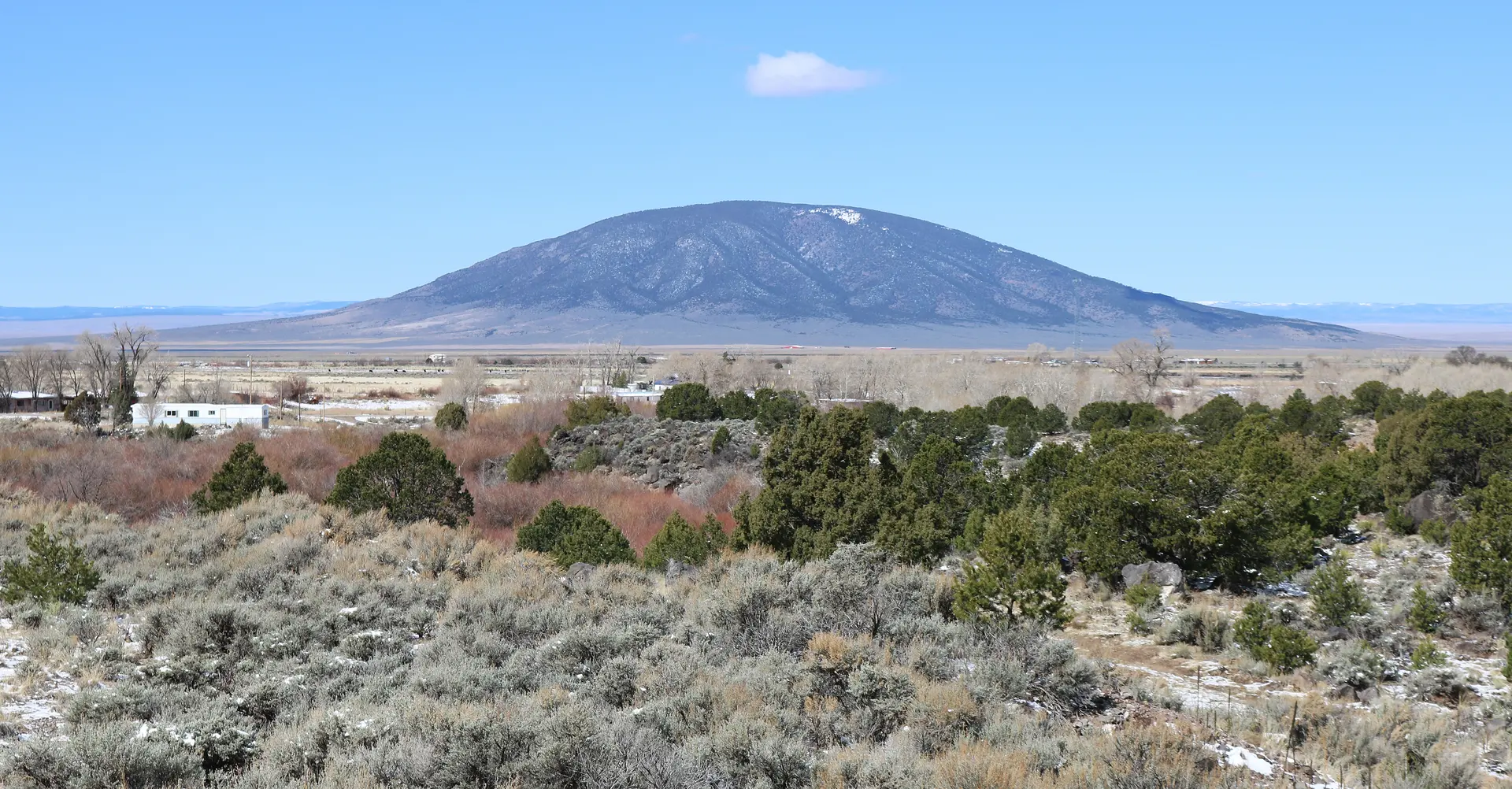
Ute Mountain, New Mexico
Taos County, New Mexico, United States
56.3 km away

Sanctuary of Chimayo, New Mexico
Santa Fe County, New Mexico, United States
60.3 km away
References
Sources consulted for this page. Source categories describe the publication, not a guarantee that every claim is verified. Traditional accounts and outside interpretations may differ.
- 01Taos Pueblo Official Website — Taos PuebloSource contextOfficial tribal website; authoritative for visitor information and cultural context
- 02Taos Pueblo - UNESCO World Heritage Centre — UNESCOofficialUNESCO World Heritage listing
- 03Taos Pueblo: World Heritage Site - NPS — National Park ServiceofficialNPS article on World Heritage significance
- 04Taos Blue Lake - Sacred Land Film Project — Sacred Land Film ProjectSource contextDocumentary project on sacred lands
- 05Righting a Wrong: The Return of Blue Lake to the Taos Pueblo — National ArchivesofficialNational Archives account of Blue Lake return
- 06In Observance of the 50th Anniversary of the Blue Lake Bill — Richard Nixon Presidential LibraryofficialPrimary source documentation
- 07Pueblo Feast Days — Indian Pueblo Cultural CenterSource contextAuthoritative on Pueblo feast day traditions
- 08Commemorating the 50th Anniversary of the Return of Blue Lake — Harwood Museum of ArtacademicExhibition context
- 09Taos Pueblo - WikipediaencyclopediaGood overview with citations
- 10Pueblo and Reservation Etiquette — Legends of AmericaacademicVisitor etiquette guidance
Share a photo
Help visitors recognize Taos Pueblo. Every submission is reviewed before publication.