Sucevita Monastery, Romania
The last and greatest of Bucovina's painted monasteries, where theology covers every wall
Understand sacred places, explore living traditions, and learn how to engage respectfully with Pilgrim Map.
Access has not been verified. Check current local guidance before planning a visit.
Sucevița, Suceava, Romania

Image of Sucevita Monastery, Romania. Image source · CC-BY-SA-3.0
Visit essentials
A quick read before you go
- Duration
- Allow 1.5 to 3 hours for a thorough visit including the exterior frescoes, church interior,…
- Access
- Located in the village of Sucevita, Suceava County, northeastern Romania, at the end of a valley…
Overview
Behind walls six meters high and three meters thick, through gates built to withstand siege, the sacred opens. Sucevita Monastery is a fortress that protects not territory but theology, its exterior surfaces covered with frescoes so vivid and so complete that standing before them is like reading Scripture written in pigment rather than ink.
The Movila princely family built this place in the 1580s at the turbulent intersection of faith and empire. Moldavia was caught between Ottoman pressure and European ambition, and the monastery served both as spiritual center and defensive stronghold. The five watchtowers that punctuate the walls are not ornamental. They watched for enemies. Inside, the painters watched for something else entirely.
Those painters, traditionally identified as the brothers John and Sofronie, created what is now recognized as the culmination of the Moldavian exterior fresco tradition. Working on a distinctive green background, they covered north, south, and east walls with theological compositions of extraordinary scope: the Ladder of Virtues depicting the thirty steps of monastic ascent, the Tree of Jesse tracing Christ's lineage, scenes from Genesis and the Akathist Hymn to the Virgin.
The western wall they never finished. According to tradition, one or both painters fell from the scaffolding and died. The bare wall stands as a reminder of the human cost of sacred making, an incompleteness that paradoxically deepens the site's power.
Today, a community of Orthodox nuns maintains the monastery's spiritual life while preserving its artistic heritage. They paint icons in the Byzantine tradition, embroider liturgical vestments, decorate eggs in Bucovina style, and strike the toaca, the wooden beam whose rhythmic call to prayer dates to Ottoman times when bells were forbidden. In their hands, the tradition the painters died for continues.
Why this place is sacred
What makes Sucevita a thin place is the density of its theological presence. Other churches have frescoes. Sucevita has more painted images than any of the Bucovina painted churches, and the sheer accumulation creates an environment where the boundary between viewer and viewed begins to dissolve.
The Ladder of Virtues is the centerpiece of this encounter. Based on the 7th-century writings of St. John Climacus, the fresco depicts thirty rungs of spiritual ascent, each inscribed with a monastic virtue. Red-winged angels attend the righteous as they climb. Demons seize those who falter. The composition is both orderly and dramatic, presenting the spiritual life as a matter of genuine stakes. Standing before it, you are not observing theology but being addressed by it.
The fortress architecture amplifies the effect. Passing through the massive walls creates a physical experience of crossing a threshold, of leaving one world for another. The contrast between the fortress exterior, built for war, and the painted interior, built for contemplation, is itself a statement about the relationship between the outer and inner life.
The unfinished western wall introduces an element that no amount of planning could produce: the presence of death within a program devoted to resurrection. The painter fell. The work stopped. The bare stone faces visitors as they exit, the last thing they see before reentering the world. It functions as a memento mori, a reminder that the spiritual ascent depicted on the other walls is undertaken by mortal beings.
The living community of nuns prevents this from becoming an exercise in art history. Their presence in the workshops, painting icons with the same Byzantine techniques used five centuries ago, and their sounding of the toaca at prayer times, connects the visible surfaces to an ongoing interior practice. Sucevita is not a painted ruin. It is a painted prayer, still being prayed.
The Movila family founded Sucevita as both spiritual center and dynastic monument. Bishop Gheorghe Movila initiated the project around 1581, and his brothers Ieremia and Simion, both of whom became princes of Moldavia, completed it. The church was dedicated to the Resurrection of Christ and served as the family burial site. The fortress architecture reflected the real insecurity of late 16th-century Moldavia, where monasteries needed to defend themselves as well as pray.
Sucevita remained the last painted church of Bucovina, the endpoint of a tradition that began with Stephen the Great's foundations a century earlier. When the painters died and the western wall was left bare, an artistic era ended. No subsequent Moldavian church attempted exterior frescoes on this scale.
The monastery survived the centuries that followed, transitioning from a male monastery to a convent. The nuns who now maintain the site have added their own traditions, establishing workshops for icon painting, embroidery, and the distinctive Bucovina egg decoration that connects Christian symbolism with folk art. UNESCO's inscription in 2010, seventeen years after the other painted churches, confirmed Sucevita's place in the collective heritage of the Moldavian churches.
Experience and orientation
Arrival at Sucevita is an experience of successive thresholds. The road winds through the Bucovina hills, past farmhouses and hayfields, until the monastery appears: massive walls, watchtowers, a presence that speaks of both defense and devotion. Passing through the gate, you leave the agricultural landscape behind and enter a space organized entirely around the sacred.
The frescoes announce themselves immediately. On a green background that seems to merge with the forested hills beyond the walls, hundreds of figures enact the narratives of Scripture and Orthodox theology. The preservation is remarkable, with colors that have endured four centuries of Bucovina weather. Scholars attribute this partly to the distinctive mineral pigments used, partly to the fortress walls that shelter the paintings from prevailing winds.
The Ladder of Virtues demands the most sustained attention. Its composition draws the eye upward along thirty rungs, each step a spiritual discipline, each climber attended or assailed. Red-winged angels guide the righteous. Demons with clawed hands pull the fallen from the ladder into chaos. The visual impact is not subtle but overwhelming, and visitors who engage with it for more than a glance often find it difficult to look away.
Something about the image, its clarity about stakes and consequences, cuts through the usual detachment of art viewing.
The workshops where nuns continue traditional crafts offer a different kind of encounter. Watching icons being painted in the same tradition that produced the monastery's frescoes collapses the distance between past and present. The sound of the toaca, struck with a mallet in a rhythmic pattern that carries across the compound, connects the ear to Ottoman-era faith maintained under prohibition.
The museum, with its tomb covers of the Movila princes, ecclesiastical silverware, and illuminated manuscripts, provides historical grounding. But it is the unfinished western wall, bare and silent, that stays with many visitors longest.
Sucevita rewards early arrival, before tour groups fill the courtyard. Come in the morning when the light falls most directly on the north wall, where the Ladder of Virtues is painted.
Spend your first minutes simply standing before the Ladder. Let its vertical composition draw your attention upward. Notice the expressions on the faces of the climbers, the contrasting postures of those ascending and those falling. This is not decoration but address.
Circle the church slowly, following the narrative program from the Akathist Hymn on the south wall to the Tree of Jesse on the north. Each wall rewards sustained attention.
Before leaving, stand before the unpainted western wall. Consider what it means that the painter died before finishing, that the monastery chose to leave his absence visible rather than hiring another to complete the work. This incompleteness speaks as eloquently as any fresco.
If your visit coincides with a service, step inside the church. The interior frescoes add another layer, and the experience of worship within a space so comprehensively painted transforms understanding of what these images were made for.
Context and lineage
The Movila family built Sucevita during one of the most turbulent periods in Moldavian history. Bishop Gheorghe Movila initiated the project around 1581, and his brothers Ieremia and Simion, both future princes of Moldavia, brought it to completion. The church was consecrated between 1584 and 1586, and the fortress walls, with their five watchtowers, were constructed simultaneously.
The exterior painting followed, likely between 1595 and 1601. The painters, traditionally identified as the brothers John and Sofronie, worked on a scale surpassing any previous Moldavian painted church. Using mineral pigments on a distinctive green background, they created a comprehensive theological program covering three of the four exterior walls.
The western wall was never completed. According to the tradition that has become inseparable from the monastery's identity, one or both of the painters fell from the scaffolding and died. Whether this account is literal history or a story that grew to explain an artistic lacuna, its effect is the same: Sucevita carries the mark of interrupted creation. The bare western wall faces visitors as they leave, the last image they carry being the absence of image.
Sucevita was the last of the Moldavian painted churches, the culmination of a tradition that Stephen the Great had inaugurated a century earlier. After Sucevita, no Moldavian church attempted exterior frescoes on this scale. The tradition ended as it reached its peak.
The monastery passed through centuries of changing administration, eventually becoming a convent. The nuns who now inhabit the site have established a creative tradition of their own, maintaining workshops for icon painting, embroidery, egg decoration, and the restoration of damaged religious books and wooden icons. Their work represents a living extension of the artistic heritage that defines the site.
UNESCO's inclusion of Sucevita in the Churches of Moldavia World Heritage listing in 2010, seventeen years after the original inscription, confirmed what visitors had long recognized: this was the tradition's masterpiece.
Gheorghe Movila
founder
Bishop who initiated the monastery's construction around 1581. His vision established the scope of the project, which his brothers completed.
Ieremia Movila
patron
Prince of Moldavia who, along with his brother Simion, completed the monastery. His tomb within the church connects the site to the Movila dynasty's legacy.
John and Sofronie
artists
The brother painters traditionally credited with creating Sucevita's exterior frescoes. Their identities are not firmly established in academic sources, and whether they are historical figures or legendary attributions remains debated. Their reported death from falling scaffolding left the western wall unpainted.
St. John Climacus
theological_source
7th-century monk and author of 'The Ladder of Divine Ascent,' the text that inspired Sucevita's most celebrated fresco. His thirty-step model of spiritual progress, written for monks at St. Catherine's Monastery on Sinai, found its most powerful visual expression at Sucevita.
Traditions and practice
The Movila-era monastery served as both spiritual center and cultural production house. A manuscript workshop produced illuminated texts, and the monastery operated as a printing center in the late 16th and early 17th centuries. The commissioning and execution of the exterior fresco program was itself a major devotional undertaking, conceived as theology made visible.
The church's dedication to the Resurrection of Christ established the theological framework within which all the monastery's activities were understood. The exterior paintings functioned as catechetical tools, communicating complex theological narratives to those who could not read. The fortress architecture reflected the practical reality of an era when monasteries needed to protect themselves from Ottoman raids.
Daily services follow the Orthodox liturgical calendar. Weekday Divine Liturgy runs from 7:30 to 9:00 a.m., with extended services on Saturdays, Sundays, and religious holidays from 9:30 a.m. to noon. The canonical Hours structure the remainder of the day.
The nuns maintain several workshops that continue traditional crafts. Icon painting follows Byzantine compositional rules and techniques. Embroidery produces liturgical vestments and textiles. The distinctive Bucovina tradition of decorated eggs, where Christian symbolism merges with folk art, is practiced and taught. A restoration workshop cares for damaged wooden icons and religious books.
The toaca, a wooden beam struck with a mallet in a complex rhythmic pattern, serves as the call to prayer. This tradition dates to the Ottoman period, when the ringing of church bells was prohibited. The rhythmic striking of wood replaced the forbidden bell, and the practice has been maintained as a mark of spiritual identity and historical memory.
If you seek engagement beyond visual appreciation, consider timing your visit to coincide with a liturgical service. Standing within the painted church during worship, surrounded by frescoes on every surface, provides an experience of total sacred immersion that no amount of exterior viewing can replicate.
Before entering the church, spend sustained time with the Ladder of Virtues. Let the composition address you directly. The thirty rungs are not abstract categories but specific invitations: humility, patience, prayer, discernment. Consider which rung you occupy. Where are you climbing toward? What pulls you down?
Visit the workshops if they are open. Watching an icon being painted in the same tradition that produced the exterior frescoes collapses the distance between the 16th century and the present.
Before leaving, stand before the unpainted western wall. The painters died before finishing their work. Let that incompleteness speak to whatever in your own life remains unfinished, or must be surrendered.
Romanian Orthodox Christianity
ActiveSucevita represents the final flowering of the Moldavian tradition of exterior-painted churches, a synthesis of Orthodox theology and artistic innovation without parallel in Christian art. Dedicated to the Resurrection of Christ, the monastery serves as a living center of Orthodox worship, artistic production, and pilgrimage in Bucovina.
Daily Divine Liturgy and canonical Hours; icon painting in the Byzantine tradition; embroidery of liturgical vestments and textiles; restoration of old religious books and icons; egg decoration using traditional Bucovina techniques; sounding of the toaca as call to prayer. The nuns combine contemplative prayer with manual work in the workshops.
Moldavian Exterior Fresco Painting
HistoricalSucevita was the last of the Bucovina churches to receive exterior frescoes, and has the largest number of painted images of any of them. The paintings represent the culmination and endpoint of a tradition unique to Moldavia, featuring a distinctive green background and an iconographic program of extraordinary theological scope. The Ladder of Virtues is considered one of the most powerful visual meditations in all of Christian sacred art.
Master painters used mineral pigments on a green background to create monumental theological compositions on exterior walls. The iconographic program combined Old and New Testament scenes with specifically monastic themes. The tradition required painters to work simultaneously as theologians, composing programs that functioned as catechetical instruction for those who could not read.
Perspectives and open questions
Sucevita Monastery invites interpretation from art historical, theological, and experiential perspectives. The frescoes function simultaneously as artistic achievement, theological instruction, and spiritual environment. The unfinished western wall resists every attempt at definitive explanation, keeping the site open to questioning and wonder.
Scholarly perspective
Art historians recognize Sucevita as the final and, in several respects, most accomplished expression of the Moldavian exterior fresco painting tradition. The paintings are considered the best-conserved of all the Bucovina churches, making them invaluable for studying the iconographic programs and painting techniques of the tradition. The UNESCO inscription in 2010 under criteria (i) and (iv) confirmed the site's universal cultural significance.
Scholars particularly value the Ladder of Virtues as a masterwork of Romanian medieval painting, notable for its scale, compositional sophistication, and theological depth. The green background palette, distinctive among the painted churches, has drawn analysis for both its aesthetic and technical properties, though the exact pigment formulations remain incompletely understood.
Historians contextualize the monastery within the broader pattern of princely patronage that characterized medieval Moldavian culture, noting the dual function of the fortress-monastery as both spiritual center and defensive installation.
Living and traditional perspectives
Within Romanian Orthodox tradition, Sucevita is understood as a place where the mysteries of faith are made visible through sacred art. The Ladder of Virtues is not illustration but spiritual teaching, presenting the monastic path with vivid immediacy. The orderly ascent of the virtuous, aided by red-winged angels, and the chaotic fall of sinners seized by demons, communicate the stakes of the spiritual life in terms that require no literacy.
The church's dedication to the Resurrection carries deep theological weight. The entire painted program leads toward the central reality of Christ's triumph over death. The unfinished western wall is sometimes interpreted as divine providence, a reminder that human plans remain subordinate to God's purposes.
The toaca tradition connects the contemporary community to the faith of predecessors who maintained worship under Ottoman prohibition of church bells. The rhythmic striking of wood is not merely tradition but testimony.
Alternative interpretations
Some interpreters have noted the Ladder of Virtues as a visual expression of a universal spiritual archetype, the ascent of the soul through stages of purification, found across traditions from the Egyptian Book of the Dead to Dante's Purgatorio to Sufi mystical literature. The fortress architecture has been interpreted by some as reflecting symbolic as well as practical function: the thick walls as metaphor for the boundary between sacred and profane.
The green color palette has been linked by some writers to concepts of spiritual renewal and the life force, though there is no academic support for these associations. The resonance is intuitive rather than documented.
Open questions
The true identities of the painters and the exact circumstances of the death that left the western wall unfinished remain debated. Whether John and Sofronie were real historical figures or legendary attributions is unclear. The precise pigment formulations used for the green-dominant palette, which has proved remarkably durable over four centuries, are not fully understood by conservators.
The extent of the monastery's medieval manuscript production and the fate of its library are not completely documented. Whether the western wall was left unpainted solely due to the painter's death, or whether financial or political factors also played a role, remains an open question.
Plan your visit
Access and arrival
Located in the village of Sucevita, Suceava County, northeastern Romania, at the end of a valley in the Carpathian foothills. Approximately 18 km from Radauti and 50 km from Suceava city. Accessible by road; the nearest airport is Suceava Stefan cel Mare Airport. Bucharest is approximately 470 km south. The village of Sucevita offers guesthouses and accommodation.
Monastery hours: Monday through Friday 9:00 a.m. to 9:00 p.m. (grounds), 9:00 a.m. to 5:00 p.m. (museum); Saturday and Sunday noon to 9:00 p.m. Mobile phone signal may be limited in the Sucevita valley; confirm coverage with your provider before relying on it for navigation.
The village of Sucevita offers guesthouses and small hotels. The town of Radauti, 18 km away, provides additional accommodation options. For those visiting multiple Bucovina monasteries, basing in Suceava or Gura Humorului allows access to the full circuit.
Respectful visit
Standard Romanian Orthodox dress code is enforced. Women: shoulders covered, skirts or dresses below the knee. Men: long trousers, covered shoulders. Head coverings for women are appreciated during services. Avoid shorts, tank tops, and immodest clothing.
Exterior photography of the monastery and frescoes is generally permitted without restriction. Interior photography of the church may be restricted. No flash photography anywhere near frescoes. Do not photograph the nuns without explicit permission. Tripods and professional equipment may require special permission.
Candles may be purchased and lit in the church. Donations are welcomed. The nuns sell handcrafted items from their workshops, including painted icons, decorated eggs, and embroidered textiles. Purchasing these supports the community and connects you to the site's living artistic tradition.
Museum admission is 10 lei (approximately $2.25). Monastic living quarters are off-limits without permission. Do not touch the frescoes or any sacred objects. Do not interrupt workshops without invitation. Maintain quiet and respectful behavior throughout the monastery grounds. Follow all instructions from the nuns and staff regarding access.
Sucevita is an active convent. The nuns are not performers but women living under monastic vows. Do not photograph them without explicit permission. Do not interrupt their work or worship. The workshops may not be open at all times; respect the community's schedule.
Do not touch the frescoes. Though they have survived four centuries, human contact threatens the pigments. The monastic living quarters are off-limits without invitation.
Current practical details
Address
DN17A 169, 727510 Sucevița, Romania
Hours
Hours, fees, and access can change — verify on the official source before you travel. Practical details last checked Jun 2026.
Location
Map loads as you approach this section.
Pilgrim reflections
A portrait of encounter, not a score
Pilgrims describe what they felt, how present they could become, and whether the place would shape a journey. There are no stars and no ranking of traditions.
No reviewed reflections yet
The first pilgrims can help describe the character of being here.
Share a reflection
Available after an account-backed “Been there.” Every reflection is reviewed before publication.
Nearby sacred places
Explore other sacred places in the region. Proximity does not establish access or travel time; check each place’s guidance.
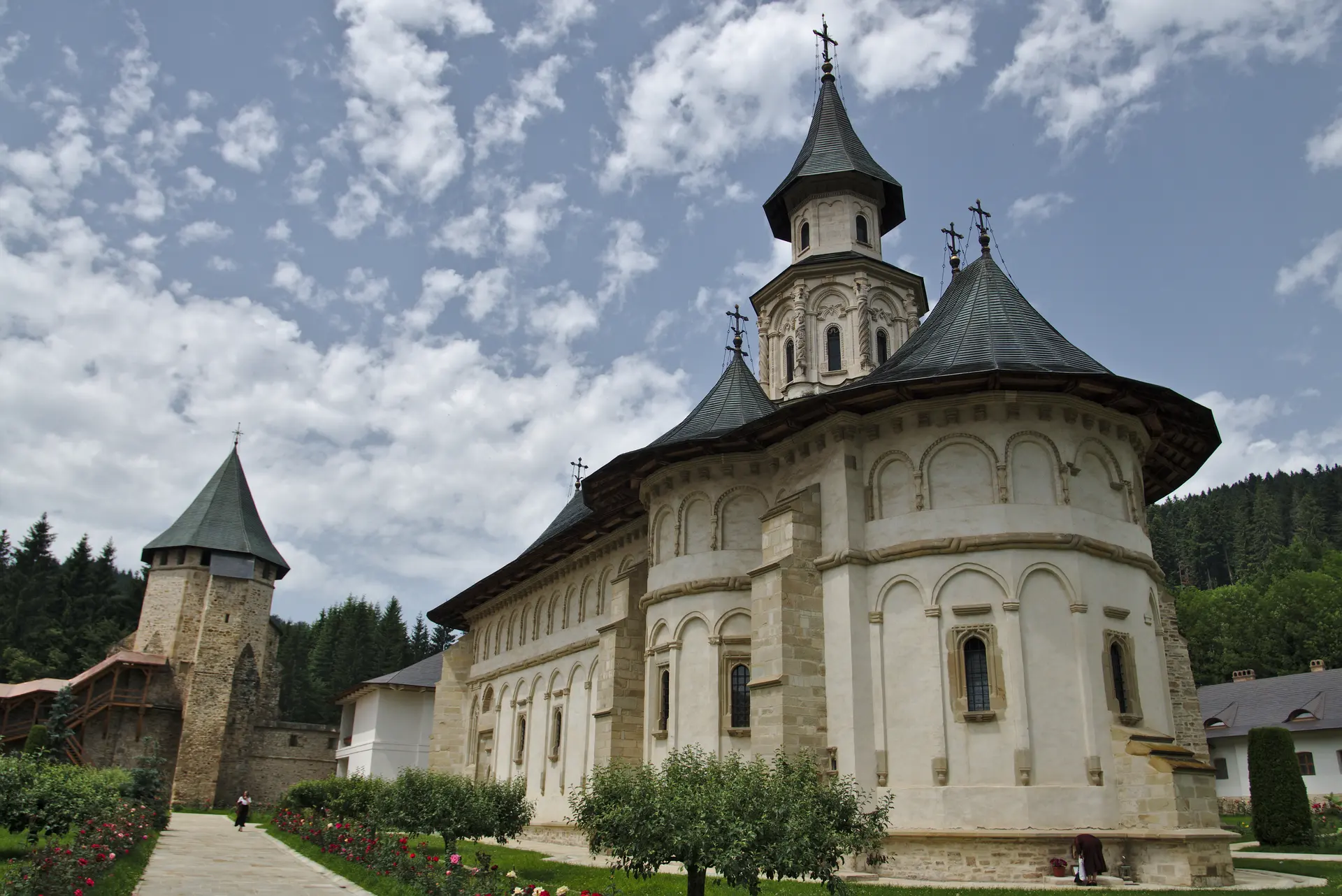
Putna Monastery, Romania
Putna, Suceava, Romania
13.0 km away
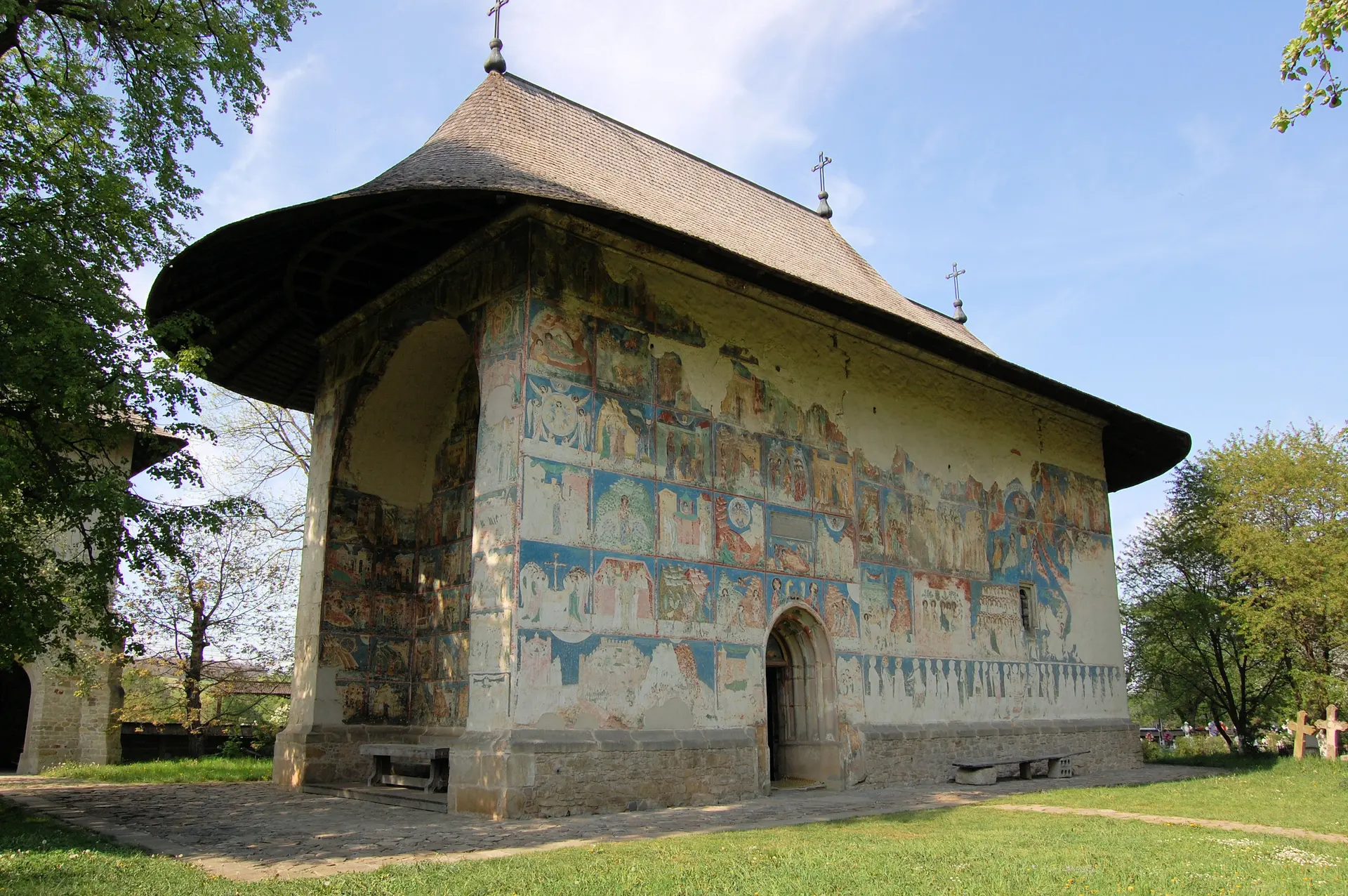
Church of the Beheading of St John the Baptist of Arbore
Arbore, Suceava County, Romania
17.3 km away
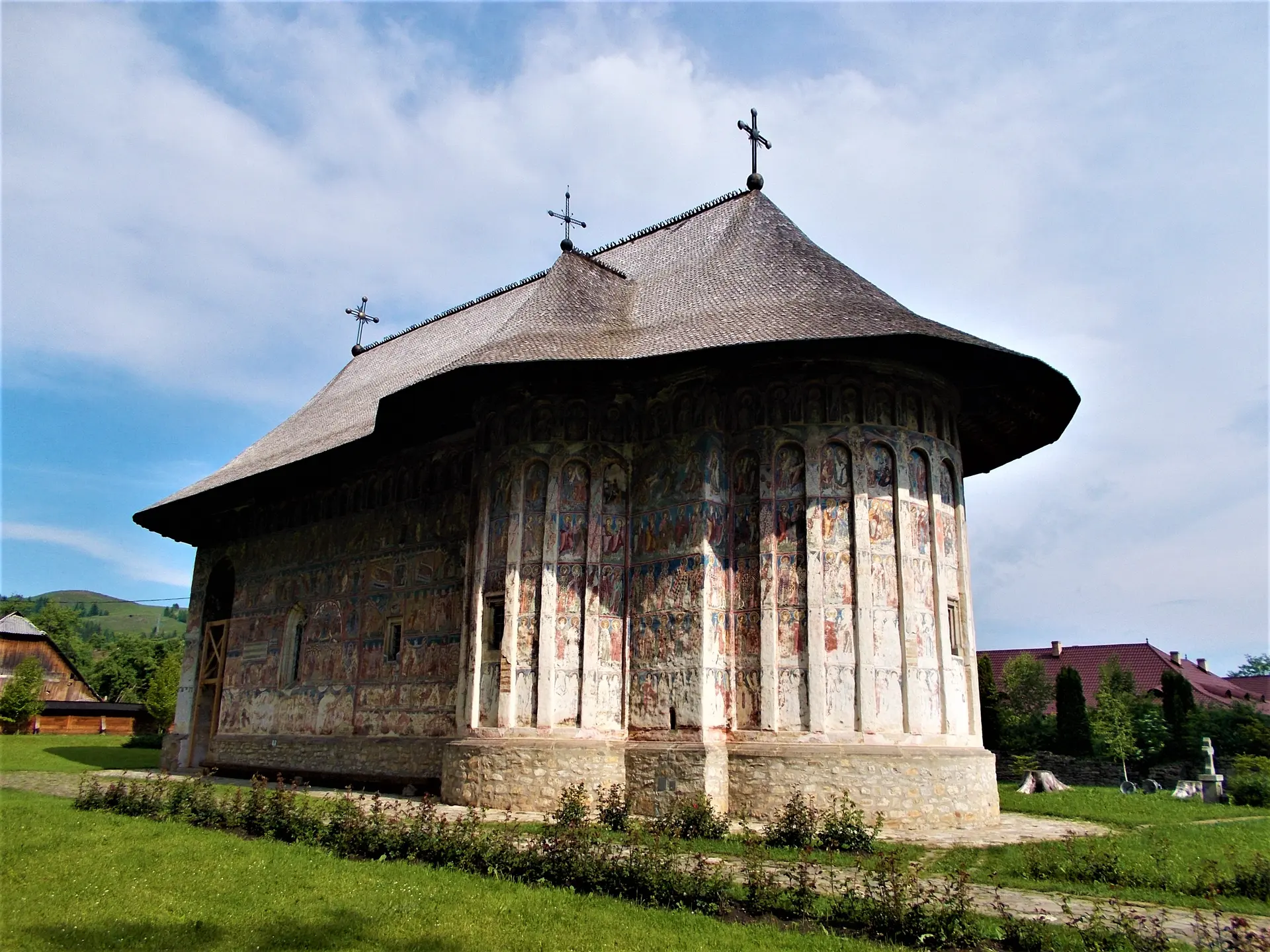
Church of the Assumption of the Virgin at Humor Monastery
Mănăstirea Humorului, Suceava County, Romania
23.1 km away

Voronet Monastery, Romania
Gura Humorului, Suceava, Romania
31.2 km away
Share a photo
Help visitors recognize Sucevita Monastery, Romania. Every submission is reviewed before publication.